
This post contains affiliate links. I may earn a small commission if you buy through them — at no extra cost to you. My scores are never influenced by this.
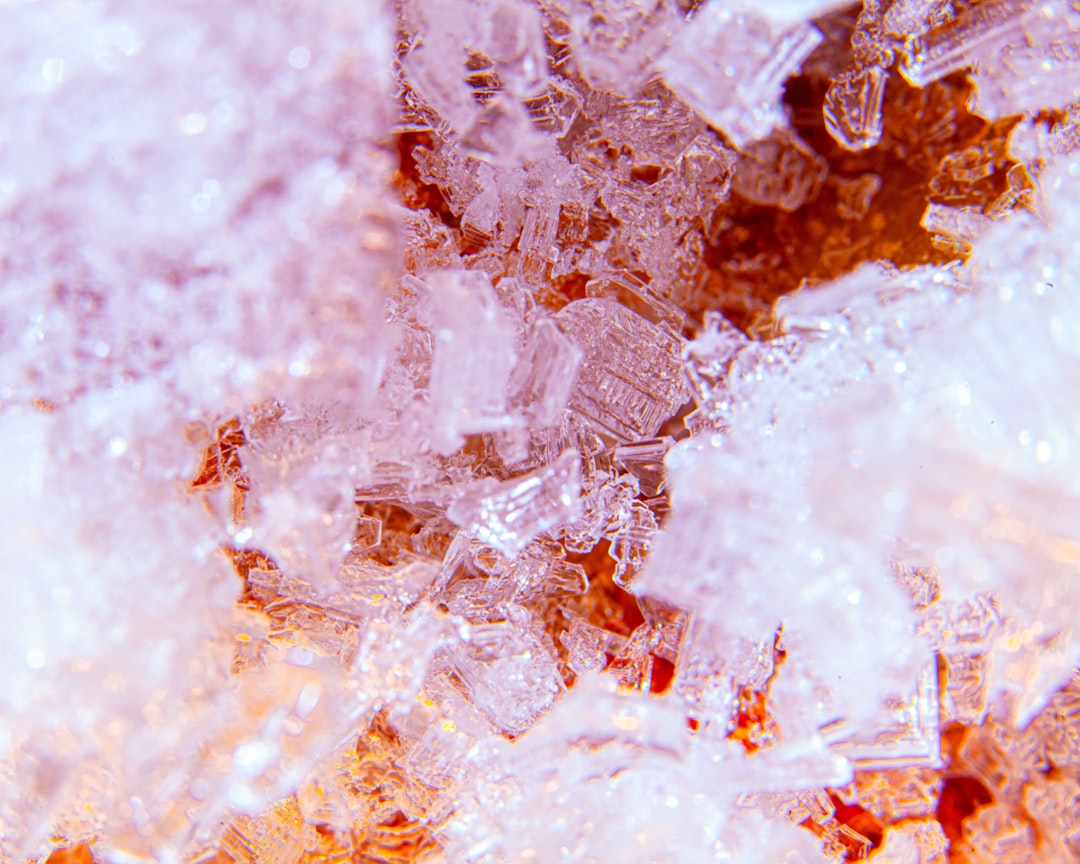
MSG in chili crisp is not a scandal. It’s a design choice — and one that almost every brand on the shelf has made. Monosodium glutamate shows up in Lao Gan Ma, Fly By Jing, Momofuku, GUIZ, and dozens of others. If you’ve eaten chili crisp, you’ve eaten MSG. The more useful question isn’t whether MSG in chili crisp should worry you. It’s what the ingredient is actually doing, and whether you should care.
I read ingredient lists before I taste anything. That’s just how I operate. And MSG appears so consistently across the category that ignoring it would be like reviewing cars without mentioning the engine. So here’s the full picture: what MSG actually is, why chili crisp makers use it, what the science says about safety, and how I factor it into the broader seasoning picture when I review a product.
What MSG Actually Is
Monosodium glutamate is glutamic acid bonded to a single sodium ion. That’s it. Glutamic acid is an amino acid — one of the 20 building blocks of protein — and it occurs naturally in tomatoes, parmesan cheese, soy sauce, mushrooms, and human breast milk. Your body produces it on its own. It’s not exotic. It’s not synthetic in any meaningful sense. The commercial version is made by bacterial fermentation of starches, similar to how vinegar or yogurt is made.
The taste it triggers is umami — that savory, mouth-coating, more-ish quality that makes you want another bite. Umami was identified as a distinct taste by Japanese chemist Kikunae Ikeda in 1908, and MSG was his method of isolating it. He figured out how to deliver that specific flavor signal in crystalline form. A century later, the same compound is in your chili crisp.
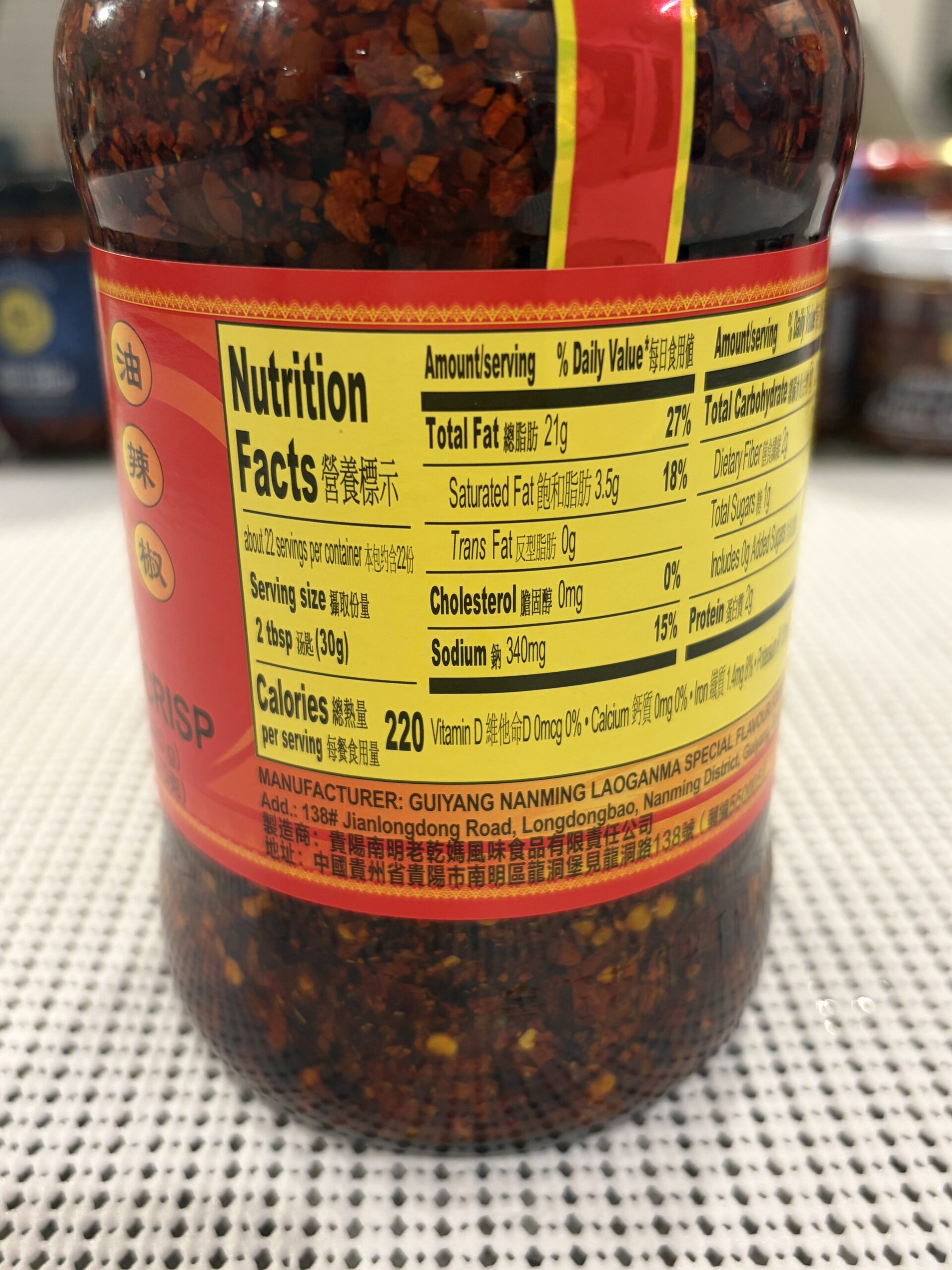
The molecular weight matters for one practical reason: MSG contains about one-third the sodium of table salt by weight. Table salt is 39% sodium. MSG is 12% sodium. That’s not a rounding error — it’s a significant difference, and it’s why some food manufacturers use MSG specifically as a sodium-reduction tool. You get flavor amplification with less sodium load. For anyone watching their sodium intake from chili crisp, this is worth knowing.
One more thing worth clearing up: MSG is not “artificial.” The manufacturing process is fermentation — bacteria convert starch or molasses into glutamic acid, which is then crystallized with sodium. It’s the same basic process that produces soy sauce, miso, and fish sauce. The output just happens to be a white crystal instead of a brown liquid. Calling MSG artificial while calling soy sauce natural is a distinction based on appearance, not chemistry.
Why It’s in Almost Every Chili Crisp
Chili crisp is a balancing act between oil, heat, crunch, and flavor depth. The oil carries heat. The crispy bits deliver texture. But the thing that makes you reach for the jar a second time — that lingering savory pull — is often MSG doing its job.
MSG amplifies existing flavors rather than adding its own. It doesn’t taste like anything specific on its own. What it does is make garlic taste more like garlic, make fermented chili paste taste deeper, and make the overall impression of a bite linger longer on your tongue. In a product where you’re tasting a dozen ingredients at once, that amplification effect is the difference between “fine” and “I need more of this.”
This is why it shows up in nearly every chili crisp on the market. Lao Gan Ma lists it. Fly By Jing uses it. Momofuku includes it. GUIZ has it. The brands that skip MSG usually compensate with naturally high-glutamate ingredients like mushroom powder, fermented soybean paste, or seaweed extract — which are delivering the same amino acid through a different door.
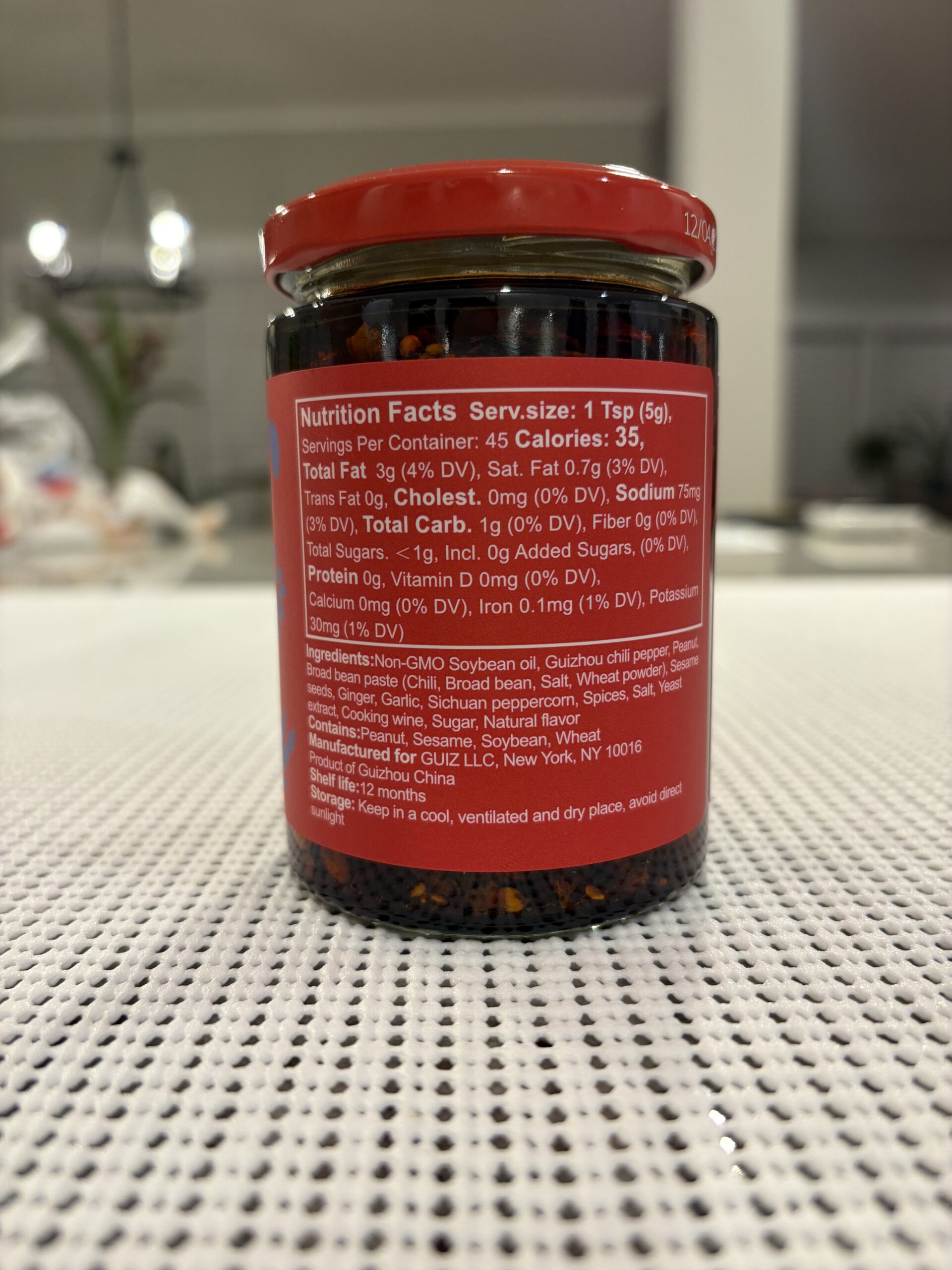
If a chili crisp claims “No MSG” on the front label but lists yeast extract, hydrolyzed soy protein, or autolyzed yeast in the ingredients, it contains free glutamate. The taste effect is identical. The label claim is technically legal but practically meaningless. I flag this when I see it. For more on reading labels honestly, see the Label Reading Guide.
The position of MSG on the ingredient list tells you something too. Ingredients are listed by weight. If MSG is near the top — say, fourth or fifth — the product is leaning on it hard. If it’s near the bottom, it’s a background player. Most chili crisps land MSG somewhere in the middle third of the list, which is a reasonable place for a flavor enhancer. I notice when it creeps higher, but I don’t penalize the ingredient itself — I penalize when it’s compensating for ingredients that aren’t pulling their weight. A chili crisp with great chilies, real garlic, and good oil doesn’t need MSG to be interesting. It just becomes more interesting with it.
The “Chinese Restaurant Syndrome” Myth
In 1968, a letter published in the New England Journal of Medicine described numbness, weakness, and palpitations after eating at a Chinese restaurant. The author speculated MSG might be the cause. The letter was anecdotal — one person’s experience, no controls, no data. It launched decades of fear anyway.
The term “Chinese Restaurant Syndrome” entered the medical lexicon and the public imagination. It was racist in framing and flawed in science, but it stuck. MSG became the thing people “knew” was bad for you, the way people “knew” that cracking your knuckles caused arthritis. Repetition did the work that evidence never could.
Here’s what the evidence actually shows. The FDA classifies MSG as Generally Recognized as Safe (GRAS) — the same category as salt, pepper, and vinegar. Double-blind, placebo-controlled studies — the gold standard — have consistently failed to establish a causal link between MSG and the reported symptoms. A comprehensive review published in the Journal of the American Academy of Nurse Practitioners concluded that “the research does not support the claim that MSG causes adverse reactions in the general population.” The European Food Safety Authority, the World Health Organization, and regulatory bodies across Asia have all reached the same conclusion.
Some people do report sensitivity to large doses of MSG consumed on an empty stomach. That’s real, and I won’t dismiss it. But “some people are sensitive to large amounts” is different from “MSG is dangerous,” the same way “some people are lactose intolerant” doesn’t make milk poison.
The stigma around MSG has always tracked along racial lines. The same compound in Doritos, ranch dressing, and canned soup never generated panic. It was specifically MSG in Chinese food that became the villain. That framing has been thoroughly debunked, but the residue lingers in “clean label” marketing that treats MSG as something to hide from. I don’t play that game in reviews. If it’s in the jar, I note it. If the product is good, the MSG is part of why.
MSG and Sodium: The Real Numbers
If your concern about MSG is sodium-related rather than safety-related, here’s the math. One gram of MSG contains about 120 milligrams of sodium. One gram of table salt contains about 390 milligrams. So gram for gram, MSG delivers roughly a third of the sodium that salt does — while adding a flavor dimension that salt alone can’t provide.
A typical serving of chili crisp (one to two tablespoons) contains anywhere from 150 to 400 milligrams of sodium total, depending on the brand. The MSG in that serving is contributing a fraction of that number. The bigger sodium drivers are usually soy sauce, salt, and fermented bean paste. When I look at a nutrition panel and see 380mg of sodium per serving, my first question is about the soy sauce and salt load, not the MSG.
For context: the American Heart Association recommends no more than 2,300mg of sodium per day, with an ideal limit of 1,500mg. A tablespoon of chili crisp is not going to blow that budget unless you’re going through half the jar in a sitting. Which, depending on the product, I understand the impulse.
How I Treat MSG in Reviews
I don’t penalize products for containing MSG. I don’t reward them for omitting it. It’s a seasoning tool — same category as salt or sugar. What I evaluate is whether the overall flavor profile has depth and complexity, or whether the product is leaning on MSG as a crutch to compensate for weak ingredients.
A chili crisp with cheap filler oil, minimal real garlic, and soybeans padding the crunch but heavy MSG will taste “savory” without tasting like much else. The MSG is doing all the heavy lifting while everything around it coasts. That’s a problem — but the problem is the supporting cast, not the MSG itself. The ingredient is a tool. Tools are only as good as the hands using them.
Conversely, a product like GUIZ uses MSG alongside quality rapeseed oil, real Sichuan peppercorn, fermented bean paste, and a thoughtful chili blend. The MSG is one voice in a full ensemble. That’s the difference between a crutch and a tool.
When I read the ingredient list — which is always before I open the jar — I note where MSG sits. If it’s present, I file it as “standard seasoning” and move on to what surrounds it. The ingredients above and below MSG on the list are almost always more interesting and more revealing about the product’s quality.
The Bottom Line on MSG in Chili Crisp
MSG is a naturally occurring amino acid salt that enhances umami. It contains a third the sodium of table salt. It’s been classified as safe by every major regulatory body on the planet. The fear around it was built on a single anecdotal letter and sustained by decades of racially inflected misinformation.
In chili crisp, it’s a nearly universal ingredient because it works. The brands that use it aren’t cutting corners — they’re using a seasoning tool that’s been part of cooking for over a century. The brands that skip it are usually replacing it with other glutamate sources — yeast extract, mushroom powder, fermented soybean paste — that do the same thing under a different name.
Read the label. Understand what’s there. And then taste the product for what it actually delivers. That’s the FIL approach to everything in the jar — MSG included. For a broader look at every seasoning you’ll find on a chili crisp label, start with the full seasonings breakdown.
Frequently Asked Questions
Does chili crisp have MSG?
Most chili crisp brands contain MSG (monosodium glutamate). It’s one of the most common ingredients in the category. Brands that don’t list MSG often use naturally high-glutamate alternatives like yeast extract or mushroom powder, which deliver the same umami effect.
Is MSG in chili crisp safe to eat?
Yes. The FDA classifies MSG as Generally Recognized as Safe (GRAS). Double-blind, placebo-controlled studies have consistently failed to establish a link between MSG and adverse health effects in the general population. It has the same safety classification as salt and vinegar.
Why do chili crisp brands use MSG?
MSG amplifies existing flavors — it makes garlic taste more like garlic, deepens fermented notes, and extends how long flavor lingers on your tongue. In a product with a dozen competing ingredients, that amplification effect keeps the overall flavor cohesive and more-ish.
How much sodium does MSG add to chili crisp?
MSG contains about one-third the sodium of table salt by weight (12% vs. 39%). In a typical one-to-two tablespoon serving of chili crisp, the MSG contributes a small fraction of the total sodium. The bigger sodium drivers are usually soy sauce, salt, and fermented bean paste.
Is ‘No MSG’ chili crisp actually MSG-free?
Not necessarily. Products labeled ‘No MSG’ often contain yeast extract, hydrolyzed soy protein, or autolyzed yeast — all of which are sources of free glutamate, the same amino acid that makes MSG work. The label claim is technically legal but the flavor mechanism is identical.
What is Chinese Restaurant Syndrome?
A debunked concept from a 1968 anecdotal letter to the New England Journal of Medicine that blamed MSG for symptoms like numbness and weakness after eating Chinese food. Decades of controlled scientific studies have failed to confirm a causal link. The term itself has been criticized as racially charged and scientifically unfounded.
Does MSG affect the tier rating in Flavor Index Lab reviews?
No. MSG is treated as a standard seasoning tool — same category as salt or sugar. FIL evaluates whether the overall flavor has depth and complexity. A product isn’t penalized for containing MSG or rewarded for omitting it. What matters is whether the full ingredient list works together.
What’s the difference between MSG and glutamate?
Glutamate (glutamic acid) is a naturally occurring amino acid found in many foods including tomatoes, parmesan, and soy sauce. MSG is glutamic acid bonded to a sodium ion — it’s the crystalline, shelf-stable form used as a seasoning. Your body processes both identically.