
This post contains affiliate links. I may earn a small commission if you buy through them : at no extra cost to you. My scores are never influenced by this.
TL;DR: This Tia Lupita peanut salsa macha review ends at SKIP. Clean ingredient list, good jar density, but roasted peanuts completely dominate every other flavor : no chili character, no garlic, no complexity. Just peanut-flavored olive oil with some spice. Check price on Amazon.
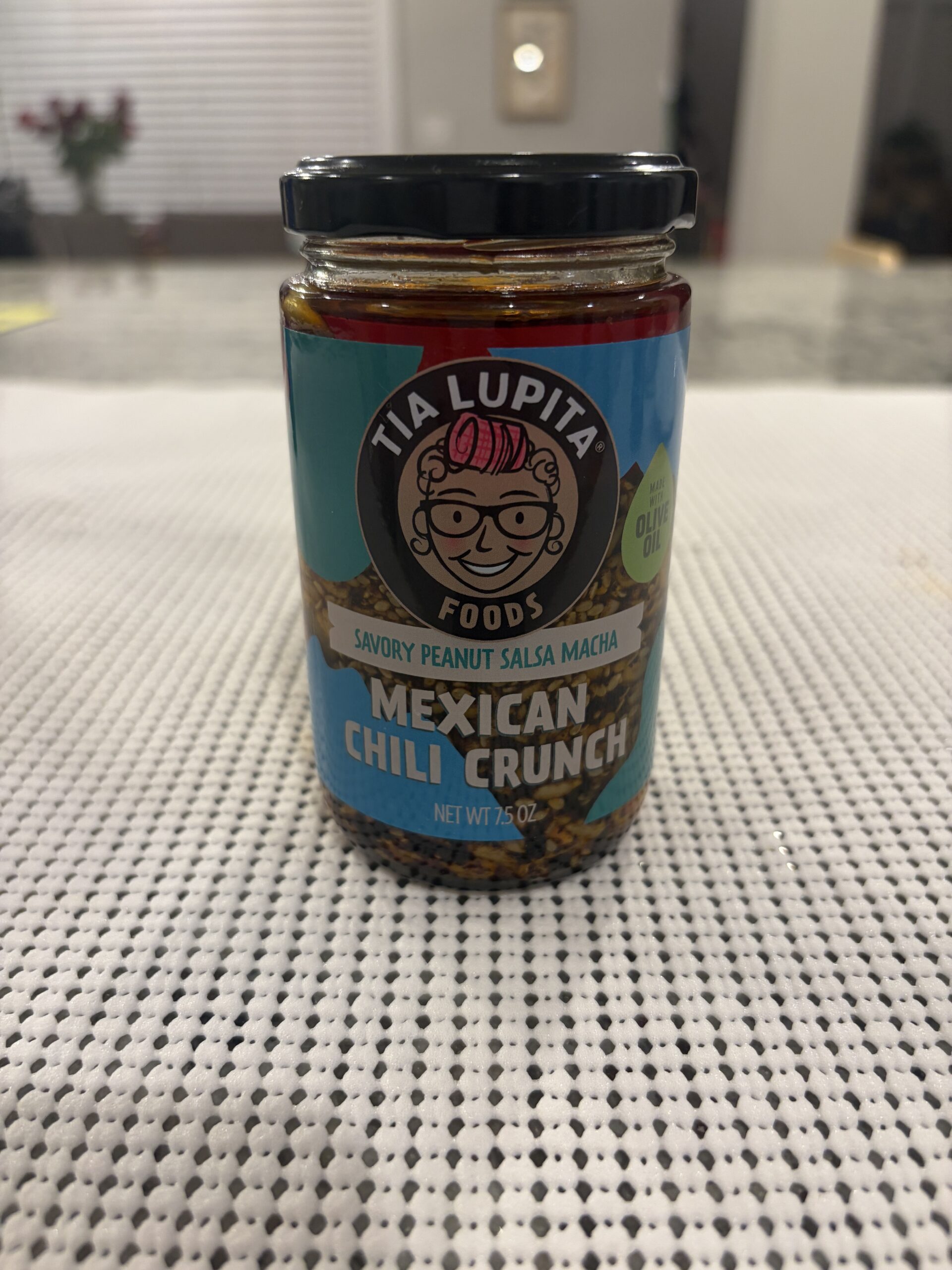
Tia Lupita Peanut Salsa Macha — What’s in the Jar
This is my Tia Lupita peanut salsa macha review : one half of their two-jar salsa macha lineup, sold as a 2-pack alongside the Sweet Cranberry variant. The full product name is Savory Peanut Salsa Macha . Mexican Chili Crunch, made by Tia Lupita Foods in Monterey, Mexico. The label says “made in small batches” and carries Non-GMO Project Verified, vegan, keto, and paleo certifications. No sugar added.
The jar is 7.5 ounces, purchased on Amazon as part of the 2-pack for $22.99 , that puts each jar at roughly $11.50, or $1.53 per ounce. The label design lets you see right through to the contents. Peanuts, seeds, and bits are all visible before you even open it. One thing that’s not on the label: any heat indicator. No chili graphic, no spice scale, no clue how hot this is supposed to be.
Quick Facts
| Brand | Tia Lupita Foods |
| Product | Savory Peanut Salsa Macha — Mexican Chili Crunch |
| Category | Salsa Macha |
| Style | Mexican |
| Oil | Olive |
| Heat | 2/5 : low-medium |
| Price | $11.50 (estimated; sold as $22.99 2-pack) |
| Size | 7.5 oz |
| Per oz | $1.53/oz |
| Made in | Monterey, Mexico |
| Buy | Amazon (individual or 2-pack) |
| Tier | SKIP |
Serving size is one teaspoon. I don’t love that. If you’re using this on anything real, you’re burning through three or four servings before you’ve covered a plate. A teaspoon serving size almost always signals an oil-forward product : oil is doing most of the work by weight, and the manufacturer knows it.
Ingredient Quality
The ingredient list is short: olive oil, roasted peanuts, sunflower seeds, sesame seeds, salted pumpkin seeds, garlic, morita chilies, salt. Eight ingredients total. That’s as clean as it gets for a salsa macha, and on paper, it reads like a solid recipe. Olive oil is a premium base. Roasted peanuts are second — the backbone of any peanut-forward macha. Three seed varieties add textural range. Morita chilies handle the heat and should bring a smoky, dried-fruit character. Garlic rounds it out.
Here’s where the label tells you everything you need to know before you take a single bite. Roasted peanuts are the second ingredient — right behind olive oil. In a traditional salsa macha, peanuts are structural. They provide body and nuttiness while the dried chilies bring smoke and heat. But in this jar, the peanut position isn’t just high . It’s prophetic. That number-two spot means peanuts are doing the majority of the flavor work by volume. And there’s only one chili variety — morita — sitting near the bottom of the list, below three different seeds. The label is honest. It’s telling you exactly what you’re about to taste.
Aroma
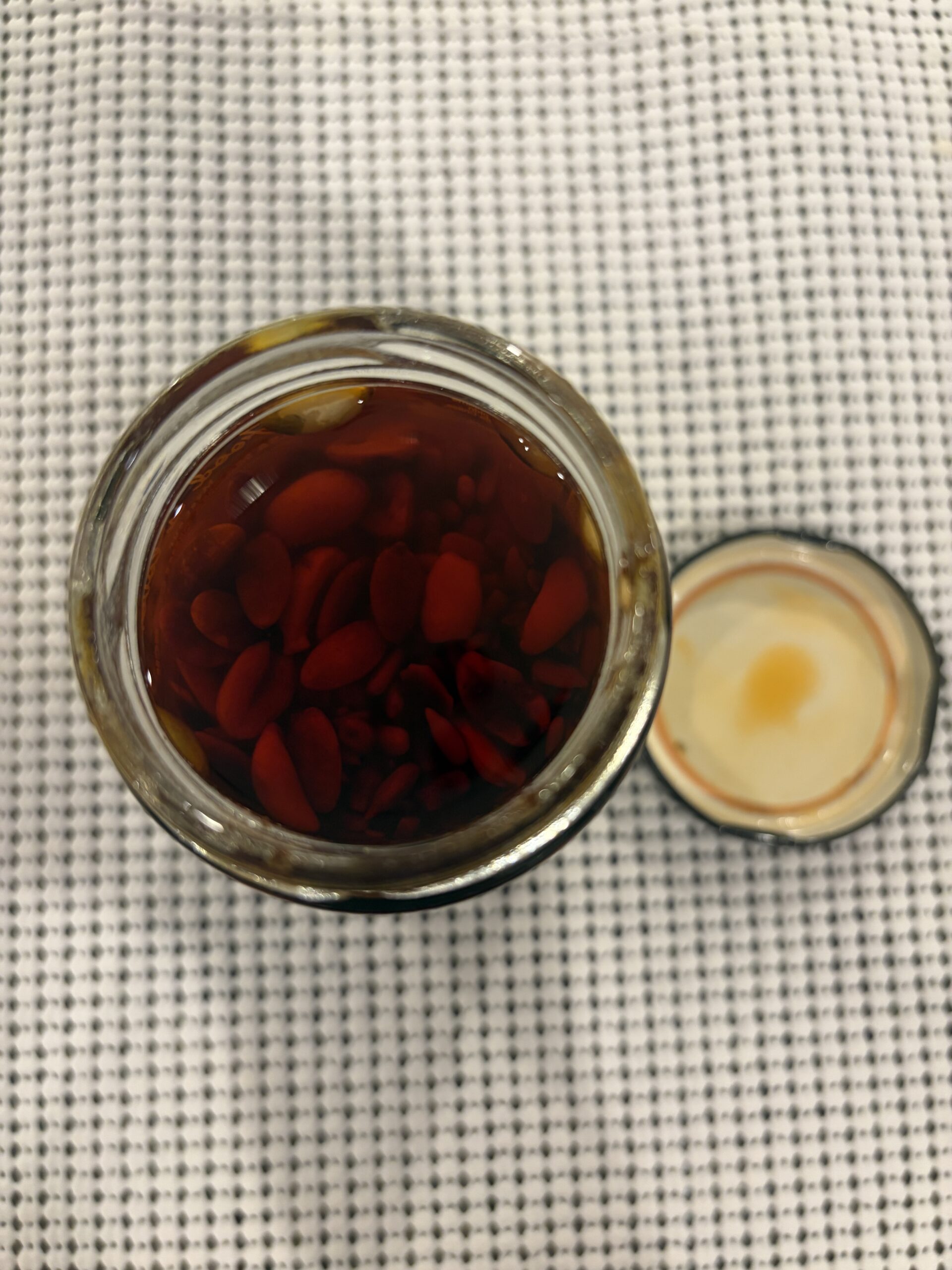
Open the jar and it’s all peanut. Not peanut plus something. Not peanut with a smoky edge from the moritas. Just peanut. The roasted peanut aroma fills the room and pushes everything else out. I couldn’t pick up any chili, any smoke, any garlic. The Cranberry variant from the same brand — you can actually smell the chilies and the cranberry right away. This one is straight-up peanut butter. That’s the nose.
Appearance and Settlement
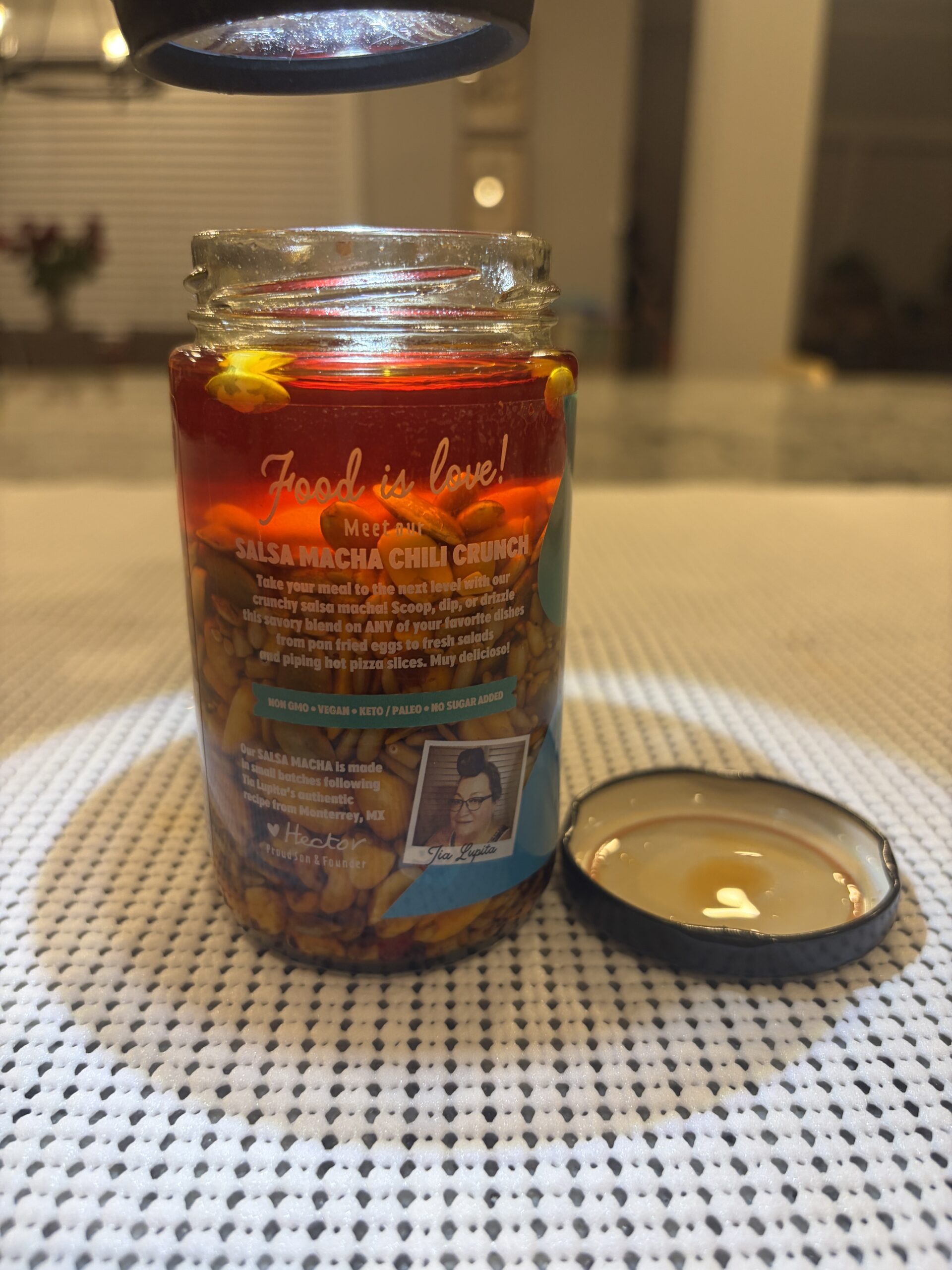
The settlement is actually solid — about 80% of the jar is packed with bits. That’s a good ratio for any category. The oil layer on top is thin, brownish-red, and a little cloudy from what looks like ground chili particles and residue from the frying process. Through the glass you can see peanuts, seeds, and larger bits clearly. Nothing’s been ground to a paste — the pieces are intact and visible.
If you were judging this jar on density alone, it’d do well. The settlement tells you there’s substance in here. The problem isn’t how much is in the jar . It’s what happens when you taste it.
Texture and Crunch
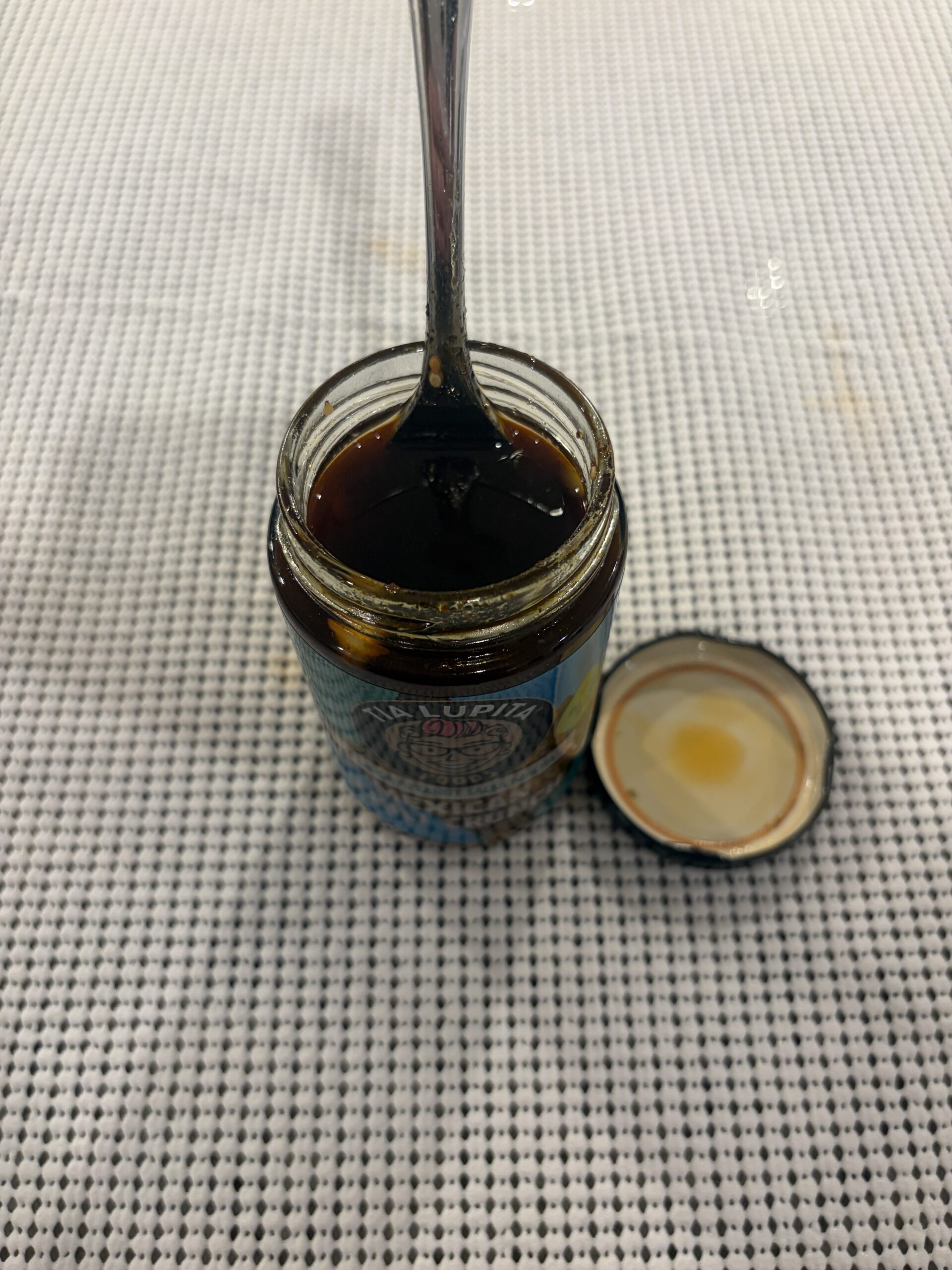
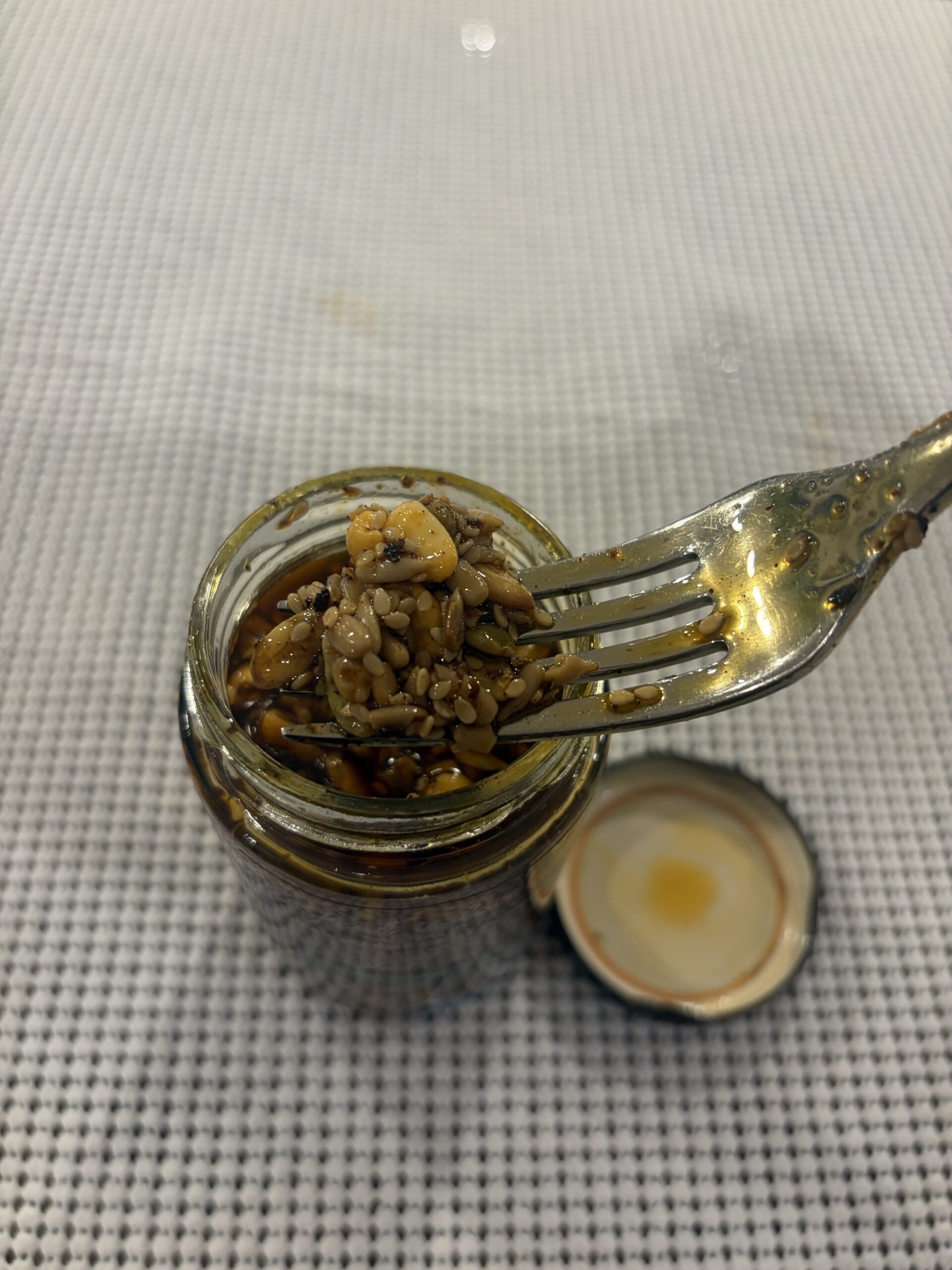
The fork sits on the settled solids without sinking — dense enough to hold, which tracks with the 80% settlement. After stirring, you can see everything: whole seeds, peanut pieces, and some ground-up morita chili bits scattered throughout. Nothing’s been processed down. The pieces are big, and the texture is seedy — sunflower seeds, sesame, pumpkin seeds all competing for real estate on the fork.
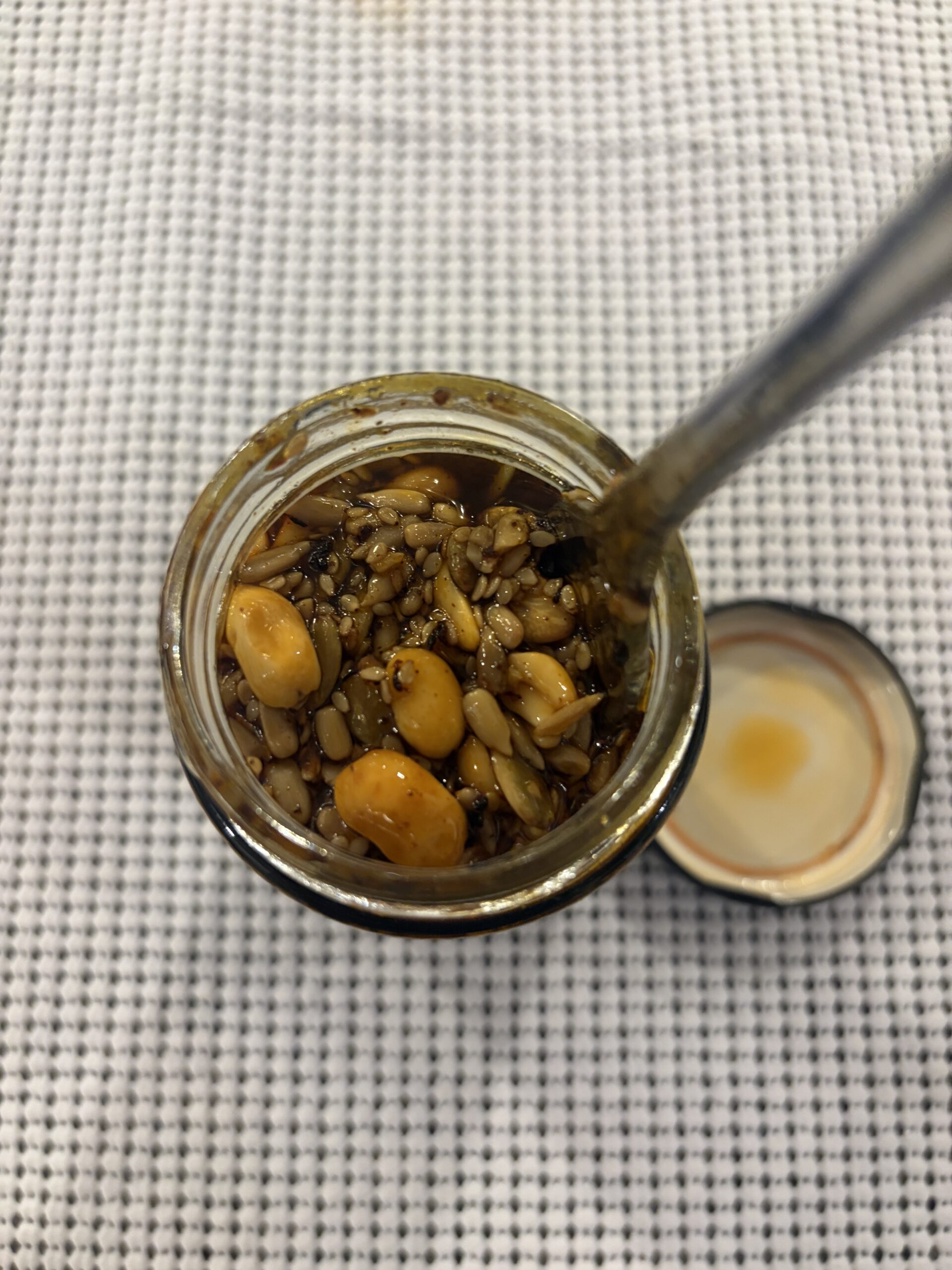
Crunch is there. The peanuts and seeds deliver on that front. But it’s a one-note seedy crunch — you’re chewing through the same thing over and over. There’s no garlic chip, no distinct chili flake that breaks the pattern. Everything in the mouth feels like trail mix that spent a week sitting in olive oil.
Flavor Complexity
This is where the jar falls apart. First forkful: peanut. Oil alone: peanut. Bits alone: peanut with seeds. Despite being olive oil on the label, the oil itself tastes like peanut oil — the roasted peanuts have so thoroughly infused into the base that the olive oil identity is gone. That’s not a fault of the oil. It’s what happens when one ingredient overwhelms the entire system.
I couldn’t detect any garlic. I couldn’t identify the morita chilies as a distinct flavor — just a vague spice that shows up on the tongue and sits there without developing. No smokiness, no dried-fruit quality, nothing that tells you moritas are in this jar. And that’s the real disappointment: morita chilies are a specific ingredient choice. They should bring something to the table. But the peanut buries them so completely that the chili variety doesn’t matter. You could swap in any dried chili and the flavor wouldn’t change.
There’s a lot going on in this ingredient list that could be good. Olive oil, three seed types, morita chilies, garlic — that’s a recipe with potential. But the execution doesn’t balance them. The peanut isn’t the base note with other layers building on top. It’s the only note. The whole jar experience is peanut-flavored olive oil with a little bit of spice on it, and there’s no development, no timeline, no second act. This isn’t a whole-jar product . It’s a one-ingredient product in an eight-ingredient jar.
Heat
Heat sits at the upper edge of mild — a 2 out of 5. Some spice arrives on the tongue mid-palate and stays at a low simmer. It’s the same heat level as the Cranberry variant, which makes sense since both rely on morita chilies as the only heat source. The heat doesn’t build. It doesn’t linger. It’s not unpleasant, but it’s not contributing anything to the experience either — just a mild warmth sitting underneath all that peanut.
What I’d Put It On
I’m not sure what this improves. If you specifically want a peanut-flavored oil with some seeds and a little bit of spice, this delivers exactly that — and maybe tossed into cold noodles where peanut flavor is the goal, or drizzled on a grain bowl where you want a nutty base, it works. But as a condiment that’s supposed to add complexity to food , which is the whole point of a salsa macha — it doesn’t do the job.
The Mixing Angle
Not a mixing candidate. The peanut would dominate any combination the same way it dominates the jar on its own. Mixing works when a product brings one strong trait that complements something else — heat without texture, texture without flavor, acidity that cuts richness. This doesn’t have a useful characteristic to contribute. It’s peanut all the way through, and adding it to another jar would just make that jar taste like peanuts.
Versatility and Packaging
Standard 7.5-ounce glass jar with a wide mouth — spoon access is fine. The label design is appealing and lets you see the contents before buying, which I appreciate. At $1.53 per ounce, it’s not cheap for what you’re getting. Sold primarily as a 2-pack with the Cranberry variant on Amazon for $22.99, which means you’re committing to both jars before you know if either one works for you.
Versatility is low. The peanut flavor is so dominant that it limits where you can use this. A good salsa macha bridges cuisines — eggs, tacos, rice bowls, noodles, avocado toast. This one is really only useful where you want peanut to be the lead, and there are cheaper, better ways to get peanut into your food.
Final Verdict — SKIP
Tia Lupita’s Savory Peanut Salsa Macha has a clean label, good jar density, and the right idea on paper — olive oil, roasted peanuts, morita chilies, three kinds of seeds. But in the jar, one ingredient takes over and refuses to share. The peanut overwhelms the moritas, buries the garlic, and converts the olive oil into something that just tastes like peanut oil. There’s no complexity, no development, and no reason to reach for this over other jars in the category.
I’ll acknowledge it might be a batch issue — maybe another jar would let the moritas and garlic come through. But based on what I tasted, this is a skip. If you’re buying the Tia Lupita 2-pack, the Sweet Cranberry variant is the better jar by a wide margin.
Tier: SKIP
- Best Chili Crisp: Everything We’ve Tested . See where every jar ranks.
- What to Eat with Chili Crisp . A field guide to pairing by jar style.
- How to Build a Chili Crisp Starter Kit . Three jars, no overlap.
Frequently Asked Questions
Is Tia Lupita peanut salsa macha spicy?
Not very. Phil rated it a 2 out of 5 on the heat scale — upper mild, lower medium. The morita chilies provide some warmth on the tongue, but heat is not the defining characteristic of this jar. Most people will find it comfortable.
What does Tia Lupita peanut salsa macha taste like?
Overwhelmingly like roasted peanuts. Despite a clean ingredient list that includes olive oil, morita chilies, garlic, and three kinds of seeds, the peanut flavor dominates everything else. The oil, the aroma, and the overall flavor all read as peanut with a mild spice finish.
What are the ingredients in Tia Lupita peanut salsa macha?
Olive oil, roasted peanuts, sunflower seeds, sesame seeds, salted pumpkin seeds, garlic, morita chilies, and salt. Eight ingredients total, no sugar added, Non-GMO Project Verified.
Is Tia Lupita salsa macha vegan and gluten-free?
Yes. The label carries vegan, keto, and paleo certifications. It contains peanuts and sesame seeds, so it is not safe for nut or sesame allergies.
Where can I buy Tia Lupita salsa macha?
Tia Lupita salsa macha is available on Amazon, typically sold as a 2-pack that includes both the Savory Peanut and Sweet Cranberry variants. Individual jars are harder to find.
What is the difference between Tia Lupita Peanut and Cranberry salsa macha?
The Peanut variant uses roasted peanuts as its dominant flavor with morita chilies for mild heat. The Cranberry variant adds dried cranberries and brown sugar, creating more flavor complexity with a sweet-smoky-spicy balance. Phil rated the Cranberry a GOOD and the Peanut a SKIP.
Is Tia Lupita peanut salsa macha worth buying?
Phil gave it a SKIP tier. While the ingredient list is clean and the jar density is good, the roasted peanuts overwhelm every other flavor — no chili character, no garlic, no complexity. If you’re buying the 2-pack, the Cranberry variant is the better jar.