
This post contains affiliate links. I may earn a small commission if you buy through them — at no extra cost to you. My scores are never influenced by this.
The Sauce Up Pineapple Mango Salsa Macha takes the same formula that earned the original an EXCELLENT tier: grapeseed oil, morita chili, peanuts, the whole Asian-Mexican fusion thing — and adds dried tropical fruit to the mix. The crunch is there, the balance is there, but the pineapple and mango never actually show up in the flavor. It’s a very good salsa macha that promises something it doesn’t quite deliver. Buy it on Amazon.
Sauce Up Pineapple Mango Salsa Macha Review
The Sauce Up Pineapple Mango salsa macha is a variant I’ve been waiting to test. Sauce Up NYC already makes one of my favorite salsas machas on the market. The original earned an EXCELLENT tier from Sauce Up NYC. it’s one of the few jars I’ve tested where every ingredient pulls its weight and the Asian-Mexican fusion approach doesn’t feel like a gimmick. So when a Pineapple & Mango variant showed up from the same brand, the question wasn’t whether it would be good. The question was whether adding dried tropical fruit to a formula that already works would make it better — or just make it different without being better.
For anyone unfamiliar with the category, salsa macha is an oil-based condiment built on dried chilies, nuts, seeds, and aromatics. It’s Mexico’s answer to chili crisp, though the two products are structurally distinct: nuts and seeds replace the fried aromatics, vinegar shows up more often, and the heat comes from dried chilies instead of fresh or fermented ones. Sauce Up plays in the space between both traditions, and this Pineapple & Mango variant pushes even further into fusion territory by introducing dried fruit into the base.
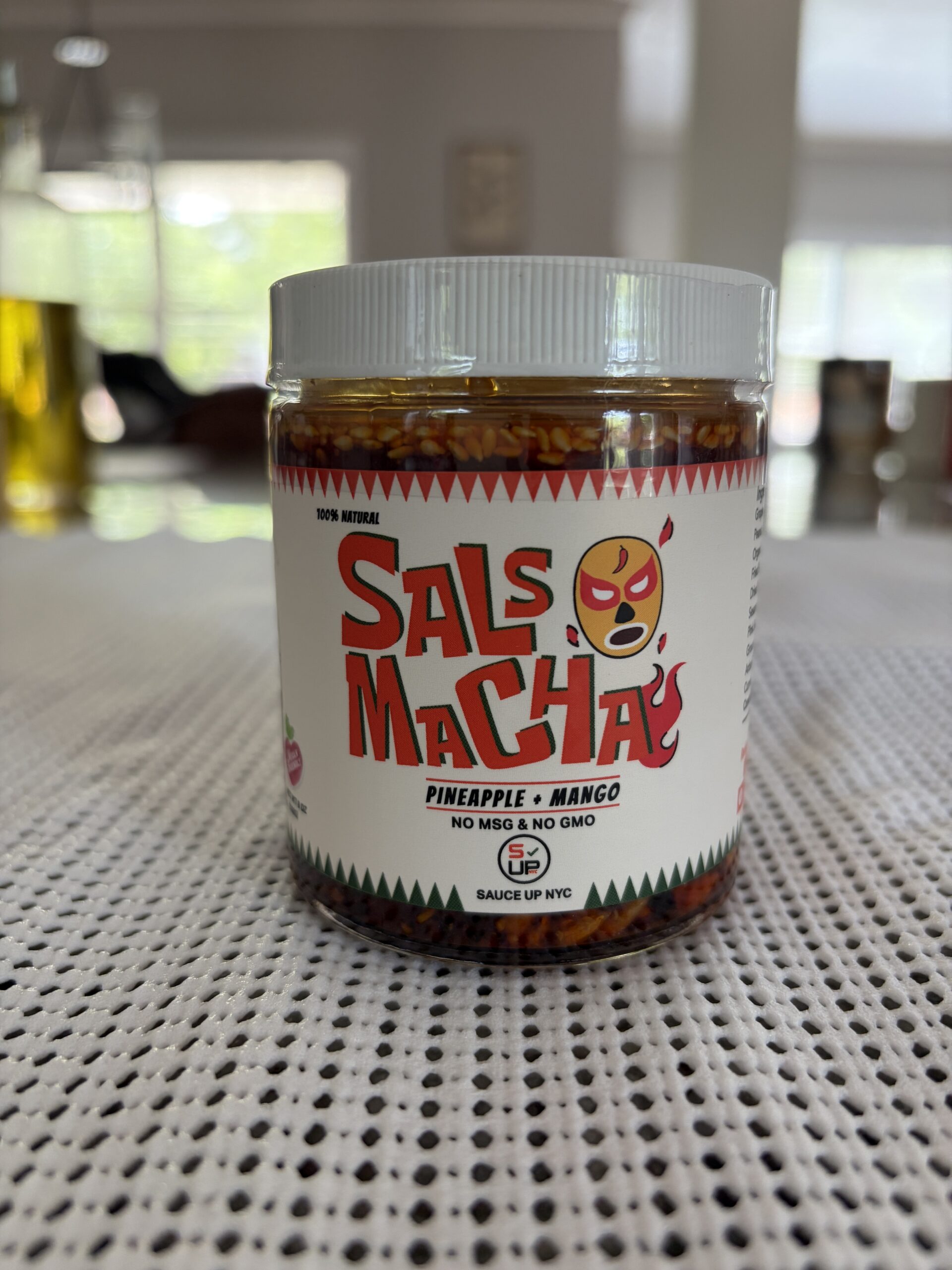
Quick Facts
| Brand | Sauce Up NYC |
| Product | Pineapple & Mango Salsa Macha |
| Category | Salsa Macha |
| Style | American Fusion (Mexican base, Asian influence, tropical fruit) |
| Oil | Grapeseed oil |
| Heat | 2–3 (medium — slow build) |
| Price | $14.99 |
| Size | 6 oz |
| Per oz | $2.50/oz |
| Made in | USA (NYC — “Proudly Handmade”) |
| Buy | Amazon · sauceupnyc.com |
| Tier | GOOD |
Serving Size
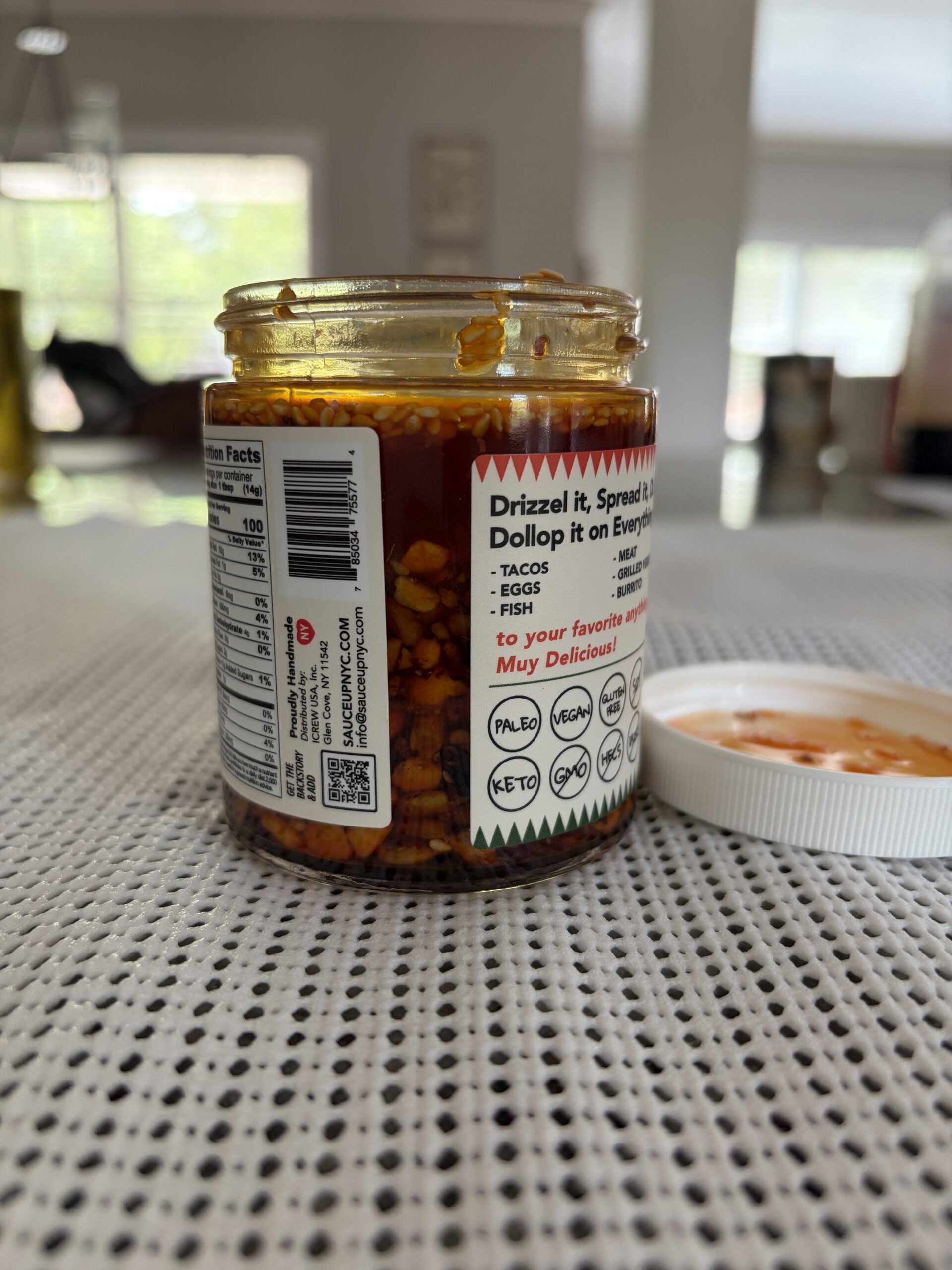
One tablespoon. Which is nice. Less than a gram of added sugar per serving. I appreciate Sauce Up’s consistency here — same honest serving size across their whole lineup. When a brand uses a teaspoon as the serving size, it’s usually because the nutrition numbers look ugly at a realistic portion. A tablespoon tells me they’re not hiding anything.
Ingredient Quality
Sixteen ingredients: grapeseed oil, morita chili, peanut, sunflower seed, organic coconut palm sugar, fried shallot, dried mango, dried pineapple, white sesame seed, Himalayan pink salt, fried garlic, ground shiitake mushroom, árbol chili, japón chili, cumin, ground ginger.
If you’ve read my original Sauce Up Salsa Macha review, this list will look familiar. Thirteen of these sixteen ingredients are identical to the original formula: grapeseed oil, morita, peanut, sunflower seed, coconut palm sugar, fried shallot, sesame, pink salt, fried garlic, shiitake mushroom, árbol, japón, cumin, and ginger are all returning players. What’s new: dried mango and dried pineapple, slotted in at positions seven and eight on the label.
This is Sauce Up’s signature move — and what makes their salsa macha ingredient profile unusual. Traditional salsa macha leans on dried chilies, peanuts, and oil. Sauce Up layers in fried shallot, garlic, and shiitake mushroom, which are chili crisp ingredients, then bridges back to the Mexican side with morita, árbol, japón, and cumin. It’s an Asian-Mexican fusion approach that I’ve seen a handful of brands attempt, but Sauce Up does it with intention — nothing feels out of place.
Grapeseed oil as the base is a deliberate choice. It’s neutral enough to let the chilies and aromatics lead, but cleaner-tasting than the soybean or canola oil you’ll find in most chili crisps. Morita chili sitting second on the list tells you this jar takes its heat seriously — morita is a smoked jalapeño, dried further than chipotle, and it brings a deep, slow smokiness that anchors the whole profile.
The coconut palm sugar at position five is worth noting. Sweetness in salsa macha isn’t a red flag. it’s a category trait. Cranberry, raisins, brown sugar, and coconut palm sugar all show up in this world. The question is whether sweetness balances or dominates. In the original, it balanced. Here, with the addition of dried fruit, the sweet side has more weight to throw around.
Aroma
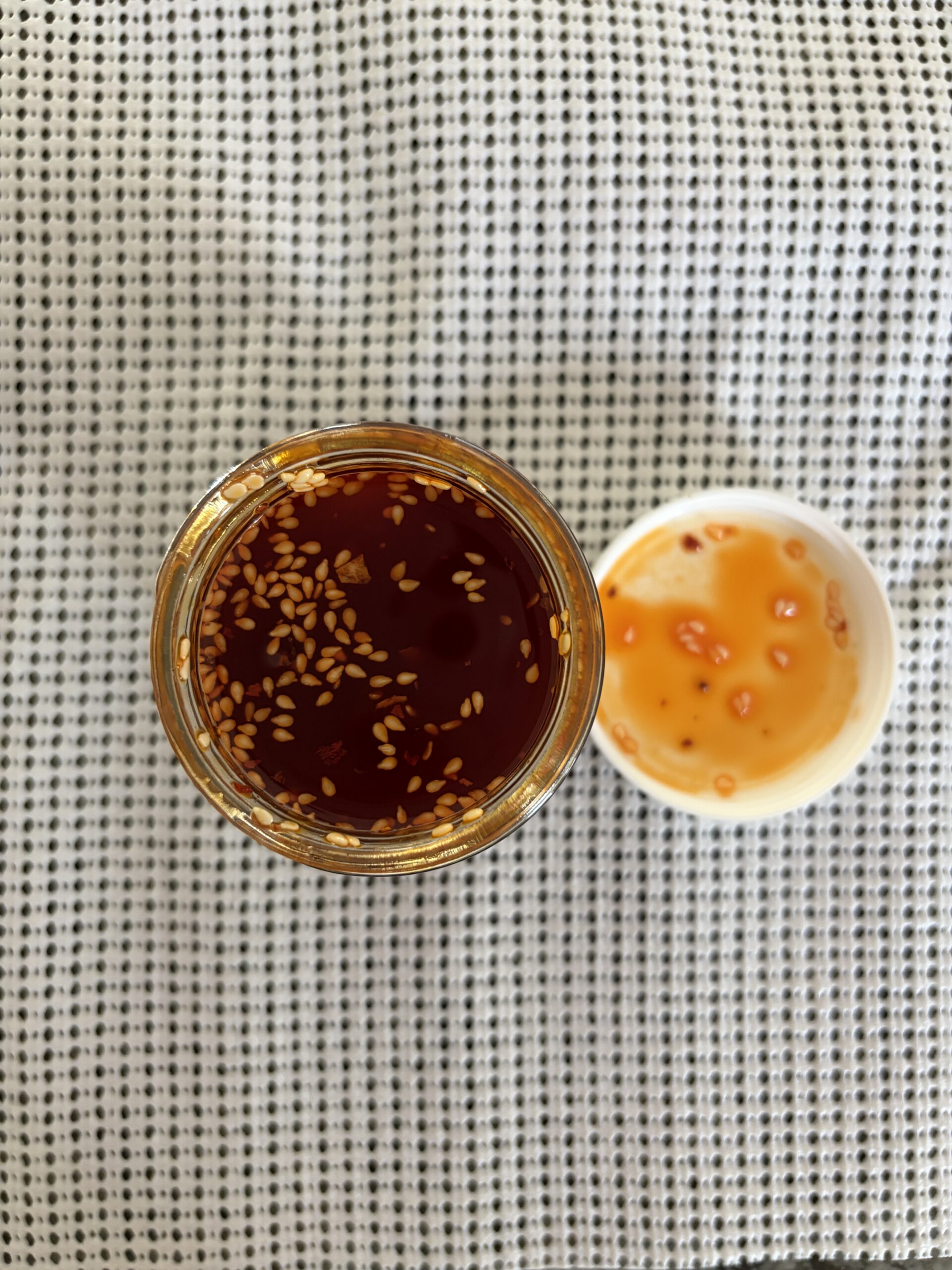
Cumin hits first: sharp and warm, right at the top of the nose. Then the chili comes through underneath, smoky and earthy from the morita. It’s the same aroma profile as the original Sauce Up salsa macha, which makes sense given the shared base. What I was looking for: any hit of dried fruit on the nose. Something tropical, something sweet before the first bite.
Nothing. No pineapple. No mango. The cumin and chili own the aroma completely. That’s not a flaw in isolation — it’s a good-smelling jar. But when the label says “Pineapple & Mango” and the aroma gives you zero indication that either is present, you start wondering how much work those ingredients are actually doing.
Appearance and Settlement
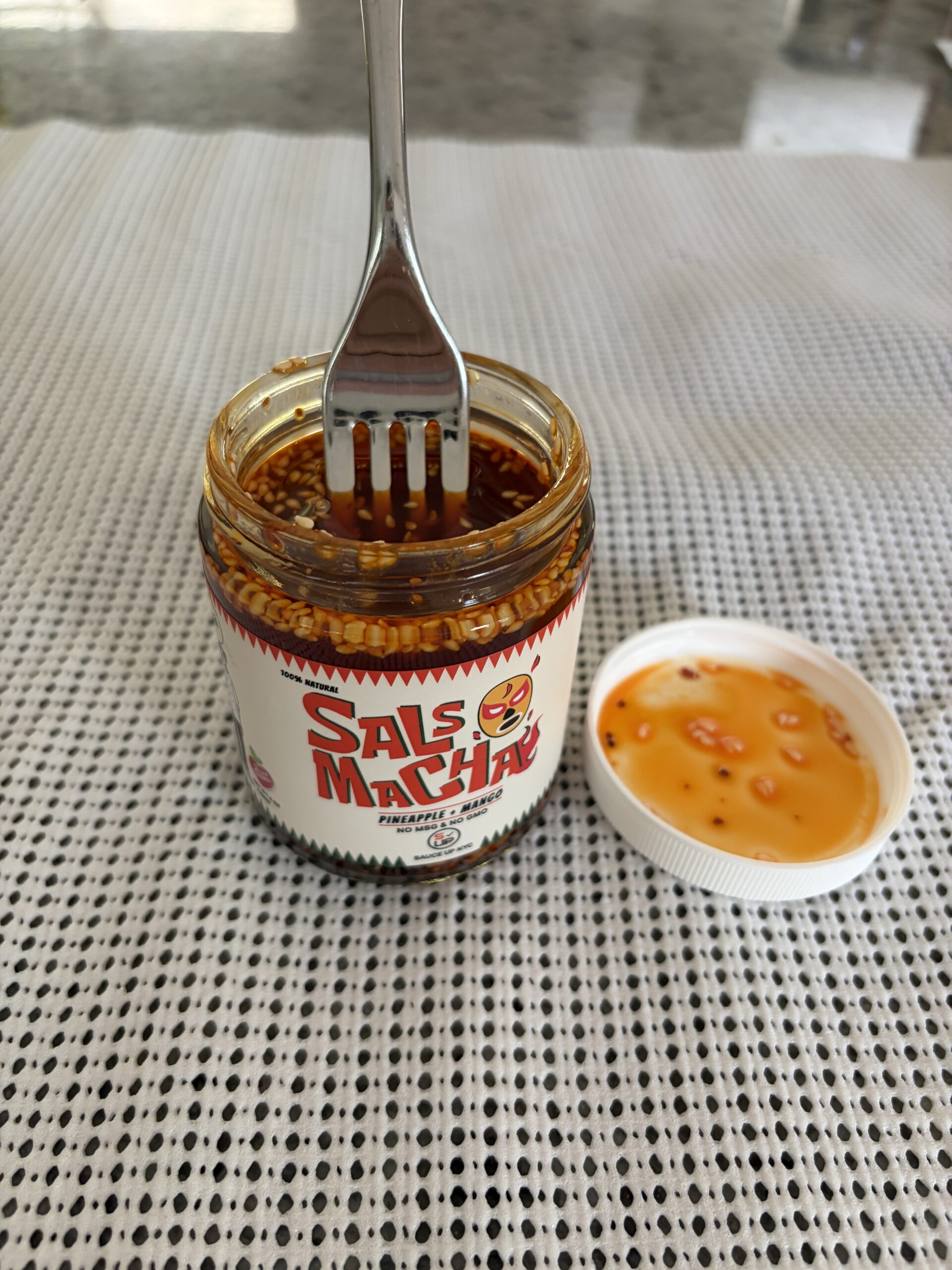
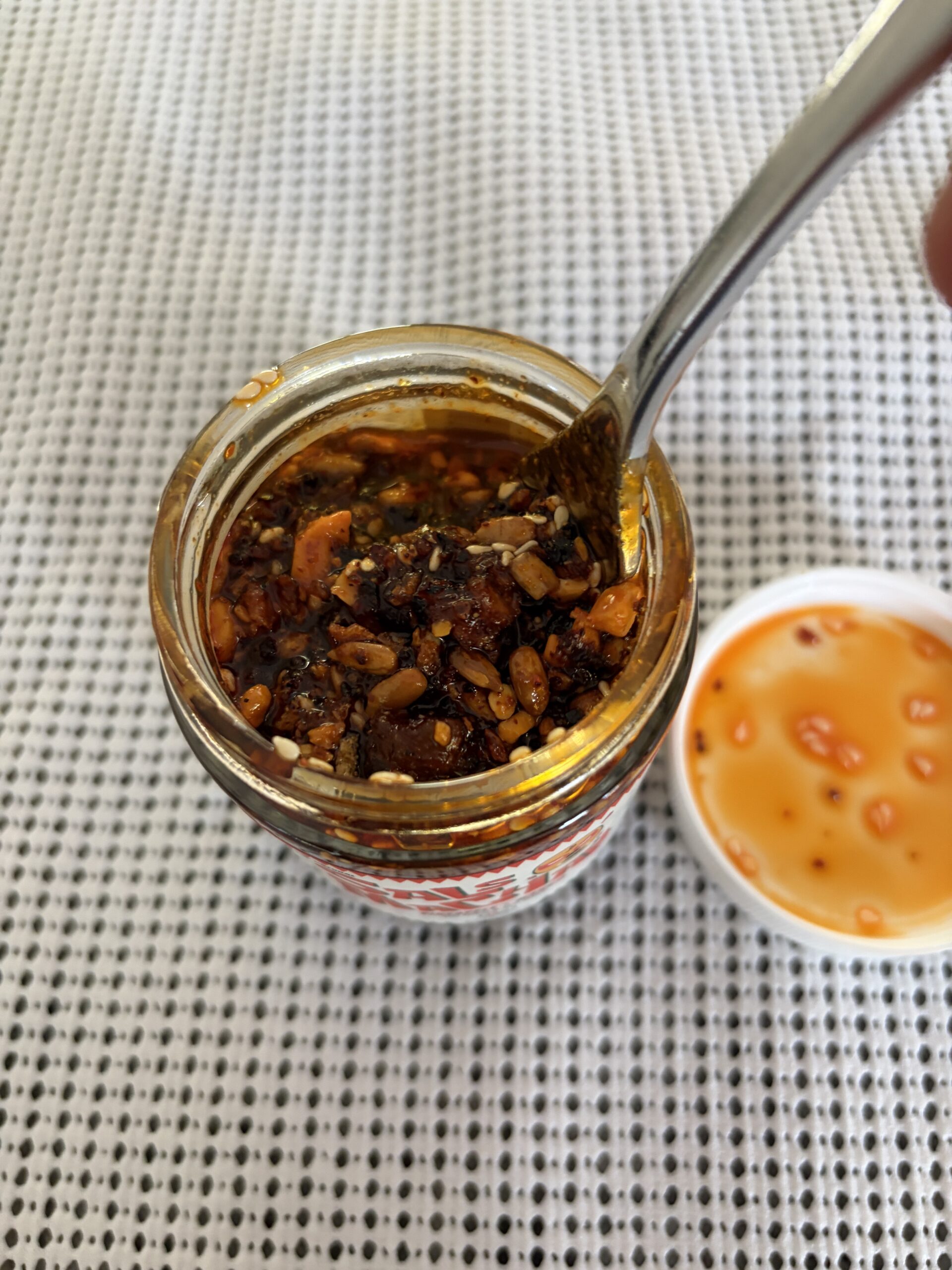
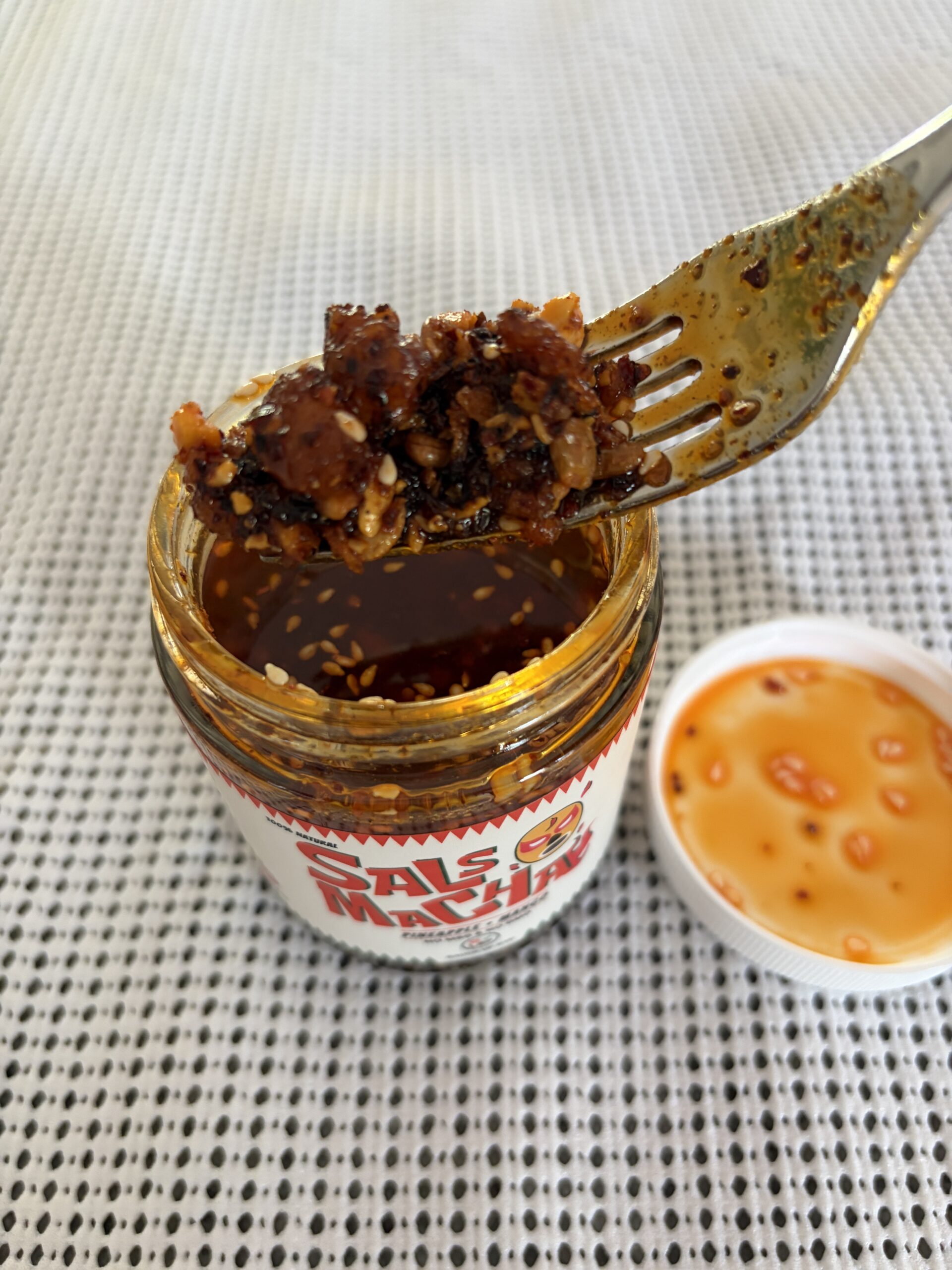
About 80% settlement — consistent with the original Sauce Up. Deep red oil with visible cumin dust floating on the surface. Through the glass, you can see the density of what’s settled below: big chunks of peanuts, visible shallot pieces, garlic, sesame seeds. The jar looks packed. Mix it up and it’s thick — the kind of thick where the fork stands up on its own if you let it.
For salsa macha, I evaluate nut-to-oil balance instead of the oil-to-solids ratio I use for chili crisp. Here, the solids clearly dominate. The oil layer is minimal relative to the mass of nuts, seeds, and chili bits sitting below it. Good ratio. Easy to fork out. No hunting for the good stuff at the bottom.
Texture and Crunch
The crunch is really good. Peanuts lead — they’re chunky, not pulverized, and they hold up. Sunflower seeds add a second layer of crunch that’s lighter and more scattered. Fried shallot gives a thinner, crispier note between the heavier nut bites. Sesame seeds are there in the background doing what sesame seeds do — adding a faint pop when you catch one between your teeth.
This is consistent with what I found in the original Sauce Up, and I mean that as a compliment. The texture balance is one of the things that set that jar apart. Everything contributes. Nothing is soggy. The bits don’t fade away after a few chews the way they do in some products where the oil has saturated everything into softness. These hold their structure. Mixed up, the consistency is thick and substantial — you’re getting a spoonful of actual food, not flavored oil with a few things floating in it.
Flavor Complexity
Sweet and salty up front. The coconut palm sugar and the pink salt establish the baseline immediately — there’s a warmth to the sweetness that’s different from refined sugar. Cumin comes through right behind it, earthy and grounding. Then the crunch kicks in, and you’re chewing through peanut and shallot and sesame while the morita smoke starts building underneath everything.
The mid-palate is where this jar does its best work. There’s a slow burn that starts climbing — not aggressive, not timid, just steady. Some sweetness rolls through, and the flavors layer in a way that feels intentional. The fried garlic and mushroom are doing background work here. I can’t taste the mushroom as a distinct flavor — it’s more like a depth enhancer, something that makes the savory notes feel deeper than they would otherwise. Shiitake mushroom is last-ish on the ingredient list, and it plays like it — present in effect, invisible in flavor.
Now, the thing the label is asking me to taste: pineapple and mango. They’re in the name. They’re on the label. They’re seventh and eighth on the ingredient list — not buried at the bottom. And I can’t identify either one in the flavor. There’s a sweetness that might be partially attributable to the dried fruit, and maybe a very faint tang underneath everything that could be the pineapple contributing some acidity. But if you handed me this jar blind, I wouldn’t guess tropical fruit was involved. The dried mango and dried pineapple seem to add “a little more depth of flavor than just upfront acidity” — which is a polite way of saying they’re contributing something subtle rather than something you can actually point to.
Here’s where it gets interesting: this is the exact same base formula that earned the original Sauce Up an EXCELLENT tier. Same grapeseed oil, same morita, same peanuts, same fried shallot and garlic and mushroom and cumin and ginger. The original’s balance was already right. Everything contributed. Adding dried tropical fruit to that formula didn’t create more complexity — it added two ingredients that merge into the existing sweetness without announcing themselves. The coconut palm sugar was already handling the sweet lane. The dried fruit just… joins it there, quietly, without changing the conversation.
Is this a whole jar product? Close. The oil and the solids work together well — the grapeseed oil carries flavor on its own, the bits are dense and varied, and nothing feels like two separate things sharing space. But the gap between the label’s promise (tropical fruit!) and the actual flavor experience (where?) holds it back from the kind of unified, every-ingredient-justified assessment the original earned.
Heat
No heat indicator on the label, but the morita chili sitting second in the ingredient list tells you this isn’t a mild jar. The heat sneaks up — no burn on entry, no immediate signal that anything spicy is happening. It builds slowly through the mid-palate, rises to a comfortable medium, and then lingers. Not in a punishing way — it hangs around for thirty seconds or so, warm across the tongue and toward the back of the mouth, then fades clean.
This is morita heat: smoky, slow, and more about atmosphere than aggression. The árbol and japón chilies add a little sharpness to the edges, but the morita is running the show. It’s the kind of dried chili heat that makes salsa macha fundamentally different from chili crisp — instead of the numbing tingle or sharp fried-chili burn you get from Sichuan or fresh pepper-based products, you get something earthier and more patient. It enhances the other flavors rather than competing with them.
For most people, this is manageable. Heat-seekers won’t be challenged, but it’s enough that you’ll notice it on eggs or plain rice. A 2 to 3 on my scale — medium, building, and well-integrated.
Use Cases
Tacos. That’s the first thing I thought while tasting this — the smoky, nutty, slightly sweet profile maps perfectly onto a taco. Avocado toast, eggs, rice bowls. It’ll work on basically anything you’d put the original Sauce Up on, because the flavor profile is close enough that the use case map doesn’t really shift. The pineapple and mango don’t redirect the versatility in any meaningful way — you’re not suddenly reaching for this to pair with dessert or fruit-adjacent dishes. It’s still a savory-smoky-nutty condiment first.
The heat level makes it accessible for sharing. You can put this on the table and not worry about it wrecking someone’s meal. It adds depth without being overpowering, which is the sweet spot for a condiment that’s going to live in rotation.
The Mixing Angle
This isn’t really a mixing candidate. The original Sauce Up salsa macha is the better standalone jar from this brand, and this variant doesn’t bring a unique enough flavor dimension to justify blending it into something else. If you’re buying Sauce Up salsa macha, buy the original. If you’ve already got the original and you’re curious about the variant, this is worth trying. but I wouldn’t keep both in rotation when they occupy essentially the same space on the shelf.
Versatility and Packaging
Standard Sauce Up packaging — clean label, same format across their lineup. The 6 oz jar is on the smaller side for salsa macha. Spoon access is fine — wide-mouth jar, easy to get a tablespoon out without scraping the sides. The label lists every certification you could want: vegan friendly, non-GMO, paleo, keto, gluten-free, no soy, no preservatives, no dairy, no HFCS, no MSG. Contains peanuts and sesame, which are the two allergens to flag.
Value depends on price point. At 6 oz, you’re paying a premium per ounce compared to larger-format competitors. For a small-batch, NYC-handmade product with grapeseed oil and named chili varieties, that’s expected — but you should know what you’re paying for relative to an 8 oz or 12 oz jar from a bigger brand.
Final Verdict — GOOD
This is a very good salsa macha. The crunch is there. The balance is there. The heat is well-integrated and the base formula — which is shared with the EXCELLENT-tier original — does the heavy lifting. Sauce Up knows how to build a jar.
But the pineapple and mango don’t earn their spot on the label. They’re in the ingredient list, they’re in the name, and they don’t show up in the flavor in any identifiable way. The dried fruit adds a background sweetness, maybe a touch more depth — but it doesn’t create a new flavor experience. When I’m tasting a jar that says “Pineapple & Mango” on the front, I want to taste pineapple and mango. I can’t.
The original Sauce Up Salsa Macha does everything this jar does, without promising something it can’t deliver. That’s why this one lands at GOOD instead of matching the EXCELLENT. It’s still a Sauce Up jar, it’s still better than most of what I’ve tested in this category, and it’ll serve you well on tacos and eggs and anything else you throw it on. But if you’re choosing between this and the original, the original is the better buy.
Tier: GOOD
Buy Sauce Up Pineapple & Mango Salsa Macha on Amazon
- Best Chili Crisp: Everything We’ve Tested — See where every jar ranks.
- What to Eat with Chili Crisp — A field guide to pairing by jar style.
- How to Build a Chili Crisp Starter Kit — Three jars, no overlap.
Frequently Asked Questions
What does Sauce Up Pineapple & Mango Salsa Macha taste like?
It tastes like a smoky, nutty, slightly sweet salsa macha with balanced heat from morita, árbol, and japón chilies. Despite the name, the pineapple and mango flavors are not distinctly identifiable — the dried fruit contributes background sweetness rather than recognizable tropical fruit flavor.
How spicy is Sauce Up Pineapple & Mango Salsa Macha?
Medium heat with a slow build. The morita chili drives the heat profile — it sneaks up, peaks at a comfortable medium, lingers briefly, and fades cleanly. Most people will find it manageable. It adds warmth without overpowering food.
Is Sauce Up Pineapple & Mango Salsa Macha vegan?
Yes. The label lists the product as vegan friendly. It’s also non-GMO, paleo, keto, gluten-free, with no soy, preservatives, dairy, HFCS, or MSG. It does contain peanuts and sesame.
What is the difference between Sauce Up’s original Salsa Macha and the Pineapple & Mango version?
The Pineapple & Mango version adds dried mango and dried pineapple to the original’s 15-ingredient base formula. The core ingredients — grapeseed oil, morita chili, peanuts, sunflower seeds, fried shallot, and the rest — are identical. In tasting, the dried fruit adds subtle sweetness but doesn’t create a distinctly tropical flavor profile.
What should I eat with Sauce Up Pineapple & Mango Salsa Macha?
Tacos, avocado toast, eggs, and rice bowls are the best pairings. The smoky-nutty-sweet profile works well on anything savory without being overpowering. The heat level is accessible enough for table sharing.
Where is Sauce Up Salsa Macha made?
Sauce Up products are proudly handmade in New York City (NYC). The brand operates as Sauce Up NYC.
Is Sauce Up Pineapple & Mango Salsa Macha worth buying?
It’s a good salsa macha — well-balanced, crunchy, and flavorful. However, the original Sauce Up Salsa Macha (which earned an EXCELLENT tier) delivers the same quality without the unfulfilled tropical fruit promise. If you’re choosing between the two, the original is the better buy.