
This post contains affiliate links. I may earn a small commission if you buy through them — at no extra cost to you. My scores are never influenced by this.
TL;DR: Sauce Up vs CHiNGONAs salsa macha is a head-to-head built on the same idea. Asian chili crisp ingredients meets Mexican dried-chili-and-nut tradition. Sauce Up earned EXCELLENT by keeping every ingredient in balance. CHiNGONAs landed at GOOD — because one ingredient took over the whole jar.
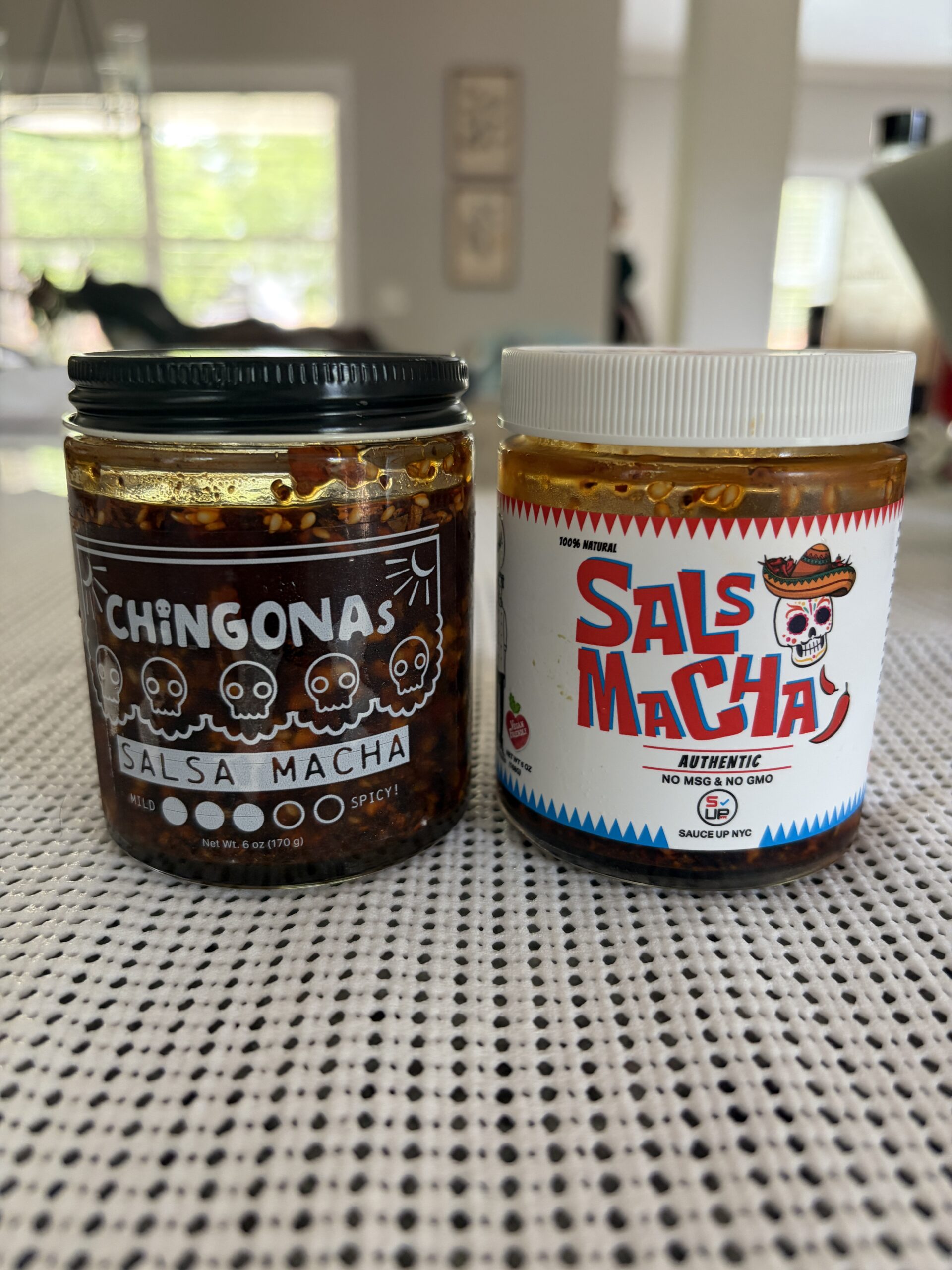
Sauce Up vs CHiNGONAs Salsa Macha: Same Idea, Different Execution
Take a traditional salsa macha — peanuts, dried chilies, seeds, oil — and fold in the ingredients you’d normally find in an Asian chili crisp. Fried shallots. Garlic. Mushroom. Ginger. That’s the bet both of these jars are making, and the fact that two American brands arrived at the same concept independently says something about where the condiment world is headed.
Sauce Up is based in NYC, already known for their chili crisp lineup. CHiNGONAs comes out of San Francisco’s Red Table Management. Both use neutral oils instead of olive oil. Both list cumin alongside shiitake or mushroom powder. Both are mild. On paper, these jars look like siblings.
In the mouth, they’re not. One earned EXCELLENT. The other landed at GREAT — borderline AVERAGE, if I’m being honest. The gap between them comes down to a single question: does every ingredient get its moment, or does one ingredient run the show?
The Fusion Blueprint: What They Share
Before I get into what separates these two, it’s worth seeing just how much they have in common. The overlap isn’t coincidental — both brands also make chili crisps, so the Asian influence isn’t a marketing gimmick. It’s the house style.
Both jars use neutral base oils — grapeseed (Sauce Up) and rice bran (CHiNGONAs) — instead of the olive oil you’d expect in a more traditional Mexican-style salsa macha. That’s a deliberate choice. Neutral oil lets the other ingredients lead instead of competing with a fruity or peppery oil character.
Both include shallots, garlic, mushroom (ground shiitake in Sauce Up, mushroom powder in CHiNGONAs), and ginger — four ingredients that would feel right at home in a Sichuan chili crisp. Both bridge those with cumin, peanuts, and dried chilies — the structural core of any salsa macha. And both end up mild. Neither jar is going to challenge anyone’s heat tolerance.
The term “fusion” gets thrown around loosely, but this is what it actually looks like when it’s intentional. Two separate condiment traditions, merged at the ingredient level, not just the marketing level. The question is whether the merger produces something better than either tradition alone — or just something muddled.
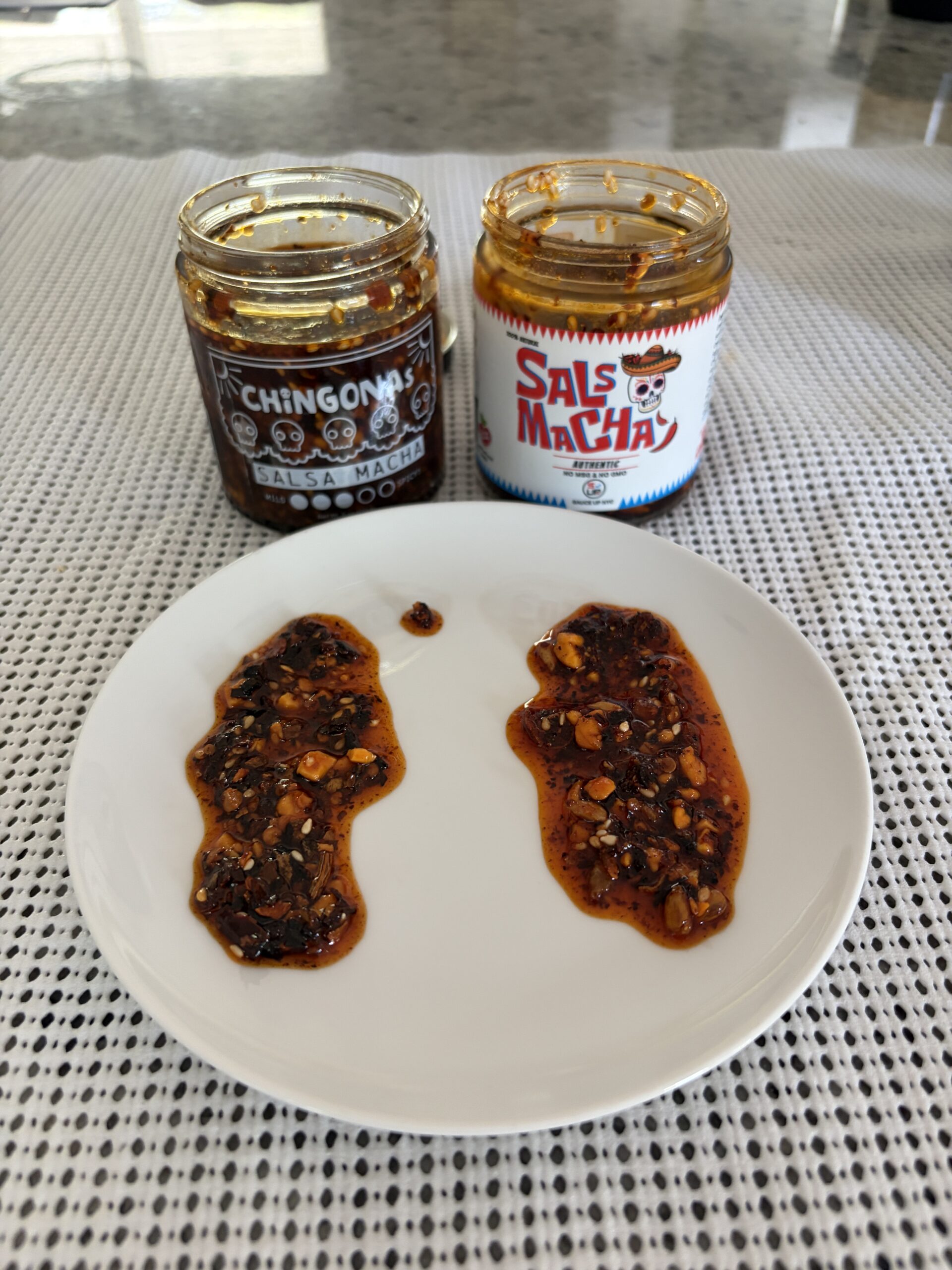
Head-to-Head Comparison
Tiers reflect in-context comparison performance. Individual review tiers may differ.
| Dimension | Sauce Up | CHiNGONAs |
|---|---|---|
| Tier | EXCELLENT | GREAT |
| Brand Base | NYC | San Francisco |
| Oil | Grapeseed | Rice bran |
| Chilies | Morita, guajillo, árbol, japón | Dried chilies (unspecified) |
| Asian DNA | Fried shallot, fried garlic, ground shiitake, ginger | Mushroom powder, ginger, shallots, garlic |
| Sweetener | Coconut palm sugar (<1g) | Sugar (listed despite “no added sugars” claim) |
| Heat | 1–2 (mild) | 1 (mild — label claims 3/5) |
| Settlement | ~80% | ~70% |
| Texture | Thick, balanced — seeds + shallot crunch | Crunchy throughout, uniformly ground |
| Dominant Note | Balanced — chili, shiitake, seeds all contribute | Cumin dominates everything |
| Price | $14.99 | $16.49 / 6 oz ($2.75/oz) |
| Buy | Amazon | Amazon |
Where They Diverge: Ingredient Execution
The ingredient lists tell you everything about why these two jars end up in different tiers. Both have the right building blocks. The difference is in how those building blocks interact once you’re actually eating the product.
Named Chilies vs. Generic “Dried Chilies”
Sauce Up names four specific dried chilies: morita, guajillo, árbol, and japón. That’s not just label decoration — each of those chilies brings a different character. Morita is smoky. Guajillo is mild and slightly sweet. Árbol is bright and direct. Japón brings a clean, medium heat. When you taste Sauce Up’s jar, the chili flavor actually comes through as something identifiable. You can taste the smoke from the morita. You can taste the brightness from the árbol.
CHiNGONAs says “dried chilies.” That’s it. No variety named, no indication of what kind. And in the tasting, the chili flavor is hard to find — it gets buried under everything else. Dried chili variety matters in salsa macha the same way grape variety matters in wine. “Dried chilies” on a label is like a wine that says “grapes” on the bottle.
The Cumin Problem
Both jars use cumin. In Sauce Up, cumin is one note among many — detectable in the oil after stirring, contributing depth without taking over. You can taste it if you’re paying attention, but it’s sharing the stage with shiitake, chili, seeds, and shallot.
In CHiNGONAs, cumin runs the show. It’s listed third in the ingredients, but it tastes like it’s first. Dried chilies are second on the label, and cumin is what you actually taste most. That’s the tension: the ingredient list reads like it should deliver complexity, but a single spice has seized control of the whole jar’s identity.
This is a pattern worth watching for in any condiment — ingredient position versus flavor presence. What’s high on the label isn’t always what dominates the palate. Sometimes the third ingredient is the loudest voice in the room.
Mushroom Depth: Shiitake vs. Powder
Sauce Up uses ground shiitake mushroom. CHiNGONAs uses mushroom powder — type unspecified. In the tasting, Sauce Up’s shiitake adds a detectable umami layer that works alongside the chili and the seeds. It’s doing real flavor work, contributing depth without competing with the other ingredients.
CHiNGONAs’ mushroom powder is there — you can taste it in the mid-palate if you’re looking for it. But it gets steamrolled by the cumin. The mushroom wants to contribute. The cumin won’t let it.
Sweetness and Label Honesty
Sauce Up uses organic coconut palm sugar and discloses less than 1 gram of added sugar. The sweetness in the jar is subtle. I noted “not too sweet” during tasting. It balances without dominating.
CHiNGONAs lists sugar in the ingredient list but carries a “no added sugars” callout on the label. That’s confusing. If sugar is an ingredient, it was added. The amount might be minimal, but the label claim doesn’t match the ingredient list, and that kind of inconsistency is worth flagging for anyone who reads labels before they buy — which, if you’re reading this site, you probably do.
The Aroma-to-Flavor Gap
Here’s where it gets interesting. CHiNGONAs actually smells better than Sauce Up on opening. I ranked CHiNGONAs’ aroma second-best out of every salsa macha and chili oil I’ve tested — behind only Don Pepe’s Morita. Super fragrant. Fried garlic mixed with chilies. That cumin bringing memories of delicious food. The nose is excellent.
But the aroma overpromises. CHiNGONAs smells better than it tastes. All that complexity your nose picks up on — the garlic, the chili, the layered spice — narrows down to cumin-forward by the time it hits your tongue.
Sauce Up’s aroma is also really nice — chili-forward on open, cumin detectable in the oil after stirring. But it’s not trying to be the best-smelling jar on the shelf. What it does instead is match. The flavor delivers what the nose promises. You smell chili and cumin and nuttiness, and then you taste chili and cumin and nuttiness, in roughly the same proportions.
That’s the lesson here: aroma-to-flavor consistency matters more than peak aroma quality. A jar that smells like a 10 and tastes like a 6 is more disappointing than a jar that smells like an 8 and tastes like an 8.
Texture and Settlement
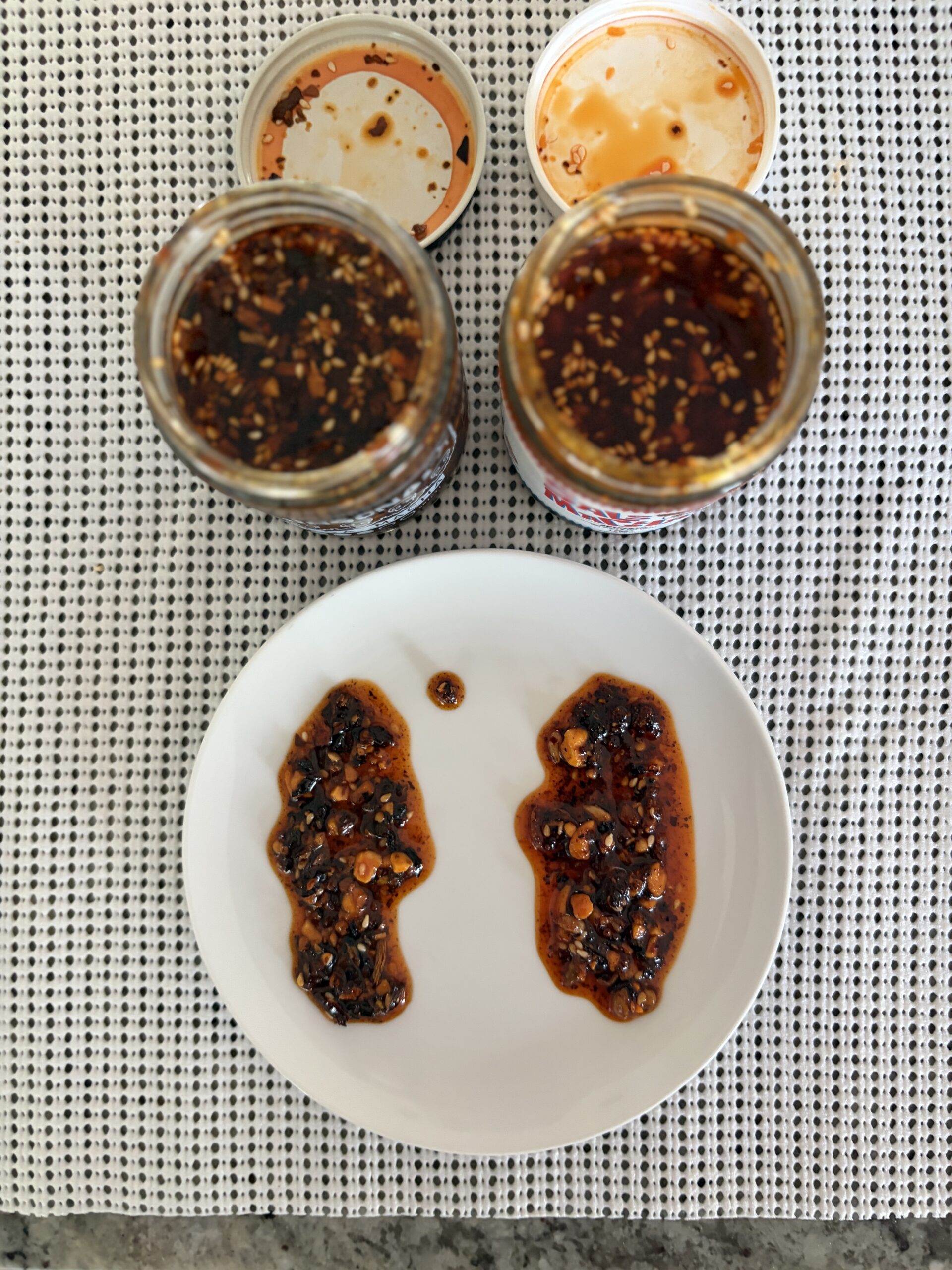
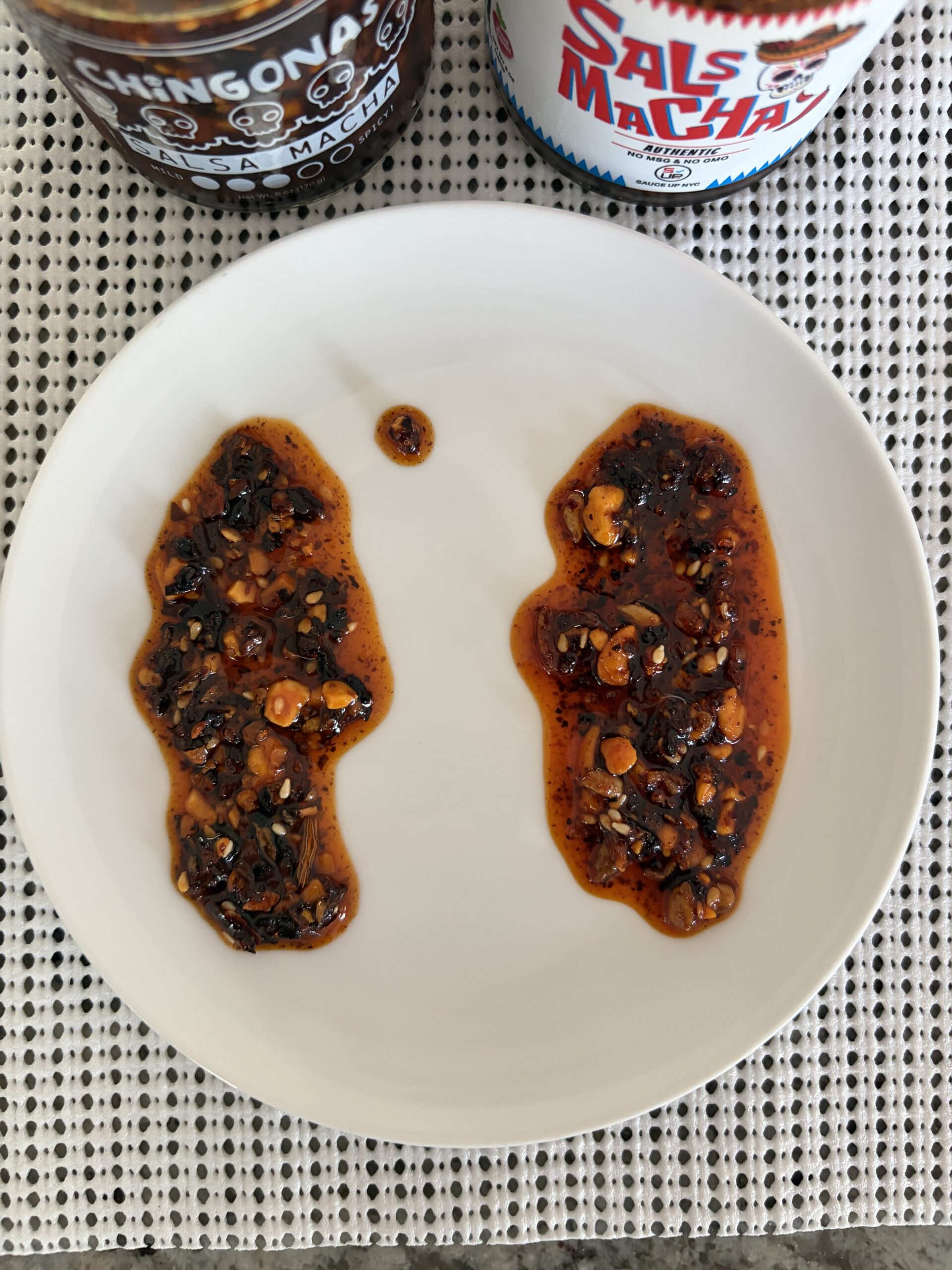
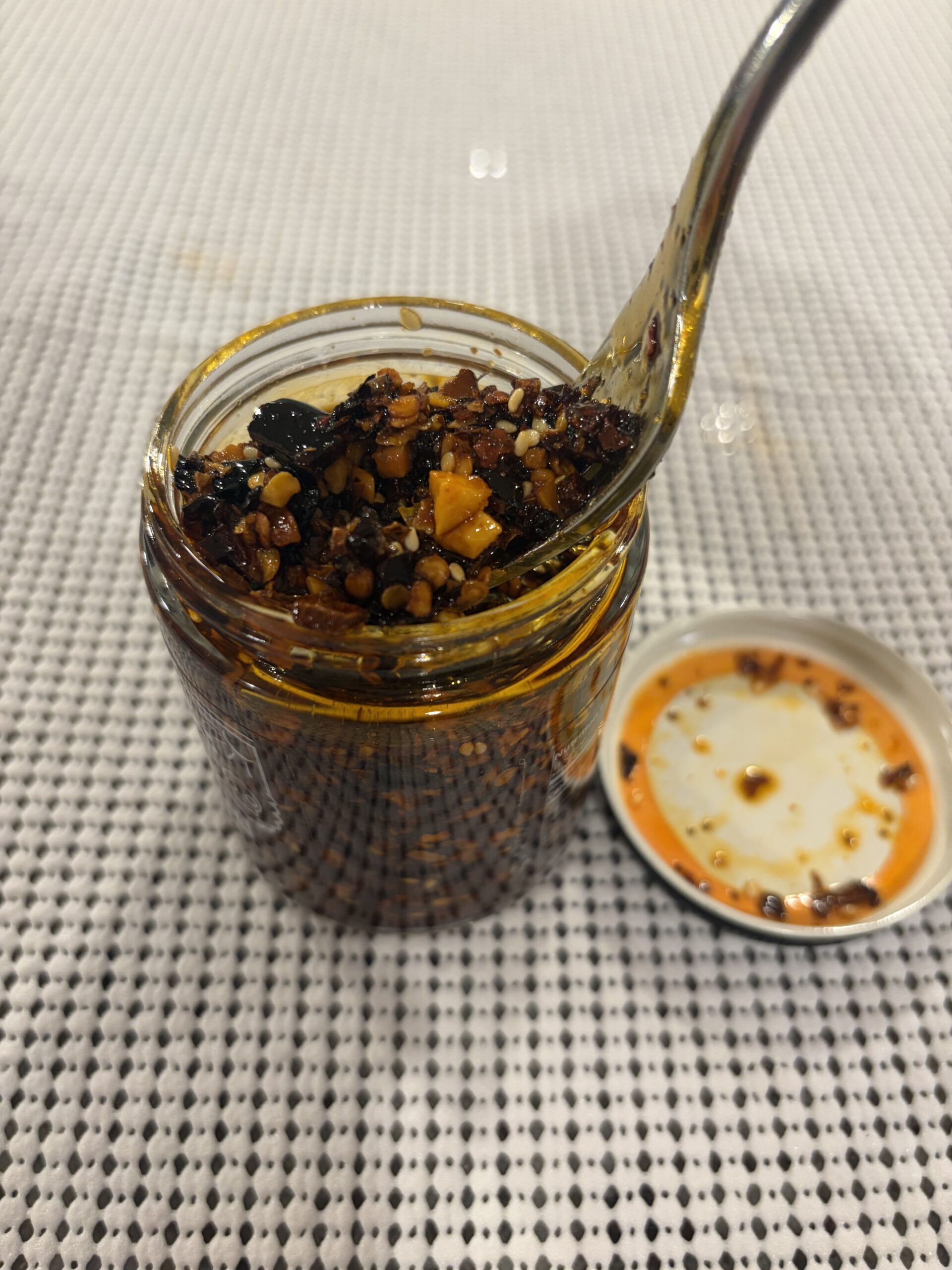
Sauce Up settles at roughly 80% solids — thick enough that the jar feels dense when you pick it up. Stirs up very thick, which I partially attribute to the coconut palm sugar acting as a binder. Big chunks of peanuts, visible sesame seeds, identifiable pieces of shallot and chili. The texture is what I’d call balanced — seeds provide crunch, the oil is present but not excessive, and the overall mouthfeel has weight to it. As you chew through the seeds, the texture transitions from crunchy to slightly pasty, but that’s normal for a seed-heavy macha. It doesn’t fall apart.
CHiNGONAs settles at about 70% — still good, not oil-heavy. When you open the jar, there’s stuff floating in the oil immediately, which is a positive sign. The grind is more uniform than Sauce Up’s — peanuts, chilies, and seeds are all ground to roughly the same particle size. That gives you consistent crunch on every forkful, which is nice. The fork crunches audibly while stirring, which tells you the density is real. But despite the 70% settlement, it mixes up oilier than Sauce Up does. You can still load a fork, but the texture is more oil-carried than solid-carried.
Neither jar has a texture problem. Both deliver crunch. The difference is in the character of that crunch. Sauce Up’s is varied (different-sized pieces, different ingredients creating different textures), while CHiNGONAs’ is uniform (everything ground to a similar size, consistent throughout). I prefer the variety, but this is an honest preference call, not a quality gap.
Which One for What
| Use Case | Winner | Why |
|---|---|---|
| Everyday condiment | Sauce Up | Balanced — works on everything without dominating |
| Bold cumin-forward kick | CHiNGONAs | If you love cumin, the dominance is a feature |
| Tacos / Mexican dishes | Tie | Both bridge the cultural gap — pick your flavor preference |
| Asian noodles / rice | Sauce Up | Shiitake and shallot depth works better with Asian flavors |
| Gift for an adventurous eater | Sauce Up | EXCELLENT tier, interesting story, complex profile |
| Budget pick | Sauce Up | $14.99 vs. $16.49 for 6 oz — Sauce Up costs less |
I want to be fair to CHiNGONAs here. If cumin is your thing — if you’re the person who doubles the cumin in every recipe — this jar might actually land differently for you than it did for me. The cumin quality itself is good. It’s not harsh or stale. It’s just louder than everything else. Some people will call that a strength, and I can respect that even though it didn’t work for me.
Final Verdict
Same concept, different execution. Balance is what separates EXCELLENT from borderline AVERAGE.
Sauce Up’s Salsa Macha proves the fusion concept works when every ingredient gets its moment. Four named chilies, ground shiitake, fried shallot and garlic, coconut palm sugar, cumin — all present, all contributing, none dominating. It’s a whole-jar product in the best sense. I like this better than Sauce Up’s own chili crisps, and that says something about how well the salsa macha format suits their ingredient philosophy.
CHiNGONAs’ Salsa Macha proves that one dominant ingredient can flatten a promising jar. The concept is interesting. The aroma is one of the best I’ve tested. But cumin overpowers the dried chilies, the mushroom, and the garlic — and what you’re left with is a cumin jar with supporting characters instead of an ensemble cast. At $2.75 per ounce, that’s a hard value proposition when the more balanced jar costs less.
Sauce Up: EXCELLENT. Buy it on Amazon.
CHiNGONAs: GREAT. Buy it on Amazon if cumin is your love language.
- Best Chili Crisp: Everything We’ve Tested — See where every jar ranks.
- What to Eat with Chili Crisp — A field guide to pairing by jar style.
- How to Build a Chili Crisp Starter Kit — Three jars, no overlap.
Frequently Asked Questions
Is Sauce Up salsa macha better than CHiNGONAs?
Yes. Sauce Up earned EXCELLENT for its balanced flavor — four named chilies, ground shiitake, and fried shallots all contribute without any single ingredient dominating. CHiNGONAs landed at GREAT (borderline AVERAGE) because cumin overpowers the other ingredients despite an impressive ingredient list.
What is fusion salsa macha?
Fusion salsa macha combines the traditional Mexican base — peanuts, dried chilies, seeds, oil — with ingredients from the Asian chili crisp tradition, like fried shallots, shiitake mushroom, garlic, and ginger. Both Sauce Up and CHiNGONAs are examples of this approach, and both brands also make Asian-style chili crisps.
Are Sauce Up and CHiNGONAs actual salsa machas or chili crisps?
Structurally, both are salsa machas — peanuts, dried chilies, and seeds form the base, and the texture is nut-and-seed-forward rather than fried-aromatic-forward. The Asian ingredients (shallots, mushroom, garlic, ginger) add depth without changing the category.
Which is spicier, Sauce Up or CHiNGONAs salsa macha?
Neither is spicy. Both land in the mild range — Sauce Up at roughly 1-2 out of 5, CHiNGONAs at 1 out of 5. CHiNGONAs’ label claims 3 out of 5 heat, but the actual experience is much milder than that.
Is CHiNGONAs salsa macha worth buying?
At $16.49 for 6 oz ($2.75/oz), it’s a GREAT-tier jar, though still pricey — especially since Sauce Up costs less and earned a higher tier. That said, if you love cumin, CHiNGONAs’ cumin-forward profile might appeal to you more than it did to me. The aroma alone is one of the best I’ve tested.
What’s the best fusion salsa macha?
Sauce Up. It’s the only EXCELLENT-tier salsa macha tested at Flavor Index Lab, and the fusion approach — shiitake, fried shallot, four named dried chilies — is what gives it that tier. The Asian ingredients add genuine depth without muddling the salsa macha structure.