
This post contains affiliate links. I may earn a small commission if you buy through them — at no extra cost to you. My scores are never influenced by this.
The short version: This Momofuku Chili Crunch batch comparison tests two jars — same ingredient list, different production runs — and the newer yellow lid is the better jar. Less sweetness, more chili, more sesame. Both earn GOOD, but the new batch earns it more convincingly. If you see the yellow lid with the Momofuku logo on the shelf, grab that one. Buy it on Amazon.
Why a Batch Comparison
This is a first for Flavor Index Lab — a Momofuku Chili Crunch batch comparison, testing the same product from two different production runs side by side. I reviewed the original batch (white lid) and came away thinking the coconut sugar ran the show. Then I bought a newer jar with a yellow-orange lid and the Momofuku logo printed on it. Same ingredient list, same order. No recipe change claimed. But when I re-reviewed the new batch, it tasted different — less sweet, more chili, more of what the label always promised.
So I opened both jars at the same time and tasted them back to back. If you are new to chili crisp and want to understand the category first, start there. This post is for anyone who has tried Momofuku before and wants to know whether the newer jar is worth buying again.
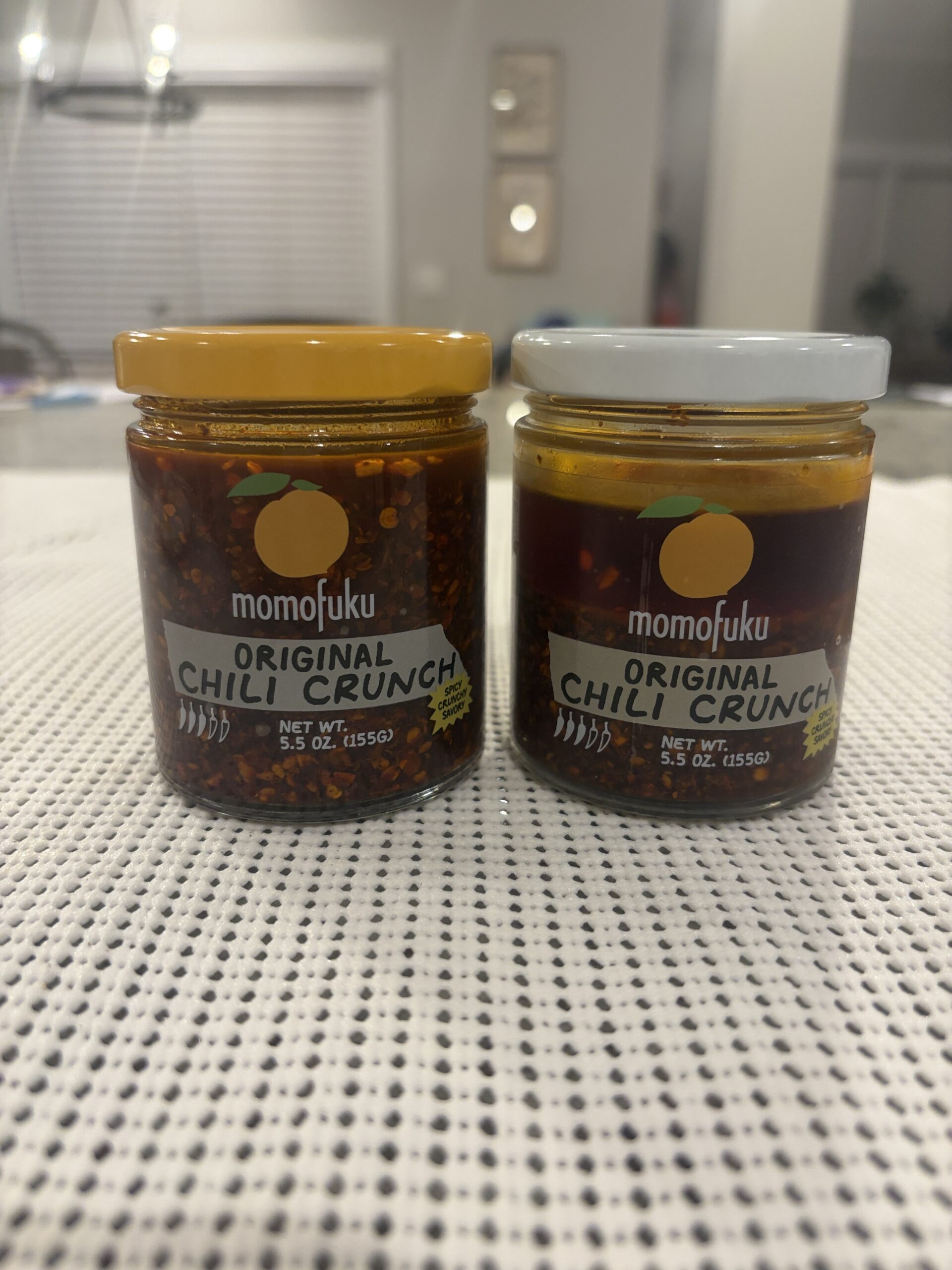
What Changed (and What Didn’t)
| Detail | White Lid (Previous) | Yellow Lid (New Batch) |
|---|---|---|
| Lid | Plain white | Yellow/orange with Momofuku logo |
| Ingredients | Identical — grapeseed oil, puya chili, coconut sugar, sesame seed, onion, garlic, mushroom powder, chile de árbol, japones chili, salt, red pepper, shallot, yeast extract, seaweed | |
| Settlement | Same pattern — multiple layers of sediment, ~70% solids | |
| Consistency | Very loose paste, syrupy — both jars identical on texture | |
| Tier | GOOD | GOOD |
The ingredient list has not changed. The order has not changed. Momofuku has not announced a reformulation. Both jars stir up the same way — that thick, syrupy paste that is more homogeneous sludge than distinct oil-and-bits. Both show the same layered sediment pattern through the glass. Whatever happened between these two batches, it is not on the label.
Aroma: The Same Nose, Different Volume
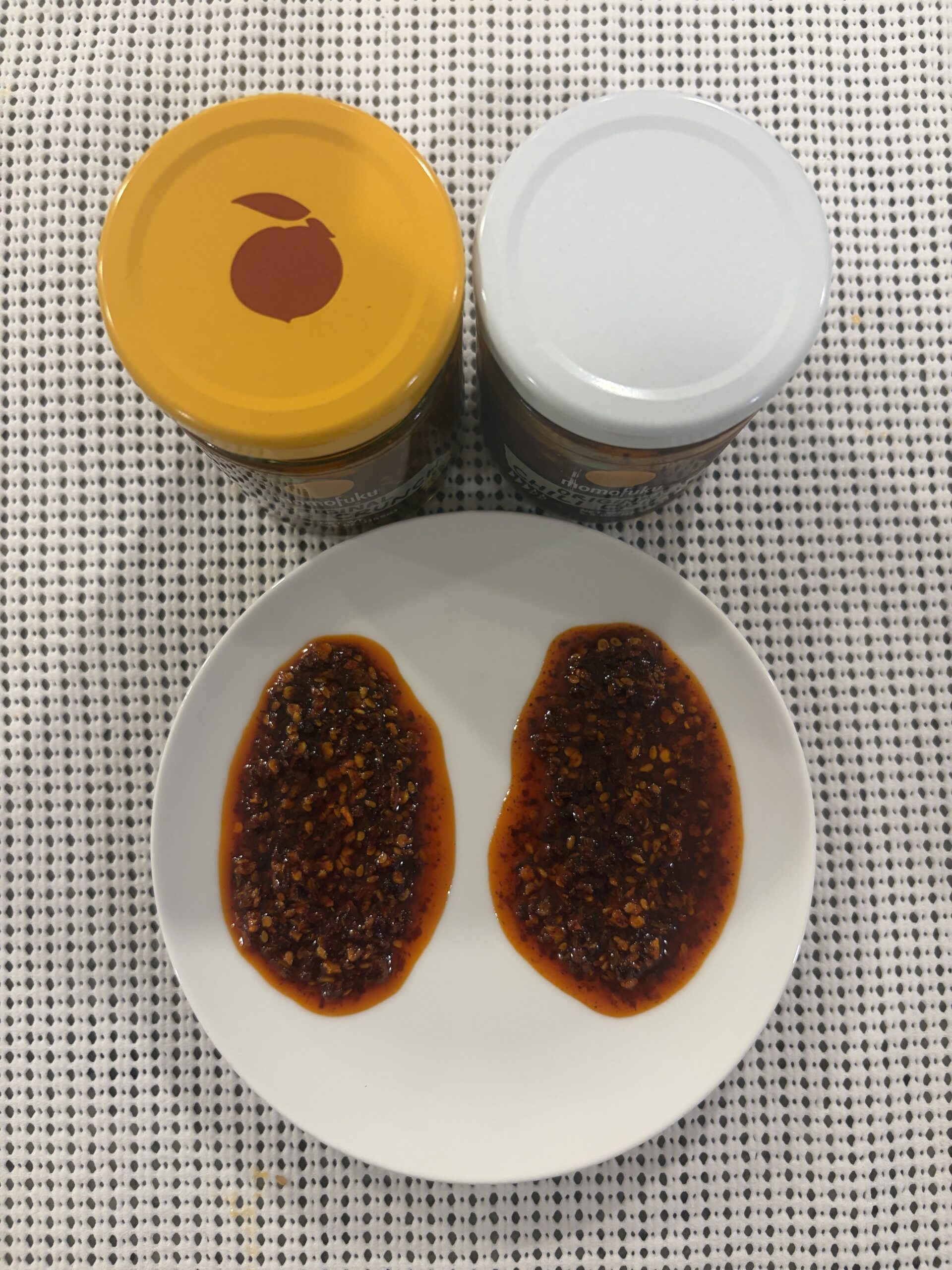
Both jars smell like honey butter. That has not changed. Open either one and you get that unmistakable sweet, rich, buttery aroma that has nothing to do with what you expect from a jar of chili crunch. I covered this in the original review — it is the grapeseed oil and coconut sugar working together, and it is the first thing anyone will notice about this product.
The difference only shows up side by side. The white lid jar is 100% honey butter on the nose — nothing else gets through. The yellow lid jar still leads with honey butter, but there is chili on the edges now. A whisper of pepper heat in the background, maybe a touch of that seaweed umami riding along underneath. The standalone re-review did not reveal this as clearly. Putting them next to each other is what brought it out.
Flavor: Where the Batch Actually Matters
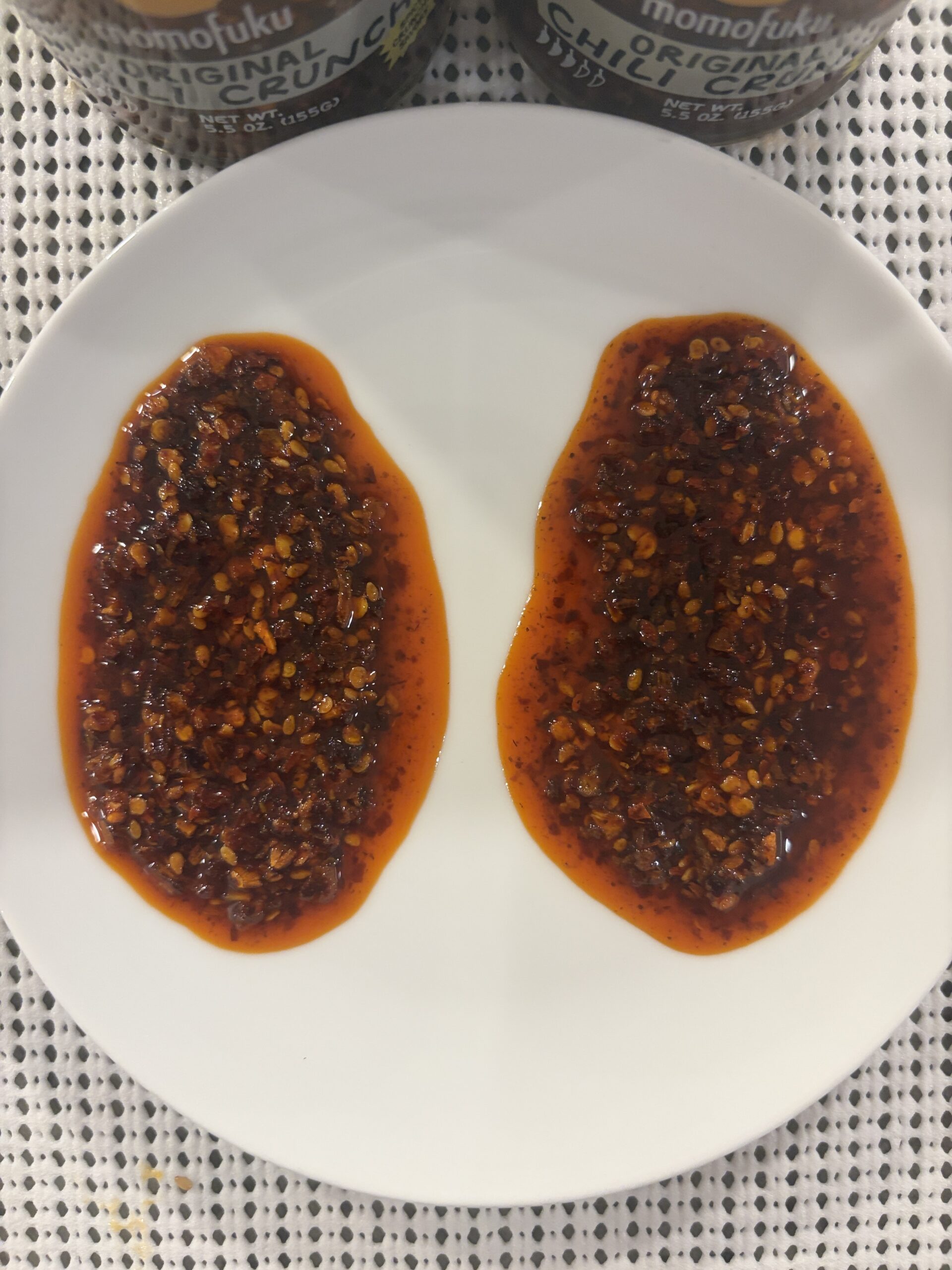
White Lid (Previous Batch)
Sweet right out of the gate. Then chili flavor. Some garlic. Heat arrives, and it is real — puya and árbol doing their job. A lot of seeds. But the sweetness circles back. Chewing on the seeds, the coconut sugar returns and bookends the whole experience. The ingredient list promises complexity. The jar delivers sweetness with chili as a supporting actor.
Yellow Lid (New Batch)
More seed crunch right away — sesame hits first, not sugar. Some umami from the seaweed and yeast extract, which I did not pick up this clearly in the white lid jar. Not a lot of garlic or onion on their own, but the chili comes through with real presence. The heat builds. And here is the key difference: you can taste all the ingredients better. The coconut sugar is still there, but it is not doing all the talking anymore.
What Happened
I do not think Momofuku changed the recipe. Fresh ingredients make exact replication difficult — sometimes the chilies come in hotter, sometimes the garlic is more bitter, sometimes the sugar batch is more or less aggressive. Something shifted in this production run. Either the coconut sugar pulled back slightly, or the other ingredients — the puya, the sesame, the seaweed — simply came in stronger than last time. The result is a jar that delivers on what the ingredient list always suggested it could.
That is the thing about batch variation in products with fresh ingredients. It is not a flaw — it is the reality of food that is not engineered in a lab. But it does mean two jars with the same label can taste measurably different. This comparison proved that.
Who Should Care About Batch Differences
If you tried Momofuku Chili Crunch once and thought it was too sweet — the newer batch might change your mind. The honey butter nose is still the headline, but the secondary seasonings actually register now. Mushroom powder, seaweed, yeast extract — they were always on the label, but in the white lid batch they were passengers. In the yellow lid batch, they are doing real work.
If you already like this product, the new batch is more of what you signed up for. More chili character, more seed crunch, less sugar dominance. Same jar, better execution.
How to tell which batch you are looking at in the store: the yellow-orange lid with the Momofuku logo printed directly on it is the newer production run. The older batch had a plain white lid. If both are on the shelf, reach for the yellow one.
Best Uses for This Jar
Both batches point toward the same food pairings — the honey butter aroma drives it. Fried chicken, Chick-fil-A sandwiches, anything breaded and golden. Biscuits with bacon. Southern comfort food that wants a sweet-heat kick. I have been reaching for this jar 2-3 times a week, always on fried food. That is its lane, and it knows it.
The new batch is slightly more versatile because the heat comes through cleaner without the sugar sitting on top of everything. I would try it on eggs now, which I would not have said about the white lid version. But this is still not an all-purpose condiment. It has a personality, and that personality is sweet heat on comfort food.
How Both Compare to Lao Gan Ma
Neither Momofuku batch is playing the same game as Lao Gan Ma. LGM is savory-forward, fermented-bean depth, neutral oil that stays out of the way. Momofuku is sweetness-forward, coconut sugar and grapeseed oil creating that distinctive honey butter profile. LGM separates into distinct oil and bits. Momofuku blends into a syrupy paste. They are different products solving different problems.
At $2.18/oz (yellow lid) versus roughly $0.60/oz for LGM, you are paying more than triple per ounce. The premium buys you a more interesting ingredient list and a narrower use case. Whether that trade is worth it depends entirely on whether you reach for sweet heat on fried food regularly enough to justify a dedicated jar.
Final Verdict
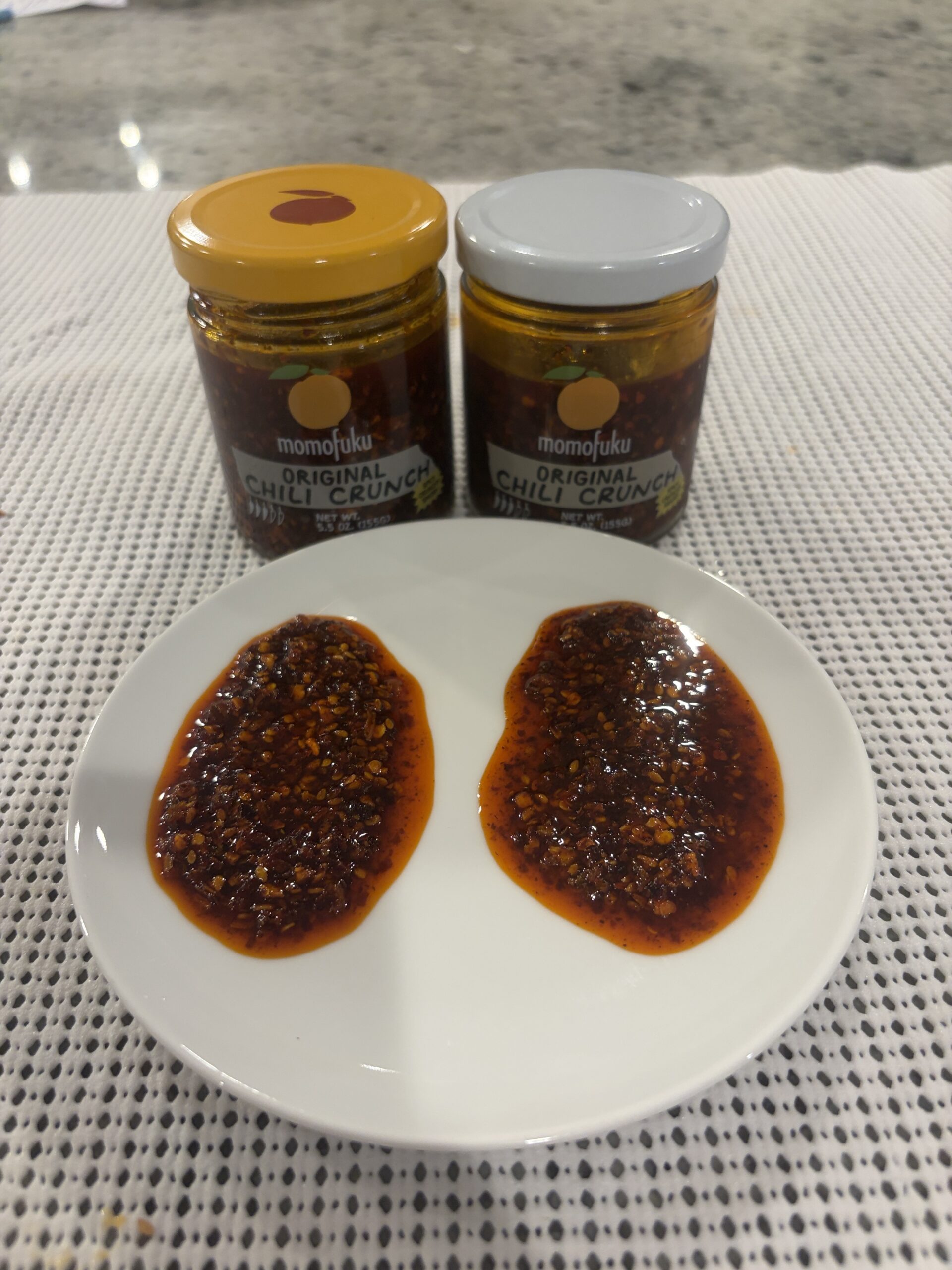
Both batches: GOOD.
The tier does not change — both jars earn GOOD. But the new batch earns it with less effort. The sweetness backed off just enough to let the chili, sesame, and umami do real work. The grapeseed oil still runs the honey butter show, and the coconut sugar is still the third ingredient doing lead-vocal work. But this is the version of Momofuku Chili Crunch I wanted the first time around.
If you see the yellow lid on the shelf, grab it. If you tried the white lid and were not impressed, give the new batch a chance. Same label, same ingredient order — better jar.
Buy Momofuku Chili Crunch on Amazon.
- Best Chili Crisp: Everything We’ve Tested — See where every jar ranks.
- What to Eat with Chili Crisp — A field guide to pairing by jar style.
- How to Build a Chili Crisp Starter Kit — Three jars, no overlap.
Frequently Asked Questions
Did Momofuku change the Chili Crunch recipe?
No. The ingredient list and order are identical across both batches — grapeseed oil, puya chili, coconut sugar, sesame seed, and the rest. The flavor differences come from natural batch variation in fresh ingredients, not a reformulation.
How can I tell which Momofuku Chili Crunch batch I have?
The older batch has a plain white lid. The newer batch has a yellow-orange lid with the Momofuku logo printed on it. If both are on the shelf, the yellow lid is the newer production run.
Is the new Momofuku Chili Crunch batch better?
Yes. The newer batch (yellow lid) is less sweet and lets the chili, sesame, and umami come through more clearly. Both earn a GOOD tier, but the new batch is more balanced and delivers more of what the ingredient list promises.
What does Momofuku Chili Crunch taste like?
Both batches lead with a distinctive honey butter aroma from the grapeseed oil and coconut sugar. The flavor is sweet-forward with chili heat building behind it. Three chili types — puya, chile de arbol, and japones — provide the heat. The newer batch has more sesame and umami presence.
What foods go best with Momofuku Chili Crunch?
Fried chicken, breaded sandwiches, biscuits with bacon, and anything golden and crispy. The honey butter profile pairs naturally with southern comfort food. It is less ideal on delicate noodles or steamed dumplings where the sweetness competes.
Is Momofuku Chili Crunch worth the price?
At $11.99 for 5.5 oz ($2.18/oz), it is expensive for the category — more than triple the per-ounce cost of Lao Gan Ma. The ingredient list justifies some of the premium, but the narrow use case (sweet heat on fried food) means you may not reach for it as often as a more versatile jar.
How does Momofuku Chili Crunch compare to Lao Gan Ma?
They solve different problems. Lao Gan Ma is savory-forward with a neutral oil, fermented bean depth, and broad versatility. Momofuku is sweetness-forward with grapeseed oil, coconut sugar, and a syrupy paste consistency. LGM is a condiment workhorse; Momofuku is a flavor accent for specific foods.