
What’s the difference between chili crisp vs chili oil? Grab a spoon. Dip it into a jar of chili crisp, then dip it into a jar of chili oil. Pull both spoons out. That’s the answer.
The chili crisp spoon comes out loaded — bits of fried garlic, chili flakes, maybe sesame seeds or soybeans clinging to the oil. The chili oil spoon comes out clean, trailing a thin red stream back into the jar. One is a condiment built around texture. The other is a condiment built around infusion. They share a shelf and sometimes a brand name — and sometimes the labels use “crisp,” “crunch,” and “oil” interchangeably. That’s fine. The names have never been standardized. But there is a real functional difference between a product built around fried solids and one built around infused oil, and that difference changes how each one works on your food.
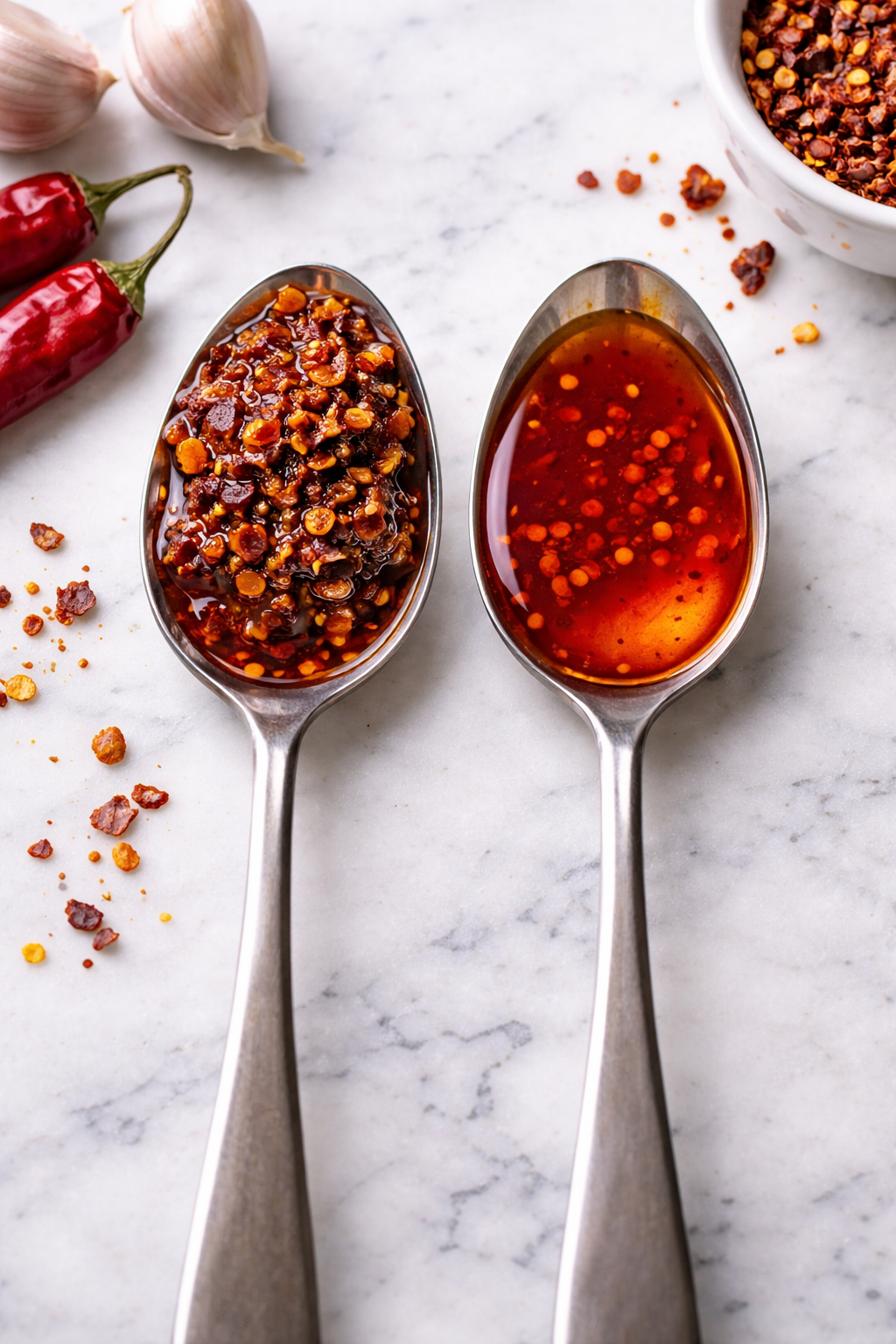
The Spoon Test
This is the fastest way to understand the difference, and it works on any jar regardless of what the label says.
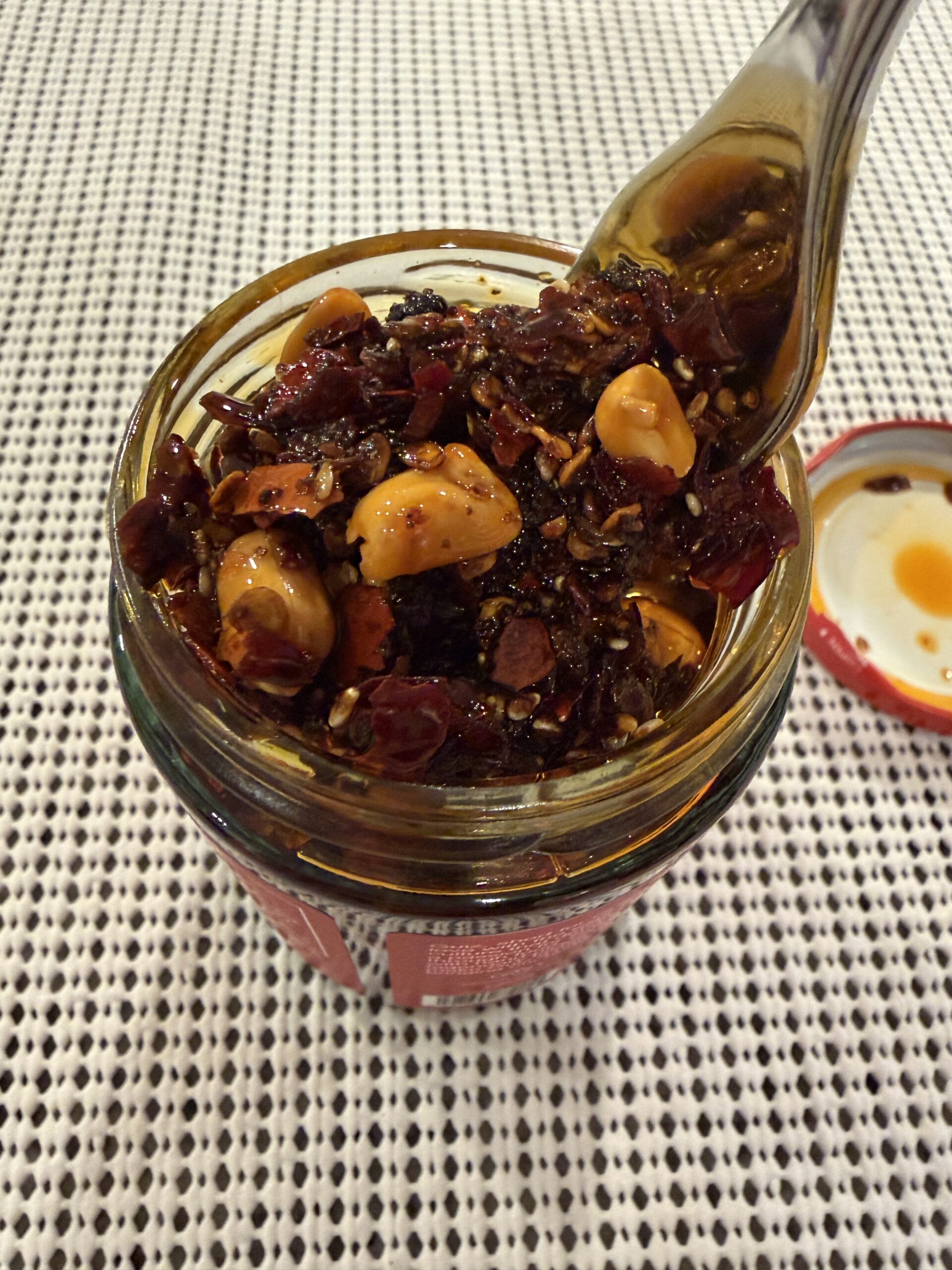
Chili crisp: the spoon catches things. Fried garlic, shallots, chili flakes, seeds — the crispy bits are the entire point. The oil carries them, coats them, delivers heat and flavor around them. But the bits are the star. A good chili crisp has a visible solids layer that dominates the jar — I look for 75% or more solids by volume in the settled jar.
Chili oil: the spoon comes out wet, not loaded. Chili oil is fundamentally an oil product — dried chilies and aromatics steeped in heated oil, transferring color, heat, and flavor into the liquid itself. Some chili oils have sediment at the bottom (chili flakes, peppercorn dust), but if you can pour it like a liquid without anything catching, it’s oil.
Brands use “crisp,” “crunch,” and “oil” interchangeably — the names are not standardized. But if you’re trying to be technical, there is one real dividing line: a product that’s purely oil with no solid bits behaves differently from one loaded with fried solids. Tip the jar. If it flows freely with nothing catching, it’s a true chili oil. If chunks shift and move through the liquid, it’s a crisp or crunch — regardless of what the label says.
Ingredients, Side by Side
| Component | Chili Crisp | Chili Oil |
|---|---|---|
| Base oil | Soybean, rapeseed, sometimes sesame | Same oils, but the oil IS the product |
| Fried solids | Garlic, shallots, chili flakes, soybeans, peanuts, sesame | Minimal or none — maybe chili sediment |
| Texture role | Crunch is primary | No crunch — all liquid |
| Heat source | Chilies in the bits + infused oil | Infused directly into the oil |
| Common additions | MSG, sugar, fermented elements | Sichuan peppercorn, star anise, ginger |
| Primary use | Finishing condiment (spooned on top) | Condiment AND cooking ingredient |
The ingredient list tells you which product you’re holding. If the first few ingredients are oil and then a parade of fried aromatics — garlic, shallots, onion — that’s chili crisp. If it’s oil, dried chilies, and spices with nothing fried, that’s chili oil. Reading the label takes 10 seconds and saves you from buying the wrong thing.
Where They Overlap (and Where They Don’t)
Both work as finishing condiments. A drizzle of chili oil over dumplings does something similar to a spoonful of chili crisp — heat, flavor, visual appeal. The difference is what you’re adding: liquid heat or textured crunch-and-heat.
Only chili oil works well for cooking. You can start a stir-fry with chili oil, sauté aromatics in it, build a dressing from it. Try that with chili crisp and the bits burn. The fried solids are already cooked — putting them in a hot pan pushes them past crispy into scorched. Chili oil handles direct heat because there’s nothing in it to burn.
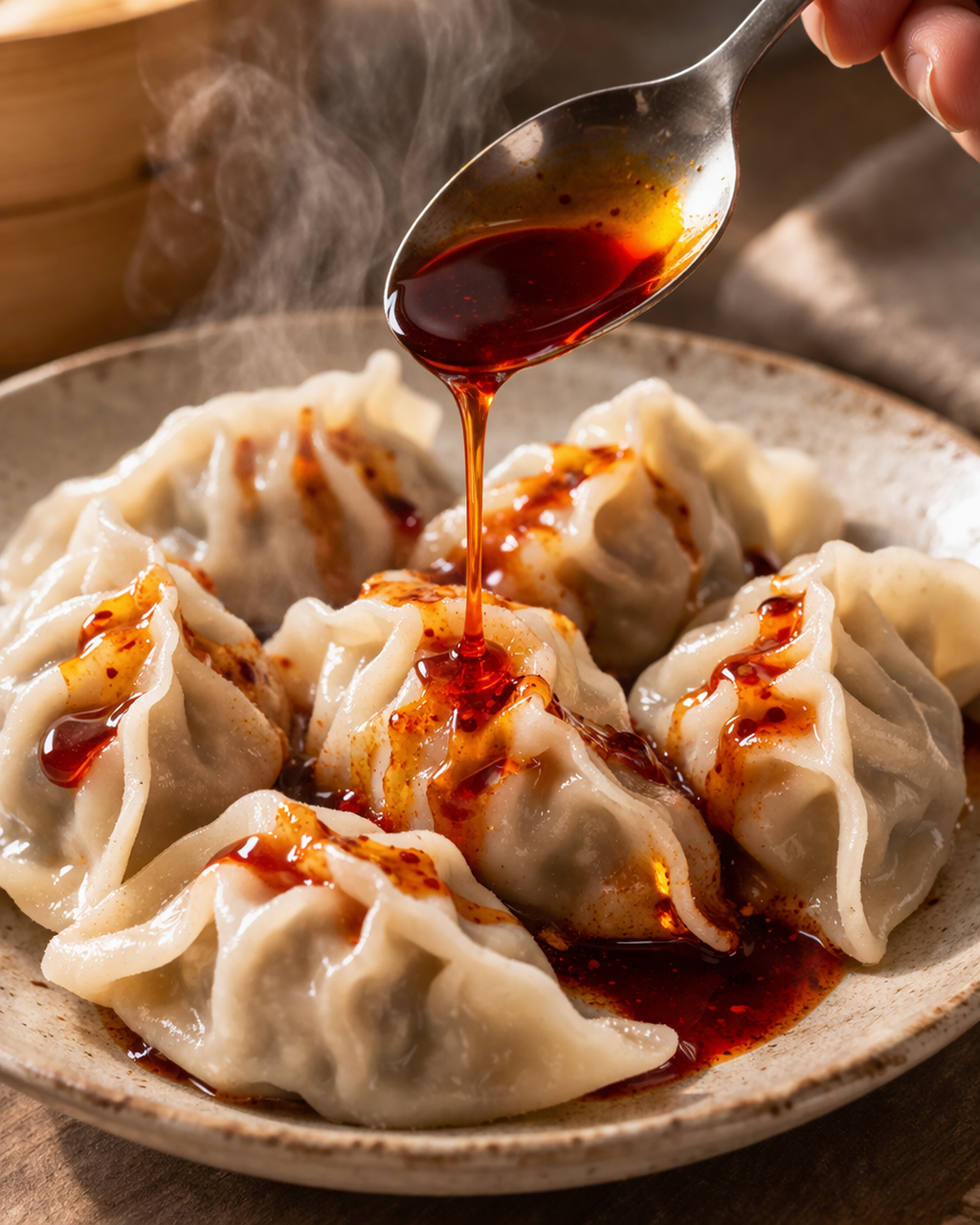
Chili crisp adds a textural dimension chili oil can’t. That crunch on eggs, on rice, on pizza — chili oil doesn’t do that. If texture is part of what you’re after, chili oil will give you heat and flavor but not the bite. This is the trade-off at the core of the distinction.
The “oil layer” in chili crisp is not chili oil. Some people skim the oil off their chili crisp and use it like chili oil. It works in a pinch, but that oil is carrying different flavors — it’s been sitting with fried solids, absorbing garlic and shallot notes. Dedicated chili oil is infused intentionally, with different aromatics and a different balance. They taste related but not identical.
Brands That Blur the Line
Some products straddle the boundary, and the labels don’t always help.
Lao Gan Ma is the perfect example of how little the labels mean. Their Spicy Chili Crisp (red label) is loaded with fried solids. Their Chili Oil with Fermented Soybeans says “oil” on the jar — but open it up and it’s packed with fermented black beans. It’s not oil-dominant at all. Same brand, same shelf space, both full of solids, different names. The labels are interchangeable, and the products prove it.
Momoya Chili Oil sits in an interesting middle ground — labeled as chili oil, Japanese-style (taberu rayu, or “eating chili oil”), with more solids than a pure chili oil but fewer than a full chili crisp. The Japanese chili oil tradition tends toward this hybrid space.
About “chili crunch”: You’ll see this on jars from Momofuku, Trader Joe’s, and others. Is chili crunch different from chili crisp? Not really. There’s no formal definition separating them. Some writers suggest “crunch” implies heavier, chunkier additions — more peanuts, more soybeans — but Lao Gan Ma has all of those and has always called itself a crisp. In practice, “crisp” and “crunch” describe the same category of product: oil-based condiments with substantial fried solids. The names are marketing choices, not technical distinctions. The spoon test works the same on all of them.
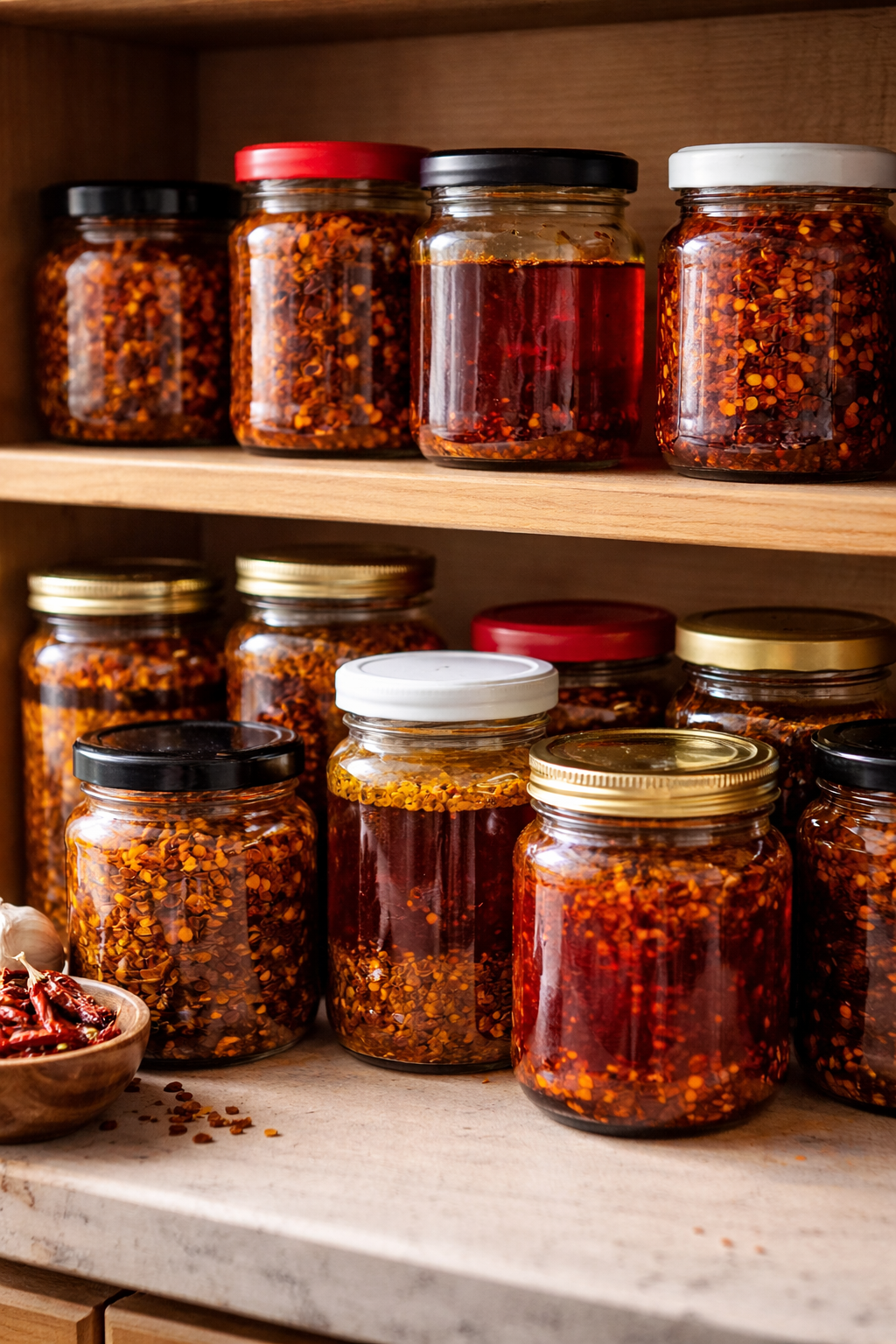
Chili crisp, chili crunch, crispy chili oil, crunchy chili oil, spicy chili crisp — these terms overlap constantly on labels, and none of them are regulated or standardized. Don’t let the name on the jar trip you up. What matters is what’s inside: mostly solids with crunch, or mostly oil with heat. The spoon test sorts every jar regardless of what the label calls it.
Which One Should You Buy?
That depends entirely on what you’re doing with it.
Buy chili crisp if you want something to spoon directly onto food — eggs, rice, noodles, pizza, avocado toast. You want crunch. You want visible bits. You want a condiment that changes the texture of what you’re eating, not just the flavor.
Buy chili oil if you want versatility between cooking and finishing. You’re making dressings, dipping sauces, stir-fries, or drizzling over soups. You want heat and flavor integrated into a dish, not sitting on top of it.
Buy both if you cook regularly and use condiments on finished food. They’re not interchangeable — they’re complementary. I keep both on my shelf at all times. The chili crisp gets spooned onto everything that’s already on the plate. The chili oil gets drizzled into things still on the stove.
For a deeper look at how I evaluate each category, see What Is Chili Crisp, Actually? and What Is Chili Oil? — the definitional posts that anchor each side of this comparison.
Frequently Asked Questions
What is the difference between chili crisp and chili oil?
The core difference is solids. Chili crisp contains substantial fried bits — garlic, shallots, chili flakes, seeds — suspended in flavored oil. Chili oil is primarily infused oil with minimal or no solid pieces. Chili crisp adds texture and crunch to food. Chili oil adds heat and flavor without changing the texture.
Can you use chili oil instead of chili crisp?
For heat and flavor, yes. For texture, no. Chili oil delivers similar spice and aromatic depth but won’t add the crunch that chili crisp provides. If a recipe calls for chili crisp and texture matters (like topping eggs or rice), chili oil is not a direct substitute. For dressings, marinades, or cooking applications, chili oil often works better.
Is Lao Gan Ma chili crisp or chili oil?
Lao Gan Ma makes products labeled as both — but the labels don’t tell you much. The Spicy Chili Crisp (red label) is loaded with fried solids. The Chili Oil with Fermented Soybeans says “oil” on the jar but is packed with fermented black beans — it’s not oil-dominant at all. This is a perfect example of how brands use “crisp” and “oil” interchangeably. Check what’s actually inside rather than trusting the name.
Can you cook with chili crisp?
Chili crisp is primarily a finishing condiment — spooned onto food after cooking. The fried solids burn under direct heat. Chili oil is better for cooking: stir-fries, sautéing, building sauces. You can stir chili crisp into warm dishes off-heat, but it shouldn’t go into a hot pan.
Which is spicier, chili crisp or chili oil?
It depends on the brand, not the category. Some chili oils are extremely hot (concentrated chili infusion). Some chili crisps are mild (more garlic and crunch than heat). The heat level is a product decision, not a category trait. Check the ingredient list for chili types and positions to gauge heat before buying.
Is chili crunch the same as chili crisp?
In practice, yes — there’s no formal definition separating them. ‘Chili crunch’ and ‘chili crisp’ describe the same category: oil-based condiments with substantial fried solids. Some people suggest ‘crunch’ implies heavier, chunkier additions like peanuts or soybeans, but brands use both terms interchangeably. Lao Gan Ma has chunky solids and calls itself a crisp. Momofuku has a similar profile and calls itself a crunch. The names are marketing choices, not technical categories.
Do I need both chili crisp and chili oil?
If you cook regularly and use condiments on finished food, both earn shelf space. Chili crisp goes on plates — eggs, rice, pizza, noodles. Chili oil goes into things — stir-fries, dressings, dipping sauces. They complement each other rather than duplicating each other.
Why do some chili oils have chunks in them?
Because the line between chili oil and chili crisp isn’t always sharp — especially in Chinese and Japanese products where chili crisp evolved from chili oil traditions. Products like Momoya’s taberu rayu (‘eating chili oil’) are labeled as oil but contain fried garlic and onion. Some brands label anything in the chili-and-oil family as ‘chili oil’ regardless of solids content. This is why the spoon test matters more than the label: if the spoon catches things, you’re dealing with a crisp-style product, whatever the jar says.
What is taberu rayu?
Taberu rayu translates to ‘eating chili oil’ — a Japanese adaptation of Chinese chili oil that includes more solid ingredients (fried garlic, onion) than traditional chili oil but typically fewer than a full chili crisp. It sits in the middle ground between the two categories and is part of the broader chili oil family.