
You don’t need 15 jars. You need 3. One for everyday, one for when you want heat, one for something different. This is the chili crisp starter kit I’d build for a friend starting from zero—a curated set designed to show you what the category can do without forcing you to hunt through a dozen products. (If you want the full rankings of every brand I’ve tested, head over to Best Chili Crisp: Every Brand I’ve Tested, Ranked.)
The philosophy is simple: one jar teaches you utility, one teaches you flavor, one teaches you variation. Stack those three jars on your shelf, and you’ve got the foundation.
The Framework: Three Jars, Three Purposes
Chili crisp works everywhere, but not every jar works the same way. The starter kit philosophy divides your shelf into three roles:
Slot 1: The Everyday Jar is affordable, versatile, and something you’ll burn through fast. This is the condiment you reach for without thinking, the one that lives in your fridge door.
Slot 2: The Statement Jar shows what premium chili crisp can actually do—better ingredients, more complexity, the kind of jar that makes you understand why people have strong opinions about this stuff.
Slot 3: The Wildcard expands your palate. A different style, a different flavor philosophy, something that proves chili crisp isn’t just a single thing.
Master these three slots, and you’re ready to build from there.
Slot 1: The Everyday Jar — Lao Gan Ma Spicy Chili Crisp
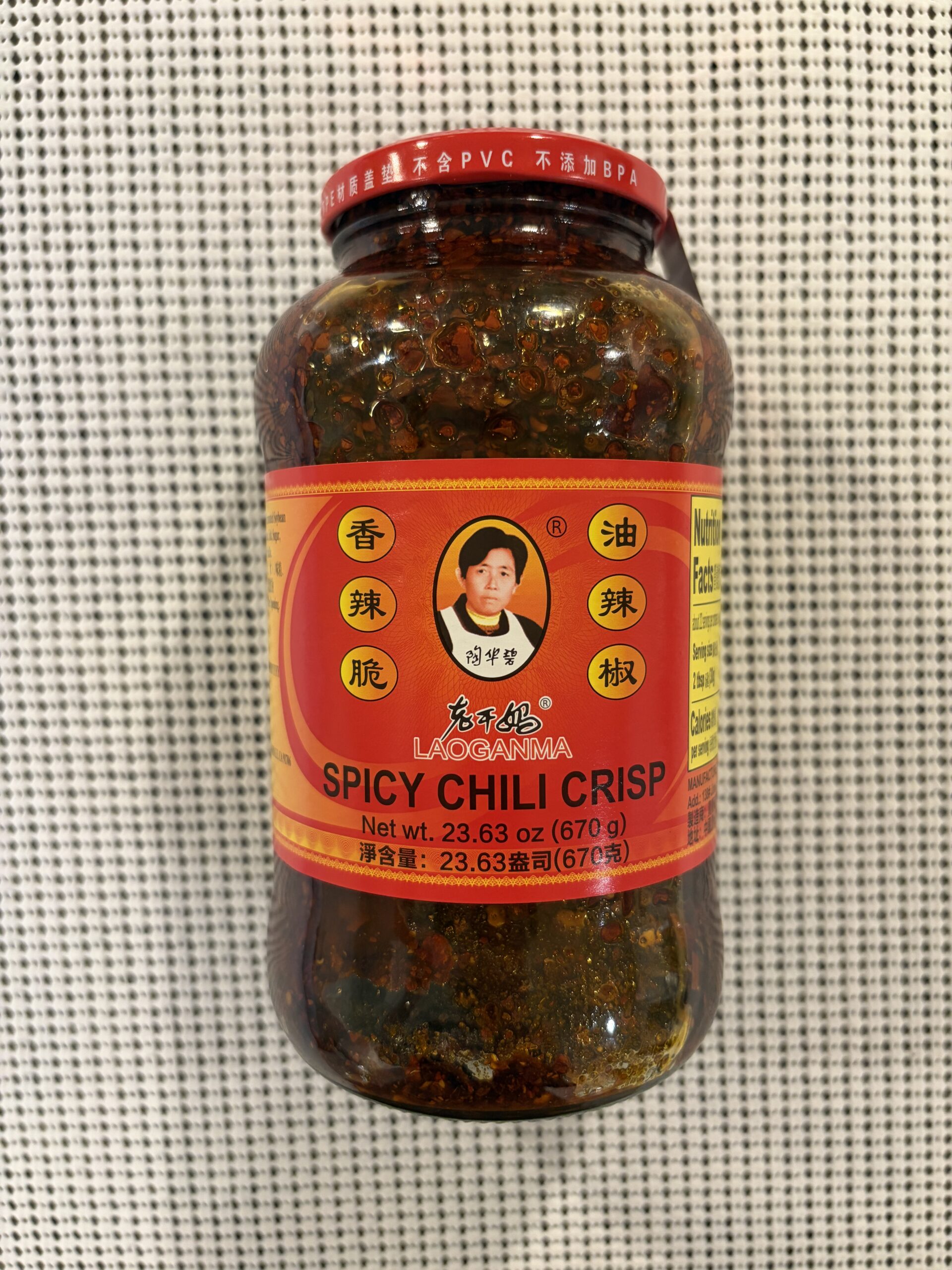
Price: ~$3.00 for 7.41 oz (~$0.40/oz)
Heat Level: Medium
Key Ingredients: Chili, soybeans, garlic, salt
Tier: Good
Review: Read the full review
This is the workhorse. Dense solids, medium heat, works on literally everything. The soybean oil isn’t exciting from a flavor perspective, and the jar doesn’t have the complexity of something like GUIZ, but the price-to-utility ratio is unmatched. You’ll burn through this faster than any other jar.
First things to put it on: eggs, instant ramen, plain rice. The solids cling to hot food, the oil distributes the heat evenly, and the whole experience costs less than a coffee. This jar teaches you the baseline—it’s your reference point for everything else you’ll try.
Alternative: If you want an olive oil base and more Western-familiar flavors, Trader Joe’s Chili Onion Crunch ($10.75 for 6 oz) fills this slot well, though it costs more per ounce.
Slot 2: The Statement Jar — GUIZ Chili Crisp (Original)
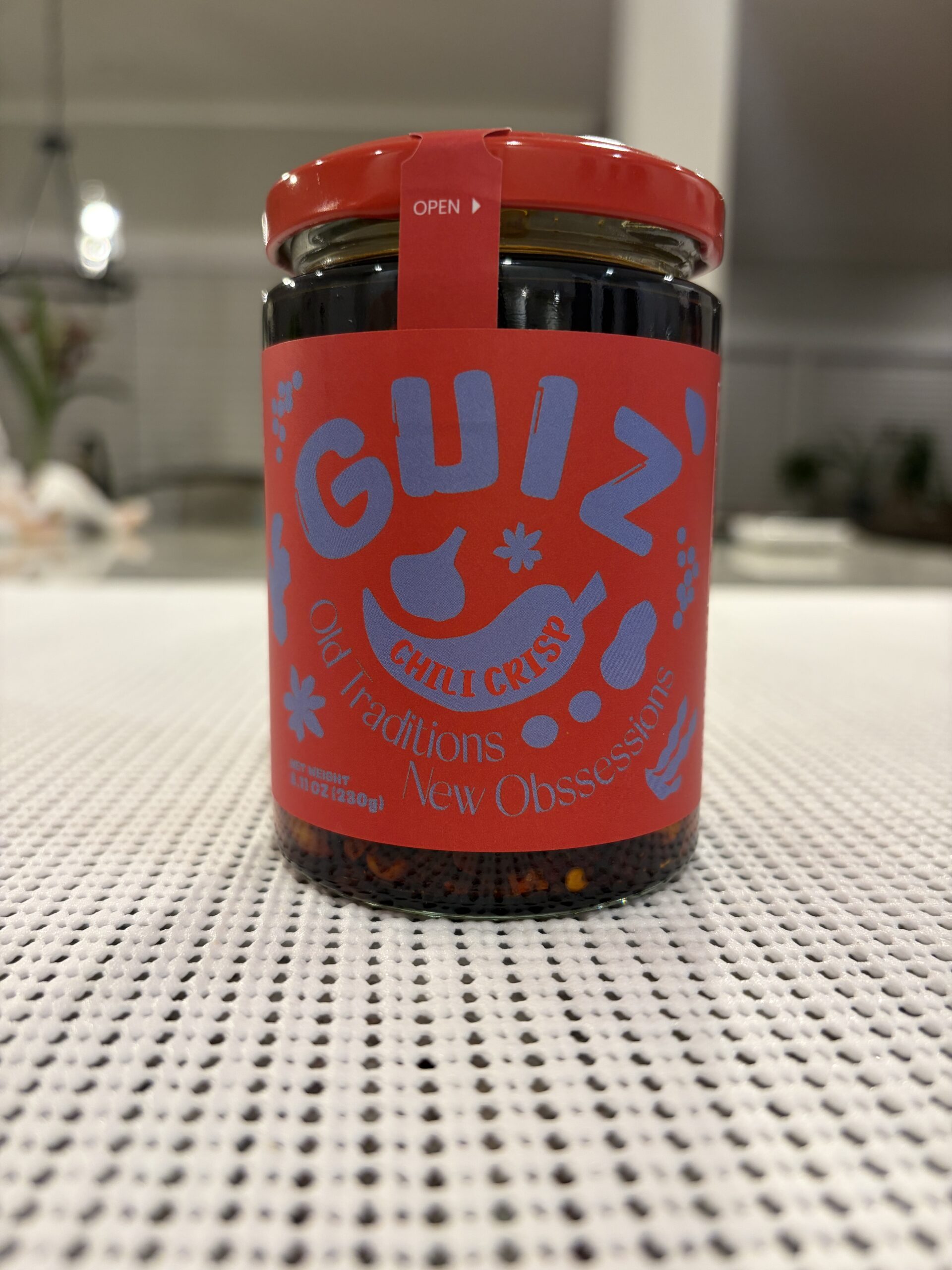
Price: $11.98 for 8.11 oz (~$1.48/oz)
Heat Level: Hot
Key Ingredients: Chili, peanuts, sesame seeds, Sichuan peppercorn, garlic
Tier: Excellent
Review: Read the full review
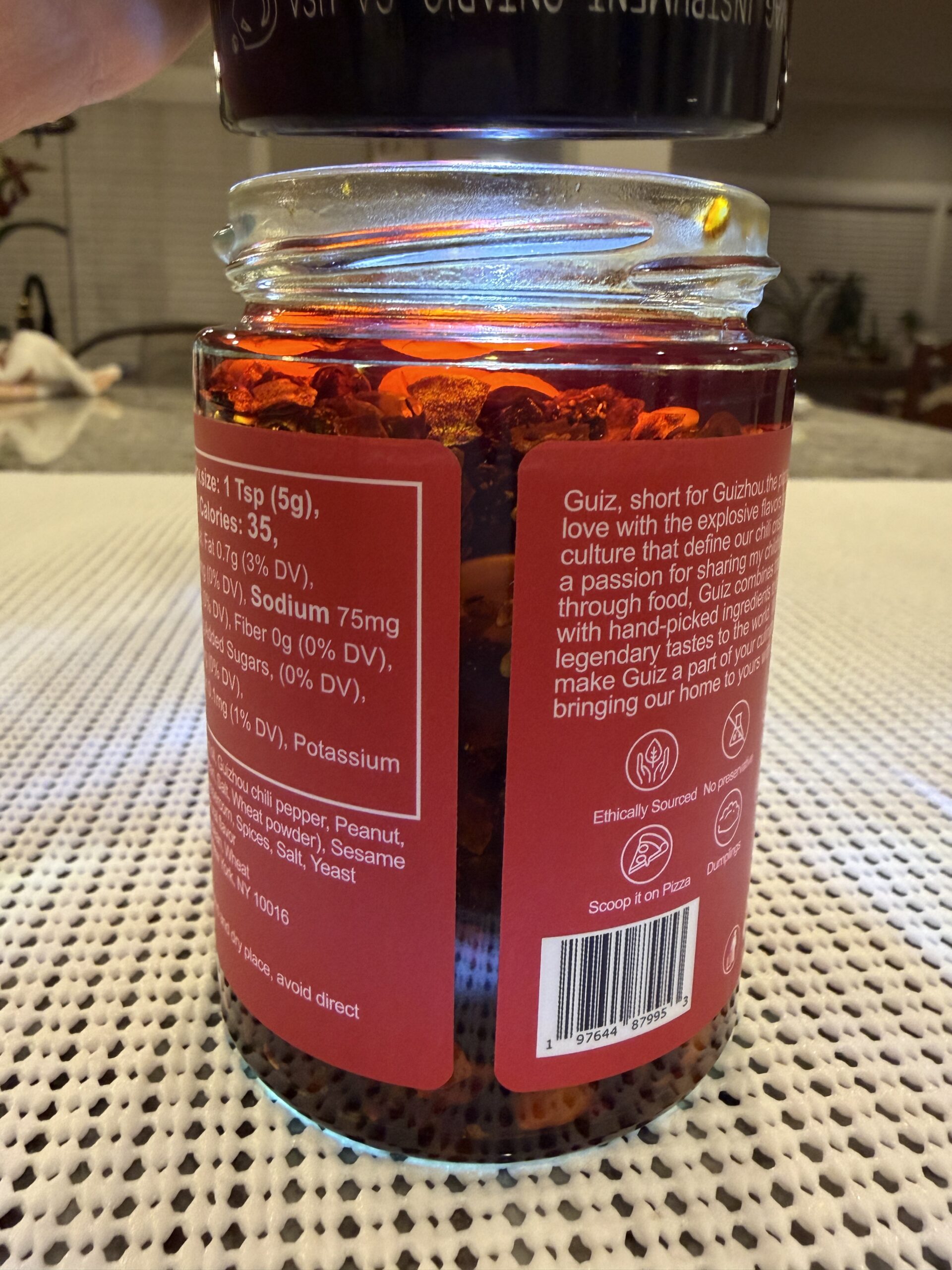
This is the only EXCELLENT-tier jar I’ve tested. Peanuts, sesame seeds, Sichuan peppercorn—layers that unfold over 30 seconds in your mouth. The oil does flavor work on its own; this isn’t just oil with crunch tacked on. It’s a whole-jar concept.
This is the jar that makes you understand why chili crisp has a following. Put it on pizza, dumplings, salads, fried rice, scrambled eggs, avocado toast, ramen—anywhere you’d expect it to work, and a few places where it surprises you. The Sichuan peppercorn creates that subtle numbing sensation (numbing, not heat) that keeps you coming back for another spoonful.
It’s pricier than Lao Gan Ma, but the quality gap is real, and the jar lasts longer because you use less of it. When you’re down to this jar on your shelf, you understand the difference between a condiment and an ingredient.
Alternative: If you want more numbing Sichuan heat and can handle serious spice, Fly By Jing Xtra Spicy ($15 for 6 oz) earns a Great tier and delivers aggressive Sichuan peppercorn presence.
Slot 3: The Wildcard — S&B Crunchy Garlic (Taberu Rayu)
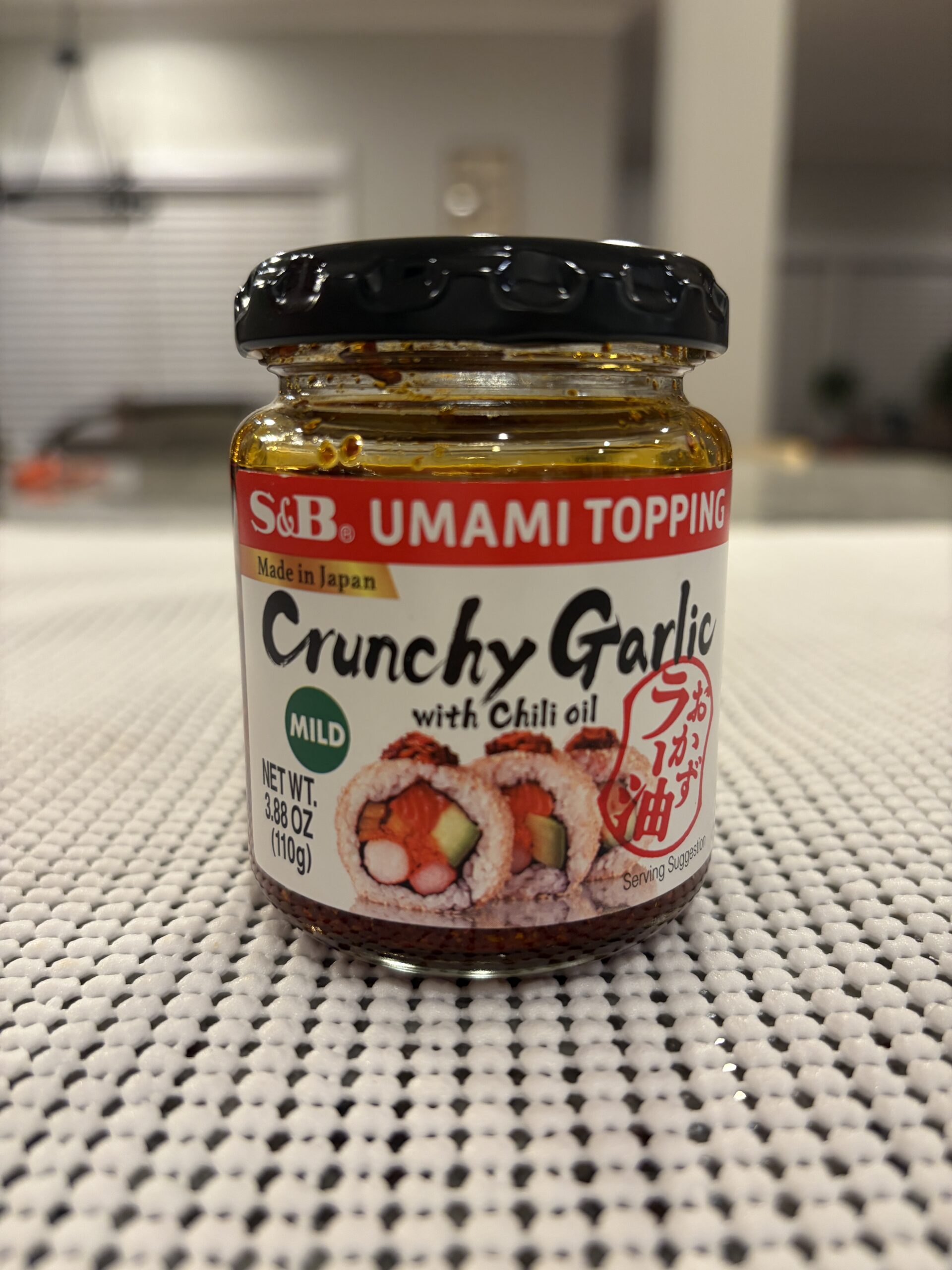
Price: $9.58 for 3.88 oz
Heat Level: Mild
Key Ingredients: Garlic, chili, sesame seeds, soy, mirin
Tier: Great
Review: Read the full review
Japanese taberu rayu style. 90% crispy bits, mild heat, garlic-forward. Completely different flavor DNA from the Sichuan jars in Slots 1 and 2. This proves chili crisp isn’t just a Chinese condiment—it’s a technique that works across cuisines.
Put it on ramen (essential), gyoza, onigiri, or just plain rice with a fried egg. The crunch factor alone earns its spot. You’re not getting heat from this jar; you’re getting textural contrast and savory garlic depth. It’s the mildest jar of the three, which is exactly why it deserves a spot.
Buy S&B Crunchy Garlic on Amazon
Alternative: If you want to stay in the Sichuan lane but want deep umami instead of pure heat, GUIZ Black Bean ($11.98 for 8.11 oz) uses fermented black beans for complexity and earns a Great tier.
What to Skip as a Beginner
A few things not to start with, even if they’re famous or beautiful:
Don’t start with expensive, oil-heavy jars. Some premium brands (like Fly By Jing Original) are 50% oil by volume—they’re designed for people who already understand what they want from chili crisp. As a beginner, you need the solids to teach you the flavor profile.
Don’t start with dry chili crisp. Products like Real Naturals sell “dry” chili crisp—more crunch, less oil. It’s a niche product for a specific use case. Start with traditional styles first.
Don’t start with filler crunches. Avoid jars where the crunch comes from soybeans and fava beans instead of real aromatics (garlic, sesame, peanuts). You want to taste the crunch, not just feel it.
Don’t start with SKIP-tier products. Some famous brands earned SKIP in testing. Don’t let brand recognition override the evidence. Read the full rankings before you buy.
Where to Go From Here
Once you’ve worked through your first three jars, you’ll know what you like. Expand from there. Want more heat? browse Sichuan jars with aggressive peppercorn presence. Want more crunch? Try Japanese taberu rayu variants. Want something between Sichuan and Japanese? I’m testing more fusion products.
For the full rankings of every brand I’ve tested, head to Best Chili Crisp: Every Brand I’ve Tested, Ranked. Browse the Database to browse by heat level, region, or price. And watch for our upcoming guides on regional styles, seasonings and ingredients, and how to read a chili crisp label.
Frequently Asked Questions
What chili crisp should I try first?
If you’ve never tried chili crisp, start with Lao Gan Ma. It’s under $4, available everywhere, and gives you a solid baseline for the category. From there, GUIZ Original shows you what a premium jar can do.
What’s a good beginner chili crisp?
Trader Joe’s Chili Onion Crunch and Lao Gan Ma are both approachable. TJ’s uses olive oil and familiar Western flavors. LGM is the traditional Sichuan entry point at an unbeatable price.
How many chili crisps do I need?
Three covers the fundamentals: an everyday jar, a premium statement jar, and a wildcard from a different style. Most people burn through the everyday jar fastest and replace it monthly.
What’s the most popular chili crisp?
Lao Gan Ma is the global volume leader—it essentially created the commercial category. In the US premium market, Fly By Jing and Momofuku have the most brand recognition, though neither earned the highest tier in testing.
Can I use chili crisp on everything?
Almost. It works on eggs, rice, noodles, pizza, avocado toast, soups, sandwiches, roasted vegetables, and more. The exceptions: delicate fish, most desserts, and anything where you don’t want oil. Definitely don’t put it on ice cream.
What’s the cheapest good chili crisp?
Lao Gan Ma at ~$0.40/oz is the clear value leader. It earned a Good tier and works as an all-purpose condiment. Trader Joe’s at ~$1.79/oz is the next affordable option with a different flavor profile.
Is expensive chili crisp worth it?
Sometimes. GUIZ Original at ~$1.48/oz earned Excellent and uses quality ingredients (peanuts, sesame, real Sichuan peppercorn). But Fly By Jing Original at ~$3.00/oz earned only Average—price doesn’t guarantee quality. Read the label, not the price tag.
What’s the difference between Chinese and Japanese chili crisp?
Chinese (Sichuan) style uses chili flakes, Sichuan peppercorn, and fermented elements for numbing heat and depth. Japanese taberu rayu is garlic-forward, milder, crunchier, and designed more as a topping than a condiment. Both are worth having.