
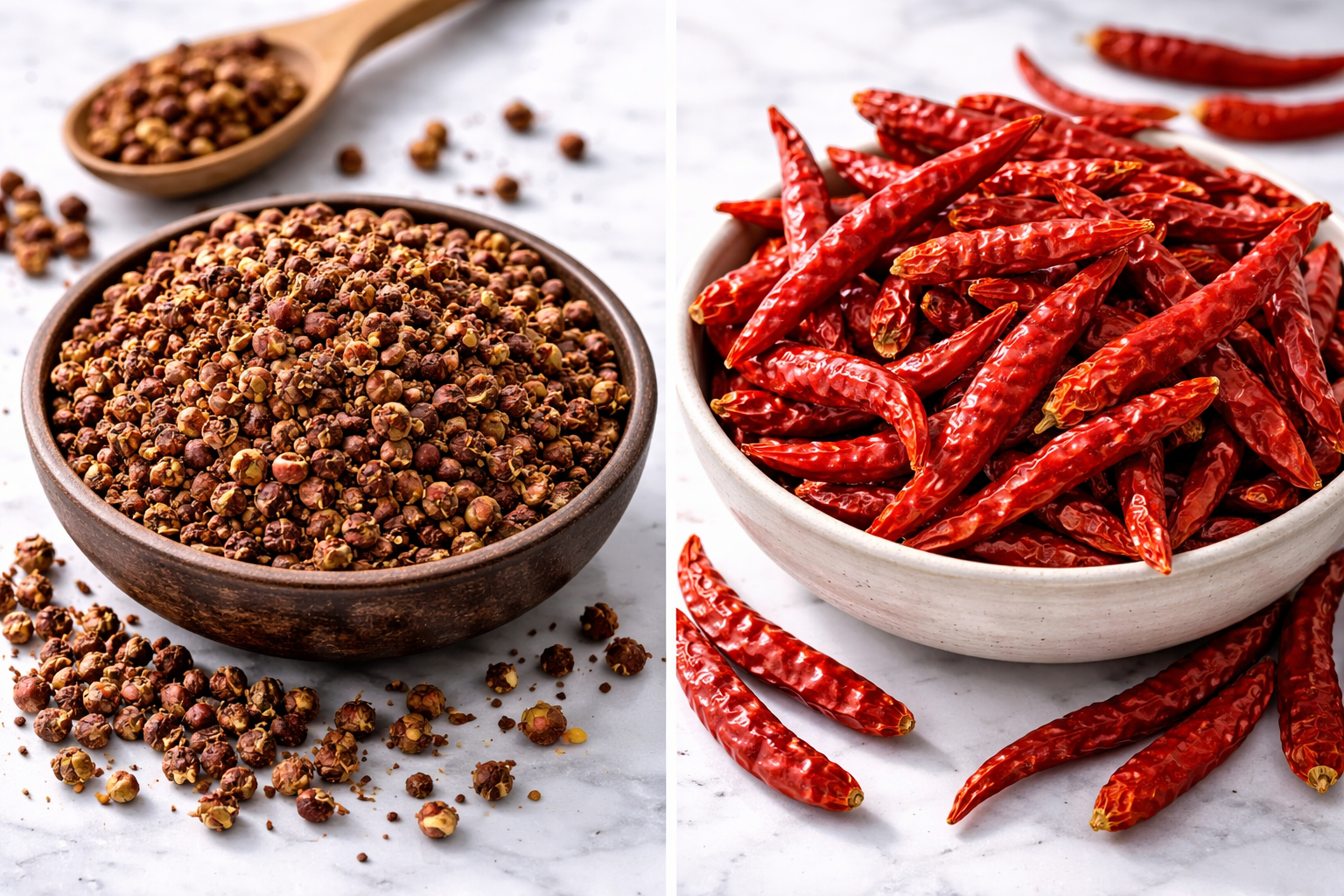
The single-scale heat rating — mild, medium, hot, extra hot — is one of the least useful pieces of information on a chili crisp label. It tells you how much, but nothing about what kind. And the kind matters. Understanding the types of heat in chili crisp is how you stop being surprised by what’s in the jar and start buying with actual intention.
I didn’t grow up eating much heat. It wasn’t a big part of how I ate as a kid. But I traveled and worked extensively through Africa, Asia, and the Caribbean, and somewhere along the way I developed a genuine appreciation for what heat can do to a dish — not as a test of endurance, but as a flavor element. That shift changed how I think about chili crisp entirely.
Because here’s what I’ve landed on after eating through a lot of it: burning pain doesn’t taste like anything. When heat gets to the point where that’s all I’m experiencing, I’ve lost the whole meal. I remember sitting down with some extremely hot wings — the kind of thing you watch people suffer through on YouTube — and spending the last fifteen minutes just trying to get the sensation to stop. What was the point? I wasn’t tasting anything. I was just enduring.
The heat I want is heat that adds something. Heat that enhances the flavor instead of overwriting it. Here’s the framework I use.
The Three Heat Types You’ll Encounter in Chili Crisp
Most chili crisps deliver some combination of these. Understanding each one separately is how you stop being surprised by what’s in the jar.
1. Sichuan Tingle (Mala Heat)
This is the one that confuses people most the first time they encounter it, because it doesn’t behave like heat at all — at least not in the way we expect heat to behave.
Sichuan peppercorn contains a compound called hydroxy-alpha-sanshool, which activates touch receptors rather than pain receptors. The result is that distinctive buzzing, tingling, almost electric sensation on your lips and tongue. Research has found it produces a vibration-like sensation at roughly 50Hz — which is why some people describe it as similar to carbonation, or a mild electrical current. (More on Sichuan pepper via Wikipedia.)
It doesn’t burn. It tingles. And that distinction matters because the tingle does something interesting: it actually modulates how you perceive other flavors. Paired with chili heat, it creates what Chinese cuisine calls mala — 麻 (má, numbing) plus 辣 (là, spicy). The numbing from the peppercorn softens the sharpness of the chili burn while amplifying the savory complexity underneath. It’s a flavor pairing, not just a sensation.
The term combines the Chinese characters for numbing (麻, má) and spicy (辣, là). When a product is described as mala-forward, you’re getting both at once — the Sichuan tingle layered over chili heat. That combination is the defining character of Sichuan-style chili crisp.
My relationship with mala heat is dish-dependent. For the right pairing — a bowl of noodles, braised greens, something that benefits from that electric brightness — I’ll actively seek it out. I’ll grab something from my local Chinese spot specifically because I’m in the mood for it. But it’s not the universal answer. There are contexts where it’s too insistent, where it competes with what’s already on the plate. Knowing when to reach for the mala jar and when to reach for something else is part of using chili crisp well.
2. Front-Load Burn (Immediate Heat)
This is the most familiar heat type — and the one most people are imagining when they read a heat rating on a label. It’s the sensation that hits within a second or two of eating, peaks quickly, and then fades.
Front-load heat typically comes from higher-capsaicin chili varieties: chile de árbol, habanero, cayenne. These are the chilies that make themselves known immediately. In small amounts, that immediacy is useful — it’s a bright, punchy signal that plays well as a finishing condiment where you want the heat to announce itself rather than sneak up.
The problem with front-load heat is that it’s easy to overdo. Because it hits fast and fades, there’s a temptation to add more — and then suddenly you’ve crossed from enhancing into overwhelming. This is where some flavored hot sauces lose me. Some of them are genuinely delicious — good acidity, good aromatics — but the heat level is calibrated so low they can’t carry a dish alone. You still need something else to bring the heat up. That’s fine; knowing what a product does and doesn’t do is better than assuming it does everything.
In chili crisp evaluation, front-load heat is worth noting because it tells you something about which chili varieties are driving the heat and how the product will behave across a meal. A very front-load-heavy jar may feel less spicy than it actually is by the time you’ve eaten half a bowl — or it may stack unexpectedly if you keep adding.
3. Slow-Build Heat
Slow-build heat is the one that catches people off guard. The entry is mild — sometimes even a little sweet — and then ten or twenty seconds later, warmth starts spreading from the back of the palate outward. Keep eating and it compounds. Finish the bowl and it’s still going.
This heat character usually comes from a combination of chili varieties and oil infusion time. Chilies like erjingtiao (the classic Sichuan chili) and facing heaven peppers tend toward slow-build profiles — moderate heat with a lot of flavor underneath. They’re not trying to hit you immediately; they’re trying to layer in. That’s part of why traditional Sichuan chili crisp reads as more complex than something built around a single high-capsaicin pepper.
Slow-build heat is excellent for dishes where you eat over time — noodles, rice, dumplings. It keeps the experience interesting from first bite to last. The risk is that it’s easy to undershoot with your initial portion, add more, and then realize halfway through the bowl that the heat is much higher than it seemed at the start.
Heat That Enhances vs. Heat That Kills Flavor
This is the distinction I care most about, and it’s what separates a chili crisp worth eating from one that’s just a heat delivery vehicle.
The purpose of adding heat to food is to make the food more interesting — more layered, more alive, more satisfying. Heat that does that is working. Heat that’s so dominant that it becomes the only thing you can perceive is failing at its job. It’s not making the dish better. It’s replacing the dish with pain.
I’ve been there. I’ve eaten things where my entire experience was trying to get the sensation to stop. Every instinct was focused on relief — water, bread, dairy, anything. The meal was gone. There was no tasting happening, no appreciation, no enjoyment. Just endurance.
That is not the goal here.
Enhancing heat has a ceiling that’s calibrated to the food. It adds brightness without erasing the underlying flavor. It makes you want another bite rather than stopping you from finishing. The mala tingle, when it’s working, heightens your sensitivity to savory and umami flavors. A well-calibrated front-load burn gives a dish a punctuation mark. Slow-build heat keeps a meal dynamic from start to finish.
When I evaluate a chili crisp’s heat character, I’m asking: is this heat doing something useful, or is it just loud? A high heat level isn’t a flaw. Heat that blinds you to everything else is.
How to Read Heat Character from the Label
You can learn a lot before you ever open the jar. A few things to look for:
- Chili position in the ingredient list. Ingredients are listed by weight. Chilies near the top mean they’re a primary component. Chilies deep in the list suggest they’re a seasoning note rather than a structural element.
- Chili variety names. If specific varieties are named — erjingtiao, facing heaven, Sichuan peppercorn, chile de árbol, habanero — that tells you something about the heat character. Generic “chili pepper” tells you almost nothing. See the full guide to chili varieties for what each one brings.
- Sichuan peppercorn presence. If it’s listed, expect at least some mala character — the tingle-and-burn combination rather than pure burn.
- Chili extract. This is a red flag. Chili extract is a way to spike heat artificially without adding flavor. It creates front-load, high-intensity heat that doesn’t integrate with the rest of the product. A jar built around chili extract will hit hard and flat.
- Oil-to-solids ratio. More oil relative to solids generally means the heat is diffused. A jar that’s mostly solids will be more concentrated per spoonful.
For a complete walkthrough of what’s actually on a chili crisp label, the How to Read a Chili Crisp Label post covers all of it.
Phil’s Personal Heat Calibration
I’ll be upfront: my baseline tolerance is on the lower end. I wasn’t surrounded by heat growing up, and I came to it as an adult through curiosity rather than conditioning. Years of travel through West Africa, Southeast Asia, the Caribbean, and elsewhere changed that gradually — not because I forced it, but because the food was good and I wanted to keep eating it.
What that means for how I evaluate: I’m calibrating up from a realistic baseline rather than down from a high tolerance. When I say something is manageable, I mean it. When I say it’s hot, it’s hot. I’m not dismissing heat that high-tolerance friends would shrug at — I’m describing what it actually does to a dish and whether it earns its place there.
My tolerance has grown through this project. Deliberate, systematic tasting builds it over time. But I’ll always care more about whether the heat is doing something useful than about how high the number is.
How This Framework Shows Up in FIL Reviews
Every product review on this site includes a Heat Character section. It doesn’t just rate intensity — it identifies the heat type, notes whether it enhances or competes with the flavor profile, and flags anything unusual or misleading (like a product labeled as medium heat that has a very assertive slow-build).
The goal is that by the time you’ve read a FIL review, you know not just how hot something is, but how it’s going to behave in your food and whether that’s what you want.
For context on how different regional styles approach heat — Sichuan mala vs. Japanese taberu rayu vs. Calabrian fruity burn — see Chili Crisp Around the World.
Ready to pick a jar? Our best chili crisp rankings break down every brand by tier, with heat levels noted for each.
Frequently Asked Questions
Why does Sichuan pepper make your mouth numb?
Sichuan peppercorn contains a compound called hydroxy-alpha-sanshool, which activates touch receptors rather than pain receptors. That’s why the sensation feels like a tingle or buzz rather than a burn — it’s a different neurological pathway than the capsaicin heat you get from chilies.
What’s the difference between numbing heat and burning heat?
Numbing heat (mala) comes from Sichuan peppercorn and creates a tingly, buzzing sensation that modulates how you perceive other flavors. Burning heat comes from capsaicin in chilies and activates pain receptors. They can coexist in the same product — that combination is what mala means: numbing (ma) plus spicy (la).
What does mala mean?
Mala is a Chinese term combining 麻 (má, numbing) and 辣 (là, spicy). Together they describe the signature flavor profile of Sichuan cuisine — the tingly, numbing sensation from Sichuan peppercorn paired with chili heat. A true mala chili crisp delivers both at once.
Is chili crisp too spicy for beginners?
It depends on the product and how you use it. Many chili crisps are quite approachable — the heat is moderate and the flavor is the point. Start with a small amount on eggs, noodles, or rice. The goal is flavor enhancement, not endurance. If it’s overwhelming, you’ve used too much or picked a very hot product.
How do I know how hot a chili crisp is before I buy it?
Check the ingredient list. Chilies near the top mean more heat. Look for specific varieties: erjingtiao and facing heaven peppers are moderate; chile de arbol and habanero push higher. Chili extract anywhere in the list is a red flag for artificial heat spikes. The How to Read a Chili Crisp Label post covers this in full.
Does chili crisp get hotter over time?
It can mellow slightly as the oil continues to infuse, but dramatic changes after purchase are unusual in commercial products. More commonly, the crunch degrades over time as oil soaks the solids — which affects texture more than heat level. Store with the lid sealed and use a clean, dry spoon.
What is front-load heat vs. slow-build heat?
Front-load heat hits immediately on the tongue and fades quickly — you feel it first, then it dissipates. Slow-build heat has a mild or even sweet entry that develops over 10-30 seconds into a sustained, spreading warmth. Front-load works well as a finishing condiment; slow-build tends to accumulate when eating a whole dish.