
Most chili crisp reviews treat the chili as a background detail — something that makes the product “spicy.” That misses the point. The chili is the thesis statement. The oil is what carries it. And once you understand how different chili varieties behave, you can read a label and make a reasonable prediction about what a product will taste like before you ever open it.
This isn’t a heat-ranking list. Scoville units are part of the story, but they’re the least interesting part. What matters is what the chili does — how it delivers its heat, what flavors ride alongside it, and how it interacts with the oil and aromatics in the jar.
The Chinese Chili Crisp Varieties: Where It All Starts
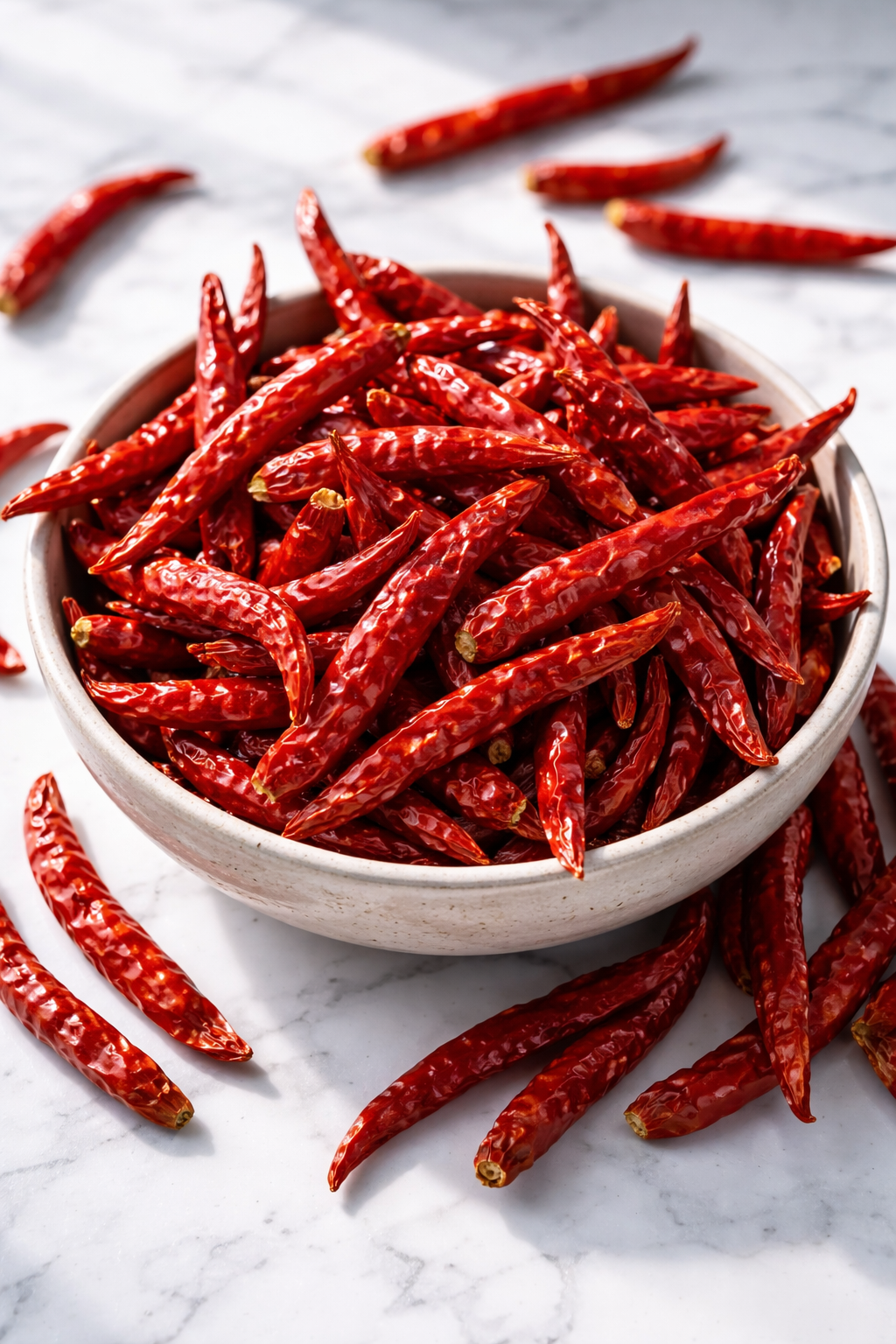
Chinese chili crisp is the original, and Chinese dried chilies are the foundation. But “Chinese chili” is almost as vague as “chili” alone. Chinese cooks — particularly in Sichuan and Guizhou provinces — distinguish between chili varieties the way wine producers distinguish between grape varietals. Each chili is chosen for specific properties: color, fragrance, heat level, and coloring ability. Most producers blend multiple varieties to achieve a target profile.
Erjingtiao (二荆条)
This is the most important chili in Sichuan cooking, and the one you’re most likely eating in a quality Chinese chili crisp. Erjingtiao is a long, slender pepper — typically 5 to 6 inches — with a deep red color and a distinctly fruity, fragrant heat. It’s not a scorcher. On the Scoville scale, it falls in the mild-to-moderate range, roughly comparable to a jalapeño but with a completely different flavor profile.
What makes erjingtiao special isn’t its heat — it’s its fragrance. Chinese cooks prize this chili for its aroma as much as its spice, which is why it’s the primary variety used in both chili oil and chili crisp. When dried erjingtiao is fried in hot oil, it releases volatile aromatic compounds that give the oil its characteristic deep red color and complex, fruity warmth. Fly By Jing specifically sources erjingtiao from Sichuan and has been a major force in bringing this variety to Western consumer awareness.
Erjingtiao is also the chili used to make doubanjiang — the fermented broad bean paste that’s a cornerstone of Sichuan cuisine. In its fresh green form, it’s fermented with broad beans and salt to create the paste. In its dried red form, it’s ground into flakes and powder for chili oil, chili crisp, and dry dipping sauces.
On the nutrition label, erjingtiao contributes capsaicin (the heat compound), vitamin A from its deep red pigment (beta-carotene), and a small amount of vitamin C. Its moderate capsaicin content means it adds noticeable heat without overwhelming the other ingredients — which is precisely why producers choose it.
Facing Heaven Pepper (朝天椒 / Zi Dan Tou)
Named for the way the pods grow pointing upward on the plant, facing heaven peppers are Sichuan’s everyday workhorse chili. They’re shorter and stubbier than erjingtiao, with moderate heat, strong fragrance, and excellent coloring ability. You’ll find them in hot pot, stir-fries, and — critically — blended into the chili flake mix that goes into many commercial chili crisps.
Facing heaven peppers bring more direct heat than erjingtiao, with less of the fruity aromatic complexity. They’re the middle ground — hot enough to register, fragrant enough to contribute, inexpensive enough to use in volume. If a Chinese chili crisp has medium heat and good color but the chili character isn’t particularly distinctive, facing heaven peppers are a likely component of the blend.
Xiao Mi La (小米辣 / Rice Grain Chili)
These tiny peppers — about the size of a grain of rice — are Sichuan’s rising star. Originally popular in Yunnan province (which borders Burma, Thailand, and Laos), xiao mi la has caught on with Sichuan chefs for its sharp, intense heat in a small package. It’s significantly hotter than erjingtiao or facing heaven peppers, and it delivers that heat quickly — a front-loaded burn rather than a slow build.
In chili crisp, xiao mi la shows up in products marketed as “extra spicy” or “hot” variants. It’s a blending chili rather than a standalone — producers add it to an erjingtiao or facing heaven base to dial up the heat level without changing the fundamental flavor profile. On the label, you likely won’t see it called out by name; it’ll just be listed as “chili pepper” or “dried chili.” But if a Chinese chili crisp is noticeably hotter than its peers, xiao mi la (or something in the same heat class) is probably in the mix.
Tianjin Peppers (天津辣椒)
If you’ve bought dried red chilies at a generic American grocery store, you’ve probably bought Tianjin peppers. They’re one of China’s most widely exported dried chilies — small, stemless, deep red, with moderate heat (roughly mid-range, hotter than erjingtiao, less hot than Thai bird chilies). They have good flavor and decent heat, but they’re not prized for fragrance or color the way Sichuan varieties are.
In chili crisp production, Tianjin peppers are a cost-effective option. They get the job done — they add heat and color — but they don’t bring the aromatic complexity of erjingtiao or the sharp punch of xiao mi la. If you see a budget Chinese chili crisp with “dried chili” or “red chili pepper” listed generically, Tianjin is a likely candidate.
Deng Long Jiao (灯笼椒 / Lantern Chili)
These round, lantern-shaped peppers have mild heat but outstanding coloring ability. They’re used almost exclusively for the vibrant red color they produce in chili oil — not for heat or flavor contribution. When you see a chili crisp with an unusually vivid, jewel-toned red oil, lantern chilies might be part of the blend. They’re the paprika of the Chinese chili world: color first, heat second.
Chinese cooks rarely use a single chili variety in isolation. The standard approach is to blend chilies for complementary properties: erjingtiao or lantern chili for color and fragrance, facing heaven for mid-range heat, xiao mi la or Tianjin for additional kick. Most commercial chili crisps use a proprietary blend — which is why the label just says “chili pepper” without specifying which ones.
Sichuan Peppercorn: Not a Pepper, Not a Chili, Entirely Its Own Thing
I’m including Sichuan peppercorn in a chili guide because it shows up on almost every chili crisp ingredient list that references Chinese production — and because most people misunderstand what it actually is and what it does.
Sichuan peppercorn is not a pepper. It’s not a chili. It doesn’t produce capsaicin heat. It’s the dried husk of the fruit of a tree in the citrus family (Zanthoxylum), and it contains a compound called hydroxy-alpha-sanshool that activates touch receptors — specifically the same receptors that detect vibration — on your tongue. The sensation is often described as buzzing, tingling, or numbing. Scientists have measured it as producing a vibration-like sensation at approximately 50Hz.
This is the “ma” in Sichuan “mala” (麻辣) — literally “numbing-spicy.” The “la” (spicy) comes from the actual chilies. Together, they create the signature Sichuan sensation that’s unlike any other chili tradition in the world.
In chili crisp, Sichuan peppercorn is a supporting actor with outsized impact. A small amount changes the entire mouthfeel of a product — it creates a buzzing backdrop against which the capsaicin heat plays out differently than it would alone. Products without Sichuan peppercorn deliver straightforward heat: it burns, then it fades. Products with Sichuan peppercorn deliver layered sensation: the heat arrives, then the tingle extends it, creates a lingering buzz, and makes your mouth feel like it’s vibrating gently.
On the nutrition label, Sichuan peppercorn adds negligible calories. Its contribution is entirely sensory. But it’s a critical label signal: when you see “Sichuan peppercorn” or “prickly ash” (another name for it) on a chili crisp ingredient list, you know the producer is aiming for authentic mala character, not just generic heat.
Doubanjiang: The Fermented Chili Product That Changes Everything
Doubanjiang isn’t a chili variety — it’s a processed ingredient made from chilies. But it appears on enough chili crisp labels that it deserves its own section, because it fundamentally changes the flavor profile of any product that contains it.
Pixian doubanjiang — the most prized version, from Pixian county near Chengdu — is made by fermenting broad beans (fava beans) and chili peppers with salt, sometimes for years. The fermentation produces deep umami compounds, dark red-brown color, and a complex savory depth that dried chilies alone cannot achieve. Think of it as the difference between fresh tomatoes and slow-roasted, concentrated tomato paste. Same starting ingredient, completely different result.
When doubanjiang appears in a chili crisp, it shifts the product’s center of gravity from “spicy condiment” toward “savory-spicy condiment.” The fermented funk adds a layer of depth that makes the product taste older, richer, more complex than a chili crisp made entirely with dried chilies and aromatics. It’s also why some chili crisps taste meatier or more umami-forward than others — fermented bean paste activates the same glutamate receptors that MSG does.
On the nutrition label, doubanjiang’s biggest contribution is sodium. It’s a fermented, salt-preserved product, and its inclusion can push a chili crisp’s sodium content noticeably higher. If you see doubanjiang on the ingredient list and the sodium per serving looks elevated compared to similar products, that’s why. It also contributes a small amount of protein from the broad beans.
Korean Chili: Gochugaru and Its Growing Influence
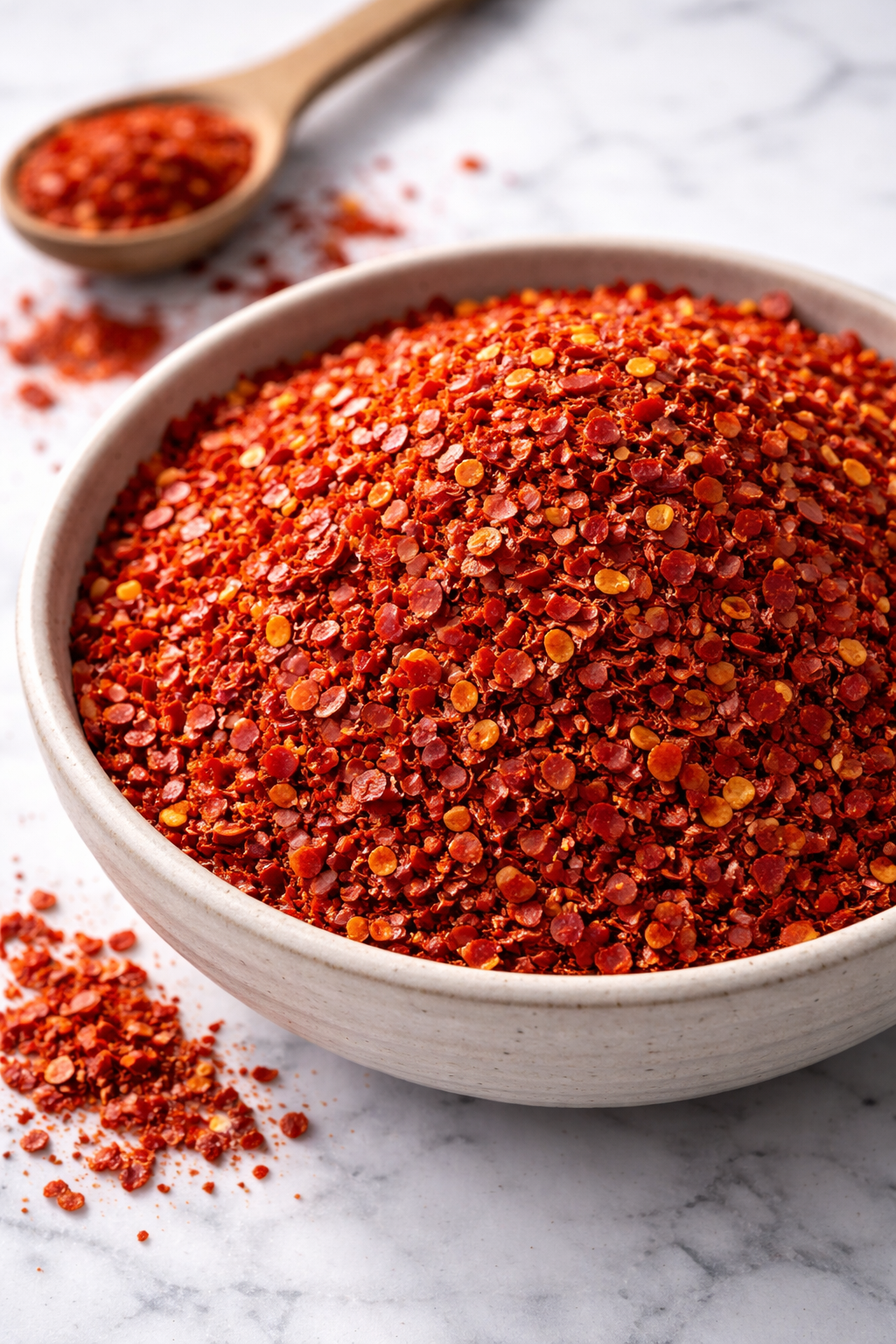
Gochugaru has moved from a strictly Korean pantry ingredient to one of the most recognizable chili products in the Western specialty food market, and it’s increasingly showing up in fusion and cross-cultural chili crisps.
Authentic gochugaru is made from sun-dried Korean red chili peppers (called taeyangcho) that have been deseeded and ground to a coarse flake. The deseeding is key — it’s what gives gochugaru its distinctive bright, uniform red color without the white or yellow seed specks you see in generic red pepper flakes. The flavor is moderately spicy, subtly sweet, and lightly smoky. It’s miles more complex than Western crushed red pepper, which is typically just cayenne ground with seeds included.
The Korean chili peppers used for gochugaru are thick-walled, similar to paprika peppers, which gives them a natural sweetness that thin-walled varieties like cayenne lack. They register between 1,500 and 10,000 Scoville heat units — roughly comparable to a mild jalapeño — but the heat isn’t really the point. The point is the flavor: fruity, warm, gently smoky, with a sweetness that plays well against salt and fat.
In chili crisp, gochugaru brings a completely different heat character than Chinese dried chilies. Where erjingtiao is fragrant and moderate, gochugaru is sweet and warm. A chili crisp made with gochugaru will taste noticeably different from one made with facing heaven peppers — less sharp, more rounded, with a gentle warmth that lingers rather than a hit-and-fade burn. Several fusion brands have embraced gochugaru as their primary chili — it’s approachable, visually striking, and has built-in consumer recognition from the Korean food boom of the past decade.
Nutritionally, gochugaru brings the same capsaicin benefits as other chili peppers (potential metabolism effects, anti-inflammatory properties), plus significant vitamin A from its vivid red pigment. Because it’s deseeded, the fiber content is lower than whole-ground chili flakes, but the concentration of flavor compounds per gram is higher.
These are different ingredients. Gochugaru is dry chili flakes/powder. Gochujang is a fermented paste made from gochugaru mixed with glutinous rice, fermented soybeans, and salt. If a chili crisp lists “gochujang,” it contains a fermented paste product — not just dried chili. Gochujang adds sweetness, umami, and a thicker texture that gochugaru alone doesn’t provide.
Calabrian and Mediterranean Chilies
Calabrian Chili (Peperoncino Calabrese)
The Calabrian chili has become the gateway pepper for the “chili crisp meets Italian food” crossover, and for good reason. These peppers from the Calabria region of southern Italy pack moderate heat — roughly 25,000 to 40,000 Scoville units, comparable to a cayenne — but their flavor is where they distinguish themselves. They’re fruity, slightly smoky, with a bright, almost sweet quality that pairs naturally with olive oil, garlic, and Mediterranean ingredients.
In the chili crisp world, Calabrian peppers have enabled an entire subcategory of products. Brands like Hot Crispy Oil use extra-virgin olive oil and Calabrian chilies to create a product that’s structurally similar to Chinese chili crisp — oil, bits, heat — but tastes completely different. These products land on pizza, bruschetta, and pasta rather than dumplings and rice. The chili defines the use case.
On the nutrition label, Calabrian chilies contribute capsaicin, vitamin A, and vitamin C. Because they’re often packed in olive oil before being incorporated into a chili crisp, the oil that comes with them may effectively become part of the product’s total oil content.
Aleppo Pepper (Pul Biber)
This is a less common but increasingly trendy chili in craft chili crisps. Aleppo pepper comes from the Halaby pepper, traditionally grown in Syria and Turkey. It’s dried, deseeded, and coarsely ground — similar in texture to gochugaru. The flavor is mild, fruity, and oily with a slow-building warmth that never becomes aggressive. It’s about 10,000 Scoville units, making it milder than Calabrian but more complex than standard paprika.
Aleppo pepper is still rare in commercial chili crisps, but it’s showing up in small-batch and Middle Eastern-influenced products. Its oily, raisin-like quality makes it interesting as a chili crisp ingredient — it brings a sweetness and depth that work especially well in olive oil-based products. If you’re seeing more of it on labels in the next few years, it’s because producers are looking for chili varieties that offer flavor complexity beyond just heat, and Aleppo delivers exactly that.
Peperoncino (Italian Crushed Red Pepper)
Generic Italian crushed red pepper — the stuff in the shaker at the pizza place — is a blend of peppers, often including cayenne, and it’s the most basic chili option in any olive oil-based condiment. It adds heat and color but minimal flavor complexity. In lower-end Italian-style chili crisps, peperoncino flakes do the heavy lifting. They’re fine for basic heat, but they lack the fruity character that makes Calabrian peppers distinctive.
Mexican Dried Chilies: The Salsa Macha Connection
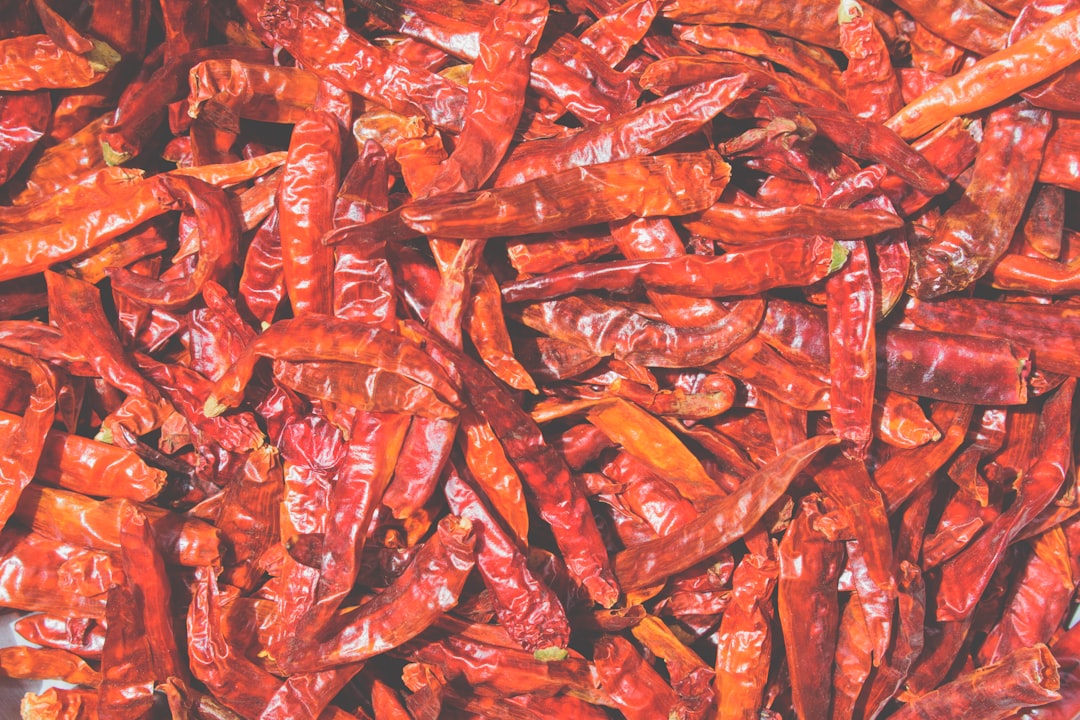
As chili crisp continues to expand into a global condiment category, Mexican dried chilies are playing an increasingly important role — particularly through salsa macha, Mexico’s own oil-based chili condiment that shares structural DNA with Chinese chili crisp. Salsa macha originated in Veracruz and is built on a foundation of dried chilies, nuts, seeds, and oil.
Mexican chili cultivation is one of the most diverse on the planet. There are dozens of named dried varieties, each with its own heat level, flavor profile, and culinary role. The ones most relevant to chili crisp and salsa macha are:
Chile de Árbol
Thin, long, bright red, and hot. Chile de árbol is the heat engine of many Mexican chili blends. It falls around 15,000–30,000 Scoville units — comparable to cayenne — and delivers sharp, direct, front-of-the-mouth heat without much build-up. The flavor is nutty and slightly smoky when toasted. In chili crisp or salsa macha, árbol provides the straightforward spicy kick, often blended with milder varieties that add flavor depth.
On the nutrition label, chile de árbol contributes concentrated capsaicin relative to its volume. A little goes a long way heat-wise, so it doesn’t add significant calories or macronutrients, but its capsaicin density means it can make the heat level of a product jump even when it’s a minor ingredient by weight.
Morita (Smoked Dried Jalapeño)
If you know chipotle, you know the concept — morita is a close relative. It’s a smoked, dried jalapeño, but smaller and smokier than the chipotle meco you might have encountered canned in adobo sauce. Morita has a deep, leathery smokiness with moderate heat (about 5,000–10,000 Scoville units) and a dried-fruit sweetness that’s almost prune-like.
In salsa macha, morita is often the backbone chili. Its smokiness defines the condiment’s character the way erjingtiao defines Chinese chili crisp. When you taste a salsa macha and think “smoky, rich, complex” before you think “hot,” morita is usually doing that work. Some craft chili crisp producers have started incorporating morita into non-Mexican products as well, using it as a smoke element in blends.
Guajillo
Guajillo is the second most widely used dried chili in Mexican cooking (after ancho). It’s mild — about 2,500–5,000 Scoville units — with a tangy, slightly cranberry-like flavor and deep red color. In salsa macha, guajillo often provides the color and the tangy background note while hotter chilies handle the heat. It’s a blending chili, rarely used alone.
On the nutrition label, guajillo’s main contribution is color (from concentrated carotenoids like beta-carotene, which converts to vitamin A) and a small amount of dietary fiber from the dried pepper flesh. Its capsaicin content is low enough that it barely registers in terms of heat per gram.
Ancho (Dried Poblano)
Ancho is a dried poblano pepper — wide, dark, wrinkled, and very mild (about 1,000–2,000 Scoville units). The flavor is sweet, earthy, and reminiscent of dried fruit — raisins, prunes, a hint of chocolate. It’s the mole chili, the one that provides body and depth to complex Mexican sauces.
In salsa macha, ancho plays a supporting role: it rounds out the edges of hotter chilies, adds sweetness without sugar, and contributes a dark, rich color. In chili crisp crossovers, ancho is interesting because it can add complexity without adding heat — useful for producers who want a flavorful product that doesn’t alienate heat-sensitive consumers.
Pasilla (Chile Negro)
Pasilla is a long, dark, slender dried chili with mild heat and a distinctive raisin-and-herb flavor profile. It’s less common in salsa macha than guajillo or morita, but some traditional recipes include it for its earthy, slightly bitter depth. It’s named for its wrinkled, raisin-like appearance (pasilla comes from pasa, the Spanish word for raisin).
Habanero
At 100,000–350,000 Scoville units, habanero is the nuclear option in the dried chili arsenal. It doesn’t show up in traditional salsa macha or Chinese chili crisp. But it’s becoming more common in craft and heat-forward products, particularly American-made crisps marketed to the hot sauce crowd. The flavor is tropical and floral — if you can taste past the fire — and it adds a slow-building, lingering heat that’s completely different from the sharp front-burn of árbol or the fragrant warmth of erjingtiao.
Habanero in chili crisp is a statement. It says “this product is for people who want serious heat.” On the nutrition label, its contribution is capsaicin — a lot of it — and not much else in the quantities typically used.
Emerging and Uncommon Chilies Worth Knowing
The craft chili crisp market is in an experimental phase, and producers are reaching beyond the traditional chili categories. A few varieties are showing up more frequently and are worth understanding.
Urfa Biber (Turkish Isot Pepper)
Urfa biber is a dark, smoky-sweet Turkish pepper that’s been gaining traction in specialty food markets. It’s processed uniquely — sun-dried during the day, then wrapped tightly at night to “sweat,” which concentrates its sugars and creates a deep, almost chocolate-like flavor with mild heat (about 5,000–8,000 Scoville units). It’s rich, earthy, and unusual. A few small-batch chili crisp producers have started using urfa biber as a primary or blending chili, and the results are interesting — dark-colored crisps with a sweetness that doesn’t come from added sugar.
Guajillo + Árbol + Morita Blends
Several salsa macha brands and cross-cultural chili crisps are using specific Mexican dried chili blends as a point of differentiation. The combination of guajillo (color, tang), árbol (heat), and morita (smoke) is becoming something of a standard blend — the Mexican equivalent of the Chinese practice of blending erjingtiao, facing heaven, and xiao mi la for balanced results. When you see a product list multiple dried chili types by name rather than just “chili peppers,” it’s a good transparency signal — the producer wants you to know what’s in the jar.
Carolina Reaper and Superhot Varieties
At the extreme end, some specialty producers have created chili crisps using superhot peppers like the Carolina Reaper (over 2,000,000 Scoville units). These are novelty products, not condiments in any practical daily-use sense. The heat is so overwhelming that it obliterates the other flavors in the jar. They’re interesting as a data point on the market’s range, but they’re not where the serious flavor innovation is happening.
How Chili Processing Methods Change the Product
The same chili pepper produces very different results depending on how it’s processed before it goes into the jar. This is an underappreciated variable that dramatically affects what your chili crisp tastes like.
| Processing Method | What It Does | Flavor Impact | Common In |
|---|---|---|---|
| Dried (sun or machine) | Removes water, concentrates flavors and sugars | Intensified heat, sweeter, more concentrated flavor | Chinese chili crisp, salsa macha, Korean gochugaru |
| Smoked (dried over wood) | Adds smoke compounds while dehydrating | Smoky, leathery, darker color, slightly bitter edge | Morita, chipotle, some Calabrian varieties |
| Fermented (with beans, salt, rice) | Microbial breakdown creates new flavor compounds | Deep umami, funky, complex, high sodium | Doubanjiang, gochujang, fermented chili paste |
| Oil-toasted / dry-fried | Quick high-heat treatment to release aromatics | Nutty, toasty, slightly charred, intensified color | Sichuan chili flakes, toasted gochugaru |
| Fresh (used as-is) | No processing — raw pepper | Bright, grassy, vegetal, less concentrated heat | Rare in shelf-stable chili crisp (water content causes spoilage) |
The most significant distinction for chili crisp is between dried and fermented. A chili crisp made with dried chilies will taste brighter, more direct, and more focused on heat and aroma. A chili crisp that includes fermented chili products (doubanjiang, gochujang) will taste richer, more savory, and more complex — but also saltier and funkier. Neither approach is better. They’re just different, and the label will tell you which route the producer took if you know what to look for.
Reading the Chili Section of a Label
Here’s how I approach the chili information on any chili crisp ingredient list.
Named varieties are a good sign. When a label says “erjingtiao chili” or “gochugaru” or “Calabrian pepper” instead of just “chili pepper” or “red pepper,” it tells me the producer cares about the chili selection and wants you to know about it. It’s a transparency signal.
“Chili pepper” alone is fine but vague. Most mass-market products list “chili pepper” or “dried chili” without specifying the variety. This isn’t a red flag — it just means you can’t predict the exact flavor character from the label alone. You’ll have to taste it.
Multiple chili types are often intentional. If you see two or three chili-related ingredients listed — say “dried chili, Sichuan peppercorn, doubanjiang” — the producer is building a layered heat profile. Dried chili for direct heat, Sichuan peppercorn for numbing tingle, doubanjiang for fermented depth. That’s a three-dimensional product.
Position on the ingredient list matters. Ingredients are listed by weight. If “chili” appears second or third (after oil), you’re getting a chili-forward product. If it’s fifth or sixth, the product is leaning harder on garlic, onion, or other components, with chili as supporting seasoning.
The label-reading guide on this site covers how to evaluate the full ingredient list. But the chili section alone tells you more about what you’re about to taste than almost anything else on the jar.