
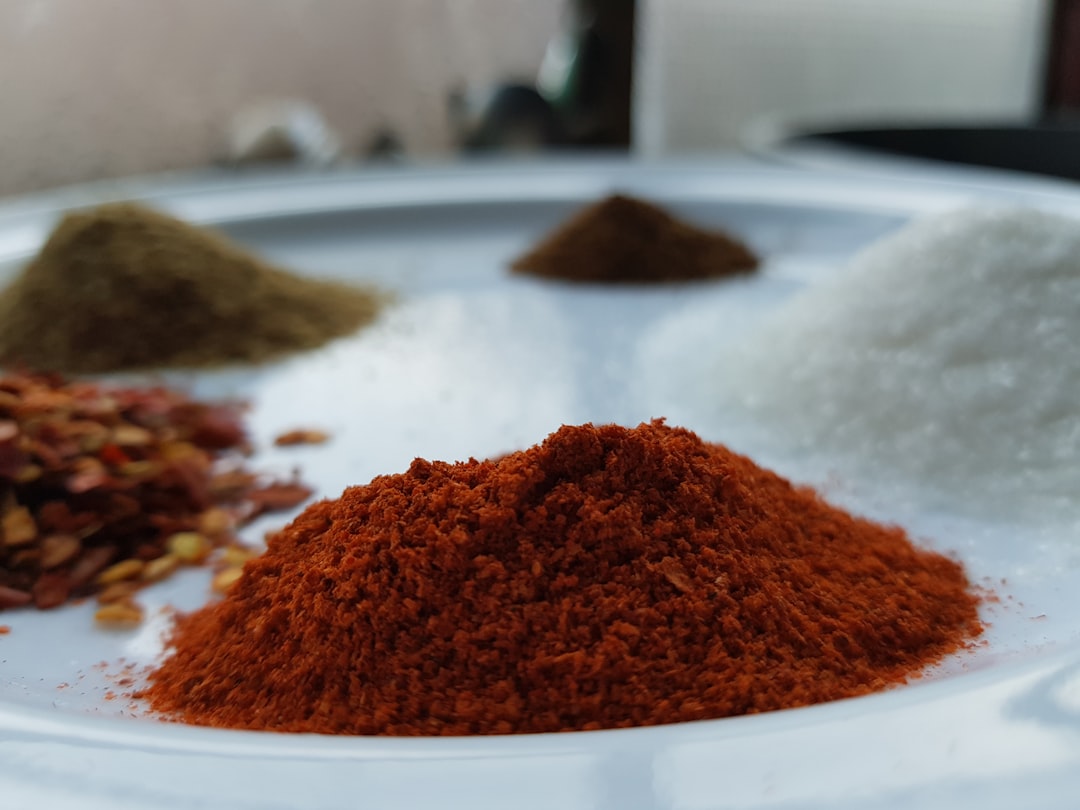
MSG in chili crisp is one of the most searched questions about the condiment, and the answer is simple: most chili crisps contain it, and that’s a good thing. But MSG is only one piece of the seasoning story. The secondary seasonings — everything beyond the oil, chilies, and crispy bits — are what separate a one-note condiment from one that makes you stop and actually think about what you’re tasting.
These seasonings include the obvious (sodium in chili crisp, sugar, MSG) and the overlooked (mushroom powder, dried shrimp, fermented black beans deep-dives, star anise, black garlic). They don’t get their own line on the front label. Most people skip right past them on the ingredient list. But they’re doing critical work — building umami depth, rounding out heat, adding aromatic complexity, and connecting the individual flavors into something that tastes deliberately composed rather than randomly assembled.
This guide covers what each secondary seasoning does in chili crisp, when its presence signals quality, and when it signals a product that’s hiding behind flavor enhancers instead of building real complexity from its core ingredients.
MSG in Chili Crisp: The Science Is Settled
Monosodium glutamate is an amino acid salt that activates umami receptors on your tongue. Umami is the fifth basic taste — alongside sweet, salty, sour, and bitter — and it’s the flavor you recognize as savory depth. Parmesan cheese has it. Soy sauce has it. Tomatoes have it. MSG is the isolated, concentrated form of that same compound, and it’s been used in cooking for over a century since Japanese chemist Kikunae Ikeda first extracted it from kombu seaweed in 1908.
The FDA classifies MSG as Generally Recognized as Safe (GRAS) — the same safety classification as salt, sugar, and vinegar. The fear around MSG traces back to a single anecdotal letter published in the New England Journal of Medicine in 1968, which described symptoms after eating Chinese food and speculated MSG might be the cause. Decades of subsequent research have found no consistent, reproducible link between MSG and the symptoms attributed to it. The stigma persists anyway, particularly around Asian food, which is where the bias originated and where it continues to do the most damage.
I’m direct about this: MSG makes food taste better. It activates a specific set of taste receptors that salt alone can’t reach. It contains roughly one-third the sodium of table salt by weight, which means it adds savory depth with less sodium impact per gram. A product using MSG alongside salt will typically deliver a fuller flavor at a lower total sodium level than a product using salt alone to chase the same intensity.
Most chili crisps contain MSG. Lao Gan Ma lists it. Fly By Jing lists it (as “yeast extract,” which is a naturally-derived form of glutamate). Many smaller brands include it. The products that don’t use added MSG often contain ingredients that are naturally high in glutamate anyway — fermented black beans, soy sauce, mushroom powder. The umami is there either way. The label just describes the delivery mechanism differently.
MSG appears on ingredient lists as “monosodium glutamate,” “MSG,” or sometimes as “yeast extract” or “hydrolyzed protein” — which are naturally-derived sources of the same glutamate compound. If a product says “No MSG” on the front but lists yeast extract on the back, it still contains glutamate. The marketing claim is technically accurate and practically meaningless.
Salt: The Invisible Foundation
Every chili crisp contains salt. It’s fundamental — salt enhances every other flavor in the jar, suppresses bitterness, and acts as a preservative. What varies is the amount and how it interacts with other sodium sources.
A typical chili crisp serving (about one teaspoon) contains 100 to 200 milligrams of sodium. That sounds modest, but most people use more than a teaspoon. Two tablespoons on a bowl of rice pushes toward 600-1200mg of sodium — a meaningful portion of the 2,300mg daily recommendation.
The sodium in chili crisp comes from multiple sources: salt itself, MSG, soy sauce (if present), and fermented ingredients like douchi or preserved mustard. Reading the nutrition label tells you the total sodium per serving, but it doesn’t tell you where it’s coming from. A product with 180mg sodium from salt and MSG combined may taste fuller and more complex than a product with 180mg from salt alone, because the MSG is activating umami receptors that salt can’t reach.
When I see a product with very high sodium per serving (north of 250mg per teaspoon), I check the ingredient list to understand why. If the sodium comes from fermented ingredients and soy sauce, the salt is doing flavor work — those are complex sodium sources. If it’s just salt and MSG in a product with minimal other seasonings, the product might be using sodium to compensate for a thin flavor profile.
Sugar in Chili Crisp: When It Helps and When It Hides
Sugar appears in most chili crisps. In small amounts, it serves a real purpose: it rounds out the sharp edges of heat and salt, contributes to caramelization during the frying process, and adds a barely perceptible warmth that makes the overall flavor more complete. You’re not supposed to taste sweetness in chili crisp. You’re supposed to notice its absence if it were removed.
The role sugar plays depends heavily on the tradition the product comes from. In Sichuan-style chili crisp, sugar is typically minimal — a background player listed near the end of the ingredients. The flavor profile is built on garlic, chili, fermented elements, and Sichuan peppercorn. Sugar is there to round, not to lead.
Korean-influenced chili products treat sugar differently. Gochujang-based sauces and Korean chili crisps often have higher sugar content because sweetness is an integral part of the Korean flavor balance. A Korean-style chili crisp with visible sugar content isn’t cutting corners — it’s building a different flavor architecture where sweet, spicy, and savory are meant to be equal partners. Judging it by Sichuan standards would miss the point entirely.
Where sugar becomes a problem is when a product uses it to mask thin flavor. If sugar appears in the first four or five ingredients of a Sichuan-style chili crisp, or if the per-serving sugar content exceeds 2-3 grams, the product is leaning on sweetness to create an impression of complexity that the core ingredients aren’t delivering. The chili quality should be providing the flavor interest, not a sugar correction.
Before judging sugar content, consider what style the product represents. A Korean-leaning chili crisp with 3-4g sugar per serving is working within its tradition. A Sichuan-style product at that level is probably compensating.
The Umami Boosters: Where Real Complexity Comes From
The most interesting seasonings in chili crisp are the ones that build umami depth beyond what MSG or salt alone can deliver. These ingredients are less common in budget products and more common in products that taste like someone actually thought about what flavors they wanted to layer.
Mushroom Powder
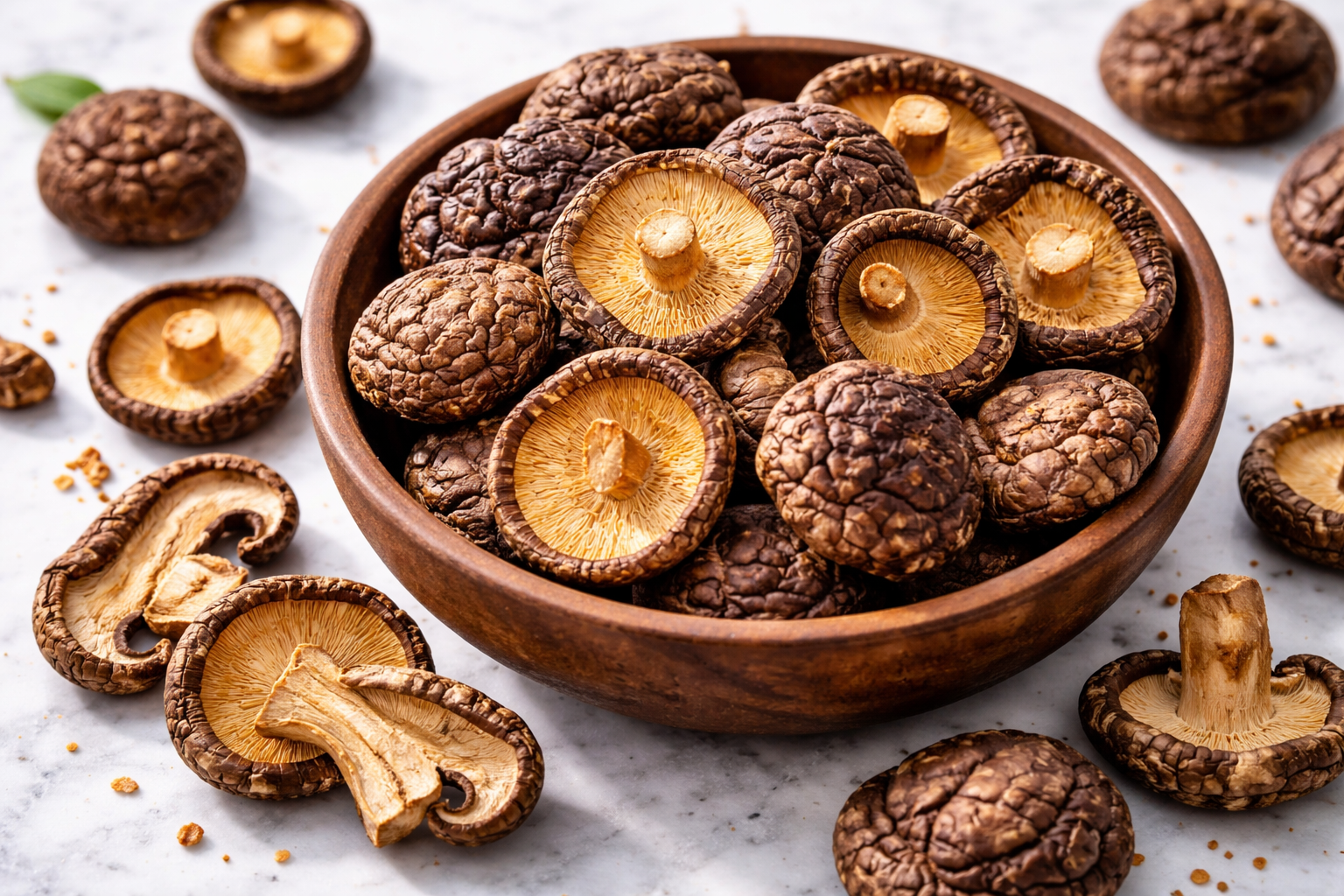
Dried mushroom powder — typically shiitake — is one of the most effective background seasonings in chili crisp. It adds a deep, earthy umami that extends the savory finish of each bite without announcing itself. You don’t taste “mushroom” in a well-made chili crisp that uses mushroom powder. You taste a longer, more satisfying savory note that you can’t quite identify. That’s the mushroom working.
Mushroom powder is naturally high in guanylate, a nucleotide that amplifies the effect of glutamate (from MSG or fermented ingredients) when both are present. This is called umami synergy — the combined effect is significantly stronger than either compound alone. A chili crisp that includes both MSG and mushroom powder isn’t doubling the same flavor. It’s creating a multiplier effect that makes the entire product taste more savory with less total sodium.
When I see mushroom powder or “mushroom extract” on a chili crisp label, it’s a signal that the formulation was designed with flavor chemistry in mind, not just by dumping ingredients into oil. It’s an intentional choice that costs more than just adding extra salt.
Dried Shrimp
Dried shrimp adds a specific kind of savory depth that no plant-based ingredient replicates. The flavor is briny, slightly sweet, and intensely umami — similar to what fish sauce does in Thai cooking, but in solid form. In chili crisp, dried shrimp particles function both as a seasoning and as a micro-texture element, adding tiny pops of concentrated flavor among the larger bits.
Dried shrimp is common in Southeast Asian-style chili crisps and in some traditional Chinese versions. It’s less common in products marketed to Western audiences, partly because of allergen labeling requirements and partly because the flavor is unfamiliar to many Western palates. When it’s present, it pushes the product into a more complex, more traditionally Asian flavor territory that’s difficult to achieve any other way.
The trade-off is dietary restriction: dried shrimp makes the product unsuitable for vegetarians, vegans, and anyone with shellfish allergies. Brands that include it are choosing depth over accessibility.
Fermented Black Beans (Douchi) and Black Garlic
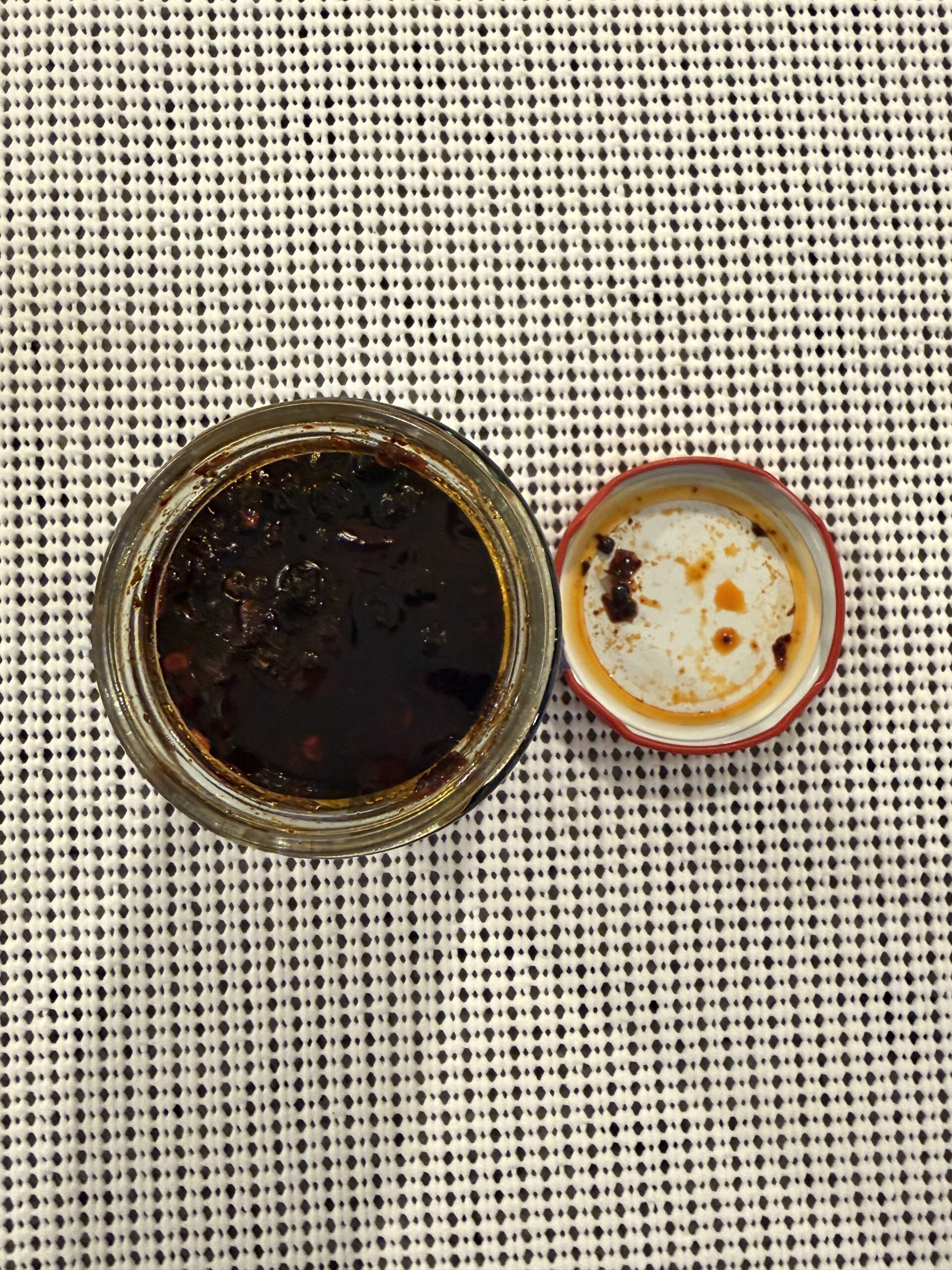
Fermented black beans appear in the bits section of some chili crisps, but they belong in the seasoning conversation too. Douchi contributes a fermented funk — salty, earthy, deeply savory — that adds a third dimension to the flavor beyond what oil-and-chili alone can achieve. The fermentation process generates natural glutamate, so douchi is adding both flavor complexity and umami depth simultaneously.
Black garlic is a newer addition to the chili crisp ingredient list. Regular garlic is slow-aged at controlled temperature and humidity until it turns black, soft, and sweet — with a flavor profile closer to balsamic vinegar than raw garlic. In chili crisp, black garlic adds a mellow, caramelized sweetness and a concentrated umami hit. It’s a premium ingredient that shows up mostly in craft and small-batch products.
Both douchi and black garlic signal a manufacturer that’s investing in fermented complexity rather than relying on MSG alone to deliver savory depth. They cost more. They require more careful processing. And they produce a flavor that’s harder to replicate with cheaper alternatives — which is exactly why their presence on a label tells you something about the product’s ambition.
Aromatic Spices: The Background Cast
Aromatic spices in chili crisp work like a bass line in music — you don’t always notice them consciously, but you’d notice immediately if they disappeared. They create warmth, depth, and a sense that the flavor has dimension beyond heat and salt.
Star Anise and Cinnamon
Star anise is the most common aromatic spice in Sichuan-style chili crisp. It adds a warm, slightly sweet, licorice-adjacent note that rounds out the chili heat without competing with it. Cinnamon (usually cassia bark in Chinese cooking, which is sharper and more pungent than Ceylon cinnamon) does something similar — a warm, woody sweetness that sits behind the main flavors and gives them a fuller context.
Neither spice should be individually identifiable in a finished chili crisp. If you bite into a spoonful and think “that’s star anise,” there’s too much. The goal is a background warmth that makes the overall flavor feel complete. Traditional Sichuan chili crisp recipes often bloom whole star anise and cassia bark in oil during the initial cooking stage, then remove them before adding the solids. The oil retains the aromatic quality without the spices being physically present in the final product.
Five-Spice as a Hidden Player
Five-spice powder — a blend of star anise, Sichuan peppercorn, clove, cinnamon, and fennel seed — shows up on some chili crisp labels, often as a pre-mixed addition rather than individual spices. It’s a shortcut to aromatic complexity, and the result depends on the quality of the blend. A good five-spice addition is invisible — you don’t taste any single spice, just a sense of warmth and depth. A heavy-handed addition makes the product taste like Chinese five-spice chicken, which is a sign that the spice ratio wasn’t calibrated for an oil-based condiment.
When five-spice appears on a label, it’s usually a sign that the product is aiming for traditional Sichuan flavor without individually sourcing and balancing each aromatic. That’s fine for most products. The quality question is how much they used, and the only way to answer that is by tasting.
Preservatives and “Natural Flavor”: The Label Gray Areas
Most chili crisps are naturally shelf-stable — oil doesn’t spoil easily, and the frying process removes the moisture that bacteria need to grow. But some products include preservatives anyway, usually sodium benzoate or potassium sorbate, as an extra safety margin for products that have higher moisture content or are distributed in varying climates.
Preservatives in chili crisp aren’t inherently a quality concern. They’re a practical choice for products that need to survive months on a store shelf in varying temperatures. I note their presence on a label but don’t penalize a product for including them. I do penalize a product that needs them because the base ingredients weren’t processed well enough to be stable on their own.
“what natural flavor really is” is the more interesting label entry. Under FDA regulation, “natural flavor” means a flavoring derived from a plant or animal source. It could be garlic extract, mushroom concentrate, onion oil, or a hundred other things. The term is intentionally broad. A product that lists “chili flakes, garlic, sesame oil, natural flavor” is telling you everything except what that last ingredient actually is.
I don’t automatically distrust products with “natural flavor” on the label, but I do note it as a transparency gap. A manufacturer that specifies “garlic, shallot, star anise” is showing you exactly what’s in the jar. A manufacturer that writes “natural flavor” is keeping a card facedown. Both approaches are legal. Only one is fully transparent.
How Seasonings Create the Flavor Stack
What makes chili crisp taste like more than the sum of its parts is the layering — each seasoning activating a different receptor or adding a different dimension. Here’s how that stack works in a well-seasoned product:
| Seasoning Layer | What It Activates | What You Experience |
|---|---|---|
| Salt | Sodium taste receptors | Baseline savory; enhances all other flavors |
| MSG / glutamate | Umami receptors (T1R1/T1R3) | Deep savory depth; prolonged finish |
| Sugar (trace) | Sweet receptors | Rounds heat edges; adds warmth |
| Mushroom powder / shrimp | Umami synergy (guanylate + glutamate) | Multiplied savory effect; longer-lasting umami |
| Fermented elements (douchi, soy) | Umami + complexity from fermentation byproducts | Funk, depth, the “why does this taste so interesting” quality |
| Aromatic spices | Aroma receptors (retronasal) | Background warmth and fullness |
| Chili / Sichuan peppercorn | TRPV1 pain receptors / touch receptors | Heat, tingle, the physical sensation layer |
A budget product might hit two or three of these layers — salt, MSG, chili. A well-formulated product hits five or six. The difference is noticeable on the first bite and becomes more obvious the more chili crisps you compare side by side.
What to Look for on the Seasoning Side of a Label
Quality signals: Fermented ingredients (douchi, soy sauce, black garlic) listed by name. Mushroom powder or dried shrimp present. Individual spices named rather than “spices” or “natural flavor.” MSG listed openly rather than obscured behind “yeast extract” marketing.
Neutral signals: MSG present (expected and fine). Salt present (required). Small amount of sugar (functional). Preservatives present (practical).
Worth questioning: Sugar in the first four ingredients of a Sichuan-style product. “Natural flavor” as a significant listed ingredient with no specificity. “No MSG” on the front label with yeast extract or hydrolyzed protein on the back. Very high sodium per serving (250mg+ per teaspoon) with minimal fermented or complex ingredients to justify it.
The seasonings won’t make a bad product good. A chili crisp with poor oil quality, filler bits, and mediocre chilies isn’t going to be saved by mushroom powder. But in a product where the core ingredients are solid, the seasoning layer is what separates good from genuinely interesting — the difference between a product you use and a product you think about.
Does chili crisp have MSG?
Most chili crisp products contain MSG, either added directly as monosodium glutamate or present naturally through ingredients like fermented black beans, soy sauce, and mushroom powder. MSG is classified as Generally Recognized as Safe (GRAS) by the FDA and has been used in cooking for over a century. It makes food taste better by activating umami receptors on the tongue.
Is MSG bad for you?
No. The FDA classifies MSG as Generally Recognized as Safe. Extensive scientific research has found no consistent link between MSG and the symptoms historically attributed to it. MSG contains about one-third the sodium of table salt by weight, so it actually contributes less sodium per unit of flavor enhancement than just adding more salt.
Why does chili crisp taste so good?
Chili crisp hits multiple flavor systems at once. The oil carries fat-soluble flavors across your palate. Salt and MSG activate savory and umami receptors. Sugar (when present) rounds out heat and adds a trace of sweetness. Chili peppers trigger heat receptors. Aromatic spices like star anise add background complexity. And the crispy bits provide texture contrast. The combination of all these elements working simultaneously is why chili crisp tastes like more than the sum of its parts.
What spices are in chili crisp?
Common spices in chili crisp include star anise, Sichuan peppercorn, cinnamon or cassia bark, clove, and occasionally five-spice powder. These are typically used in small amounts as background flavors rather than dominant notes. Not all chili crisps include aromatic spices — some rely entirely on garlic, chili, and oil for their flavor profile.
How much sodium is in chili crisp?
Typical chili crisp contains 100 to 200 milligrams of sodium per teaspoon serving. Sodium comes from salt, soy sauce, MSG, and fermented ingredients. The actual amount varies significantly by brand. Products with MSG in chili crisp may have lower total sodium than salt-only products because MSG provides umami flavor with about one-third the sodium of table salt.
What does natural flavor mean on a chili crisp label?
“Natural flavor” on a chili crisp label is a catch-all term for flavoring derived from plant or animal sources. It could mean anything from garlic extract to mushroom concentrate. The term is regulated by the FDA but doesn’t tell you specifically what’s in the product. If a chili crisp lists only “natural flavor” without naming the source, you’re trusting the manufacturer’s judgment about what belongs in the jar — which makes it harder to evaluate ingredient quality.
Is sugar in chili crisp normal?
Yes. Small amounts of sugar appear in many chili crisp products and serve a functional purpose — sugar rounds out the sharp edges of heat and salt, and it helps with caramelization during the frying process. The concern is quantity, not presence. Sugar listed in the first four or five ingredients, or sugar content above 2-3 grams per serving, suggests the product is using sweetness to compensate for a lack of real flavor complexity.