
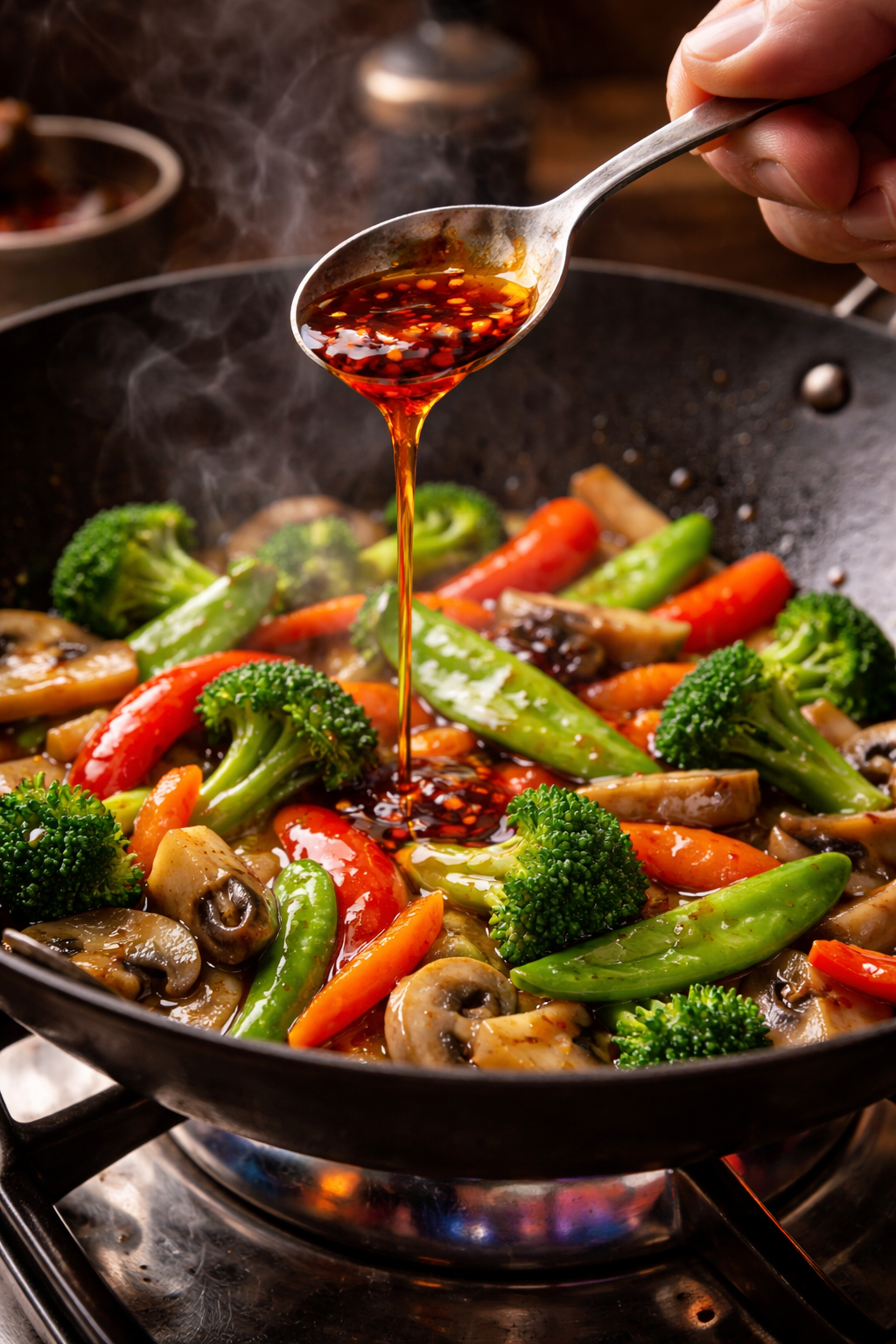
Cooking with chili oil is something most people stumble into by accident. You use it on noodles, like it, start reaching for it on eggs and rice, and eventually wonder whether you can cook with it — add it to the pan, use it as a base, build a stir fry in it. The answer is yes. But which chili oils hold up to heat and which ones fall apart is a question almost no one is writing about directly. That’s what this guide covers.
Chili oil is primarily oil — infused with dried chilies and aromatics, pourable, designed to carry heat and flavor. That’s different from chili crisp, which is loaded with fried solids and meant to sit on top of food. The oil-dominant structure is exactly why chili oil works as a cooking ingredient in ways cooking with chili crisp generally doesn’t. But not all chili oils are built the same, and the base oil matters enormously once heat gets involved.
Why Chili Oil Works as a Cooking Ingredient
Most condiment content treats chili oil as a finishing product — drizzle it on, eat it. That framing misses half the point. Chinese la you has been used as a cooking fat for decades, not just a table condiment. The difference between chili oil and, say, hot sauce is that chili oil is fundamentally an oil. You can cook in oil. You cannot cook in vinegar-based hot sauce without turning it into something unpleasant.
The practical advantage: when you add chili oil to a hot pan, the oil carries the chili flavor directly into whatever you’re cooking. The heat activates the dried chili compounds and aromatics left in the oil — garlic, ginger, Sichuan peppercorn if it’s present — and you get a baseline seasoned flavor without any additional prep. One ingredient doing two jobs.
Chili oil cooks differently than chili crisp. Chili crisp has fried solids — onions, shallots, seeds — that will burn fast in a hot pan. Chili oil has minimal to no solids, so it behaves more like a flavored cooking fat. Different tool, different use.
This also changes how I evaluate chili oils for review. Cookability is a primary criterion: what’s the base oil, what’s the smoke point, does the flavor survive heat or turn acrid, is the chili-to-oil ratio right for cooking applications? Those questions don’t appear in most chili oil content. They’re central here.
The Oil Base Determines Everything at High Heat
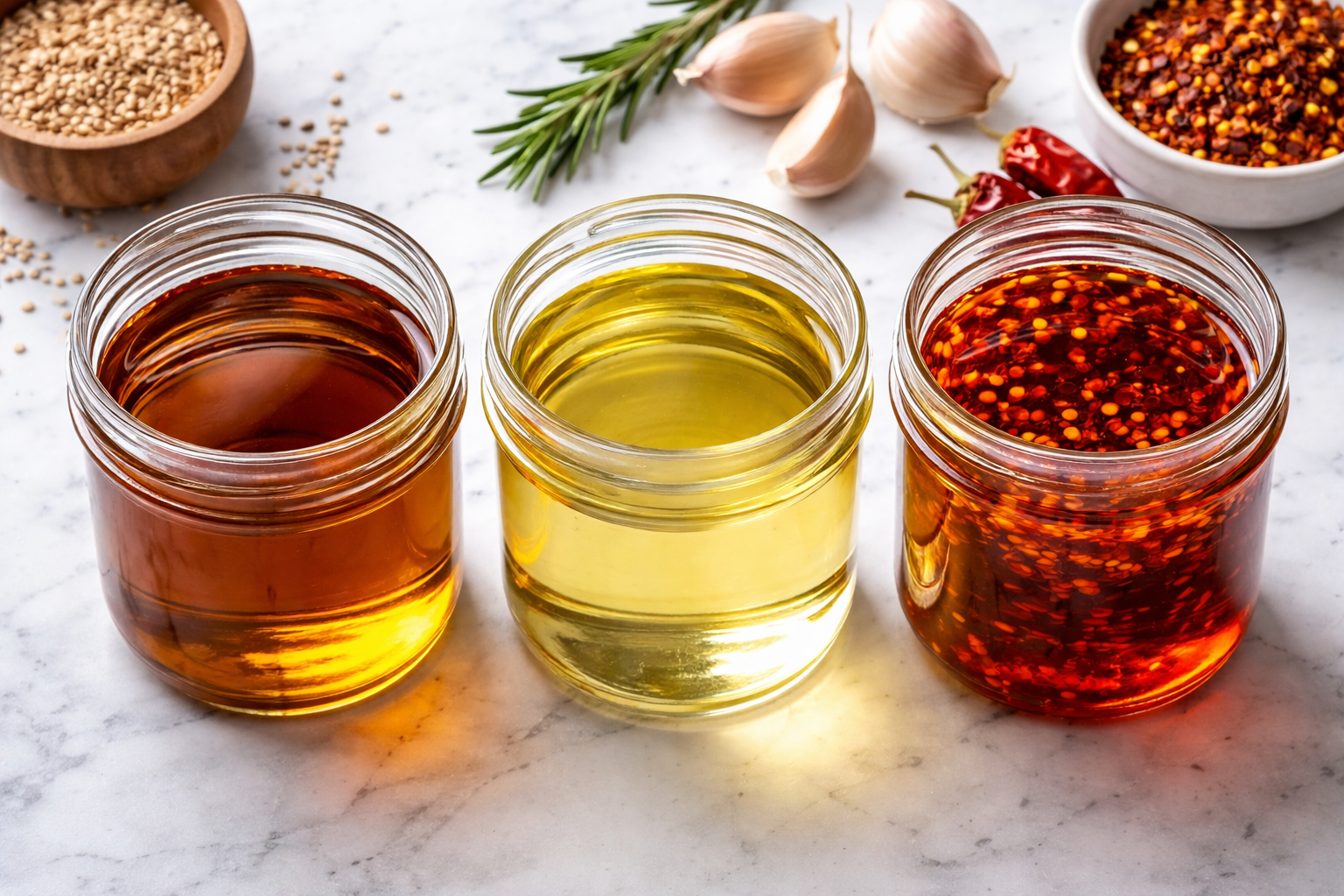
The base oil in a chili oil tells you exactly how versatile that product is in the kitchen. This is one of the first things I check on the label, and it matters more for cooking applications than it does for finishing. The oil types guide covers how different base oils behave across all chili condiment categories — the same principles apply here with the added variable of heat exposure.
Neutral oils: the best chili oil for cooking applications
Soybean oil, canola oil, and sunflower oil are the most common bases in Chinese-style chili oils. All three have smoke points in the 400–450°F range, which puts them comfortably above typical stir fry temperatures (around 350–375°F for a home wok). Neutral-based chili oils are your reliable cooking option. The base fat doesn’t compete with the chili flavor, doesn’t add its own taste, and doesn’t break down at high heat. When someone asks me for the best chili oil for cooking in a stir fry, I’m starting here.
Sesame oil: finishing only
Pure sesame oil has a smoke point around 350°F — low enough that you’ll start getting off flavors at typical stir fry temperatures. More importantly, the toasted sesame flavor that makes it interesting as a finishing oil turns harsh when exposed to sustained high heat. Sesame-based chili oils are good on noodles, in cold dressings, drizzled on dumplings. They’re not what you want in a hot pan. Japanese-style rayu and Korean chili oils often use sesame as a base or blend — read the label and keep them off the burner.
Olive oil: finishing only
Olive oil smoke points vary by grade — extra virgin sits around 375°F, refined closer to 465°F — but the flavor argument is the real issue. Olive oil’s distinctive flavor, which is the whole point of Italian-style olio di peperoncino, degrades sharply at high heat. Calabrian chili oil with good olive oil as the base is excellent on pizza, pasta, and charcuterie. It’s not a stir fry ingredient. The flavor that makes it worth buying is also what gets destroyed in a hot pan.
Neutral oil (soybean, canola, sunflower) → cooking and finishing
Sesame oil → finishing only
Olive oil → finishing only
Blend → depends on ratio; check label for primary oil
Smoke Points and What They Mean in Practice
Smoke point is the temperature at which an oil starts visibly smoking and breaking down into compounds that taste acrid and, at extended exposure, aren’t good for you. For cooking with chili oil, you want a smoke point comfortably above the temperature you’re cooking at, with some margin to spare.
| Oil Type | Smoke Point (approx.) | Cooking Verdict |
|---|---|---|
| Canola / Rapeseed | 400–450°F | Excellent for high-heat cooking |
| Soybean | 440–450°F | Excellent for high-heat cooking |
| Sunflower (refined) | 440–450°F | Excellent for high-heat cooking |
| Sesame (toasted) | 350°F | Finishing only — flavor degrades at heat |
| Extra virgin olive oil | 375°F | Finishing only — flavor degrades at heat |
Home stir fry in a regular skillet runs around 325–375°F. A carbon steel wok over high flame can push 400–425°F. The neutral-based oils stay below their smoke points in either scenario. Sesame and olive oil are marginal to outright bad depending on the heat source. If your chili oil bottle doesn’t list the base oil on the label, that’s a red flag on its own — it usually means a cheap soybean blend, which is at least safe for cooking even if not exciting.
For more on how base oil selection affects the flavor profile of chili oils across regional styles, that guide maps the five major traditions and what each one uses.
Chili Oil Stir Fry: How to Actually Use It
A chili oil stir fry is simpler than it sounds. You’re substituting chili oil for some or all of your standard cooking oil. The result is a base layer of chili heat and aromatic flavor built directly into the dish rather than added on top at the end. Here’s how the mechanics work:
Use it as a partial fat replacement
You don’t need to cook entirely in chili oil. Using 1–2 teaspoons of chili oil alongside a neutral cooking oil lets you control heat level and avoid overwhelming the dish with chili flavor before anything else is in the pan. The chili oil seasons the fat; the neutral oil carries the heat without burning the chili compounds.
Add it to aromatics first
If you’re starting with garlic and ginger — standard stir fry aromatics — add a teaspoon of chili oil when you add those ingredients. The oil blooms the dried chili flavor and ties the aromatics together. This works in a 30-second window before anything else hits the pan. Don’t do this over screaming-high heat; medium-high is enough to activate without burning.
Finish with a second hit
Even if you cook in a neutral chili oil, add a small finishing drizzle right before plating. The cooking application builds base flavor; the finishing drizzle adds brightness and aroma that you lose during cooking. Two uses, one bottle.
Start with 1 tsp chili oil + 1 tbsp neutral oil for a single-serving stir fry. Adjust up from there based on heat preference. You can always add more; you can’t take it back out.
Other Applications: Where Cooking with Chili Oil Makes Sense
Marinades
Chili oil in a marinade does two things: the oil carries fat-soluble flavor compounds from the chili into the protein, and the chili heat distributes evenly rather than sitting on the surface. A tablespoon in a chicken marinade with soy sauce, garlic, and a little acid works well. The oil also helps the marinade adhere. Neutral-based chili oils work best here — you want the chili flavor, not the sesame or olive character competing with the other marinade ingredients.
Noodles and sauce bases
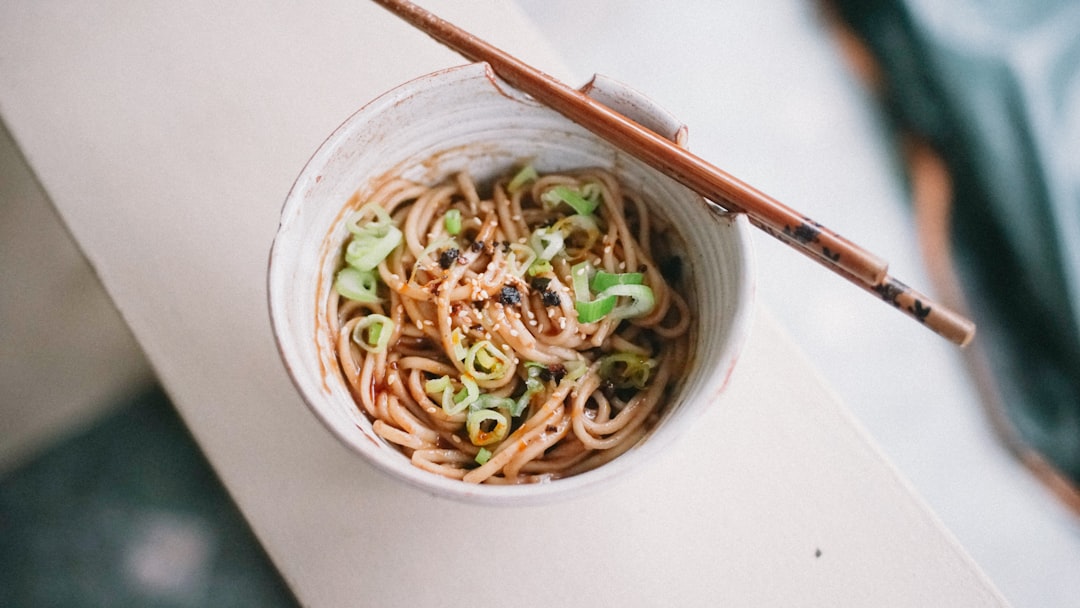
This is probably the most natural application. Adding chili oil directly to a noodle sauce — dan dan style, cold sesame noodles, a quick soy-butter sauce — integrates the heat into the sauce itself rather than sitting on top. You get even heat distribution in every bite. Chinese-style neutral-base oils are the go-to here; sesame-based oils can work too since you’re not applying sustained heat. The secondary seasonings in these sauces — soy, sugar, MSG — interact with the chili oil’s flavor in ways worth understanding.
Eggs
Frying eggs in chili oil is a legitimate technique and not a novelty. Use a neutral-based chili oil, medium heat, and the result is a fried egg with chili flavor cooked into the whites. The edges get a little crisped by the chili infusion in the oil. The yolk stays intact. This works. Keep the heat below the smoke point — medium rather than high — and don’t walk away from it.
Dressings and cold applications
Chili oil in a vinaigrette or cold sauce requires no heat consideration at all — any base oil works. Sesame-based chili oils are excellent in cold noodle dressings, sliced cucumbers, and smashed garlic applications. This is where Italian-style olive-based chili oils also shine: a drizzle on bruschetta, into a cold bean salad, over burrata. The smoke point is irrelevant here; the base oil flavor is everything.
What “Cookability” Means in FIL Chili Oil Reviews
Every chili oil review on this site evaluates cookability as a distinct criterion alongside flavor, heat, and oil quality. Here’s what that means in practice:
- Base oil identification: Is it labeled? Is the base oil appropriate for cooking applications?
- Smoke point estimate: Based on the labeled oil type, is there headroom for stir fry temperatures?
- Flavor stability under heat: Does the chili flavor survive a hot pan, or does it turn flat and acrid? This I test directly.
- Chili-to-oil ratio: Oils with very high solid content (suspended chili flakes, seeds) behave differently in a pan than clear, filtered oils. Solids burn faster.
- Versatility range: Can this oil serve both cooking and finishing roles, or is it single-use as a condiment?
A chili oil that scores well on cookability is a more useful pantry item. That’s the practical outcome. If a $15 chili oil can replace both a cooking oil and a finishing condiment in a dish, the value calculus changes compared to a condiment-only product at the same price.
The What Is Chili Oil foundation post covers how chili oil differs from chili crisp at the category level — including why cookability is a primary evaluation criterion for chili oil in a way it isn’t for chili crisp. And the how chili crisp is made guide explains the production methods — pour-over vs. simmer — that determine how much flavor ends up in the oil before it ever hits a pan.
A Note on Heat Concentration
One thing worth flagging: chili oil gets more concentrated as it cooks down. If you’re reducing a sauce or cooking at high heat for several minutes, the heat level in the dish will climb as moisture evaporates and the chili compounds concentrate. This isn’t a problem if you account for it. Add less than you think you need at the start; you can always add more at the finish. With a finishing drizzle, you have full control. With cooking applications, start conservative.
This concentration effect is also why I’d rather use a milder chili oil for cooking and add a hotter finishing oil than try to cook with a high-Scoville product. The heat becomes difficult to predict once it’s been reduced into a sauce.
If you want the full picture on how the different chili varieties contribute different heat characters — and why some peppers produce heat that intensifies under cooking while others stay stable — that guide covers the spectrum. And for context on how salsa macha handles cooking versus condiment use, that’s a related question worth exploring — it’s a different oil-based chili product with its own set of rules around heat application.
Can you cook with chili oil in a stir fry?
Yes, as long as the base oil is a neutral high-heat oil like soybean, canola, or sunflower. These have smoke points in the 400–450°F range, which is above typical stir fry temperatures. Sesame-based and olive oil-based chili oils should be used as finishing oils, not cooking fats.
What is the best chili oil for cooking?
Neutral-based chili oils — soybean, canola, or sunflower oil as the base — are the best chili oil for cooking applications. They have high smoke points and don’t add competing flavors. Chinese-style la you is typically made with neutral oil, which is part of why it’s the most versatile cooking chili oil.
Does chili oil burn in the pan?
The base oil won’t burn at typical cooking temperatures if it’s a neutral high-heat oil. However, chili oils with suspended solids (chili flakes, seeds) can scorch if the pan gets too hot or you leave them unattended. Use medium to medium-high heat and keep things moving.
Can you fry eggs in chili oil?
Yes. Use a neutral-based chili oil at medium heat. The oil cooks into the egg whites and adds chili flavor throughout. Keep the heat lower than you’d use for a standard fried egg — medium rather than high — to stay below the smoke point.
Does cooking with chili oil make food spicier?
It concentrates as it reduces. If you’re building a sauce and cooking it down, the heat level in the finished dish will be higher than what the chili oil tastes like straight from the bottle. Start with less than you think you need when cooking, and add more as a finishing drizzle if you want more heat.
Can you use sesame chili oil for cooking?
Not at high heat. Toasted sesame oil has a smoke point around 350°F and its flavor degrades under sustained heat. Sesame-based chili oils are best used as finishing oils on noodles, cold dishes, and dressings. Japanese rayu and some Korean chili oils use sesame as a base — check the label.
What is the difference between cooking with chili oil vs. chili crisp?
Chili oil is primarily oil, so it behaves like a flavored cooking fat. Chili crisp has substantial fried solids — onions, shallots, seeds — that will burn quickly in a hot pan. Chili crisp is a condiment designed for finishing; chili oil is versatile enough for both cooking and finishing depending on the base oil.