
This post contains affiliate links. I may earn a small commission if you buy through them — at no extra cost to you. My scores are never influenced by this.
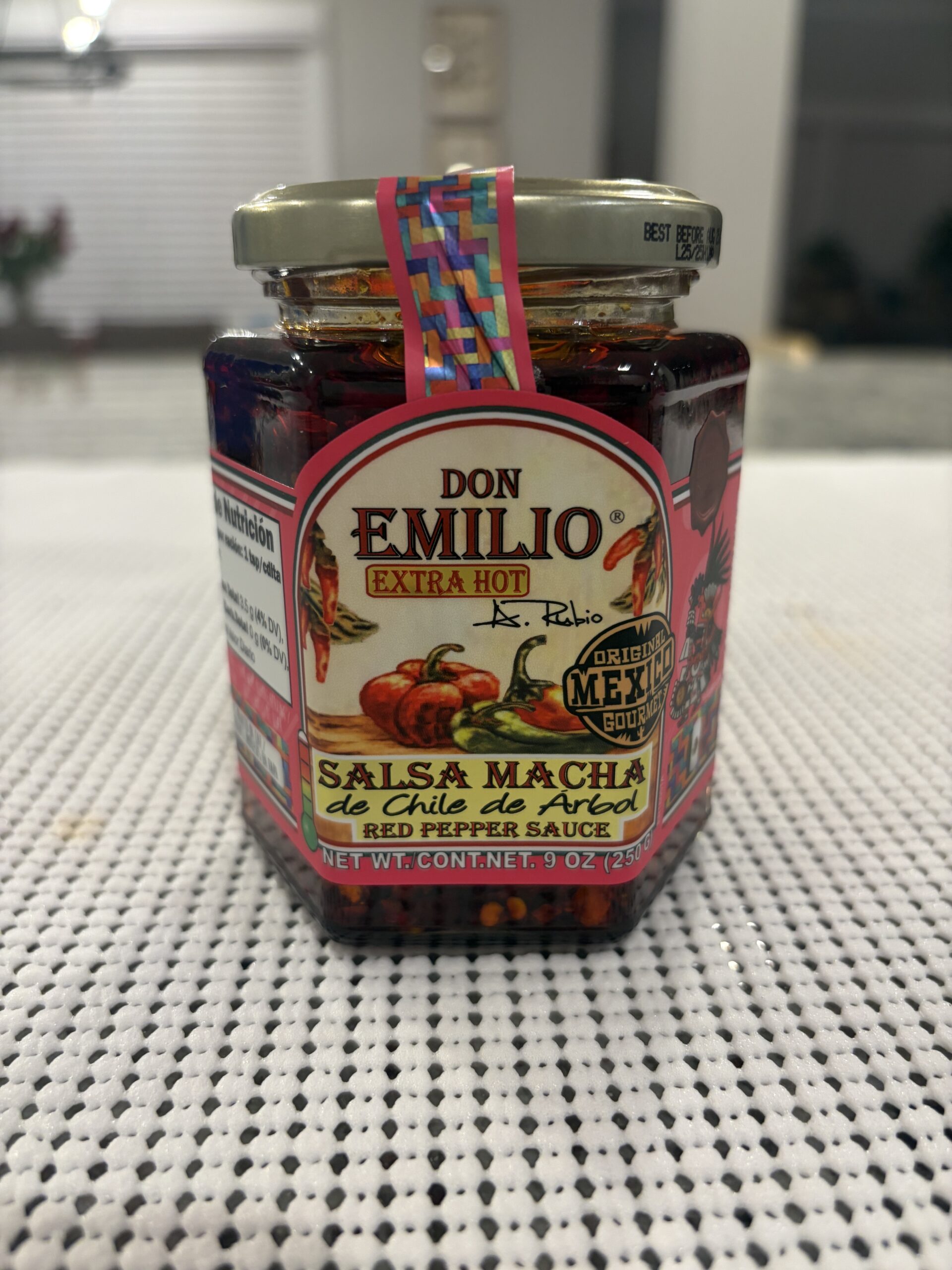
Don Emilio’s Extra Hot Salsa Macha delivers pure chile de árbol heat with nothing else behind it. Impressive settlement and real chili, but the extreme heat buries all flavor complexity. Heat seekers only. Check price on Amazon.
Introduction
This Don Emilio salsa macha review is part of something bigger. Flavor Index Lab’s first full batch of salsa macha reviews. I’ve spent months testing chili crisp and chili oil, and now I’m expanding into the category that started in Veracruz and builds its flavor on dried chilies, nuts, seeds, and oil. Don Emilio is a Mexican brand that makes several salsa macha variants across the heat spectrum, and I’m starting with the one they label Extra Hot — their chile de árbol version rated 5 out of 5 on their own heat scale.
I’ll be honest: extreme heat isn’t where I perform best. I have a medium spice tolerance and I evaluate heat as one factor among seven. But the label made a promise, and I wanted to see if this jar had anything interesting to say beyond the burn. Spoiler: it didn’t.
Don Emilio Salsa Macha Review: Quick Facts
| Brand | Don Emilio |
| Product | Salsa Macha de Chile de Árbol. Red Pepper Sauce (Extra Hot) |
| Category | Salsa Macha |
| Style | Mexican |
| Oil | Sunflower |
| Heat | 5 / 5 (very hot) |
| Price | $14.99 |
| Size | 9 oz |
| Per oz | $1.66/oz |
| Made in | Mexico |
| Buy | Amazon |
| Tier | SKIP |
Serving size: 1 teaspoon. Usually a teaspoon serving signals a product that’s more oil than substance — a way to keep the nutrition label looking clean. Here, it’s just accurate. A teaspoon is all you’d want. Maybe less.
Ingredient Quality
Ingredients: Sunflower oil, red peppers, garlic, onion, sea salt, yeast extract, parsley, celery, turmeric, annatto.
The first thing I notice: no nuts, no seeds, no vinegar. Those three ingredients are what separate salsa macha from every other chili-in-oil product. Traditional salsa macha is built on the tension between toasted nuts and dried chilies, bound by oil and sharpened with vinegar. Don Emilio skipped all of that. What’s here instead: parsley, celery, turmeric — reads more like a European seasoning blend than a Veracruz pantry staple.
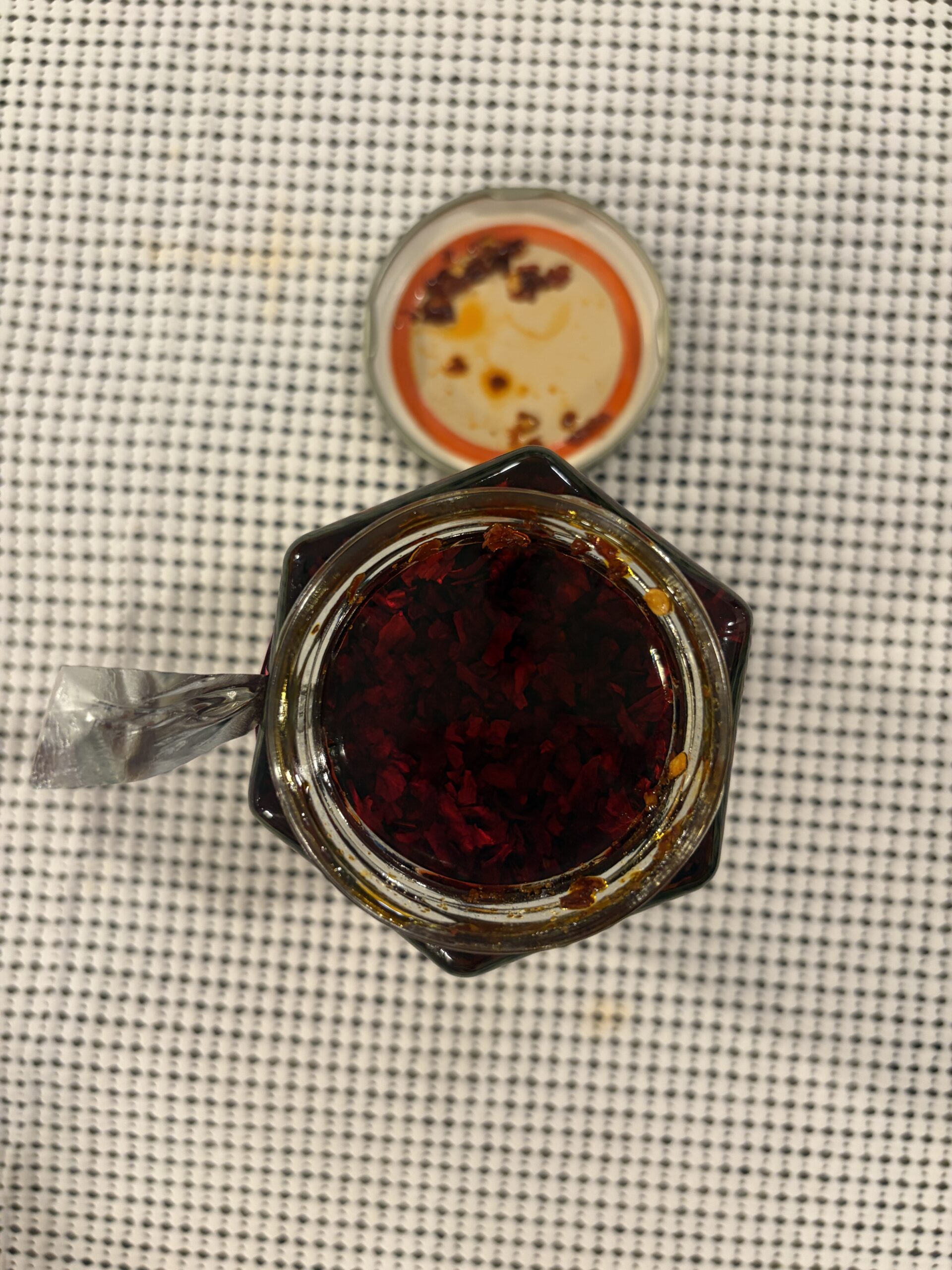
Then there’s annatto — and this is where it gets interesting. Annatto comes from the seeds of the achiote tree, native to tropical Mexico and Central America. It’s been a staple in Mexican cooking for centuries: you’ll find it in cochinita pibil, recados, and achiote paste across the Yucatán. It adds a slightly peppery, nutty, earthy sweetness and gives food a distinctive orange-red color. I’d never seen it in a salsa macha before, and its presence here says something about Don Emilio’s roots. This isn’t a brand cosplaying as Mexican: the annatto, the sunflower oil, the “product of Mexico” on the label, the Non-GMO Project Verified seal. The DNA is real.
But here’s the problem: annatto is last on the ingredient list, and I couldn’t detect its contribution in the actual eating experience. The extreme heat buries whatever peppery sweetness annatto might add. The same goes for yeast extract — a legitimate umami booster sitting fifth on the list — and the garlic and onion behind it. There’s a potentially interesting ingredient foundation here that never gets a chance to show up because the chile de árbol heat steamrolls everything.
The question this raises: is this actually a salsa macha? Don Emilio puts those words on the label, and I take them at their word. But the composition: no nuts, no seeds, no vinegar, plus parsley and celery — is closer to a chili pepper condiment in oil than what the salsa macha tradition typically delivers.
Aroma
Opening the jar, it smells like freshly cracked, chopped red chili — a genuine dried pepper smell, not extract-grade heat. The aroma persists through stirring, which is a good sign. The oil itself smells like an infused oil that picked up the vibrancy of the pepper. There’s real chile de árbol character here, and the nose actually promises something the palate can’t deliver.
Appearance and Settlement
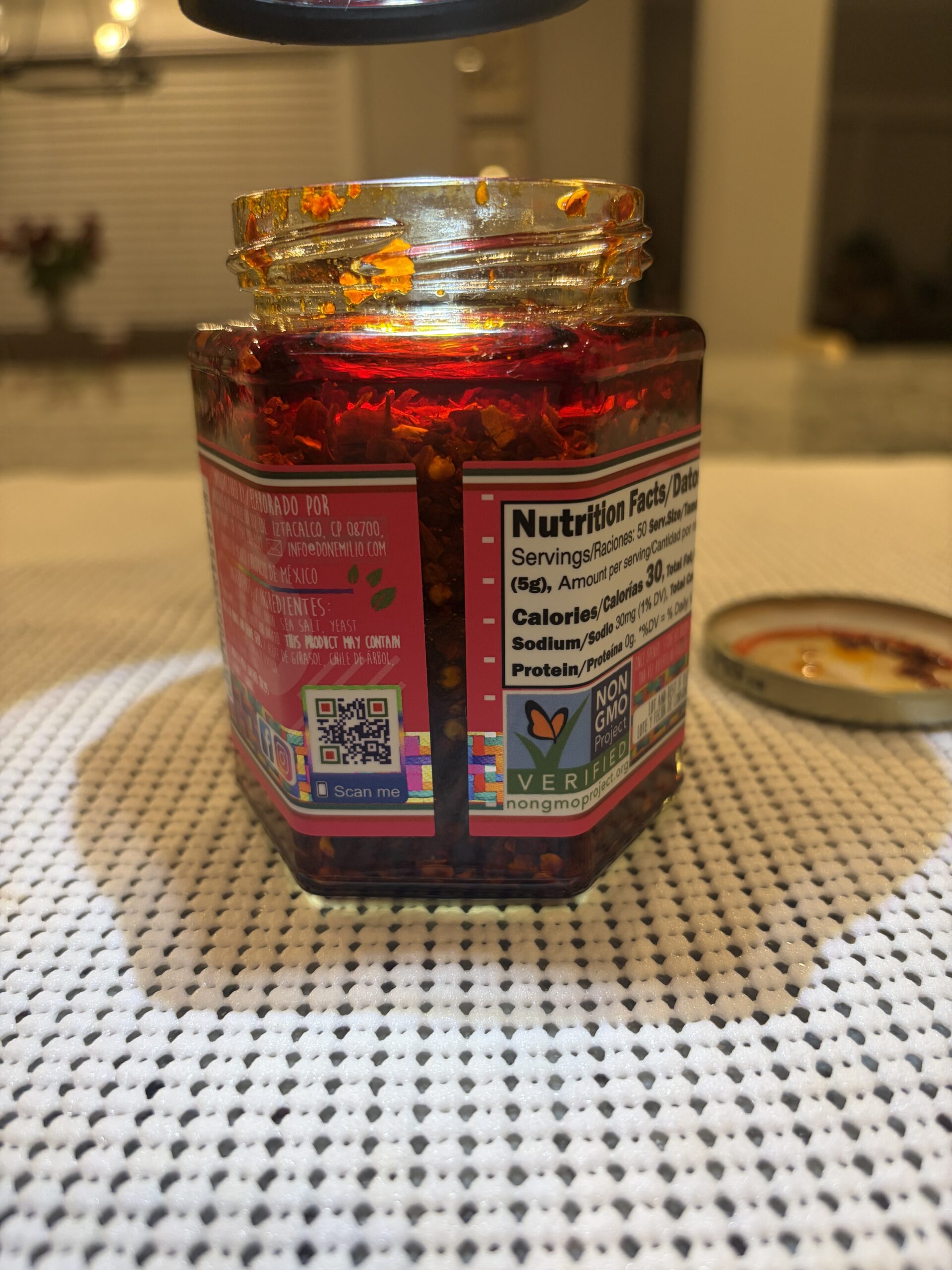
The settlement is impressive — roughly 90% solids to oil. Before opening, the settlement sticks up over the label line, and once the lid comes off, you can see right down to the chilies. Red chili bits and a density of seeds — chili seeds from the peppers themselves, not sesame or pepita. Post-stir, the texture is finely ground and uniform, everything approximately seed-sized.
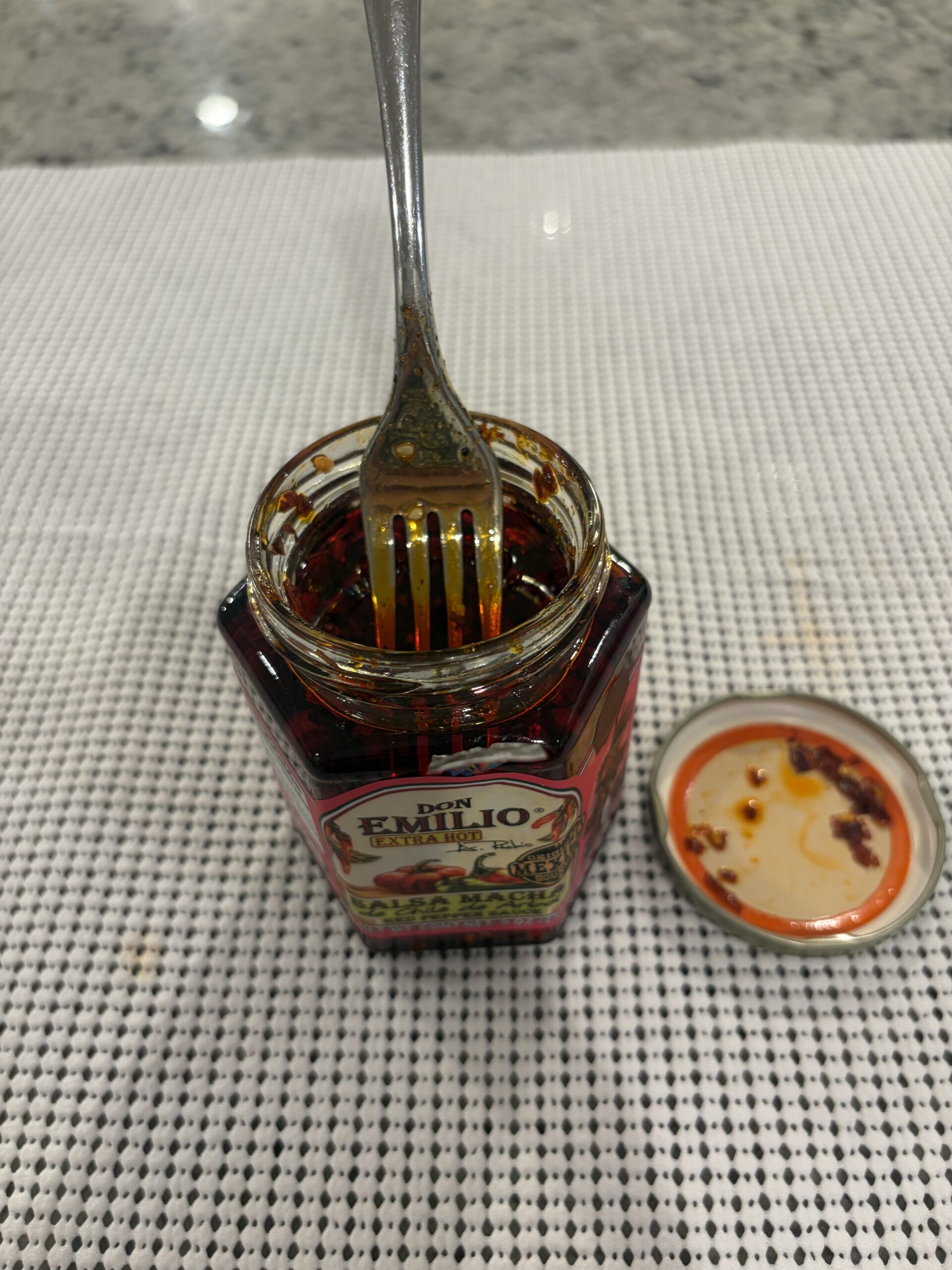
The fork sits on top of the settled solids before stirring — dense enough to hold weight. That’s a positive indicator. Whatever else this jar gets wrong, the physical composition is solid.
Texture and Crunch
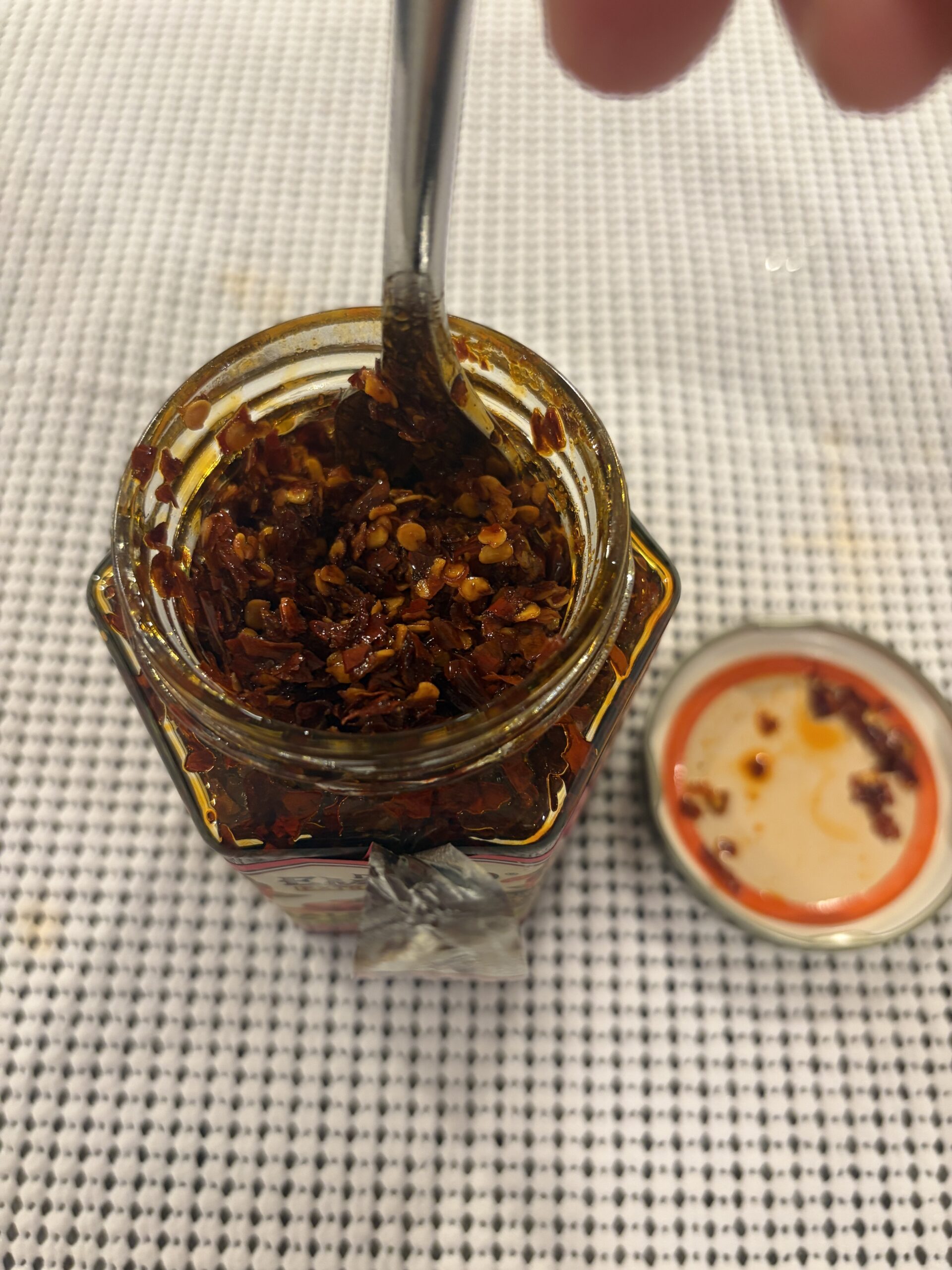
Very crunchy. The grind is fine and uniform — small, seed-sized particles that hold their structure. The crunch comes entirely from dried chili and its seeds, not from nuts or fried aromatics. It’s a different kind of crunch than chili crisp — less shattery, more seedy and dense. You earn the flavor (what there is of it) by chewing through that grind.
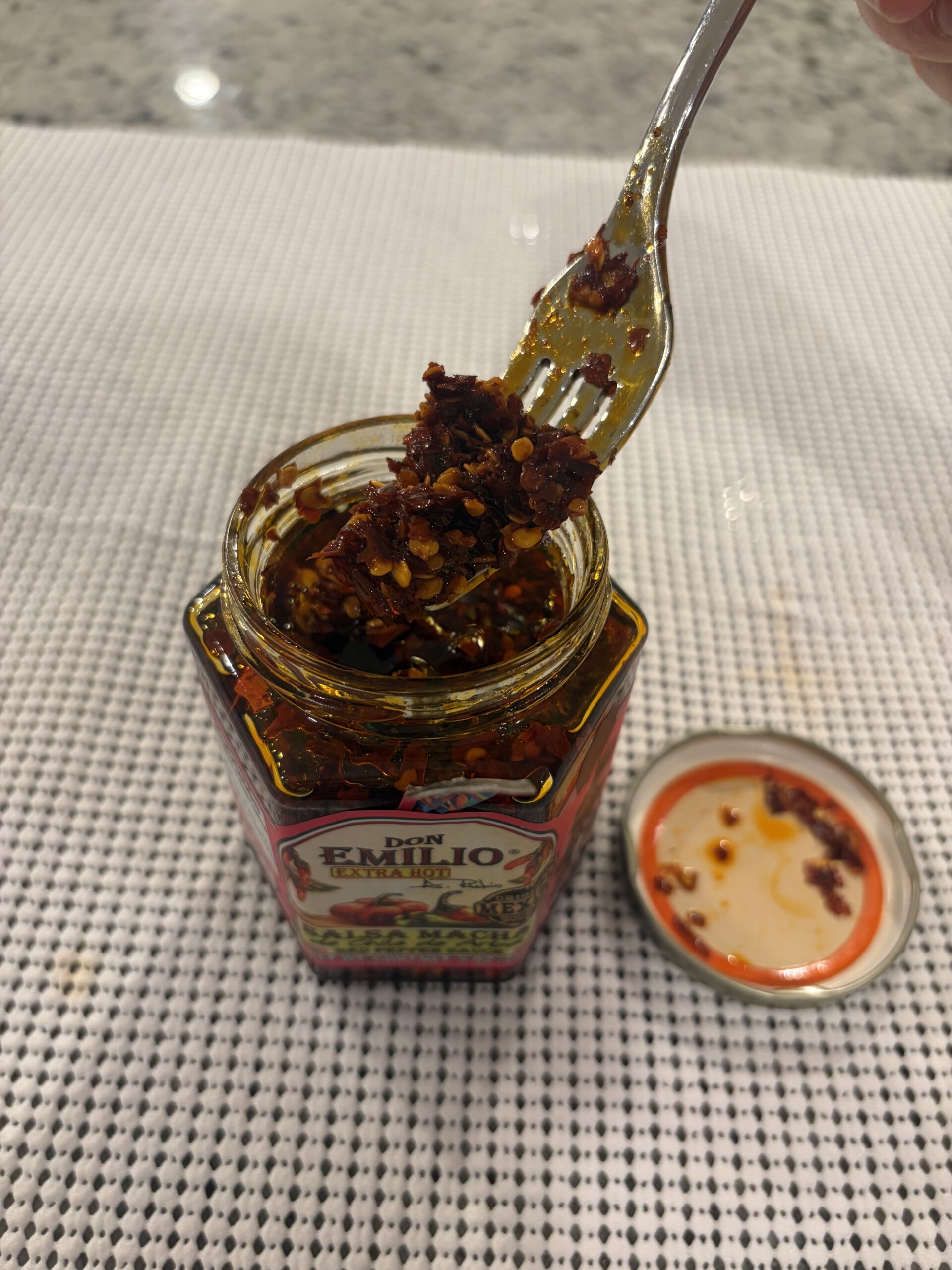
The fork-pull post-stir brings up a thick, packed load of chili bits with minimal oil runoff. The ratio is exactly what you’d want to see. On texture alone, this jar passes.
Flavor Complexity
This is where it falls apart. Take a very small bite and the first thing you get is crunch, then an immediate tingling burn on the tongue. There’s a flash of fresh pepper flavor — you can taste the vibrancy of the chile de árbol, and for a fraction of a second, it’s promising. Then the heat takes over.
It builds instead of front-loading, which means by the time you realize how hot it is, it’s already escalating. The burn stays isolated to the tongue — not the back of the throat, not the lips, just the entire surface of the tongue, all the way down. And the intensity keeps increasing after you swallow.
I didn’t get to taste the oil separately. After the first forkful, my tongue was already wrecked, and any attempt at careful oil evaluation would’ve been theater. The oil smells like it captured real pepper vibrancy, and under different heat circumstances, it might do interesting work. I’ll never know.
The whole jar is technically unified — the oil and the bits are both working toward the same goal. The problem is that goal is just heat. There’s no second layer. No savory depth from the yeast extract, no earthy sweetness from the annatto, no garlic presence worth noting. Those ingredients exist in the jar. They just don’t exist in the experience. One note, one dimension.
Heat
The label puts this at 5 out of 5 on their thermometer graphic, and that’s accurate. This is one of the hottest products I’ve tested at Flavor Index Lab.
The heat is capsaicin burn, concentrated entirely on the tongue. It builds — you think for a moment you might be OK, and then it escalates. It kept getting worse after I swallowed. I was sweating from a small amount, and the heat didn’t subside for the rest of the recording session. I tasted this at 10:45 at night after my kids went to bed. I predicted heartburn. I was right.
I evaluate heat as one factor among seven, and I don’t penalize a product for being hot. What I penalize is heat that destroys everything around it. The question is always: does the heat enhance or bury the other flavors? Here, it buries them completely. The fresh chile de árbol character that shows up in the aroma and the first half-second of tasting gets obliterated by the capsaicin that follows.
Heat rating: 5 (very hot). Type: Capsaicin burn, tongue-focused. Behavior: Building, not front-loaded. Duration: Long-lingering — still intensifying minutes after the bite.
Use Cases and the Mixing Angle
I can’t recommend this to anyone with a normal spice tolerance. If you’re specifically chasing extreme heat — if you want your salsa macha to function purely as a heat delivery system — this delivers on that promise. But “it’s really hot” is a description, not a recommendation.
If I had to put it on something: a very small amount stirred into a pot of beans, or a few drops on tacos al pastor where the meat and salsa can absorb and distribute the heat. But at this intensity, you’re measuring in drops, not spoonfuls.
I didn’t reach for a mixing angle here — when your tongue is on fire, blending experiments aren’t where your head goes. In theory, a tiny amount added to a milder, more complex jar could function as a heat booster. But you’d need to be precise, and at that point a dedicated hot sauce gives you more control. This isn’t a standalone jar, and it’s not an enthusiastic mixing candidate either. It’s a one-trick jar, and the trick is pain.
Versatility and Packaging
Standard 9 oz glass jar — decent size, easy spoon access. At $14.99 ($1.66/oz), it’s mid-range for salsa macha. But value per ounce is a strange metric for a product you’d use a teaspoon at a time and might never finish. Non-GMO Project Verified. The label design is clean — the heat thermometer graphic is honest, which I appreciate. Don Emilio doesn’t try to sneak this past you.
Final Verdict
SKIP
Don Emilio’s Extra Hot Salsa Macha delivers exactly one thing: extreme heat. The chile de árbol is real, the settlement is impressive at 90% solids, and the fresh pepper aroma suggests a product that could be interesting in a milder form. But there’s no flavor payoff beyond the burn. No nut depth, no vinegar sharpness, no complexity from the annatto or yeast extract — just capsaicin burn that builds and doesn’t stop.
The ingredient list is missing the core components that define salsa macha as a category — nuts, seeds, and vinegar — and what’s there instead gets completely overwhelmed by the heat. Don Emilio makes other variants across their range — Morita, Seeds, Garlic — that may tell a different story. This one told me exactly one thing, very loudly.
- Best Chili Crisp: Everything We’ve Tested — See where every jar ranks.
- What to Eat with Chili Crisp — A field guide to pairing by jar style.
- How to Build a Chili Crisp Starter Kit — Three jars, no overlap.
Frequently Asked Questions
Is Don Emilio salsa macha spicy?
The Extra Hot variant is extremely spicy — Don Emilio rates it 5 out of 5 on their own heat scale, and that rating is accurate. The heat is capsaicin burn concentrated on the tongue that builds after swallowing and lingers for several minutes. Even a small amount caused sweating and intense burning.
What does Don Emilio Extra Hot salsa macha taste like?
Primarily heat. There’s a brief flash of fresh chile de árbol pepper flavor before the capsaicin burn takes over completely. The aroma is promising — fresh cracked chili pepper — but the extreme heat buries any other flavor notes from the garlic, yeast extract, or annatto in the ingredient list.
Where can I buy Don Emilio salsa macha?
Don Emilio salsa macha is available on Amazon as individual jars and as a 4-pack variety bundle that includes Árbol (Extra Hot), Morita (Hot), Select Seeds (Mild), and Spicy Garlic (Hot) variants.
What is annatto and why is it in salsa macha?
Annatto is a natural coloring and flavoring derived from achiote tree seeds, native to Mexico and Central America. It adds a slightly peppery, nutty, earthy sweetness and an orange-red color. While common in Mexican cooking (cochinita pibil, achiote paste), it’s unusual in salsa macha. Its presence in Don Emilio signals authentic Mexican production roots.
Is Don Emilio salsa macha a traditional salsa macha?
The ingredient list departs significantly from traditional salsa macha — there are no nuts (peanuts, pepitas), no seeds (sesame), and no vinegar, which are three of the core components that define the category. It also includes parsley, celery, and turmeric, which are uncommon in salsa macha. It’s made in Mexico by a Mexican brand, but the composition is closer to a chili pepper condiment in oil.
How should I use Don Emilio Extra Hot salsa macha?
In very small amounts — drops, not spoonfuls. It works best stirred into dishes where other flavors can absorb and distribute the heat: beans, stews, tacos al pastor. It’s not recommended as a standalone condiment for most spice tolerances. Some heat seekers may enjoy it directly, but there’s minimal flavor complexity beyond the burn.
Does Don Emilio make milder salsa macha variants?
Yes. Don Emilio offers several variants across the heat spectrum: Select Seeds (Mild), Salsa Macha Hot with Morita chilies, and Spicy Garlic & Onion (Hot). They also sell a 4-pack variety bundle on Amazon that includes all four variants. The Extra Hot chile de árbol version reviewed here is the most extreme end of their range.