
This post contains affiliate links. I may earn a small commission if you buy through them — at no extra cost to you. My scores are never influenced by this.
TL;DR: This one isn’t close. GUIZ Original dominates Momofuku Chili Crunch on flavor complexity, heat character, settlement, and value. Momofuku’s coconut sugar buries everything under sweetness. GUIZ gives you layers across every bite. GUIZ earns EXCELLENT; Momofuku earns AVERAGE.
Two originals, two different price brackets, two completely different philosophies on what a chili crisp should taste like. GUIZ builds its jar on Guizhou chili peppers, peanuts, broad bean paste, and cooking wine — traditional Chinese ingredients with fermented depth. Momofuku builds its jar on grapeseed oil, three chili varieties, and coconut sugar. One of these approaches produces a chili crisp with layers. The other produces a sweet, spicy condiment where the sugar does most of the talking.
I reviewed both individually — GUIZ Original (EXCELLENT) and Momofuku Chili Crunch (AVERAGE). This GUIZ vs Momofuku chili crisp comparison confirms what the individual reviews suggested: GUIZ is operating at a different level. Here’s why.
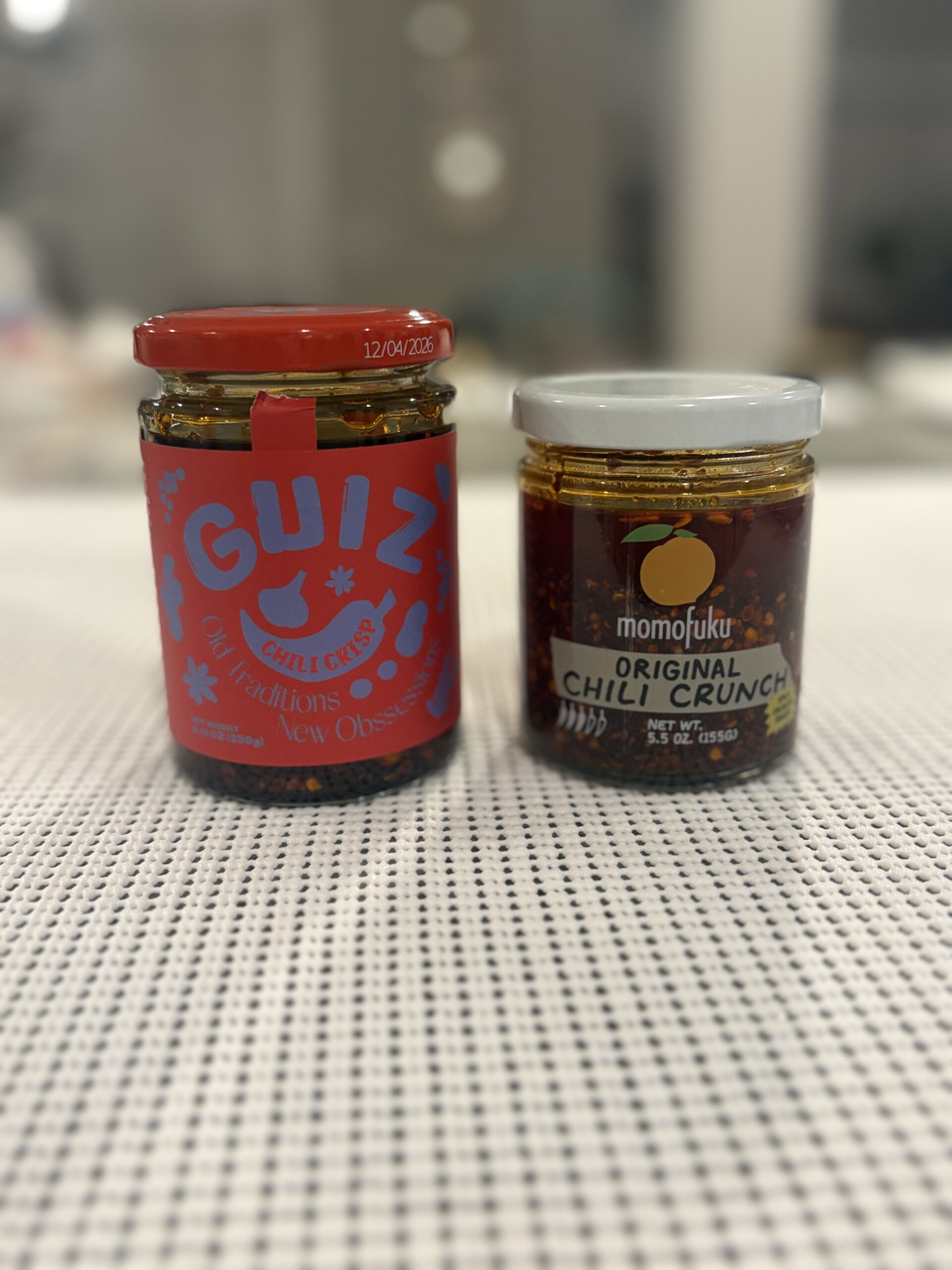
At a Glance
GUIZ vs Momofuku Chili Crisp Comparison Table
Tiers reflect in-context comparison performance. Individual review tiers may differ.
| GUIZ Original | Momofuku Chili Crunch | |
|---|---|---|
| Category | Chili Crisp | Chili Crunch |
| Size | 8.11 oz | 5.5 oz |
| Price | $11.98 ($1.48/oz) | ~$12 (~$2.18/oz) |
| Oil Type | Non-GMO soybean oil | Grapeseed oil |
| Key Ingredients | Guizhou chili, peanuts, broad bean paste, cooking wine | Puya chili, coconut sugar, sesame seed, 3 chili varieties |
| Heat | 4/5 — Dual-track chili + Sichuan peppercorn numbing | 3/5 — Chili burn only, no peppercorn |
| Crunch | Strong — peanuts, sesame, chili flakes | Moderate — uniform chili flakes and seeds |
| Settlement | ~90% solids | ~60-65% solids |
| Dominant Flavor | Layered: chili, peanut, fermented funk, tang | Sweet + spicy (two-dimensional) |
| Sugar | Yes (low, near end of list) | Yes — coconut sugar, 3rd ingredient |
| Fermented | Yes (broad bean paste, cooking wine) | No |
| Tier | EXCELLENT | AVERAGE |
The Crunch Question
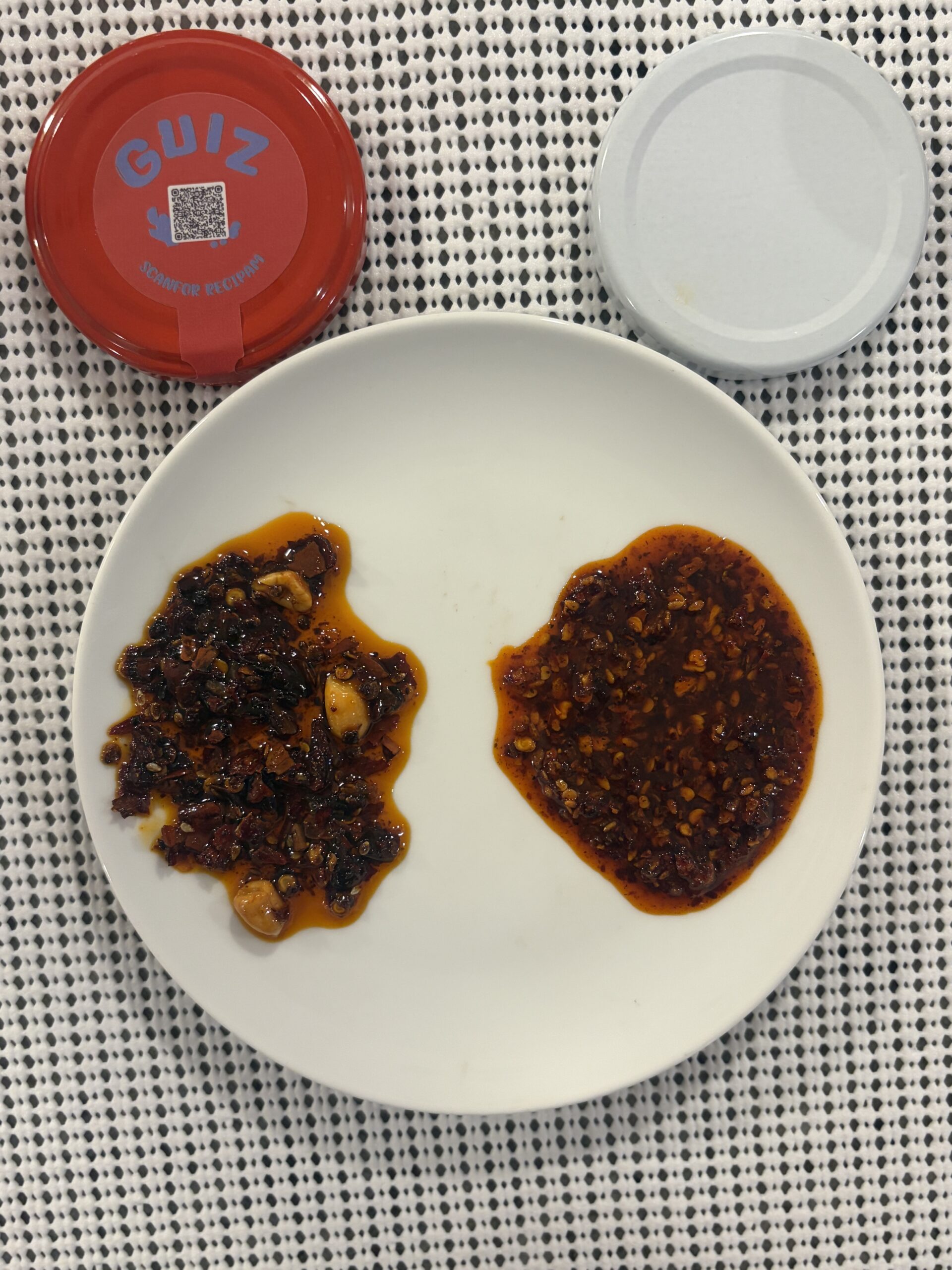
This is the one area where Momofuku holds its own. Both jars do a decent job with crunchy bits. Momofuku fills its jar with uniform chili flakes and seeds — everything crushed to a consistent size, creating a steady crunch across every bite. It’s a different kind of texture than GUIZ, which delivers bigger, more varied pieces: whole peanut chunks, sesame seeds, and larger chili flakes that give you different textures as you chew.
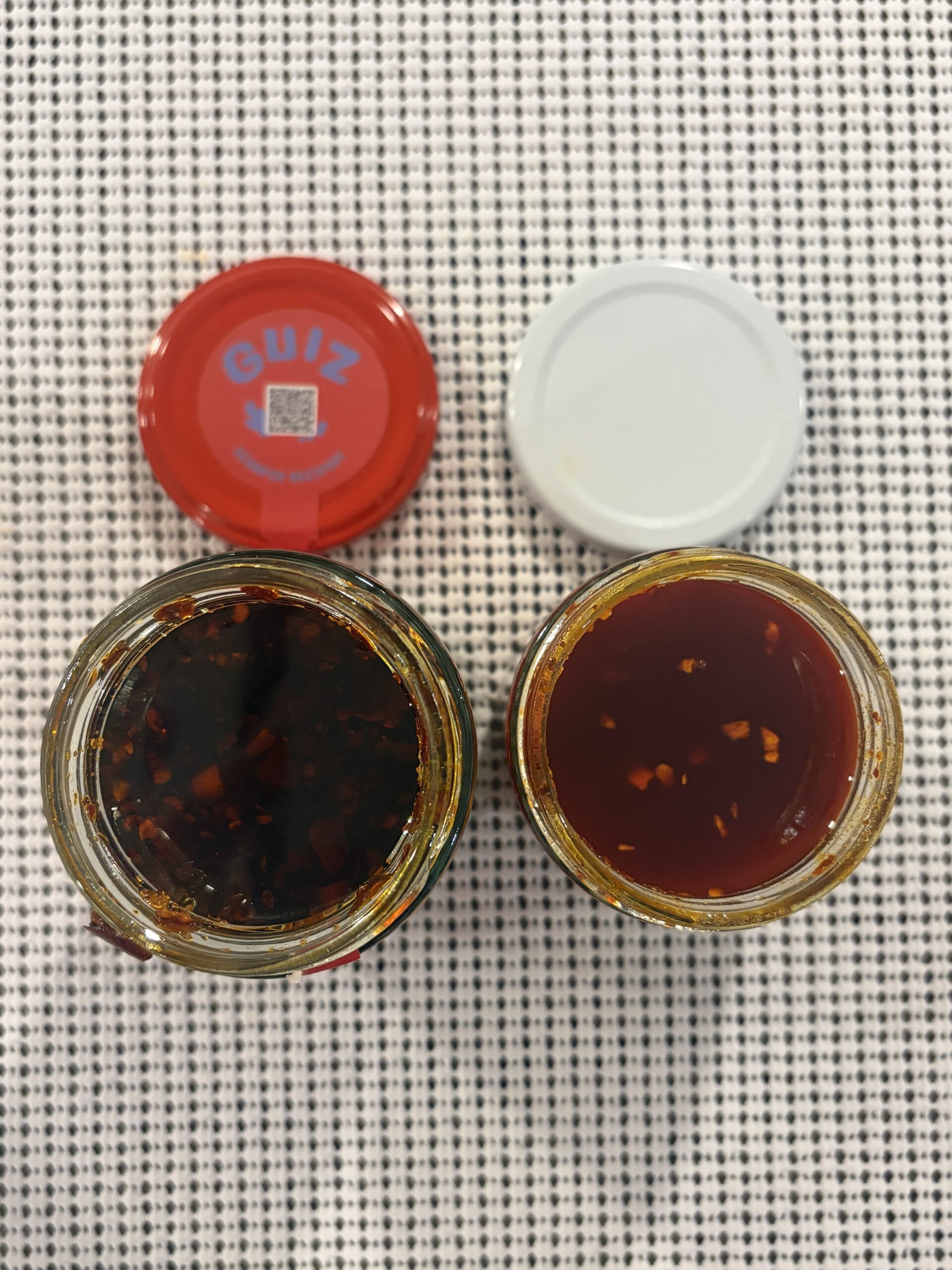
GUIZ’s crunch is more interesting because there’s size variation. You hit a peanut chunk, then a cluster of sesame seeds, then a chili flake — each contributing a different texture. Momofuku’s crunch is more uniform, which means consistent but one-note. Neither jar has a crunch problem. The gap between them on texture is smaller than the gap on everything else.
Where crunch starts to matter more is what carries it. In GUIZ, the peanuts are doing flavor work in addition to texture work — roasted nuttiness, body, something to chew on that rewards the effort. In Momofuku, the chili flakes and seeds deliver crunch and heat, but the coconut sugar coats everything. You’re crunching through sweetness. The texture is there; the flavor riding on that texture is the issue.
Momofuku’s Sweetness Problem
This is the section that decides the comparison — same as it decided the Momofuku vs Fly By Jing matchup. Coconut sugar as the third ingredient defines the entire Momofuku experience. The first thing you taste is sweetness. Not chili character, not garlic, not sesame. A thick, honey-butter toastiness that’s not even particularly coconutty — it’s more like someone melted honey butter and tossed chili flakes into it.
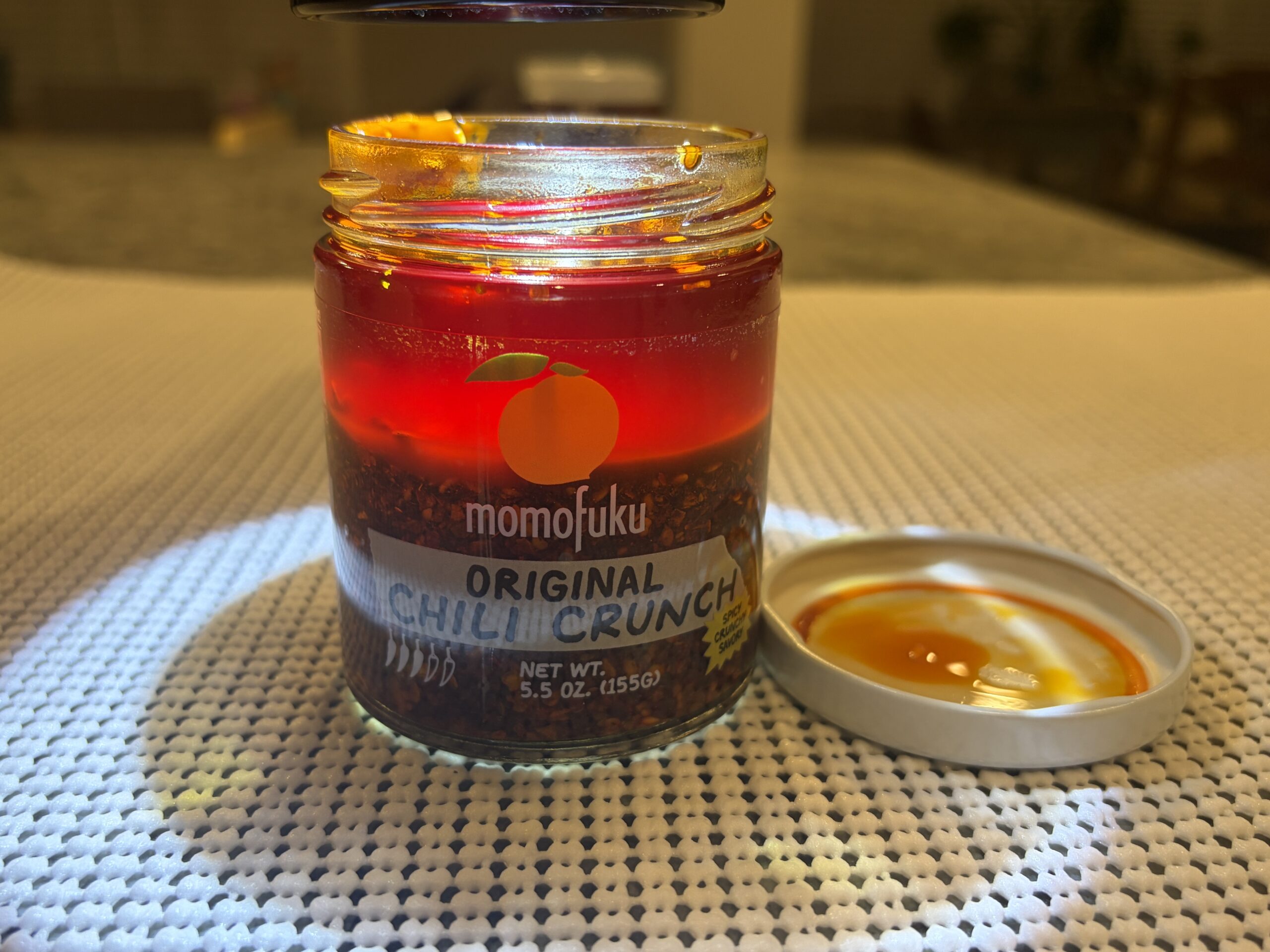
For all the ingredients Momofuku lists — three chili varieties, mushroom powder, sesame, shallots, garlic — you can’t pull them apart. The sweetness masks everything. Phil’s exact assessment: “For the amount of chilies it has, you can’t really distinguish much other than just burn and sweetness.” Three different chili types that could be creating a layered heat profile, and the sugar flattens all of them into a single sensation. Some umami shows up if you’re looking for it, but nothing else comes through with enough force to register as its own flavor.
The pairing problem follows. What do you put a sweet, spicy condiment on? Not rice — the sweetness clashes. Not eggs — same issue. You’d need something where sweet heat makes structural sense: a Thai-adjacent dish, something with peanut butter, maybe a glaze. That’s a narrow lane for a chili crisp that costs over $2 per ounce.
What GUIZ Does Differently
Everything about GUIZ is built for balance. Where Momofuku hits you with one dominant note, GUIZ delivers a sequence of flavors that unfold across the bite. The oil arrives first — clean, carrying garlic and ginger from the infusion. Then the Guizhou chili pepper brings actual chili flavor, not just burn. Peanut crunch lands right behind it. And underneath all of that, the broad bean paste and cooking wine add a fermented funk and a tanginess that gives the whole jar its character.
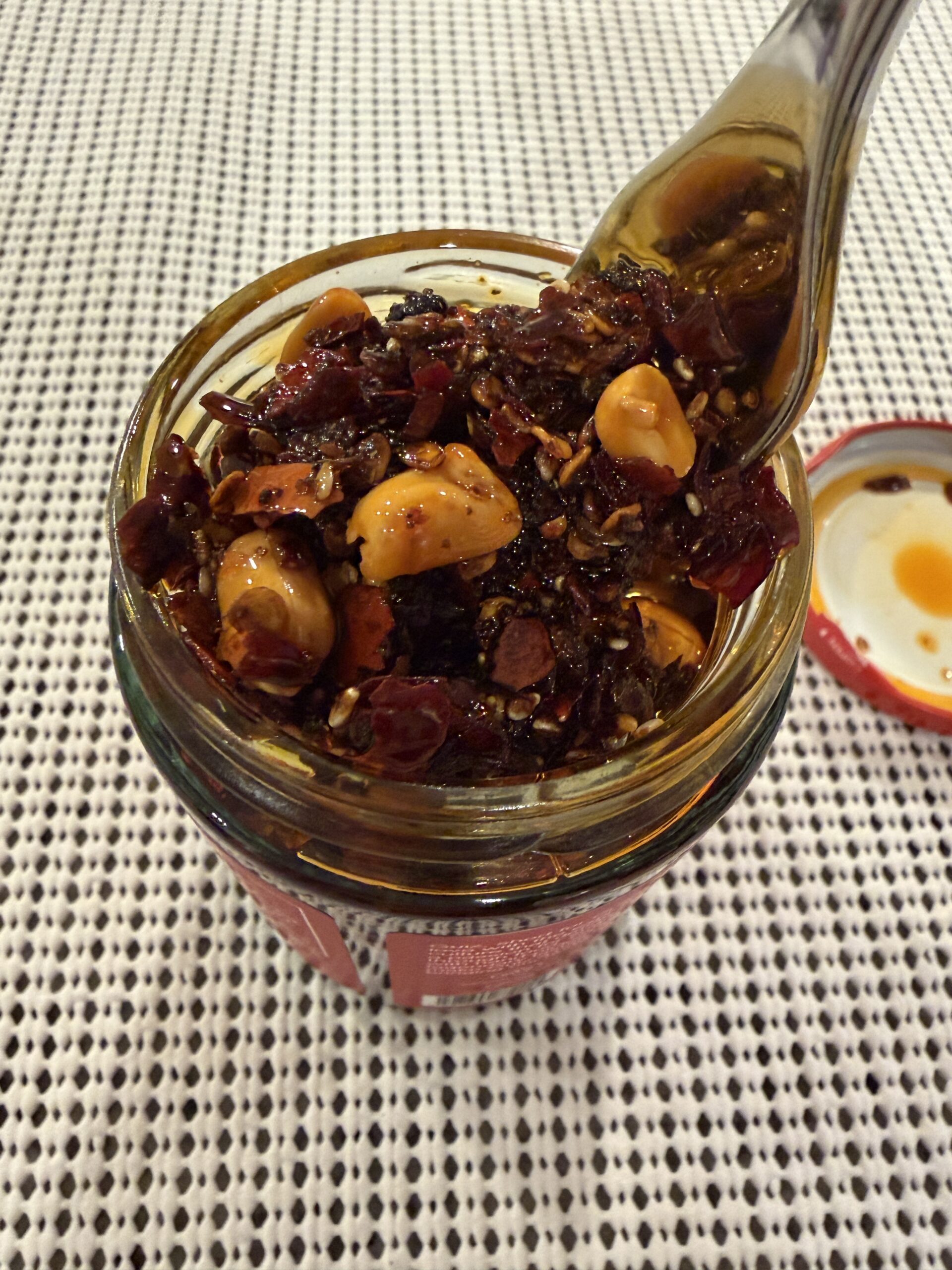
That tanginess is the thing GUIZ has that nobody else in this comparison series does. It comes from the cooking wine — a sharpness that sits underneath the heat and the peanut and the fermented bean paste, adding a dimension that you don’t expect and can’t replicate by mixing other jars together. It’s the ingredient that makes GUIZ taste like a recipe rather than a product.
The oil tells a similar story. GUIZ’s soybean oil base is clean and actively flavorful — it carries garlic and ginger from the infusion, and you can taste those flavors in the oil alone before you even get to the solids. It’s a whole jar concept where the oil and the bits work together as a designed system. Momofuku’s grapeseed oil is neutral by nature — a clean, light carrier that doesn’t contribute much flavor on its own. The oil spreads out clear with an orange-reddish hue from the chilies, but it’s not doing independent flavor work the way GUIZ’s oil does. That means Momofuku leans entirely on its solids for flavor impact, and those solids are fighting through a sugar layer to be heard.
The spice in GUIZ also works differently. Momofuku gives you one type of heat: chili burn. GUIZ gives you two tracks running simultaneously. The Guizhou chili peppers deliver capsaicin burn across the tongue and mouth. The Sichuan peppercorn adds numbing and tingling across the lips and the front of the tongue. Those two heat types layer on each other and create a fuller sensation — your mouth is processing burn and tingle at the same time, and neither overwhelms the other. The cooking wine and broad bean paste flavors continue working underneath the heat, so you’re tasting something even while the spice is doing its job.
Ingredients Side by Side
| Position | GUIZ Original | Momofuku Chili Crunch |
|---|---|---|
| 1st | Non-GMO soybean oil | Grapeseed oil |
| 2nd | Guizhou chili pepper | Puya chili |
| 3rd | Peanuts | Coconut sugar |
| 4th | Broad bean paste (doubanjiang) | Sesame seed |
| 5th+ | Sesame seeds, ginger, garlic, Sichuan peppercorn, spices, salt, yeast extract, cooking wine, sugar, natural flavor | Onion, garlic, mushroom powder, chili de arbol, Chaponese chili, salt, red pepper, shallot, yeast extract, seaweed |
The third ingredient tells the whole story. GUIZ puts peanuts there — crunch, flavor, body. Momofuku puts coconut sugar — sweetness that dominates everything below it on the list. By the time you reach Momofuku’s mushroom powder or yeast extract, the sugar has already taken the stage. GUIZ’s third ingredient adds to the jar. Momofuku’s third ingredient subtracts from it.
GUIZ also has fermented ingredients that Momofuku lacks entirely. Broad bean paste (doubanjiang) in the fourth position adds a deep, savory funk. Cooking wine adds sharpness and tang. These are traditional Chinese chili crisp ingredients that build flavor through fermentation rather than through sugar or MSG. Momofuku has nothing fermented in its list — the umami has to come from mushroom powder and yeast extract alone, and those quiet ingredients can’t compete with the coconut sugar sitting three positions above them.
Heat Comparison
GUIZ runs at a 4 out of 5. Momofuku runs at a 3 out of 5. But the gap is bigger than one point suggests, because the heat types are fundamentally different.
GUIZ delivers dual-track heat: Guizhou chili pepper burn plus Sichuan peppercorn numbing. The burn sits on the tongue and spreads across the mouth. The numbing tingles across the lips and the front of the tongue. Both heat tracks work at the same time without canceling each other out — you feel the burn and the tingle simultaneously, and the experience lasts for several minutes after you stop eating. It’s a full mala-adjacent heat profile that enhances flavor rather than masking it.
Momofuku delivers straight chili burn from three pepper varieties — puya, arbol, and Chaponese. No Sichuan peppercorn, no numbing, no tingling. One dimension of heat. The three chilies could have created an interesting layered burn — puya is mild and fruity, arbol is sharp and direct, Chaponese adds its own character — but the coconut sugar smooths all three into a single sweet-spice wall. You feel heat, you feel sweet, and that’s the story. GUIZ gives your mouth more to work with on every level.
Which One for What
| Situation | Reach For |
|---|---|
| Rice, noodles, eggs — everyday use | GUIZ — savory base works across the board |
| You want Sichuan peppercorn numbing | GUIZ — Momofuku has none |
| You want crunch | Either — both deliver, different styles |
| You want flavor complexity beyond two notes | GUIZ — fermented depth, tang, layered heat |
| You want sweet heat for Thai-adjacent pairings | Momofuku — the sweetness fits there |
| Peanut allergy | Momofuku — no peanuts (contains sesame, coconut) |
| Pizza, avocado toast, grain bowls | GUIZ — crunch and savory depth add to casual foods |
| Best value per ounce | GUIZ — $1.48/oz vs ~$2.18/oz, more solids too |
Value & Verdict
The value gap makes this comparison even more decisive. GUIZ gives you 8.11 ounces for $11.98 — that’s $1.48 per ounce. Momofuku gives you 5.5 ounces for roughly $12 — about $2.18 per ounce. You’re paying 47% more per ounce for Momofuku, and what you’re getting is a smaller jar with fewer flavor dimensions and a sweetness problem that limits what you can put it on. GUIZ fills 90% of its jar with solids. Momofuku’s settlement is lower, with more oil relative to bits. The math goes one direction on every metric.
Momofuku is a recognizable brand that’s done well in American grocery stores. The packaging is clean, the variety lineup is wide, and the chili crunch concept has introduced a lot of people to the category. That matters for the market. But when you evaluate what’s in the jar against what GUIZ puts in the jar — ingredient quality, flavor complexity, heat character, crunch density, price per ounce — Momofuku isn’t in the same conversation.
GUIZ Original on Amazon ($11.98) | Momofuku Chili Crunch on Amazon
GUIZ Original: EXCELLENT — Layered flavor, dual-track heat, dense crunch, fermented depth, and the best settlement I’ve tested. The most complete original chili crisp at any price point I’ve reviewed.
Momofuku Chili Crunch: AVERAGE — Decent crunch and three interesting chili varieties, but coconut sugar as the third ingredient flattens the entire experience into sweet-and-spicy. At $2.18 per ounce for a two-dimensional product, the value isn’t there when better options exist at a lower price.
Frequently Asked Questions
Is GUIZ chili crisp better than Momofuku?
Yes. In a side-by-side comparison, GUIZ Original outperforms Momofuku Chili Crunch on flavor complexity, heat character, settlement density, and value per ounce. GUIZ delivers layered flavor from broad bean paste, cooking wine, peanuts, and dual-track heat. Momofuku’s coconut sugar overwhelms its other ingredients, reducing the flavor to sweet and spicy. GUIZ earns EXCELLENT; Momofuku earns AVERAGE.
Why does Momofuku chili crunch taste so sweet?
Coconut sugar is the third ingredient in Momofuku Chili Crunch — ahead of sesame, garlic, and all supporting flavors. That high placement means sugar is one of the heaviest ingredients by weight. It creates a honey-butter sweetness that masks the chili character, mushroom powder, and other ingredients that could have added complexity.
Does GUIZ or Momofuku have better crunch?
Both jars deliver decent crunch, but in different styles. GUIZ has more variety — peanut chunks, sesame seeds, and chili flakes in different sizes. Momofuku has uniform chili flakes and seeds crushed to a consistent size. GUIZ’s crunch is more interesting; Momofuku’s is more consistent. Crunch is the one area where Momofuku holds its own in this comparison.
Does Momofuku have Sichuan peppercorn?
No. Momofuku Chili Crunch contains no Sichuan peppercorn. Its heat comes entirely from chili burn — puya, arbol, and Chaponese varieties. There is no numbing or tingling sensation. GUIZ includes Sichuan peppercorn and delivers dual-track heat: chili burn plus peppercorn numbing at the same time.
How much more does Momofuku cost per ounce compared to GUIZ?
GUIZ costs $1.48 per ounce (8.11 oz for $11.98). Momofuku costs approximately $2.18 per ounce (5.5 oz for ~$12). That’s a 47% premium for Momofuku, which delivers a smaller jar with fewer solids, less flavor complexity, and a dominant sweetness that limits its versatility.
What does GUIZ chili crisp taste like compared to Momofuku?
GUIZ delivers a layered sequence: garlic and ginger in the oil, Guizhou chili pepper flavor, peanut crunch, Sichuan peppercorn numbing, and a fermented tang from broad bean paste and cooking wine underneath. Momofuku delivers two dominant notes: sweetness from coconut sugar and burn from three chili varieties. GUIZ gives you more to taste on every bite.
Which original chili crisp should I buy — GUIZ or Momofuku?
Buy GUIZ Original. It delivers more flavor complexity, better heat character (dual-track vs. burn only), denser crunch, higher settlement (90% solids), and a lower price per ounce. Momofuku is only the better choice if you specifically want sweet heat for Thai-adjacent pairings or need to avoid peanuts and wheat.