
This post contains affiliate links. I may earn a small commission if you buy through them — at no extra cost to you. My scores are never influenced by this.
Momofuku Extra Spicy Chili Crunch introduces habanero to the lineup and markets itself as the heat-seeker option. In practice the burn is slower, more isolated, and less intense than the original. The flavor runs sweet and one-note. At $13 for 5.5 oz, it doesn’t earn the price. Verdict: SKIP. Check the current price on Amazon →
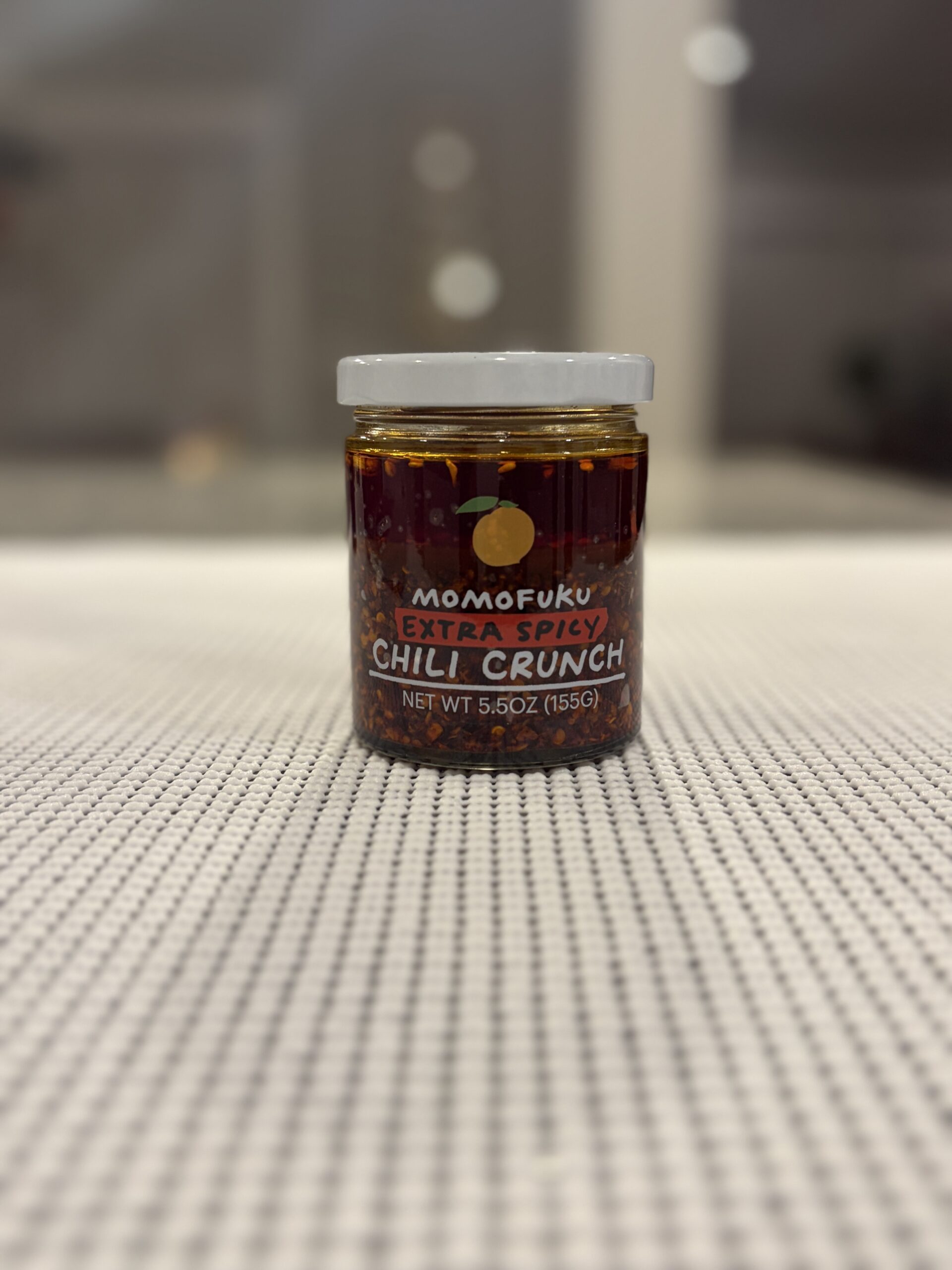
This is my fourth Momofuku Chili Crunch of the night, and this Momofuku Extra Spicy Chili Crunch review might be the shortest one to write. The Extra Spicy is the heat-forward entry in the lineup — the one built for people who found the original too gentle. It lists habanero in the ingredients, which neither the original nor the Black Truffle version has. And it costs $13 for 5.5 ounces, which is real money for a jar this size.
I’m reviewing this as a Momofuku Extra Spicy Chili Crunch standalone, and I’ll reference the other jars where it’s useful. But I want to be fair to this one on its own terms first.
Quick Facts
| Field | Detail |
|---|---|
| Brand | Momofuku |
| Product | Extra Spicy Chili Crunch |
| Category | Chili Crisp |
| Style | Fusion |
| Oil | Grape seed |
| Heat | 3 / 5 |
| Price | $13.00 |
| Size | 5.5 oz |
| Per oz | $2.36/oz |
| Made in | Not specified on label |
| Buy | Amazon, Momofuku online store |
| Tier | SKIP |
Label and Ingredients
Full ingredient list: grape seed oil, puya chili, coconut sugar, sesame seeds, onions, garlic, mushrooms, chili de arbol, chapones chili, salt, red pepper, shallots, yeast extract, seaweed, habanero chili.
Grape seed oil is a clean, neutral base — no issues there. But coconut sugar sits third on the list, ahead of sesame seeds, garlic, and anything that might actually taste like something. Ingredient position tells you what drives the flavor — and when the sweetener ranks that high, it’s going to dominate whether you want it to or not.
The label reads “0 grams added sugar” while listing coconut sugar as the third ingredient. This isn’t fraud — serving sizes are small (one teaspoon), so the per-serving amount may fall below the disclosure threshold. But coconut sugar is still sugar, and you will taste it. Don’t let the front-label claim create expectations the jar can’t meet.
Habanero appears last on the ingredient list — which means, by weight, it’s the least present of anything listed. The chilis doing more structural work are puya (mild, fruity, low heat) and chili de arbol (sharper, more resinous). Habanero is a slow-building, fruity chili — its heat accumulates rather than arriving upfront. When it’s also the smallest-quantity ingredient in a jar called Extra Spicy, that combination has consequences.
Compare this to the original Chili Crunch: similar structure, no habanero, and the coconut sugar doesn’t sit quite as prominently. The Extra Spicy was built by extending the chili roster and adding habanero at the end. The sweetness architecture wasn’t meaningfully changed. That matters.
One teaspoon serving size also deserves a flag. That’s a small portion for a product most people will use by the tablespoon. It keeps the nutrition panel modest, but it also means the per-serving numbers are doing some flattering math.
Appearance and Settlement
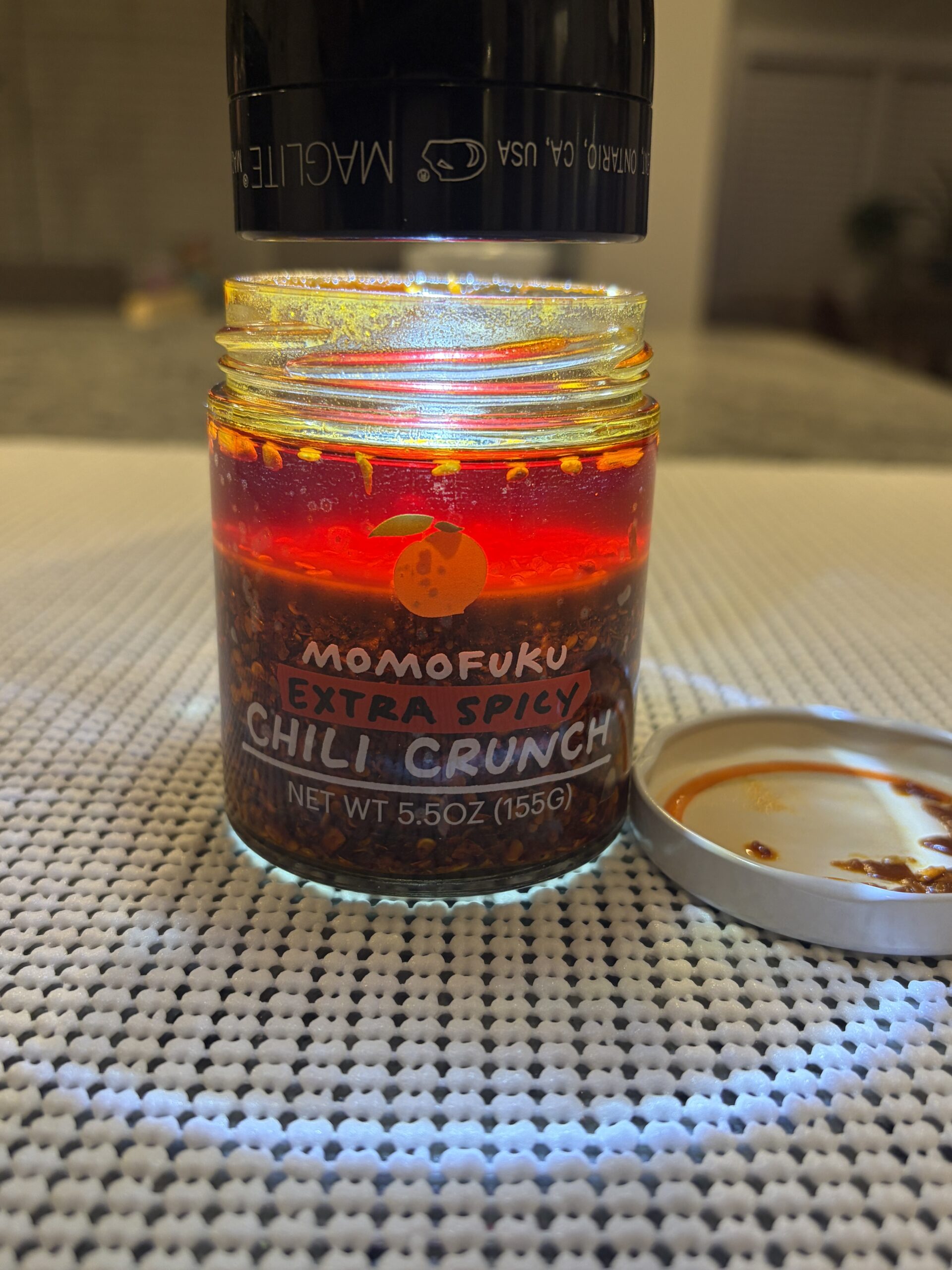
Settlement is average for Momofuku — a little more than two-thirds solids, around one-third oil. That’s a workable ratio. The oil is a dark, rich red and looks clean when isolated. The bits inside are fairly uniform: sesame seeds, chili flakes, a fine spice powder sitting on top of the larger chunks. Everything looks consistent.
The fork sit was the highest I got from any Momofuku jar — the fork rested visibly above the oil line rather than sinking through. That’s a real indicator of bit density relative to oil volume. The oil-to-solids ratio here is actually one of the better things about this jar.
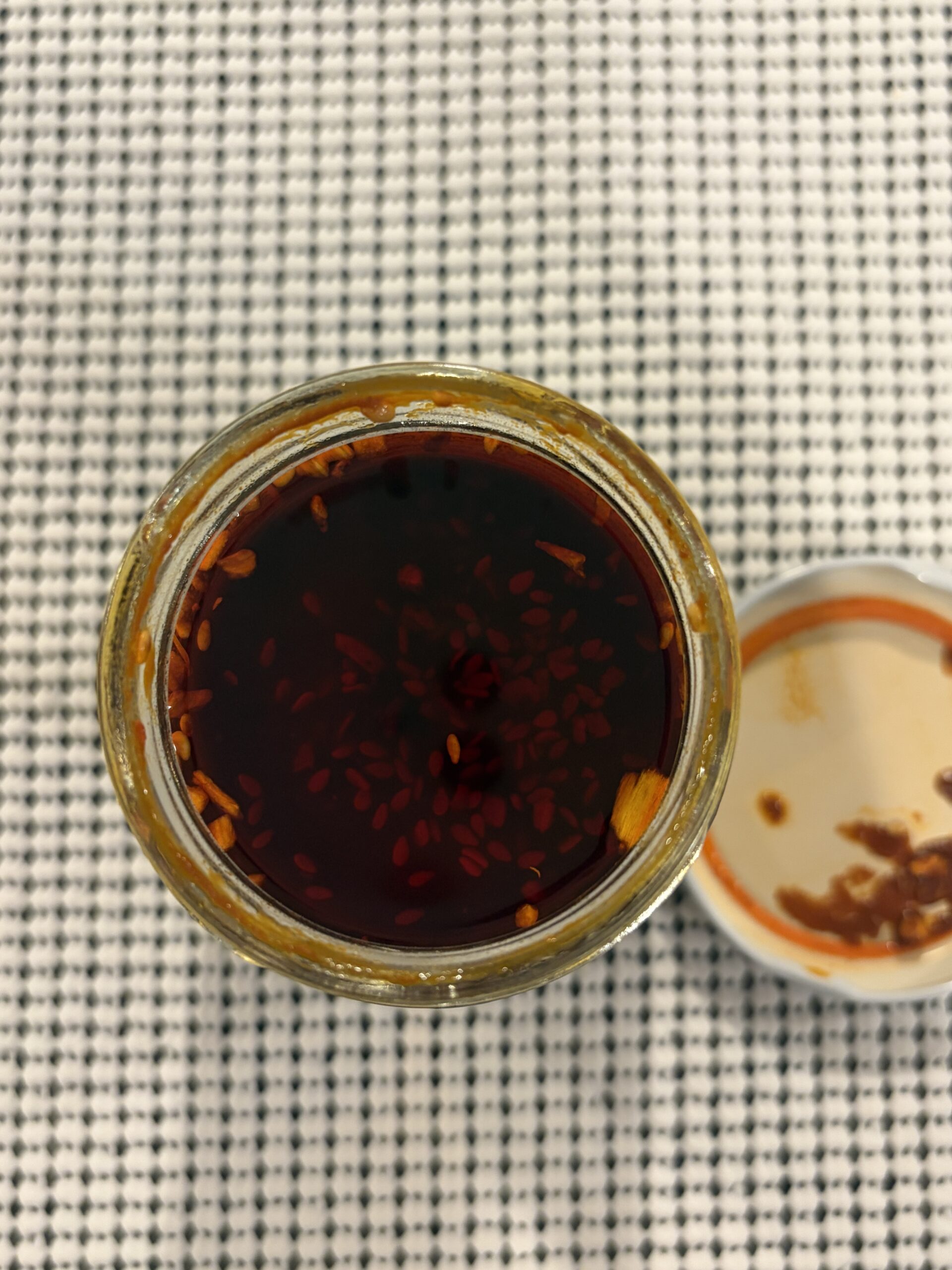
Opening the jar: you get chili, some sweetness, and the honey-butter character that I keep associating with Momofuku specifically — something the coconut sugar and aromatics do together. With this one, the dried chilies read a little more forward in the aroma than the other jars. Smells more alive than it tastes.
Texture and Crunch
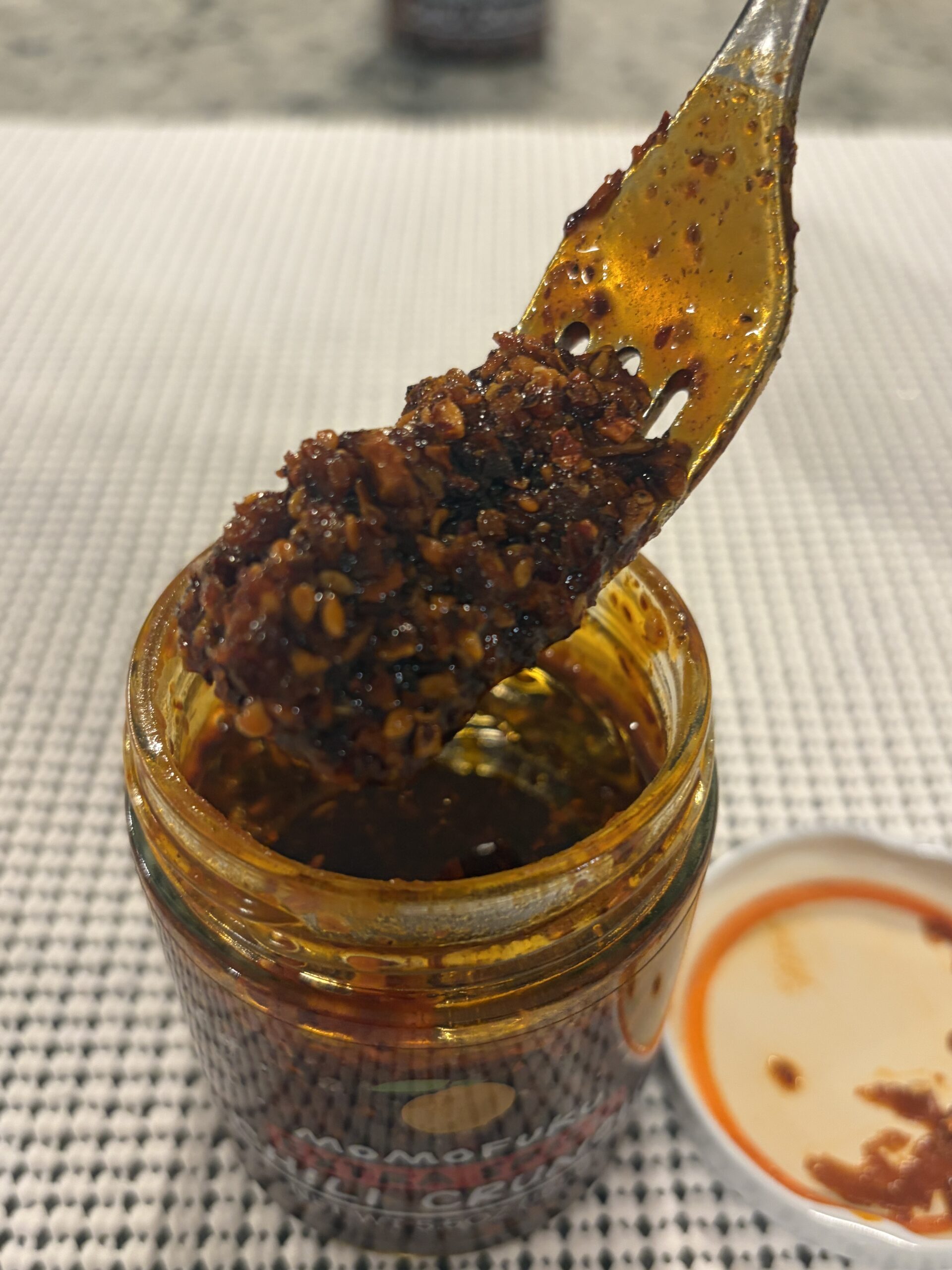
Crunchy. That’s the thing this product does well, and it deserves credit for it. Pull a fork through and you’re getting sesame seeds, chili pieces, solid bit density. The texture holds on the first bite and stays present as you chew — the bits don’t dissolve immediately.
The problem is that the crunch is doing most of the work. You bite into it and get the mechanical satisfaction of chewing through something, but actual chili flavor requires effort. The dried chilies release flavor as you work through them, but that flavor doesn’t come out into the oil in any meaningful way. The oil isn’t carrying much. It’s sweet, mildly spiced, and that’s about it.
This is a jar where the bits and the oil feel like two separate things. The bits have potential. The oil is a sweetened carrier. They’re sharing a container but not really working together. The original Chili Crunch has more coherence — the oil actually tastes like something. Here it’s mostly background.
Heat
Here’s where it gets strange.
The name is Extra Spicy. Momofuku doesn’t put a pepper-count on this one — the original is rated at three peppers out of five — but “Extra Spicy” sets a clear expectation. You pick this up expecting more heat than what came before it.
The first bite is crunchy and sweet, and you’re chewing, wondering where the heat is. Then, after the second bite, something starts building — slow, centralized, sitting squarely in the middle of the tongue. Not spreading, not climbing. Just parked there. That’s the habanero doing its thing.
The original and the Black Truffle both hit immediately — front of mouth, cheeks, tongue edges. You know within seconds that you’re eating something spicy. The Extra Spicy doesn’t do that. After two bites I had some heat in the center of my tongue. My cheeks were clear. The back of my throat was clear. No whole-mouth burn.
“Extra Spicy” is a stretch, not a lie. Habanero does add a genuinely different heat profile — slow, central, fruity-adjacent — and that’s a real design choice. But most people read “Extra Spicy” as meaning hotter than the original, not differently hot. The heat type changed; the intensity didn’t go up, and for many palates it effectively went down. Different heat types behave differently — front-of-mouth burn and slow-building center heat are not the same experience, even at the same Scoville level. The labeling sets up the wrong expectation.
On the heat scale: I’d call this a 3. The original earns a similar rating, maybe 3 to 3.5 — but it registers hotter because the heat is immediate and broad. This one earns its 3 quietly, and most people will clock it as the milder jar.
Flavor Complexity
The first thing you taste is sweetness. Not a suggestion of it — actual sweetness, upfront. Coconut sugar at position three will do that. Then the crunch arrives as you chew, and if you work through the dried chilies you get some genuine chili flavor — earthy, a little smoky, the puya doing something in there. But you have to earn it.
The oil on its own isn’t giving you much. It’s sweet, mildly spiced, and smells better than it tastes. The honey-butter character that works fine in the original — because the immediate heat cuts through it — here it just sits. Without a sharp chili burn to balance it, the sweetness dominates from start to finish.
The mushrooms, seaweed, and yeast extract are presumably doing some background work, but nothing reads as a distinct flavor you’d identify blind. The secondary seasoning layer is there on paper; it’s not showing up in the tasting. What you get is sweet, then crunch, then a slow build if you’re patient. That’s the complete arc.
Use Cases
The crunch ratio is genuinely good, so anything that benefits from textural contrast gets something here. Eggs, rice, congee — the bits add something even if the oil isn’t doing much. Keep it simple: plain rice or a fried egg lets the crunch do what it’s good at without the sweetness clashing against anything. If you want a Momofuku jar that leans sweet without pretending to be extra spicy, the Mild Garlic is the more honest version of that idea.
I wouldn’t reach for it anywhere heat needs to do real work. Something already rich and fatty is going to get buried under the sweetness. It won’t push back. It’ll just add sugar.
This is a better mixing candidate than a standalone jar. The crunch density is real — pair it with something that has sharper, more immediate heat and less sweetness, and the bits contribute something. The Momofuku original is the obvious pairing if you have both. But if you’re mixing two Momofuku jars to fix one of them, that’s the jar telling you something about itself.
Packaging and Value
$13 for 5.5 ounces is $2.36 per ounce — expensive end of the category. For a GOOD or EXCELLENT product, that’s defensible. For this one it’s not. Momofuku’s packaging is always considered: clean label, good jar, nothing embarrassing. But packaging isn’t the product, and at this price point you’re paying for performance the jar doesn’t deliver.
The one-teaspoon serving size compounds this. You’ll use more than that, which means you’ll burn through the jar faster and the effective price-per-use climbs. The math doesn’t get better the more you think about it.
Momofuku Extra Spicy Chili Crunch — Final Verdict
SKIP is a rating I use rarely — most products in this category are doing something right, even if that something is narrow. SKIP means the product fails enough criteria that it’s not worth buying, and this one earns it clearly.
The Extra Spicy has good crunch. That’s the complete list of things it does well. The heat doesn’t deliver on what the label promises — it’s a different heat profile, not a bigger one, and it registers as milder than the original for most palates. The flavor is dominated by sweetness that has nothing to balance it. The oil is largely a carrier. And at $2.36 an ounce, you’re paying premium pricing for a product that underperforms the original.
If you want a Momofuku jar, buy the original. If you want habanero heat, find something that actually leads with it. This one exists, and I’d pass on it.
Momofuku and David Chang attempted to trademark “chili crunch” in early 2024. The backlash from the Asian food community was significant — the term is considered a generic category descriptor, not proprietary branding — and Chang dropped the attempt. The product stands on its own, and this one doesn’t stand well. But the trademark story is part of the brand’s recent record and worth knowing if you’re deciding how much goodwill to extend.
Check the current price on Amazon →