
This post contains affiliate links. I may earn a small commission if you buy through them — at no extra cost to you. My scores are never influenced by this.
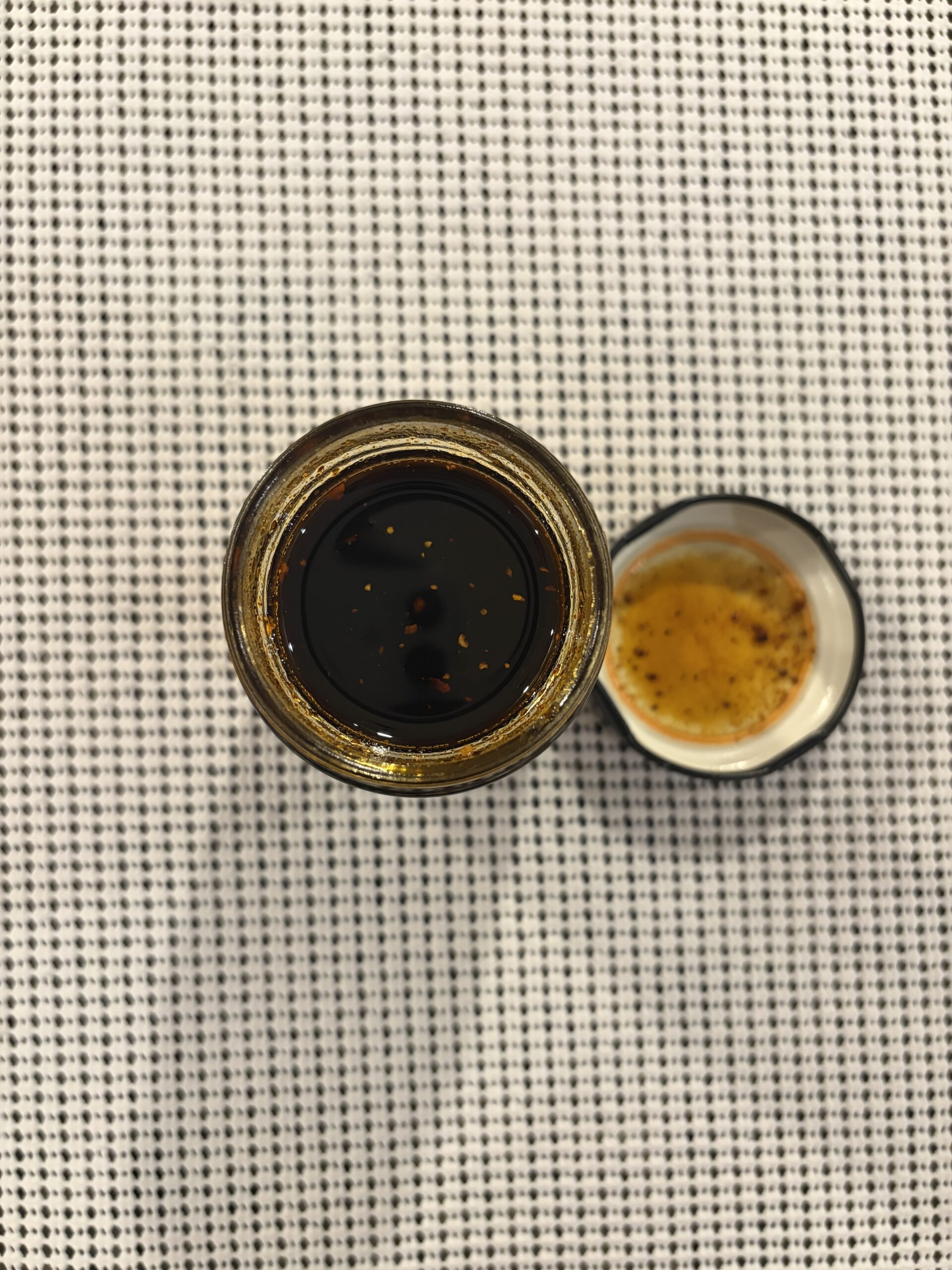
The first ingredient on every chili crisp label is oil. That’s expected — oil is the medium everything else lives in. But which oil? Rapeseed oil in chili crisp tells a very different story than soybean oil, and that detail gets skipped by almost everyone. It tells you more about the product than most of the marketing on the front of the jar.
These two are the most common base oils in the category by far. They’re not interchangeable, and the choice between them signals something real about how the product was made, where it was made, and how much the brand is spending on what goes in the jar.
I started paying attention to this after tasting a dozen products back to back. Some oils had a subtle warmth to them — a background nuttiness that made the chili and garlic flavors feel grounded. Others tasted like nothing. Just slick, neutral fat coating my tongue before the other flavors showed up. That difference tracked consistently with what was on the label.
Why the Base Oil Matters
Oil is the largest single ingredient in any chili crisp by volume. It’s the carrier for heat, the medium that suspends the aromatics, and the thing that coats your tongue first when you take a bite. A well-chosen oil can make everything else taste better. A cheap one just takes up space.
In my guide to chili crisp oil types, I break down the full range — sesame, olive, blended, infused, and more. But in practice, most jars on the shelf use one of two: rapeseed or soybean. Understanding those two gets you 80% of the way toward knowing what you’re buying.
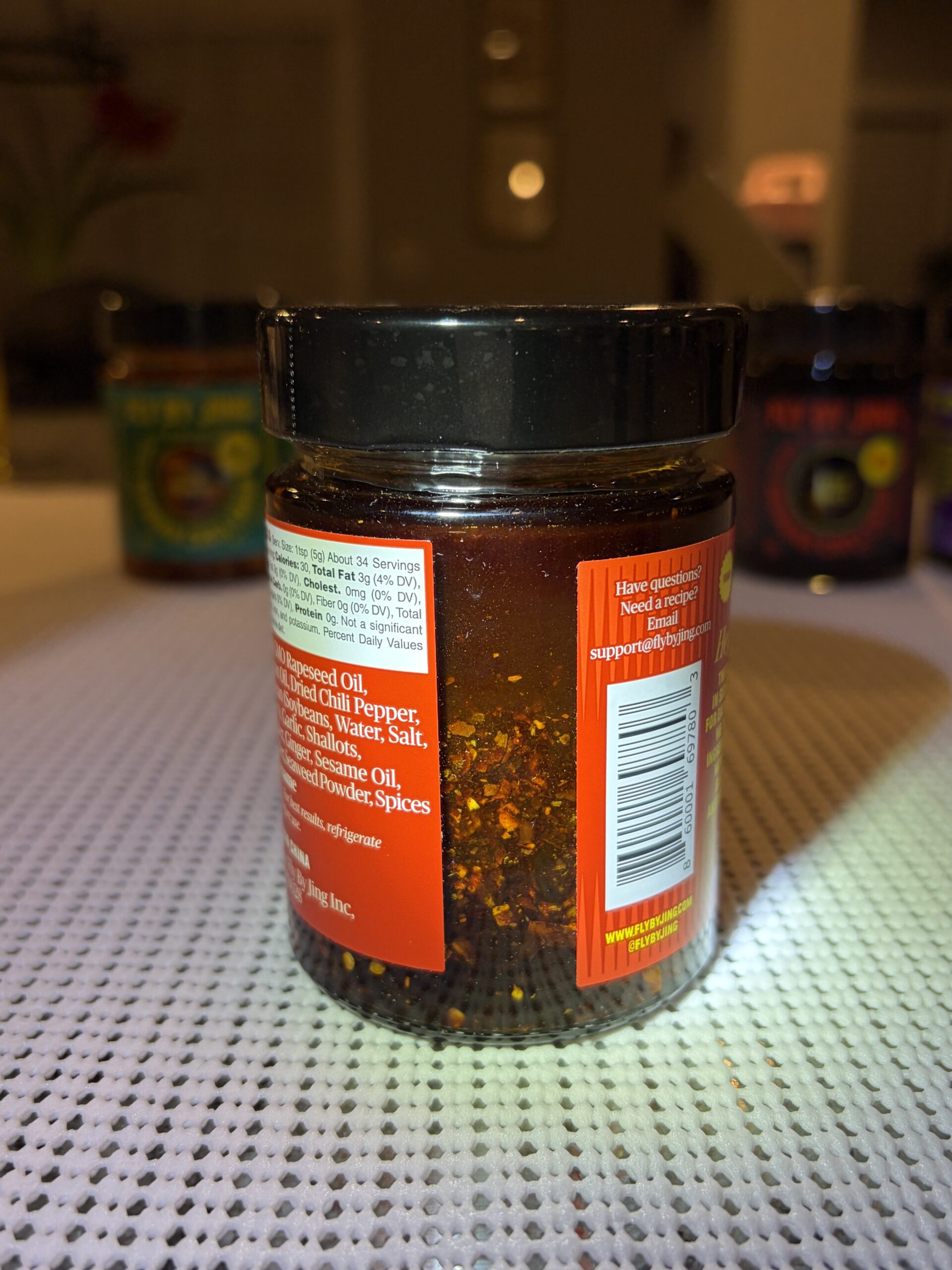
The oil also determines how the product behaves on food. Some oils cling to rice and coat noodles evenly. Some run off and pool at the bottom of the bowl. Some have a flavor that complements chili and garlic. Others just taste like… oil. When I do the “oil alone” taste in a review — dipping the fork in just the oil layer, no solids — I’m specifically checking whether the oil is doing flavor work or just acting as a neutral vehicle for everything else.
It matters for cooking too. If you’re the kind of person who spoons chili crisp oil into a hot pan for stir-frying (and you should be), the smoke point and flavor stability of that oil affects what happens next. Rapeseed and soybean both handle heat fine, but one of them brings something to the party and the other just shows up.
Rapeseed Oil in Chili Crisp: The Traditional Choice
Rapeseed oil is what traditional Chinese chili crisp is built on. If you’re eating a product imported from Guizhou, Sichuan, or Hunan province, there’s a strong chance the base is rapeseed oil — it’s the default cooking oil in much of China the way olive oil is in the Mediterranean or butter is in French cooking.
On a Western label, rapeseed oil often shows up as “canola oil.” They’re the same plant family (Brassica napus), but canola is a specific cultivar bred for lower erucic acid content. For chili crisp purposes, the difference between rapeseed and canola is academic — the flavor and behavior are functionally similar.
What rapeseed oil brings to chili crisp:
| Property | What It Means in the Jar |
|---|---|
| Neutral to slightly nutty flavor | Doesn’t compete with chili and garlic. Lets the aromatics lead. |
| High smoke point (~400°F) | Handles the high-heat frying that makes bits crispy without breaking down. |
| Light body | Thinner mouthfeel — less coating, more clean. The oil doesn’t overstay. |
| Regional authenticity | Traditional choice signals a product following established methods. |
The slight nuttiness of rapeseed oil is worth noting. In a good chili crisp, you won’t consciously identify it — but it adds a warmth to the oil layer that neutral soybean oil doesn’t have. It’s the kind of thing you notice by absence when you switch to a soybean-oil product and the oil layer suddenly feels emptier.
There’s a practical benefit too. Rapeseed oil’s lighter body means the oil layer in a settled jar tends to be less viscous. It flows more easily when you stir, integrates with the solids better, and doesn’t leave as thick a film on your tongue. For products where the oil-to-solids ratio is already borderline, a lighter oil helps the overall experience feel less oily.
Soybean Oil: The Budget Default

Soybean oil is the most consumed cooking oil in the United States and one of the cheapest vegetable oils produced at scale globally. It’s in everything — processed food, restaurant fryers, packaged condiments, baked goods. When a chili crisp uses soybean oil, it’s usually making a cost decision, not a flavor decision.
That said, soybean oil isn’t bad. It’s a functional oil. Here’s what it does:
| Property | What It Means in the Jar |
|---|---|
| Very neutral flavor | Adds nothing. Doesn’t hurt, doesn’t help. Just carries. |
| Decent smoke point (~450°F) | Fine for frying. No issues there. |
| Heavier body | Slightly thicker coating on the tongue. Can feel oily. |
| Commodity cost | Among the cheapest options. Chosen for margin, not character. |
The “heavy body” point is the one I notice most in reviews. Soybean-oil chili crisps tend to leave a thicker film on the tongue — that slightly-too-slick feeling that lingers after you swallow. When I say an oil “tastes kind of oily” or “doesn’t do much for me,” soybean oil is usually the culprit. It’s not offensive — it’s just not contributing anything beyond being a fat. And when the biggest ingredient by volume doesn’t bring flavor, the rest of the product has to work harder.
Next time you try a new chili crisp, taste the oil layer alone before stirring. If it has a subtle warmth or nuttiness, you’re probably tasting rapeseed. If it tastes like nothing — just slick and neutral — it’s likely soybean. Neither is wrong, but one is doing more work than the other.
A soybean-oil product can still be good. If the solids are strong — packed with fried garlic, quality chili, good spice blend — the oil’s neutrality becomes less of an issue because the flavor is coming from everywhere else. But a soybean-oil product with soybean solids for crunch? Now both the oil and the bits are soybean-derived, and the jar is essentially a soybean product seasoned to taste like chili crisp. That combination is a clear cost-optimization signal.
How to Read the Oil on the Label
Oil always appears first on a chili crisp ingredient list — it’s the largest component by weight. What you’re looking for is the type of oil named. Some labels are straightforward. Some require a bit of translation.
Common label terms and what they mean:
| Label Says | What It Actually Is |
|---|---|
| Rapeseed oil | Rapeseed oil. Traditional choice for Chinese products. |
| Canola oil | Rapeseed oil (low-erucic cultivar). Same family, same behavior. |
| Soybean oil | Soybean oil. Budget default. |
| Vegetable oil | Almost certainly soybean or a blend. Generic term = non-specific sourcing. |
| Vegetable oil (soybean and/or canola) | The brand uses whichever is cheaper at production time. |
| Sesame oil | Sesame oil — distinct, toasty flavor. Common in Japanese-style products. |
| Olive oil | Usually Calabrian or Italian-style products. Strong flavor contribution. |
Generic “vegetable oil” with no parenthetical is the vaguest option. It almost always means soybean oil in the US market, but the brand isn’t even committing to that much specificity. It’s the condiment equivalent of a restaurant menu that says “mixed greens” without telling you what’s in the mix.
For a full walkthrough of reading every line on a chili crisp label, including ingredient order, sodium context, and serving size red flags, check How to Read a Chili Crisp Label.
The “And/Or” Problem
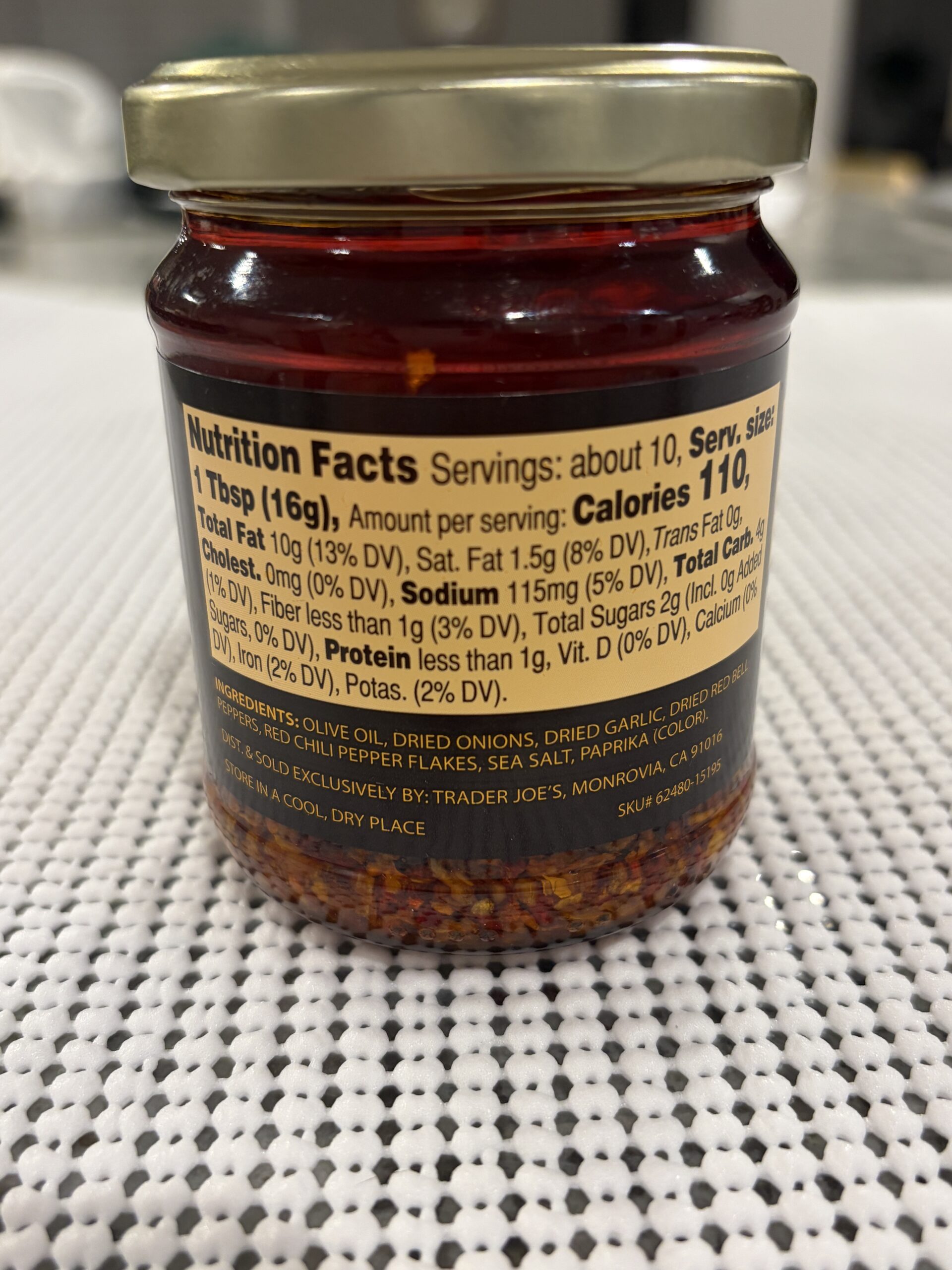
Watch for the “and/or” construction. When a label says “soybean and/or canola oil,” the brand is telling you they switch based on commodity pricing. The product you buy in March might use a different oil than the one you buy in August. That’s not illegal or deceptive — it’s disclosed right there on the label. But it means the oil isn’t a deliberate flavor decision. It’s a procurement decision.
This matters because flavor consistency is part of what makes a product trustworthy. If the oil changes batch to batch, the baseline flavor shifts. Maybe not enough to ruin it, but enough that the product you liked three months ago doesn’t taste exactly the same. For a commodity product priced under $4, that’s an acceptable trade-off. For a $12 artisan jar, it would be surprising.
In practice, I’ve only seen the “and/or” construction on mass-market products. Brands that care about their oil source tend to name it specifically and consistently. That naming specificity is itself a signal — the brand wants you to know what oil they chose, because the choice was deliberate.
What the Oil Tells You About the Product
The oil choice is a proxy for production philosophy. It’s not the only signal, but it’s a consistent one.
Rapeseed/canola oil tends to show up in products where the manufacturer is following a traditional recipe or making deliberate ingredient choices. Chinese imports, artisan domestic brands, and products that specify their oil source by name generally fall here. It’s not a guarantee of quality, but it suggests the brand thought about what goes in the jar beyond just hitting a price point.
Soybean oil tends to show up in mass-market products optimized for cost. There are exceptions — some perfectly solid products use soybean oil and make up for it with excellent solids and seasoning — but the correlation is real. When a brand is investing in quality ingredients, the oil is usually part of that investment.
Generic “vegetable oil” is the weakest signal. A brand that won’t name its oil on the label isn’t necessarily hiding something bad, but they’re not proud of the choice either.
The oil is the biggest ingredient by volume. If the brand didn’t think carefully about the biggest ingredient, how much thought went into the rest? That’s not always a fair inference — some brands use soybean oil and still make something interesting. But it’s the right question to start with.
Other Oils Worth Knowing
Rapeseed and soybean cover most of the market, but a few other oils show up in specific styles and they’re worth understanding when you encounter them:
Sesame oil is common in Japanese-style chili oil and some Korean products. It has a strong, toasty flavor that becomes part of the product’s identity — not a background ingredient but a defining one. Momoya’s Chili Oil and S&B’s Chili Crisp both use sesame as a key element. You always know when sesame oil is in the base. It announces itself.
Olive oil shows up in Calabrian and Italian-inspired chili crisps. Alessi’s Calabrian Chili Crisp uses it to reinforce the Mediterranean flavor profile. It’s a heavier oil with more distinct character — fruity, sometimes peppery — and it shifts the entire product away from the East Asian chili crisp tradition into something that feels more European. Whether that works depends on what you’re using it for.
Avocado oil appears in some newer American brands targeting health-conscious buyers. High smoke point, very neutral flavor, premium price. The oil itself is fine but functionally similar to rapeseed in the jar. Whether the price premium translates to a better product is debatable — you’re mostly paying for the health halo of the word “avocado” on the label.
Blended oils are more common than labels suggest. Some products use a rapeseed or soybean base with a splash of sesame oil for flavor. The sesame might be listed second or third on the label but constitutes a small percentage of the total oil volume. It’s enough to add aroma without being the primary base. This is a smart production move — you get sesame character at rapeseed cost.
For the full breakdown of every oil type and what it does in a chili crisp context — including how oil affects heat delivery, settlement behavior, and cooking performance — I cover all of this in The Oil Behind the Crisp.
Frequently Asked Questions
What oil is used in most chili crisp?
The two most common base oils are rapeseed oil (often labeled as canola) and soybean oil. Rapeseed is traditional in Chinese chili crisp production, while soybean oil is the budget default for mass-market products.
Is rapeseed oil the same as canola oil?
Essentially yes. Canola is a specific cultivar of rapeseed bred for lower erucic acid. For chili crisp purposes, they behave the same way — neutral to slightly nutty flavor, high smoke point, light body.
Is soybean oil bad in chili crisp?
Not bad — just neutral. Soybean oil is a functional oil that carries flavor without contributing any. It’s chosen for cost, not character. Some good products use soybean oil, but the oil itself isn’t doing flavor work.
What does ‘vegetable oil’ mean on a chili crisp label?
It almost always means soybean oil or a soybean-canola blend. ‘Vegetable oil’ is a generic term that lets the manufacturer switch between commodity oils based on pricing without changing the label.
What does ‘soybean and/or canola oil’ mean?
It means the brand switches between the two based on whichever is cheaper at production time. The product you buy in March might have a different oil than the one you buy in August. It’s legal and disclosed, but it means the oil isn’t a deliberate flavor choice.
Which oil is best for chili crisp?
For traditional Chinese-style chili crisp, rapeseed oil is the standard — neutral with a slight nuttiness that complements the aromatics. Sesame oil works best in Japanese-style products. Olive oil suits Calabrian-style. The best oil depends on the style of product.
Can you taste the difference between rapeseed and soybean oil in chili crisp?
In a side-by-side oil-only taste, yes. Rapeseed has a subtle warmth and nuttiness. Soybean oil tastes like nothing — just slick and neutral. In the full product with solids mixed in, the difference is subtler but still present in the overall mouthfeel and oil layer behavior.