
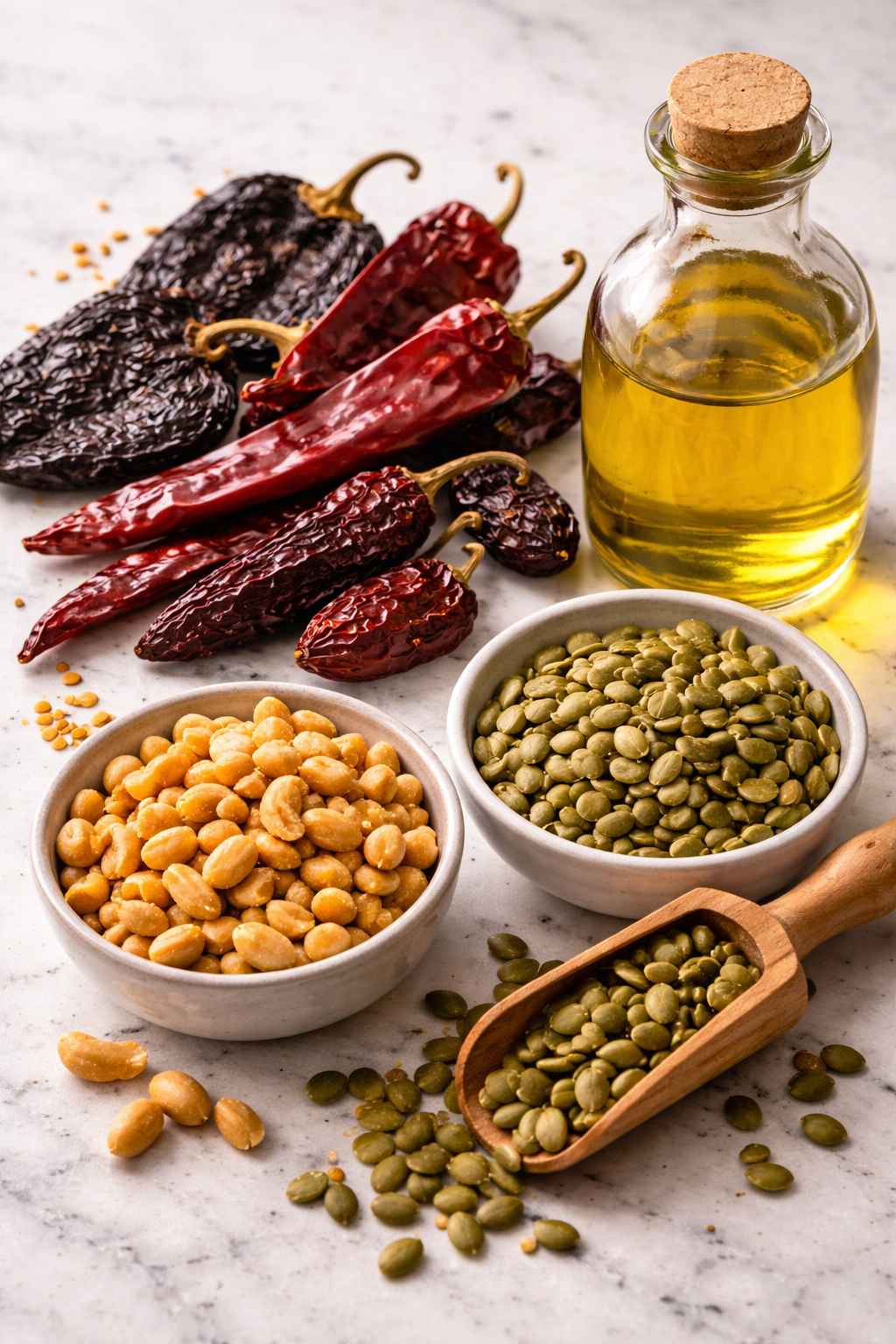
Pick up a jar of salsa macha and read the back label. There probably aren’t many ingredients — six, maybe eight, maybe ten if the brand is doing something interesting. That short list is part of what makes salsa macha worth evaluating carefully: when there’s nowhere to hide, you can tell a lot about what you’re getting before you open the jar.
Salsa macha ingredients break down into four categories: the chilies (which set the flavor baseline), the nuts and seeds (which determine texture), the oil (which carries everything), and the extras — vinegar, garlic, sweeteners, spices. Understanding what each one does makes you a better shopper and a more useful judge of what’s actually in the jar.
If you’re still getting oriented on what salsa macha is and how it compares to chili crisp, start with What Is Salsa Macha? first. This post assumes you know the basics and want to go deeper on the label.
The Chilies: Where the Flavor Foundation Comes From
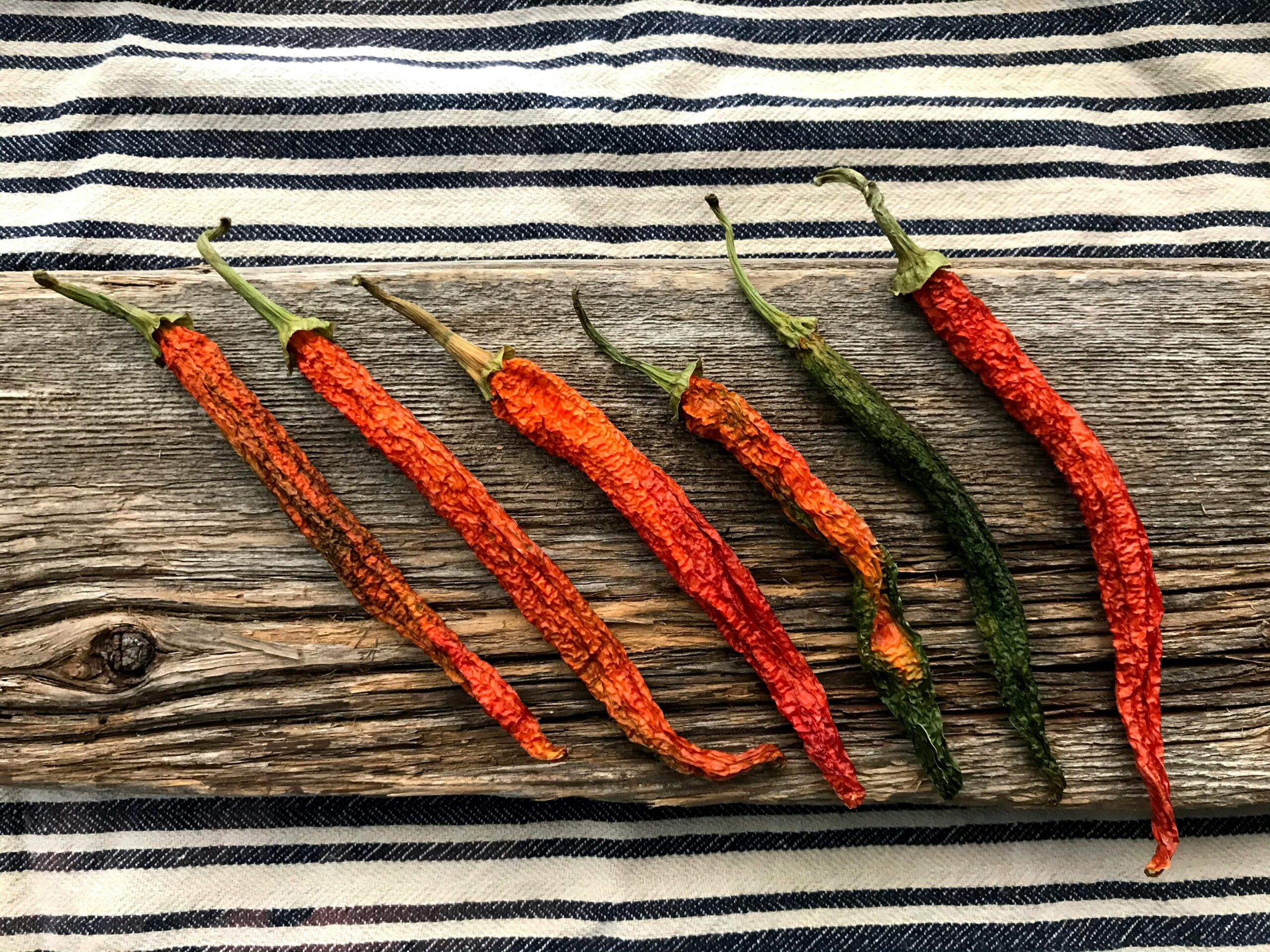
Salsa macha gets its character from dried Mexican chilies, and the variety on the label tells you a lot about what to expect. These aren’t fresh chilies that were dried — they’re distinct varieties grown specifically to be used in their dried form, each with its own flavor profile. If you want a full breakdown of how dried chili varieties work across both salsa macha and chili crisp, that guide covers it in depth.
The most common chilies you’ll see on commercial labels:
| Chili | Flavor Character | Heat Level |
|---|---|---|
| Morita | Smoked, slightly fruity — a dried smoked jalapeño | Medium |
| Guajillo | Mild, tangy, slightly sweet — good color contributor | Low–medium |
| Ancho | Earthy, raisin-like depth — dried poblano | Mild |
| Chile de árbol | Sharp, dry heat — clean and aggressive | Hot |
| Chipotle | Deep smoke, savory richness | Medium |
| Pasilla | Chocolatey, complex — dried chilaca | Mild |
Most commercial jars blend two or three of these. A morita-forward blend will lean smoky. Guajillo-dominant jars are often brighter and less aggressive. Chile de árbol anywhere near the top of the list means heat is a feature, not just background. Ancho and pasilla are usually supporting players — they add depth and body without pushing heat. Understanding the different types of heat these chilies produce helps you predict what a jar will taste like before you open it.
The traditional salsa macha chili was the comapeño, a small variety from the Orizaba region of Veracruz that’s now nearly impossible to find commercially. You won’t see it on labels today, but it’s worth knowing: the condiment was built around a specific local chili, and the modern commercial versions are all approximations of that original. The flavor profile you’re tasting has been adapted to chilies that are easier to source at scale. The full origin story — the comapeño, the Veracruz trade routes, how the condiment spread — is in the history of salsa macha.
The chili should be listed first or second on the label — before the oil. If oil comes first and chilies are fourth or fifth, you’re buying flavored oil, not salsa macha. The chili-to-oil ratio is what makes this a condiment worth using. The same principle applies to reading a chili crisp label — ingredient order tells you what you’re actually getting.
Nuts and Seeds: The Texture Equation
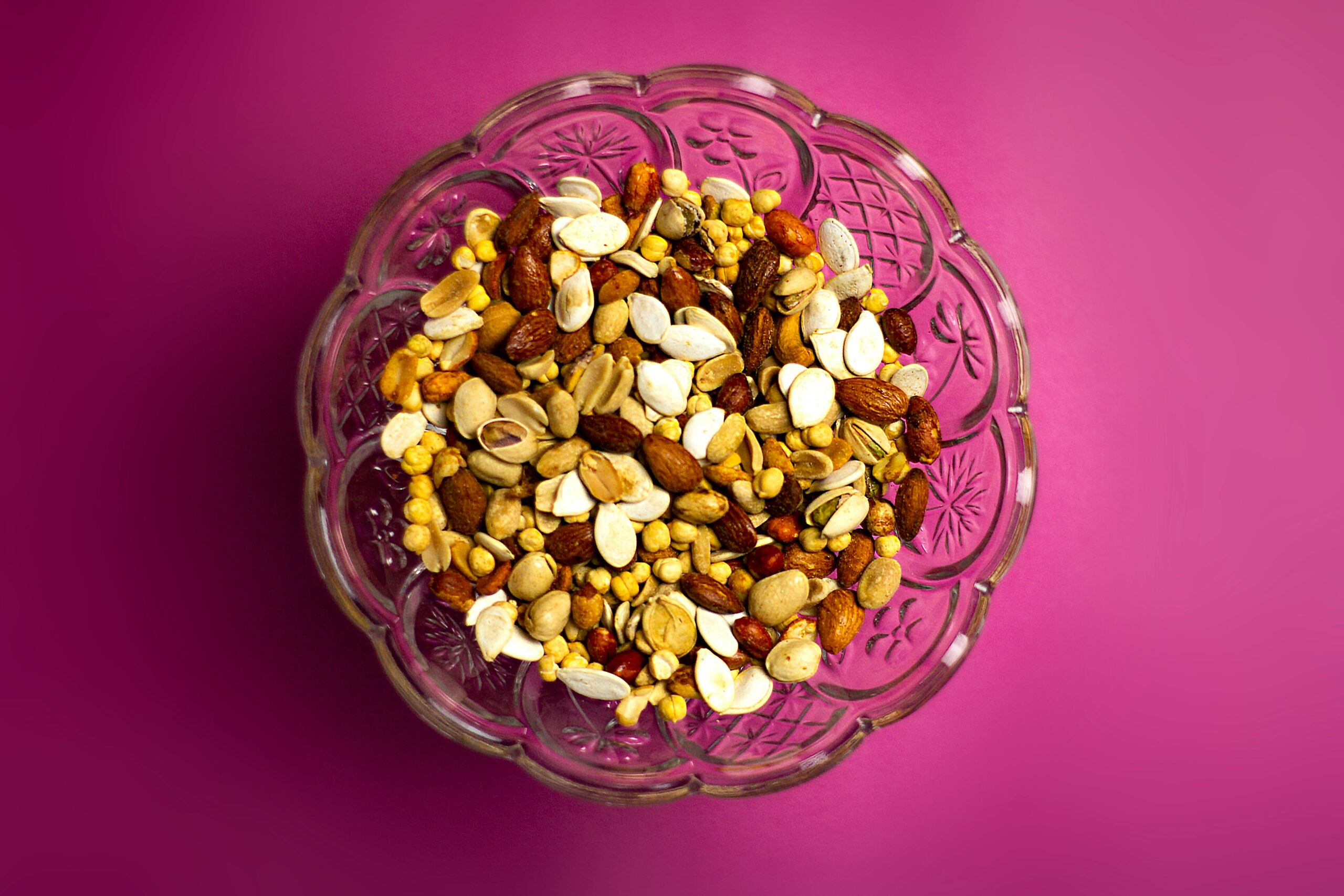
This is the ingredient category that most clearly separates salsa macha from chili crisp. Chili crisp gets its crunch from fried aromatics — garlic chips, shallot fragments, sometimes soybean puffs. Salsa macha gets its crunch from nuts and seeds, and the difference in texture is significant: denser, more substantial, more satisfying when you bite into it.
The nut or seed on the label is also one of the clearest quality signals in the category.
Peanuts
The most traditional option. Peanuts appear in salsa macha going back to the classic Veracruz preparations, and they remain the most common commercial choice. They hold up well in oil, contribute a neutral base crunch, and pair naturally with the smoky-earthy chili profile. A peanut-forward jar will taste grounded and familiar.
Pepitas (Pumpkin Seeds)
A slightly more delicate crunch than peanuts, with a mild, grassy flavor that recedes into the background. Pepitas often appear alongside peanuts rather than alone. When they’re the primary seed on the label, the texture leans toward sandy rather than chunky — more distributed crunch than distinct bites.
Sesame Seeds
Almost always a supporting ingredient rather than the star. Sesame adds a toasted, slightly bitter note and helps bind the condiment’s texture. You’ll often see sesame listed after peanuts or pepitas. If a jar is sesame-forward, the flavor profile will tilt slightly toward the Asian-influenced end of the spectrum — some brands are consciously playing to the chili crisp audience with this choice.
Almonds, Hazelnuts, Pine Nuts
These show up in premium and artisan jars. Almonds give a cleaner, drier crunch. Hazelnuts add richness and a slightly sweeter nuttiness — Masienda’s guajillo and cranberry variant uses hazelnuts, which is an interesting pairing. Pine nuts are rare but appear occasionally in higher-end preparations. When you see these on a label, you’re usually looking at a product positioning itself above the commodity tier, and the price will reflect it.
Find the nut or seed on the ingredient list and note its position. Second or third means it’s a structural component — there’s enough of it to matter. If it’s sixth or seventh, it’s a flavoring, not a texture builder. The jar will taste thin compared to one where the nut is doing real work.
The Oil: What Carries Everything
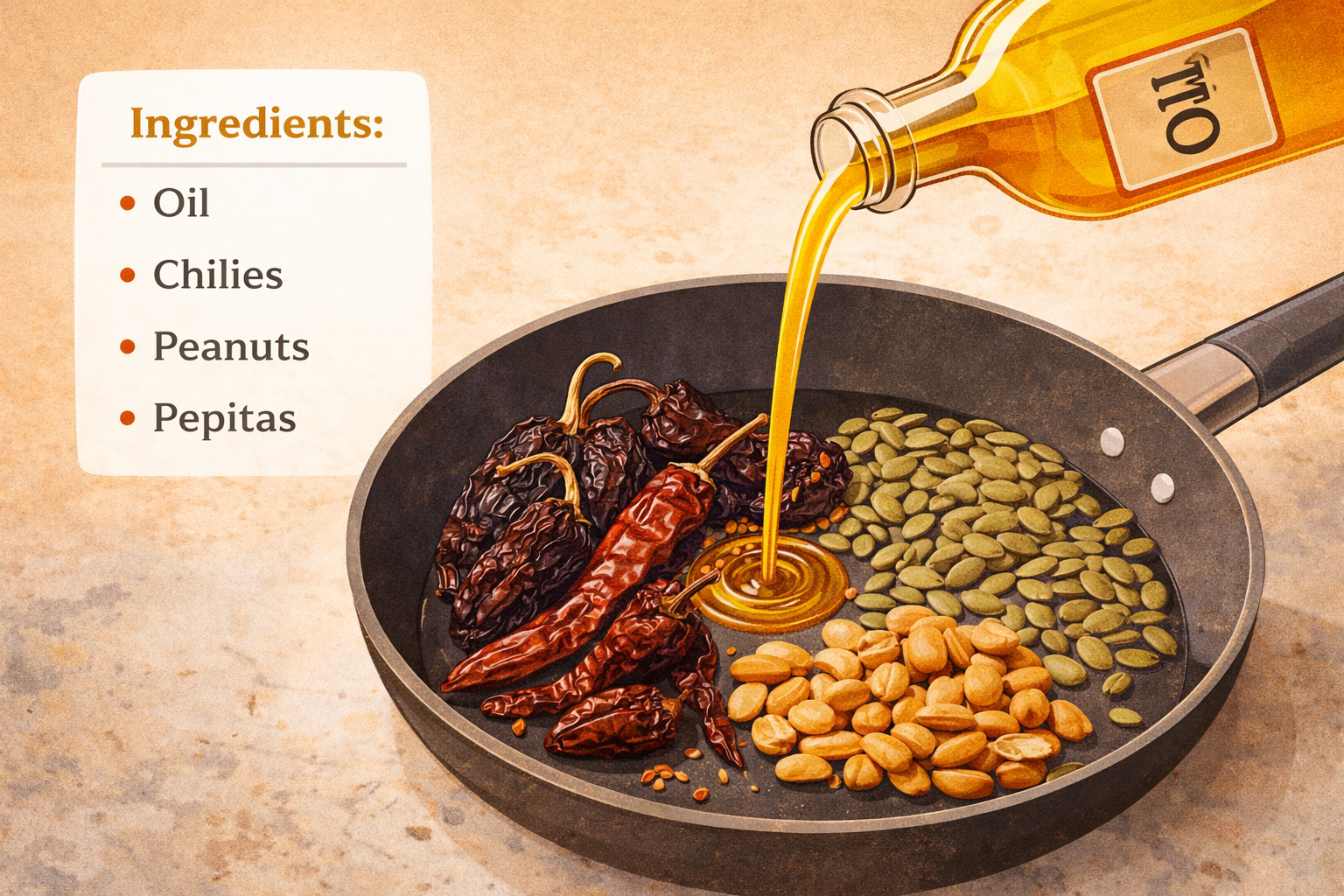
Oil in salsa macha does two jobs: it preserves the condiment and it carries the fat-soluble flavor compounds from the chilies and aromatics. The type of oil on the label matters, but not always in the ways people assume.
Unlike chili crisp oil, where the oil is the dominant medium and its quality is highly visible, salsa macha has enough going on with the nuts and chilies that the oil is more of a supporting player. That said, it still signals something about how the product was made.
| Oil Type | What It Signals |
|---|---|
| Avocado oil | Premium positioning. High smoke point, clean flavor, doesn’t compete with the chilies. Usually found in higher-priced jars. |
| Olive oil | Traditional in some regional preparations. Adds its own flavor — can be assertive. Works well with guajillo-forward profiles, can clash with heavily smoked versions. |
| Sunflower or grapeseed oil | Neutral and clean. A reasonable choice that stays out of the way. Not a red flag. |
| Canola or vegetable oil | The default commodity choice. Nothing wrong with it functionally, but it signals cost-optimization over craft. Common in mass-market jars. |
One thing worth noting: because salsa macha has significant solid content (the nuts, the chili pieces, the garlic), the oil-to-solids ratio behaves differently than in chili crisp. A jar that looks oily on top may still have a solid core of actual condiment — the nuts and chili pieces settle and the oil migrates upward. Stir before evaluating. If you want to understand how oil type affects cookability, that guide covers the practical side.
Vinegar: The Ingredient That Makes Salsa Macha Taste Like Salsa Macha
Vinegar appears in a lot of traditional salsa macha preparations and in many commercial jars, and it’s one of the clearest flavor differentiators between salsa macha and chili crisp. Chili crisp is almost never acidic. Salsa macha often is, and that brightness is part of what makes it distinctive.
Apple cider vinegar is the most common choice. White wine vinegar shows up occasionally. The quantity is always small — vinegar on a salsa macha label is a seasoning, not a base. It contributes a lift that cuts through the fat from the oil and nuts, keeps the flavor from feeling heavy, and gives the condiment its characteristic tang on the back end of a bite.
If vinegar is on the label and you can taste it, that’s good. If a jar with vinegar listed tastes flat and one-dimensional, something else is off — the chili-to-oil ratio, the nut quality, or the production method.
Garlic: Assumed But Worth Noting
Garlic is almost universal in salsa macha and often goes unnoticed precisely because it’s doing its job — providing a savory backbone that holds the other elements together. In a good jar, you don’t taste garlic distinctly; you taste a condiment that has depth and doesn’t feel thin.
In a bad jar — or one where the garlic is low on the ingredient list — you notice its absence. The condiment tastes flat, like chili-flavored oil with some crunch, rather than something with dimension.
Roasted or toasted garlic on the label is a mild positive signal — it suggests the production process involved more than just blending raw ingredients into oil. The same principle applies to garlic in chili crisp, where the production method — whether aromatics are fried in a pour-over step or simmered slowly — determines how much flavor the garlic actually contributes.
Sweeteners: Small Quantities, Real Impact
Not all salsa machas include sweeteners, but many do — and it’s worth understanding what you’re looking at when they appear on the label.
Piloncillo is unrefined Mexican cane sugar, brown and slightly molasses-forward. It’s the traditional choice and it adds a very subtle earthy sweetness that doesn’t read as “sweet” so much as “round.” If you see piloncillo on a label, the brand is making at least some gesture toward traditional formulation.
Brown sugar is the more accessible substitute — similar role, slightly less complexity. Fine.
Dried fruit — raisins, cranberry, sometimes tamarind — appears in more premium or inventive formulations. Masienda’s guajillo variant uses cranberry alongside hazelnuts. When fruit is present, the flavor profile shifts noticeably: there’s more sweetness, more complexity, and occasionally a tartness that reinforces the vinegar note.
Honey is rare but shows up occasionally. It reads as sweeter than piloncillo and can tip the condiment toward “flavored sauce” territory if the quantity is too high. A small amount at the bottom of the ingredient list is fine. High up? Worth knowing before you buy.
The role sweeteners play in chili condiments — balancing heat, rounding sharp edges, sometimes masking low-quality ingredients — is something the secondary seasonings guide covers in detail.
Sweetener listed near the bottom of the ingredient list means it’s a trace amount — there for balance. Sweetener listed fourth or fifth means the jar will taste noticeably sweet. Neither is automatically bad, but it’s useful to know before you drizzle it on something savory.
Spices: The Supporting Cast
Beyond the core four — chilies, nuts, oil, garlic — some jars include spices that are very much a Mexican pantry thing and don’t appear in chili crisp at all.
Mexican oregano is more citrusy and less floral than Mediterranean oregano. When it appears on a salsa macha label, it’s usually contributing an herbal note that ties the condiment to its regional roots. Small amounts blend into the background. Larger amounts become part of the flavor identity.
Cumin adds warmth and a slightly earthy, almost savory bitterness. Common in Tex-Mex-adjacent products, less common in jars positioning themselves as traditional Veracruz-style.
Cinnamon is unusual but not unheard of in certain regional preparations. If you see it, expect a noticeably warmer, more complex profile — closer to mole territory than what most people expect from an oil-based condiment.
None of these spices are dealbreakers or automatic positives. They’re context. A jar with Mexican oregano and cumin is making a different flavor argument than one with pure chilies and peanuts, and knowing that before you open it helps you put it on the right food. For a broader look at how regional traditions shape the spice choices across different chili condiment cultures, that guide maps the landscape.
Reading a Salsa Macha Label in Under 30 Seconds
You don’t need to analyze every ingredient. Here’s the fast version of what to check before buying:
1. What’s first — chili or oil? Chili first means you’re buying a condiment. Oil first means you’re buying flavored oil. This is the single most important thing on the label.
2. What’s the nut? Peanuts = traditional, dense, reliable. Pepitas = lighter texture. Premium nuts (almond, hazelnut) = artisan positioning, higher price. Note where it falls in the list — position = quantity.
3. What chili variety? Morita or chipotle = smoky. Guajillo = mild, fruity. Chile de árbol = heat-forward. Multiple varieties usually means more complex flavor.
4. Is there vinegar? Yes = expect brightness and tang. No = richer, more purely fat-forward profile.
5. What’s the oil? Avocado or olive = premium positioning. Canola or vegetable = commodity. Sunflower or grapeseed = neutral and clean.
That’s it. Everything else is nuance. If you answer those five questions before you buy, you’ll know what you’re getting before you open the jar — which is the whole point.
How This Connects to FIL Reviews
Every salsa macha review on this site starts with the ingredient list. Not the tasting notes, not the brand story — the label. What the maker put in the jar, in what order, with what oil, using which chilies and which nuts. That information is the foundation for everything that follows.
When reviews go live, they’ll link back to this post every time there’s something worth discussing about an ingredient decision. This is the reference to bookmark. If you’re curious about the chili oil category and how its ingredient priorities differ — oil quality and cookability instead of nut crunch — that guide explains the distinction.
What are the main ingredients in salsa macha?
The core ingredients are dried chilies, oil, nuts or seeds (typically peanuts, pepitas, or sesame), and garlic. Most commercial versions also include vinegar for acidity, and some add a small amount of sweetener — piloncillo, brown sugar, or dried fruit. That’s the full list for a traditional jar. Anything beyond that is brand-specific variation.
What nuts are in salsa macha?
Peanuts are the most traditional option and the most common in commercial jars. Pepitas (pumpkin seeds) and sesame seeds are also widely used, either alone or combined with peanuts. Some premium brands use almonds, hazelnuts, or pine nuts — the Masienda Pura Macha guajillo variant uses hazelnuts alongside cranberry. Whatever the nut or seed, it should be listed high on the label: if it’s buried near the bottom, there isn’t much of it.
What kind of chilies are in salsa macha?
The most common dried chilies in commercial salsa macha are morita, guajillo, ancho, chile de árbol, chipotle, and pasilla. Morita is a smoked dried jalapeño — it’s responsible for a lot of the smoky depth you taste in traditional versions. Guajillo adds mild, almost fruity heat and a red color. Chile de árbol brings sharp, clean heat. Most jars blend two or three of these to balance smoke, heat, and depth.
Does salsa macha have vinegar?
Many do, and it’s a positive sign when it shows up. A small amount of vinegar — apple cider vinegar is common — gives the condiment its characteristic brightness and helps balance the richness of the oil and nuts. It’s one of the things that makes salsa macha taste noticeably different from chili crisp, which is rarely acidic. If vinegar appears on the label, it’s usually doing real flavor work.
Is salsa macha gluten-free?
Almost all commercial salsa machas are gluten-free by ingredient — none of the core components (chilies, oil, nuts, garlic, vinegar) contain gluten. The risk is cross-contamination during production. If you’re celiac or highly sensitive, check whether the brand explicitly states it’s produced in a gluten-free facility. Most don’t make that claim, though many do manufacture without any gluten-containing ingredients.
Is salsa macha vegan?
Almost universally yes. The traditional ingredient list — dried chilies, oil, nuts, garlic, vinegar — is entirely plant-based, and commercial versions follow the same formula. Rare exceptions might involve honey as a sweetener or lard as a cooking fat in very traditional preparations, but these are uncommon in jarred commercial products. Check the label if it matters to you, but you’re very unlikely to find animal-derived ingredients.
What’s the difference between salsa macha and chili crisp ingredients?
The biggest difference is what creates the texture. Chili crisp gets its crunch from fried aromatics — garlic, shallots, sometimes soybeans — cooked in oil until crisp. Salsa macha uses raw or lightly toasted nuts and seeds, which give a different kind of crunch: denser, more substantial, less oily. Salsa macha also typically includes vinegar (chili crisp rarely does) and relies on Mexican dried chilies rather than Chinese varieties. The flavor profiles reflect those differences: salsa macha tends toward smoky and nutty; chili crisp tends toward savory and umami-forward.