
What is chili oil? It’s an oil-forward condiment made by infusing a base oil with dried chilies and aromatics. No substantial solids. No crunch. Mostly oil, with heat and flavor steeped into it. The category is simpler than it’s been made to look.
The reason I’m writing a dedicated post on this is that chili oil has a positioning problem. A lot of chili oils try to blend into the chili crisp section of the pantry — and the market has gotten fuzzy about where the line is. If you’ve picked up a jar and genuinely wondered whether it’s chili oil or chili crisp vs. chili oil comparison, that’s not your fault. Brands have been deliberately ambiguous because chili crisp has had more search momentum and shelf cachet. I look at oil-to-solids ratio as a core evaluation criterion when reviewing chili crisp specifically because of this: oil is an ingredient in chili crisp. Chili oil is a different product. They don’t belong in the same category just because they share a base.
What Is Chili Oil, Exactly?
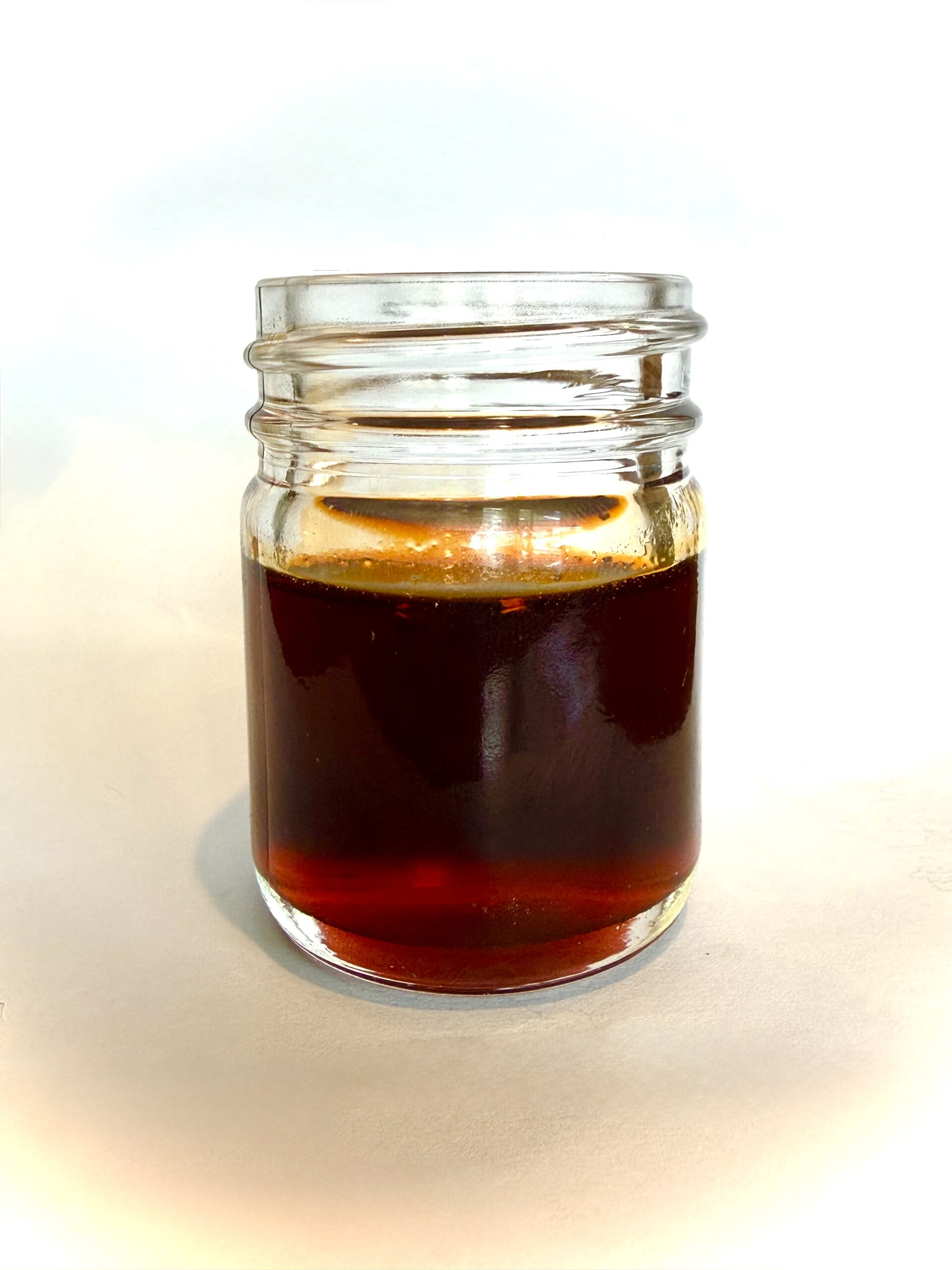
Chili oil is a condiment built primarily from oil. A base oil — usually neutral, sometimes sesame — is heated and combined with dried chilies and aromatics. The solids are typically strained out, or present only in trace amounts. What you’re left with is a clear-to-translucent, deeply colored oil that carries heat, fragrance, and the flavor of whatever went into it.
The texture gives it away immediately. Pour a chili oil and it runs like any other cooking oil — fast, clean, no drag from solids. Tip a jar of chili crisp and you see chunks moving through it. That visual alone is usually enough to categorize a product correctly. If you’re still unsure what is chili oil versus what’s been labeled chili oil to catch trending search traffic, behavior in the jar is the fastest tell.
The flavor profile is typically cleaner and more focused than chili crisp. Chili oils don’t have the layered depth that comes from fried garlic, fermented black beans, or crispy soybeans steeping alongside the chilies. They’re oil-forward by design. The heat and dried chili character are the point — and when a chili oil is made well, that restraint is a feature, not a gap.
What’s In the Jar
A straightforward chili oil has three core components: a base oil, dried chilies, and aromatics. Understanding what is chili oil at the ingredient level is useful because it tells you exactly where quality can go wrong — and in this product, there are only a few places to hide.
Base oil. Neutral oils like soybean, rapeseed, or sunflower are most common in Chinese-style chili oils. Sesame oil shows up in Japanese and Korean styles. Some premium products use avocado or olive oil as the base. The base oil matters more in chili oil than in chili crisp because it’s the primary vehicle — the solids aren’t doing as much compensatory flavor work. A cheap oxidized base oil will come through clearly. There are no crispy bits to mask it. For a deeper look at how different oils behave across chili condiments, the oil types guide covers it in detail.
Dried chilies. The heat and color source. Varieties like facing heaven chilies, Korean gochugaru, Calabrian peperoncino, or Thai bird’s eye all produce different oil. The chili type shapes the heat character: sharp and front-loaded, slow-building and deep, or the tingly mala quality from Sichuan peppercorn blended in. If you want to understand how different chilies behave, that’s covered in the chili crisp pepper guide — the same varieties appear here.
Aromatics. Garlic, ginger, green onion, star anise, cinnamon, Sichuan peppercorn. These are steeped in the hot oil, transfer their flavor, and are typically strained out. Their role is depth and fragrance, not texture. The presence or absence of aromatics is often what separates a one-note chili oil from something worth buying. The secondary seasonings guide covers how these flavor builders work across all chili condiment categories.
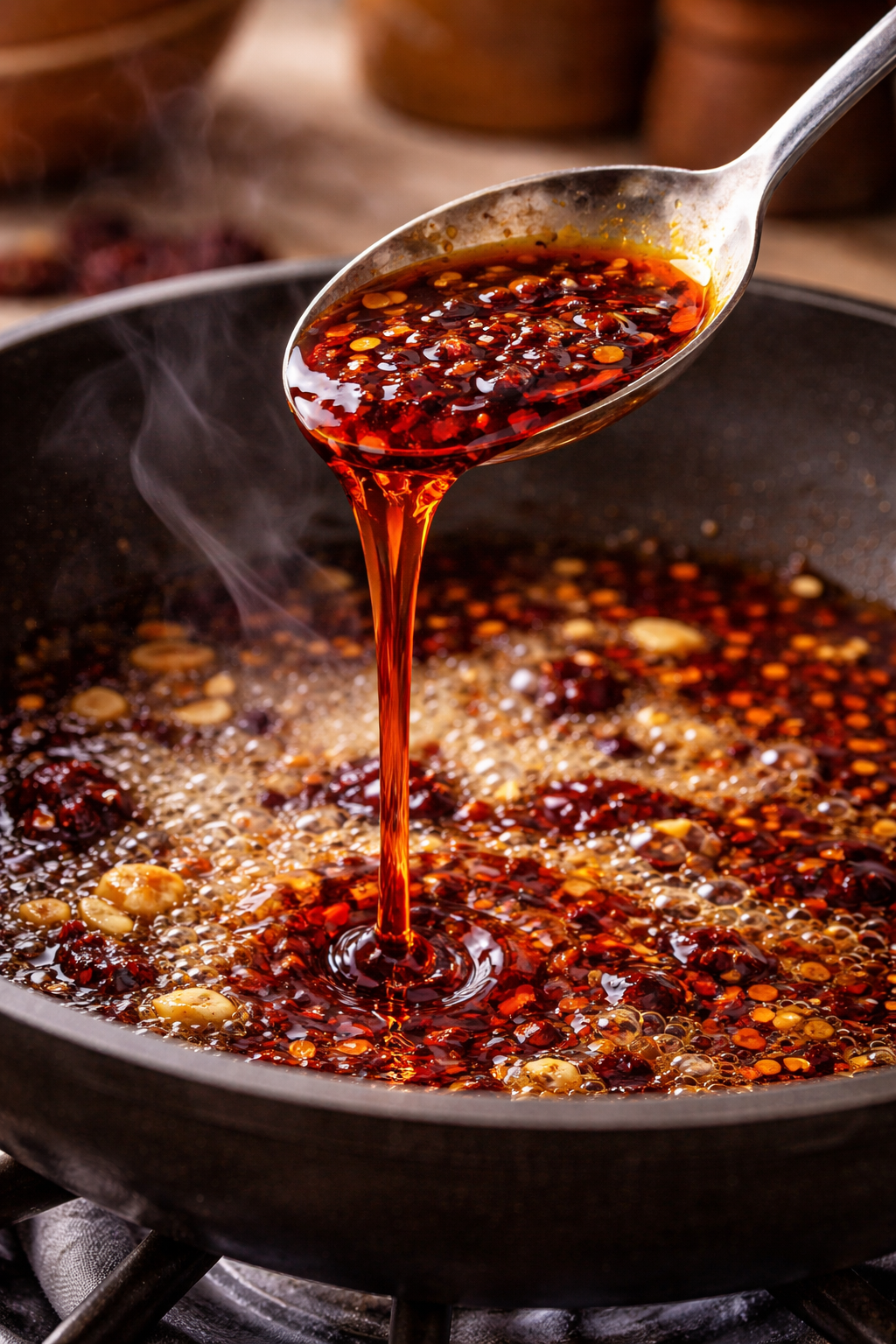
When I read a chili oil label, I’m looking at the base oil first. If a cheap refined soybean oil leads the ingredient list on a $20 bottle, that’s a signal. The oil quality sets the ceiling for everything the product can be. A good chili oil should be able to answer the what a chili oil should taste like question with the oil alone — before a single dried chili enters the picture.
The Line Between Chili Oil and Chili Crisp
The defining difference is solids — specifically, the ratio of fried, textured solids to oil in the jar.
Chili crisp has substantial solids: fried garlic, shallots, soybeans, peanuts, mushrooms, or some combination — suspended in oil. The crispy bits are load-bearing. They determine texture, contribute significant flavor, and are part of why chili crisp works primarily as a condiment rather than a cooking fat. Those solids scorch when you apply direct heat.
Chili oil has no meaningful solids, or so few that the product functions as an oil. You can use it to cook. You can dress a bowl of noodles without needing a spoon to pull material up from the bottom. The behavior is fundamentally different.
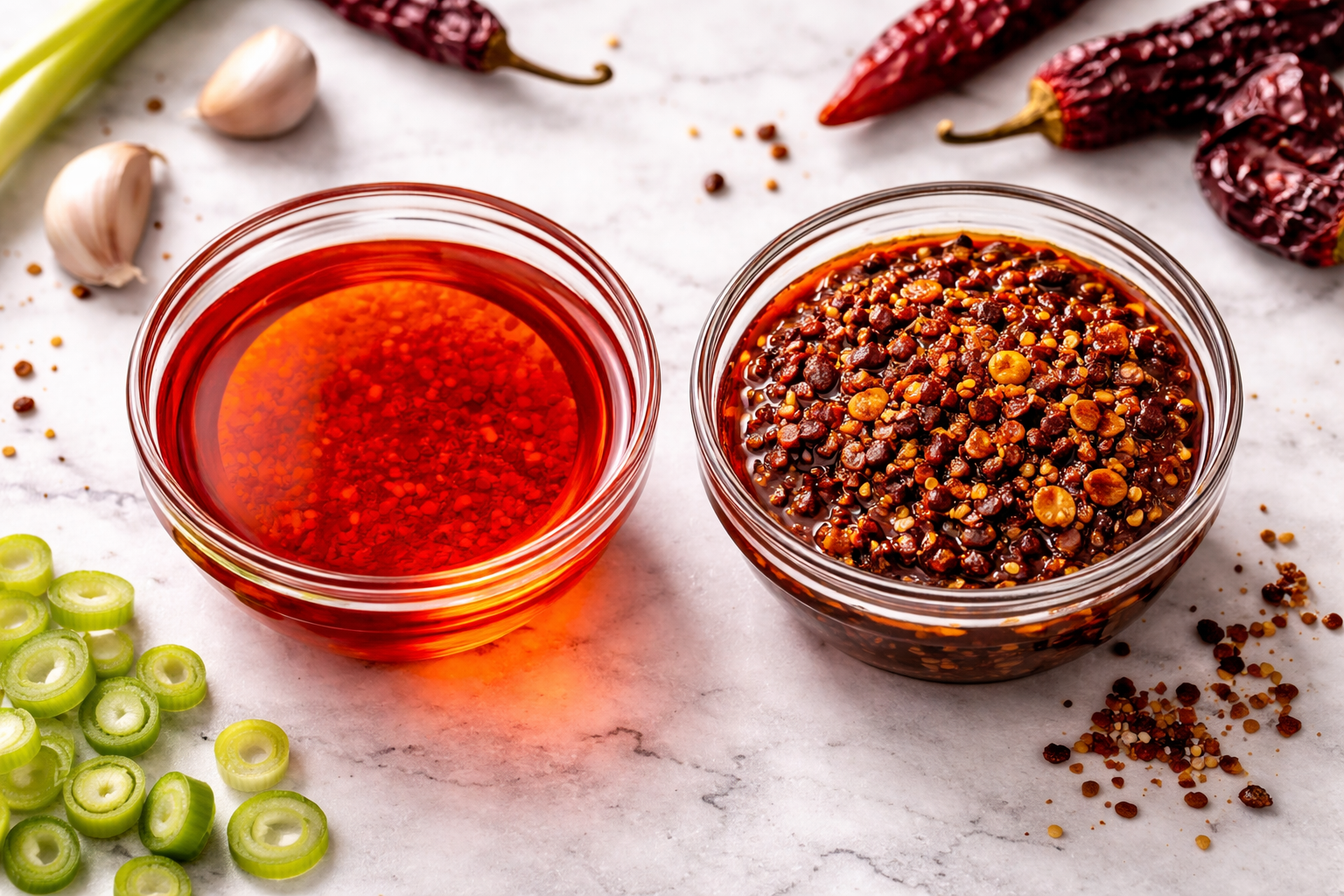
The market has made this harder than it needs to be. Some products float a handful of chili flakes in oil and call it chili oil. Others produce what is functionally a chili crisp but market under a different name. When I’m categorizing a product — whether for a review or just for my own pantry — the first thing I do is tip the jar and watch how it moves, then read the ingredient list for what’s generating any visible solids. If you’re trying to sort out what is chili oil versus what has simply been labeled that way, the label and the pour test will answer it faster than the brand’s description will. If you want a framework for reading condiment labels, the chili crisp label-reading guide applies across categories.
A Note on Lao Gan Ma
Lao Gan Ma is the source of one of the most common chili oil vs. chili crisp confusions. The brand makes multiple products, and their most recognized jar — the red label with the woman’s face — is a chili crisp with heavy solids: soybeans, peanuts, fried aromatics. Substantial crunch. Classic chili crisp behavior.
They also produce a separate chili oil product that is oil-dominant. The two behave completely differently in use. The label tells you which is which — you just have to know what you’re looking for. The history of chili crisp covers the Lao Gan Ma story and how the brand built the category.
Can You Cook With It?
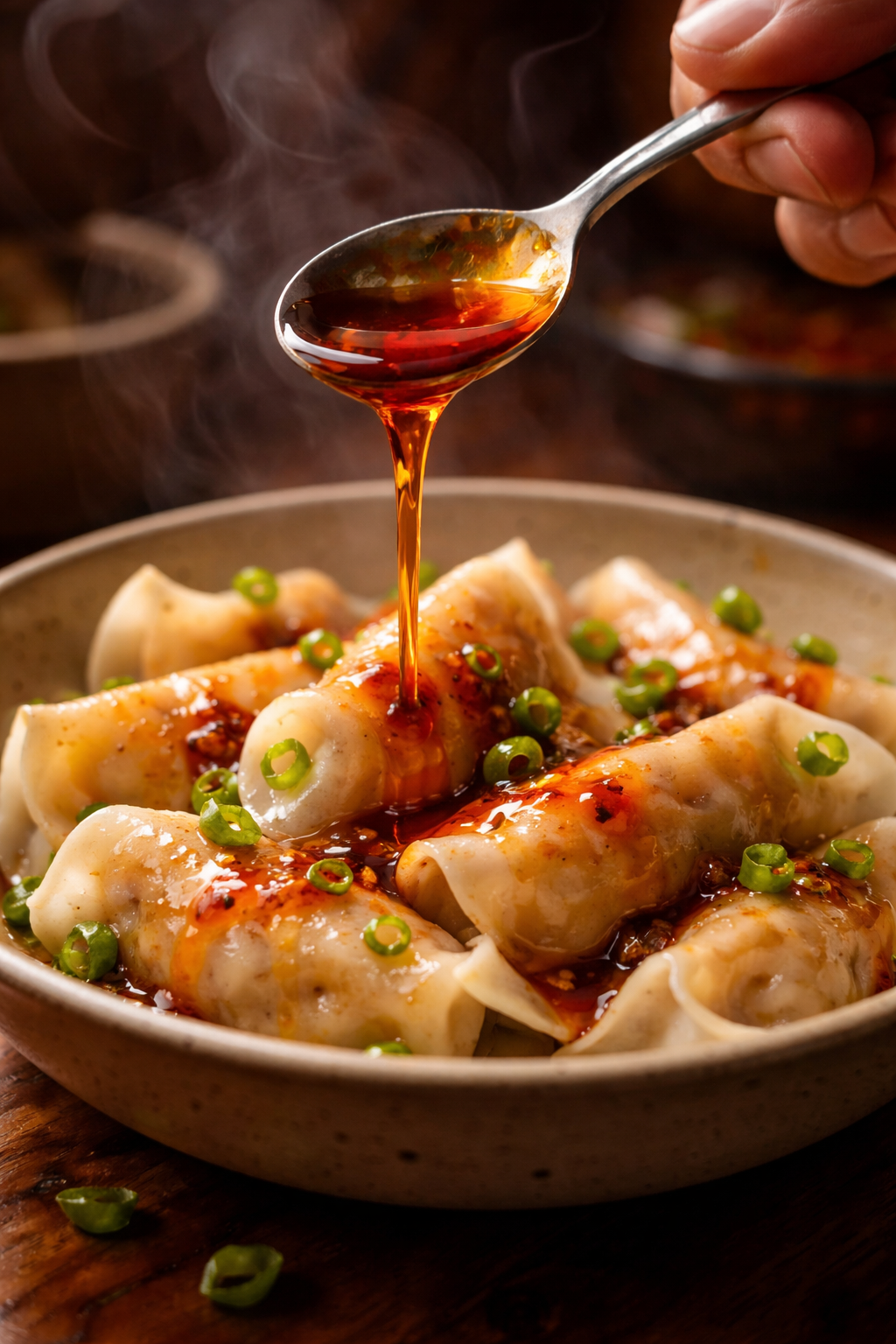
Yes, and this is one of the real functional advantages chili oil has over chili crisp. Because there are no fried solids to burn, chili oil handles direct heat well. You can use it as the starting fat in a stir-fry, swirl it into a hot broth, or build a fast dipping sauce without worrying about scorched garlic bits dragging down the flavor.
Chili crisp is a condiment you add after cooking — at the table, or in the last few seconds of a dish. Chili oil works at both stages. I cover specific cooking applications, temperatures, and which styles hold up best to heat in the full guide to cooking with chili oil. And for a look at the five distinct regional styles — Chinese la you, Korean gochugaru oil, Italian olio di peperoncino, Thai nam prik, and Japanese rayu — and what each one is actually for, the types of chili oil guide maps it out.
How I Evaluate Chili Oil
The evaluation criteria for chili oil are different from chili crisp. Crunch is irrelevant. Solid quantity is a category signal, not a positive. When I’m reviewing a chili oil — or deciding whether something labeled “chili oil” is actually what is chili oil by definition — these are the things I’m checking:
Oil quality. The base oil is the foundation. If the oil tastes flat, oxidized, or like nothing, the product fails before the chilies even register. I look for clean neutral oil or good sesame — something with its own character that supports the infusion rather than competing with it or disappearing under it.
Infusion depth. A well-made chili oil should taste like the chilies are in it, not just the color. Thin, one-note heat suggests either low-quality dried chilies or under-infusion. Good chili oil has layered heat — front-loaded brightness from one variety, slower-building depth from another, fragrance from the aromatics. If the heat arrives and immediately disappears, the infusion was shallow. The how chili crisp is made guide explains how pour-over vs. simmer infusion methods produce different results — the same principles apply to chili oil production.
Clarity and consistency. A clean chili oil should be clear to translucent — not murky or cloudy. Cloudiness can indicate oxidation, poor straining, or a base oil that wasn’t properly refined. The color should be rich and even throughout the jar. Uneven color can mean the infusion wasn’t controlled.
Cookability. Does it hold up to heat without smoking immediately? Does the heat character survive the transition from condiment to cooking fat? This matters especially for products positioned as cooking oils rather than finish oils. A chili oil that smokes at medium heat has a low smoke point base — and that’s useful to know before you ruin a stir-fry.
Aroma before tasting. Open the jar before you do anything else. A well-infused chili oil should smell like something — dried chilies, aromatics, the base oil’s character. If it smells neutral or flat before it touches your tongue, that tells you the infusion didn’t do much. This is an underused evaluation step and I’ve started doing it first on every product.
Chili oil reviews are coming. These are the criteria I’ll be scoring against when they do. And if you’re curious how salsa macha fits into the broader landscape of oil-based chili condiments — the Mexican tradition that uses nuts and seeds instead of fried aromatics — that post covers the third category in FIL’s Year 1 coverage.
What is chili oil made of?
Chili oil is a base oil — usually neutral like soybean or rapeseed, sometimes sesame — infused with dried chilies and aromatics like garlic, ginger, and spices. The aromatics are steeped in heated oil, transferring color, heat, and flavor. Quality chili oils use good base oil and real dried chilies. Avoid anything that lists artificial color or flavoring.
What’s the difference between chili oil and chili crisp?
The defining difference is solids. Chili crisp has substantial fried solids — garlic, shallots, soybeans, or other crispy bits — suspended in oil. Chili oil is primarily oil with minimal or no solids. If you tip the jar and it flows like water, that’s chili oil. If chunks move through it, that’s chili crisp. Some brands blur this line deliberately, but the distinction matters for how each product behaves in cooking and as a condiment.
Is Lao Gan Ma chili oil or chili crisp?
Both — they make separate products. Their most recognized jar (red label, woman’s face) is a chili crisp with heavy solids: soybeans, peanuts, fried aromatics. They also make a chili oil product that is oil-dominant. The two behave completely differently. If you’re buying Lao Gan Ma expecting chili crisp texture, confirm which jar you have before you open it.
Can you cook with chili oil?
Yes, and this is one of chili oil’s genuine advantages over chili crisp. Because there are no fried solids to burn, chili oil handles direct heat better. Use it to start a stir-fry, finish noodles, or build a fast dipping sauce. Chili crisp is primarily a condiment added after cooking — those solids scorch. Chili oil is more flexible at both stages.
How long does chili oil last?
Most commercial chili oils are shelf-stable for 12–24 months unopened. Once opened, keep the jar sealed. Store at room temperature if you go through it regularly, or refrigerate if you use it slowly. Oil-only products are more stable than chili crisps, which have fried solids that can go stale faster.
Why does some chili oil taste flat or one-dimensional?
Two common causes: low-quality base oil, or insufficient infusion time. A good chili oil should taste like the chilies are in it, not just the color. If it tastes thin, the oil quality or production method is the issue. The base oil is the foundation in chili oil in a way it isn’t in chili crisp — there are no solids doing compensatory flavor work.