
This post contains affiliate links. I may earn a small commission if you buy through them — at no extra cost to you. My scores are never influenced by this.
TL;DR: Umami Hottie Original Heat chili oil is a paste-like Japanese condiment built for ramen. The heat is pleasant and slow-building, the texture is chewy, and the umami runs deep — but the flavors arrive all at once rather than in layers, which keeps it just short of the top shelf. GOOD tier. Worth grabbing in the 3-pack.
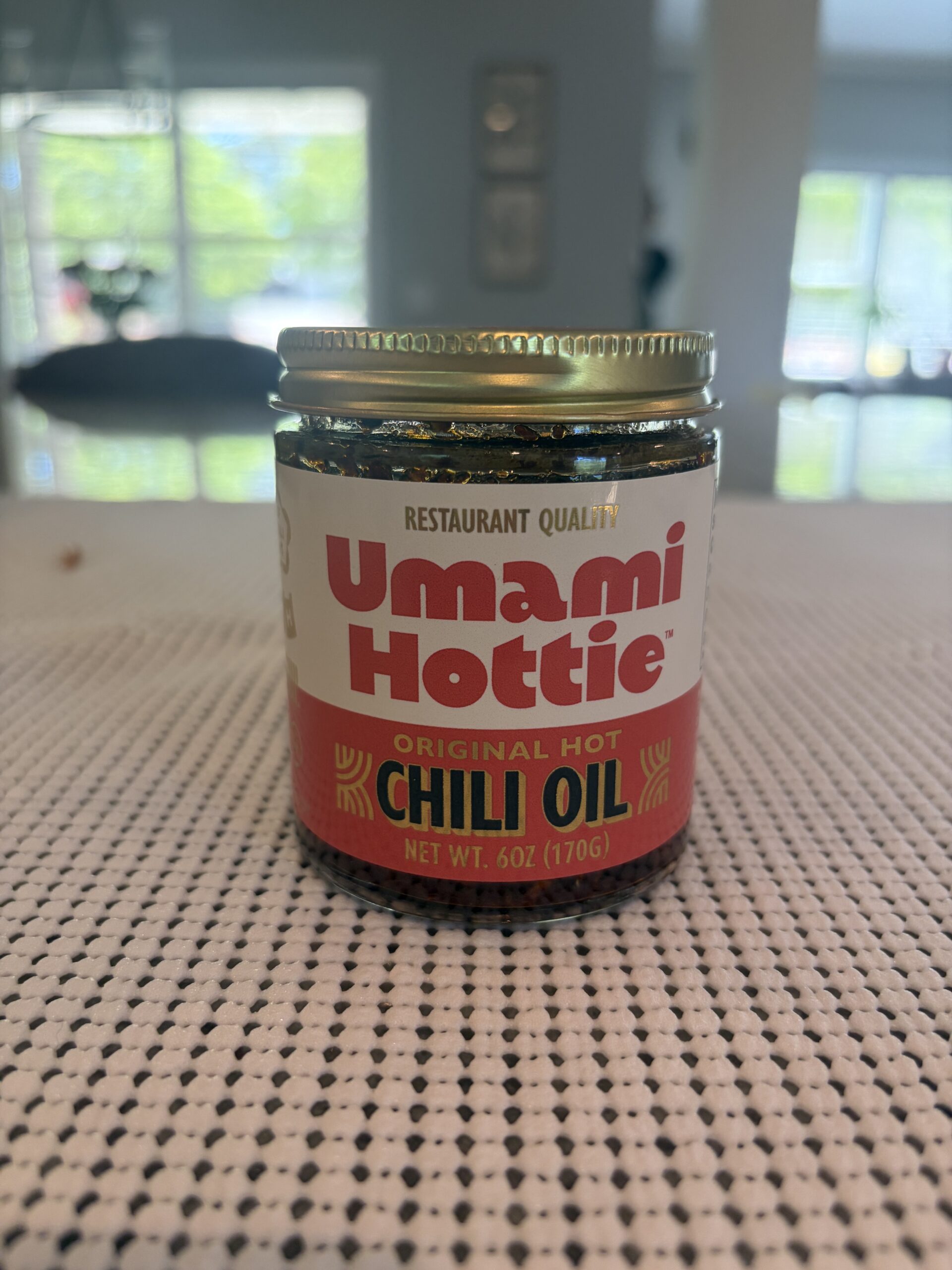
Umami Hottie Original Heat Chili Oil comes out of San Francisco, labels itself 3 out of 4 flames, and tells you right on the jar to put it on ramen, noodles, soups, and dipping sauces. That’s a narrow pitch compared to most chili oils that want you to believe they go on everything. I appreciate the honesty.
This is Umami Hottie’s heat-forward entry — one step up from the Sweet Heat, two steps above the Crispy Crunchy. Same ingredient DNA, totally different preparation. Where the other two give you crunch and texture, this one gives you a paste. And that paste has a job to do.
Quick Facts: Umami Hottie Original Heat Chili Oil
| Brand | Umami Hottie |
| Product | Original Heat Chili Oil |
| Category | Chili Oil |
| Style | Japanese |
| Oil | Soybean + Sesame (Blend) |
| Heat | 3 / 5 |
| Price | $12.95 ($11.66 via 3-pack) |
| Size | 6 oz |
| Per oz | $2.16/oz ($1.94/oz via 3-pack) |
| Made in | San Francisco, CA, USA |
| Buy | Amazon |
| Tier | GOOD |
Serving size is one teaspoon. For a paste this thick, that’s actually realistic — a teaspoon is about what you’d drop into a bowl of soup. For direct-on-food use, you’ll go through more than that. Zero grams added sugar, which sets this apart from both the Sweet Heat and Crispy Crunchy — those two lean on brown sugar for balance. Original Heat skips it entirely.
Ingredient Quality
Soybean oil and sesame oil lead the list — same base as the other two Umami Hottie jars. The soybean oil is doing structure work, the sesame is doing flavor work. That blend shows up often in Japanese-style chili oils, and it’s effective here — the sesame comes through clearly without overwhelming everything else.
What sets this apart from a basic chili oil is everything after the oil. Fried garlic, dried chilies, green onions, rice vinegar, chili flakes, salt, and then shichimi togarashi — a Japanese seven-spice blend that includes roasted orange peel and sansho pepper. That’s unusual for the chili oil category. Most products in this space rely on one or two chili types and call it done. Umami Hottie is stacking seasoning layers before you even get to the bottom of the list.
Red miso and mushroom seasoning sit low on the ingredient list, but they’re doing more than their position suggests. That deep saltiness in the first bite isn’t coming from the salt alone — it’s fermented umami from the miso, amplified by the mushroom. Just layers and layers of umami baked into this jar.
Aroma
Soy and sesame on the nose, right away. I’m getting more soy here than the other two Umami Hottie varieties — which tracks with the ingredient list and the absence of brown sugar. There’s a roasted quality underneath, but the sesame is doing most of the first-impression work. No off-notes, nothing that surprises. It smells like what it is.
Appearance
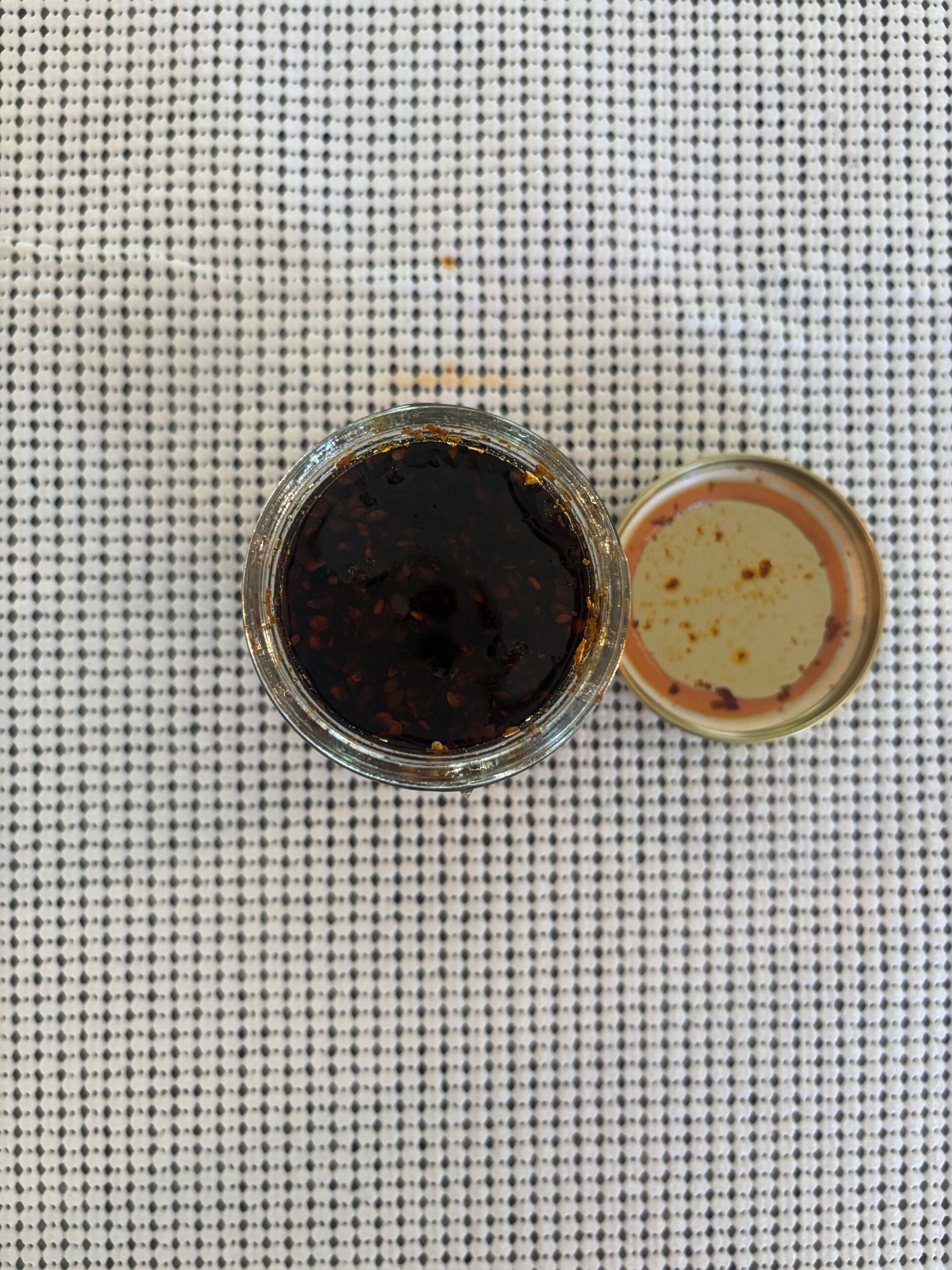
Clear oil — you can see right through it. The bits distribute all the way up to the top of the jar. Nice even suspension rather than the typical oil-on-top, solids-on-bottom split you get with most products.
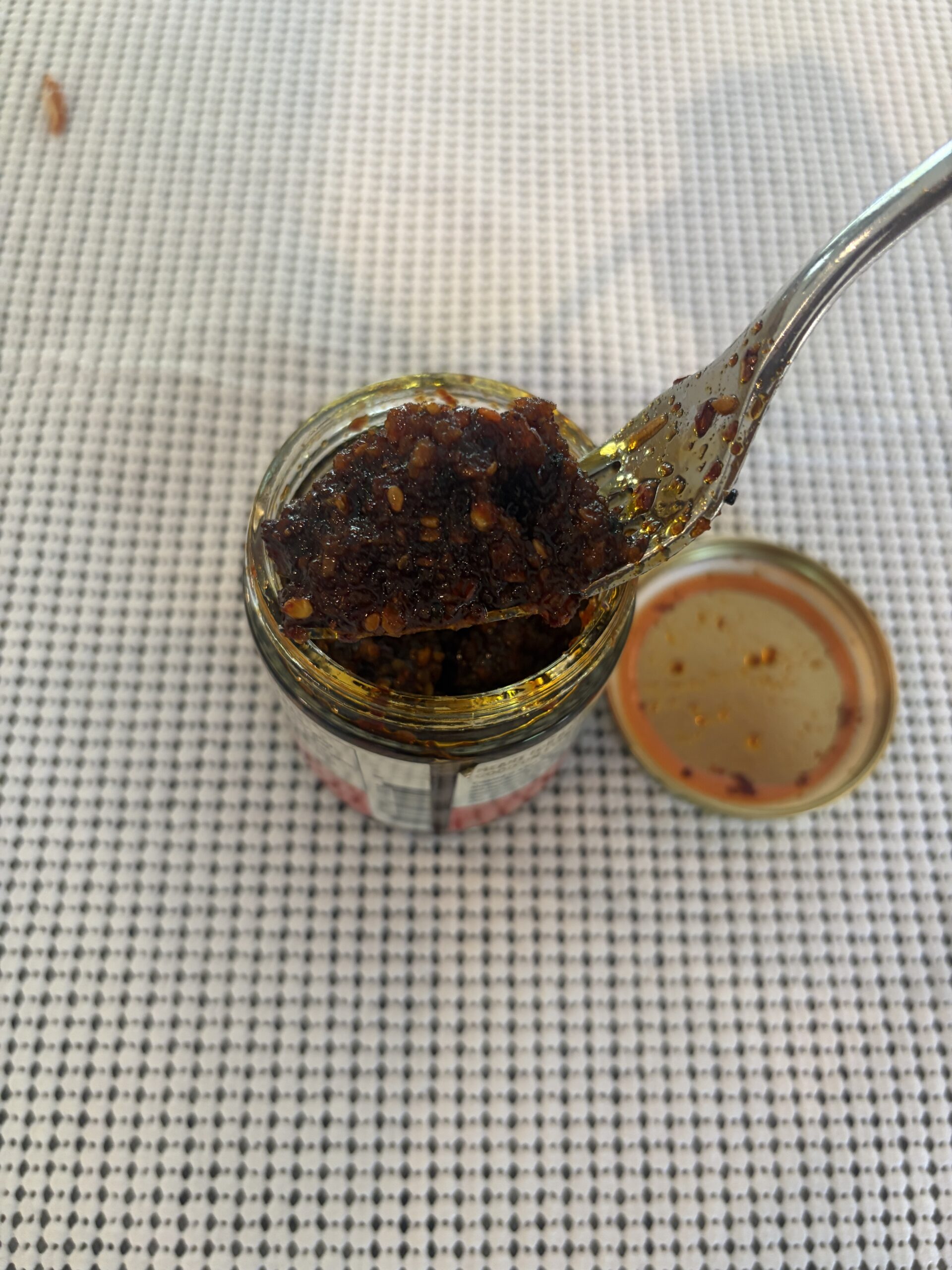
After stirring, the whole thing shifts to something like wet sand. Thick. Uniformly combined — no big chunks of garlic or shallot like you’d find in the Crispy Crunchy. This is where Original Heat separates itself from its siblings. Same ingredients, completely different form. It’s a paste, not a pourable oil with floating bits.
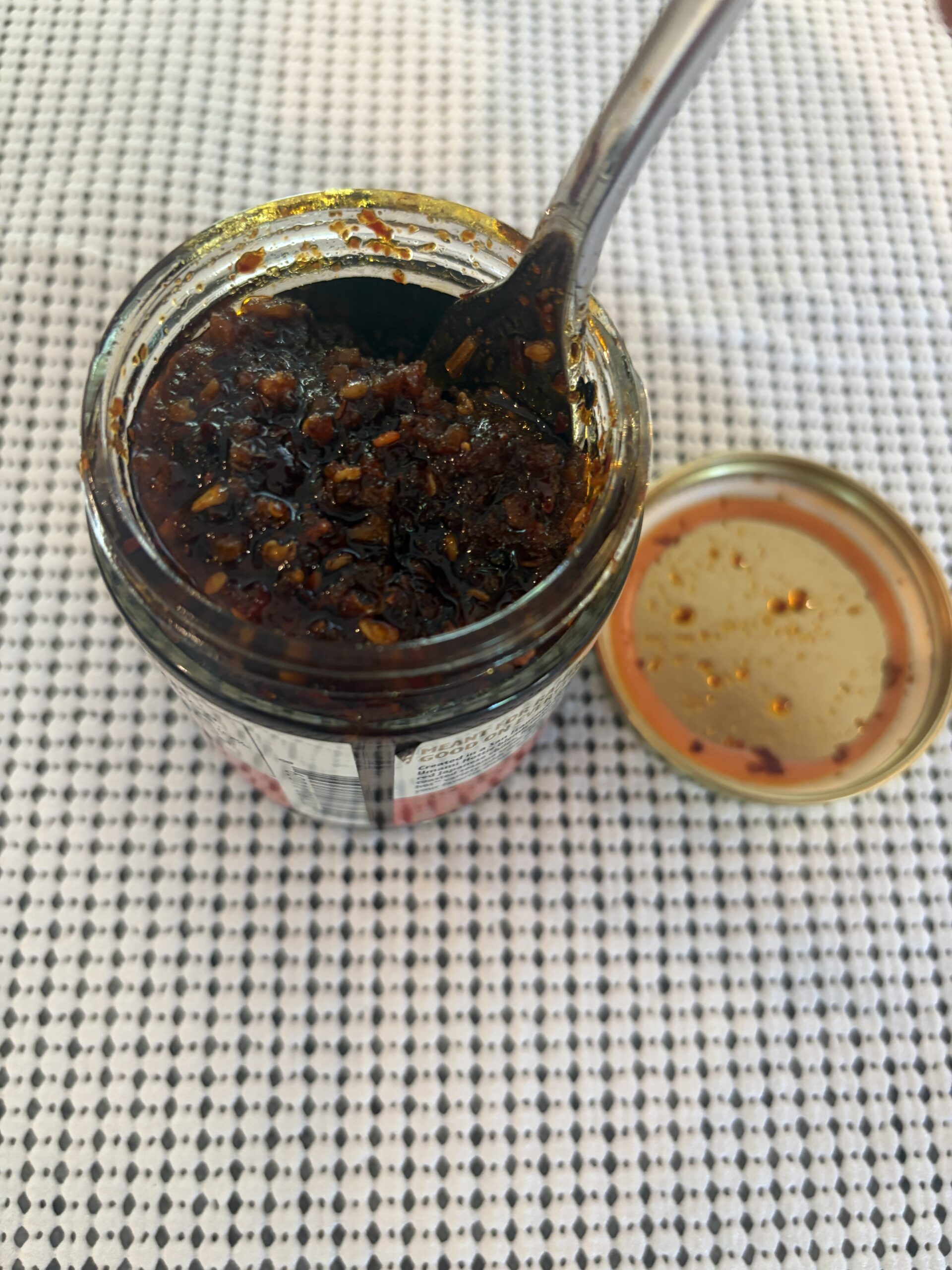
I’d almost call this a chili paste that uses oil as a binder rather than a chili oil with solids. The label says chili oil, and technically the oil is the first ingredient, but the product you’re actually using doesn’t behave like any chili oil I’ve tested. That’s not a criticism — it’s a reclassification that helps you understand how to use it.
Texture and Crunch
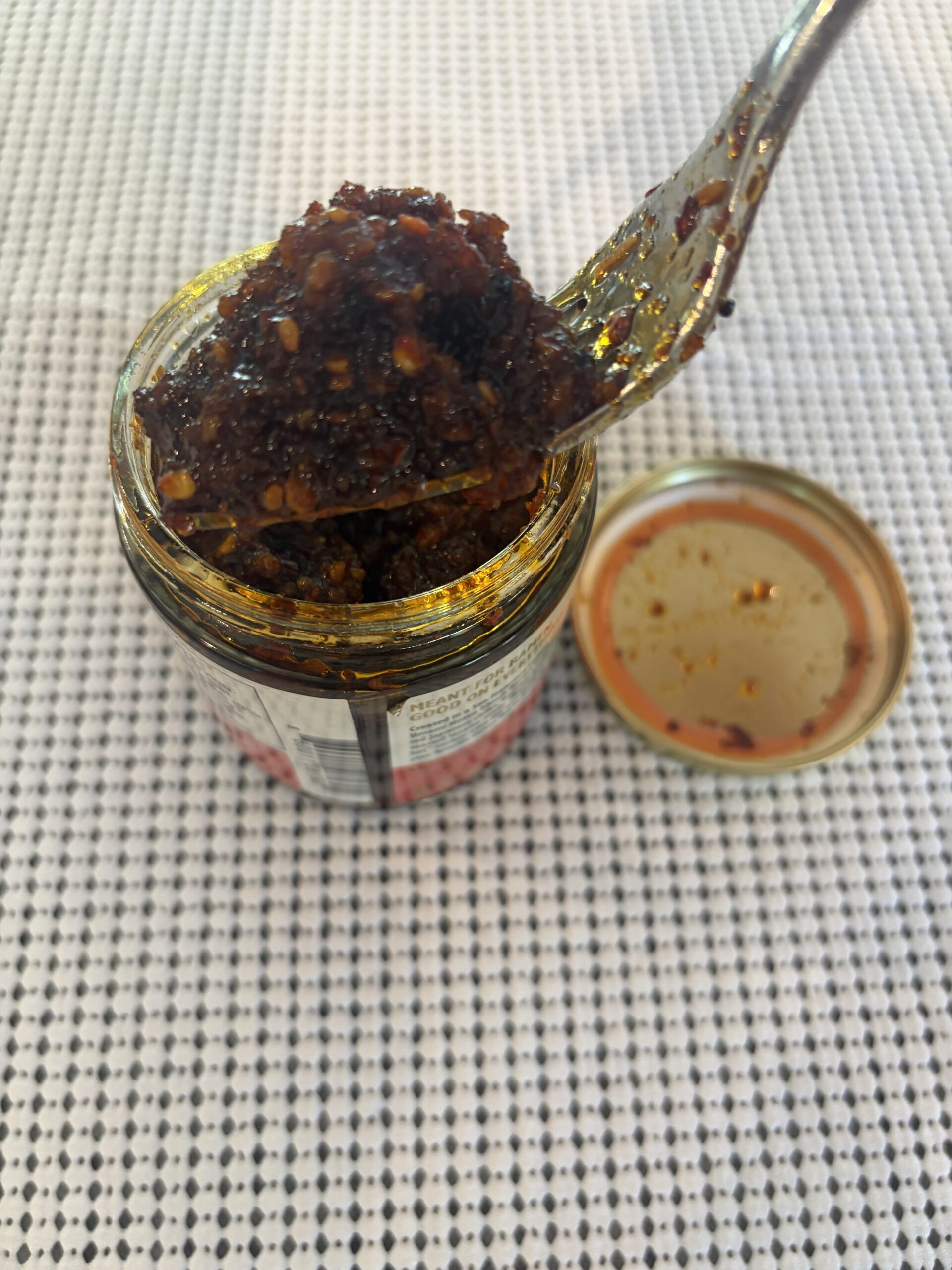
Chewy. Not crunchy. That’s the first thing to know about Original Heat — if you’re expecting crispy bits, you’re in the wrong jar. The ingredients are ground uniformly, creating a paste-like consistency that clings to food rather than sitting on top of it.
Lots of visible sesame seeds, but the spices are more finely ground than in either of the other two Umami Hottie varieties. The fork pull is thick — this stuff doesn’t drip, it holds. Compare that to Momoya’s Rayu, which is loose and oily, or S&B’s Taberu Rayu, which gives you big garlic chunks in a thin oil. Three Japanese products, three completely different textures.
Is chewy a negative? For a condiment you’d eat by the spoonful, maybe. For something designed to dissolve into hot broth, it’s exactly right. The texture makes sense once you drop it into ramen — it melts into the liquid and distributes evenly instead of clumping at the surface or floating on top.
Flavor Complexity
Here’s where Original Heat earns its tier and hits its ceiling at the same time.
The flavors arrive together. All at once. There’s an initial hit of umami and a touch of sweetness, then salt, then a bit of funk and chili, and then the heat rolls in. But the individual ingredients don’t announce themselves the way they do in a more layered product. It’s all kind of mangled together — not in a bad way, but in a way that makes it hard to isolate the garlic from the miso from the sesame.
For standalone eating, that’s a limitation. I want layers. I want to taste through a product and find different things on different bites. The Sweet Heat does that — you get the brown sugar, then the miso, then the heat in sequence. Original Heat compresses everything into one moment.
But drop this into a bowl of ramen and the simultaneous delivery becomes an advantage. You don’t need distinct layers when the broth is already carrying its own flavor story — you need a condiment that adds depth and heat in one move, uniformly, across every spoonful. Original Heat does that well. Context matters.
The oil itself carries flavor — sesame and soy come through even on a clean fork dip. This isn’t neutral carrier oil. It’s doing actual work, which makes the whole jar feel intentional rather than padded. Compared to Lao Gan Ma, there’s definitely more happening in the oil alone. LGM’s oil doesn’t do much for me on its own — it’s a vehicle. Umami Hottie’s oil is pulling its weight. But LGM gives you more textural variety and distinct chili flavor. Different products for different jobs.
Heat
Three out of four flames on the label, and the label is right. Just slightly more kick than the Sweet Heat — noticeable but not dramatic. The heat is pleasant and slow-building. Starts mid-palate and moves to the back of the throat, which is where all three Umami Hottie varieties land their heat.
That back-of-throat placement matters. It means the heat doesn’t park on your tongue and block everything else. You can still taste the umami, the soy, the vinegary onion vibe in the background while the heat does its thing. I pay attention to this — a lot of spicy chili oils just blast your palate and you’re done. The heat distracts and doesn’t let you catch the lingering flavors. Original Heat avoids that trap.
On FIL’s scale, this is a 3. Comfortable for most people. Might make you reach for water after a few heavy bites, but it’s not going to ruin your meal or your next ten minutes.
Use Cases
The label says ramen, noodles, soups, and dipping sauces — and the label nailed it. This is a ramen condiment that happens to come in a chili oil jar. The paste consistency dissolves into hot liquid in a way that a chunky chili crisp never could.
Where it works: any hot broth situation. Ramen is the obvious one, but pho, congee, and hot pot dipping sauce are all in play. Stir it into lo mein or any sauced noodle dish and it disappears into the sauce — in a good way. It adds depth without changing the texture of whatever you’re eating.
Where it struggles: straight on rice, it’s a bit one-dimensional without textural contrast. On eggs, it’s fine but not the first jar I’d reach for. This isn’t a put-it-on-everything product, and that’s OK. Chili oils that try to do everything usually don’t do anything particularly well.
Original Heat is a mixing candidate. Specifically: Original Heat plus Crispy Crunchy. The heat and paste consistency from this jar combined with the massive crunch from the Crispy Crunchy would cover each other’s gaps perfectly — you’d get heat, texture, and depth in one blend. That’s the play if you’re buying the 3-pack.
Versatility and Packaging
Same 6 oz jar and lid as the other two Umami Hottie varieties. Wide mouth, easy spoon access. The paste consistency means you’re not fighting oil drips down the side of the jar — it stays where you put it. Which is nice.
At $12.95 individual ($2.16/oz) or $11.66 via the 3-pack ($1.94/oz), it’s mid-range for a specialty chili oil. Not a budget pick, but not unreasonable for a small-batch San Francisco product with this ingredient list. The 3-pack at $34.99 is the value play — and honestly the way I’d recommend buying Umami Hottie, since the three jars complement each other rather than compete.
Vegan, gluten-free. Contains soy and sesame.
Final Verdict
GOOD. Higher end of good.
The heat is well-placed, the oil carries real flavor, and the paste-like consistency makes Original Heat genuinely useful for its intended purpose — ramen and hot noodle bowls. There’s depth here from the shichimi togarashi, the red miso, and the mushroom seasoning. But the flavors arrive all at once rather than in distinct layers, and for standalone eating that compression limits the experience. A few adjustments to open up the complexity and this moves into GREAT territory.
If you’re buying the 3-pack, Original Heat is the jar you reach for whenever a bowl of soup needs more heat and depth. It knows what it is, and it does that job well.
Frequently Asked Questions
What does Umami Hottie Original Heat chili oil taste like?
Umami Hottie Original Heat has a deep, savory flavor with soy, sesame, and fermented miso notes. The flavors arrive simultaneously rather than in layers, with slow-building heat that moves to the back of the throat. It tastes more like a concentrated seasoning paste than a traditional pourable chili oil.
Is Umami Hottie Original Heat spicy?
It’s a 3 out of 5 on the Flavor Index Lab heat scale — medium heat that’s comfortable for most people. The label rates it 3 out of 4 flames. The heat builds slowly and sits at the back of the throat rather than on the tongue, so you can still taste the other flavors while the heat is present.
What is the best way to use Umami Hottie Original Heat?
Original Heat works best stirred into hot liquids — ramen, pho, congee, noodle soups, and hot pot dipping sauces. Its paste-like consistency dissolves evenly into broth. It’s less ideal as a standalone topping on rice or eggs, where you’d want more textural contrast.
Is Umami Hottie chili oil vegan and gluten-free?
Yes. All three Umami Hottie varieties (Original Heat, Sweet Heat, and Crispy Crunchy) are certified vegan and gluten-free. They do contain soy and sesame allergens.
How does Umami Hottie compare to Lao Gan Ma?
Umami Hottie Original Heat has a more flavorful oil and deeper umami than Lao Gan Ma Spicy Chili Crisp. However, Lao Gan Ma offers more textural variety with its crispy bits and distinct chili flavor. They serve different purposes — Umami Hottie is a ramen-first paste, while Lao Gan Ma is a versatile chili crisp.
Where is Umami Hottie chili oil made?
Umami Hottie products are manufactured in San Francisco, California. The brand is a small-batch operation with Japanese-style seasoning influences, including shichimi togarashi (seven-spice blend) in all three varieties.
Is the Umami Hottie 3-pack worth it?
The 3-pack ($34.99, or $11.66 per jar) saves about $1.29 per jar compared to buying individually at $12.95 each. Beyond the savings, the three varieties complement each other — Sweet Heat for standalone use, Crispy Crunchy for texture, and Original Heat for ramen and soups. Mixing Original Heat with Crispy Crunchy creates a particularly good combination.