
This post contains affiliate links. I may earn a small commission if you buy through them — at no extra cost to you. My scores are never influenced by this.
Lee Kum Kee Cilantro Chili Crisp is a paste-forward, Sichuan-leaning chili condiment with a cilantro name that barely earns its spot on the label. The Sichuan peppercorn does the heavy lifting here — citrusy, chewy, and present — while the cilantro whispers from the back of the room. Solid density, decent heat, and a price tag that asks a lot for what you get. A good jar for soups and broths. Not a great jar for someone expecting crunch. Buy it on Amazon.
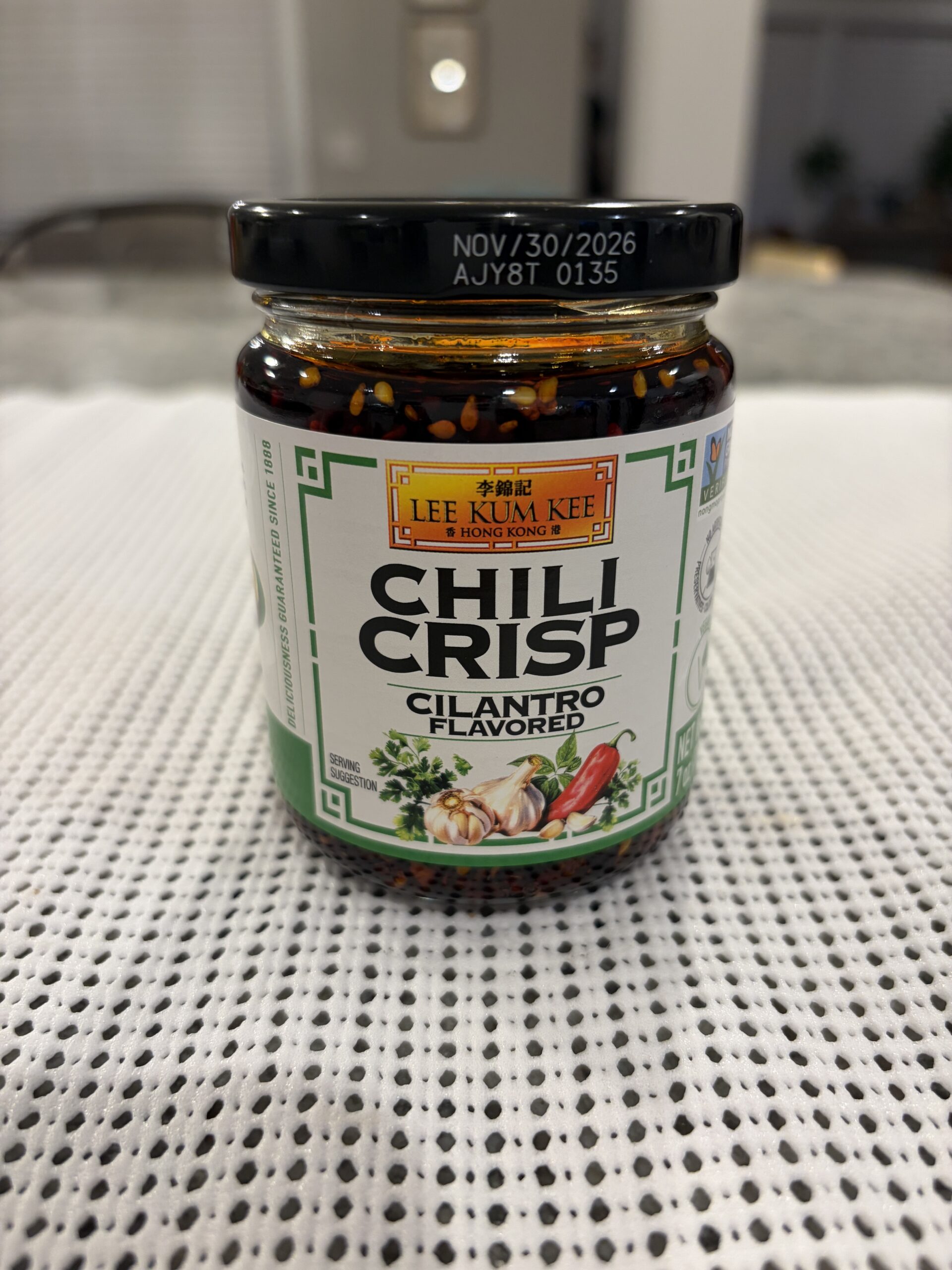
Lee Kum Kee Cilantro Chili Crisp Review
Lee Kum Kee is one of those names that just lives in your pantry whether you think about it or not. Oyster sauce, hoisin, soy sauce — they’ve been doing this since 1888, and they’re in every Asian grocery store on the planet. So when I saw them release a Lee Kum Kee cilantro chili crisp, I was genuinely curious. Lee Kum Kee already makes the Chiu Chow Chili Oil, which is a solid product with real chili-forward character. This cilantro version is a newer entry — a 7 oz jar with green branding, cilantro imagery on the label, and a promise of “irresistibly fresh taste with cilantro flavor.” That’s a big promise. If you’re new to the category, check out our guide on what chili crisp actually is before diving in.
I grabbed this off Amazon for $12.98. The jar arrived with a November 2026 expiration date, which means a roughly seven-month window from purchase. That’s not a lot of runway — I suspect this sat on an Amazon shelf for a while before it got to me. Something to keep in mind if you’re buying online versus picking it up in a store.
Quick Facts
| Brand | Lee Kum Kee |
| Product | Cilantro Flavored Chili Crisp |
| Category | Chili Crisp |
| Style | Sichuan-Chinese |
| Oil | Soybean |
| Heat | 2/5 |
| Price | $12.98 |
| Size | 7 oz |
| Per oz | $1.85/oz |
| Made in | China |
| Buy | Amazon |
| Tier | GOOD |
One teaspoon serving size. About 40 servings per jar. Thirty-five calories per serving. The teaspoon serving size is the standard move for oil-heavy products — it lets the calorie and sodium numbers look friendlier on the label. I don’t love it, but it’s not unusual. Just know that nobody is spooning out a single teaspoon of this stuff.
Ingredient Quality
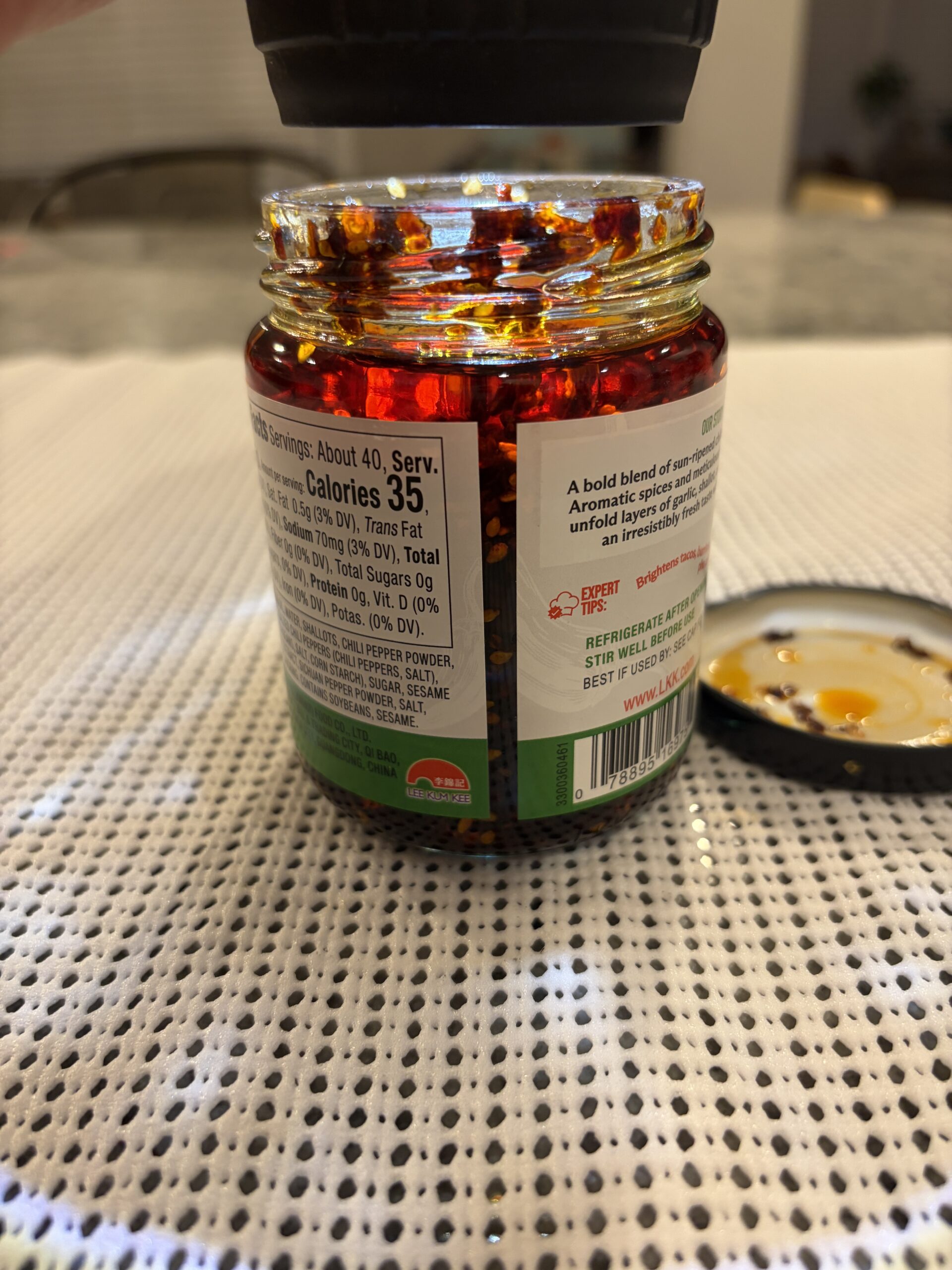
Here’s the full list: soybean oil, water, shallots, chili pepper powder, dehydrated garlic, salted chili peppers, soy sauce, sugar, sesame seeds, spices, yeast extract, Sichuan pepper powder, salt, natural cilantro flavoring. If you want to understand how to read a chili crisp label, this one’s a good exercise.
Soybean oil first — standard, nothing to flag there. But water as the second ingredient is unusual. Most chili crisps don’t list water that high. It tells you this product has a different consistency than what you’d expect from a traditional oil-and-solids jar. The water content is likely why this reads more like a paste than a crisp.
Shallots are third, which is nice — that’s a real aromatic pulling weight near the top of the list. Chili pepper powder and dehydrated garlic follow. Then you hit the fermented elements: salted chili peppers and soy sauce. That fermented chili component adds depth — it’s doing quiet work in the background even if it doesn’t announce itself on the palate.
Now, the elephant in the room. The product is called “Cilantro Flavored Chili Crisp.” Cilantro is the identity of this jar. It’s the reason you’d pick this up instead of any other Lee Kum Kee chili product. And “natural cilantro flavoring” is the very last ingredient on the list. Not cilantro. Not dried cilantro. Not cilantro oil. Natural cilantro flavoring — dead last, after salt. When the defining ingredient of a product is the last thing on the label, that tells you everything about how much of it is actually in there.
Aroma
Pop the lid and the first thing on the nose is Sichuan peppercorn. It’s immediate — that citrusy, almost floral quality that good Sichuan pepper has. Underneath that, there’s a leafiness. A freshness that you could connect to cilantro if you’re looking for it, but it’s not like opening a bag of fresh herbs. It’s subtle. Knowing the label says cilantro, your brain fills in the dots, but I’m not sure I’d identify it blind. Garlic is present too, sitting underneath the peppercorn, and the standard chili crisp aromas are there — warm oil, dried chili, a hint of fermentation. The overall impression is fresh, which is nice. It smells different from most jars I’ve opened, and that freshness is probably the cilantro flavoring doing what it can from the bottom of the ingredient list.
Appearance and Settlement
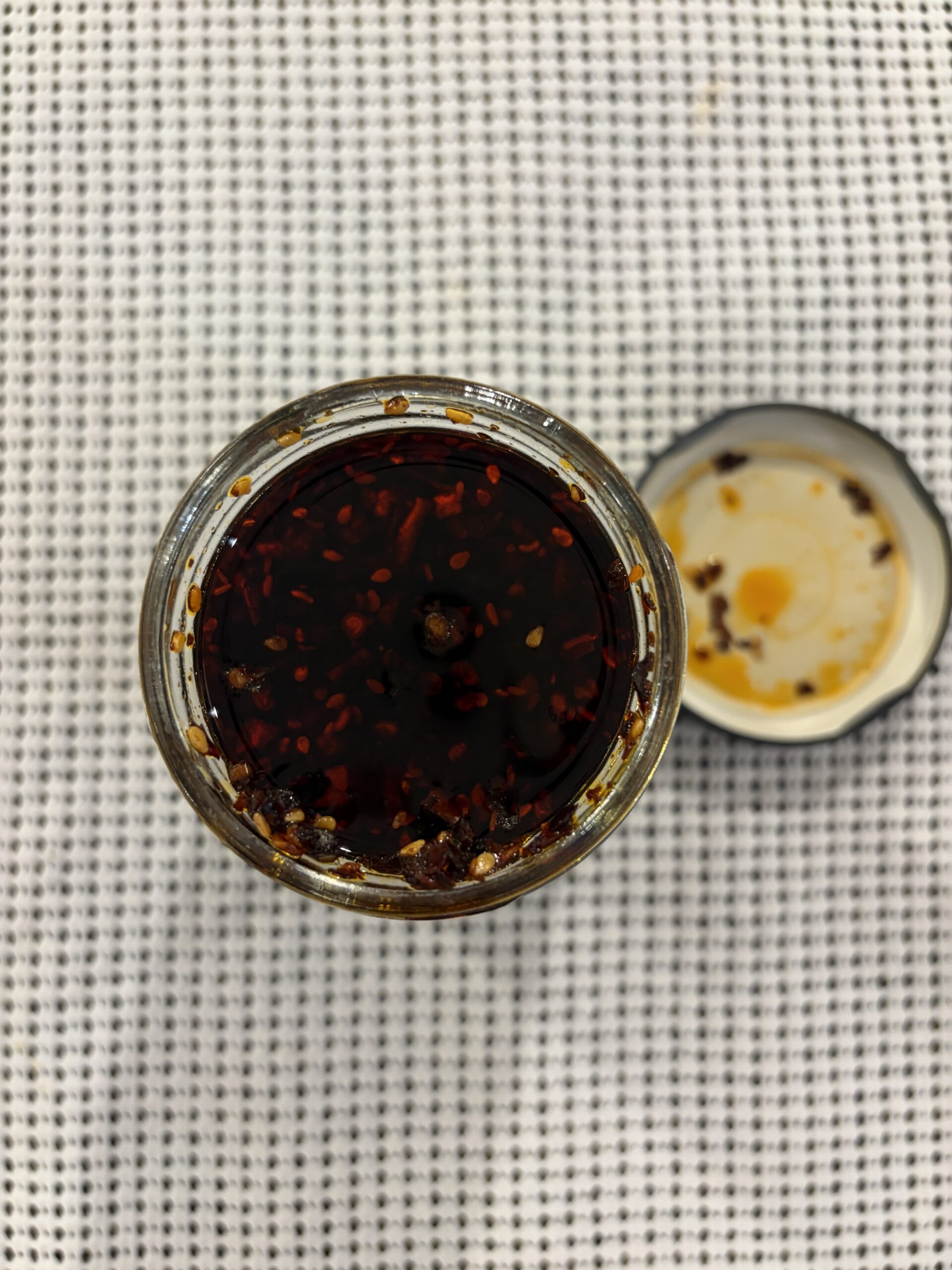
The jar has a narrow viewing window between the labels, but what you can see is encouraging. This is roughly 90% settlement — bits nearly to the top, with almost no clear oil layer sitting above the solids. That’s an excellent ratio on paper. The oil is mixed in with everything rather than pooling on top, which you don’t always see. If you’re judging purely by oil-to-solids ratio, this jar looks dense and packed.
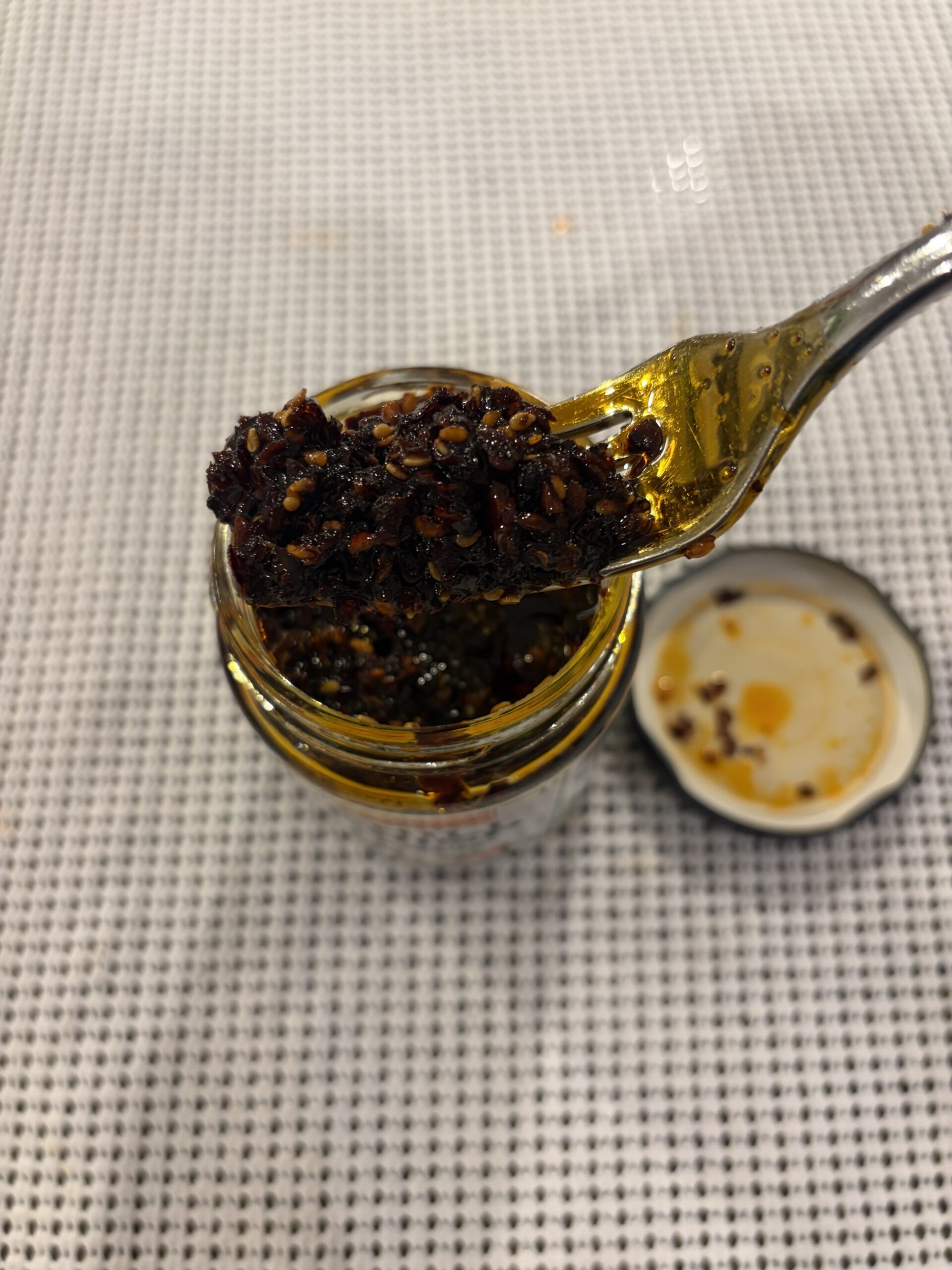
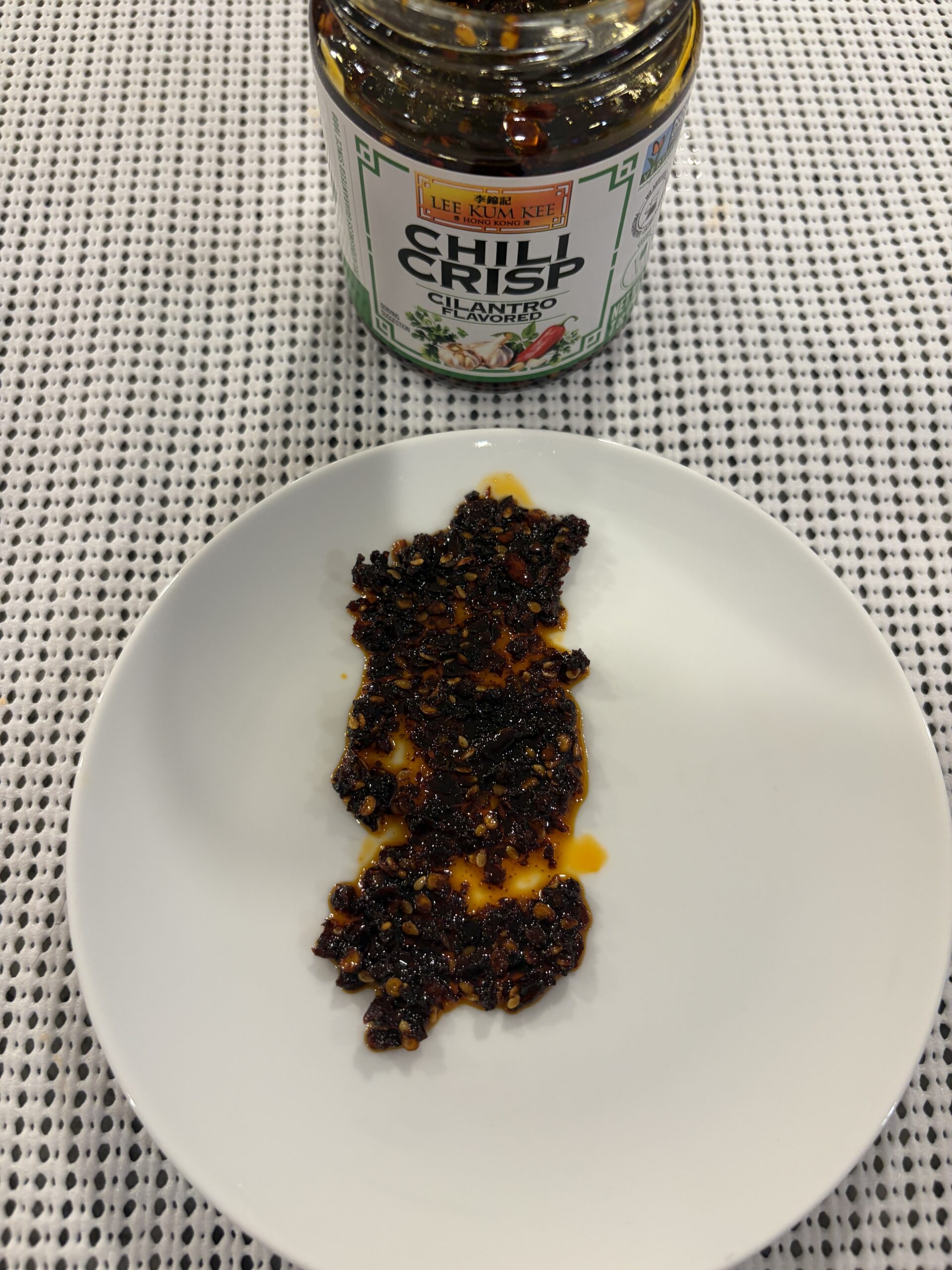
But here’s where the photos tell a more complicated story. The bits are very finely ground. This isn’t chunky, textured chili crisp with visible garlic pieces and whole chili flakes. It’s more of a paste — soft, uniform, and dark. You can see some sesame seeds and smaller chili pieces in there, but the overall visual is closer to a thick sauce than what most people picture when they hear “chili crisp.” The consistency is more like a spread than a condiment with distinct solids.
Texture and Crunch
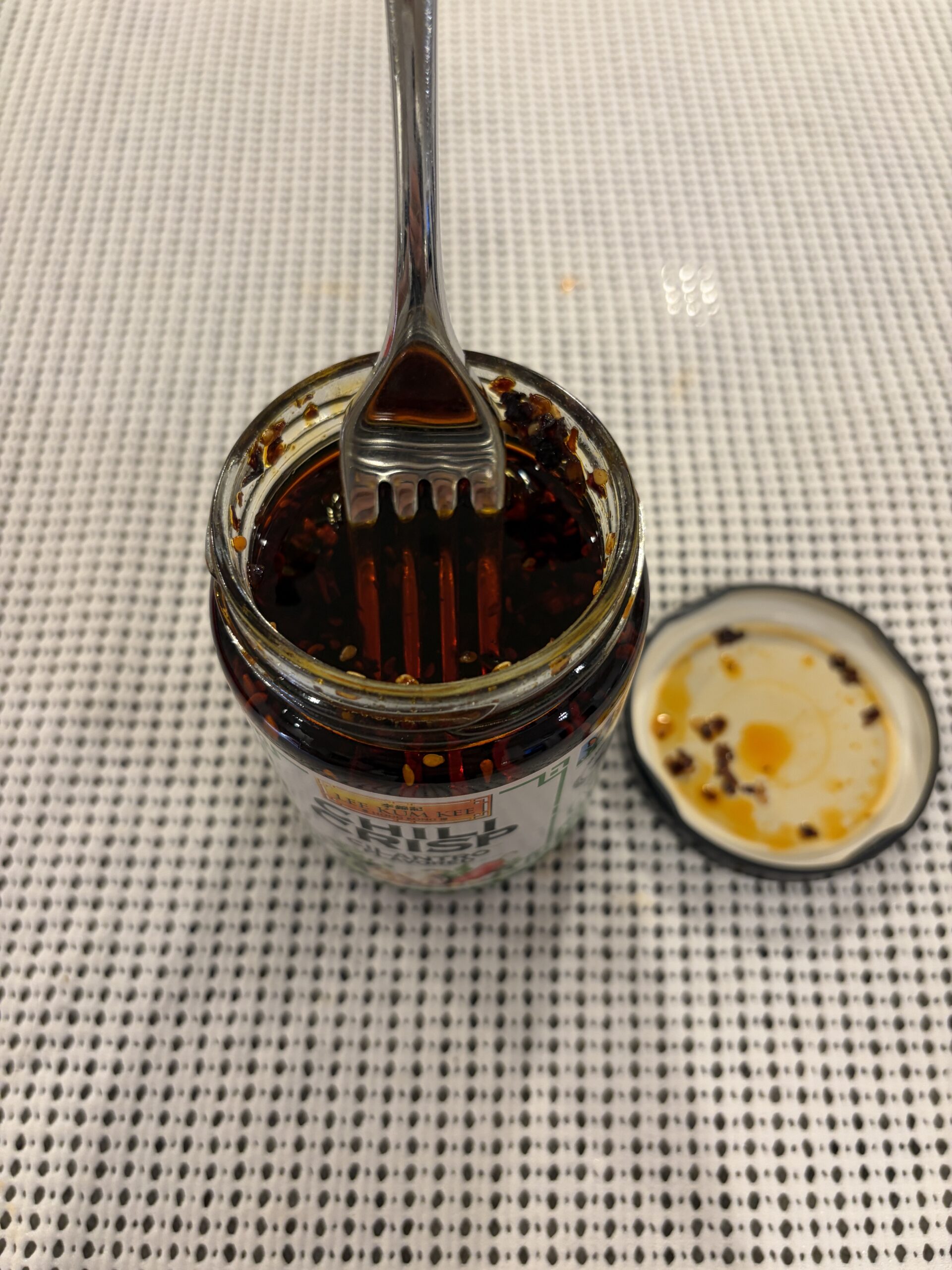
This is where I have to call it like I see it. The label says chili crisp. This is not crispy. At all. The stir is very soft — the fork moves through it with zero resistance. The bits are paste-like, already soft, already broken down. There’s no crunch to speak of. No shatter, no snap, nothing that makes you feel like you’re eating crispy bits. It’s chewy in places, particularly when you hit a piece of Sichuan peppercorn, but that’s a different texture entirely — that’s the peppercorn itself being fibrous, not a fried crisp doing its job.
If you need this to soften further for a soup or a broth, you’re already there. It’s already soft. That’s actually a selling point for liquid applications — you can drop a spoonful into pho and it integrates immediately without any awkward crunchy bits floating around. But if you’re buying this because the label says “crisp” and you’re expecting what Lao Gan Ma or Fly By Jing deliver in terms of texture, you’re going to be disappointed.
Flavor Complexity
The first thing you taste is Sichuan peppercorn. It’s the dominant note — chewy, citrusy, and present. It arrives immediately and it stays. After that, there’s some stray heat from the chili, and then a faint, almost ghostly cilantro presence. I described it in my notes as “La Croix vibes” — like somebody whispered the word cilantro into this jar and then left the room. You know it’s supposed to be there. You can almost convince yourself it is. But it’s not leading anything.
The garlic doesn’t do much work here either. Dehydrated garlic is fifth on the list, but in the actual tasting, it’s barely registering. The shallots contribute more to the savory base than the garlic does, which is an interesting inversion from most chili crisps where garlic is a primary driver. The fermented chili element — the salted chili peppers and soy sauce — adds some depth in the background, but it’s not assertive enough to call this a fermented-forward product the way Lao Gan Ma’s Spicy Chili Crisp is.
Everything balances reasonably well despite being muted across the board. Nothing is fighting for attention because nothing is loud enough to fight. The Sichuan peppercorn is carrying this jar. Its citrus freshness is probably what most people will attribute to the cilantro, but I think that’s the peppercorn talking, not the natural flavoring at the bottom of the ingredient list.
On the oil-alone test: the oil here isn’t doing independent flavor work. It’s soybean oil doing soybean oil things — carrying heat and blending into the paste. This isn’t a “whole jar” product where the oil and solids function as a designed-together system. The oil is a vehicle. The solids — or in this case, the paste — are doing whatever flavor work gets done. Split jar assessment.
Heat
The heat is moderate. I’d put it at a 2 out of 5 — enough to make me cough once on the first bite, but nothing that sticks around aggressively or builds into anything uncomfortable. The burn comes from a chili that provides pure heat without much of its own flavor character. It’s functional spice — it’s there, it does the job, and then it moves on. If you want to understand the difference, read up on the different types of heat in chili crisp.
The Sichuan peppercorn provides some tingling — you’ll feel it on your lips and the front of your tongue — but it’s not the full numbing mala experience you get from a dedicated Sichuan product. The tingle is there and it’s pleasant. The citrusy freshness from the peppercorn is actually more noticeable than the heat itself, which is an interesting dynamic. The peppercorn’s chewiness and its citrus quality are doing more on your palate than the chili’s burn.
For most people, this is a very approachable heat level. You could hand this to someone who’s heat-cautious and they’d be fine.
Use Cases
This is a broth jar. I see this going into pho, into ramen, into any soup that needs a bump of chili and some Sichuan character. The paste-like texture means it dissolves right into liquid — no weird floating bits, no textural clash. Drop a spoonful into a bowl of congee and it integrates clean. That’s where this product makes sense.
Beyond soups, I could see this on lo mein or stir-fried noodles where you want the flavor without worrying about crunch distribution. Eggs would work — scrambled especially, where the paste can fold into the curds. I wouldn’t put it on pizza or toast where you’re expecting that textural contrast that a proper chili crisp gives you. This isn’t that product.
The Mixing Angle
The paste-like consistency makes this an easy blender. You could fold a spoonful into a jar of something crunchier that lacks Sichuan character — add some peppercorn depth and a hint of fermented chili to a jar that’s all texture and no complexity. It’s not a standalone jar in the traditional chili crisp sense. It’s a flavor enhancer that happens to come in a chili crisp jar.
Versatility and Packaging
The 7 oz jar is a standard size, but at $12.98 you’re paying $1.85 per ounce. That’s on the higher end for a mass-produced product from a brand this size. For context, a 7.41 oz jar of Lee Kum Kee’s Chiu Chow Chili Oil runs around $5.50 at most Asian grocers. This cilantro version is an Amazon-priced product, and the premium is significant.
The jar itself is fine. Standard glass, screw-top metal lid. Spoon access is easy. The label claims Non-GMO Project Verified, no artificial preservatives, colors, or flavors, and it’s vegan. The “refrigerate after opening, stir well before use” instruction makes sense given the water content — this is a product with more moisture than a typical oil-based chili crisp, so shelf stability after opening is something to watch.
Final Verdict — GOOD
Lee Kum Kee Cilantro Chili Crisp is a GOOD jar. There’s enough going on here — the Sichuan peppercorn character, the fermented chili depth, the solid density ratio — to kick it above average. But there’s not quite enough to make it great. The cilantro is a whisper when the label promises a statement. The texture says “crisp” but delivers paste. And the price asks $1.85/oz for a product that works best as a soup enhancer rather than a versatile condiment you’d reach for across multiple meals.
I respect what Lee Kum Kee is doing here. Making a consistent product at their scale is genuinely hard, and this jar doesn’t have any offensive flaws. It’s interesting and novel — it reminds me of jars where there’s something there, it just leaves you wanting a little more. If you’re a pho or ramen person looking for a Sichuan-forward condiment that integrates cleanly into broth, this is worth trying. If you’re looking for a crunchy, cilantro-forward chili crisp with real texture, keep looking.
Buy Lee Kum Kee Cilantro Chili Crisp on Amazon.
- Best Chili Crisp: Everything We’ve Tested — See where every jar ranks.
- What to Eat with Chili Crisp — A field guide to pairing by jar style.
- How to Build a Chili Crisp Starter Kit — Three jars, no overlap.
Frequently Asked Questions
Is Lee Kum Kee cilantro chili crisp actually spicy?
It’s mild to moderate — about a 2 out of 5 on the heat scale. Most of the warmth comes from dried chili and a light Sichuan peppercorn tingle. It won’t overwhelm anyone who’s heat-cautious.
Does Lee Kum Kee cilantro chili crisp taste like cilantro?
Barely. The cilantro flavor comes from ‘natural cilantro flavoring’ — the very last ingredient on the label. The freshness you taste is mostly Sichuan peppercorn citrus, not cilantro. It’s more of a whisper than a defining flavor.
Is Lee Kum Kee cilantro chili crisp crunchy?
No. Despite the word ‘crisp’ on the label, this product has a paste-like, soft texture with no noticeable crunch. It’s better suited for soups and broths where texture integration matters more than crispiness.
What’s the best way to use Lee Kum Kee cilantro chili crisp?
It works best stirred into liquid dishes — pho, ramen, congee, or any broth-based soup. The paste-like texture dissolves cleanly into liquids. It also works folded into scrambled eggs or tossed with noodles.
Is Lee Kum Kee cilantro chili crisp vegan?
Yes. The product is labeled vegan and contains no animal-derived ingredients. It’s also Non-GMO Project Verified and free of artificial preservatives, colors, and flavors.
How does Lee Kum Kee cilantro chili crisp compare to Lao Gan Ma?
They’re different products. Lao Gan Ma has more pronounced crispy bits and a fermented soybean depth. The LKK Cilantro version is paste-forward with Sichuan peppercorn as the dominant flavor. LGM offers better texture; LKK Cilantro offers more peppercorn character.
Where can I buy Lee Kum Kee cilantro chili crisp?
It’s currently available on Amazon for about $12.98 for a 7 oz jar ($1.85/oz). It may also appear at Asian grocery stores, though availability varies by region.