
This post contains affiliate links. I may earn a small commission if you buy through them — at no extra cost to you. My scores are never influenced by this.
Fly By Jing chili crisp — the original Sichuan formula — has the best aroma and most complex flavor I’ve tested in this category. It also has a solids problem — the jar looks balanced, but the settled material is fine-particle powder and peppercorn rather than crunchable bits. Extraordinary flavor. Doesn’t deliver on the chili crisp promise. Tier: GOOD.
Fly By Jing Sichuan Chili Crisp Review: A Jar That Smells Better Than It Delivers
Open a jar of Fly By Jing chili crisp — the original Sichuan Chili Crisp — and you will stop whatever you’re doing. From a foot away, the smell is extraordinary — dense, roasted, deep. I initially thought I had accidentally opened a really good jar of tomato sauce. Get closer and the chilies come forward, then the mushroom, then a faint note of seaweed underneath everything. I’ve tested a lot of these. The aroma on this Fly By Jing chili crisp is in its own category.
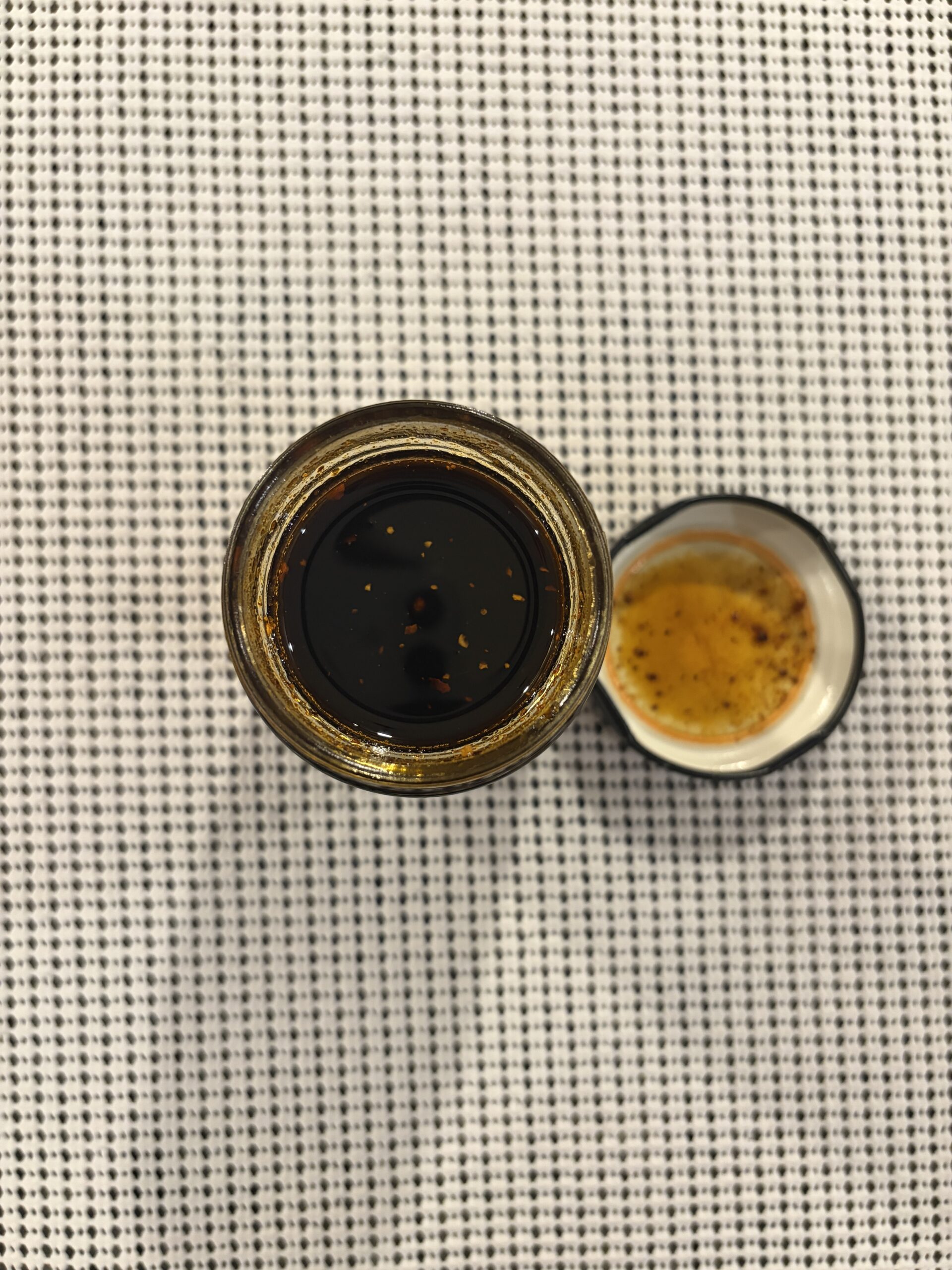
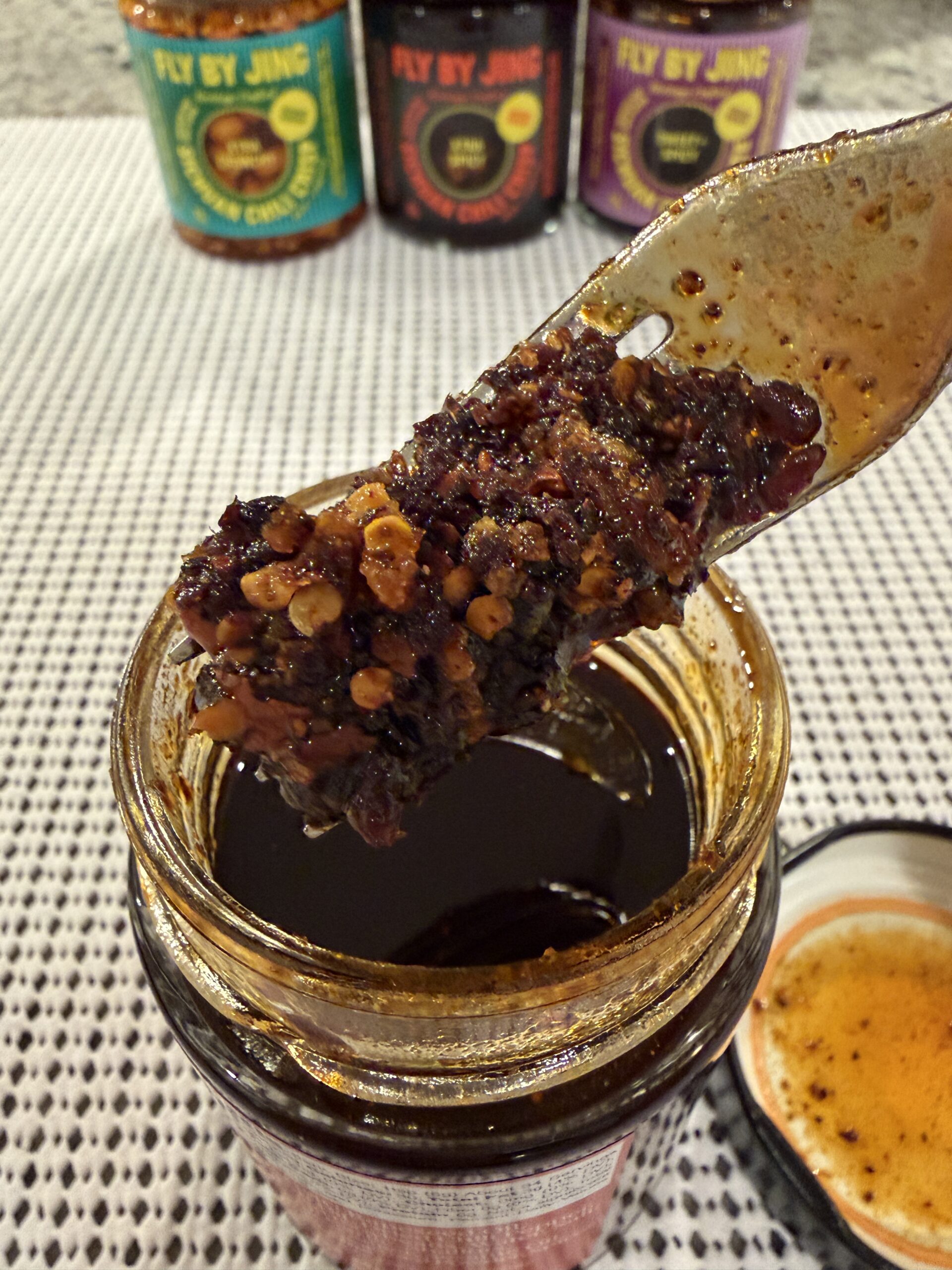
Then you look at the jar. The settled material sits at roughly half the volume — so far so good. But when you open the lid, there are almost no visible bits on the surface. Put a fork in and it sinks through. Stir around and what you find isn’t garlic chips and chili flakes — it’s mostly fine sediment, ground peppercorn, and powder. The solids are there by volume. They’re just not the crispy kind.
That distinction is the whole review. This Fly By Jing chili crisp has genuine complexity and real flavor depth. What it hasn’t delivered is a chili crisp experience — at least not by the standard that matters most. Understanding that gap is the difference between buying the right jar for the right reason and being disappointed.
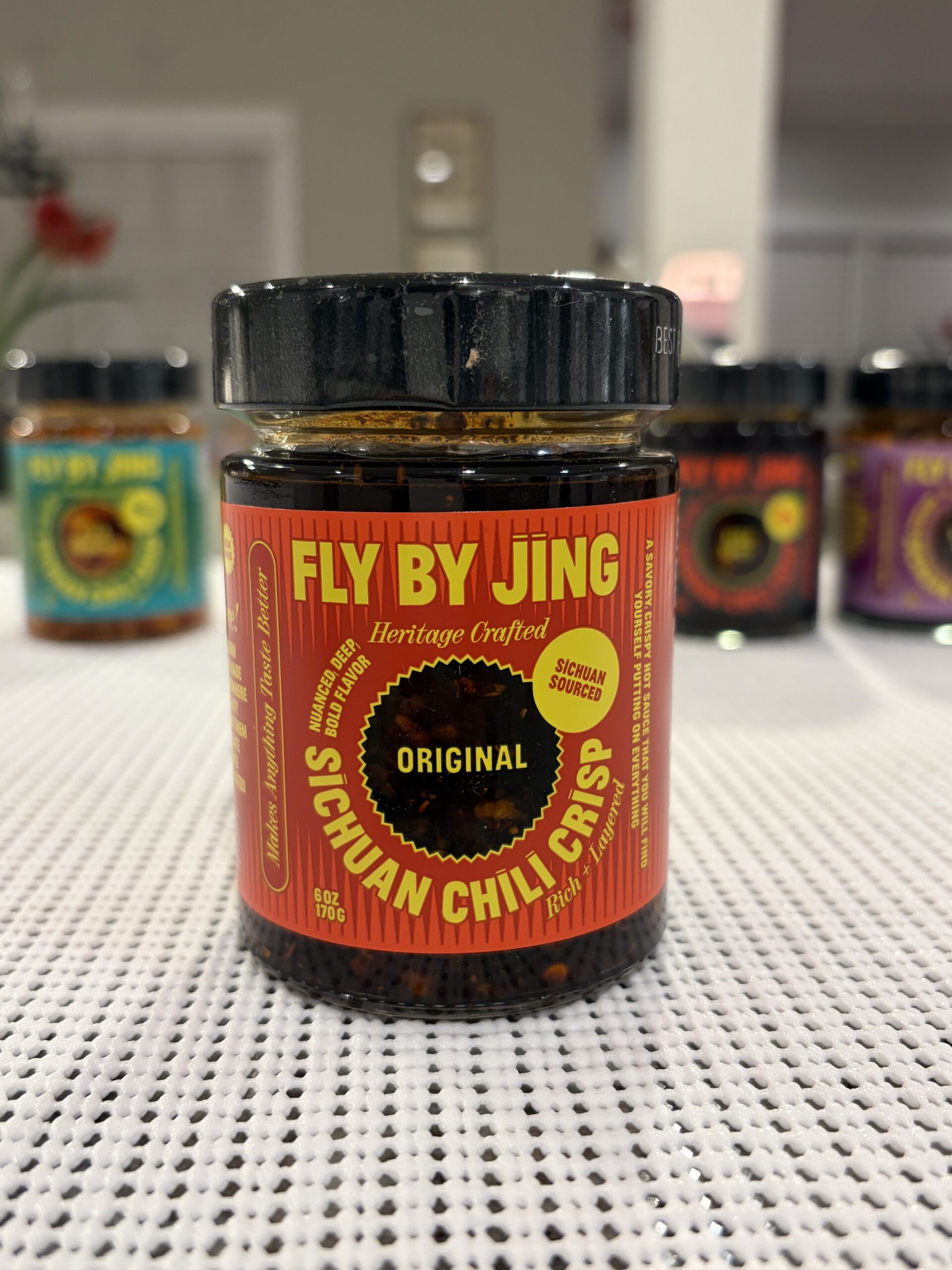
Quick Facts
| Field | Detail |
|---|---|
| Brand | Fly By Jing |
| Product | Sichuan Chili Crisp |
| Category | Chili Crisp |
| Style | Sichuan / Chinese |
| Oil | Rapeseed (primary), Soybean |
| Heat | 3 / 5 |
| Price | $9.33/jar (3-pack, $27.99); $15–22 single jar |
| Size | 6 oz |
| Per oz | $1.56/oz (3-pack) · ~$2.50–3.00/oz (single) |
| Serving size | 1 tsp |
| Made in | China |
| Storage | Refrigerate after opening |
| Buy | Whole Foods, Target, Amazon, flybyjing.com |
| FIL tier | GOOD |
The Ingredient List
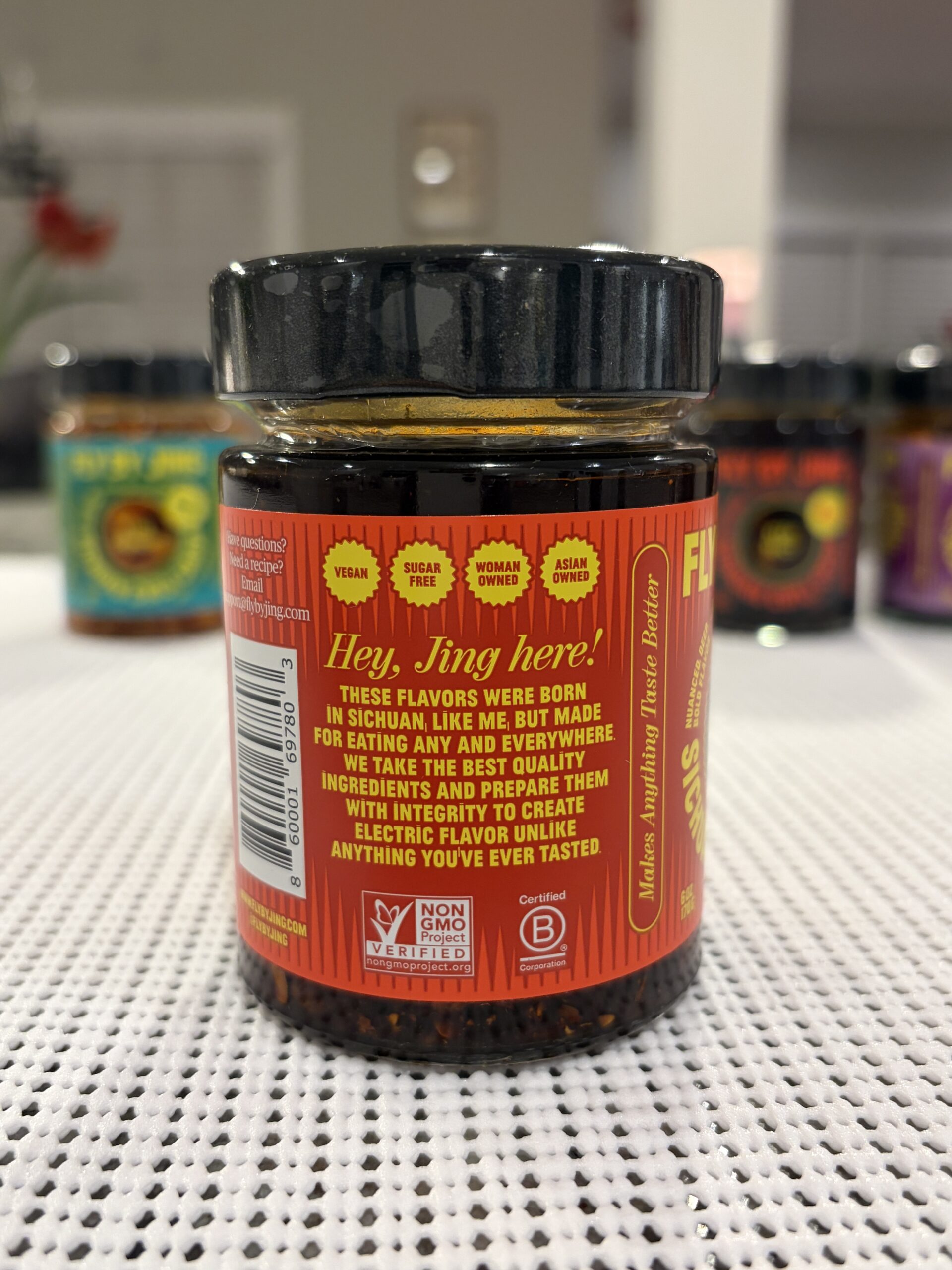
Rapeseed oil, soybean oil, dried chili pepper, fermented soybean, garlic, shallots, mushroom powder, ginger, sesame oil, salt, Sichuan pepper, seaweed powder, spices.
The first thing worth noting: rapeseed oil leads. Most chili crisps — Lao Gan Ma included — open with soybean oil. Rapeseed (caiziyou) is the traditional Sichuan cooking oil, with a slightly nutty, more characterful flavor than neutral soybean. It’s a meaningful choice, and you can taste it. This oil carries flavor that most chili crisp oils don’t bother with.
Mushroom powder at position seven is high enough to actually influence what you taste, and it does — both in the aroma and mid-palate. Sichuan pepper and seaweed powder complete a seasoning stack that explains why this jar smells unlike anything else in the category.
The fermented soybean at position four is worth distinguishing from the soybean filler you see in cheaper products. Here it’s contributing umami as an intentional flavor ingredient — not whole fried soybeans stuffed in to fake crispy volume. Different application, different outcome. For more on how ingredient order tells you what you’re actually buying, see How to Read a Chili Crisp Label.
Appearance — Looks Balanced, Isn’t
At rest, the settled material in the jar looks roughly 50/50 with the oil layer. That’s a reasonable ratio visually. The problem reveals itself when you open the lid: almost no discrete bits on the surface. When you put a fork in, it sinks through without resistance. When you stir and pull out what’s at the bottom, it’s mostly fine sediment — ground Sichuan peppercorn, mushroom powder, compacted chili flakes. There’s no garlic chip to find. No shallot piece. Nothing that holds its shape.
The solids are there. They’ve just been broken down — by the infusion process, by time in oil, or by the nature of the ingredients themselves. Sichuan peppercorn, once saturated in oil, goes soft. Mushroom powder is powder. The result is a jar that looks like it has a reasonable solid-to-oil ratio and behaves like it doesn’t.
The defining characteristic of chili crisp is discrete, crunchable solids. That’s what separates it from chili oil. By that standard, Fly By Jing is closer to the oil end of the spectrum than the label implies.
Aroma — The Best in the Category
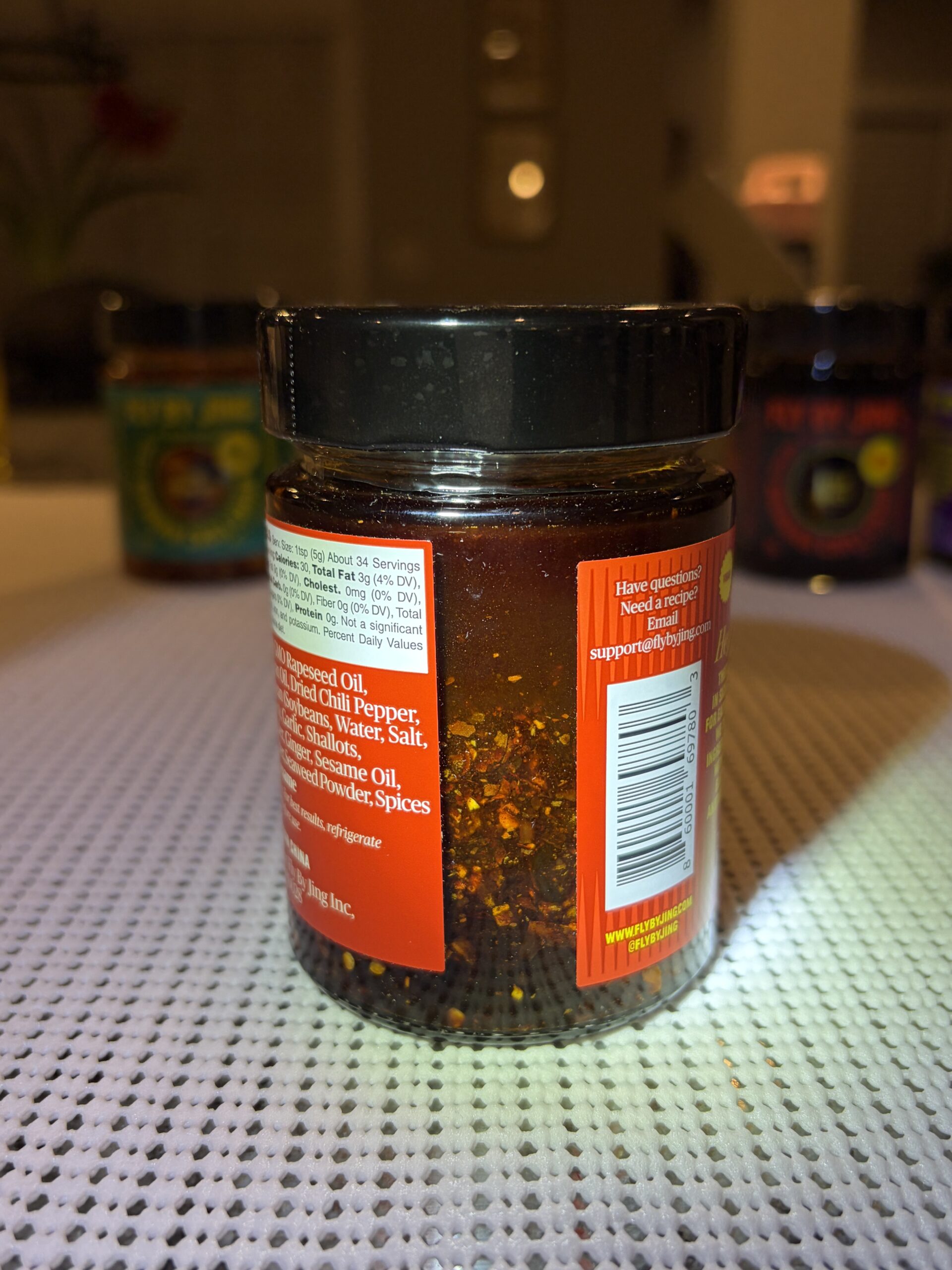
This is where the product earns back everything the texture section costs it. A foot from the open jar, the smell is dense, roasted, and deeply savory — the kind of aroma that makes you think something has been cooking for a while. Up close, chilies fill in, mushroom powder comes forward, and there’s a quiet seaweed note that rounds out the back end.
The rapeseed oil plays a role here. It smells more alive than most chili crisp oils. Combined with the mushroom and seaweed, it creates something that smells like actual Sichuan cooking rather than a jar of dried chilies sitting in soybean oil. The oil type in chili crisp is one of the most underappreciated variables in the category, and this jar makes that argument better than anything else I’ve tested.
Texture — The Core Problem
There is no crunch. The Sichuan peppercorn — the dominant solid in the jar — chews down to something soft and pulpy once saturated in oil. Whatever texture these ingredients had before they went in the jar has been absorbed. A forkful is chewy at best, paste-like at worst.
This is the highest-weight criterion for chili crisp evaluation. Crunchable solids are what make a chili crisp a chili crisp — not the heat, not the oil, the texture. Fly By Jing Sichuan Chili Crisp delivers exceptional flavor. It does not deliver texture. At single-jar prices of $2.50–3.00/oz, that’s a meaningful gap between what the label promises and what the jar provides.
Flavor Complexity
The Fly By Jing chili crisp The flavor is the strongest case this jar makes, and it makes it well. There’s no wasted space from entry to finish.
First hit: Sichuan peppercorn. That tingly, lip-numbing sensation that the prickly ash berry creates — it arrives immediately and settles across the front of the palate. Then a wave of mushroom and seaweed umami fills the middle. Garlic shows up at the finish. None of these flavors are late arrivals. They’re stacked and active throughout.
I tasted the oil alone — fork dip, no solids. Even then: Sichuan peppercorn, mushroom, garlic at the end. The oil is earning its volume. Most chili crisp oils are neutral carriers that deliver heat and that’s it. This oil is a flavor ingredient. That changes what the high oil ratio means — it’s not dead space, it’s just not the same as having more crispy bits to spoon.
The internet’s main complaint about Fly By Jing is too much oil. That’s accurate but imprecise. The more specific observation: the oil is doing genuine flavor work — Sichuan peppercorn, mushroom, seaweed — in a way that most chili crisp oils don’t. The problem isn’t oil quality. The problem is that the product is named and marketed as a chili crisp when its texture profile is closer to a premium chili oil. A different label would reframe the oil ratio from flaw to feature.
Heat — Front-Loaded and Clean
The heat here is immediate and Sichuan-style — tingly and numbing rather than a straight burn. It arrives on entry, sits on the lips and front of the mouth, and is mostly gone within a minute or two. No lingering. No slow build. It hits and it clears.
Initial strength is higher than Lao Gan Ma but the fade is also faster. LGM’s heat arrives late and sticks around. FBJ’s heat arrives on entry and exits cleanly. Neither is objectively better — they’re different heat profiles for different preferences. I’d call this a 3 out of 5 for most palates.
The Serving Size Gap
One detail worth flagging before you buy: the serving size on Fly By Jing is 1 teaspoon. Lao Gan Ma‘s serving size is 2 tablespoons. That’s a 6-to-1 ratio.
Part of this reflects the oil density — more oil per spoonful means calories add up faster, so the serving size is calibrated down. But it also reflects something real about how you use the product. You drizzle Fly By Jing. You spoon Lao Gan Ma. That’s a meaningful use-case difference that the serving size makes visible before you ever open the jar.
Use Cases
Where does the Fly By Jing chili crisp actually work? Where this works well: anywhere a flavored finishing oil makes sense. Drizzled over a fried egg, stirred into plain noodles, used as a starting layer on rice before adding other things. The flavor is present enough in the oil itself that you don’t need crispy bits to get the payoff.
Where it falls short: any application where you want visible, crunchable volume on the food. Dumplings, wontons, anything where you’re looking for something you can see and feel. The bit-to-oil ratio and the texture of what bits exist don’t hold up to that job.
The best use I found for this jar: mix it into a half-empty Lao Gan Ma. LGM gives you the solids, the crunch, and the staying heat. FBJ gives you the flavor complexity and Sichuan peppercorn character that LGM lacks. The combination is genuinely better than either alone.
Value
The Fly By Jing chili crisp Single-jar pricing ($15–22 for 6 oz, ~$2.50–3.00/oz) is a hard sell against the texture performance. The 3-pack on Amazon changes the math significantly: $27.99 for three 6 oz jars works out to $9.33 per jar and $1.56/oz. At that price point, the value case is much more reasonable — you’re paying for flavor depth and versatility, and you’re getting both.
If you’re trying Fly By Jing for the first time, the 3-pack also happens to include the Original, the Sweet & Spicy, and the Extra Crunchy variants — which means you can compare the lineup directly rather than committing to one jar at premium single-jar pricing.
Fly By Jing Chili Crisp — Final Verdict
Fly By Jing’s original Sichuan Chili Crisp is the best-smelling, most flavor-complex jar I’ve tested in this category. It also doesn’t deliver on the one criterion that matters most for chili crisp: crunchable, discrete solids in meaningful volume. The settled material looks balanced but behaves like fine sediment. The texture isn’t there.
Buy it knowing what it is — a premium Sichuan finishing oil with genuine flavor depth and the most complex flavor profile I’ve tested in this category. The texture gap is real and worth knowing about before you buy. But the flavor, the aroma, the oil quality, and the 3-pack value all earn it a place on the shelf. Tier: GOOD.
Buy Fly By Jing Sichuan Chili Crisp on Amazon →
Wondering how Fly By Jing stacks up against other flagship chili crisps? See our best original chili crisp comparison for the full breakdown.
Curious how all four Fly By Jing varieties compare? See our Fly By Jing Sample Pack comparison for the full side-by-side.