
Do you need to refrigerate chili crisp? Short answer: probably not. But it depends on what’s in the jar — and that’s where most of the internet advice falls apart.
I’ve got about a dozen jars on my shelf right now, and exactly zero of them are in the fridge. That’s not recklessness — it’s a read on what these products actually are and how oil-based condiments behave. Here’s how I think about refrigerating chili crisp, and why the blanket “just refrigerate it” advice misses the point.
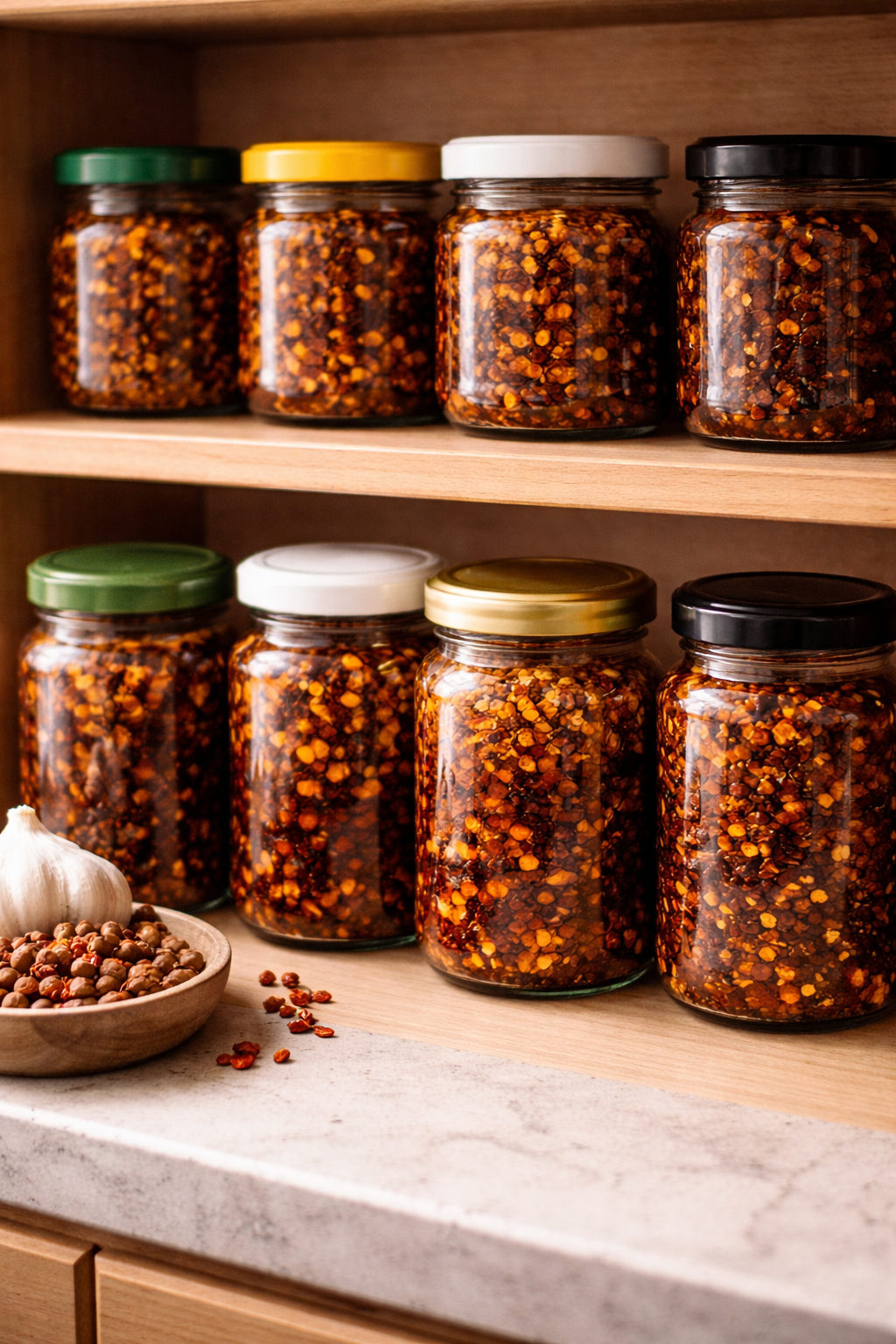
What the Jar Actually Is
Chili crisp is an oil-based condiment. The base is almost always soybean oil, rapeseed (canola) oil, or sometimes sesame oil. Oil doesn’t spoil the way dairy or fresh produce does. It oxidizes — slowly, over months — and the rate depends on storage conditions, oil type, and what else is in the jar.
The fried solids — garlic, shallots, chili flakes, sometimes soybeans — are dehydrated through the frying process. Moisture is the enemy of shelf stability, and frying removes it. That’s the whole mechanism. A properly made chili crisp is already preserved by its own production method.
This is why most commercial chili crisp labels say “store in a cool, dry place” and leave it at that. Lao Gan Ma, Fly By Jing, Momofuku — check the label. None of them require refrigeration before opening.
When Refrigeration Actually Matters
There are three situations where the fridge makes sense:
Fresh or wet ingredients. If the chili crisp contains fresh garlic (not fried), fresh herbs, or anything that wasn’t fully dehydrated, refrigerate it. These ingredients introduce moisture and create conditions where bacteria can grow in the oil. Most commercial jars don’t have this problem, but small-batch or homemade versions often do.
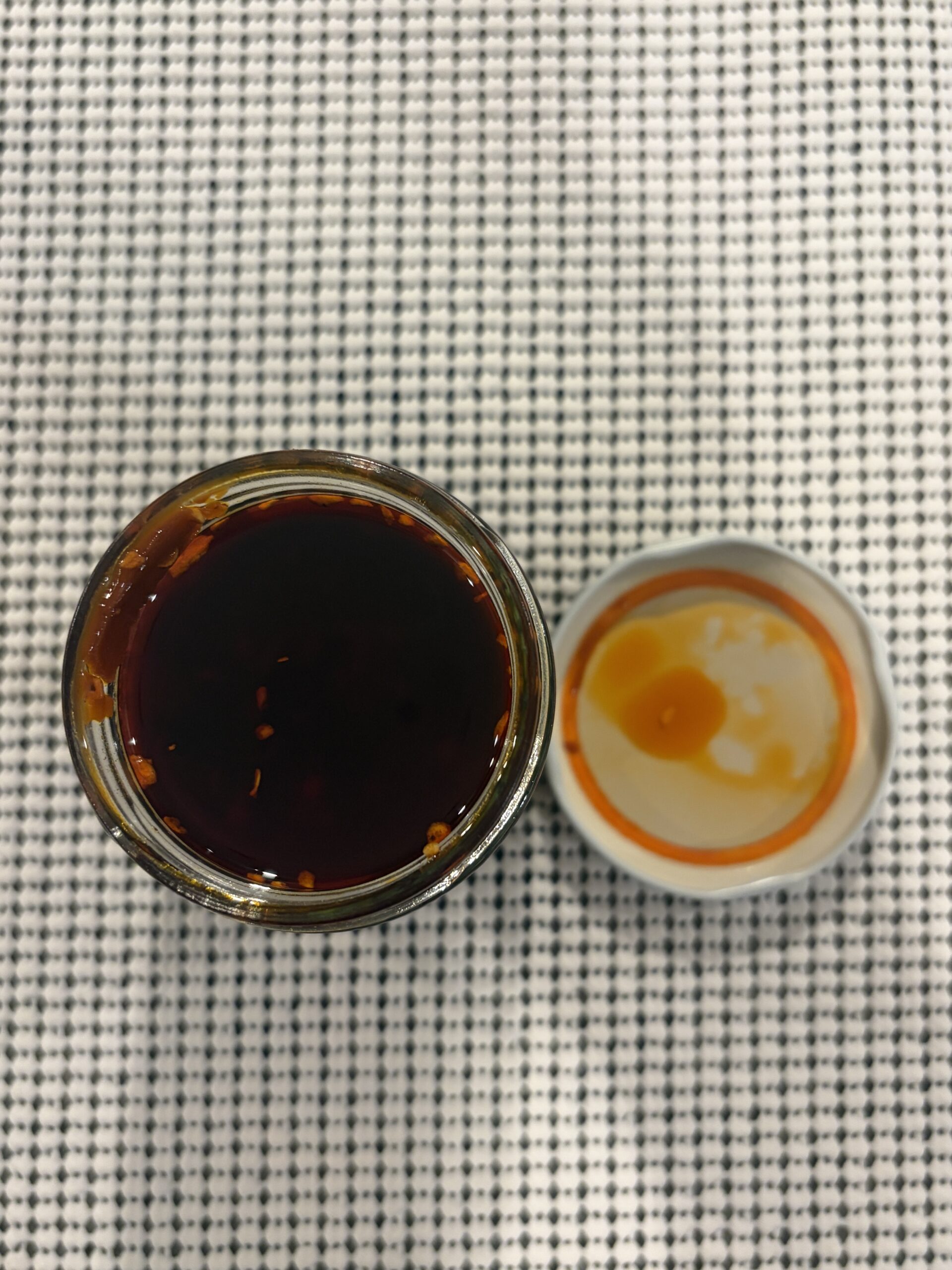
After opening, if you’re a slow user. Once the seal is broken, oxygen enters the jar. Oxygen accelerates oil oxidation. If you’re working through a jar over 3-4 months, the fridge slows that process down. If you finish a jar in 2-3 weeks — which is my pace — room temperature is fine.
Hot or humid storage. A pantry shelf in an air-conditioned kitchen is different from a shelf above the stove or in a garage in July. Heat and light accelerate rancidity. If your storage spot regularly gets above 75°F or gets direct sunlight, the fridge is the safer call.
What Refrigeration Does to the Texture
Here’s the trade-off nobody talks about: cold oil gets thick. Soybean oil at fridge temperature turns sluggish. The bits clump. Getting a good spoonful out of a cold jar means waiting for it to warm up, or wrestling with a fork through what feels like cold honey.
Worse, temperature cycling — fridge to counter to fridge — can cause condensation inside the jar. That condensation introduces the one thing you’re trying to avoid: moisture. A jar that lives on the counter at a stable 68-72°F is often in better shape than one that bounces between 38°F and room temperature every time you use it.
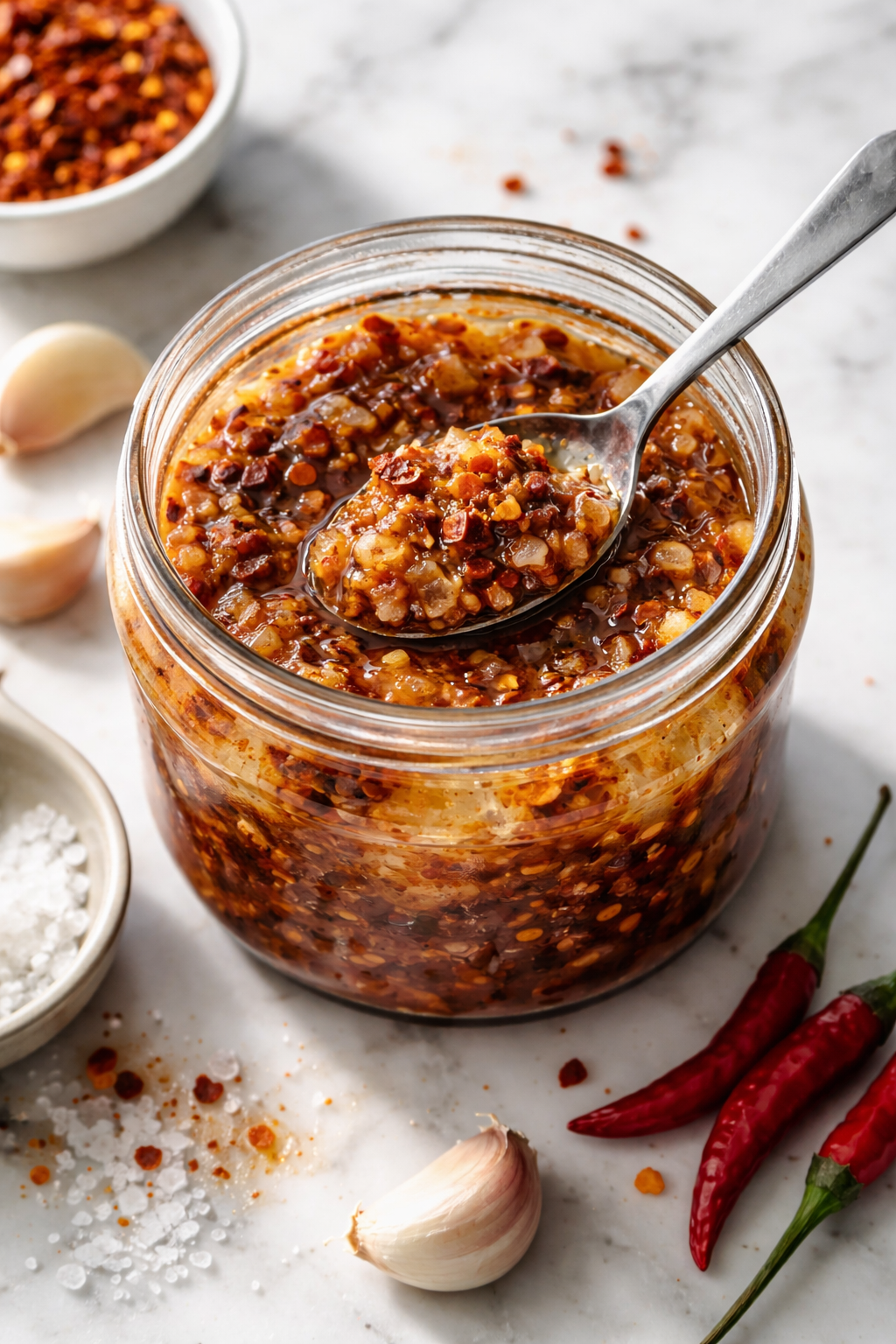
If you refrigerate chili crisp, pull it out 10-15 minutes before you plan to use it. This lets the oil loosen up and the flavors come forward. Cold oil mutes everything — aroma, heat, even the crunch feels different when the bits are locked in thick oil.
The Oil Type Matters
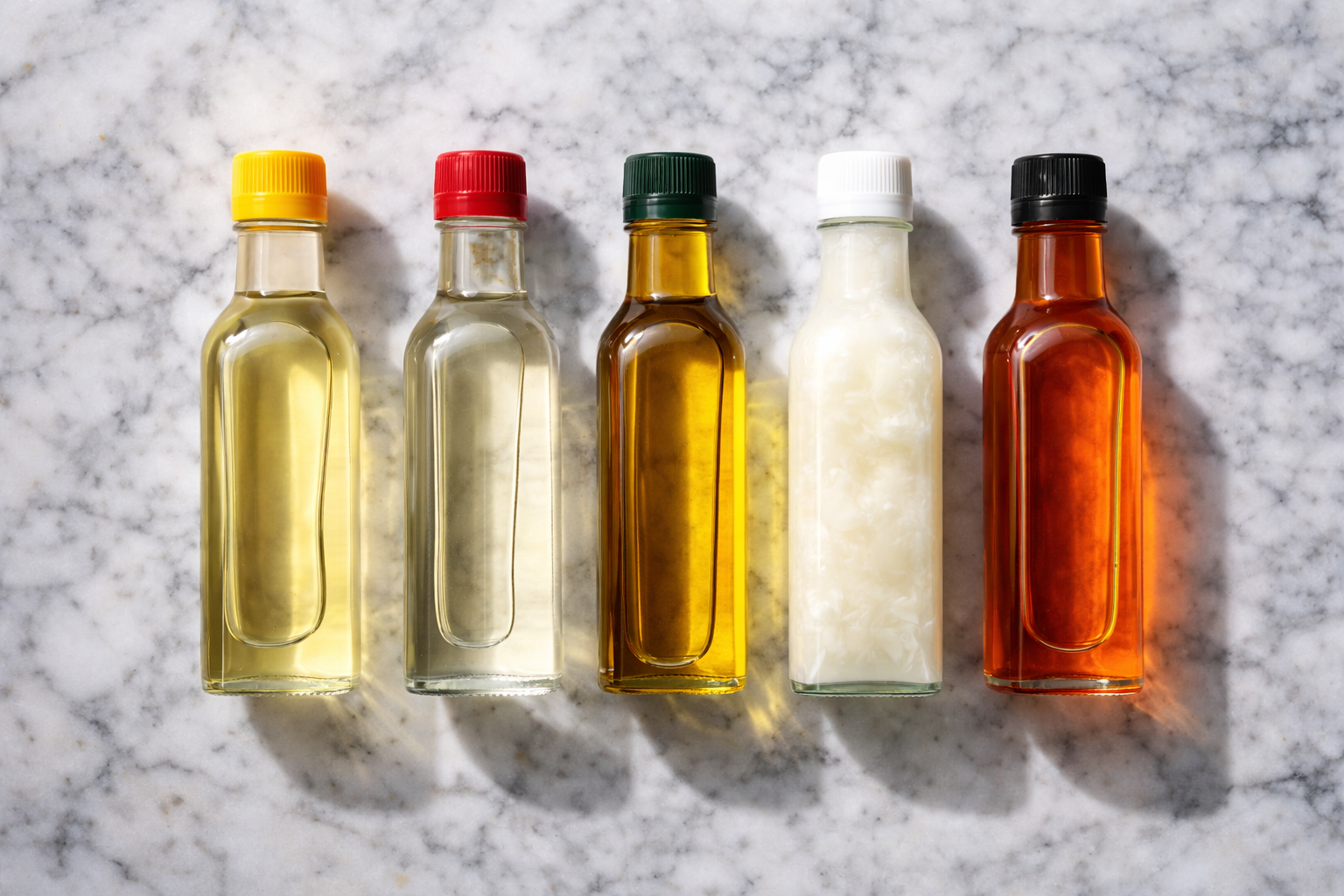
Not all oils oxidize at the same rate. Soybean oil is relatively stable but not the most resistant to rancidity. Sesame oil has natural antioxidants (sesamol) that extend shelf life. Olive oil-based products — like some Calabrian-style chili crisps — have different oxidation behavior entirely.
Rapeseed (canola) oil falls somewhere in the middle. Most Chinese-style chili crisps use soybean or rapeseed, and most are formulated to be shelf-stable for 12-18 months unopened.
The point: the oil choice your chili crisp manufacturer made already factors in shelf life. They’re not hoping you’ll refrigerate it — they chose an oil and a process that handles pantry storage. If a product needs refrigeration, the label will say so.
What I Actually Do
Every jar I’m actively using stays on the counter, away from the stove, out of direct sunlight. That’s it. My consumption rate is fast enough that rancidity isn’t a factor — most jars are gone in two to three weeks.
If I’m stockpiling — say I bought a backup jar of GUIZ or grabbed a second Trader Joe’s Chili Onion Crunch — the unopened backups go in a cool, dark cabinet. Not the fridge. The seal is intact, the oil is stable, and I’d rather open a jar that pours easily than one I need to chisel into.
The one exception: if someone hands me a homemade chili crisp with fresh garlic or herbs visible in the oil, that goes straight in the fridge. No question. Fresh ingredients in oil is a food safety conversation, not a quality preference.
The Bottom Line
Refrigerating chili crisp won’t hurt it, but it changes the experience — thicker oil, muted flavors, clumpy bits. For most commercial products made with refined oils and fully fried solids, room-temperature storage in a cool, dark spot is exactly what the product was designed for.
Read the label. If it says refrigerate, refrigerate. If it says “cool, dry place,” trust the manufacturer. And if you’re making your own with fresh garlic floating in the oil, the fridge isn’t optional — that’s food safety 101.
For more on what happens when chili crisp goes past its prime, see Does Chili Crisp Go Bad? — I cover the signs of rancidity and when to toss a jar.
Frequently Asked Questions
Do you need to refrigerate chili crisp after opening?
Most commercial chili crisp does not require refrigeration after opening. The oil base and fried (dehydrated) solids create a shelf-stable product. However, if you take more than 3-4 months to finish a jar, refrigeration slows oil oxidation. Check the label — if it says refrigerate after opening, follow it.
Does chili crisp go bad if not refrigerated?
Not quickly. Oil-based condiments with fully fried solids are designed for pantry storage. They can last months at room temperature if kept in a cool, dry place away from heat and direct sunlight. The oil will eventually oxidize (go rancid), but that process takes months under normal conditions.
How long does chili crisp last at room temperature?
Unopened, most commercial chili crisp lasts 12-18 months at room temperature. After opening, 2-3 months on the counter is typical before any quality change. If you notice off smells, stale flavors, or the oil tastes flat or bitter, it’s time to toss it.
Does Lao Gan Ma need to be refrigerated?
The label says store in a cool, dry place. Lao Gan Ma uses soybean oil and fully fried solids, making it shelf-stable. Refrigeration is fine but not required — the oil will thicken in the cold, making it harder to spoon out.
Does Fly By Jing need to be refrigerated?
Fly By Jing recommends refrigeration after opening for best quality. Their formulation uses avocado oil and includes ingredients like Tribute pepper that benefit from cold storage to preserve aromatic compounds. This is a quality recommendation, not a safety requirement.
Why does my chili crisp get thick in the fridge?
Oil thickens when cold. Soybean, rapeseed, and sesame oils all become sluggish at refrigerator temperatures (around 38°F). This is normal and doesn’t mean anything is wrong. Pull the jar out 10-15 minutes before using it to let the oil return to a pourable consistency.
Should homemade chili crisp be refrigerated?
Yes — always. Homemade chili crisp often contains fresh garlic, fresh herbs, or other ingredients that weren’t fully dehydrated through commercial frying processes. Fresh ingredients in oil can create conditions for botulism if left at room temperature. Refrigerate homemade chili crisp and use it within 2-3 weeks.
Can you freeze chili crisp?
You can, but there’s rarely a reason to. Freezing can alter the texture of the fried solids and cause the oil to separate differently when thawed. Since most chili crisp is already shelf-stable for over a year unopened, freezing doesn’t add meaningful shelf life. If you must freeze, expect some texture change in the bits.
At this time I am going to do my breakfast, afterward having my breakfast
coming yet again to read further news.