
Does Chili crisp go bad? Chili crisp doesn’t spoil the way milk or meat does. It’s an oil-based condiment with fried solids — there’s no water activity to speak of, and that’s the thing that drives bacterial growth. But “doesn’t spoil” and “lasts forever” are different statements, and the gap between them is where a lot of jars go wrong.
I’ve opened jars that have been sitting on my shelf for months. Some were fine. A couple weren’t. Here’s what actually happens to chili crisp over time, how to tell when a jar is past its window, and what accelerates the decline.
The Mechanism: Oil Oxidation
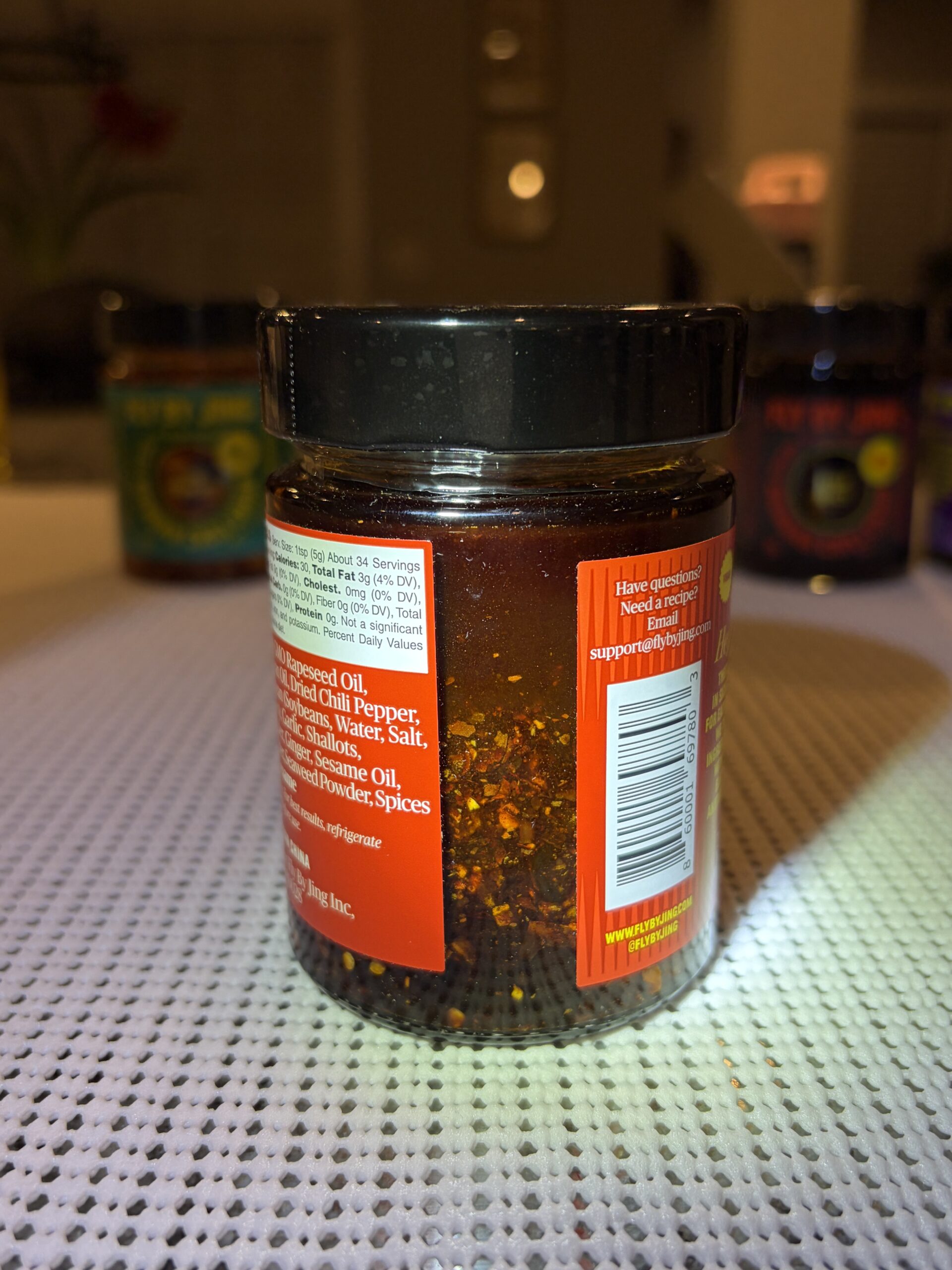
Chili crisp goes bad through oxidation, not through bacterial spoilage. The base oil — usually soybean, rapeseed, or sesame — reacts with oxygen once the jar is opened. Over time, the fatty acids break down, producing aldehydes and peroxides that smell and taste stale, cardboard-like, or vaguely metallic.
This is rancidity, and it’s a gradual process. A jar doesn’t go from good to bad overnight. It drifts. The oil gets flatter, the chili heat loses its edge, and one day you take a spoonful and something just feels off. That’s oxidation doing its work.
Sealed, the process barely moves. Most commercial chili crisp ships with an airtight seal, nitrogen-flushed headspace or vacuum packing, and preservatives like TBHQ or vitamin E (tocopherols) that slow oxidation. An unopened jar of Lao Gan Ma sitting in a pantry will be fine for well over a year.
Signs Your Jar Has Turned
None of these require a lab test. You already have the equipment — your nose and your mouth.
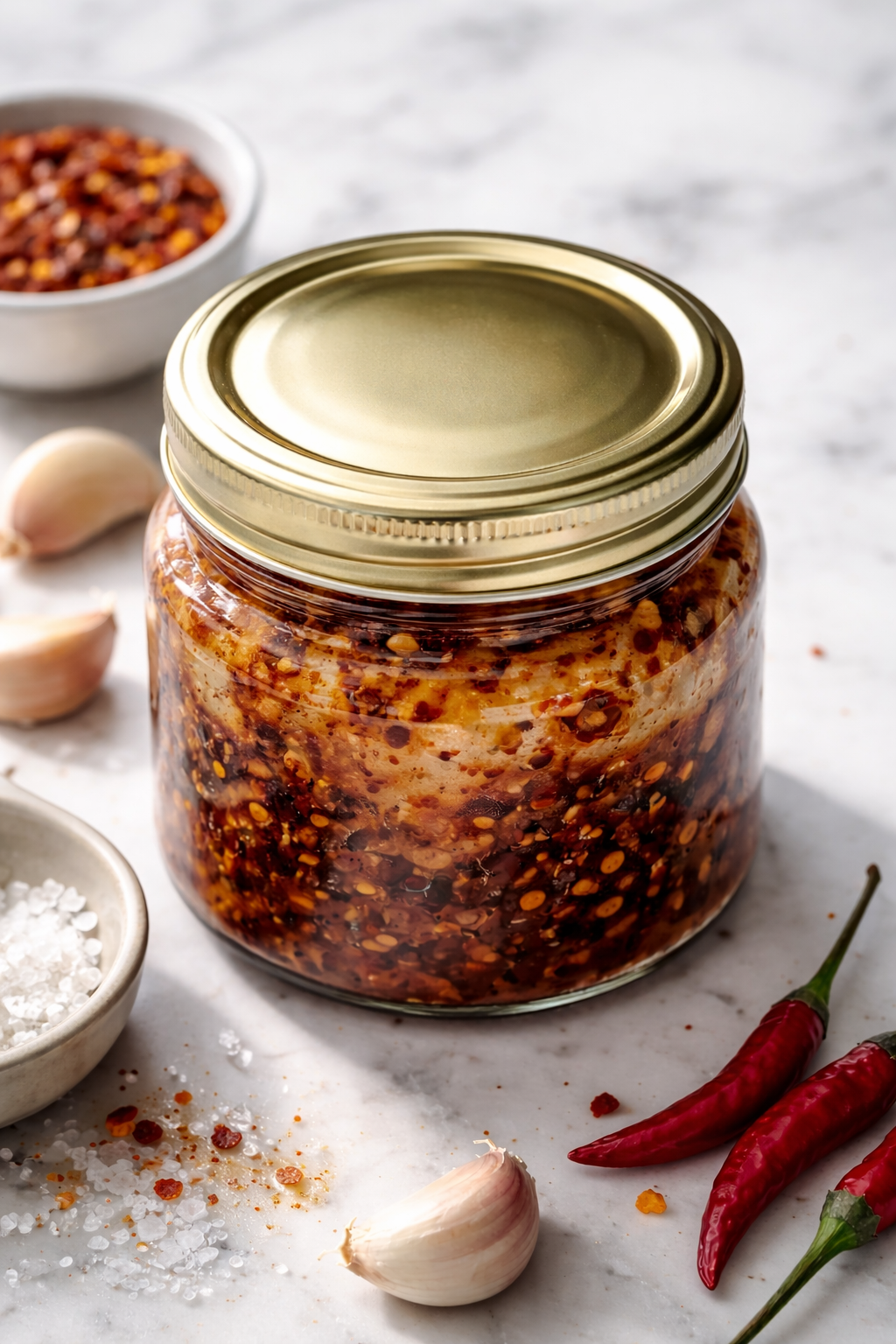
The smell test. Fresh chili crisp smells like toasted chilies, fried garlic, warm oil — something you want to eat. Rancid chili crisp smells flat. The chili notes recede, and what’s left is something oily and slightly stale, like a bag of chips that’s been open too long. If you open a jar and the first reaction is “nothing” instead of “chili,” the oil has gone quiet.
The taste test. Rancid oil has a specific flavor signature — slightly bitter, papery, with a finish that lingers in the wrong way. It’s not dangerous in small amounts, but it’s unpleasant, and it mutes everything else in the jar. The garlic tastes flat, the heat feels dull, the crunch is still there but the payoff isn’t.
The look. Separation is normal — oil floats, bits settle. That’s fine. What’s not fine: visible mold (rare in oil-based products, but possible if moisture got in), a cloudy film across the oil surface, or darkening that goes beyond the original color. Fresh chili crisp oil should look clean and have some transparency. Murky oil is oil that’s been working too hard for too long.
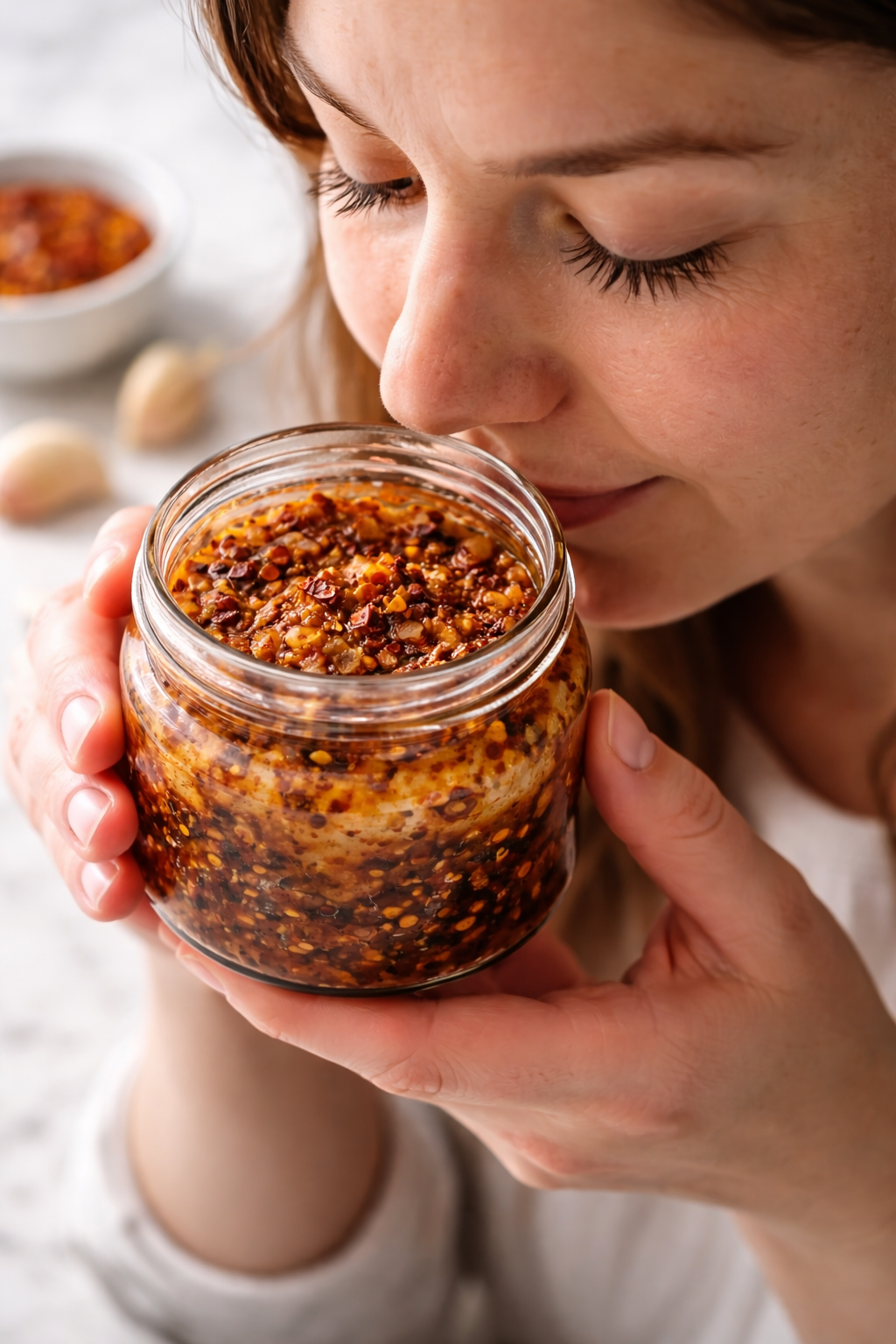
Smell the jar before every use. Your nose adapts to gradual decline — you won’t notice the change if the jar’s been sitting open next to you for weeks. Close the jar, walk away, come back, open it fresh. If the first hit is “stale” or “nothing,” the oil has turned.
What Accelerates the Decline
Heat. Oil oxidation speeds up exponentially with temperature. A jar stored above the stove or near a sunny window degrades faster than one in a cool cabinet. Every 10°C (~18°F) increase roughly doubles the oxidation rate. Your kitchen counter at 70°F is fine. The shelf above the stovetop at 90°F is not.
Light. UV light breaks down the antioxidants in oil — the same compounds that keep it stable. Clear glass jars (which most chili crisp uses) offer no protection. If your jar sits in a sunlit spot, you’re actively accelerating rancidity. A cabinet or a drawer fixes this instantly.
Oxygen exposure. Every time you open the jar, fresh oxygen enters. If you leave the lid off while you eat — guilty — you’re giving the oil a longer oxidation window. This is a minor factor per occurrence but it compounds over weeks and months.
Dirty utensils. Using a fork that’s been in your mouth or has food residue introduces moisture and organic matter into the jar. Neither is great for shelf life. I keep a dedicated spoon in my most-used jars. It’s a small thing, but it matters over a 2-month span.
How to Store Chili Crisp
Cool, dark, sealed. That’s the whole strategy.
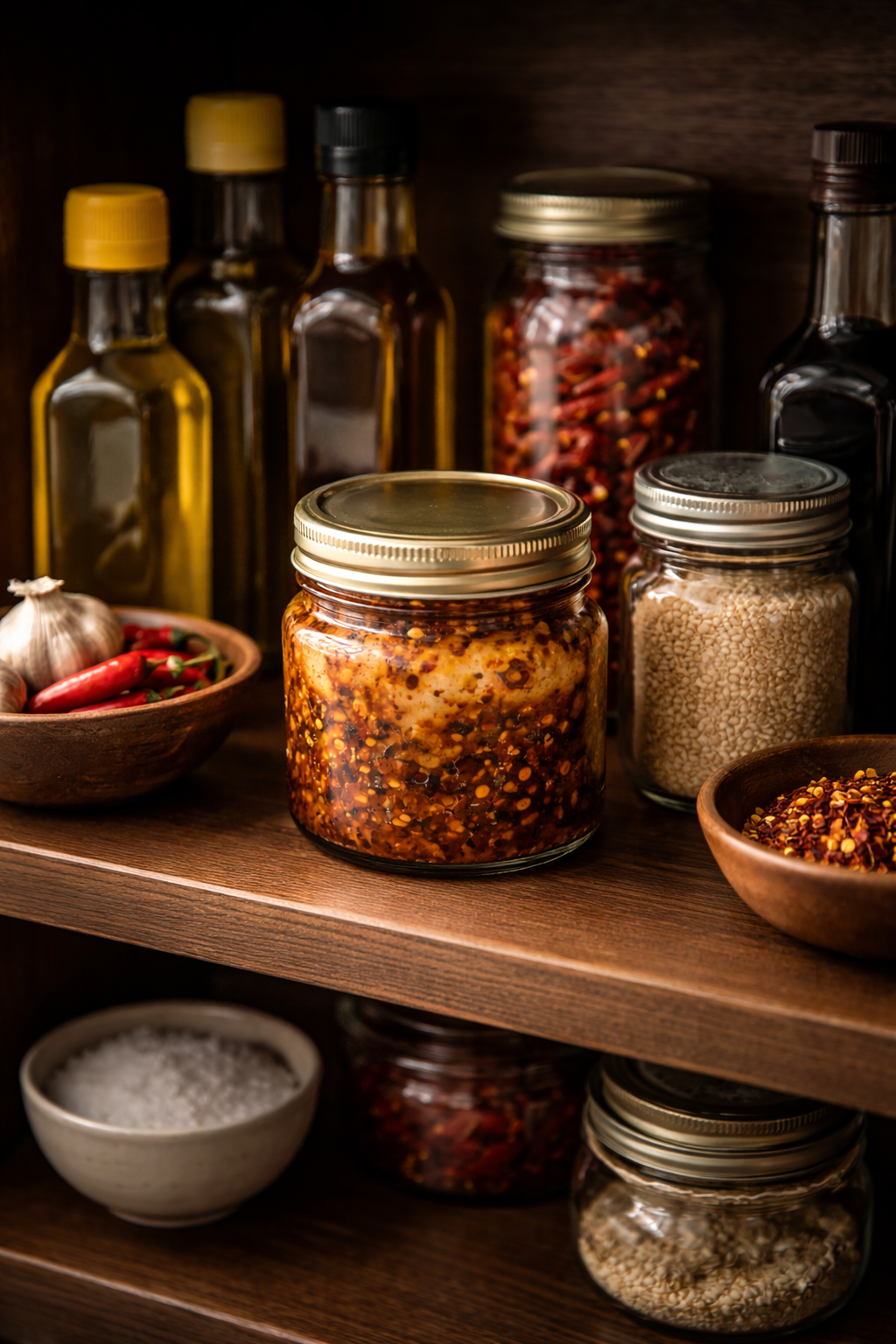
Keep open jars in a cabinet or pantry, away from the stove and out of direct sunlight. Make sure the lid is on tight between uses. Use a clean, dry utensil every time — not the fork you just ate with. If your kitchen runs warm (above 75°F regularly), move open jars to the fridge. The oil may thicken and cloud up in the cold, but it returns to normal at room temperature. No flavor loss, no texture damage.
Unopened jars are less fussy. A cool shelf out of the sun is enough. Don’t store them above the stove or in a garage that gets hot in summer.
If crunch matters to you, try to finish an open jar within 2–3 weeks. The oil won’t go bad that fast, but the crispy bits start losing their snap once they’ve been soaking. After that window, you’re eating chili soft, not chili crisp.
Shelf Life by Product Type
| Product Type | Unopened | After Opening |
|---|---|---|
| Commercial chili crisp (soybean/rapeseed oil) | 12–18 months | 2–4 months at room temp |
| Commercial chili crisp (sesame oil base) | 12–18 months | 2–3 months — sesame oxidizes faster once open |
| Small-batch / artisan chili crisp | 6–12 months | 1–3 months — fewer preservatives |
| Homemade chili crisp | N/A | 2–3 weeks refrigerated |
| Chili oil (no solids) | 12–24 months | 3–6 months — no solids to degrade |
These are estimates based on proper storage — cool, dark, sealed. Your mileage depends on how you treat the jar. A Fly By Jing jar that lives on the counter next to the stove in a warm kitchen will age faster than a Momofuku or GUIZ jar tucked in a cool cabinet.
Chili Crisps That Don’t Need Refrigeration
Most commercial chili crisps are shelf-stable after opening. The combination of oil-based formulation, low water activity, and preservatives (usually TBHQ or tocopherols) means they’ll hold at room temperature for 2–4 months without any issues. Here are the ones I’ve tested and confirmed as pantry-stable:
| Product | Oil Base | Notes |
|---|---|---|
| Lao Gan Ma Spicy Chili Crisp | Soybean | The benchmark. TBHQ preserved. Stays stable for months. |
| Fly By Jing Sichuan Chili Crisp | Rapeseed | No artificial preservatives, but the oil base and low moisture keep it stable. Brand says pantry is fine. |
| Momofuku Chili Crunch | Sunflower/grapeseed blend | Pantry-stable. All four varieties (original, extra spicy, mild garlic, black truffle) behave the same. |
| Trader Joe’s Chili Onion Crunch | Olive/canola blend | No refrigeration needed. One of the most stable budget options. |
| S&B Crunchy Garlic | Rapeseed | Japanese-made. Sealed well, preservative-protected, long shelf life. |
| Mr. Bing Chili Crisp | Soybean | Both spicy and mild are pantry-stable. Solid commercial production. |
| Cholula Chili Crisp | Soybean | Major brand, well-preserved. No fridge needed. |
| Hotpot Queen Chili Crisp | Soybean/rapeseed | Pantry-stable. The label doesn’t require refrigeration. |
| Fusion Select Chili Crisp | Soybean | Commercial production with preservatives. Room temp is fine. |
| Alessi Calabrian Chili Crisp | Olive oil | Italian-style. Olive oil is naturally stable. No refrigeration required. |
When the Fridge Helps
Small-batch and artisan chili crisps often skip preservatives, which means the oil oxidizes faster at room temperature. If the label says “refrigerate after opening,” follow it. Products like GUIZ, Red Clay, Pono Hawaiian, and Redbloom benefit from cold storage — not because they’ll spoil immediately, but because the fridge slows oxidation and extends the flavor window by a month or more.
The trade-off: cold oil thickens. A refrigerated jar needs a minute on the counter before it pours or stirs normally. Some people don’t mind. Some people hate it. If you’re in the second camp but have an artisan jar, store it in the coolest spot in your kitchen instead — a low cabinet away from the stove is a good middle ground.
For the full breakdown on refrigeration, see Do You Need to Refrigerate Chili Crisp?
The Bits Go Before the Oil
Here’s something I’ve noticed across dozens of jars: the crispy bits lose their crunch before the oil goes rancid. Oil degradation takes months. Crunch degradation takes weeks. The bits absorb oil as they sit, softening from crispy to chewy. By week 3-4 in an open jar, even dense products start losing their snap.
This isn’t spoilage — it’s physics. Oil-soaked starch and protein go soft. The product is still safe. It just doesn’t deliver the texture it was designed for. If crunch matters to you (and if you’re reading this site, it probably does), eat the jar while the bits are still doing their job.
When to Toss It
Throw it out if:
The oil smells stale, bitter, or like old cardboard. The flavor is flat and leaves a metallic or papery aftertaste. You see mold — extremely rare in pure oil products, but if moisture got in, it’s possible. The jar has been open on the counter for 4+ months and you haven’t been careful about utensils or lid closure. You just feel like something’s off. Trust that instinct. A $7 jar isn’t worth a bad meal. (Need a replacement? See everything we’ve tested.)
Rancid oil isn’t acutely toxic in small amounts, but it’s not something you want to eat regularly. The compounds produced by oxidation (malondialdehyde, 4-hydroxynonenal) are associated with inflammation and oxidative stress. A spoonful won’t hurt you. A jar-a-week habit with rancid oil isn’t great.
For storage guidance that helps your jars last longer, see Do You Need to Refrigerate Chili Crisp? — same research, different question.
Frequently Asked Questions
Does chili crisp expire?
Chili crisp has a best-by date, not a strict expiration. Most commercial jars are good for 12-18 months unopened. After opening, quality starts declining within 2-4 months at room temperature due to oil oxidation. It’s safe past the best-by date in most cases, but flavor and texture degrade.
How can you tell if chili crisp has gone bad?
Three checks: smell the oil (stale, cardboard-like, or flat means rancid), taste a small amount (bitter or metallic aftertaste means the oil has oxidized), and look at the surface (murky film or unusual darkening suggests degradation). The smell test is the most reliable — fresh chili crisp smells like toasted chilies and garlic.
Is rancid chili crisp dangerous to eat?
A small amount of rancid oil won’t cause immediate illness. However, the oxidation compounds (malondialdehyde, 4-hydroxynonenal) produced by rancid oil are associated with inflammation and oxidative stress with regular consumption. If the oil tastes off, toss the jar — a fresh one costs $5-12.
How long does chili crisp last after opening?
Most commercial chili crisp lasts 2-4 months after opening at room temperature with proper storage (cool, dark, sealed between uses). Refrigeration extends this to 4-6 months. Small-batch products with fewer preservatives may have a shorter window. Homemade chili crisp should be refrigerated and used within 2-3 weeks.
Why did my chili crisp lose its crunch?
The fried bits absorb oil as they sit, transitioning from crispy to chewy over weeks. This isn’t spoilage — it’s the physical reality of fried solids submerged in oil. Most jars start losing noticeable crunch after 3-4 weeks open. Eating the jar within 2-3 weeks gives you the best texture.
Does the type of oil affect how long chili crisp lasts?
Yes. Sesame oil has natural antioxidants (sesamol) that slow rancidity. Soybean and rapeseed oils are moderately stable. Olive oil-based products have different oxidation behavior. The oil choice is a shelf-life decision the manufacturer already made — better oils don’t automatically mean longer life, but they do affect flavor stability.
Can you eat chili crisp past the best-by date?
Usually yes, if the jar was sealed and properly stored. Best-by dates on oil-based condiments indicate peak quality, not safety. An unopened jar 2-3 months past the date stored in a cool, dark place is almost certainly fine. Open it, smell it, taste a small amount. If the oil is clean and the flavor is intact, it’s good.
Does chili crisp go bad faster in summer?
It can. Heat accelerates oil oxidation — every 10°C (18°F) increase roughly doubles the rate. If your kitchen runs warm in summer (above 75-80°F), consider moving open jars to the fridge or at least to the coolest cabinet in the house. Unopened jars are less affected but should still stay out of direct sunlight.
Which chili crisps don’t need refrigeration?
Most commercial chili crisps are pantry-stable after opening, including Lao Gan Ma, Fly By Jing, Momofuku, Trader Joe’s Chili Onion Crunch, S&B, Mr. Bing, Cholula, and Alessi. They use oil-based formulations with low water activity and preservatives that prevent spoilage at room temperature for 2-4 months. Small-batch and artisan brands (GUIZ, Red Clay, Pono Hawaiian, Redbloom) often skip preservatives and benefit from refrigeration after opening.
3 thoughts on “Does Chili Crisp Go Bad?”