
How much chili crisp sodium will you find in a jar? More than you think, and less than you’d worry about — as long as you know where the numbers come from.
A typical tablespoon of chili crisp runs between 80-200mg of sodium. That’s a wide range, and it depends on the brand, the formulation, and — this is the part most nutrition panels quietly obscure — the serving size the manufacturer chose to print.
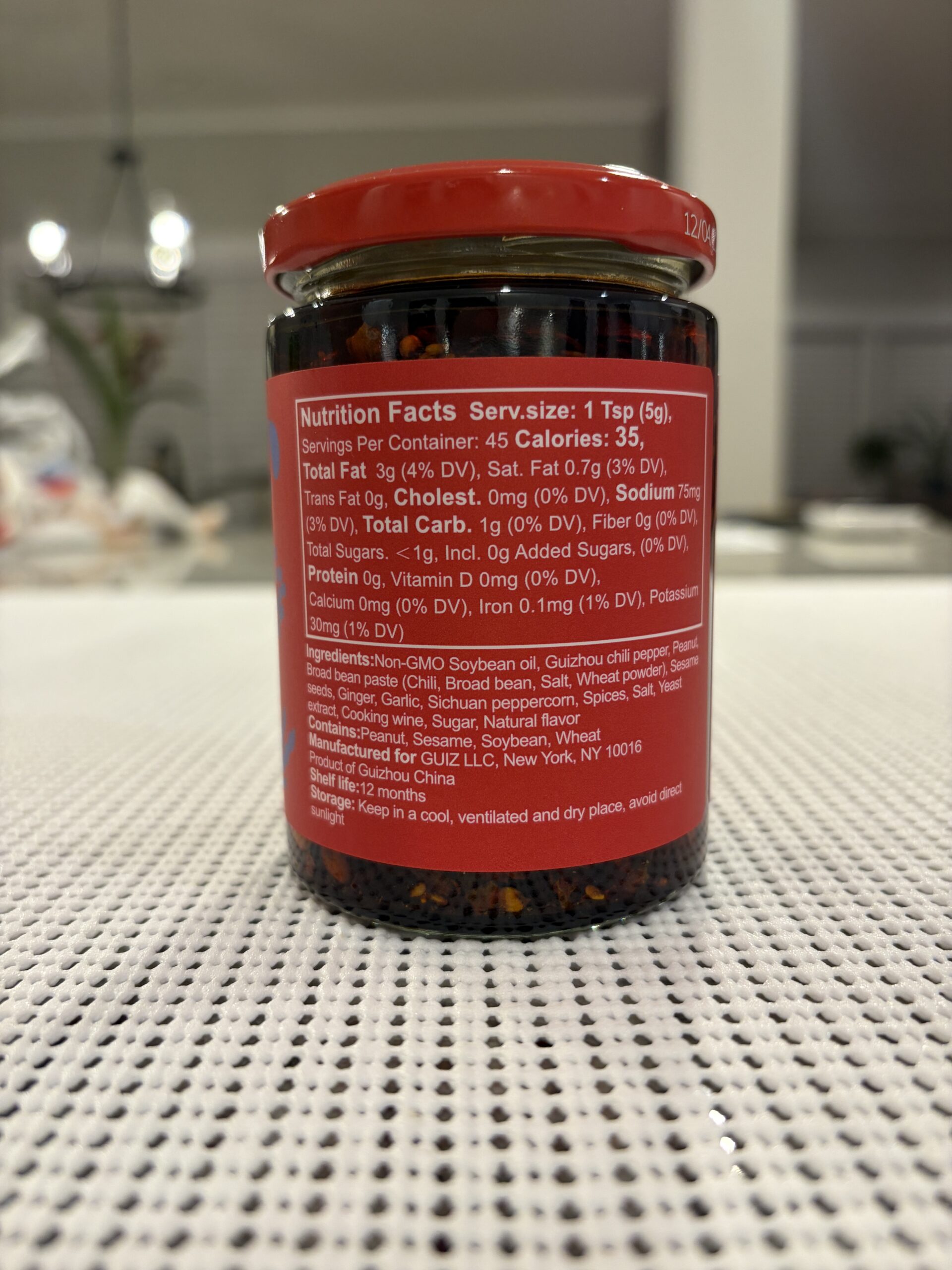
The Serving Size Trick
Here’s where the nutrition panel plays games. Most chili crisp labels define a serving as 1 tablespoon (about 15g). Some use 1 teaspoon (about 5g). That’s a 3x difference in the amount of product, and it makes the sodium number look dramatically different.
A chili crisp with 80mg per teaspoon is actually 240mg per tablespoon — which is what most people actually use. When you see a sodium number on a chili crisp label, the first thing to check is the serving size. If it says 1 teaspoon, multiply by three to get the tablespoon number, because nobody is measuring out a teaspoon of chili crisp. I use a tablespoon minimum. Usually more.
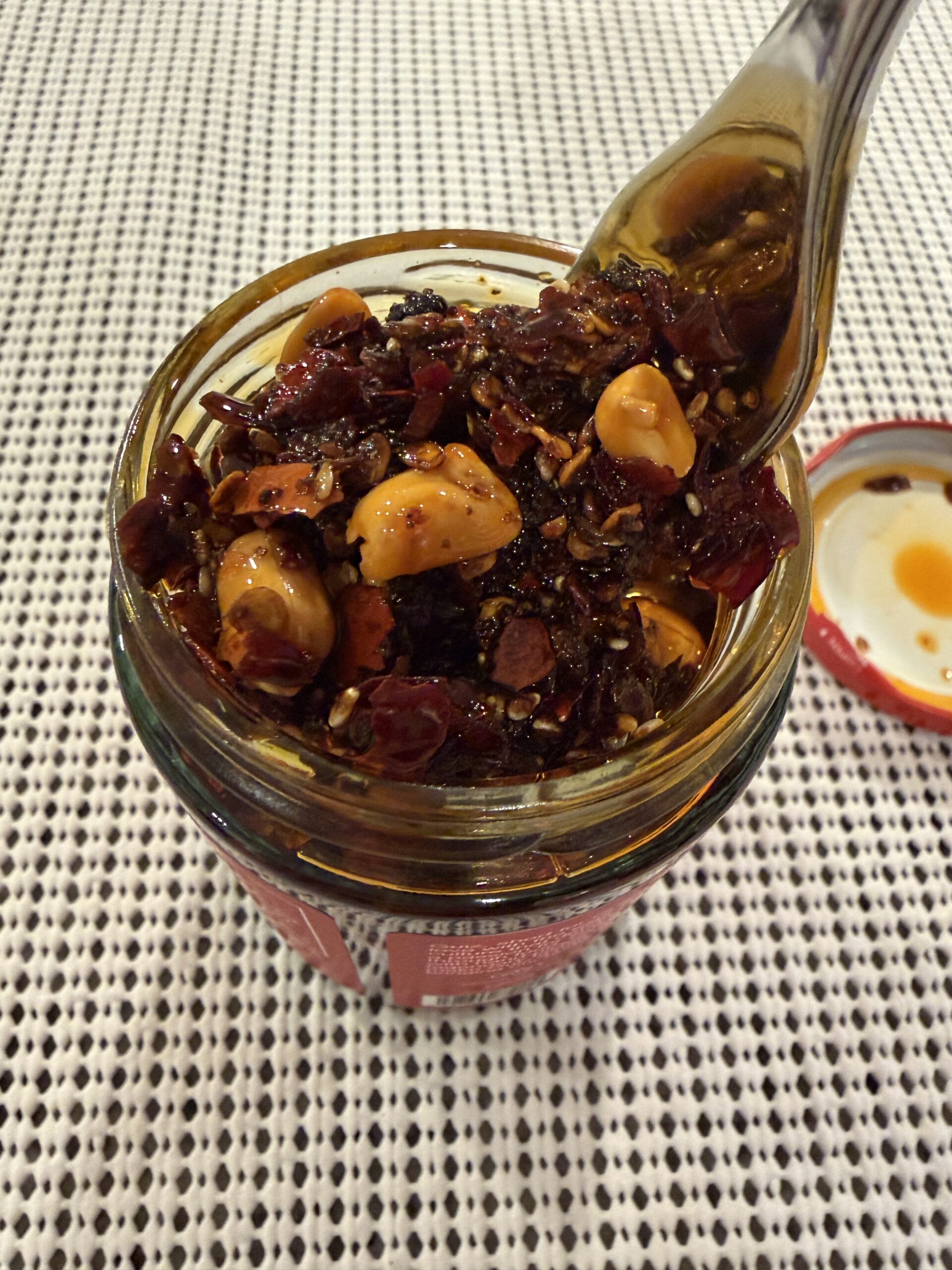
A reasonable single-use amount of chili crisp on eggs, rice, or noodles is 1-2 tablespoons. That’s the number to work with when you’re thinking about sodium. Ignore the single-teaspoon serving on the label unless you have more self-control than anyone I’ve ever met.
Where the Sodium Comes From
Three sources account for nearly all the sodium in chili crisp:
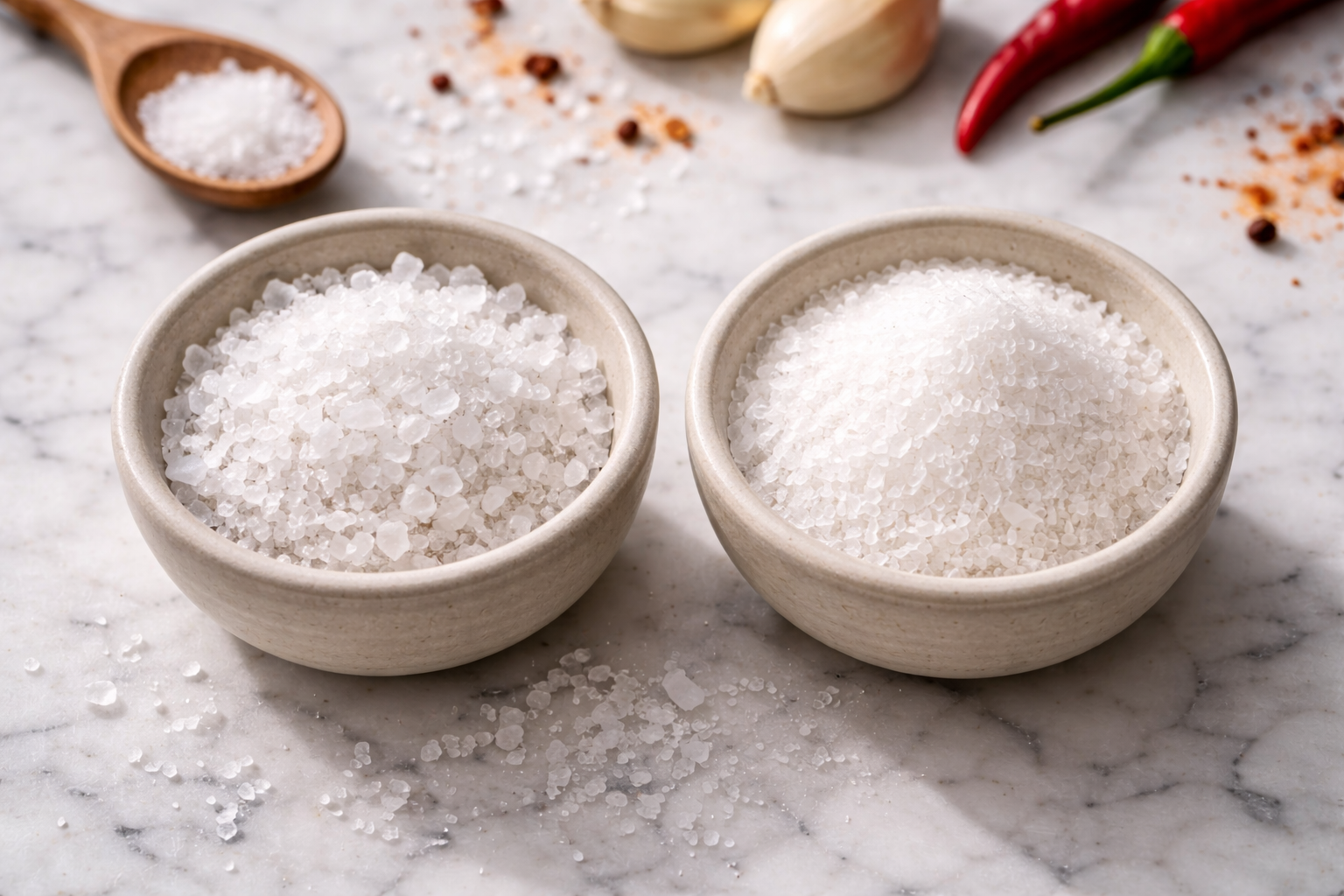
Salt. The obvious one. Salt preserves the oil, seasons the bits, and shows up in every formulation. It’s usually listed mid-label, which means it’s present in moderate quantity relative to the oil and solids.
MSG (monosodium glutamate). Here’s the thing most people miss: MSG has about one-third the sodium of table salt by weight. A product that uses MSG instead of extra salt for its umami flavor is actually lower in total sodium than one that skips MSG and compensates with more salt. MSG gets a bad reputation on sodium grounds, but the math doesn’t support the worry.
Soy sauce. Products that include soy sauce in their formula carry additional sodium from that ingredient. Traditional soy sauce runs about 900mg sodium per tablespoon. Even a small amount in a chili crisp formulation adds up. This is the ingredient that pushes some brands significantly higher than others.
Chili Crisp Sodium Across Brands I’ve Tested
I pulled the nutrition panels from every chili crisp I’ve reviewed. Here’s how they compare, normalized to a 1-tablespoon serving.
| Brand | Sodium per Tbsp | Listed Serving | Key Sodium Source |
|---|---|---|---|
| Lao Gan Ma | ~210mg | 1 tbsp | Salt, MSG, soy |
| Fly By Jing Original | ~110mg | 1 tbsp | Salt, tamari |
| Momofuku Chili Crunch | ~85mg | 1 tsp (×3) | Salt |
| GUIZ Original | ~130mg | 1 tbsp | Salt, MSG |
| Trader Joe’s Chili Onion Crunch | ~95mg | 1 tbsp | Salt |
| S&B Chili Crisp | ~170mg | 1 tbsp | Salt, soy sauce |
The range is 85-210mg per tablespoon. For context, the FDA daily recommended limit is 2,300mg total. A generous 2-tablespoon serving of the highest-sodium chili crisp here (Lao Gan Ma, ~420mg) is about 18% of that daily limit. That’s noticeable but not alarming unless you’re stacking sodium from multiple sources in the same meal.
MSG and Sodium: The Math
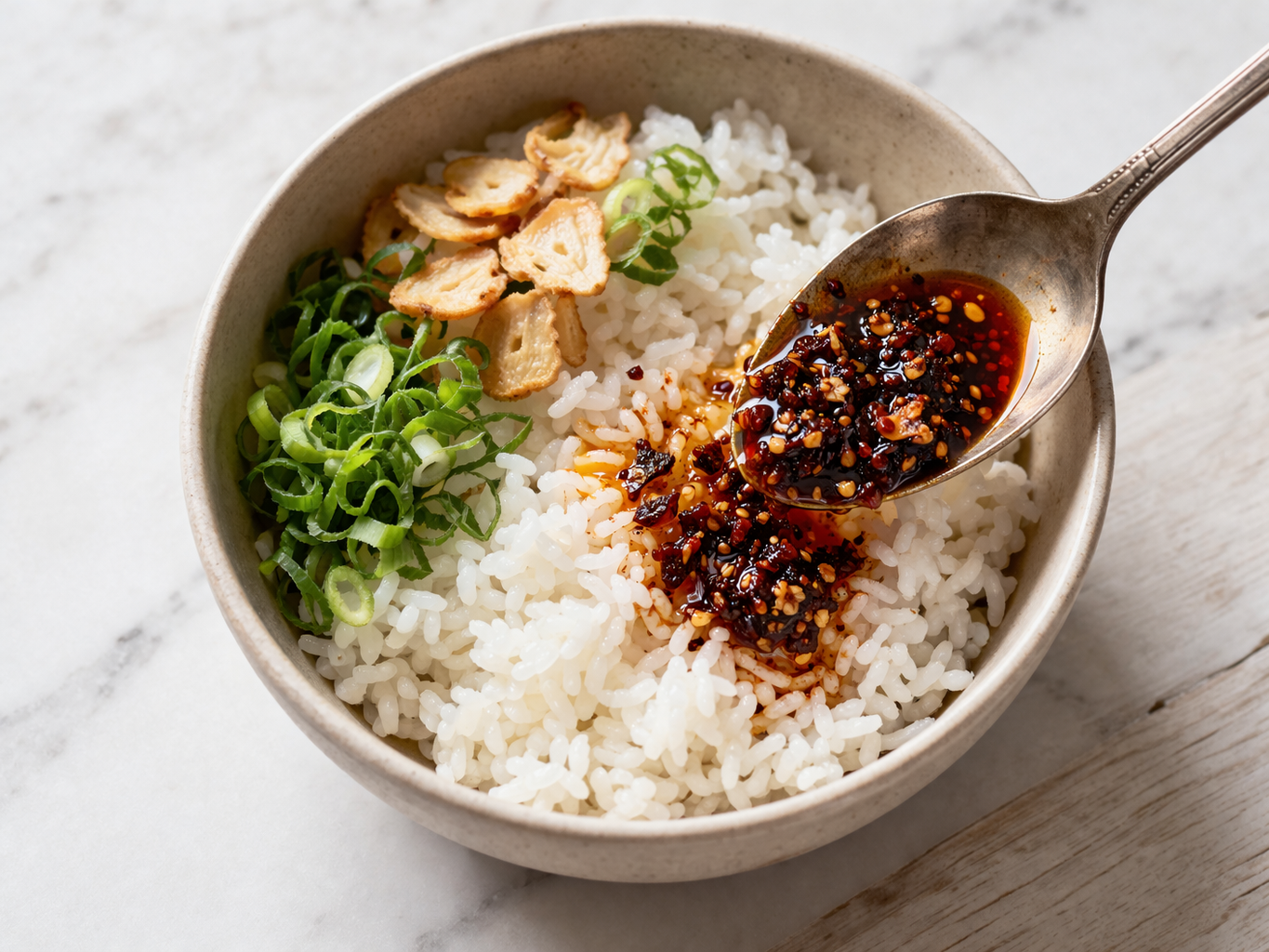
I keep coming back to this because the misconception is persistent. MSG contains sodium — it’s in the name (monosodium glutamate). But gram-for-gram, MSG delivers about 12% sodium by weight versus table salt’s 39%. That’s a third the sodium load for the same weight of ingredient.
A chili crisp that uses MSG for flavor depth can use less salt and still taste fully seasoned. This is why some products with MSG in the ingredient list have lower total sodium than products without it. The MSG is doing flavor work that would otherwise require more salt. It’s a net positive for sodium-conscious eaters, not a negative.
For the full breakdown on MSG in chili crisp, see the seasonings deep-dive.
How to Manage It
If you’re watching sodium, here’s the practical approach:
Pick a lower-sodium brand for everyday use. Momofuku and Trader Joe’s both land under 100mg per tablespoon, which gives you more room in the rest of your meal. Save higher-sodium products like Lao Gan Ma for dishes where you’re not adding other salty ingredients.
Measure once so you know what a tablespoon looks like, then eyeball it. Most people dramatically underestimate how much chili crisp they’re using. That “spoonful” might be two tablespoons. Not a problem if you know it, but worth calibrating once.
Account for salt in the rest of the dish. Chili crisp on unsalted rice is a different sodium equation than chili crisp on top of soy sauce-seasoned stir-fry. The condiment isn’t the problem in isolation — it’s the total picture.
Frequently Asked Questions
How much sodium is in a tablespoon of chili crisp?
Between 80-210mg depending on the brand. Lower-sodium options like Momofuku Chili Crunch run about 85mg per tablespoon. Higher-sodium brands like Lao Gan Ma run about 210mg per tablespoon. The range depends on salt content, MSG, and whether soy sauce is included in the formulation.
Is chili crisp high in sodium?
Relative to other condiments, chili crisp is moderate. A tablespoon of soy sauce has about 900mg sodium. A tablespoon of most chili crisp has 80-210mg. It’s higher than plain hot sauce but lower than soy sauce, fish sauce, or most salad dressings. Context and portion size matter more than the number alone.
Does MSG in chili crisp add a lot of sodium?
Less than you’d think. MSG has about one-third the sodium of table salt by weight (12% vs 39%). A product using MSG for flavor can use less salt overall, resulting in lower total sodium. MSG is a sodium contributor but not the primary one — salt and soy sauce are bigger factors.
What is a realistic serving of chili crisp?
Most people use 1-2 tablespoons per serving on eggs, rice, or noodles. Some nutrition labels list the serving as 1 teaspoon, which makes the sodium look lower than what you’ll actually consume. Multiply the per-teaspoon number by 3 to get the per-tablespoon figure.
Which chili crisp brand has the lowest sodium?
Among the brands I’ve tested, Momofuku Chili Crunch and Trader Joe’s Chili Onion Crunch have the lowest sodium — both under 100mg per tablespoon. Fly By Jing is moderate at about 110mg. Lao Gan Ma is on the higher end at about 210mg per tablespoon.
Is chili crisp OK for a low-sodium diet?
It can fit if you choose a lower-sodium brand and account for it in your daily total. At 85-110mg per tablespoon, brands like Momofuku and Trader Joe’s are comparable to many other condiments. The key is measuring your portion and not adding chili crisp on top of other high-sodium ingredients in the same dish.
Does chili crisp have less sodium than soy sauce?
Significantly less. A tablespoon of soy sauce contains about 900mg sodium. A tablespoon of chili crisp ranges from 80-210mg. Even the highest-sodium chili crisp has less than a quarter the sodium of soy sauce per tablespoon.
Why do chili crisp serving sizes vary between brands?
Manufacturers choose their own serving size for the nutrition panel. Some list 1 tablespoon (15g), others list 1 teaspoon (5g). A smaller listed serving makes every number on the panel look lower — calories, fat, sodium. Always check the serving size before comparing brands.