
This post contains affiliate links. I may earn a small commission if you buy through them — at no extra cost to you. My scores are never influenced by this.
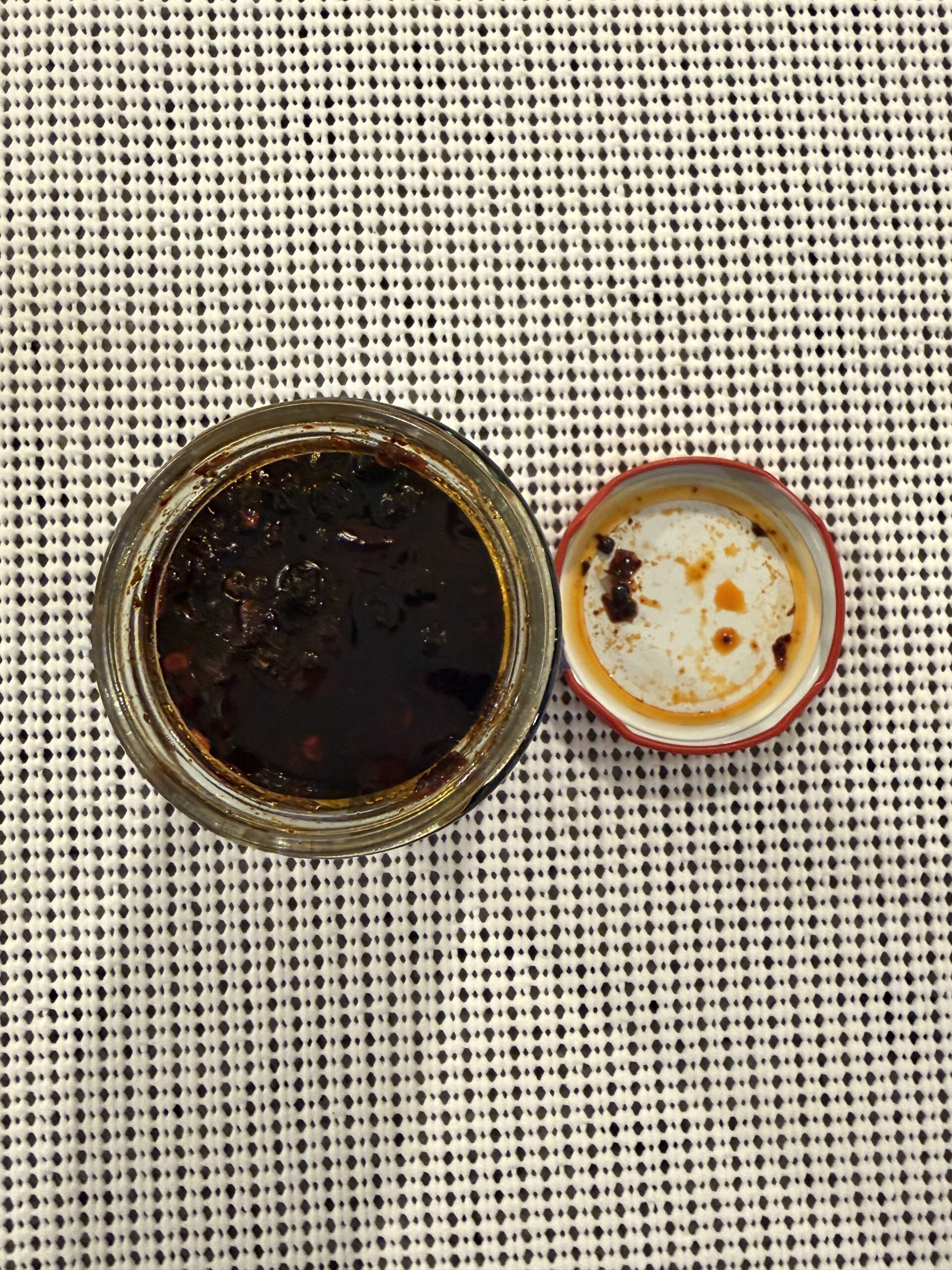
Fermented black beans in chili crisp — douchi, if you’re reading the Chinese label — are one of the easiest ingredients to overlook and one of the hardest to forget once you know what it does. These small, dark, wrinkled beans are usually buried mid-list on the ingredient panel, and most buyers scan right past them. But douchi is one of the oldest preserved foods in Chinese cooking, fermented from soybeans for well over two thousand years. And when a chili crisp maker includes douchi in the jar, the product has a depth that’s hard to achieve any other way.
Most people scanning a chili crisp label blow right past “fermented black beans” or “douchi” without registering it. That’s a mistake. This ingredient tells you something specific about the product’s flavor architecture — and about whether the person who formulated it was building complexity on purpose or just assembling standard parts. Here’s what douchi actually is, what it does in a jar, and why I treat it as a quality signal when I find it on the label.
What Douchi Actually Is
Douchi (豆豉) are black soybeans that have been salted, inoculated with Aspergillus oryzae (the same mold that makes sake, miso, and soy sauce), and fermented for weeks to months. The process transforms a bland legume into something intensely savory, slightly funky, and deeply complex. The beans turn dark — almost black — and develop a soft, slightly chewy texture with a concentrated umami flavor that’s different from soy sauce, different from miso, and different from MSG.
The fermentation is what matters. During the process, the mold breaks down proteins into free amino acids — including glutamic acid, the same compound that gives MSG its flavor. But douchi delivers that umami alongside a whole constellation of other flavors: earthy, slightly bitter, faintly wine-like, with a savory depth that lingers long after the initial taste. It’s concentrated in a way that raw soybeans never are.
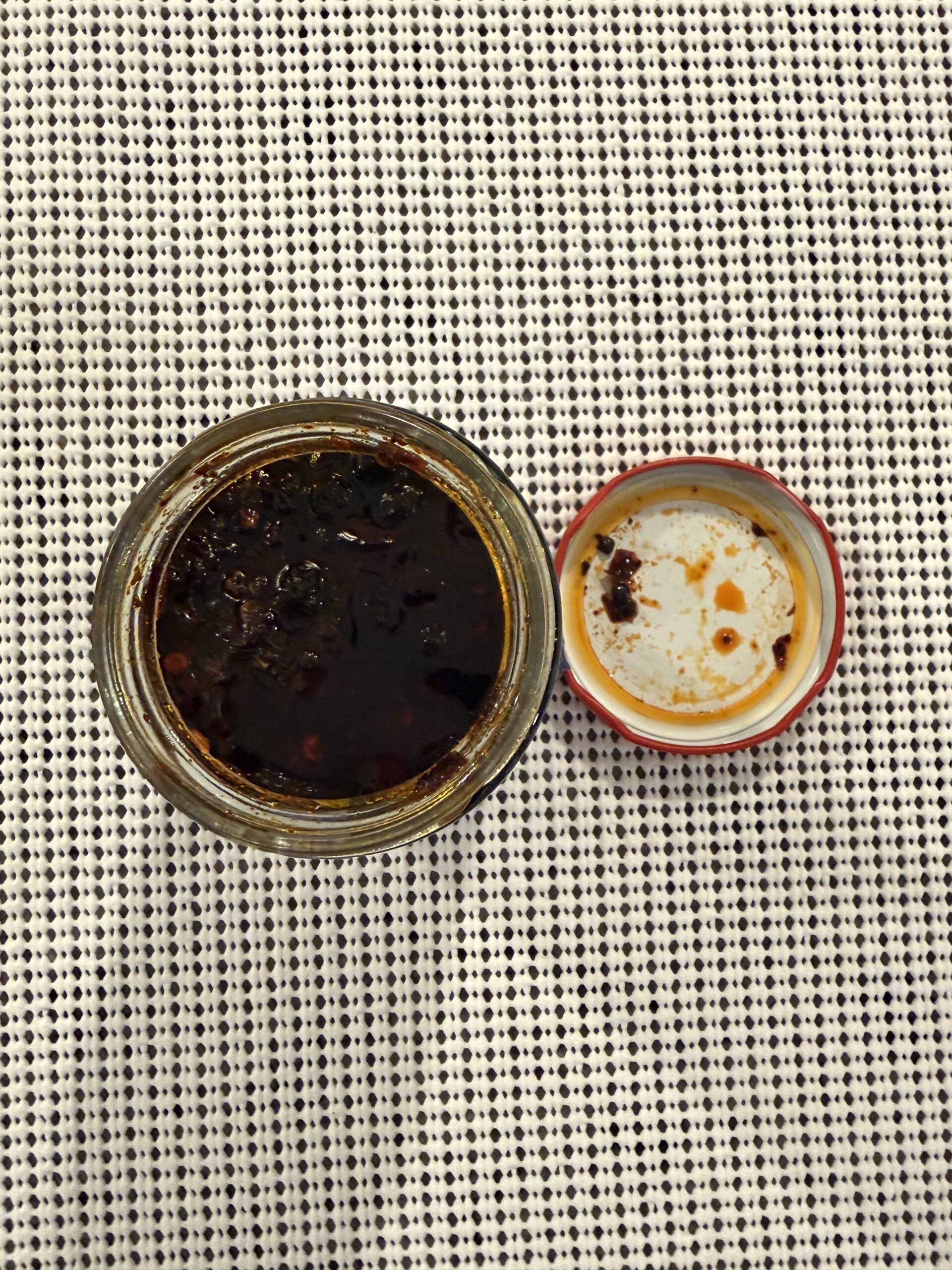
This is the critical distinction between douchi and the plain soybeans that show up in many cheaper chili crisps. Regular soybeans are added for bulk — they pad the crunch count and fill volume at low cost. Douchi is added for flavor. The production effort alone tells you: nobody ferments soybeans for weeks just to add filler. If douchi is on the label, someone made a deliberate formulation choice.
Why Fermented Black Beans Change Everything in the Jar
In a chili crisp, douchi functions as a flavor anchor. While the oil base carries heat and the crispy bits deliver texture, fermented black beans add a savory floor that everything else sits on top of. Think of it as the bass line in a song — you might not consciously notice it, but you’d feel the absence if it disappeared.
Specifically, douchi contributes three things that other chili crisp ingredients don’t replicate well:
Fermented depth. The umami from douchi has a different character than the umami from MSG or soy sauce. It’s darker, earthier, with a slight bitterness that keeps the flavor from tipping into one-dimensional saltiness. In a product with strong chili heat and garlic, that depth prevents the flavor from going flat after the first few bites.
Textural variety. Douchi pieces in chili crisp are soft and slightly chewy — the opposite of the crispy garlic and fried shallot around them. That contrast matters. A jar of all-crunch-no-chew can feel monotonous. The softness of a fermented bean between crunchy bits gives your mouth something different to process, which keeps the eating experience interesting.
Savory persistence. The flavor from douchi lingers longer than most other chili crisp ingredients. Fried garlic fades. Chili heat peaks and dissipates. But fermented black bean flavor sits in the background for a while, which is why products containing douchi tend to have a longer finish.
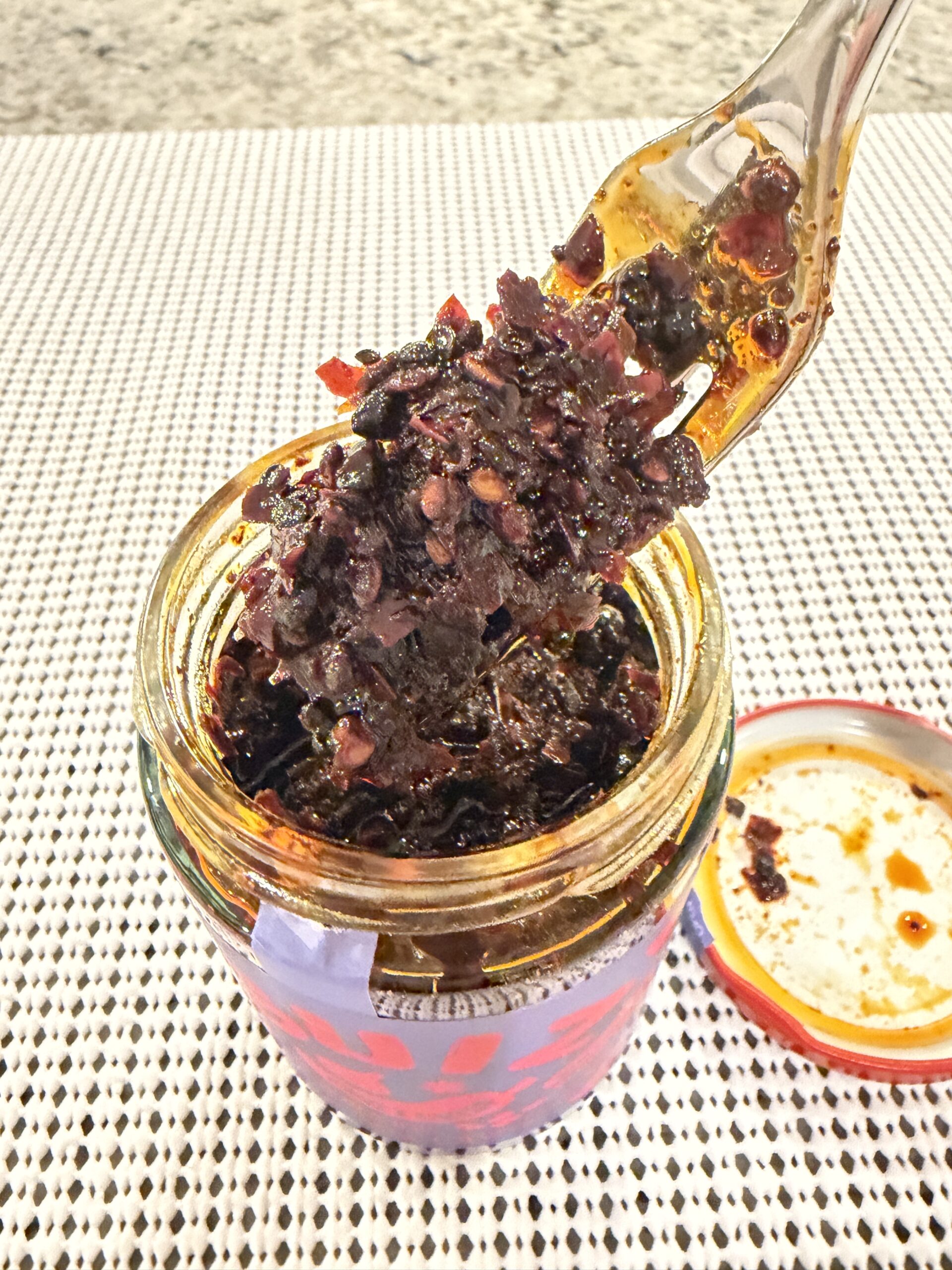
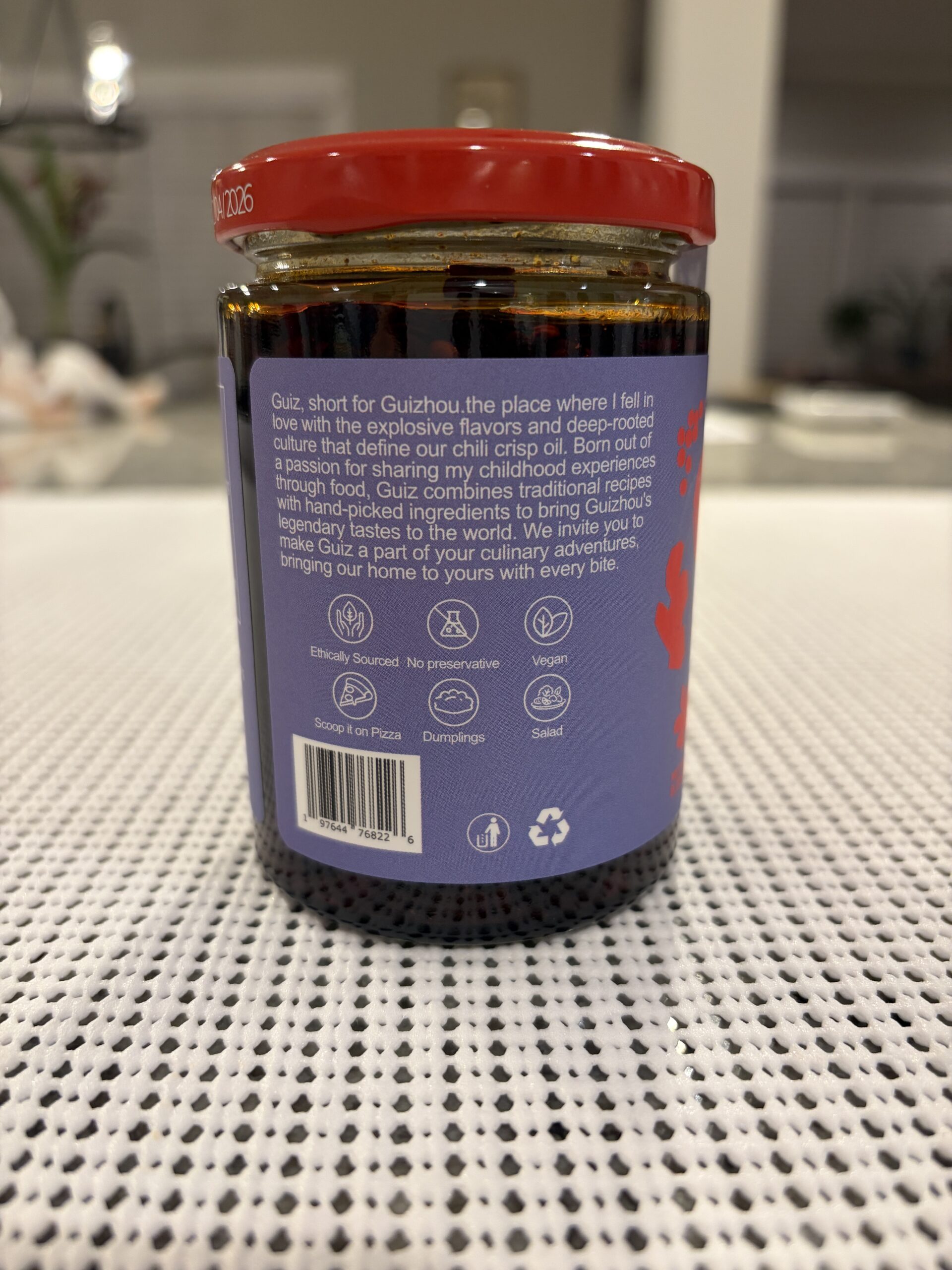
GUIZ Black Bean Chili Crisp is the clearest example of douchi as a primary flavor driver in our review set. Fermented black beans are listed high in the ingredients, and you can taste the difference immediately — the base flavor is darker and more complex than GUIZ’s original, even though much of the surrounding ingredient list is similar. If you want to understand what douchi does in a chili crisp, taste this product alongside one that doesn’t have it.
Douchi vs. Plain Soybeans on the Label
This is where label reading earns its keep. “Fermented black beans,” “douchi,” “fermented black soybeans,” and “preserved black beans” all refer to the same ingredient — soybeans that have undergone deliberate fermentation. “Soybeans,” “soybean,” or “soy protein” without the word “fermented” refers to plain, unfermented legumes that contribute volume and a generic crunch but almost no distinctive flavor.
The two serve fundamentally different purposes. Douchi is a seasoning — a flavor ingredient added in controlled amounts to build complexity. Plain soybeans are a filler — a cheap structural ingredient that bulks up the solids count. Some products include both: fermented black beans for flavor and regular soybeans for crunch. That’s fine. The problem is when a product contains only plain soybeans, listed high on the label, with no fermented anything in sight. That’s a cost-cutting signal, not a culinary one.
A quick way to tell them apart in the jar: douchi pieces are very dark (almost black), soft, and have a slightly wrinkled surface. Plain soybean pieces are lighter tan or golden, hard, and look like small fried nuggets. If you can see dark, soft beans mixed in with the crunchy bits, that’s douchi. If everything crunchy in the jar is the same light color and uniform texture, it’s probably soybean filler.
Which Brands Use Douchi
Douchi shows up most consistently in Sichuan-style chili crisps, which makes historical sense — fermented black bean paste (douchi jiang) has been a cornerstone of Sichuan cooking for centuries. In the products I’ve reviewed, the breakdown looks roughly like this:
Products with douchi: GUIZ Black Bean Chili Crisp (the most prominent example — fermented black beans are a defining ingredient), Lao Gan Ma (lists “fermented black beans” as douchi on the label), and several smaller Sichuan-style brands that position themselves as traditional.
Products that skip it: Most Japanese-style chili crisps (they lean on dashi, bonito, and sesame instead), most fusion brands, and many US-market products that prioritize simplicity on the ingredient list. Fly By Jing uses fermented chili bean paste (doubanjiang), which is a different fermented product — not douchi, but in the same philosophical neighborhood of deliberate fermentation adding depth.
The presence or absence of douchi isn’t inherently good or bad. A Japanese-style taberu rayu doesn’t need it — the flavor profile is built on a different foundation. But when a product claims Sichuan heritage or promises “deep umami complexity” on the label and doesn’t include douchi, doubanjiang, or another fermented element, that’s a gap between the marketing and the formulation. I notice that gap.
How Fermentation Creates the Flavor
The fermentation process behind douchi is worth understanding because it explains why the flavor is so different from unfermented soy products. When Aspergillus oryzae colonizes the soybeans, it secretes enzymes — proteases and peptidases — that break long protein chains into individual amino acids. Glutamic acid is the headline act (it’s what delivers umami), but it’s accompanied by dozens of other amino acids and peptides that create the full flavor profile.
Simultaneously, the fermentation produces organic acids, aromatic compounds, and melanoidins (the dark pigments that give douchi its color). The longer and slower the fermentation, the more complex the result. Quick-fermented douchi — weeks instead of months — is saltier and less nuanced. Traditionally fermented douchi has a rounder, deeper flavor with less sharp salinity.
This is the same basic mechanism that makes aged cheese taste different from fresh cheese, or why fish sauce has a flavor profile that salt water never will. Time plus microbial activity creates compounds that don’t exist in the raw ingredient. The fermentation isn’t a shortcut — it’s the entire point.
For context, the broader seasonings picture in chili crisp includes MSG, salt, sugar, and aromatic spices alongside any fermented elements. Douchi works with all of these. MSG amplifies the umami that douchi provides. Salt balances the slight bitterness. Sugar, when present, rounds the edges. The best formulations treat douchi as part of an ensemble, not a solo act.
How I Evaluate Douchi in Reviews
When I see douchi on a chili crisp label, I register it as a positive signal — but signals need confirmation. I’m looking for three things when I actually taste the product:
Can I taste it? Douchi listed low on the ingredient list might be present in negligible amounts — a label decoration more than a flavor contributor. If fermented black beans are there, I should be able to detect a savory depth that’s different from the straight soy sauce or MSG flavor. If the product tastes identical to one without douchi, the listing isn’t doing any real work.
Does it integrate with the rest of the flavor? Good douchi use creates a unified flavor where the fermented depth supports the chili heat and the garlic. Bad douchi use — rare, but it happens — creates a jarring flavor disconnect where you taste a funky fermented note that doesn’t belong with the rest of the jar. Integration is the goal.
Is it replacing something or adding to something? In products like GUIZ Black Bean, douchi is clearly an additive ingredient — it’s there in addition to everything else, building a richer product. In cheaper products, fermented black beans sometimes appear as a replacement for more expensive ingredients, which changes the evaluation. The question is always whether the ingredient is earning its place or just occupying space.
I also cross-reference douchi presence with the oil base and overall ingredient list. A chili crisp with douchi, quality oil, real garlic, and Sichuan peppercorn is signaling serious formulation. Douchi alongside commodity soybean oil and vague “spices” is a mixed signal at best.
The Bottom Line on Douchi in Chili Crisp
Fermented black beans are one of the most underappreciated ingredients in the chili crisp category. They add a savory depth that MSG, soy sauce, and salt can’t fully replicate — because the fermentation process creates flavor compounds that don’t exist in any of those ingredients individually. When a chili crisp includes douchi, it tells me the formulator was thinking about flavor architecture, not just assembling a standard ingredient list.
That said, the ingredient isn’t magic. A product with douchi and weak everything else will still fall flat. And a well-made chili crisp without douchi — one that builds depth through other fermented elements or layered seasoning — can be excellent. The point isn’t that douchi is required. It’s that when it’s there, it’s worth noticing. Most people skip right over it on the label. Now you won’t.
Frequently Asked Questions
What are fermented black beans in chili crisp?
Fermented black beans (douchi) are soybeans that have been salted and fermented with Aspergillus oryzae mold for weeks to months. The process creates an intensely savory, slightly funky ingredient with deep umami flavor. They appear as small, dark, soft pieces in the jar — distinctly different from plain fried soybeans.
What is douchi?
Douchi (豆豉) is the Chinese name for fermented black soybeans. It’s one of the oldest preserved foods in Chinese cooking, used for over two thousand years. In chili crisp, douchi adds savory depth, textural contrast, and a lingering umami that other ingredients can’t fully replicate.
Are fermented black beans the same as regular soybeans in chili crisp?
No. Plain soybeans are unfermented and serve primarily as a filler — they add bulk and crunch but minimal flavor. Fermented black beans (douchi) undergo weeks of fermentation that creates complex umami compounds. They look different too: douchi pieces are dark and soft, while plain soybeans are light tan and hard.
Is douchi in chili crisp a sign of quality?
Generally yes. Douchi requires deliberate fermentation and adds genuine flavor complexity, so its presence signals intentional formulation. However, it needs to be present in meaningful amounts and well-integrated with other ingredients. Douchi listed at the very bottom of the ingredient list may be more of a label decoration than a flavor contributor.
Which chili crisp brands use fermented black beans?
Douchi appears most consistently in Sichuan-style chili crisps. GUIZ Black Bean Chili Crisp features it prominently. Lao Gan Ma lists fermented black beans on the label. Many smaller traditional Sichuan brands include it as well. Japanese-style and most fusion chili crisps typically skip douchi in favor of other umami sources.
What does douchi taste like?
Douchi has an intensely savory, slightly funky flavor with earthy and faintly wine-like notes. It delivers umami differently from soy sauce or MSG — darker, more complex, with a slight bitterness that adds depth. The flavor lingers longer than most other chili crisp ingredients.
How can I tell if my chili crisp has douchi?
Check the ingredient list for ‘fermented black beans,’ ‘douchi,’ ‘fermented black soybeans,’ or ‘preserved black beans.’ In the jar, douchi pieces are very dark (almost black), soft, and slightly wrinkled — visually distinct from the lighter, harder pieces of plain fried soybeans.
Is douchi the same as doubanjiang?
No. Douchi are whole fermented black soybeans. Doubanjiang is a fermented chili-broad bean paste — a different product with a different production process and flavor profile. Both are fermented soy products used in Sichuan cooking, but they serve different roles in a chili crisp formulation.