
This is the skill I use on every product I test. If you’re new to the category, start with what chili crisp actually is before diving into labels. Here’s how to do it yourself.
Why the Ingredient List Is the Only Thing That Matters
The front of the jar is marketing. The back of the jar is the truth. Legally, FDA regulations require ingredients to be listed in descending order by weight — whatever appears first is present in the largest amount. That single rule is the foundation of everything below.
Most chili crisp labels are short — 8 to 15 ingredients is typical for a well-made product. If you’re looking at a list of 25 items, that’s worth noting. More isn’t better; it often signals a cheaper formulation stretched with fillers and flavor enhancers to compensate for lower-quality base ingredients.
Look at the first four ingredients. They tell you the oil base, the primary chili source, what’s creating the crunch, and whether the producer is using filler to bulk up the solids. Everything else is seasoning.
Position 1–2: The Oil
Oil should be first or second on any chili crisp label. If it’s not, something’s off with the formulation — either the solids-to-oil ratio is unusually high, or the label math doesn’t reflect what’s actually in the jar.
The oil type matters more than most buyers realize. Here’s what you’ll commonly see and what each signals:
| Oil | What It Signals | Notes |
|---|---|---|
| Soybean oil | Neutral, cheap, standard | Most common in Chinese-style products. Neutral flavor — lets the other ingredients speak. Nothing wrong with it; it’s the industry baseline. |
| Canola / rapeseed oil | Neutral, slightly lighter | Common in Western-produced products. Slightly lighter mouthfeel than soybean. Also neutral. |
| Sesame oil | Flavor contribution, premium signal | Adds a toasted, nutty depth. Rarely the primary oil — usually in a blend. When it appears early on the list, expect more complexity. |
| Sunflower / vegetable oil | Neutral, inexpensive | Interchangeable with soybean in terms of function. Common in budget products. |
| Avocado / olive oil | Premium positioning | Flavor-forward oils. More common in American-made or Italian-adjacent products. Higher cost, distinct flavor contribution. |
A blend of oils — soybean plus sesame, for example — is common in quality products. The sesame is usually further down the list, present in small amounts for flavor rather than structure. That’s fine. What you’re looking for is whether the primary oil is a neutral carrier or something that actively contributes to the flavor profile.
Position 2–4: The Chili
Chili crisp gets its heat, color, and a significant amount of its flavor from dried chilies. What kind, and where they appear on the list, tells you a lot about the type of heat you’ll experience.
The most common entries you’ll see:
- Chili pepper / dried chili pepper — Generic but not a red flag. “Dried chili pepper” covers a wide range of varieties. What matters is whether it appears high on the list.
- Erjingtiao / chaotianjiao — Specific Sichuan varieties. Seeing these named explicitly is a good sign — it means the producer is sourcing deliberately, not just buying commodity chili.
- Gochugaru — Korean red pepper flakes. Sweet, fruity heat with lower burn than Sichuan varieties. Appears in Korean-influenced or fusion products.
- Calabrian chili — Italian, fruity-savory. Appears in Italian-style or Western crossover products.
- Chili powder / chili flakes — Processed forms. Not inherently bad, but less specific than named varieties. Common in volume-production products.
“Spices” listed without further detail is a catch-all that can mean almost anything. It’s not automatically a problem, but it’s worth noting — especially if it appears early on the list where you’d expect to see a specific chili source named.
The Crispy Bits: Garlic, Shallot, and What Creates the Crunch
The solids in chili crisp — the “crisp” part — are typically fried or dehydrated aromatics. What they are and how high they sit on the ingredient list tells you whether you’re getting real texture or filler volume.
Good Signs
- Fried garlic Good — The backbone of most quality chili crisps. Adds depth, crunch, and savory complexity. Should appear high on the list.
- Fried shallot / onion Good — Adds sweetness and body to the solids. Common alongside fried garlic.
- Fermented black bean / doubanjiang Good — Umami depth. The defining ingredient in Lao Gan Ma’s profile. If you see this, expect a more savory, funky flavor.
- Sesame seeds Good — Adds nuttiness and some crunch retention. Common in quality products.
Filler Signals
- Soybeans / soy protein Filler — This is the one that most people miss. Whole or textured soybeans are commonly used to bulk up the solid content cheaply. They have almost no flavor contribution and dissolve quickly on contact with moisture. If soybeans appear in the top five ingredients, a meaningful portion of your “crunch” is cheap filler.
- Peanuts — Context-dependent. In chili crisp, peanuts as a primary solid is more common in budget products. In salsa macha, peanuts are a traditional and expected component. Know what category you’re evaluating.
- Wheat flour / starch Watch — Sometimes used as a binder or thickener. Also means the product is not gluten-free chili crisp guide-free.
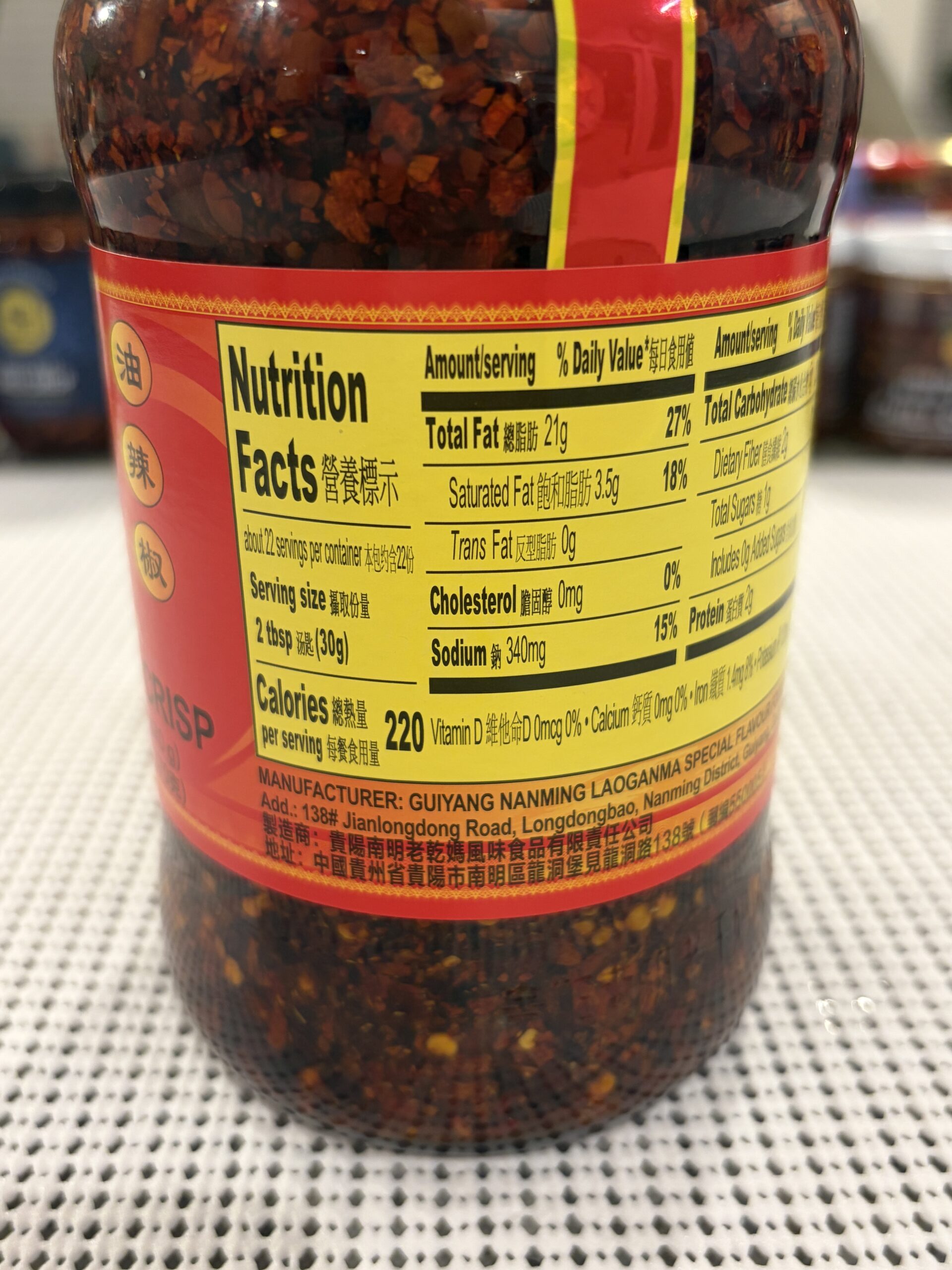
Seasonings, Flavor Enhancers, and What They Tell You
After the primary components, you’ll typically find a mix of seasonings. A few specifics worth knowing:
MSG
Most quality chili crisps contain MSG (monosodium glutamate), usually listed by name or as “disodium inosinate” / “disodium guanylate” — which are companion flavor enhancers that work synergistically with MSG. The FDA classifies MSG as Generally Recognized as Safe (GRAS). It contains roughly one-third the sodium of table salt. Its presence is a sign the producer is going for maximum savory depth — not a red flag.
“Natural Flavor”
This is a legally defined but practically vague term. It means the flavor compound was derived from a natural source — but tells you nothing about what it tastes like or how much is in the product. Its presence isn’t damning, but it’s a catch-all that serious producers often avoid by naming their flavoring sources specifically.
Sugar
Small amounts of sugar are common — they balance heat and add a slight caramel note to fried aromatics. If sugar appears in the first five ingredients, the product is likely noticeably sweet, which may or may not be what you want.
Vinegar
Not typical in chili crisp. If you see vinegar, the product is either a hybrid (crossing into hot sauce territory) or a salsa macha-influenced formulation. It’s not wrong — just compositionally different from traditional chili crisp.
Sodium: Do the Math
The nutrition panel tells you sodium per serving. The catch: serving sizes vary wildly — some labels use 1 teaspoon, some use 1 tablespoon. Always convert to a consistent unit before comparing products.
A rough reference point: 150–250mg of sodium per teaspoon is typical for standard chili crisp. Below 100mg per teaspoon is genuinely lower-sodium. Above 300mg per teaspoon is worth factoring in if you use it liberally.
If the label lists sodium per tablespoon, divide by 3 to get the per-teaspoon number. Now you’re comparing apples to apples across different brands.
Country of Origin and What It Signals
Most chili crisp is produced in China — including the vast majority of what you’ll find in Asian grocery stores and on Amazon. That’s not a quality signal either way. Some of the best products are Chinese-made. Some of the most padded-out ones are too.
American-made and other Western-produced chili crisps have grown significantly in the past five years. They often use different base ingredients (canola over soybean, alternative chili varieties, premium oils) and tend to have shorter, cleaner ingredient lists — though not always.
Country of origin matters primarily as context for what you’re tasting, not as a quality shortcut.
How These Same Skills Apply to Salsa Macha and Chili Oil
Label-reading isn’t chili crisp-specific. The same principles translate directly to the other oil-based condiments FIL covers:
Salsa macha: Expect nuts or seeds (peanuts, pepitas, sesame, almonds) to appear high on the list — they’re structural, not filler. Dried chilies should be named specifically (árbol, ancho, guajillo, morita). Vinegar is typical and positive — it’s part of the tradition. Oil base is often olive oil or a neutral oil, and may appear after the solids because the nut content is substantial. I’ve written a full salsa macha ingredient guide if you want the deep dive.
Chili oil: Oil should dominate the list. If you’re seeing large quantities of solids listed, you’re looking at something closer to chili crisp. Chili type matters: la you-style Chinese chili oil uses dried chilies and Sichuan peppercorn; Korean versions lean on gochugaru; Italian versions are olive oil-based with Calabrian or peperoncino. The regional variety determines the ingredient profile, and oil quality is the primary evaluation criterion for chili oil — not crunch.
A Quick Reference: What to Look For and What to Watch Out For
| Ingredient | What It Means |
|---|---|
| Soybean / canola oil (Position 1) | Standard neutral base. Expected and fine. |
| Sesame oil (early in list) | Flavor contribution. Good sign for complexity. |
| Named chili variety (erjingtiao, gochugaru, etc.) | Deliberate sourcing. Quality signal. |
| Fried garlic / shallot (high on list) | Real aromatic solids. What you want. |
| Soybeans / soy protein (top 5) | Filler. Bulking up volume cheaply. |
| MSG / disodium inosinate | Savory depth. FDA-safe. Not a red flag. |
| “what “natural flavor” actually means” | Vague. Note it, not a dealbreaker. |
| Wheat flour / starch | Binder or filler. Not gluten-free. |
| Vinegar (in chili crisp) | Atypical. Hybrid formulation territory. |
| Sugar (top 5) | Noticeably sweet product. |
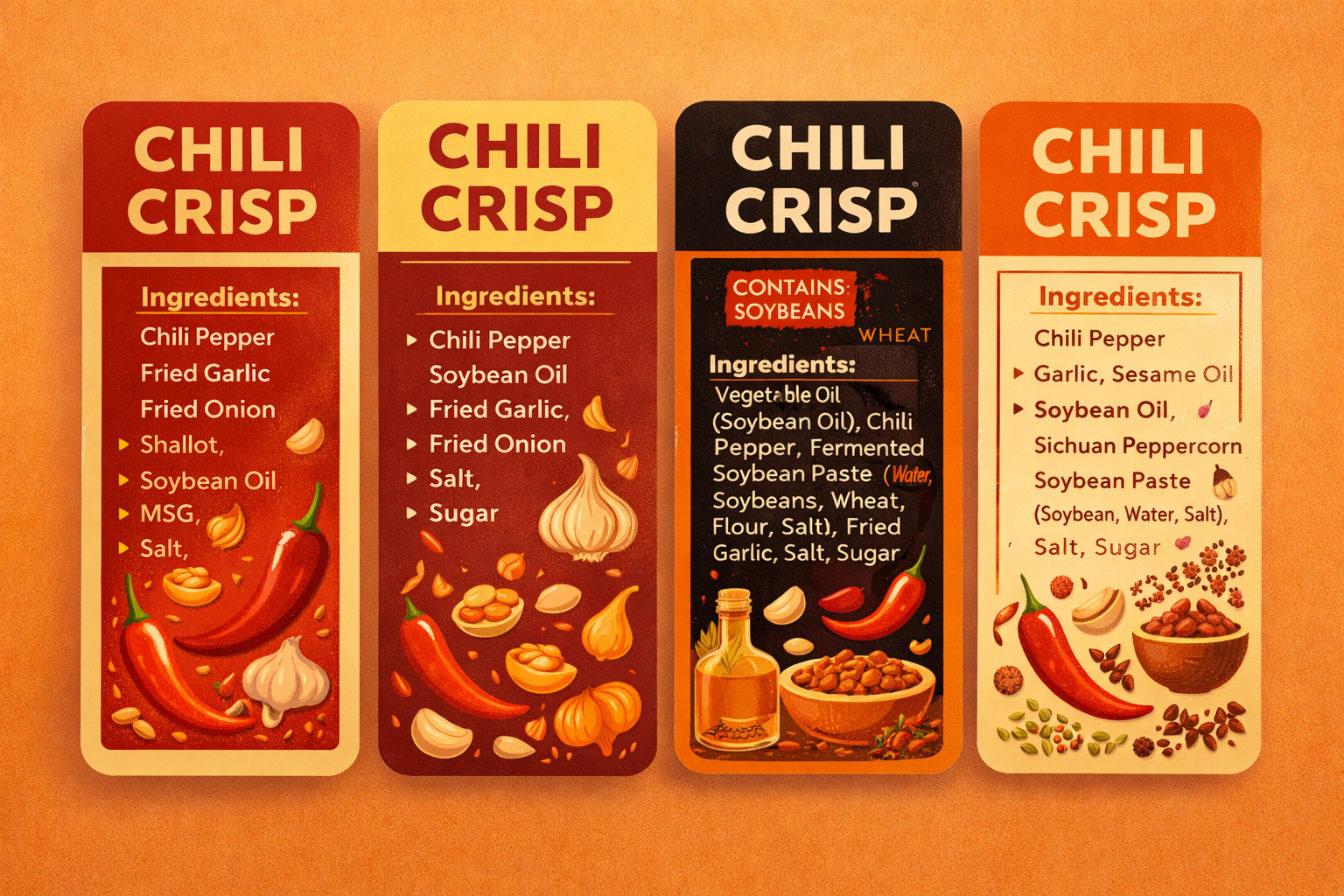 whether chili crisp goes bad.jpg” alt=”Assorted chili condiment jars on a kitchen shelf — Flavor Index Lab” />
For plant-based buyers, ingredient labels get even more important. Our vegan chili crisp guide breaks down which common ingredients to watch for.
Once you know what’s in the jar, the next question is how to store it. Our guide covers whether you need to refrigerate chili crisp and what the label tells you about shelf life.