
This post contains affiliate links. I may earn a small commission if you buy through them — at no extra cost to you. My scores are never influenced by this.
Momofuku Chili Crunch leads sweet — coconut sugar and grape seed oil create a thick, honey-butter opening before the chili heat shows up. The heat is real and it lingers, but the sweetness gets in the way of everything else: the mushroom, the seaweed, the shallot. Good ingredient list. Interesting product concept. Too sweet for a straight GOOD — this one lands AVERAGE. Skip to the verdict → or buy it here: Buy Momofuku Chili Crunch on Amazon →
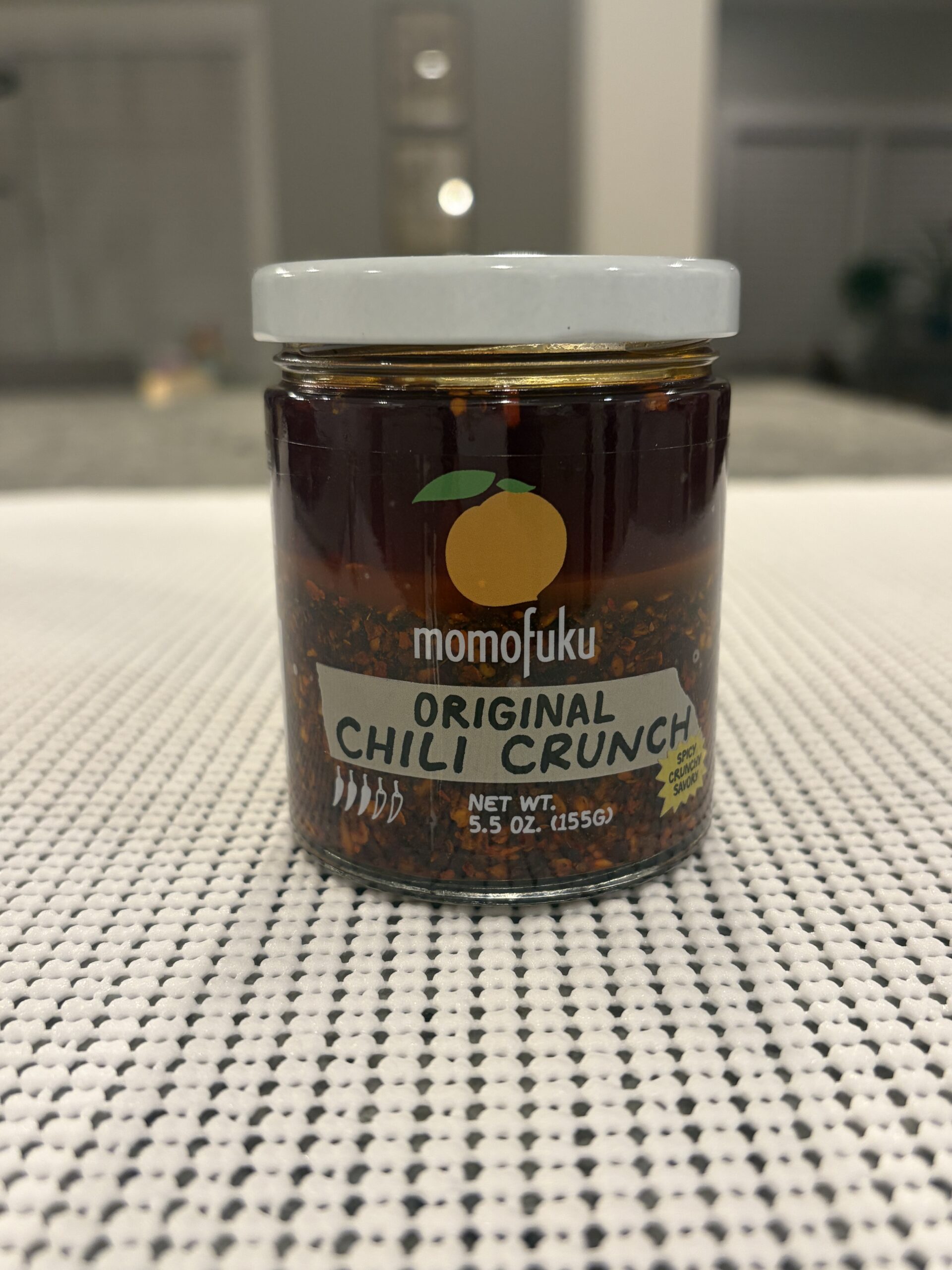
This Momofuku Chili Crunch review started the way they all do — with the label. And the label had a lot to say. David Chang’s brand has significant distribution — Whole Foods, Target, Amazon — and it comes loaded with brand equity from the restaurant side. That’s not a reason to like it or dislike it. It’s just context for why this was one of the first jars on the list.
The label says spicy, crunchy, savory, with a three-pepper heat rating. The ingredient list says something a little more complicated. I opened the jar expecting something clean and chili-forward. What I got was honey butter. That surprised me, and I spent the whole tasting trying to figure out how I felt about it.
Quick Facts
| Field | Detail |
|---|---|
| Brand | Momofuku |
| Product | Chili Crunch |
| Category | Chili Crisp |
| Style | Fusion / American |
| Oil | Grape seed |
| Heat | 3 / 5 |
| Price | ~$13.00 |
| Size | 5.3 oz |
| Per oz | ~$2.45/oz |
| Made in | USA |
| Buy | Amazon, Whole Foods, Target, Momofuku store |
| Tier | AVERAGE |
The Label
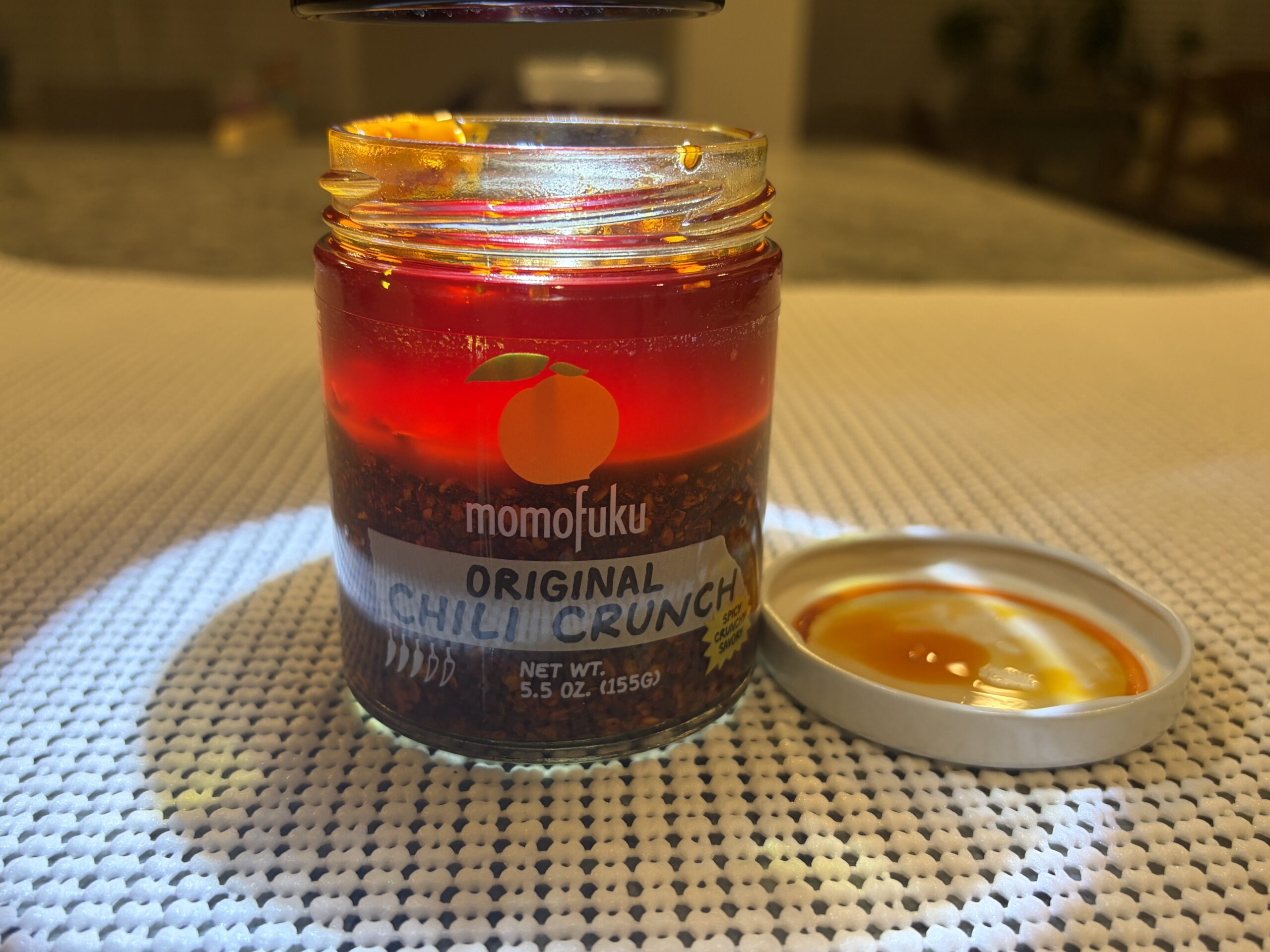
Ingredient list in order: grape seed oil, puya chili, coconut sugar, sesame seed, onion, garlic, mushroom powder, chile de árbol, japones chili, salt, red pepper, shallot, yeast extract, seaweed.
Three types of chili: puya, chile de árbol, and japones (japonés). That’s a more interesting chili lineup than most. Puya runs medium heat with a fruity undertone. Chile de árbol is sharper and hotter. Japones is closer to a generic dried red chili — you’ll find it called “Japanese chili” on some labels. The combination suggests heat with some complexity, which tracks with what I tasted.
Coconut sugar is the third ingredient — and ingredient position tells you exactly how a product is built. It sits ahead of sesame, onion, garlic, mushroom powder, and everything else. In a chili crisp, sugar that high in the list is unusual — it means sweetness is a primary design choice, not a background note. One gram of added sugar per teaspoon sounds small, but the flavor impact is significantly larger than the number implies. This product was built sweet on purpose.
Grape seed oil as the base is worth noting. The Oil Behind the Crisp covers how base oil choice shapes the final product — the short version here is that grapeseed is a deliberate choice. It doesn’t assert itself the way sesame does, doesn’t have the density of soybean. In a sweeter product like this, that neutrality lets the coconut sugar lead without competition from the oil. Smart formulation choice, actually, even if the end result isn’t my preference.
The yeast extract and seaweed at the end of the list are interesting. Both are umami contributors — the kind of ingredients that should build savory depth. In theory this jar should have some real background complexity. In practice, the coconut sugar buries them.
Appearance and Aroma
Settlement sits at about two-thirds solids, one-third open oil at the top. That’s consistent across Momofuku’s other jars — they seem to run this ratio across the line, which is a sign they’re formulating consistently rather than letting fill level vary batch to batch.
The oil is a thick, reddish-brown — darker than most, almost a deep burgundy when the light hits it. Viscous. This is not a pourable oil. It moves like something with weight behind it.
The smell, though. I opened the jar and I got honey butter. Not chili, not sesame, not garlic — honey butter. I smelled it a dozen times because I kept thinking I was wrong. The coconut sugar is doing real olfactory work here, overwhelming the other aromatics entirely at the jar level. If someone handed you this jar without context, you might not guess chili crisp.
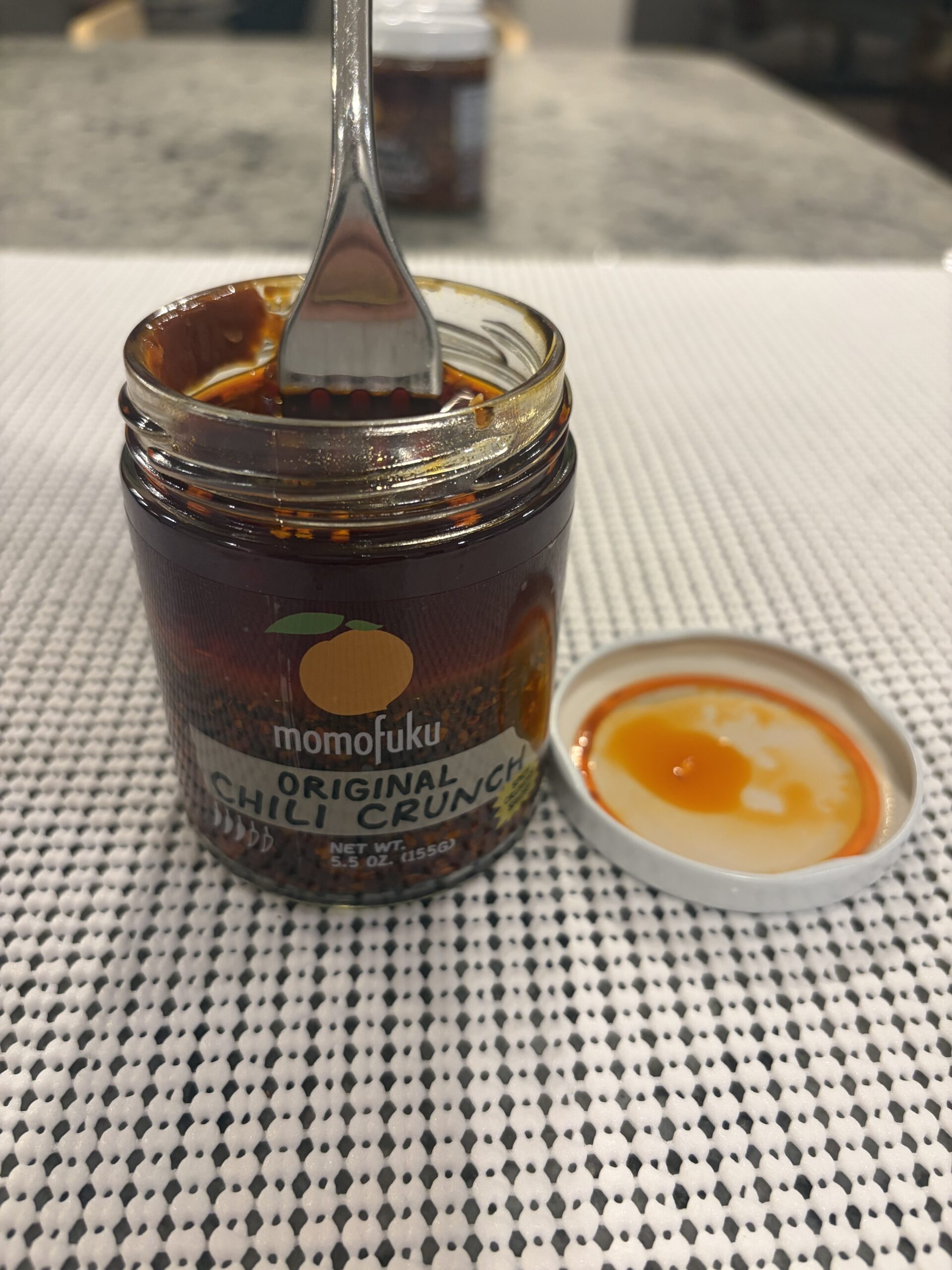
One thing I test on a settled jar: rest a fork on the surface of the solids and see if it sinks. If the bits are fine or powdery, the fork disappears. If they have structure, it sits. This jar — the fork sat. The solids are dense enough to hold weight, which tells you something about the particle consistency before you even dip in.
Texture and Crunch
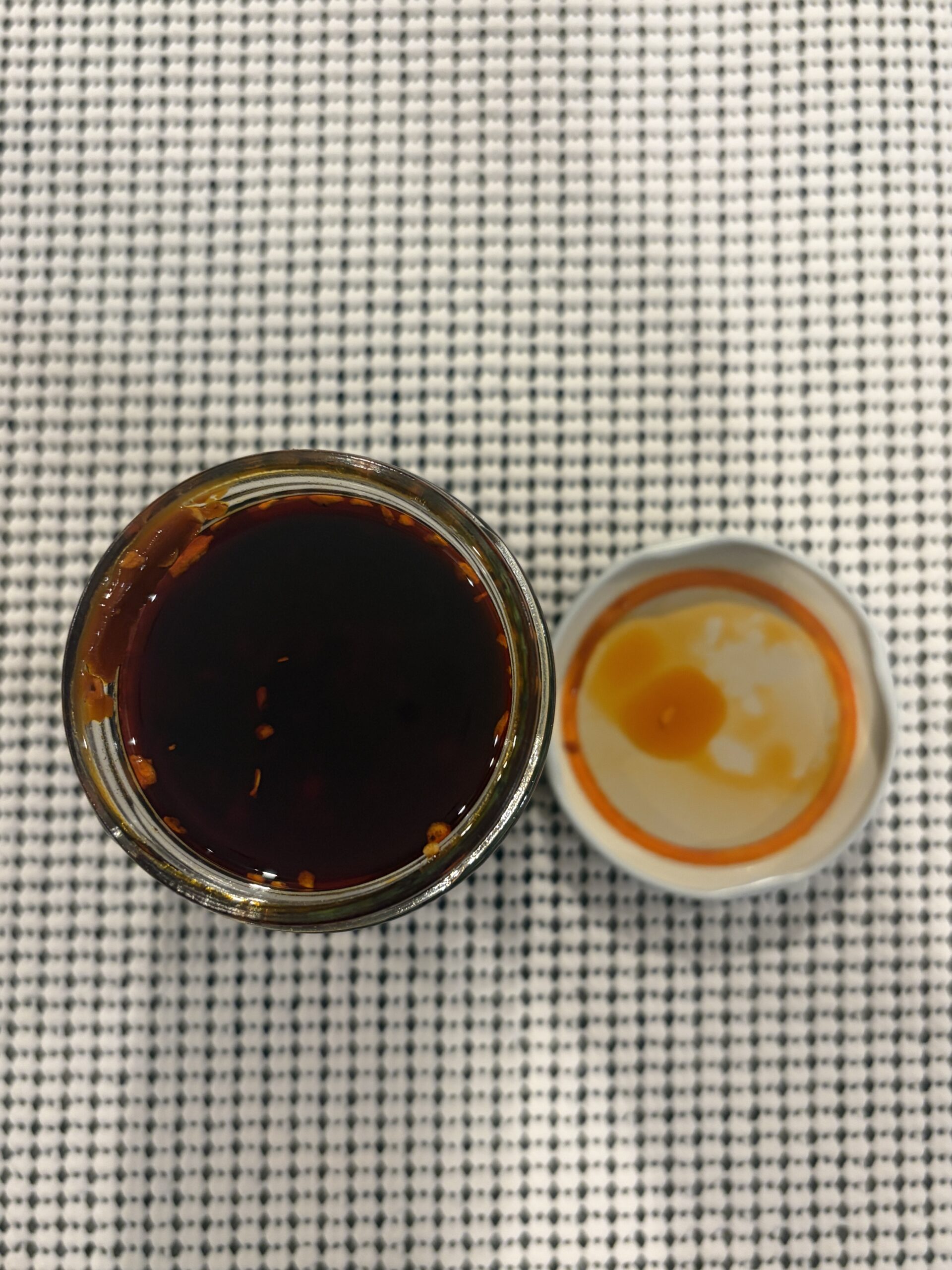
The solids are uniform in size — sesame seeds, ground-up chili bits, finely processed everything. Not a lot of particle variation. No big garlic chips, no chunky shallot pieces. Everything’s been broken down to a similar grain size, which gives the jar a clean look but limits the textural range once it’s in your mouth.
The crunch is decent — good, actually. It holds up on the spoon and gives you something to chew. The fork-sit test backs this up: the solids have enough structure to support weight rather than collapsing into paste. But because everything is similarly sized, you don’t get the experience of hitting a larger piece and getting a different crunch. Pleasant but texturally one-note. The sesame seeds are probably doing most of the crunch work here.
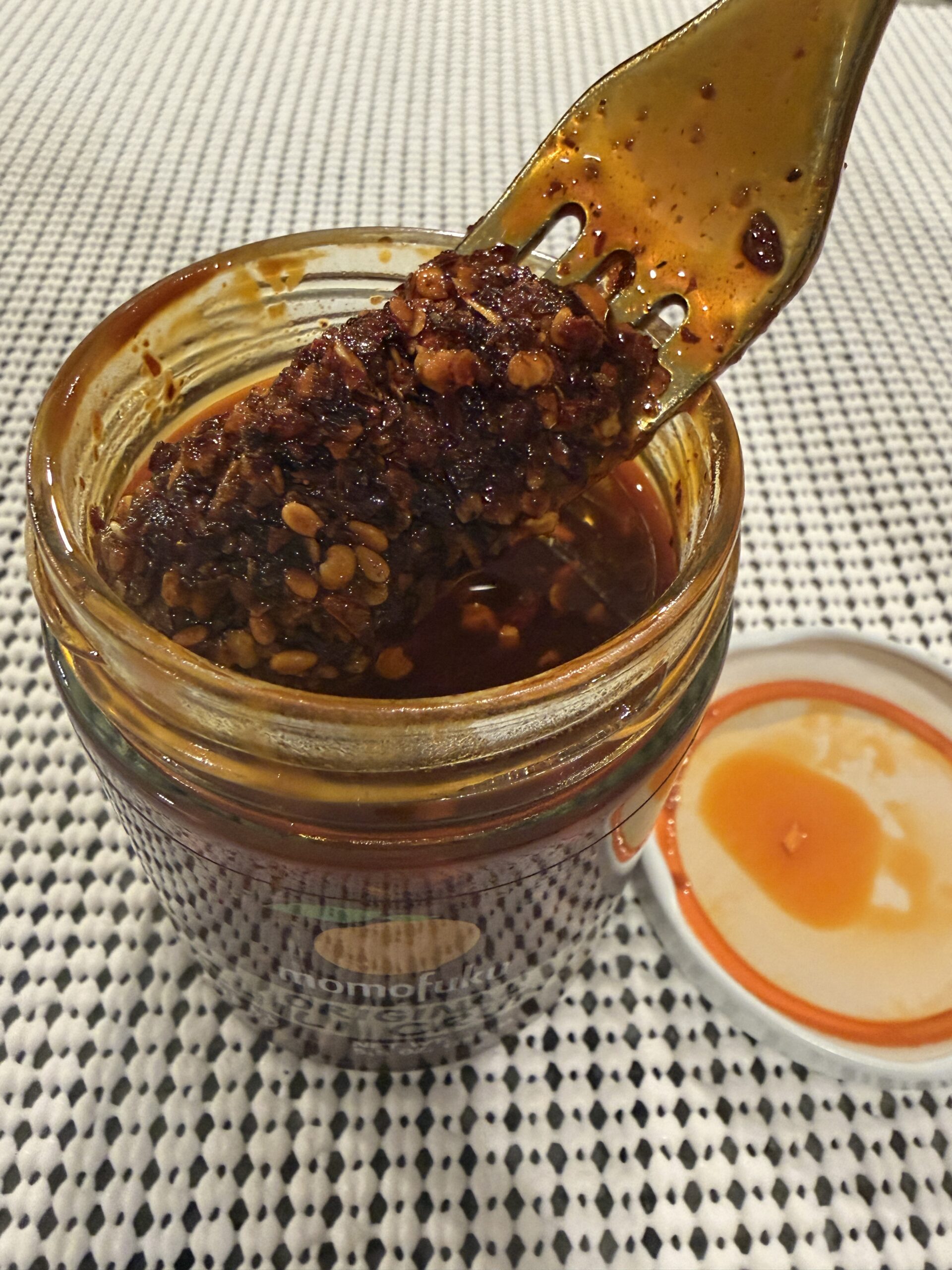
The oil is thick enough that it coats immediately. You get the chili bits and the oil as one unified thing — which is how a good chili crisp should work. The oil isn’t separating from the solids mid-bite. That part holds up.
Heat
Medium. Three peppers on the label, and that’s about right by my palate. The problem isn’t the heat level — it’s the delivery sequence.
The first thing you taste is sweet. Thick, coating sweetness from the coconut sugar and the oil. The heat comes second, building in as the sweetness spreads across your mouth. It ends up covering the middle of your tongue, the sides of your cheeks, the roof of your mouth. A pleasant burn — not sharp, not aggressive. It lingers for a bit, which I liked.
But the sweetness mutes everything. You’re getting heat after sugar, and the sugar is still sitting in your mouth when the heat arrives. The result is a sweet-spicy experience rather than a chili-forward one. Some people want exactly that. For the purposes of evaluating this as a chili crisp, the balance is off — the sugar is too dominant for the chili character to come through clearly.
Flavor Complexity
The flavor arc is: sweet, then hot. I kept looking for the mushroom powder, the seaweed, the yeast extract — the umami layer the ingredient list promised. I couldn’t find it. The coconut sugar sits on top of all of it, and by the time the sweetness clears, what’s left is the chili burn and not much else.
The chili flavor does stick around after the sugar dissipates. That’s the most interesting moment in the tasting — when the sweetness fades and you get a few seconds of actual chili character before the whole thing resolves. Good. I wanted more of that and less of the sugar runway that precedes it.
The three-chili lineup should be producing more complexity than this jar delivers. Puya, chile de árbol, and japones have meaningfully different flavor profiles when they’re allowed to show up. Here, they’re all landing under the sweetness umbrella and presenting as generic heat rather than distinct chili character.
Everyone assumes the Momofuku name signals quality depth — restaurant pedigree, serious ingredient sourcing. The label backs that up: grape seed oil, three chili types, mushroom powder, seaweed. That’s a genuinely interesting ingredient list. But what the label doesn’t signal is that coconut sugar as the third ingredient means the flavor architecture is sweetness-first, everything else second. The brand’s fine dining reputation and the actual flavor experience point in different directions. That gap is worth knowing about before you buy.
Use Cases
Momofuku’s label shows a fried egg and says to use it on all your favorite dishes. I’d be more specific than that.
The sweetness makes this a natural fit for proteins that can absorb some sugar: pork belly, duck, fatty cuts where richness and sweet heat work together. A pork bun with this would be genuinely good. A dry soba or buckwheat noodle — something that leans into sweet-savory — could work well here too.
Where I wouldn’t reach for it: fried rice, dumplings, anything where I want the condiment to add depth without sweetness. The coconut sugar isn’t subtle enough to disappear into a dish. It stays on top, and that changes the profile of whatever you’re putting it on.
The Mixing Angle
This jar is a candidate for blending — specifically for cutting the sweetness with something more savory. A blend with something drier and chili-forward (Lao Gan Ma would work) would probably land in a more balanced place than either jar on its own. Momofuku brings the crunch, the oil weight, the heat. Lao Gan Ma brings the savory backbone. Worth trying if you’ve got both on the shelf.
Packaging
Standard jar format. Momofuku’s design work is consistently clean and legible. The lid includes a QR code linking to recipes. The label also calls for refrigeration after opening — most chili crisps don’t require this, and it’s worth flagging. If you leave this out, the oil quality and shelf life will degrade faster than most jars in the category.
The consistent settlement ratio across multiple Momofuku jars suggests a tight production process. Not something most buyers notice, but it tells you the product is being made to spec rather than eyeballed.
Momofuku Chili Crunch — Final Verdict
AVERAGE — Fine. Not exciting. Better options exist at the same price.
Momofuku Chili Crunch is a well-made product that has been tuned to a sweetness level that doesn’t work for me as a chili crisp. The ingredient list is genuinely interesting — three chili types, grape seed oil, mushroom powder, seaweed — and in a different formulation, this could be a more complex jar. Coconut sugar as the third ingredient means that complexity never really gets to show up.
The heat is real and pleasant. The crunch is good. The whole-jar concept holds together. But when the dominant flavor experience is sweet-then-spicy rather than chili-forward, I can’t land this above AVERAGE. At ~$2.45/oz, that verdict stings a little more — you’re paying a premium price for a product that underdelivers on the thing that should matter most in a chili crisp. There are better jars for less money.
That said: this is a thoughtful product built for a broad audience, and if most chili crisps feel too intense or too savory for your palate, Momofuku might be exactly the right entry point. The sweetness is a design choice, not a mistake — it just doesn’t fit what I’m looking for in the category.
Buy Momofuku Chili Crunch on Amazon →
To see how Momofuku’s original compares against other flagship chili crisps, check our best original chili crisp comparison.
Momofuku makes several other variants worth knowing about: the Extra Spicy dials up the heat, and the Mild Garlic removes it entirely.
For a direct head-to-head with the competition, see our GUIZ vs. Momofuku comparison.