
This post contains affiliate links. I may earn a small commission if you buy through them — at no extra cost to you. My scores are never influenced by this.
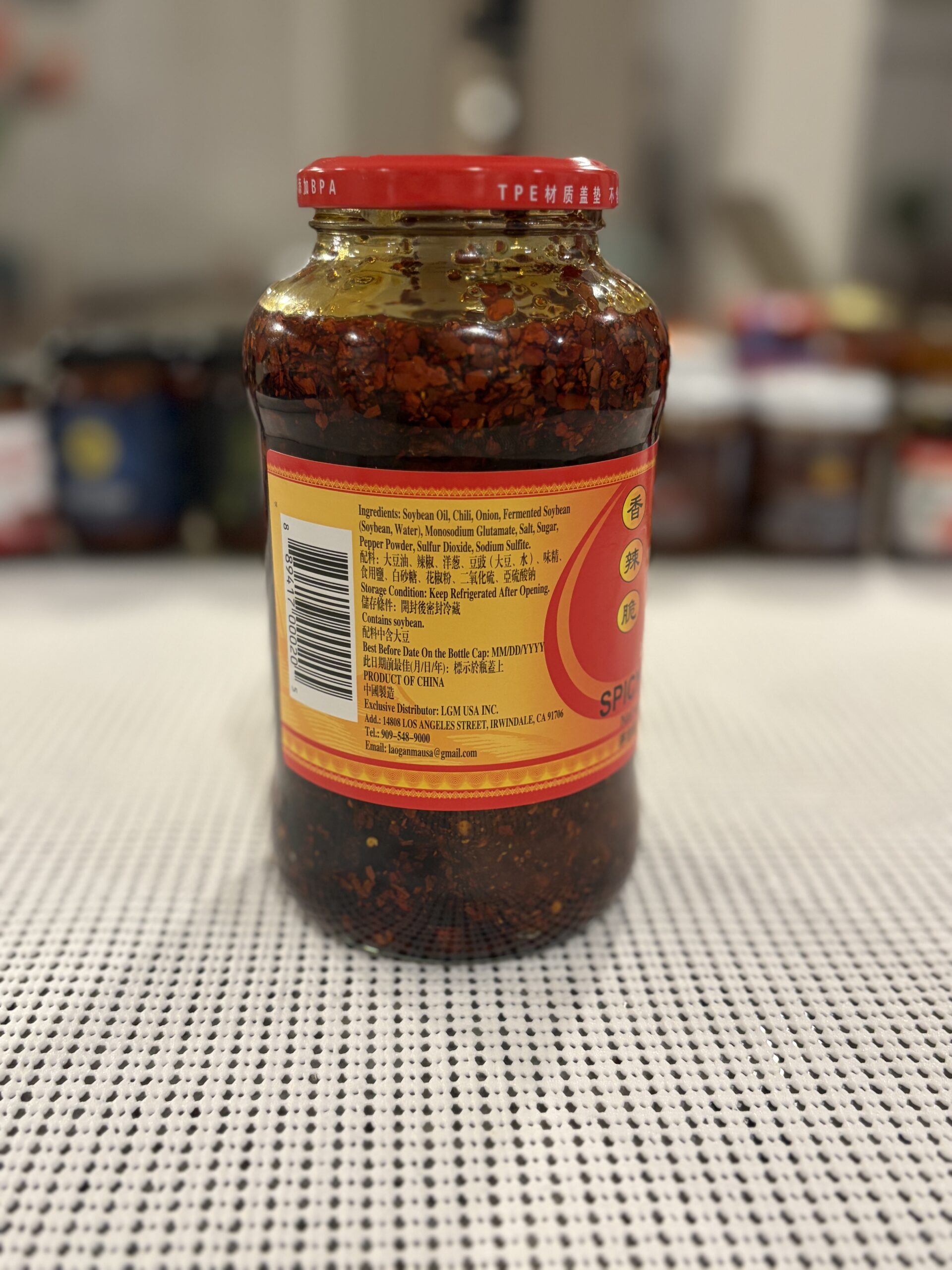
Pick up any jar of chili crisp and flip it around. Read the ingredient list. If you see “soybeans” — especially high on the list, ahead of garlic, ahead of chili flakes, sometimes right after the oil — you’re looking at a product that’s using legumes to fake crunch volume.
This isn’t a food safety issue. It’s not a health thing. It’s a quality thing. Soybeans in chili crisp are cheap, bland filler that take up space where more interesting ingredients could be. And once you know what to look for, you’ll see them everywhere.
I started paying attention to this when I noticed that some jars felt heavy with solids — fork didn’t sink, looked packed — but the flavor was flat. The crunch was there, technically. The taste behind it wasn’t. That disconnect almost always traced back to soybeans doing the heavy lifting in the bits department.
What Soybeans Are Doing in the Jar
Soybeans in chili crisp aren’t there for flavor. They’re there for mass. A fried soybean is cheap to produce, holds up structurally in oil, and gives the jar a visual density that looks like crunch. Shake a soybean-heavy jar and it feels substantial. Fork through it and you hit resistance. Looks promising.
Then you eat it. The soybeans are bland. They have a generic fried-legume taste — slightly nutty, mostly nothing — that adds zero flavor complexity to the product. They chew like small pebbles. They don’t dissolve on warm food the way fried garlic does. They don’t release oil or aroma. They just sit there, taking up real estate.
The real problem is displacement. Every soybean in the jar is space that could have been fried garlic, fried shallot, chili flake, or sesame seed. Those ingredients actually contribute something — aroma, sweetness, heat, nuttiness. A soybean contributes volume. That’s it.
Think of it this way: if you scraped all the soybeans out of a jar and replaced them with fried garlic chips, the product would taste dramatically different. If you did the reverse — replaced the garlic with soybeans — the product would taste like less. That asymmetry is the whole issue. Soybeans are interchangeable with air in terms of what they bring to the flavor equation.
I flag this in my guide to crispy bits as one of the clearest quality signals in the category: what’s making the crunch? Fried aromatics and chili = good. Fried soybeans = filler.
Why Brands Use Them
Cost. That’s the whole story.
Soybeans are one of the most heavily produced crops on earth and among the cheapest legumes on the planet. A brand can fry them in bulk for a fraction of what it costs to fry garlic or shallots, which require peeling, slicing, and careful frying to get right. Garlic burns in seconds if the oil is too hot. Shallots need to be sliced thin and fried in controlled batches to get that crispy-not-burnt result. Soybeans don’t care. Drop them in hot oil, pull them out, done. They’re forgiving, consistent, and cheap at scale.
For mass-market products that need to fill millions of jars a year at a retail price under $5, soybeans are the answer to a math problem: how do you make the jar look full without spending the money on real ingredients?
When soybeans appear high on the ingredient list — second or third, ahead of garlic, chili, or shallots — they’re not a seasoning. They’re the primary solid component. The label is telling you exactly what the crunch is made of. Most people just don’t read it.
There’s a perception issue too. Consumers associate a heavy jar with quality — more stuff in there, more value. Soybeans solve that perception problem cheaply. The jar feels dense. It looks packed with “bits.” Open it up and you see a lot of solids. It’s only when you eat it and compare it to a jar full of actual fried aromatics that the difference becomes obvious.
This is the same logic behind filler ingredients in processed food generally. It’s not malicious. It’s economics. But when you’re paying $8-12 for a premium chili crisp, you deserve to know whether the crunch is coming from something that tastes like something.
How to Spot Soybeans in Chili Crisp
Ingredient lists are ordered by weight. The first ingredient is always the most abundant. In chili crisp, that’s almost always oil (which is fine — the oil type matters, but oil being first is expected). What comes after the oil tells you what the product actually is.
Here’s what to look for:
| Label Position | What It Means |
|---|---|
| Soybeans in the top 3 | Primary solid ingredient. The “crunch” is mostly filler. |
| Soybeans in positions 4-6 | Significant component but not dominant. Check what’s above them. |
| Soybeans near the bottom | Minor inclusion. Not driving the texture. |
| No soybeans listed | The brand is using other ingredients for crunch. Read what those are. |
The word you’ll see is usually just “soybeans” — sometimes “fried soybeans” or “roasted soybeans.” In imported products with bilingual labels, the English translation is required and will list them explicitly. Some labels use “soya beans” (two words) — same thing.
Watch for a related move: soybeans listed and soybean oil as the base. When a product uses soybean oil and soybean solids as the primary crunch, you’re essentially buying soybeans in soybean oil with some chili flakes mixed in. The oil base matters too — and when both the oil and the crunch are soybean-derived, the product is leaning hard on the cheapest ingredient available.
For a full walkthrough of reading chili crisp labels — ingredient order, oil types, sodium context, and what “natural flavor” actually means — I wrote a complete guide to label reading.
What Real Crunch Looks Like
The best chili crisps build their crunch from ingredients that pull double duty — they add texture and flavor. Here’s what the good stuff looks like compared to soybeans:
| Ingredient | Texture | Flavor Contribution |
|---|---|---|
| Fried garlic | Crispy, shattery, dissolves on warm food | Deep savory, caramelized sweetness |
| Fried shallot | Thin, crispy, delicate | Sweet onion, slight caramelization |
| Chili flakes | Varies — thin and papery to thick and chewy | Heat, smokiness, fruity notes depending on variety |
| Sesame seeds | Tiny crunch, pops between teeth | Nutty, toasty |
| Peanuts | Dense crunch, substantial bite | Roasted, rich, slightly sweet |
| Fried soybeans | Hard, dense, generic crunch | Almost nothing |
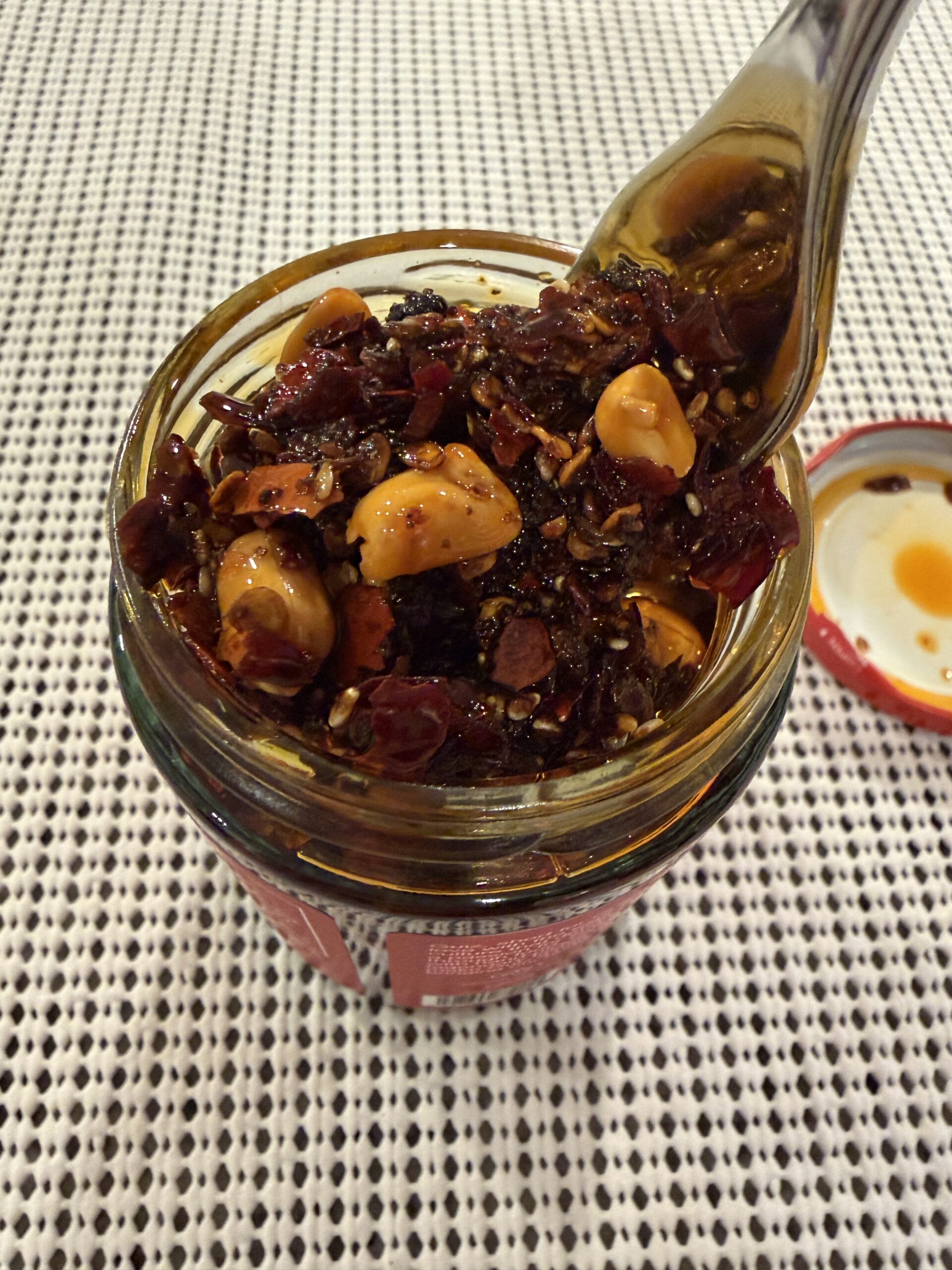
See the difference? Garlic, shallot, and chili each bring a distinct personality. Soybeans bring a body count. The jar feels full, but the flavor doesn’t match the volume.
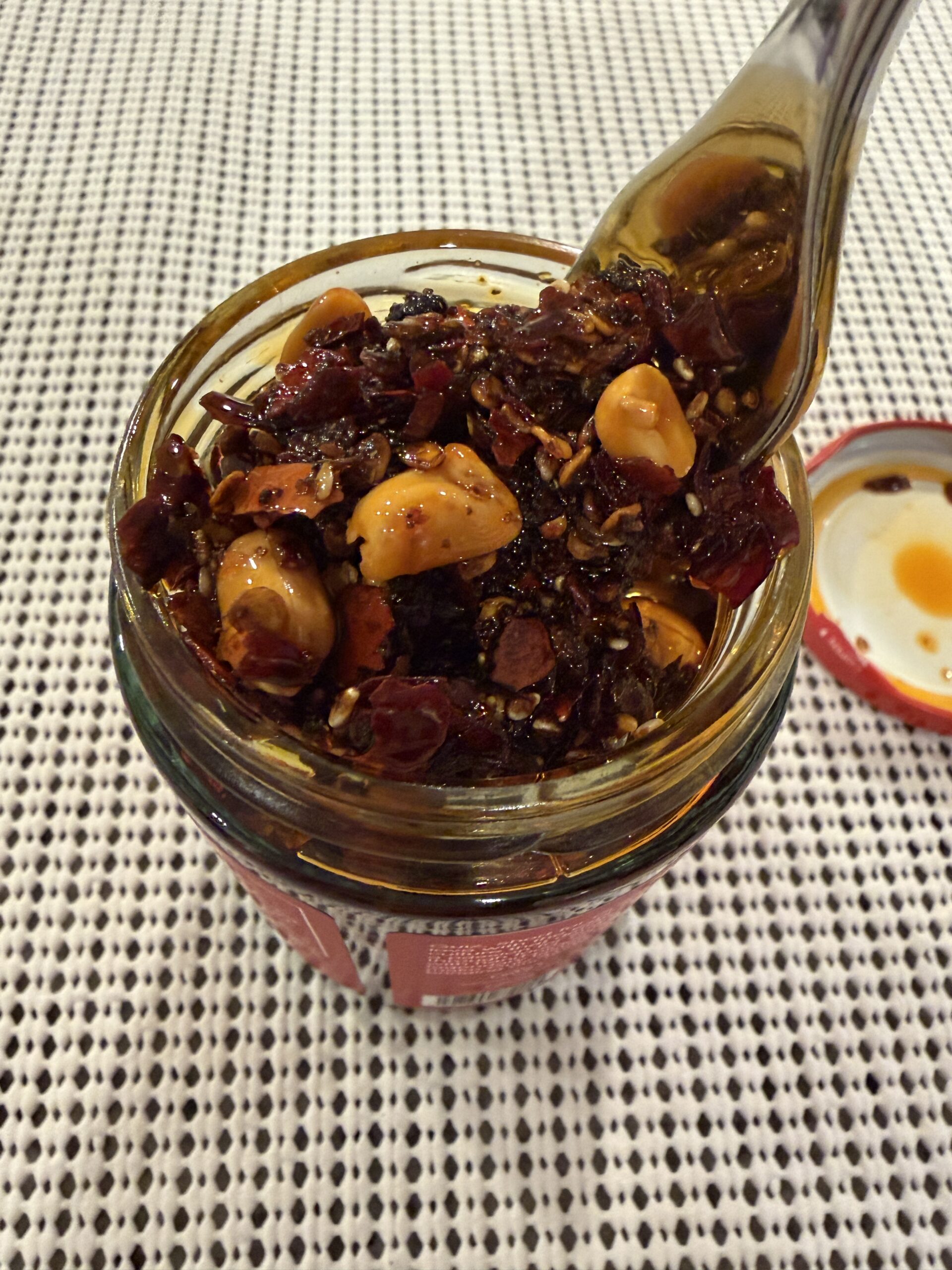
When I review a chili crisp, one of the first things I do is look at the bits on the fork and try to identify what I’m seeing. In a product like GUIZ, the fork comes up with a visible mix — garlic chips, chili pieces, sesame seeds, different shapes and sizes and colors. That visual variety maps directly to flavor variety. In a soybean-heavy product, the fork picks up a uniform mass of similar-looking round bits. Homogeneous on the fork usually means one-dimensional in the mouth.
The Fork Test
You can actually feel the soybean difference before tasting. When I do the fork test — pulling a fork through the jar before the first bite — the behavior tells me something about what’s in there.
In a soybean-heavy jar, the fork moves through consistent resistance. Everything feels the same density. The bits that cling to the fork look uniform — similar size, similar shape, similar color. It’s like dragging through gravel.
In a jar built on fried aromatics and chili, the fork catches different things at different levels. A garlic chip here, a chili flake there, oil that clings differently than it would on a smooth round soybean. The fork tells you about the ingredient diversity in the jar before your tongue does.
I’m not suggesting people stand in the grocery store stabbing forks into jars. But once you get a jar home and open it, before you stir it up: pull a fork through and look at what sticks. If it all looks the same, check the label. Soybeans are probably the reason.
The One Exception
Not all soybeans are filler. Fermented black beans — douchi (豆豉) — are a completely different ingredient that happens to start as soybeans. The fermentation process transforms them into something with deep, funky, concentrated umami. They’re dark, slightly soft, intensely savory, and they’ve been a cornerstone of Chinese cooking for centuries.
If you see “fermented black beans” or “douchi” on a chili crisp label, that’s not filler. That’s a deliberate flavor ingredient — and it’s a quality signal, not a cost-cutting one. Fermented black beans are actually more expensive than plain soybeans because they require time, salt, and controlled fermentation to produce.
GUIZ’s Black Bean Chili Crisp leans into this hard. The fermented black beans are what make it interesting — they add a savory depth that plain soybeans could never provide. It’s the same starting ingredient, completely transformed by process.
The distinction on the label is usually clear. “Soybeans” = filler. “Fermented black beans” or “black bean” (in the context of a Chinese condiment) = quality ingredient. The secondary seasonings guide covers fermented elements in more detail, including how they interact with the other flavor layers in the jar.
What This Means for Your Next Jar
I’m not saying soybeans in the ingredient list automatically make a chili crisp bad. Lao Gan Ma uses soybeans, and it’s the benchmark for a reason — the chili flake volume and the spice blend do enough work that the soybeans aren’t ruining anything. They’re just not adding much either. The product succeeds despite the soybeans, not because of them.
What I am saying: if the soybeans are the primary solid ingredient — if they’re doing most of the crunch work, sitting high on the label, visible as the dominant bit in the jar — the product is leaning on the cheapest possible path to perceived quality. That’s a signal worth factoring into your decision, especially if you’re spending more than $5 on the jar.
Flip the jar. Find soybeans on the label. Note their position. If they’re above garlic and chili, the crunch is mostly filler. If they’re below them or absent entirely, the brand is spending the money on ingredients that actually taste like something.
The best chili crisps don’t need soybeans. They build crunch from ingredients that contribute flavor — garlic, shallot, chili, sesame, peanuts. Those ingredients cost more and require more care to fry properly, which is exactly why the products that use them tend to taste better. You’re paying for what’s in the jar. Make sure you know what that is.
This is the kind of thing that label reading is built for. Not paranoia — just paying attention to what you’re buying. The jar will tell you everything if you read it first.
Frequently Asked Questions
Why are soybeans in chili crisp?
Soybeans are a cheap filler ingredient used to add crunch volume. They’re inexpensive to fry at scale and hold up structurally in oil, but they contribute almost no flavor compared to fried garlic, shallot, or chili flakes.
Are soybeans in chili crisp bad for you?
No — soybeans aren’t a health concern in chili crisp. The issue is quality, not safety. They’re bland filler that takes up space where more flavorful ingredients could be. If you have a soy allergy, check every label carefully, as soybeans are extremely common in the category.
How can I tell if my chili crisp has soybean filler?
Check the ingredient list on the back of the jar. Ingredients are listed by weight. If soybeans appear in the top three ingredients (after oil), they’re the primary solid component and the main source of crunch in the product.
What should chili crisp crunch be made of?
Quality chili crisps build their crunch from fried garlic, fried shallot, chili flakes, sesame seeds, and sometimes peanuts or fermented black beans. These ingredients add both texture and flavor, unlike soybeans which only add volume.
Does Lao Gan Ma have soybeans?
Yes. Lao Gan Ma’s Spicy Chili Crisp contains soybeans. However, the product also has substantial chili flake content and a well-balanced spice blend, so the soybeans aren’t the only thing providing crunch.
Are fermented black beans the same as soybean filler?
No. Fermented black beans (douchi) start as soybeans but undergo a fermentation process that transforms them into a deeply savory, umami-rich ingredient. They’re a premium addition to chili crisp, not filler.
What’s the best chili crisp without soybeans?
Several brands skip soybeans entirely, relying on fried garlic, chili, shallot, and seeds for crunch. Check the ingredient list before buying — products that don’t list soybeans at all are building crunch from more flavorful ingredients.
Does soybean filler affect the tier rating in FIL reviews?
Yes. Soybeans as the primary crunch ingredient is a negative signal for Texture and Ingredient Quality, both weighted High or Critical in FIL’s evaluation. A product with soybean-dominated crunch can still score well on other criteria, but it faces a disadvantage on texture.