
If you’ve spent any time in a grocery store condiment aisle in the last five years, you’ve seen the jars. Red oil. Visible chunks. Labels in multiple languages. Maybe a stern-looking woman’s face. And somewhere in the mix, two words: chili crisp.
So what is chili crisp? Here’s the short version: it’s an oil-based condiment made from fried chilies and aromatics — things like garlic, shallots, and spices — suspended in flavored oil. You spoon it onto food. It adds heat, texture, and flavor all at once. That’s the basic definition, and if that’s all you needed, you’re welcome.
But if you’re here, you probably want more than the basic definition. You want to know what actually separates chili crisp from chili crisp vs. chili oil, why some jars why chili crisp is so expensive $4 and others cost $22, and what’s going on with all those bits floating around in there. That’s what this post is for.
I read the label before I taste anything. It’s a habit from my years as a college athlete and a mild obsession with knowing what I’m actually putting in my mouth. And here’s what I’ve learned: the more you understand about what’s inside a jar of chili crisp, the better you get at picking the right one — without needing to trust a stranger’s taste buds or a brand’s marketing copy.
What Makes Chili Crisp “Crisp”
The word “crisp” is doing all the work in the name, and most descriptions of this condiment skip right past it. The crisp refers to texture — specifically, the fried solids suspended in the oil. In a good chili crisp, those solids should crunch. Fried garlic slivers, shallot pieces, chili flakes, sesame seeds, sometimes fermented black beans or peanuts. When you scoop a spoonful onto rice, the oil carries flavor while the bits provide crunch and substance.
This is the single most important thing to understand about chili crisp: it’s defined by its texture, not its heat. A lot of people assume it’s just another hot sauce. It isn’t. Heat is one factor — and for some products, a pretty minor one. The ratio of crispy solids to oil is what makes a chili crisp a chili crisp, and it’s the first thing I look at when I open a jar.
Let the jar sit undisturbed on a shelf for a day. The oil rises, the solids sink. Look at where the oil line sits. In a product that takes texture seriously, the solids should clearly dominate — the oil layer should be roughly a quarter of the jar or less. If the jar is three-quarters oil with a thin layer of bits at the bottom, you’ve bought flavored oil with some debris in it. That’s a different product.
The quality of those bits matters too. Fried garlic and shallot give you real crunch — the kind that holds up on warm rice or eggs. Soybeans, which show up in a lot of cheaper jars, are often there to bulk up volume on the cheap. They crumble into nothing the second they hit moisture. I look for distinct, identifiable solids. If I can fork through the jar and pick out individual garlic chips and chili pieces, that’s a good sign. If it’s all homogeneous mush, that’s a problem.
The Four Components of Every Chili Crisp
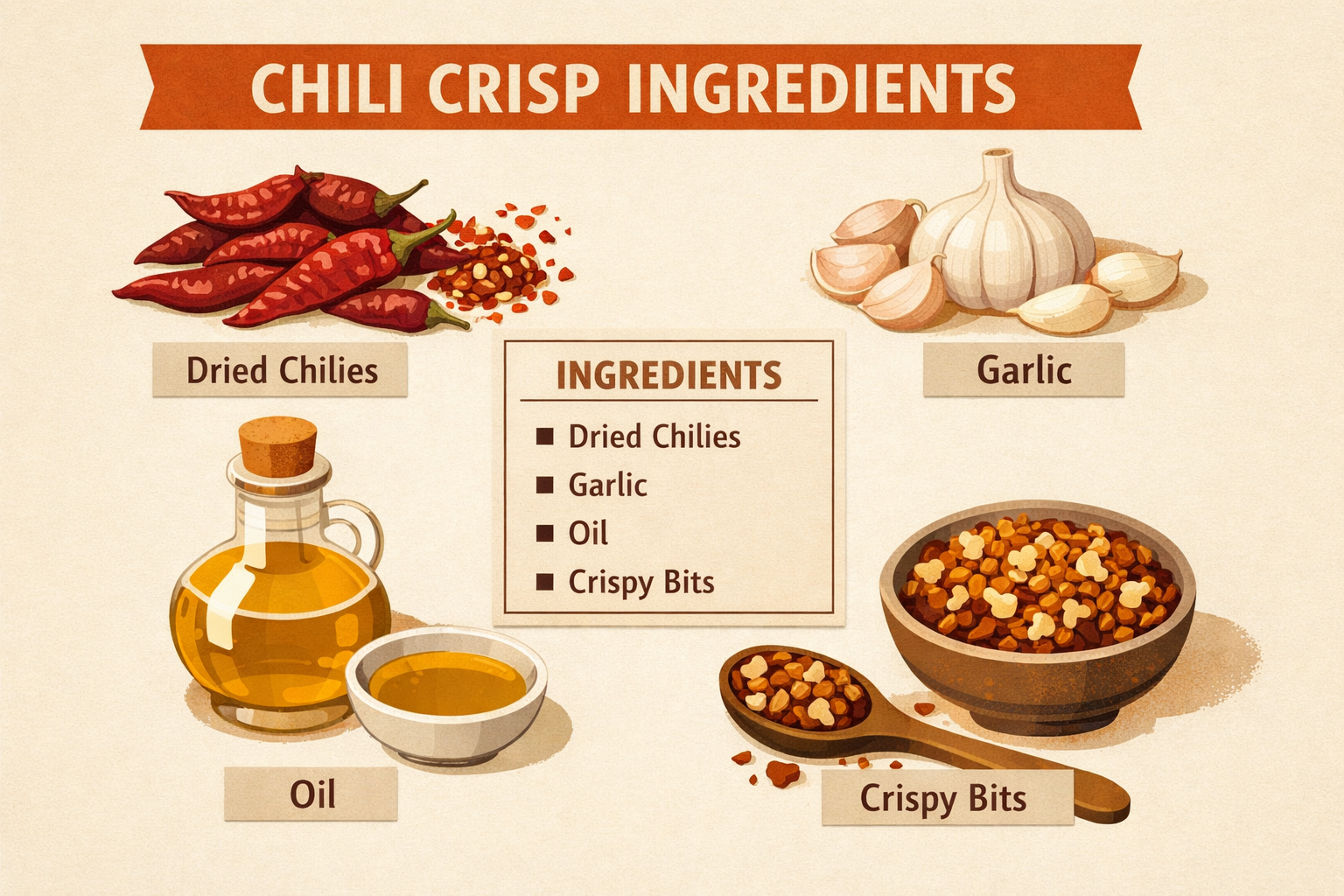
cook with chili crisps and formulas vary — a lot — but every chili crisp is built on four categories of ingredients. Understanding these makes the rest of the category click. If you want to go deeper on any of them, I’ve written a full guide on how to read a chili crisp label that breaks down what each line of an ingredient list actually tells you.
1. The Oil
Oil is the base and the carrier. It dissolves the fat-soluble flavor compounds from the chilies and aromatics, and it’s what makes chili crisp spreadable and spoonable. The most common base oils are soybean, canola (rapeseed), and sometimes sesame or a blend. Premium products might use avocado oil, grapeseed, or olive oil.
The oil type matters more than most people realize. Soybean and canola are neutral — they carry flavor from the other ingredients without imposing their own. Sesame oil adds a distinct nutty, toasty note. Olive oil (common in Italian-influenced chili crisps) brings a fruity, peppery flavor that changes the entire character of the product. When I read a label, the oil listed first tells me a lot about what I’m about to taste.
2. The Chilies
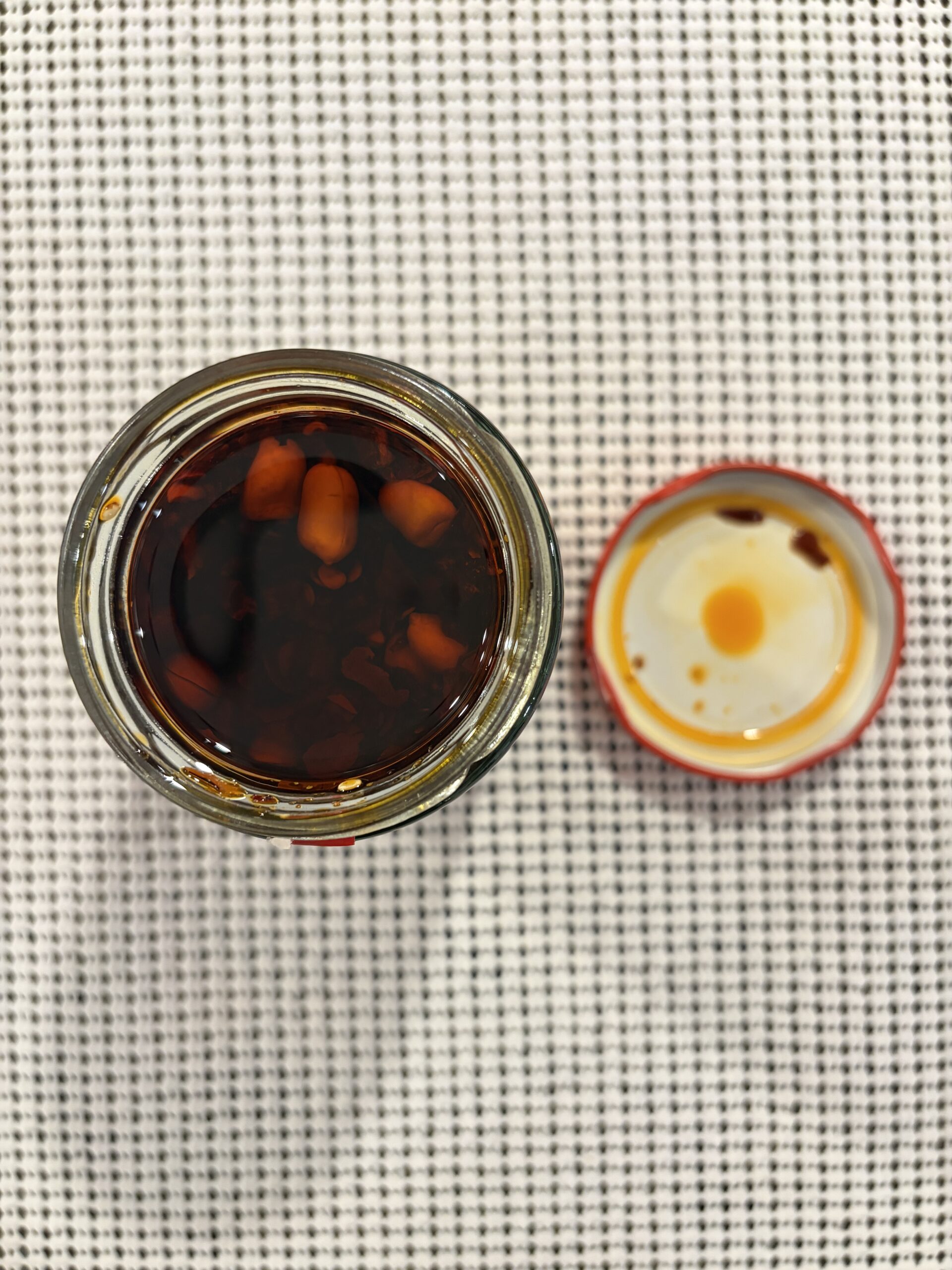
This is where the heat comes from — but it’s also where a huge amount of flavor comes from, and those two things aren’t the same. Different chilies produce different sensory experiences. Sichuan-style chili crisps often use erjingtiao and chaotianjiao peppers alongside Sichuan peppercorn, which isn’t actually a pepper at all — it’s a dried berry from the prickly ash tree that creates a tingly, numbing sensation on your lips called mala. Japanese-style products might use milder chilies with a heavier umami lean. Calabrian-influenced versions bring a fruity, sweet heat from Italian Calabrian peppers.
The chili variety tells you the kind of heat you’ll get, not just the amount. A chili crisp that lists Sichuan peppercorn will tingle. One that lists habanero will burn. One that lists gochugaru (Korean chili flakes) will be mild and slightly sweet. This is something most roundups and taste tests ignore entirely — they rate heat on a one-dimensional mild-to-hot scale, which tells you almost nothing useful. I’ve written a full breakdown of heat types — Sichuan tingle vs. front burn vs. slow build — if you want to understand what different heat sources actually do on your palate.
3. The Crispy Bits
Fried garlic. Fried shallots. Sesame seeds. Peanuts. Fermented black beans (douchi). These are the ingredients responsible for the “crisp” part, and they’re where the texture evaluation lives. Quality crispy bits are distinct, crunchy, and hold their structure even after the jar’s been open for a week. Low-quality bits — or filler ingredients like soybeans — dissolve, soften, or taste like nothing.
The composition of the crispy bits also drives flavor complexity. Fried garlic adds a sweet-savory depth. Fermented black beans bring a funky umami. Peanuts add richness and body. A chili crisp with three or four different solids is going to be more interesting than one that’s just chili flakes in oil.
4. The Seasonings
Salt, sugar, MSG, spices. These are the supporting cast, and they determine whether a chili crisp is one-note or layered. MSG shows up in most chili crisps — it’s a glutamate salt that amplifies savory flavor, the FDA classifies it as generally recognized as safe, and it contains about a third of the sodium of table salt. You’ll also find sugar (which balances heat and rounds out sharpness), star anise, cinnamon, bay leaf, and various other aromatics depending on the regional style. I cover all of these in my guide to secondary seasonings — MSG, sugar, salt, and the rest of the flavor builders.
The seasoning balance is what separates an interesting chili crisp from a boring one. Heat alone doesn’t make a product good. Heat that plays against sweetness, salt, and umami — where no single element overpowers the others — is what makes a product worth buying twice.
Chili Crisp Is Not Chili Oil
This is the category confusion that drives me slightly crazy. Every “best chili crisp chili oil” list on the internet includes chili crisps. Every “best chili crisp” list includes chili oils. They are not the same product.
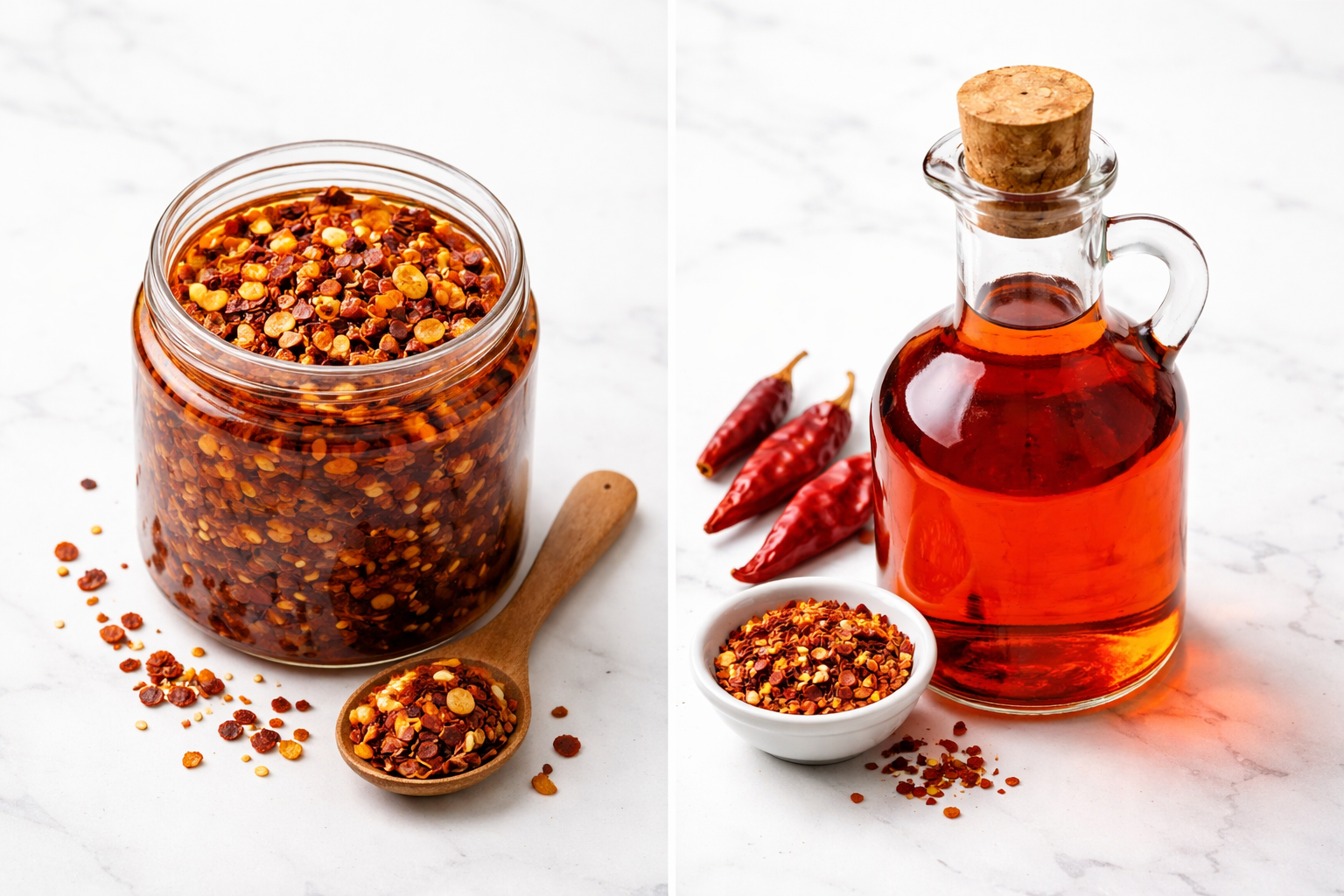
Chili oil is primarily oil — infused with dried chilies and aromatics, sometimes with a few sediment flakes at the bottom, but mostly a pourable liquid. You can cook with it. You drizzle it. It’s a cooking ingredient as much as a condiment. The traditional Chinese version, la you (辣油), has been a kitchen staple for centuries. It comes in several regional varieties — Chinese, Korean, Italian, Thai, and Japanese — each with a different character.
Chili crisp is primarily solids — fried aromatics and chilies suspended in oil. You spoon it, you don’t pour it. It’s almost exclusively a finishing condiment, not a cooking ingredient. The texture is the point.
Dip a spoon into the jar and pull it out. If what comes up is mostly oil with a few flakes clinging to the spoon, you’re holding chili oil. If what comes up is a heaping mound of crunchy bits glistening with oil, you’re holding chili crisp. The distinction isn’t subtle once you know what to look for.
This matters because evaluating them requires different criteria. For chili oil, I care about oil quality, infusion depth, and how it performs under heat. For chili crisp, I care about crunch, solids-to-oil ratio, and flavor complexity of the bits. Rating them on the same scale is like reviewing sneakers and dress shoes with the same rubric.
Some brands — Lao Gan Ma is the obvious example — make both. Their Spicy Chili Crisp and their Fried Chili in Oil are different products with different textures and different uses. If you’ve been buying one thinking it was the other, my label reading guide will clear that up permanently.
Chili Crisp Is Not Hot Sauce
This is the other category line worth drawing clearly. Traditional hot sauce — Tabasco, Cholula, Frank’s, Sriracha — is a liquid. It’s typically vinegar-based, pourable, and designed to add heat to food. The texture of hot sauce is the texture of the food underneath it. Hot sauce disappears into a dish.
Chili crisp doesn’t disappear. It sits on top. It adds its own texture, its own visual layer, its own weight on your tongue. A fried egg with hot sauce is a spicy fried egg. A fried egg with chili crisp is a fried egg wearing a crunchy, oily, savory jacket. They’re serving fundamentally different purposes.
There’s also the vinegar question. Most hot sauces are built on vinegar — it’s the preservative, the sharpness, the tang. Chili crisp typically contains no vinegar at all. The preservation comes from the oil, and the flavor balance comes from the interplay of salt, sugar, umami, and heat rather than acid. If you’re someone who doesn’t love vinegar-forward condiments, chili crisp might be the heat delivery system you’ve been looking for.
The Relatives: Salsa Macha and Chili Oil
Chili crisp belongs to a broader family of oil-based chili condiments that show up across multiple cultures. Two of the closest relatives are worth knowing about, because they share shelf space, overlap in use, and get mixed up constantly.
Salsa Macha
Salsa macha is Mexico’s oil-based chili condiment, originating in Veracruz. It’s built on dried Mexican chilies (morita, guajillo, ancho, árbol), nuts and seeds (peanuts and pepitas are the most traditional), garlic, and oil — often with a splash of vinegar for tanginess. Where chili crisp gets its texture from fried aromatics, salsa macha gets its crunch from nuts and seeds. The flavor profile leans smoky and earthy rather than umami-forward. Some brands market it as “Mexican chili crisp,” which is useful shorthand even if it’s not perfectly accurate. If you want to know what goes into salsa macha at the ingredient level, I’ve written a full label-reading guide for that too.
Chili Oil
As I covered above, chili oil is the pourable, oil-dominant member of this family. It’s a cooking ingredient and a condiment, and it shows up in Chinese, Korean, Italian, Thai, and Japanese kitchens in different forms. Chinese la you, Korean gochugaru oil, Italian olio di peperoncino, and Japanese rayu are all chili oils — same concept, different traditions, different ingredient profiles.
Chili crisp is the youngest of these formats in commercial terms. Lao Gan Ma started mass production in 1997. Chili oils and salsa macha have been kitchen staples in their respective cultures for generations before that. Chili crisp is essentially what happened when someone decided the solids in chili oil were the best part and deserved to be the star of the jar instead of a byproduct.
What “Chili Crunch” Means (and Whether It Matters)
You’ll see jars labeled “chili crisp,” “chili crunch,” “crunchy chili oil,” and various other names. The honest answer is that there’s no induschili crisp starter kit-standard definition separating these terms. Chili crisp and chili crunch are used interchangeably by most brands, and the name on the label has more to do with marketing than with what’s inside the jar.
The naming became briefly controversial in early 2024, when Momofuku attempted to trademark “chili crunch.” The backlash from the Asian food community was swift and sharp — “chili crunch” is a generic descriptor, not a brand name. Momofuku dropped the attempt. The terms remain unregulated and interchangeable.
What I’d pay attention to instead of the name: the ingredient list, the solids-to-oil ratio, and the chili varieties used. Those tell you what the product actually is. The name tells you what the marketing team decided sounded best.
What I Look for in a Chili Crisp
I evaluate every chili crisp I test against the same criteria, weighted by how much each one affects the actual experience of eating it. Here’s the framework, in brief.
| Criterion | What I’m Evaluating | Weight |
|---|---|---|
| Texture / Crunch | Solids-to-oil ratio. Crunch quality. Whether the bits hold up or dissolve. Filler detection. | Critical |
| Flavor Complexity | Layers vs. one-note. Does it develop on the palate or just hit and fade? Balance of sweet, salt, heat, umami. | Critical |
| Ingredient Quality | What the label says. Oil type. Recognizable vs. vague ingredients. No mystery fillers. | High |
| Heat Character | Type of heat — tingly, burning, building. Whether heat adds to the experience or just hurts. | High |
| Aroma | First impression on opening. Does it smell like what it claims to be? | Medium |
| Appearance | Visible oil ratio. Color. Can you see quality ingredients through the glass? | Medium |
| Versatility | Range of foods it works on. Does it do one thing or many? | Medium |
| Packaging | Spoon access. Jar size. Value per ounce. Whether the lid actually works. | Low–Med |
Notice that heat isn’t at the top. It’s important, but it’s not the defining quality. A chili crisp can be mild and still be excellent. A chili crisp can be blazing hot and still be boring. Heat is one variable in a larger equation, and treating it as the headline metric — like most taste tests do — misses the point of the product.
I also don’t score by regional style. A Sichuan-style chili crisp isn’t automatically better or worse than a Japanese-style or Calabrian-style product. I evaluate execution within whatever the product is trying to be. A Japanese rayu-inspired chili crisp that’s mild, umami-forward, and beautifully crunchy can score just as high as an aggressive Sichuan mala bomb — if it delivers on what it’s attempting.
What to Put Chili Crisp On (Specific Answers, Not Vague Ones)
Every description of chili crisp says “put it on everything.” That’s not helpful. Here are specific foods where chili crisp makes an actual difference, based on my experience eating an unreasonable amount of it.
Fried eggs. Spoon it over sunny-side-up or over-easy eggs before serving. The oil mingles with the runny yolk. The bits add crunch to every bite. This is probably the single best entry point for someone who’s never tried chili crisp.
Plain white rice. This is how chili crisp was born — as a way to make simple rice more interesting. A spoonful of chili crisp turns plain steamed rice into a meal. Not a side. A meal.
Noodles. Toss it into hot noodles — ramen, udon, spaghetti, whatever you have. The oil coats the noodles, the bits distribute throughout. It’s an instant sauce.
Avocado toast. I know. But it works. The fat of the avocado, the crunch of the chili crisp, the salt from both — it’s a legitimately good combination and one of the reasons chili crisp crossed over from Chinese pantry staple to mainstream American condiment.
Pizza. Specifically after the oven, not before. Drizzle the oil, scatter the bits. Calabrian-style chili crisps are particularly good here because the olive oil base and fruity chili match Italian flavors.
Vanilla ice cream. This sounds like a gimmick. It isn’t. The salt and heat against cold sweetness creates a contrast that’s genuinely compelling. Not every chili crisp works here — you want one with moderate heat and good flavor complexity, not one that’s going to burn your mouth while you’re trying to enjoy dessert.
Dumplings. The original pairing. Mix chili crisp with a splash of soy sauce and rice vinegar for a dipping sauce, or spoon it straight onto steamed dumplings.
If you follow a plant-based diet, you’ll want to check whether chili crisp is vegan — some jars are, but common ingredients like shrimp and oyster sauce mean you can’t assume.