
Every recipe blog on the internet frames homemade vs. store-bought chili crisp as an obvious choice: make it yourself. Fifteen minutes. Pantry staples. Better than any jar. Cheaper, too. But let’s not rush to conclusions on whether you should make or buy chili crisp
I’ve tested over 25 commercial chili crisps at this point — read every label, evaluated every ingredient list, tracked oil types and crispy bit ratios and filler patterns across the entire category. And my honest conclusion is the opposite of what those recipe posts are selling: for most people, buying a jar is the smarter move.
That’s not a knock on cooking. I love cooking. But chili crisp is a deceptively tricky product, and the gap between “I made flavored oil with some pepper flakes” and what a good commercial jar delivers is wider than the internet lets on.
This isn’t a recipe. It’s a decision framework — when homemade makes sense, when it doesn’t, and what I’ve learned from testing that changes the math.
What Commercial Jars Actually Do Better Than Your Kitchen
This is the part recipe blogs skip. They compare their best homemade batch to the worst jar on the shelf and call it a win. But the good commercial products — the ones I’ve rated GREAT and EXCELLENT — do specific things that are genuinely hard to replicate at home.
Oil Infusion Depth
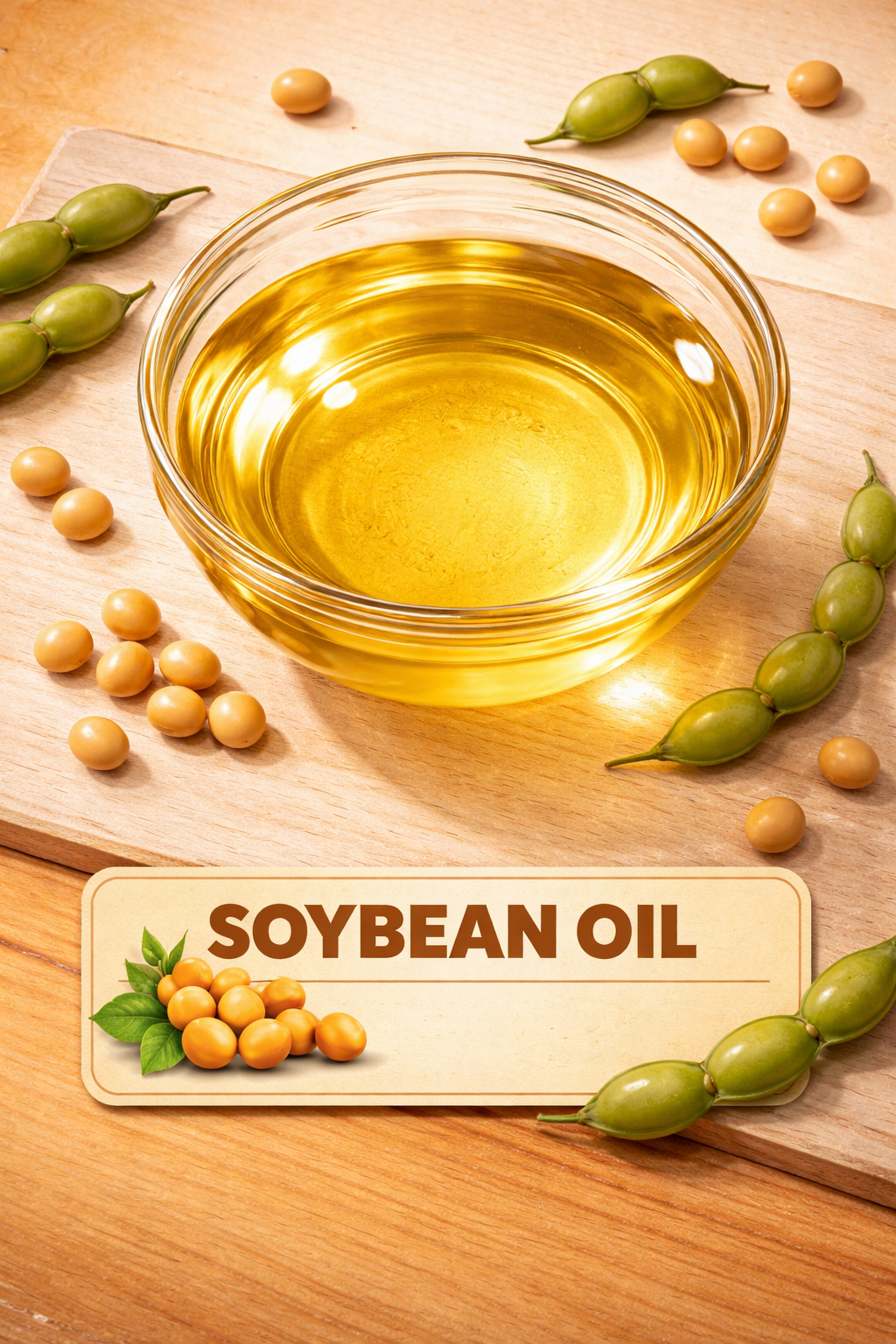
Commercial producers infuse their base oils at controlled temperatures for extended periods. The result is oil that carries flavor on its own — not just heat, but depth. When I taste the oil separately from the bits (something I do in every review), the best jars have oil that does real work. GUIZ’s soybean oil carries Sichuan peppercorn and fermented black bean flavor all the way through. Hotpot Queen’s rapeseed oil has mushroom and peppercorn infused at a level that takes commercial equipment and time most home kitchens can’t match.
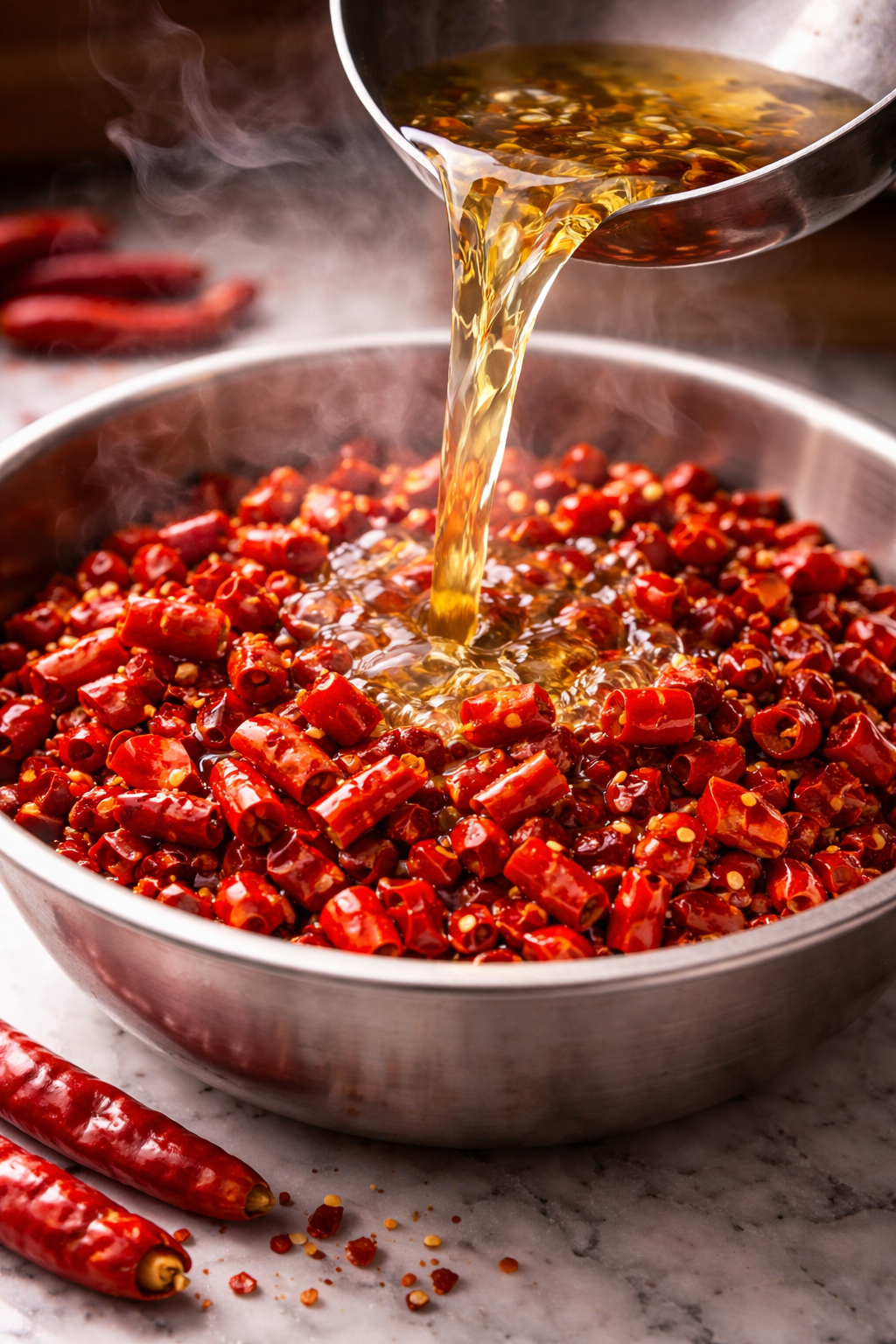
At home, you’re pouring hot oil over chili flakes and hoping for the best. You’ll get heat. You probably won’t get layers.
Crispy Bit Consistency
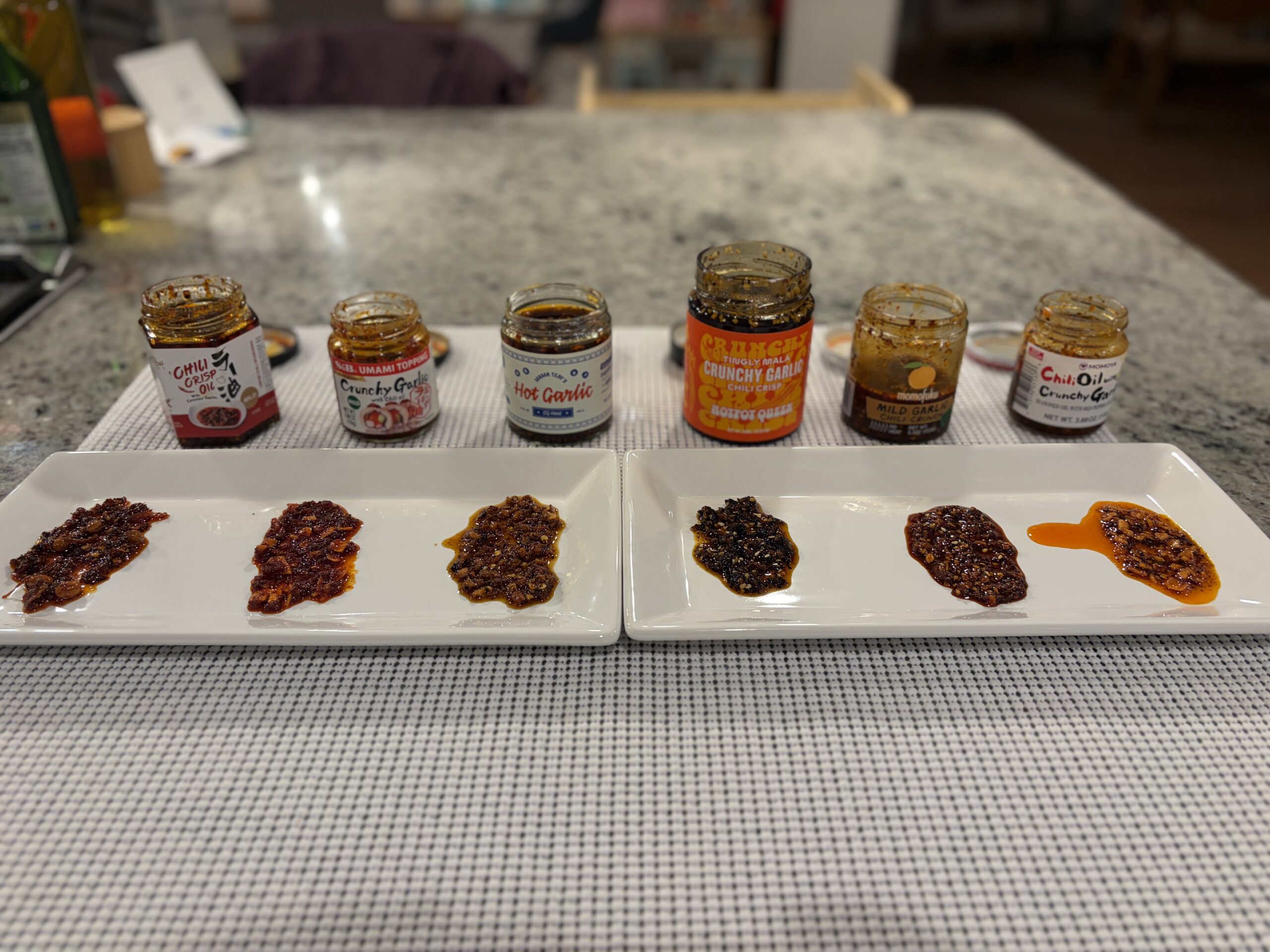
The crispy bits are the whole point of chili crisp — it’s in the name. Commercial fry processes produce uniform texture because they control oil temperature precisely and fry in batches calibrated to the ingredient. The garlic in S&B’s Crunchy Garlic is consistent piece to piece. Trader Joe’s Chili Onion Crunch packs its jar with bits that hold their crunch for months.
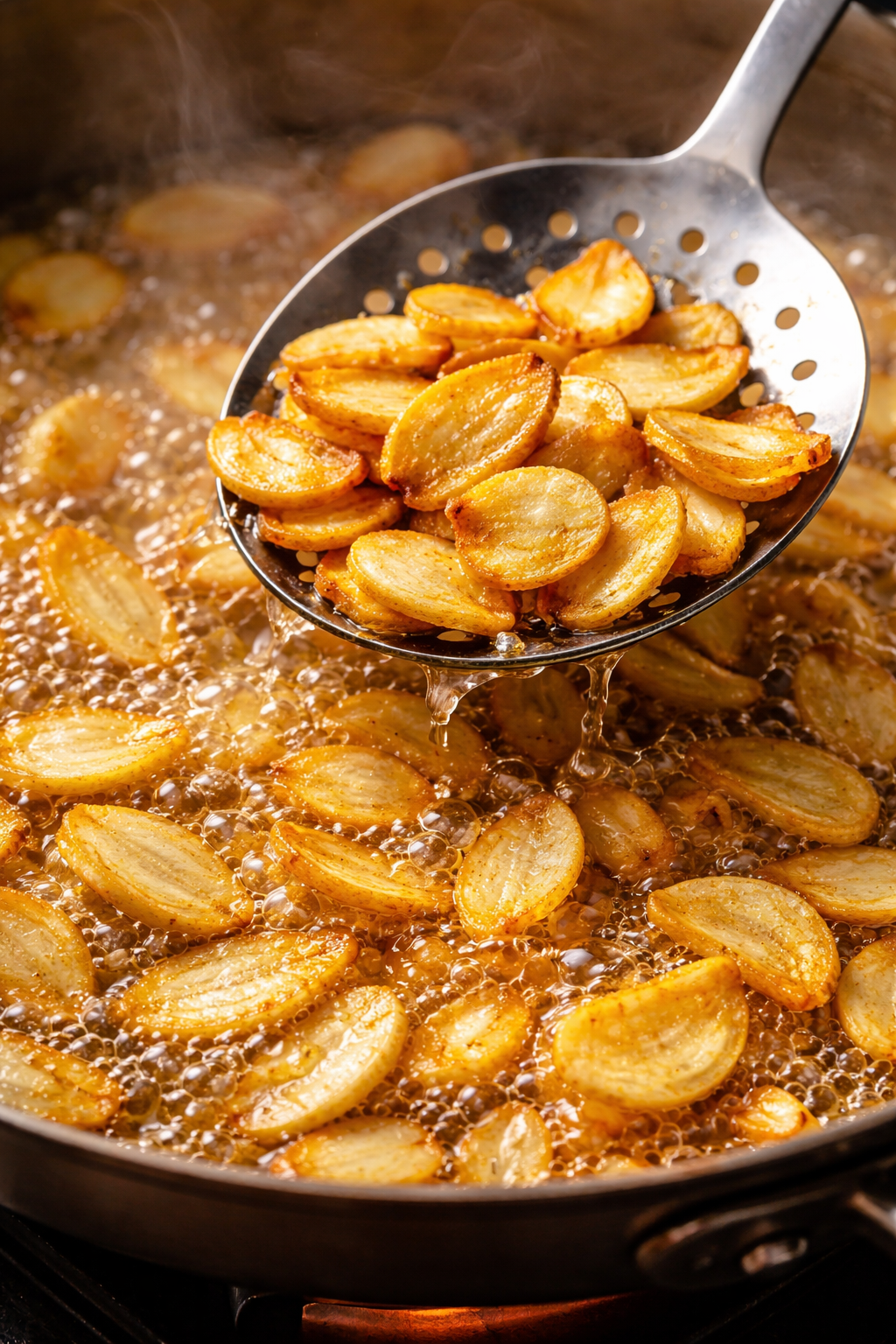
At home, garlic goes from golden to burnt in about eight seconds. Not a metaphor — literally eight seconds of inattention and the batch is bitter. The margin for error on crispy shallots is similarly thin. Recipe blogs call this process “foolproof.” It isn’t.
Shelf Stability
A sealed commercial jar lasts 12+ months. Once opened, most hold up for months in the fridge — I’ve covered this in detail in the refrigeration guide and the shelf life breakdown. Homemade chili crisp? Two to three weeks, max. The moisture content in home-fried aromatics is higher, the oil isn’t stabilized the same way, and your kitchen isn’t a controlled production environment.
If you use chili crisp on everything (and you should), two to three weeks isn’t a lot of runway.
Ingredient Complexity You Can’t Fake
Fermented black beans (douchi) add a savory depth that takes months of fermentation to develop. Mushroom powder — the kind Hotpot Queen and White Elephant use — builds umami without MSG. Sichuan peppercorn at precise ratios creates the numbing tingle (máo) without overwhelming the palate. These aren’t pantry staples for most people. These are specialty ingredients sourced from specific suppliers, combined at ratios refined over production runs.
I’m not saying you can’t buy fermented black beans and Sichuan peppercorn. I’m saying the commercial products that use them have figured out ratios that balance them against everything else in the jar. That takes iteration — more iteration than most home cooks are signing up for.
Where Homemade Chili Crisp vs. Store-Bought Actually Wins
Homemade isn’t pointless. There are real advantages. But they come with conditions that recipe blogs conveniently leave out.
Freshness of Aromatics
Fresh-fried garlic and shallots, straight out of the oil, have an aroma and snap that no jar matches. This is the single strongest argument for homemade, and it’s legitimate. If you eat chili crisp within 48 hours of making it, the freshness factor is real.
The asterisk: that freshness fades fast. By day five, your homemade batch is approaching what a jar tastes like on day one. By day fourteen, it’s worse — the bits have softened, the oil has oxidized slightly, and you’re in “use it or lose it” territory.
No Fillers
When you make your own, there are no soybeans bulking up the crispy bits, no “natural flavor” standing in for actual ingredients. You control exactly what goes in. For people with dietary restrictions or allergies, this is a real advantage — you know exactly what’s in the jar because you put it there.
Customization
Want more garlic? Double it. Can’t handle heat? Skip the Sichuan peppercorn. Need it nut-free? Easy. Homemade lets you dial every variable. That flexibility is genuine, and for people who need it, it matters.
The Hidden Costs of DIY
Here’s where the “it costs $2 a batch” math falls apart.
Ingredient Procurement
The simple recipes — red pepper flakes, pre-dried garlic, olive oil — produce something closer to flavored oil than actual chili crisp. If you want to match what a good commercial jar delivers, you need facing heaven chilies, Sichuan peppercorn, dried arbols, star anise, possibly fermented black beans, mushroom powder, and a specific base oil. These aren’t at your local grocery store.
You’re ordering from specialty retailers — Mala Market, Amazon, maybe an H Mart run if you’re lucky enough to live near one. And these ingredients come in bulk. A bag of facing heaven chilies is 8 ounces minimum. Sichuan peppercorn comes in 4-ounce bags. You’re committing to making multiple batches before you’ve made your first one. If batch one doesn’t work out, you’ve got a shelf full of specialty ingredients and no Plan B.
Fry Risk Is Real
Chili crisp is a deceptively delicate product. You’re frying aromatics in oil at temperatures where the window between “perfect” and “ruined” is measured in seconds. Garlic burns fast. Shallots go from golden to acrid while you’re reaching for the strainer. Over-fry your chilies and the whole batch is bitter — and you won’t know until you taste it, because the color change is subtle until it’s too late.
Under-fry and your “crispy” bits are chewy. This is worse than it sounds — chewy bits in oil don’t improve with time. They get soggier.
Recipe blogs call this a “quick and foolproof 15-minute process.” Anyone who’s actually stood over a pot of 350°F oil trying to pull garlic chips at the exact right second knows that’s not the whole story. You’re working with dangerously hot oil and tight timing windows. A failed batch costs you ingredients, time, and possibly a burn.
The Honest Math
The “$2 per batch” figure floating around the internet assumes you already own every specialty ingredient and you’re only counting the marginal cost of what goes into one jar. That’s like saying a home-brewed beer costs 50 cents if you don’t count the equipment.
In reality, your startup cost for quality ingredients — the kind that produce something comparable to a GOOD-tier commercial product — runs $30-50 depending on what you already have. If your first batch doesn’t work out (and it probably won’t be perfect), you’ve spent more than a jar of GUIZ at $11.98 with nothing to show for it.
Meanwhile, Lao Gan Ma runs $19.95 for 26.63 ounces — that’s $0.75 per ounce for a product that has been refined over decades. Hotpot Queen at $14.99 for 10.58 ounces gives you mushroom powder, dual peppercorn, and shiitake at $1.42 per ounce. These are products with ingredient complexity that took commercial R&D to develop. The honest comparison isn’t “my batch vs. a jar.” It’s “my batch, my time, my failed attempts, and my ingredient investment vs. a jar that’s ready now.”
The Decision Framework
I’ve tested 25+ commercial jars, read every label, and tracked what separates the good ones from the average ones. My take: buying is the right call for most people. The best commercial chili crisps deliver complexity, consistency, and value that homemade can’t touch without serious commitment. But homemade does make sense for a specific type of cook. Here’s how to figure out which one you are.
Buy When…
You want Sichuan-level complexity. Fermented black beans, precise peppercorn ratios, layered infused oil — this is what the GREAT and EXCELLENT tier jars deliver, and it takes production-level iteration to get right. If this is the flavor you’re chasing, buy GUIZ Original or Hotpot Queen and save yourself the learning curve.
You use chili crisp occasionally. A jar lasts months. A homemade batch lasts weeks. If you’re reaching for it a few times a week rather than every meal, the shelf life of a commercial product is a practical advantage.
You want variety across styles. Japanese-style, Sichuan, Calabrian, Thai-inspired — each has its own regional tradition, its own oil base, its own approach to heat. Buying lets you explore the whole map without mastering each style from scratch.
You value your time honestly. “Fifteen minutes” doesn’t include shopping for specialty ingredients, cleaning up oil splatter, or the batches that didn’t work. A jar is ready when you are.
Make When…
You already have the pantry. If you cook Sichuan food regularly and your cabinet already has facing heaven chilies, Sichuan peppercorn, and fermented black beans — the marginal cost of a batch actually is low. You’re the target audience for those recipe blogs. The rest of us are not.
You enjoy the process. If frying aromatics in hot oil sounds like a good time rather than a risk, and you’re genuinely interested in iterating on your technique, homemade is a rewarding project. Just go in knowing it’s a project, not a shortcut.
You have dietary needs a jar can’t meet. Specific allergies, strict ingredient avoidance, religious dietary laws — if you need total control over what’s in the jar, homemade is the only guaranteed path.
You go through a jar a week. At that volume, the economics of homemade start to pencil out — if you’ve dialed in your technique. But if you’re eating that much chili crisp, you probably also have two or three commercial jars in the fridge. That’s fine. That’s what I do.
Or Do Both
Keep a commercial jar as your daily driver — something reliable, shelf-stable, ready to go. Make a batch when you want that fresh-fried garlic hit for a specific meal. The “homemade vs. store-bought” framing is a false binary that recipe blogs created to justify their posts. The actual answer is: use the right tool for the moment.
If You’re Buying — Where to Start
I’ve reviewed and tiered 25+ products. Here’s the short version for people who just want a jar in their hand:
Best overall: GUIZ Original (EXCELLENT) — $11.98 for 8.11 oz. Sichuan-style, fermented complexity, non-GMO soybean oil that does real flavor work. This is the jar I reach for.
Best value: Lao Gan Ma (GOOD) — $19.95 for 26.63 oz puts it at $0.75/oz. Forty years of refinement in a jar. Not the most complex, but it’s the benchmark for a reason.
Best for variety: The Chili Crisp Starter Kit guide walks through building a multi-jar lineup that covers different styles and heat levels.
The full ranked list lives at Best Chili Crisp: Everything We’ve Tested.
If You’re Making — What I’d Put in the Jar
This isn’t a recipe — I don’t publish recipes. But after reading 25+ ingredient lists and tracking which components separate the top-tier products from the average ones, I can tell you what matters.
Oil base: Rapeseed or soybean oil for traditional Sichuan flavor. Avoid olive oil unless you’re going for a Calabrian or fusion style — it has a strong flavor that fights the chilies. Grapeseed is neutral but boring.
Chilies: Facing heaven chilies (erjingtiao) for the classic Sichuan profile — fruity, moderate heat, beautiful color. Supplement with Thai bird’s eye for sharper heat if you want it. Crushed red pepper flakes alone won’t get you there.
Crispy bits: Fried garlic and fried shallot are the foundation. Add sesame seeds for texture. Peanuts if you want a Sichuan classic profile. Avoid soybeans as filler — they add volume but not flavor.
Seasoning layer: Sichuan peppercorn is non-negotiable for tingle. Mushroom powder for umami depth. A small amount of sugar to balance. MSG is optional but effective — most commercial products use it, and the science is clear on its safety. Salt last, adjusted to taste.
A deeper dive on mapping commercial ingredients to DIY decisions is coming — stay tuned.
The Bottom Line
The internet wants you to believe homemade chili crisp is a 15-minute shortcut to something better than any jar. After testing 25+ commercial products, I don’t buy it — pun intended. The best jars deliver complexity, consistency, and convenience that most home kitchens can’t match without significant investment in ingredients, technique, and practice.
Homemade appeals to a specific type of cook: someone who already has the pantry, enjoys the process, and goes through enough chili crisp to justify the effort and the risk. For everyone else — and that’s most of us — the jar is the better call. The good ones are really good. Start there.
Frequently Asked Questions
Is homemade chili crisp better than store-bought?
It depends on what you mean by better. Homemade has a freshness advantage for the first 48 hours — fresh-fried garlic and shallots have a snap that no jar matches. But that freshness fades within days. The best commercial jars (GREAT and EXCELLENT tier) deliver oil infusion depth, crispy bit consistency, and ingredient complexity that most home kitchens can’t replicate without specialty ingredients and precise technique.
How much does it cost to make chili crisp at home?
The often-cited ‘$2 per batch’ figure only counts marginal ingredient cost and assumes you already own everything. If you’re starting from scratch with quality ingredients — facing heaven chilies, Sichuan peppercorn, fermented black beans, proper oil — your initial investment runs $30-50. Factor in failed batches (likely on your first attempt) and the per-jar cost climbs well above buying a commercial product like Lao Gan Ma at $0.75 per ounce.
How long does homemade chili crisp last?
Homemade chili crisp lasts about 2-3 weeks in the refrigerator in a sealed jar. Commercial jars last 12+ months sealed and several months after opening. The difference comes down to moisture content in home-fried aromatics and the lack of commercial stabilization processes.
Is making chili crisp difficult?
It’s more difficult than recipe blogs suggest. The frying step is the critical challenge — garlic goes from golden to burnt in seconds, and over-fried chilies make the entire batch bitter. You’re working with oil at 350°F and tight timing windows. Simple versions using pre-dried garlic and red pepper flakes are easier but produce something closer to flavored oil than actual chili crisp.
What ingredients do you need to make chili crisp?
For a basic version: oil, dried chili flakes, garlic, and salt. But to match what a good commercial jar delivers, you need facing heaven chilies (erjingtiao), Sichuan peppercorn, a proper base oil (rapeseed or soybean), fried garlic, fried shallots, sesame seeds, and possibly fermented black beans and mushroom powder. Most of these require ordering from specialty retailers.
What is the best store-bought chili crisp?
After testing 25+ products, GUIZ Original earned Flavor Index Lab’s only EXCELLENT tier — it’s $11.98 for 8.11 oz with Sichuan peppercorn, fermented black bean complexity, and oil that does real flavor work on its own. For best value, Lao Gan Ma at $0.75 per ounce is the category benchmark. The full ranked list is at flavorindexlab.com/best-chili-crisp/.
Should I make or buy chili crisp if I have dietary restrictions?
If you have specific allergies or strict dietary requirements, homemade gives you total control over every ingredient. Many commercial chili crisps contain common allergens (soy, sesame, peanuts) and some include undisclosed ingredients under ‘natural flavor.’ Making your own is the only guaranteed way to know exactly what’s in the jar.