
This post contains affiliate links. I may earn a small commission if you buy through them — at no extra cost to you. My scores are never influenced by this.
TL;DR: Mr. Bing’s Mild Chili Crisp is a crunchy, finely ground condiment that leans hard into dried onion and garlic — like an umami version of everything bagel seasoning. The mushroom powder is interesting, but sweetness and salt flatten everything into one gear. It’s fine. Better options exist at this price. Check price on Amazon.
Mr. Bing Mild Chili Crisp — Beijing Street Cart Meets American Pantry
Mr. Bing brands itself around Beijing street carts — specifically jianbing, the crepe-like street food you’d grab from a sidewalk vendor in China. The jar even has a little street cart silhouette on the label. It’s a fun story. The tagline reads “Taste the flavor of our Beijing street carts,” and the suggested uses include everything from eggs and rice to mixing into mayo, guac, or hummus. But a chili crisp has to deliver in the jar, not just on the label. This is the Mr. Bing mild chili crisp review where I put those claims to the test.
I picked up the Mild and Spicy as a two-pack on Amazon. The Mild is rated 1 out of 5 on their own pepper scale — so we’re not here for the heat. We’re here for everything else. The label also promises “four smoky and fruity peppers” and says to “bring on the crunch with the punch.” That’s a lot of marketing confidence. Let’s see if the jar backs it up.
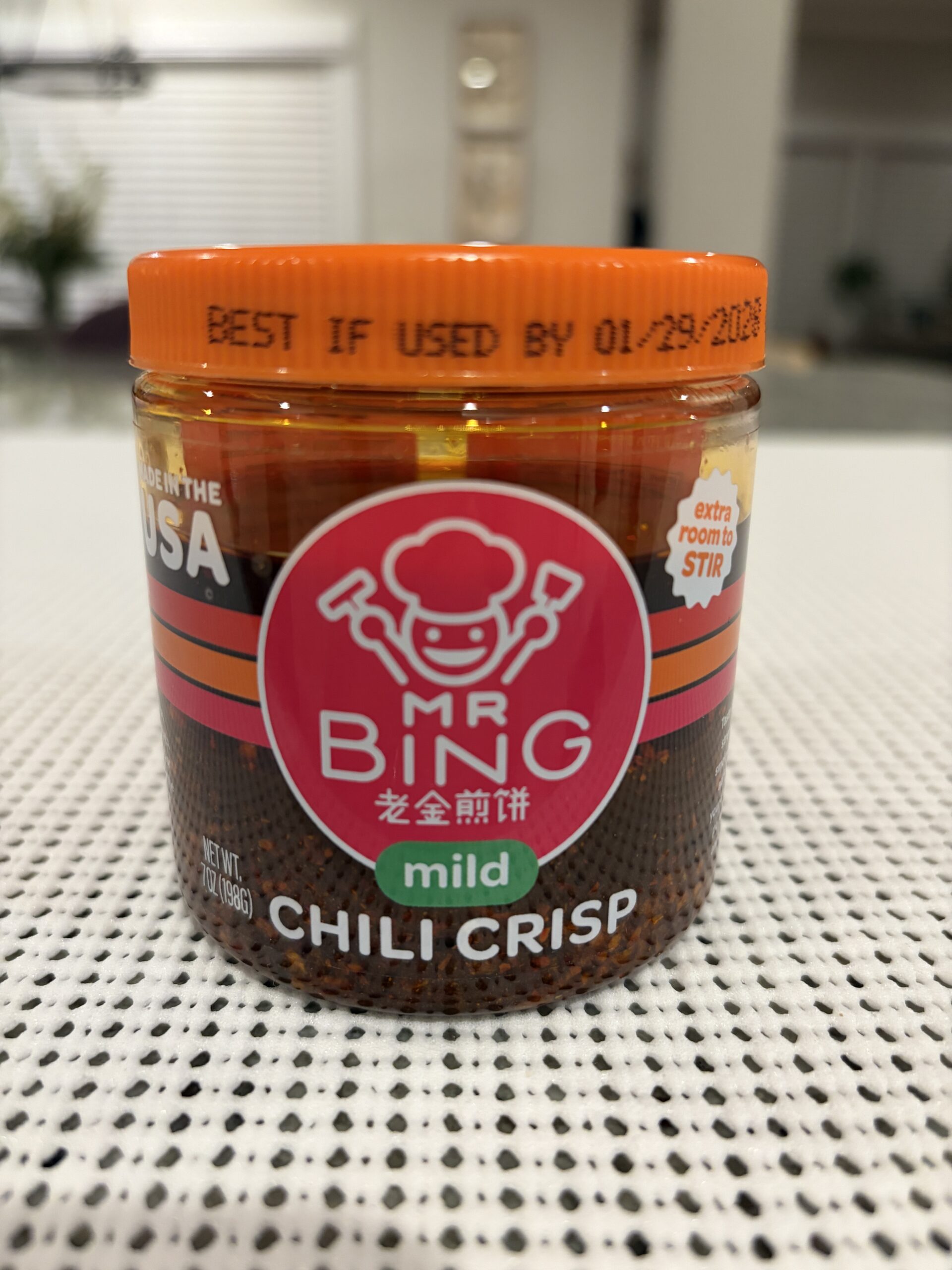
Quick Facts
| Brand | Mr. Bing |
| Product | Mild Chili Crisp |
| Category | Chili Crisp |
| Style | Fusion (Beijing-inspired, Made in USA) |
| Oil | Non-GMO expeller-pressed canola oil |
| Heat | 1 / 5 |
| Price | $9.99 ($18.99 for the 2-pack) |
| Size | 7 oz (label) — see note below |
| Per oz | $1.67/oz (based on ~6 oz actual product) |
| Made in | USA |
| Buy | Amazon |
| Tier | AVERAGE |
About that jar size: The label says 7 oz. The jar itself is only about 80% full — Mr. Bing actually brands this as “Extra Room to Stir,” with a little icon on the label. That’s a clever way to frame 20% headspace. In practice, you’re getting closer to 6 ounces of actual product, which pushes the per-ounce cost from $1.43 to about $1.67. Not a dealbreaker, but worth knowing before you compare shelf prices.
Serving size: 1 teaspoon. I don’t love that. A teaspoon of chili crisp is barely a taste — it signals an oil-heavy product trying to keep the calorie and sodium numbers respectable on the nutrition label. Nobody eats one teaspoon. Calories are 30 per serving with 2g of carbs, including less than 1g of added sugar from that turbinado.
Ingredient Quality — Four Peppers? Let’s Count.
The full ingredient list: non-GMO expeller-pressed canola oil, onions, spices, garlic, rice bran, bell pepper, turbinado sugar, mushroom powder, sea salt, chili peppers (guajillo, gochugaru), Sichuan peppercorn.
The label makes a specific claim: “We’ve fused four smoky and fruity peppers that add heat but aren’t burn-your-face-off spicy.” I count two actual chili peppers — guajillo and gochugaru. Sichuan peppercorn is technically not a pepper at all (it’s a dried fruit from the prickly ash tree), and bell pepper isn’t bringing any heat to the table. So the “four peppers” marketing is generous math at best. That’s the kind of label claim that sounds impressive until you actually read the ingredient list — which is exactly why I read it first.
The ingredient order tells a story too. Onions are second — above garlic, above any chili pepper. That tracks with what I taste: this is an onion-and-garlic product with some chili backdrop. Turbinado sugar is in the middle of the list, which explains the dense, wet-sand sediment. Rice bran is interesting — it’s in both Mr. Bing variants and I suspect it contributes to the uniform fine grind, though whether it’s adding flavor or just bulk is hard to say.
The canola oil is expeller-pressed and non-GMO, which is a step above the cheapest soybean options. Not the most interesting oil choice, but a clean one. Label claims include Non-GMO, Gluten-Free, Vegan, No MSG, No Preservatives, and K Parve (kosher pareve — no meat or dairy). Made in USA.
One thing I noticed: “spices” is listed without a parenthetical breakdown on the Mild jar. On the Spicy version, they specify “spices (white pepper, Sichuan peppercorn)” but hide the chili pepper varieties. The Mild does the opposite — specifies the chilies but hides the spices. Same brand, two labels, different things hidden on each. Some secret sauce in there, maybe, but even the secret sauce doesn’t really come out when you taste it.
Aroma
Umami up front. There’s a mushroomy quality that hits immediately on open — not fishy, but adjacent to something like bonito in a way I can’t fully place. The mushroom powder is doing most of the work here. Get closer and there’s dried garlic and onion underneath, but the umami is the dominant note by a wide margin.
After stirring, the smell doesn’t evolve. No new notes release, no deeper layers open up. What you get when you crack the lid is what you get five minutes later with everything mixed. For comparison, a jar of Lao Gan Ma hits you with toasted chili and fermented depth the moment it opens, and the aroma shifts once you stir. Mr. Bing’s aroma is one note repeated — pleasant, but static.
Appearance and Settlement
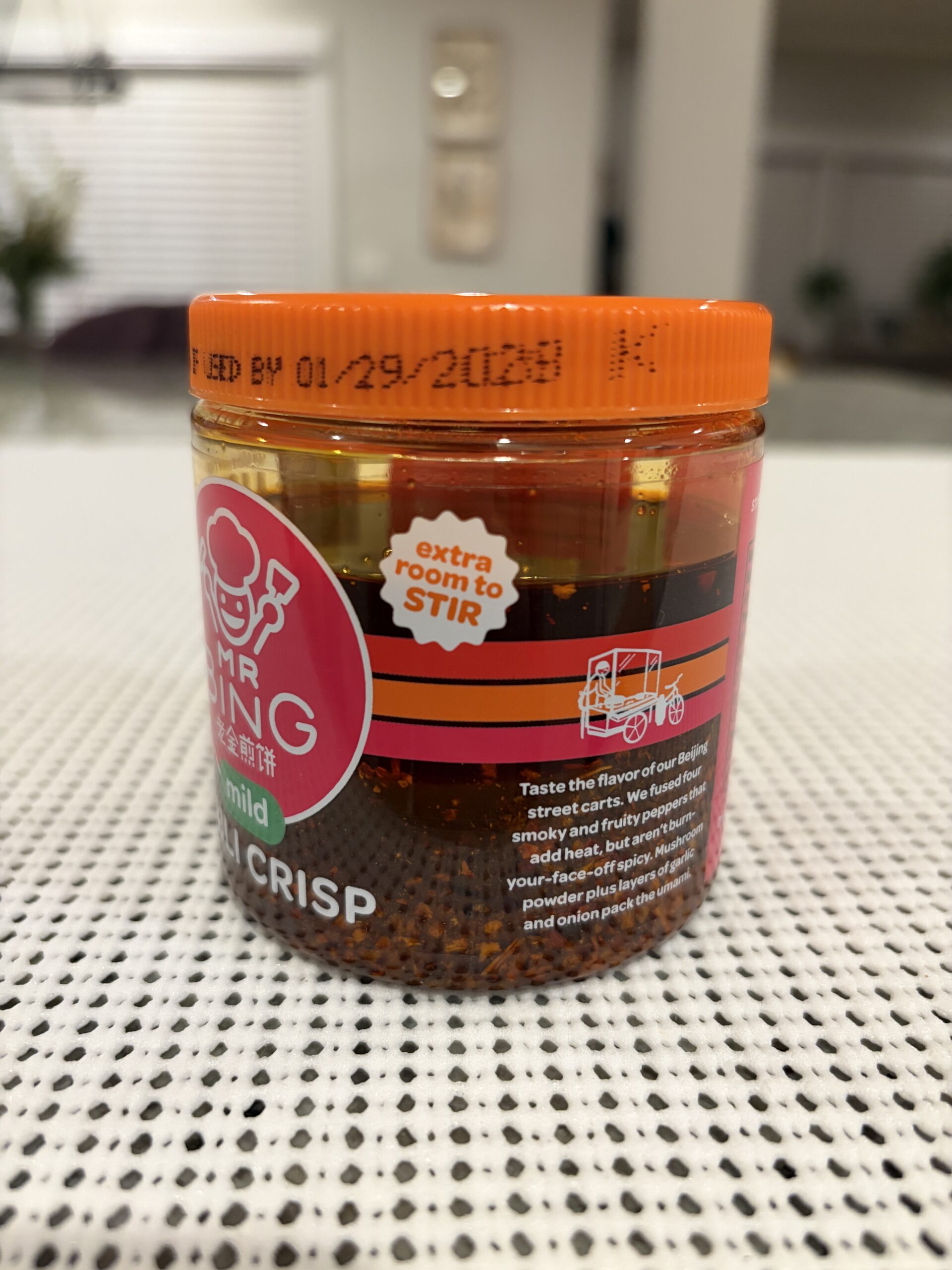
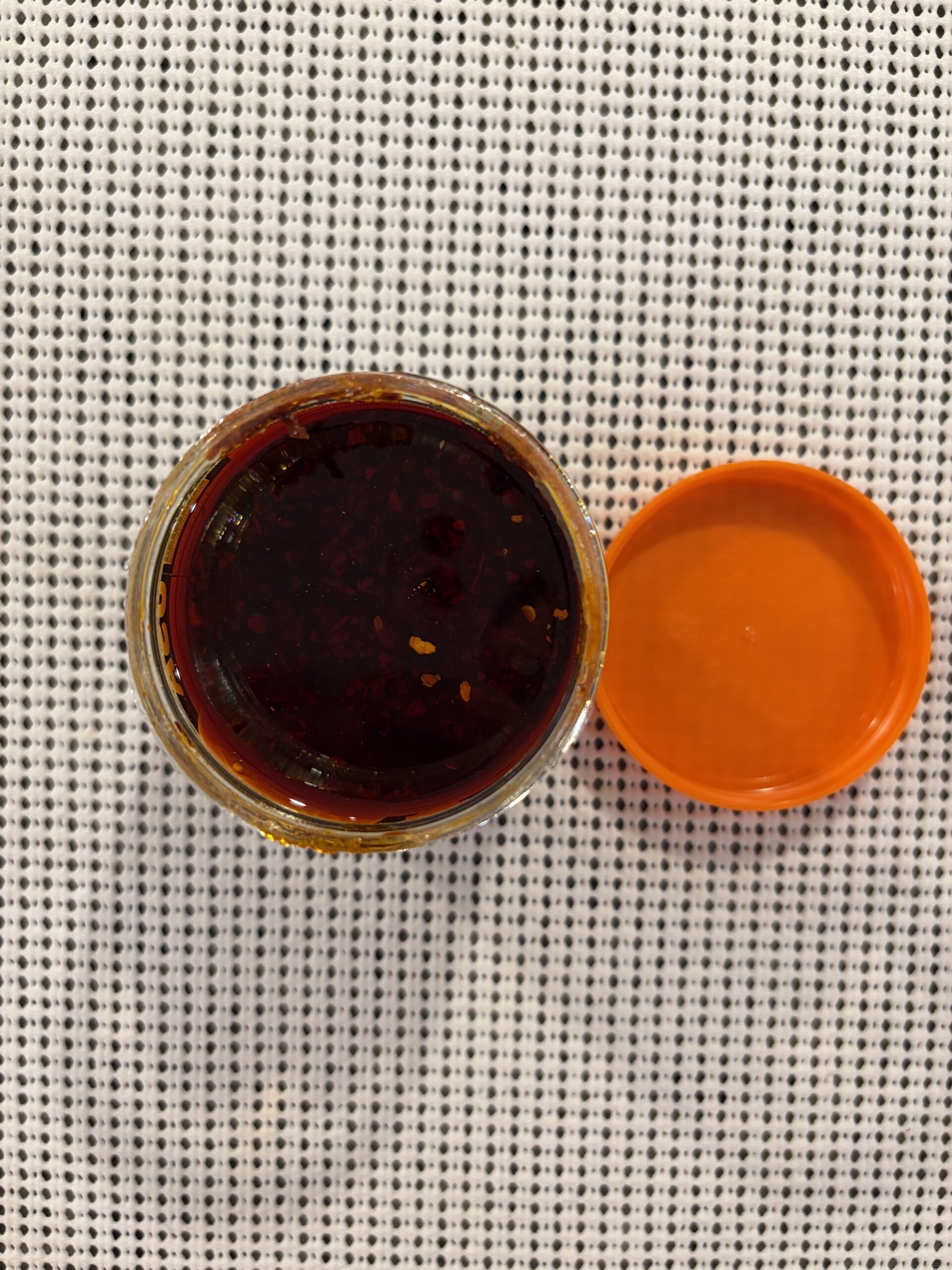
The oil is very dark, rich brown — almost syrupy-looking, what I’d call a motor oil brown. Before stirring, you’re looking at about 66% sediment and 34% oil, with that additional 20% headspace at the top. That’s a solid ratio on paper, but the sediment itself is misleading. It’s packed tight like wet sand — dense and heavy — which is typical when turbinado sugar settles to the bottom. The density isn’t from an abundance of crispy bits; it’s from sugar and fine powder compacting together.
After stirring, the oil doesn’t stay clear. It goes very cloudy immediately, with finely ground particles staying suspended throughout. This is nothing like Lao Gan Ma, where you’ve got huge visible chunks and oil that stays relatively clear. Mr. Bing is uniformly ground to the point where individual ingredients are hard to distinguish — some dried onion, some garlic, possibly light chili pieces, but it all blends together visually. The stirring itself feels thick and sandy, like working through packed wet sediment. A powdery, finer-than-usual substance stays suspended in the oil even after you stop.
Texture and Crunch
Very crunchy. I’ll give it that. Everything in here is super crunchy, and it starts immediately. The bits are very small and uniformly ground — like chewing directly on dried garlic and dried onions. It’s the texture of everything bagel seasoning, but wetter. There’s also a grainy quality underneath the crunch — fine particles that coat your mouth and give it a slightly gritty feel.
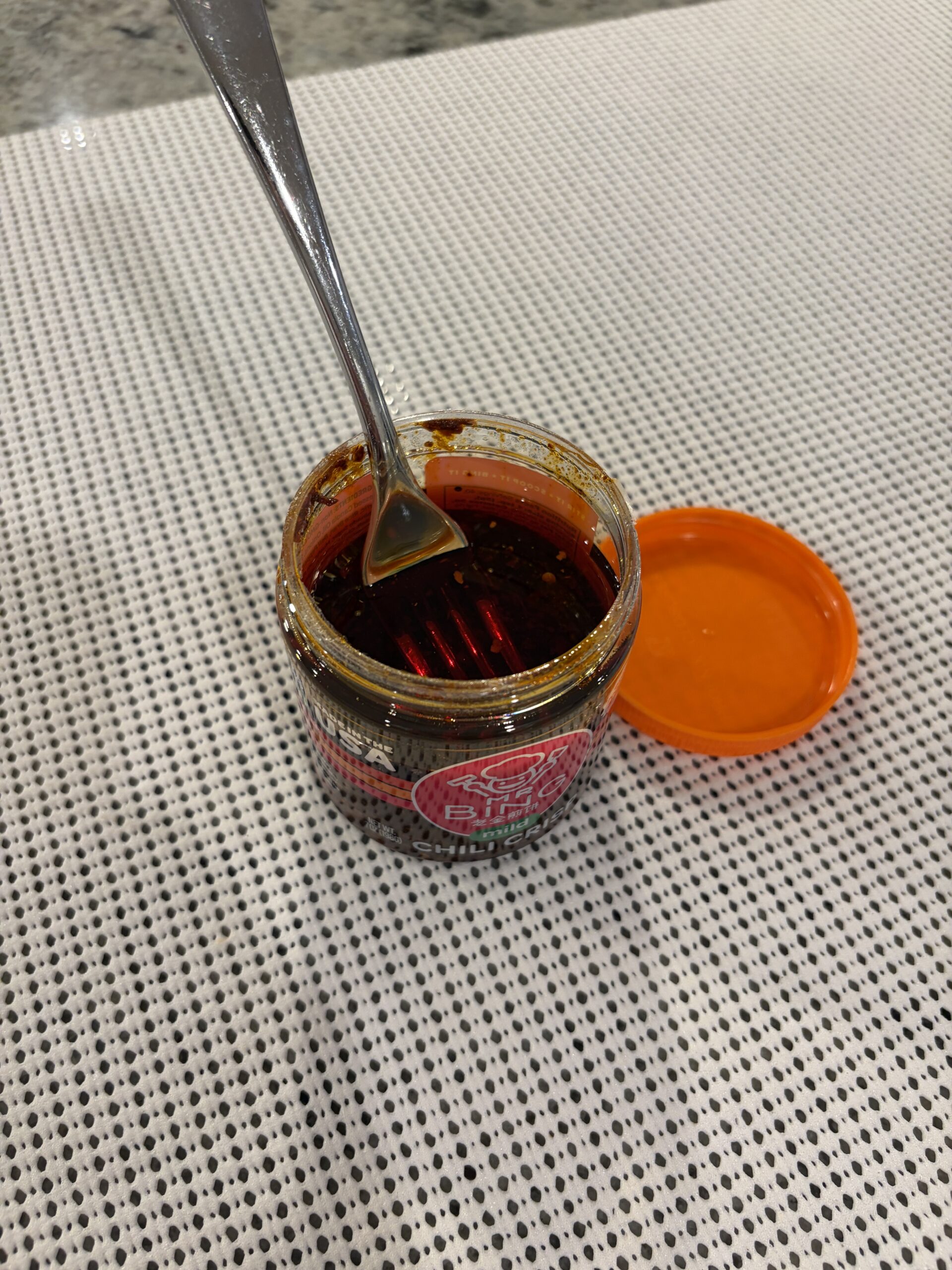
The problem is uniformity. Every bite is the same crunch, the same size, the same texture. There’s no variety — no big piece of garlic to discover, no chili flake that stands out, no seed that pops. It could have benefited from some range in bit size. The Momofuku line has a similar fine-grain approach, and it runs into the same issue: the crunchiness is consistent but not interesting. Compare that to something like Hotpot Queen, where you get different textures in every forkful — that’s what makes crunch engaging over the course of a whole jar.
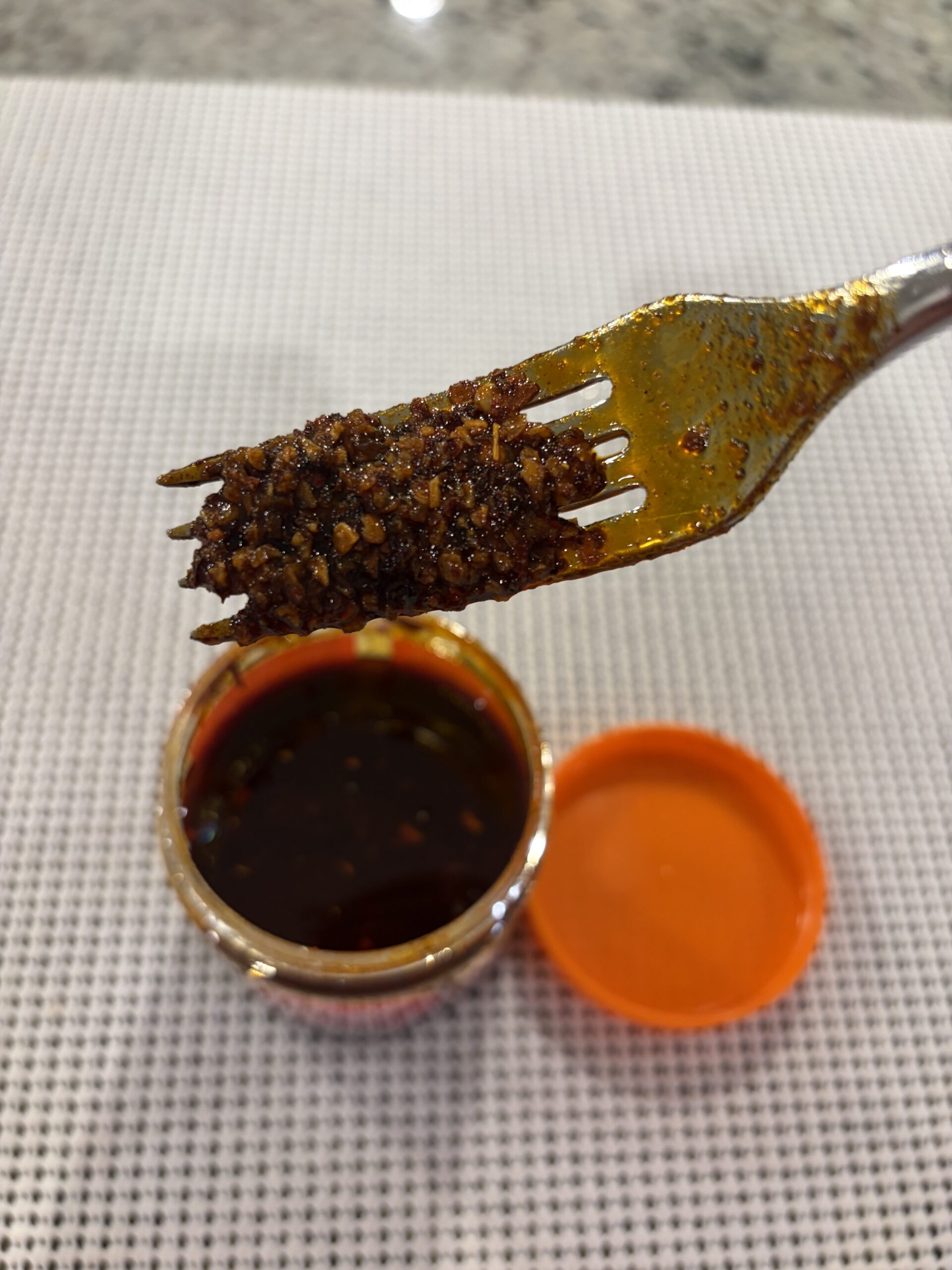
The bits don’t hold up as well as they should, either. That thick, sandy consistency means they’re absorbing oil quickly. On a fork, they spread nicely and don’t clump, but the crunch window — the time between hitting food and going soft — is shorter than I’d like for something branding itself on crunch.
Flavor Complexity — The Everything Bagel Problem
First hit: crunchy. Sweet and salty arrive simultaneously — not one then the other, but both at once, like a wall. There’s umami present — the mushroom powder is doing something — but it gets muted almost immediately by the sweetness and the salt. They all land at the same time, and nothing stands out.
Mid-palate, it’s dried onions and dried garlic, very crunchy. Like they took everything bagel seasoning and made an umami version of it. Salt, sweetness from the garlic and onions, a mushroomy quality underneath. Feels thick in the mouth — not overly oily, which is nice. There’s something shrimpy or bonito-adjacent in there that I can’t identify — probably buried in the unspecified “spices.” Not unpleasant. It’s good. But it’s all happening at once, and by the time you’ve processed the first wave of sweet-salty-umami, there’s nothing arriving behind it. No second act. No flavor that sneaks up on you three seconds later.
The oil alone doesn’t bring much. Salt primarily, slight spice heat, maybe a little umami. Mostly salty. This is a split-jar situation — the oil is a vehicle, not a contributor. The bits are doing all the flavor work, and the oil is just along for the ride. Compare that to something like Fly By Jing, where the oil itself tastes like something — roasted Sichuan peppercorn, chili infusion, depth. Mr. Bing’s oil is closer to the Lao Gan Ma baseline: present but passive.
That mushroom powder is interesting as an ingredient choice, and I can detect it — but it doesn’t get the room it needs to be a real differentiator. The sweetness from the turbinado sugar and the salt just flatten everything into one frequency. You can tell there are layers trying to emerge, but they never separate. Balanced? Maybe. But balanced in a way where nothing stands out is just another way of saying nothing stands out.
Heat
This is the Mild, rated 1 out of 5, and that’s accurate. There’s a slight lingering heat on the tongue after everything else fades — not numbing, no Sichuan peppercorn tingle whatsoever despite it being listed in the ingredients. It’s more of a cayenne-pepper-type warmth. Just a whisper on the tongue. You barely notice it was there when everything else was in your mouth — the heat only reveals itself once the salt and sweetness have cleared out.
For a product that lists guajillo, gochugaru, and Sichuan peppercorn in its ingredients, I expected more character from the heat — not more intensity, but more personality. Guajillo should bring some smokiness. Gochugaru should bring a fruity warmth. Neither comes through in any identifiable way. The heat is just there. Generic. A background whisper with no accent. If you blinded me, I couldn’t tell you what chili was responsible for the heat in this jar.
Use Cases and the Mixing Angle
The label suggests eggs, rice, pizza, pasta, veggies, fish, meats — and then gets creative with “mix with mayo, guac, or hummus.” That last set is actually a more interesting use case than the standard topping suggestions. Mr. Bing’s fine, uniform crunch would distribute well through a dip or spread. It wouldn’t sit on top awkwardly the way bigger-chunked crisps can.
The texture is thick in the mouth — not overly oily, which is nice — and the bits are small enough to spread across food evenly. Dumplings, noodles, guacamole, hummus — anything where you want distributed crunch without overwhelming the host dish. The crunch works as a texture addition to something else, even when the flavor alone doesn’t command attention.
The mixing angle: This is a mixing candidate, not a standalone jar. On its own, the Mild doesn’t have enough going on to justify reaching for it over something like Lao Gan Ma Fermented Soybeans, which would actually bring complementary flavors and offset Mr. Bing’s limitations — the LGM brings fermented depth and bigger chunks, Mr. Bing brings the uniform crunch. I’d also mix this with the Mr. Bing Spicy — the Mild has better flavor balance, the Spicy adds the heat the Mild lacks. Two scoops Mild, one scoop Spicy. See my full comparison for that breakdown.
Versatility and Packaging
The jar itself is functional. The intentional headspace gives you room to stir without overflow, and the bits are fine enough that they re-distribute easily. But the counterpoint: if the jar had more product in it, you wouldn’t need the stirring room. Dense sugar-heavy sediment is the reason stirring is so necessary in the first place. “Extra Room to Stir” is a feature born from a problem the product created for itself.
At $9.99 for about 6 ounces of actual product — $1.67 per ounce — this is mid-range pricing for what you’re getting. Momofuku’s Original runs about the same per ounce and gives you a similar experience: fine-grain, sweet-salty, no MSG, American-made. Neither one is a great value compared to a 7.41 oz jar of Lao Gan Ma at half the price.
The Mr. Bing brand website has recipes and additional context on their jianbing roots. Available on Amazon individually or as a two-pack with the Spicy for $18.99.
Final Verdict
Mr. Bing Mild Chili Crisp delivers crunch and umami, but neither in a way that separates it from the pack. The “four smoky and fruity peppers” label claim doesn’t survive contact with the actual ingredient list or the tasting experience. Mushroom powder is a nice touch buried under too much sweetness and salt. It’s a mixing candidate — blend it with something that has personality, and the crunch becomes useful. On its own, better options exist at this price point. Check price on Amazon.
- Best Chili Crisp: Everything We’ve Tested — See where every jar ranks.
- What to Eat with Chili Crisp — A field guide to pairing by jar style.
- How to Build a Chili Crisp Starter Kit — Three jars, no overlap.
Frequently Asked Questions
What does Mr. Bing mild chili crisp taste like?
Mr. Bing Mild Chili Crisp tastes like an umami version of everything bagel seasoning — heavy on dried onion and garlic with mushroom powder providing a savory base. Sweet and salty hit simultaneously, and the heat is minimal. The texture is very crunchy with finely ground, uniform bits.
Is Mr. Bing mild chili crisp actually spicy?
No. Mr. Bing rates their Mild at 1 out of 5 on their own pepper scale, and that’s accurate. There’s a slight lingering warmth on the tongue, but it’s barely noticeable. If you’re heat-sensitive, this won’t be an issue.
Is Mr. Bing chili crisp vegan?
Yes. Mr. Bing Mild Chili Crisp is labeled Vegan, Gluten-Free, Non-GMO, No MSG, No Preservatives, and K Parve (kosher pareve — no meat or dairy). It’s also made in the USA.
Where can I buy Mr. Bing chili crisp?
Mr. Bing chili crisp is available on Amazon — both individually (around $9.99) and as a Mild + Spicy two-pack ($18.99). The brand website is mr-bing.com.
Mr. Bing mild vs spicy — which one is better?
The Mild actually tastes a bit better because the reduced heat lets more flavor come through. The Spicy adds burn but the heat has no chili character — just generic capsaicin. Both are rated AVERAGE. The best approach is mixing them: two scoops Mild, one scoop Spicy.
What are the ingredients in Mr. Bing mild chili crisp?
Non-GMO expeller-pressed canola oil, onions, spices, garlic, rice bran, bell pepper, turbinado sugar, mushroom powder, sea salt, chili peppers (guajillo, gochugaru), and Sichuan peppercorn.
Is Mr. Bing chili crisp worth the price?
At about $1.67 per ounce of actual product (the 7 oz jar is only about 80% full), Mr. Bing is mid-range pricing for an average product. Lao Gan Ma offers more flavor at roughly half the per-ounce cost. Mr. Bing works best as a mixing ingredient rather than a standalone condiment.