
This post contains affiliate links. I may earn a small commission if you buy through them — at no extra cost to you. My scores are never influenced by this.
TL;DR: Mr. Bing Spicy Chili Crisp brings real heat — but it’s heat with no personality. The burn is generic capsaicin with no identifiable chili character, and it arrives packaged with an aggressive salt-and-sugar one-two punch that buries anything subtle. Same fine crunch as the Mild, same cloudy oil, same one-dimensional experience — just hotter. Check price on Amazon.
Mr. Bing Spicy Chili Crisp — Same Jar, More Burn
This is the other half of the Mr. Bing two-pack. I already reviewed the Mild — crunchy, umami-forward, but flat. The Spicy version rates itself 3 out of 5 on Mr. Bing’s own pepper scale, which is a self-reported medium. The question for this Mr. Bing spicy chili crisp review isn’t whether it’s hotter than the Mild — it obviously is. The question is whether the added heat brings anything interesting with it, or just turns up the volume on the same one-note track.
Spoiler: it turns up the volume. The chili crisp underneath is nearly identical. But the way the heat interacts with everything else changes the experience in ways worth breaking down — not all of them good.
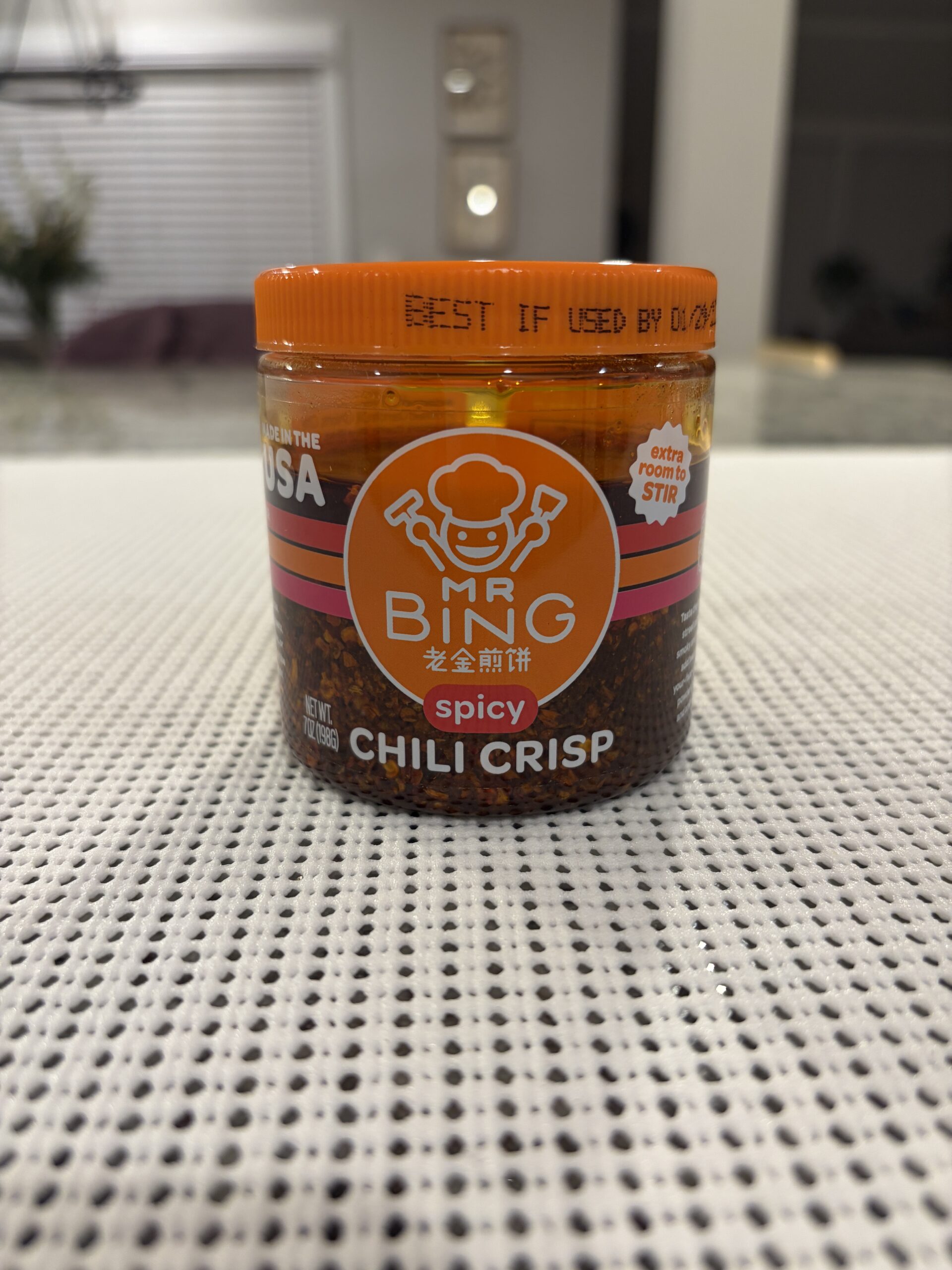
Quick Facts
| Brand | Mr. Bing |
| Product | Spicy Chili Crisp |
| Category | Chili Crisp |
| Style | Fusion (Beijing-inspired, Made in USA) |
| Oil | Non-GMO expeller-pressed canola oil |
| Heat | 3 / 5 |
| Price | $9.99 ($18.99 for the 2-pack) |
| Size | 7 oz (label) — ~6 oz actual product |
| Per oz | $1.67/oz (based on ~6 oz actual product) |
| Made in | USA |
| Buy | Amazon |
| Tier | AVERAGE |
Same jar size issue as the Mild: The label says 7 oz, but the jar is only about 80% full. Mr. Bing brands this as “Extra Room to Stir” — same icon, same headspace, same ~6 ounces of actual product. At $9.99, that’s $1.67 per ounce of what’s actually in there, not the $1.43 you’d calculate from the label weight. Both jars in the two-pack have this gap.
Serving size: 1 teaspoon. Same as the Mild. Still don’t love it. Nutrition looks identical — 30 calories per serving.
Ingredient Quality — What’s the Spicy Hiding?
The full ingredient list: non-GMO expeller-pressed canola oil, onions, chili peppers, garlic, rice bran, turbinado sugar, salt, mushroom powder, spices (white pepper, Sichuan peppercorn).
Here’s what’s interesting. On the Mild jar, they specify the chili pepper varieties — guajillo, gochugaru — but hide the spices behind a generic “spices” listing. The Spicy does the opposite: the spices are specified as white pepper and Sichuan peppercorn, but the chili peppers are just listed as “chili peppers” with no variety breakdown. Same brand, two labels, and they’re hiding different things on each one.
The biggest structural difference from the Mild ingredient list: chili peppers move up significantly in the order. On the Mild, they’re near the bottom — below rice bran, below bell pepper, below turbinado sugar. On the Spicy, they jump to third position, right after onions. That’s a meaningful shift in proportion, and it tracks with what I taste — there’s genuinely more chili material in this jar.
Same turbinado sugar, same rice bran, same mushroom powder, same canola oil base. Salt is listed as “salt” here versus “sea salt” on the Mild — probably the same thing, different label formatting. The rest of the supporting cast is identical. Same label claims: Non-GMO, Gluten-Free, Vegan, No MSG, No Preservatives, K Parve, Made in USA. Same “four smoky and fruity peppers” marketing copy — which I already took apart in the Mild review.
Aroma
Same smell as the Mild. Umami up front — but this one reads more as mushroom umami than the slightly bonito-adjacent note I picked up in the Mild. Not a lot of chili on the nose, which is surprising for a product with chili peppers as the third ingredient. No other notable notes beyond the umami. The aroma doesn’t give you any preview of the heat that’s coming — it smells calm, almost gentle. Misleading, as it turns out.
Appearance and Settlement
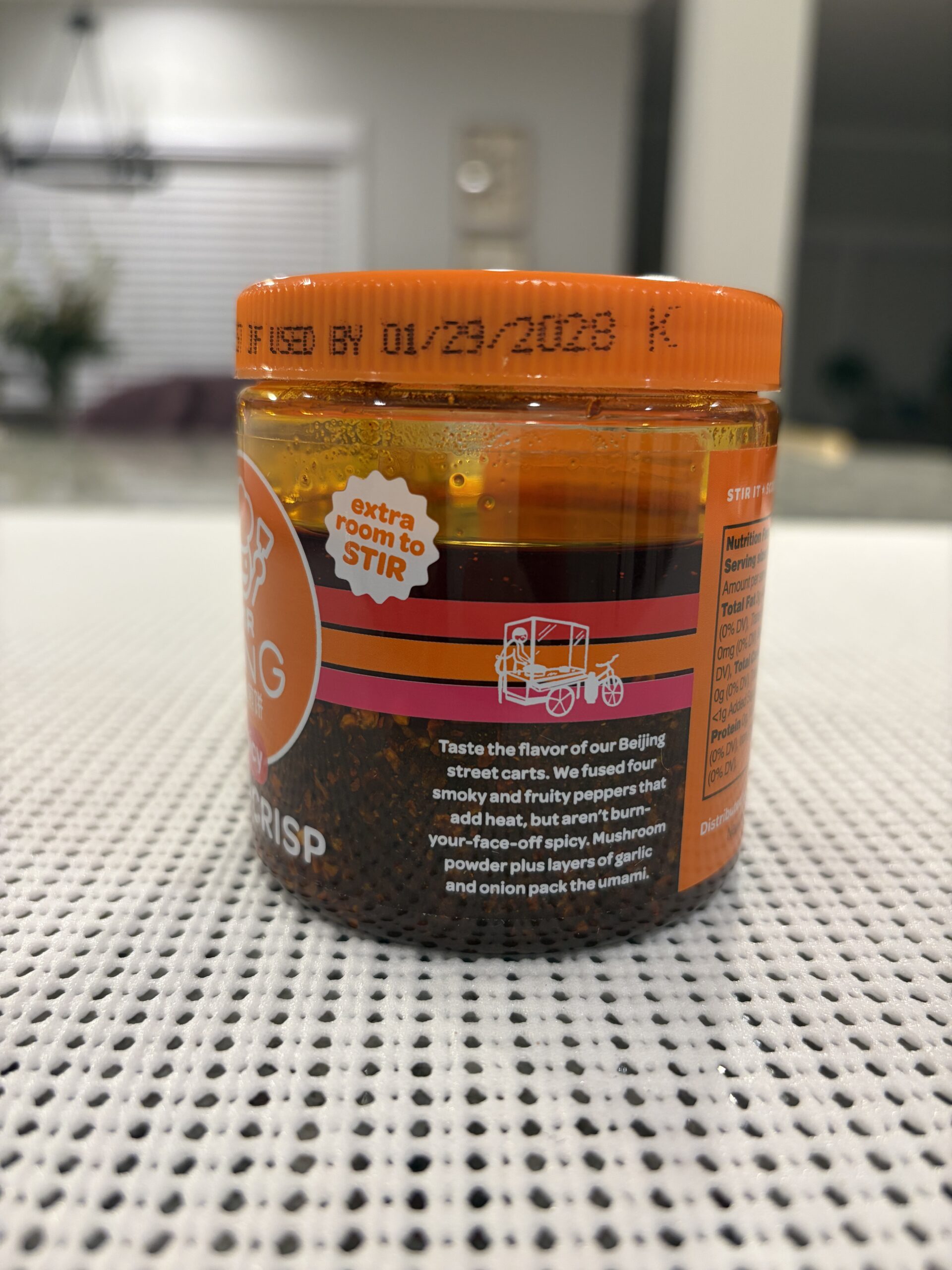
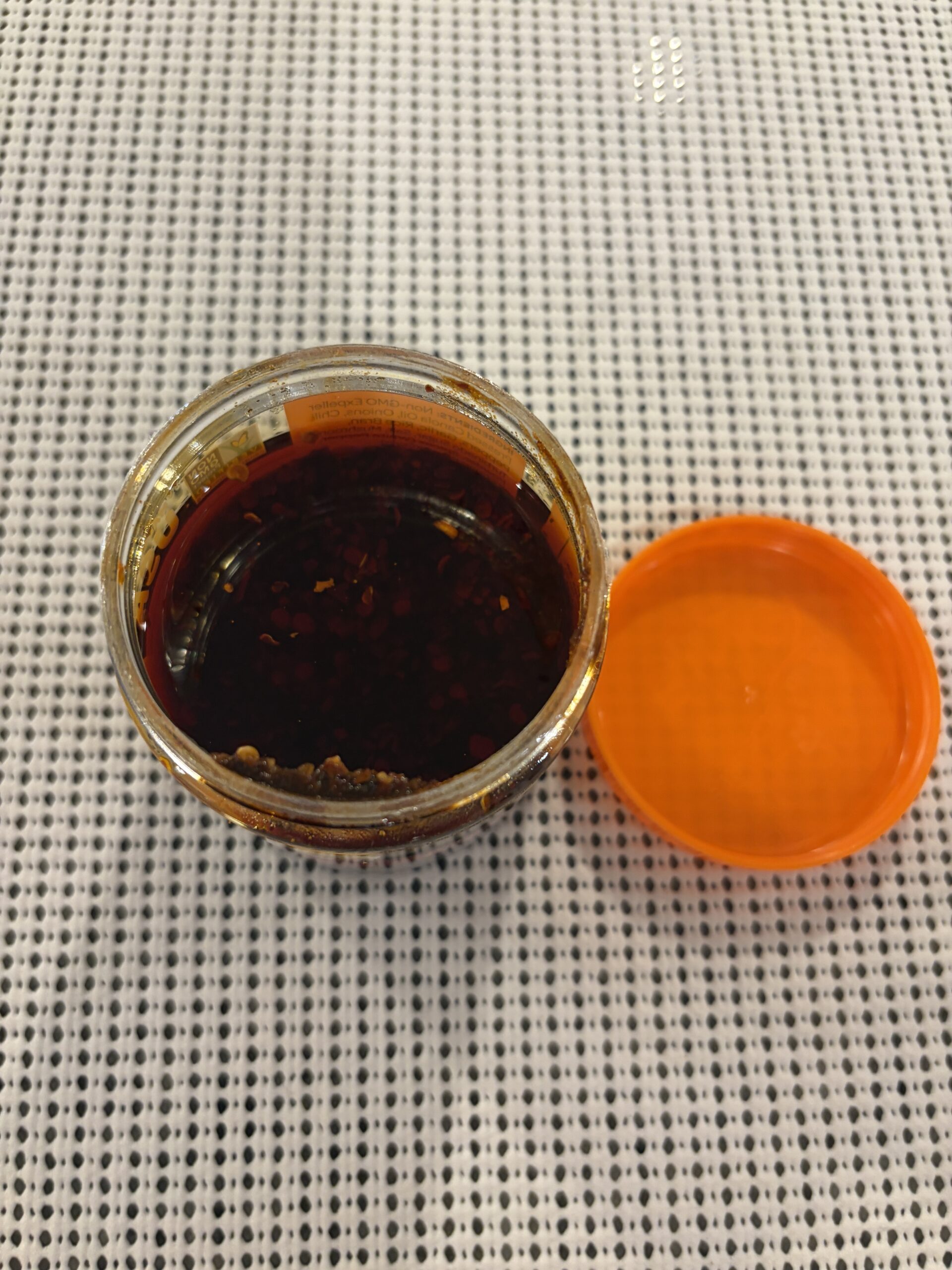
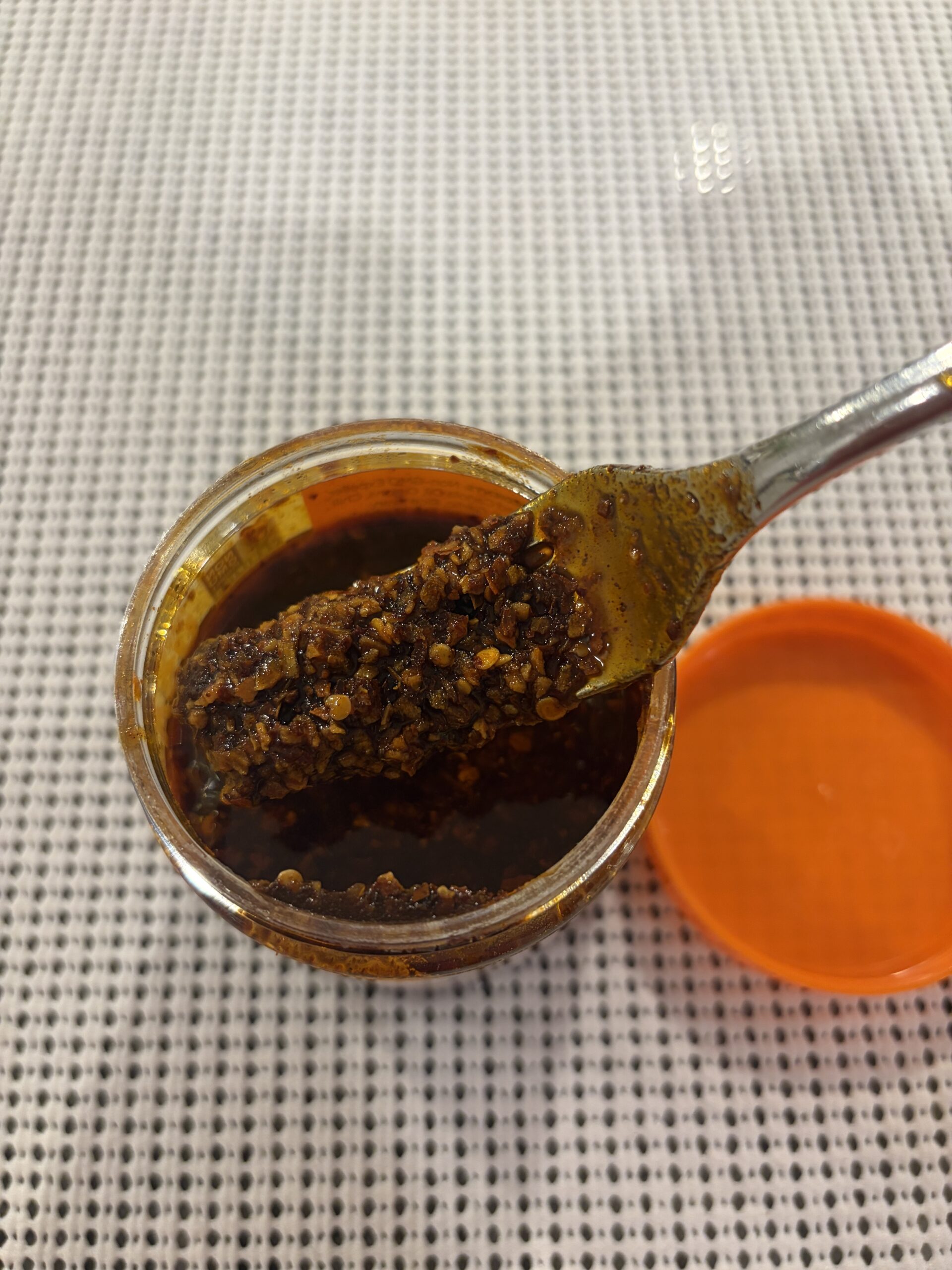
Visually indistinguishable from the Mild. Same dark brown oil, same finely ground bits, same oil-to-bits ratio, same jar fill level, same 20% headspace. Clear oil when undisturbed, goes very cloudy once stirred — identical behavior. Same wet sand texture when working a fork through the sediment. If you swapped the lids, you couldn’t tell them apart by looking.
This is one of those situations where the settlement check doesn’t reveal the differences between two products. Everything that separates the Spicy from the Mild happens on the palate, not in the jar. The same finely ground, powdery bits stay suspended in the oil after stirring — nothing chunky, nothing distinctive, nothing you could point at and say “that’s where the extra heat lives.”
Texture and Crunch
Identical to the Mild — very crunchy, very fine, completely uniform. Same tiny bits that crunch immediately on contact. Same everything bagel seasoning texture. Same lack of variety in bit size. If the Mild was a 7 out of 10 on crunch quality (good volume, bad diversity), the Spicy is the same 7.
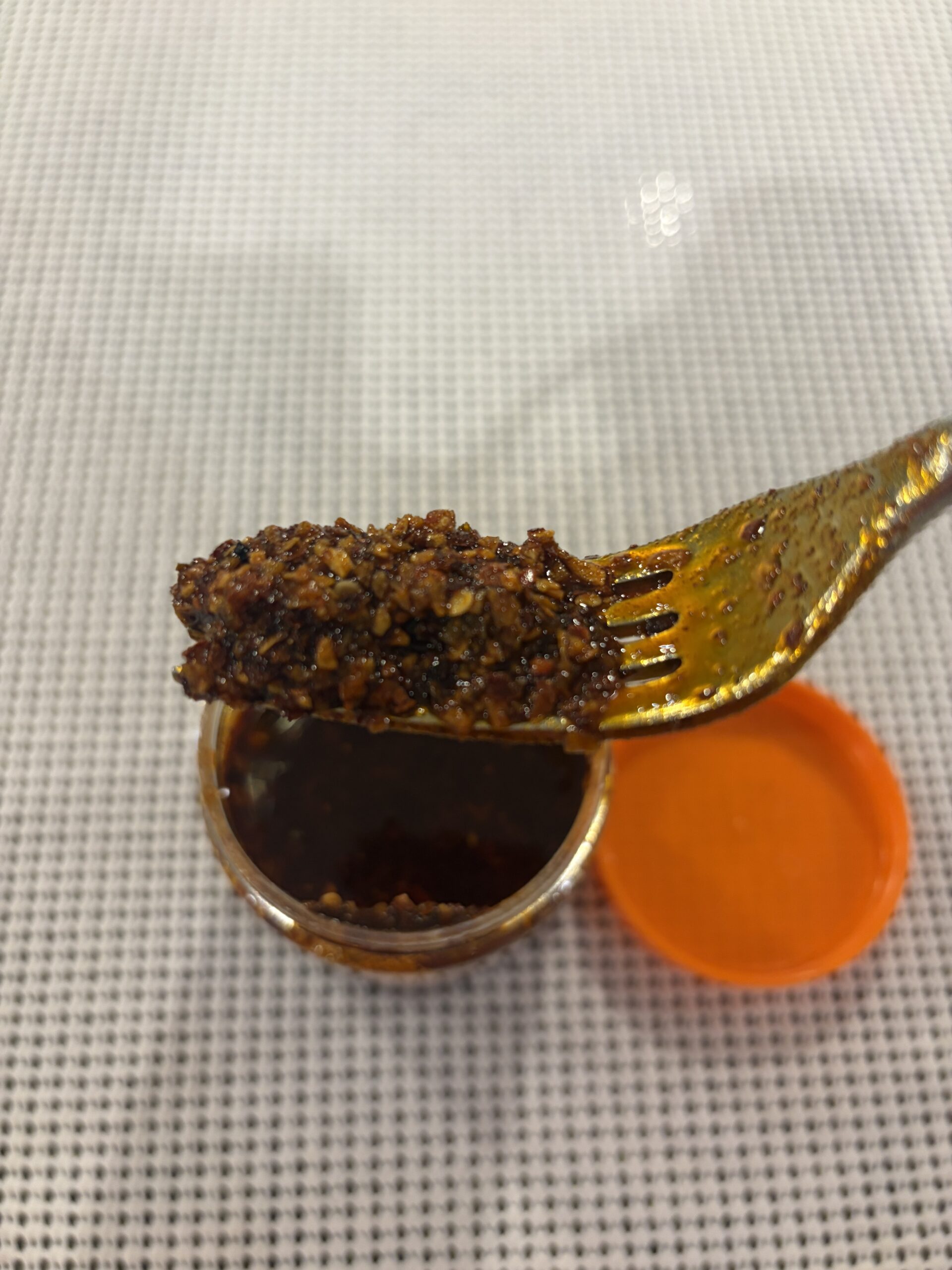
One practical advantage of the fine, uniform bits: they’d spread nicely through dips, over dumplings, across noodles. The texture distributes evenly, which makes it functional as a topping even when the flavor profile has issues. The bits are small enough that the heat disperses across food rather than concentrating in clumps — a useful quality for a spicier product.
Flavor Complexity — Heat Arrives First and Takes Over
Here’s where the Spicy diverges from the Mild, and not in the way I hoped. The Mild’s problem was that sweet and salty arrived simultaneously and flattened everything. The Spicy has the same problem, but adds a heat wall in front of it.
The sequence: spice hits first — immediate heat on contact, no warmup. Then salt and sugar arrive right behind it. By the time anything subtle might show up — mushroom umami, dried onion sweetness, whatever the unspecified chili peppers are supposed to contribute — your palate is already processing three competing sensations. Heat, sweet, salt. That’s the whole show. Any nuance that existed in the Mild (and there wasn’t much) gets buried under the additional layer of burn.
The heat itself is the real disappointment. It’s pure capsaicin burn — heat with no flavor associated with the heat. Just burn. No smokiness, no fruitiness, no chili character. Compare that to Lao Gan Ma: as you chew LGM, you can start to taste the actual chilies themselves. The chili flakes in LGM have flavor — dried chili flavor, roasted warmth, something that tells your brain which pepper is responsible. Mr. Bing’s heat is anonymous. A burning sensation that could come from any pepper, prepared any way. It just… burns.
The oil is the same passive vehicle as the Mild. Not contributing flavor independently — same split-jar dynamic. The bits are doing the work, and the oil is along for the ride. Given the identical appearance and the identical aroma, the Spicy really is just the Mild with a heat dial turned up. That’s not necessarily bad — but it means the heat is the only differentiator, and the heat itself doesn’t bring anything interesting to the table.
I’d rather have an MSG hit than a straight salt-and-sugar punch. The salt needs the sugar to balance it, and the sugar needs the salt, and together they create this aggressive one-two that dominates the front of every bite. There’s a USA-made chili crisp pattern here — I see it in Momofuku too. Thick, fine-grain, in-your-face sweetness and saltiness, no MSG, no delicate flavors. It’s a formula, and Mr. Bing is following it.
Heat
Mr. Bing self-rates the Spicy at 3 out of 5 peppers, and that’s honest. It’s a true medium — good heat around the mouth, not overwhelming. I could keep eating it without needing to stop. It’s not extra spicy by any stretch. If you’re expecting the 3/5 to mean anything more than “warmer than mild,” you’ll be fine.
The heat lingers nicely — more staying power than the Mild’s whisper, which fades as soon as you swallow. The Spicy’s burn sticks around on the tongue and lips for a couple of minutes after eating. No Sichuan peppercorn tingle, which is unfortunate given it’s listed in the ingredients. There is a white peppery vibe — I can feel the peppercorns contributing to the overall burn — but it’s buried under the generic capsaicin heat rather than standing on its own as a distinct sensation.
The core problem: this heat doesn’t enhance flavor. It competes with it. The Mild lets mushroom umami and dried garlic come through because there’s no burn fighting for attention. The Spicy pushes all of that aside. Heat that enhances is heat you taste through — you feel the burn while still identifying the garlic, the onion, the chili. Heat that competes is heat that replaces everything else. Mr. Bing Spicy is the second kind.
Use Cases and the Mixing Angle
Same suggested uses on the label as the Mild — eggs, rice, pizza, pasta, veggies, fish, meats, mix with mayo/guac/hummus. The fine texture works for all of those. The Spicy’s better application is probably dumplings and noodles, where the heat can work with the dish rather than dominate it. The small uniform bits would distribute well across a bowl of lo mein or a plate of potstickers.
I wouldn’t put this on anything delicate. A piece of whitefish, a fried egg, avocado toast — the aggressive salt-sugar-heat combination would steamroll lighter foods. Save it for dishes that can push back.
The mixing angle: The best version of Mr. Bing isn’t either jar alone — it’s both jars mixed. The Mild has better flavor balance, the Spicy adds the heat the Mild lacks. Two scoops Mild, one scoop Spicy. That ratio gives you the Mild’s cleaner flavor progression with enough heat to make it interesting. I’d also mix the Spicy into Lao Gan Ma Fermented Soybeans — the LGM’s fermented depth and bigger chunks could offset Mr. Bing’s limitations, and the crunch would actually contribute something useful to the blend. See my full Spicy vs Mild comparison for the detailed breakdown on mixing ratios.
Versatility and Packaging
Same jar, same headspace branding, same “Extra Room to Stir” icon. Same ~6 ounces of actual product in a jar that says 7 oz. At $9.99, same $1.67 per ounce. Available individually or in the two-pack with the Mild for $18.99 — which is effectively a dollar off buying them separately.
Momofuku’s Original is the closest comparison in approach and price. Both are American-made, fine-grain, sweet-salty-forward, no MSG. Momofuku ran AVERAGE on my review too. Neither represents a great value when Lao Gan Ma exists at half the per-ounce cost with more flavor complexity. If you’re spending $10 on a chili crisp, there are better places to put that money.
The Mr. Bing website has recipes and brand background. I will not be buying these again.
Final Verdict
Mr. Bing Spicy Chili Crisp adds genuine heat to the same base as the Mild — but the heat brings no chili character with it. Just burn. The aggressive sweet-salt-heat combination leaves no room for the mushroom powder, dried garlic, or anything else to make an impression. It’s a USA-made formula that mirrors Momofuku’s approach: in your face, not a lot of delicate flavors. Better as a mixing ingredient than a standalone jar — combine it with the Mild or with Lao Gan Ma Fermented Soybeans and the crunch finds a purpose. On its own, it’s not worth coming back for. Check price on Amazon.
- Best Chili Crisp: Everything We’ve Tested — See where every jar ranks.
- What to Eat with Chili Crisp — A field guide to pairing by jar style.
- How to Build a Chili Crisp Starter Kit — Three jars, no overlap.
Frequently Asked Questions
How spicy is Mr. Bing spicy chili crisp?
Mr. Bing rates their Spicy at 3 out of 5 peppers, and that’s accurate — it’s a true medium heat. Good burn around the mouth that lingers for a couple of minutes, but not overwhelming. Most people with moderate spice tolerance will handle it comfortably.
What does Mr. Bing spicy chili crisp taste like?
Heat hits first, followed immediately by a strong salt-and-sugar punch. The base is the same as the Mild — dried onion, dried garlic, mushroom umami — but the heat and salt tend to overpower those subtler flavors. The burn itself has no identifiable chili character; it’s generic capsaicin heat.
Mr. Bing spicy vs mild — what’s the difference?
The Spicy has more chili peppers (they move to third in the ingredient list) and noticeably more heat. Visually and texturally, they’re identical. The Mild has better flavor balance because the reduced heat lets mushroom and garlic come through. Both are AVERAGE tier.
Is Mr. Bing chili crisp gluten-free?
Yes. Both Mr. Bing Mild and Spicy are labeled Gluten-Free, Vegan, Non-GMO, No MSG, and No Preservatives. They’re also K Parve (kosher pareve) and made in the USA.
What can you put Mr. Bing spicy chili crisp on?
The fine, uniform texture works well on dumplings, noodles, and mixed into dips like guacamole or hummus. Avoid delicate foods like whitefish or plain eggs — the aggressive salt-sugar-heat combination will overpower lighter dishes.
Is Mr. Bing spicy chili crisp worth it?
At $1.67 per ounce of actual product, Mr. Bing Spicy is mid-range pricing for an average product. Lao Gan Ma offers more flavor complexity at roughly half the cost. Mr. Bing Spicy works best mixed with the Mild or blended into another chili crisp.
What chili peppers are in Mr. Bing spicy chili crisp?
The Spicy label lists ‘chili peppers’ without specifying the varieties. The Mild jar specifies guajillo and gochugaru, and the Spicy likely uses the same or similar peppers in higher proportion, but Mr. Bing doesn’t disclose this on the Spicy label.