
This post contains affiliate links. I may earn a small commission if you buy through them — at no extra cost to you. My scores are never influenced by this.
TL;DR: Cholula chili crisp review in brief: this is a seed-heavy, crunch-forward jar with serious salsa macha DNA. The texture is the star — three types of seeds, three types of dried chilies, and a satisfying bite that holds up on food. Salt is aggressive when eaten straight from the jar, but it makes sense once you put it on tacos or avocado toast. A solid GOOD that delivers where it counts. Buy it on Amazon.
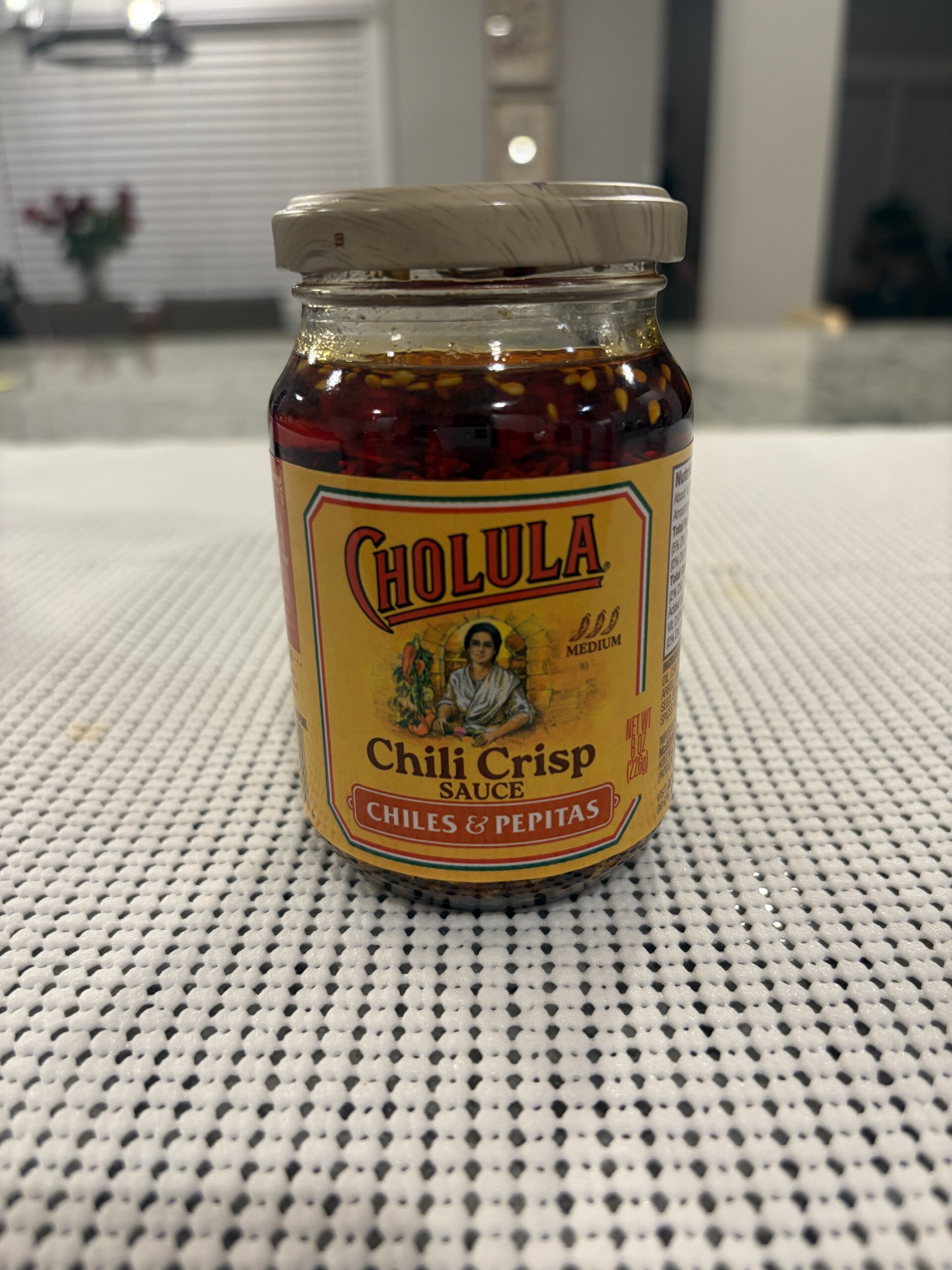
Cholula Chili Crisp Review — A Hot Sauce Giant Tries Something New
This Cholula chili crisp review has been on my list since I spotted the jar at the store. Cholula is one of those brands I reach for without thinking — the wooden cap, the label I have memorized, the hot sauce that lives on the table at half the Mexican restaurants I have eaten at. So when I saw Cholula releasing a chili crisp, I was curious. Not skeptical, but genuinely interested in what a brand with that kind of hot sauce pedigree would do with a completely different format.
This is the Cholula Chili Crisp Sauce — Chilies and Pepitas. Eight ounces, product of Mexico, imported by McCormick. And here is the thing: this jar straddles a line. The label says chili crisp. But three types of dried chilies (ancho, morita, árbol), three types of seeds (sesame, pumpkin, sunflower), and high oleic sunflower oil? That is salsa macha territory. Cholula did not make a Sichuan-style chili crisp. They made something rooted in Mexican tradition, gave it a name that moves on Amazon, and packed it with enough crunch to back up the label. I respect the move.
Quick Facts
| Brand | Cholula |
| Product | Chili Crisp Sauce — Chilies and Pepitas |
| Category | Chili Crisp (with salsa macha characteristics) |
| Style | Mexican |
| Oil | High oleic sunflower oil |
| Heat | 2–3 (low-medium to medium) |
| Price | $9.99 |
| Size | 8 oz |
| Per oz | $1.25/oz |
| Made in | Mexico (imported by McCormick & Co.) |
| Buy | Amazon, mainstream grocery |
| Tier | GOOD |
Serving size: 1 tablespoon. That is the serving size I like to see. One tablespoon is honest. It tells me Cholula expects you to actually use this product, not drizzle a teaspoon of oil on your food and call it a serving. With 100 calories per tablespoon and no added sugars, the nutrition label is clean and straightforward.
Ingredient Quality — A Lot Going On in Here
The ingredient list is where this jar gets interesting. High oleic sunflower oil leads — a neutral, high-smoke-point oil that stays out of the way. Then three named chili varieties: ancho, morita, and árbol. That is a deliberate spread. Ancho for earthy depth, morita for smokiness, and árbol for sharp, direct heat. On paper, this looks like someone who knows dried chilies put this recipe together.
Then the seeds: sesame, pumpkin, and sunflower. Three types of seeds plus three types of chilies — that is a salsa macha ingredient profile, not a chili crisp one. There are no fried shallots, no fermented soybeans, no Sichuan peppercorns. The building blocks here are Mexican, through and through.
After the seeds: garlic, salt, onion, spices, and natural flavor. “Spices” and “natural flavor” are both unspecified, which is the one mark against an otherwise transparent label. I would rather know exactly what is in there. But the core of this ingredient list — named chilies, named seeds, clean oil — is better than what most big-brand entries offer. If you want to know what to look for on a chili crisp label, I break it down in my label reading guide.
Aroma — Straight Out of a Bag of Dried Chilies
Open the jar and it smells like you just opened a bag of dried chilies at a Mexican grocery. That is the whole impression. Toasted, warm, and direct. No garlic haze, no sweetness, no fermented funk — just pure dried chili aroma. It is a really clean smell, and it matches exactly what the ingredient list promises.
There is no complexity in layers the way you get with a Sichuan-style jar. But for a Mexican-style product built on dried chilies and seeds, this is the right smell. It tells you what the jar is about before you taste a thing.
Appearance and Settlement
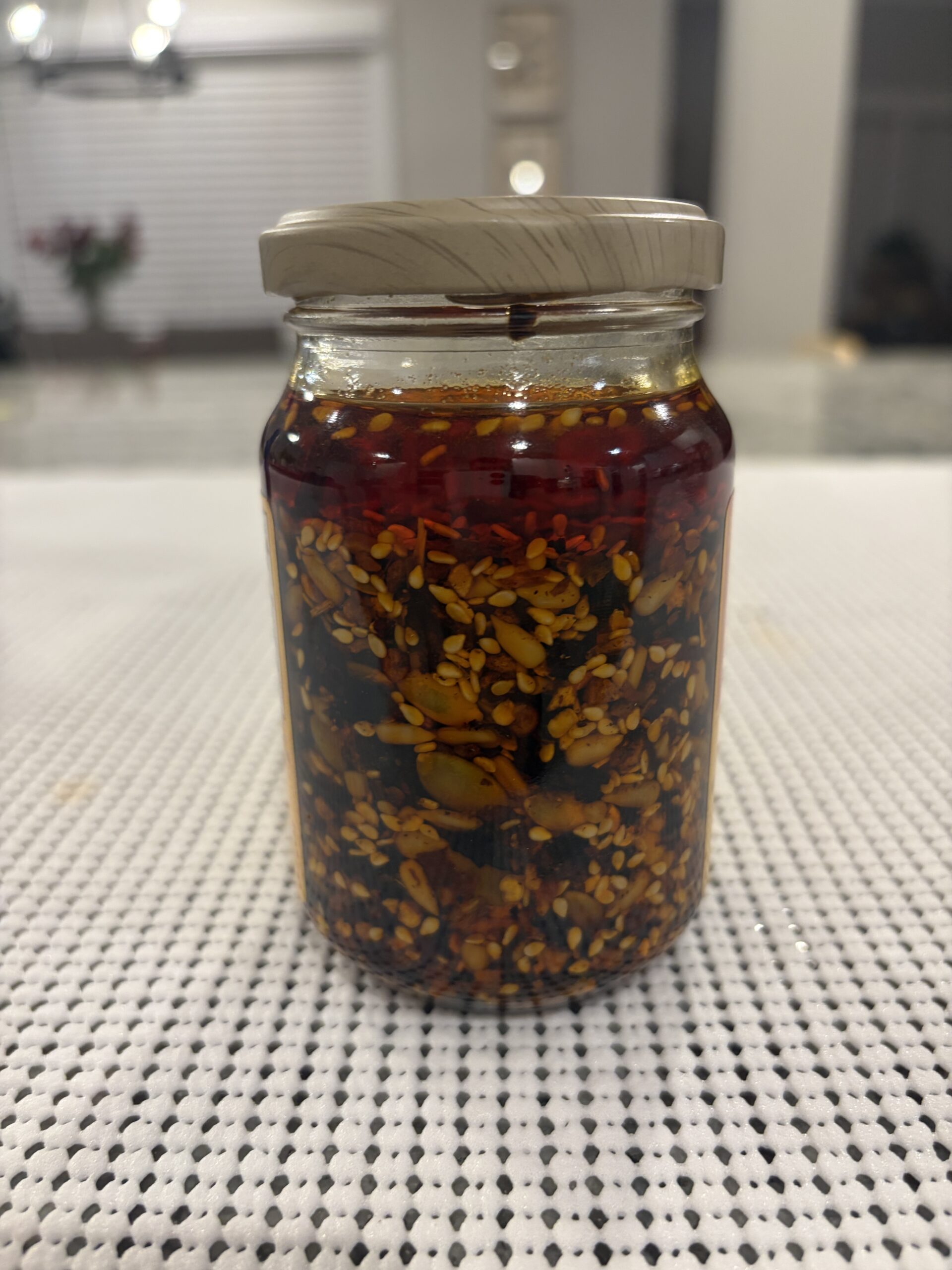
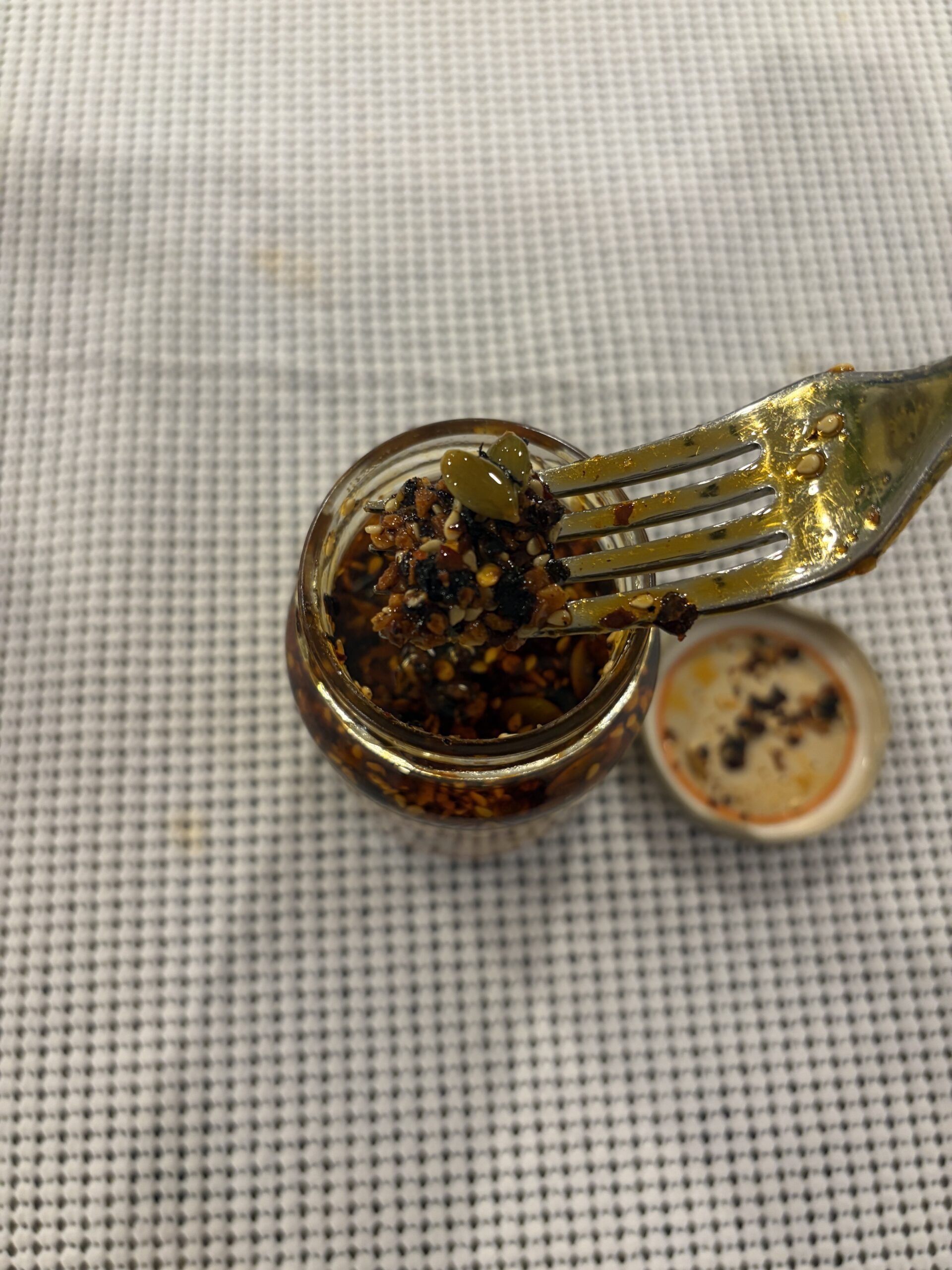
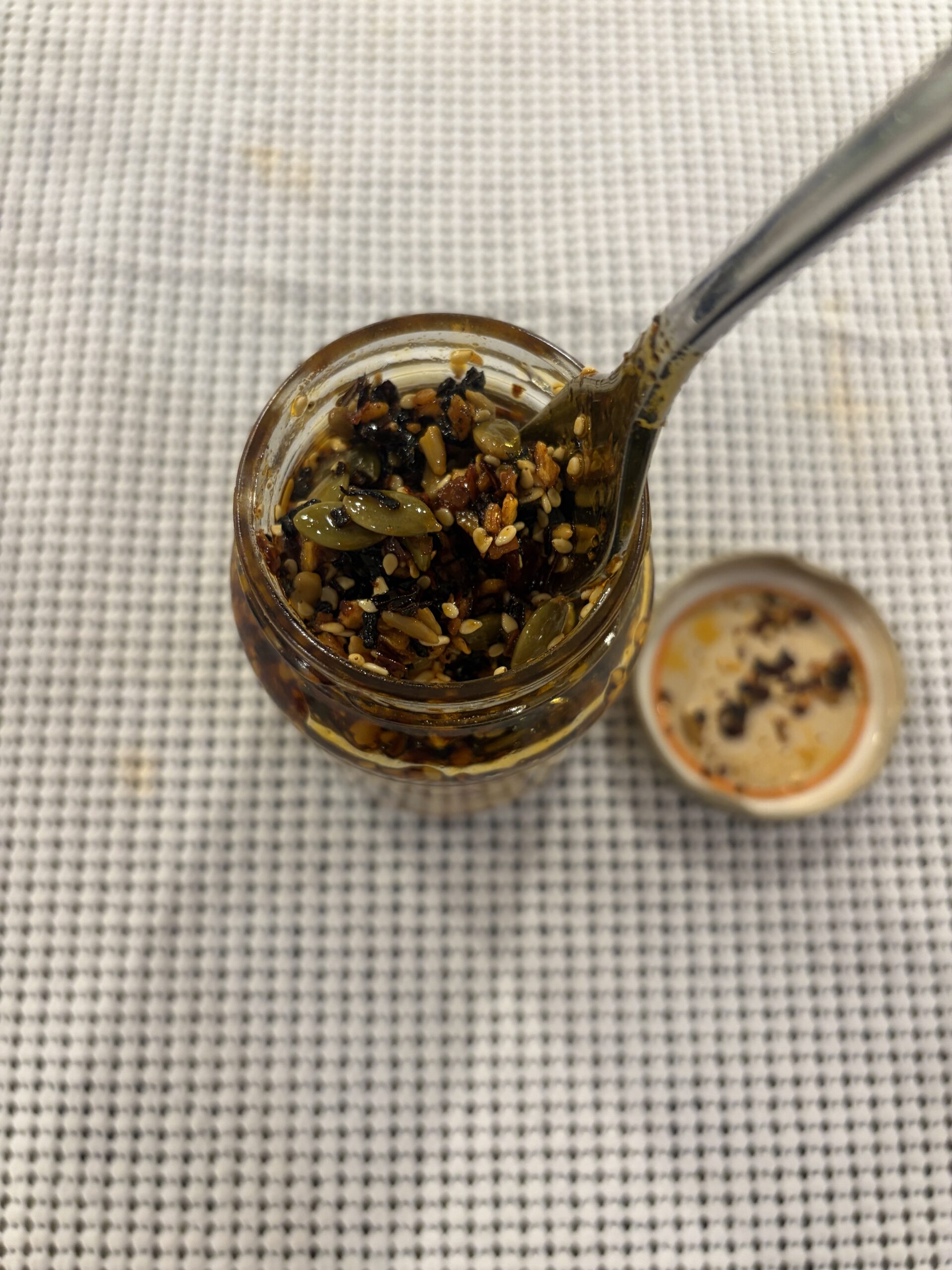
Settlement is about 80% solids to 20% oil — a really good ratio. The oil is a deep, rich red. You can see right through it down to the bits sitting at the bottom. Seeds of all sizes are visible — the bigger pumpkin seeds (pepitas) float near the surface, with sesame and sunflower seeds packed below. Chili pepper flakes are scattered throughout.
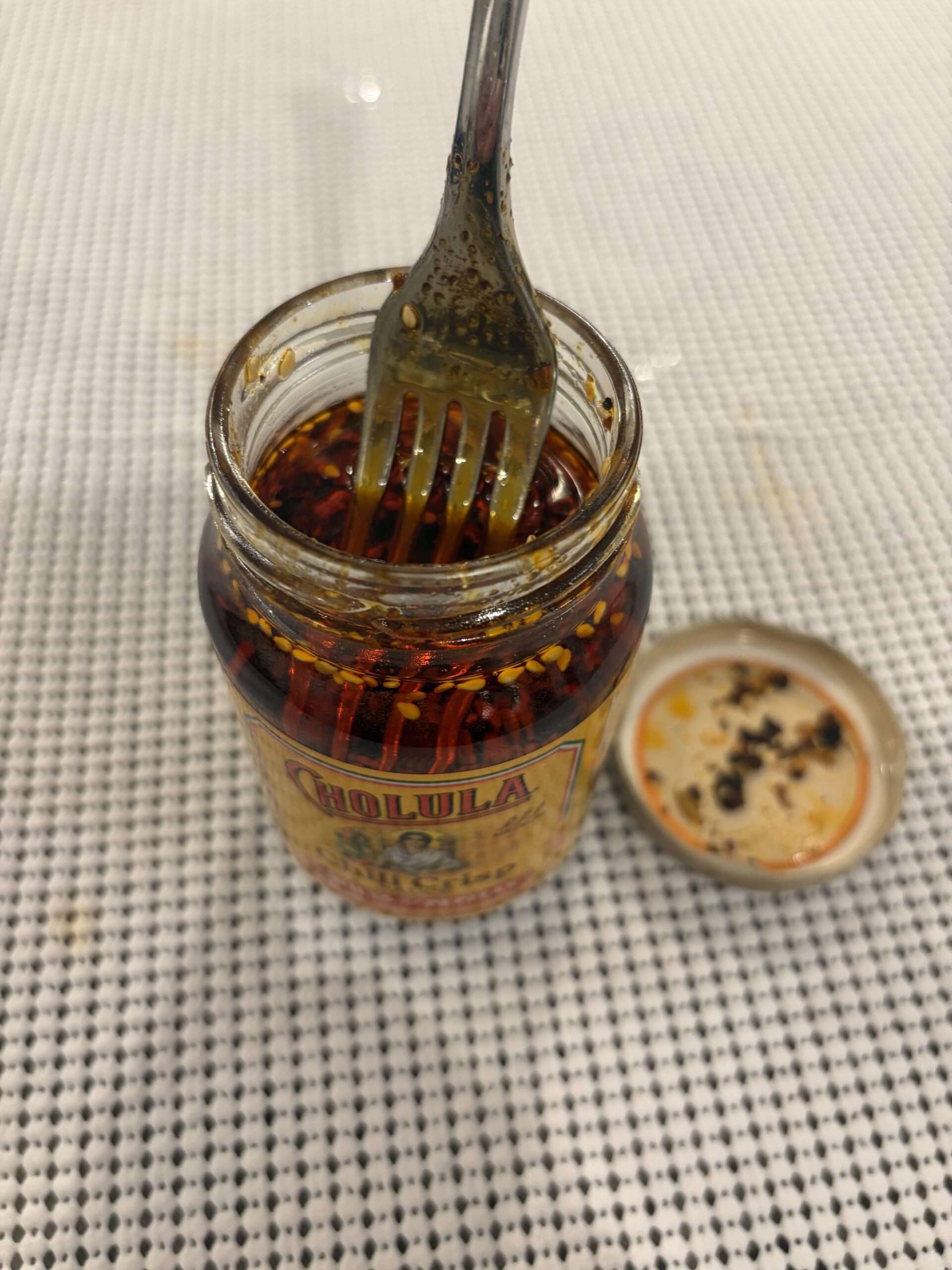
Pre-stir, the fork test tells the story. The settlement is dense enough that the fork does not sink straight to the bottom. There is real material in here. Post-stir, it thickens up considerably. This is not a jar where you pour oil over your food with a few bits floating along. You scoop. You load. The spoon comes out full.
Texture and Crunch — The Best Thing About This Jar
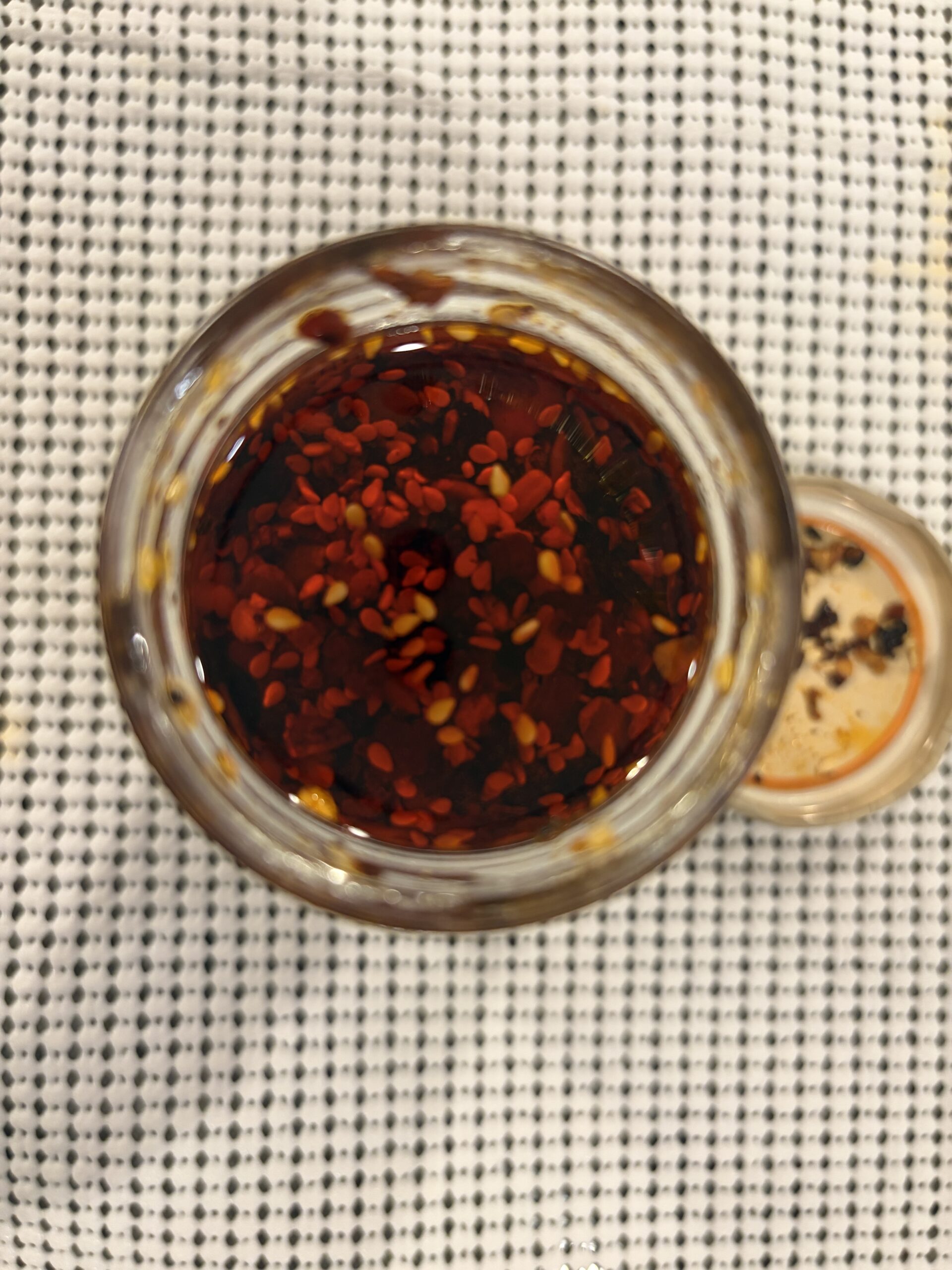
The crunch is the star of this product. Seeds of all sizes deliver a varied, layered texture — crunchy sesame, bigger bites from the pepitas, and chili flakes that add a different dimension between the seeds. It is not a single type of crunch. Every forkful has something different going on texturally.
This is what separates Cholula from a lot of the Sichuan-style jars I test. Those jars usually rely on fried garlic and shallots for their crunch, which can go soggy if the oil-to-solids ratio is off. Seeds do not have that problem. Sesame seeds stay crunchy. Pepitas hold their bite. The texture here is structurally reliable in a way that fried aromatics are not.
It stirs up very thick — almost paste-like in consistency. The bits do not separate from the oil easily, which is a sign that the product was designed to be used as a unit, not strained. That thickness is a practical feature: when you spoon this onto a taco, it stays put. It does not slide off like a thinner chili oil would.
Flavor Complexity — Salt First, Chili Second, and a Question About Those Three Peppers
Here is where things get complicated. The first thing I taste — immediately, without question — is salt. It is very salty eaten straight from the jar. That initial salt hit dominates the experience for the first few seconds. Then garlic and chili flavor emerge behind it, and you start getting the dried chili character that the aroma promised.
The overall flavor reads as “chili powder.” Which makes sense — you have got three types of dried, ground chilies blended together. But here is the thing: I cannot pick out the individual chili varieties. The ancho, morita, and árbol are all on the label, but in the actual flavor, they merge into one general dried-chili note. The variety is on the ingredient list, not on your tongue. I wish they pulled apart more — some smoky morita here, some sharp árbol heat there. Instead, it all lands in the same place.
That said, there is still a lot of flavor coming through the salt. The garlic contributes quietly in the background. The seeds add a subtle nuttiness that rounds out the chili note. It is not one-dimensional — it is just that the salt is running the show, and everything else is working behind it.
The whole-jar assessment: the oil and bits function as a unit. When you stir and scoop, you get a cohesive product — not oil with bits floating in it, not dry chunks sitting in a puddle. It is a whole-jar product. The oil does not do much on its own — I would not call it a split-jar situation, but the oil is a vehicle here, not a co-star. The solids are doing the heavy lifting.
Heat — Three Peppers, Moderate Delivery
The label says medium, and I mostly agree. The heat arrives on the back end — not up front, not on the lips or the tip of the tongue. You take a bite, taste salt and chili, and then the warmth rolls in a few seconds later. It builds gently and settles across the back of the mouth. No throat burn, no nose hit, no mala tingle.
For a product with three types of chilies — ancho, morita, and árbol — the heat is surprisingly restrained. Árbol is typically the sharpest of the three, and I expected more direct, pointed heat from it. Instead, the heat profile feels blended and rounded, like the chilies are all working at the same medium volume rather than contributing distinct heat signatures. I would rate this a 2–3 on my scale. Comfortable for most people. Not a challenge.
The heat dissipates fairly quickly. Within a minute or two of talking, it is gone. There is no lingering burn, no residual tingle. This makes sense for the product’s intended use case — tacos, eggs, grilled meat — where you want seasoning heat, not endurance heat.
Use Cases — Built for Food, Not for the Spoon
Here is where the salt issue reframes itself. Eaten straight from the jar, Cholula’s chili crisp is aggressively salty. But I tend to put products like this on avocado toast, tacos with avocado and tomatoes, tostadas — foods that maybe need some salt. In that context, the salt works. It is doing seasoning work that the food benefits from.
This jar makes sense on tacos. It makes sense on eggs. It makes sense spooned over grilled chicken or stirred into soup. Cholula’s own label suggests queso fundido, which is a great call — the thick, crunchy texture would hold up in melted cheese without disappearing. I would also try it on a grain bowl or over roasted vegetables where you want crunch and heat without adding another liquid.
Where it does not work: anything delicate. A piece of white fish, a simple salad, rice by itself. The salt will overpower anything that is not bringing its own flavor to the table.
The Mixing Angle
This is a standalone jar for its intended use case — Mexican-style food pairings. I would not mix it into another jar because it is already doing something specific. The seed-and-chili profile is distinct enough that blending it with a Sichuan-style chili crisp would just muddy both products. Use it on its own, on the foods it was built for.
That said, if you have a jar that is light on crunch — something oil-heavy with not enough solids — a spoonful of Cholula stirred in would add the texture that jar is missing. The seeds are the mixing asset here, not the flavor.
The Category Question — Chili Crisp or Salsa Macha?
I need to address this because it is the most interesting thing about this product. Cholula calls it a chili crisp. And by the broadest definition, it is — it has crispy bits in oil. But the ingredient profile is salsa macha: dried chilies (not fried aromatics), seeds and nuts (not fried garlic and shallots), neutral oil (not sesame or soybean), Mexican origin.
Compare it to something like Tia Lupita’s Mexican Chili Crunch, which takes a similar approach — dried chilies, seeds, a Mexican flavor identity — but labels itself as “chili crunch” to ride the category wave. Or CHiNGONAs Salsa Macha, which owns the salsa macha label outright.
Cholula is doing something smart here. They built a product rooted in Mexican condiment tradition and packaged it with a label that speaks the language of the current market. The product does not pretend to be Sichuan-style. It is not trying to be Lao Gan Ma. It is a Mexican product with a chili crisp label, and it is honest about what is inside. I am fine with that. Evaluate the jar on what it delivers, not what category box it checks.
Versatility and Packaging
The 8 oz jar is a standard size. At $1.25 per ounce, it is priced in the middle of the field — not budget, not premium. Cholula’s brand recognition and McCormick distribution mean you can find this at mainstream grocery stores, which is a real advantage over small-batch salsa machas that only exist on Amazon or at specialty shops.
The jar opens wide enough for a spoon, and the product is thick enough that you are not fighting oil dripping off the sides. Practical. Vegan, gluten-free, no added sugars. Label recommends shaking before use and refrigerating after opening.
Versatility is moderate. It excels in Mexican-adjacent pairings and anything that benefits from salt, crunch, and dried chili heat. It does not cross over well into East Asian or Italian applications where a different oil profile or aromatic base would be expected.
How It Compares to Lao Gan Ma
These are fundamentally different products. Lao Gan Ma is built on fermented soybeans, fried aromatics, and soybean oil — a Sichuan framework. Cholula is built on dried chilies, seeds, and sunflower oil — a Mexican framework. Comparing them on the same axis is not entirely fair, but it is useful because they sit next to each other on the shelf.
Where Cholula wins: crunch. The seed-based texture here is more varied and more durable than LGM’s fried bits. Where LGM wins: flavor depth. The fermented soybean base gives LGM a savory complexity that Cholula’s cleaner, saltier profile does not match. Cholula’s oil is neutral and functional. LGM’s oil carries more flavor on its own, even if it is not the best oil I have tested.
Different jars for different jobs. LGM goes on noodles and rice. Cholula goes on tacos and eggs. There is room for both.
Final Verdict
Cholula Chili Crisp is a GOOD jar. The crunch is the best thing about it — varied, durable, and satisfying. The three-chili, three-seed ingredient list is more thoughtful than most big-brand entries. The dried chili aroma is clean and honest. Salt is aggressive when eaten alone, but it works in context on the foods this jar was designed for.
The gaps: individual chili varieties do not distinguish themselves in the flavor (you get one blended chili-powder note), and the salt balance could use more counterweight — some fried garlic bringing natural sweetness, maybe, or a touch of acid. But the crunch and the overall flavor are both good, and Cholula brings brand reliability and grocery-store availability that small-batch jars cannot match.
If you eat tacos, eggs, tostadas, or anything that benefits from crunchy, salty, chili-forward heat, this jar earns its spot on the shelf. Buy it on Amazon.
TIER: GOOD
- Best Chili Crisp: Everything We’ve Tested — See where every jar ranks.
- What to Eat with Chili Crisp — A field guide to pairing by jar style.
- How to Build a Chili Crisp Starter Kit — Three jars, no overlap.
Frequently Asked Questions
Is Cholula chili crisp spicy?
Cholula Chili Crisp Sauce is a low-medium to medium heat product. The label rates it as medium, and that is about right. The heat arrives on the back end — not up front — and dissipates within a minute or two. It is comfortable for most people and will not overpower food.
What does Cholula chili crisp taste like?
It tastes like dried chili powder with a strong salt presence, backed by crunchy seeds (sesame, pumpkin, and sunflower). The three chili varieties — ancho, morita, and árbol — blend into one general dried-chili note rather than contributing distinct flavors. Garlic and subtle nuttiness round out the profile.
Is Cholula chili crisp a salsa macha?
The ingredient profile — dried chilies, multiple seeds, neutral sunflower oil, Mexican origin — is closer to salsa macha than traditional Sichuan-style chili crisp. Cholula labels it as chili crisp, but the building blocks are rooted in Mexican condiment tradition. It works well regardless of which category you put it in.
What do you eat Cholula chili crisp with?
Cholula Chili Crisp works best on tacos, tostadas, eggs, grilled meat, soups, avocado toast, grain bowls, and roasted vegetables. The thick, crunchy texture holds up well on food. It is quite salty eaten straight from the jar, so it pairs best with foods that benefit from added salt and crunch.
Is Cholula chili crisp vegan and gluten-free?
Yes. Cholula Chili Crisp Sauce is both vegan and gluten-free. The ingredient list contains no animal products, dairy, or gluten-containing grains. There are also no added sugars.
How does Cholula chili crisp compare to Lao Gan Ma?
They are fundamentally different products. Cholula is built on dried chilies and seeds (Mexican tradition), while Lao Gan Ma uses fermented soybeans and fried aromatics (Sichuan tradition). Cholula wins on crunch and texture variety. Lao Gan Ma wins on savory flavor depth. They serve different food pairings — Cholula for tacos and eggs, LGM for noodles and rice.
Where can I buy Cholula chili crisp?
Cholula Chili Crisp Sauce is available on Amazon and at mainstream grocery stores. McCormick distributes it nationally, so it has much wider retail availability than most small-batch chili crisps and salsa machas.