
This post contains affiliate links. I may earn a small commission if you buy through them — at no extra cost to you. My scores are never influenced by this.
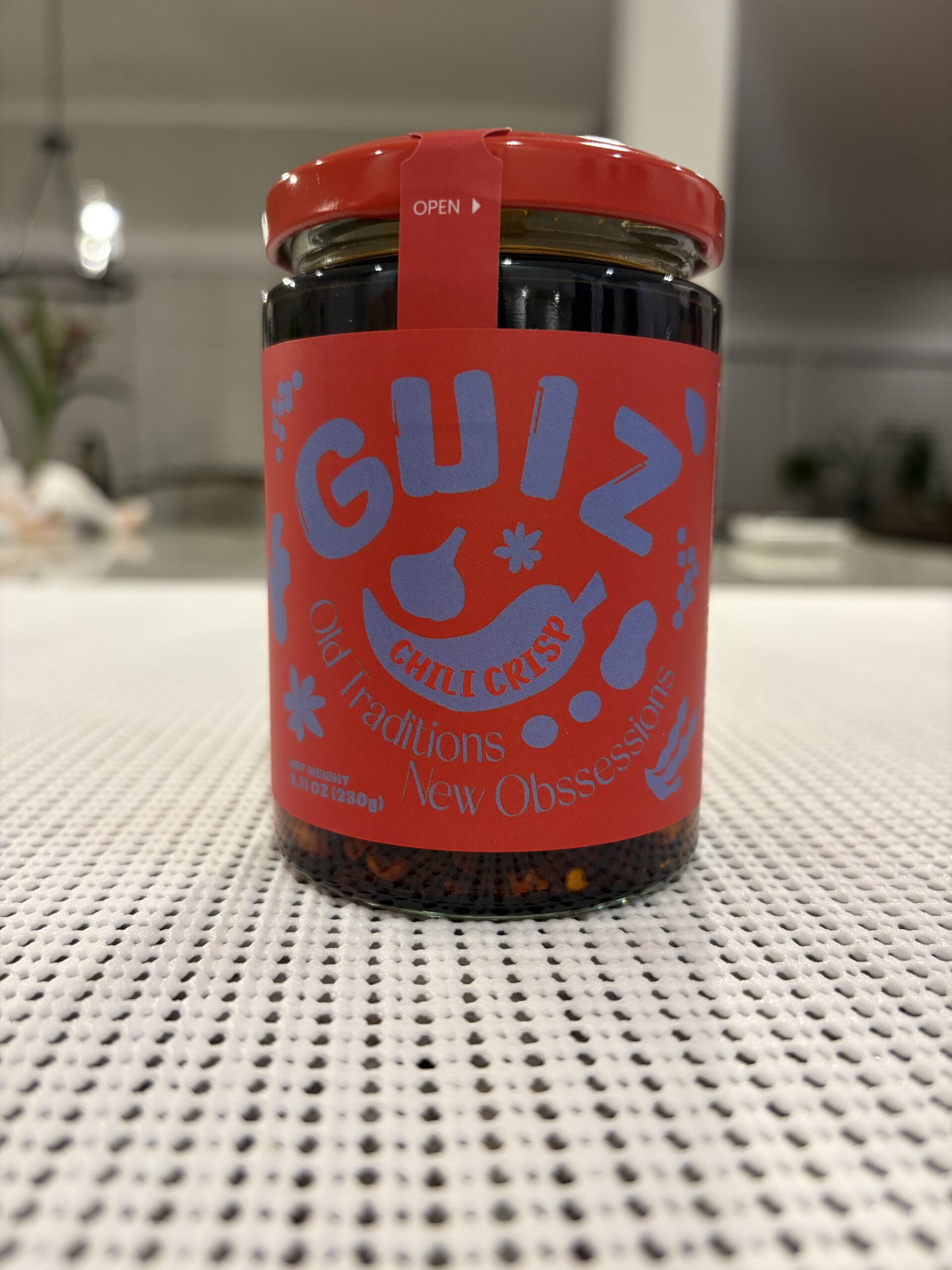
TL;DR: GUIZ Original Chili Crisp is the real deal — a Guizhou-inspired jar packed with peanuts, Sichuan peppercorn, broad bean paste, and some of the densest crispy bits I’ve tested. The oil does actual flavor work, the heat is serious but layered, and nothing here feels like filler. If you want one jar that does everything, grab it on Amazon.
GUIZ is a name I hadn’t heard until it showed up in an Amazon search. The brand is built around Guizhou — a Chinese province known for chili-forward cooking that doesn’t get the same airtime as Sichuan or Hunan. This GUIZ chili crisp review covers their Original, an 8.11-ounce jar that lists peanuts, Sichuan peppercorn, and broad bean paste (doubanjiang) on the label. If you’re new to what chili crisp is, this is not a gentle introduction — but it might be the most complete one I’ve tested.
I ordered the duo pack on Amazon, which came with the Original and the Fermented GUIZ Original vs. Black Bean comparison variant. The duo is currently unavailable, but the individual jar runs $11.98. The label promises ethically sourced ingredients, no preservatives, and vegan. There’s a nice story on the back about the founder’s connection to Guizhou — the province where they fell in love with the flavors that define this jar. A QR code on the lid seal leads to their website, which has more detail on sourcing and recipes. Worth a look.
Quick Facts
| Brand | GUIZ |
| Product | Original Chili Crisp |
| Category | Chili Crisp |
| Style | Sichuan / Chinese (Guizhou-inspired) |
| Oil | Non-GMO Soybean |
| Heat | 4 / 5 — Hot |
| Price | $11.98 |
| Size | 8.11 oz / 230g |
| Per oz | $1.48/oz |
| Made in | China |
| Buy | Amazon · guiz.co |
| Tier | EXCELLENT |
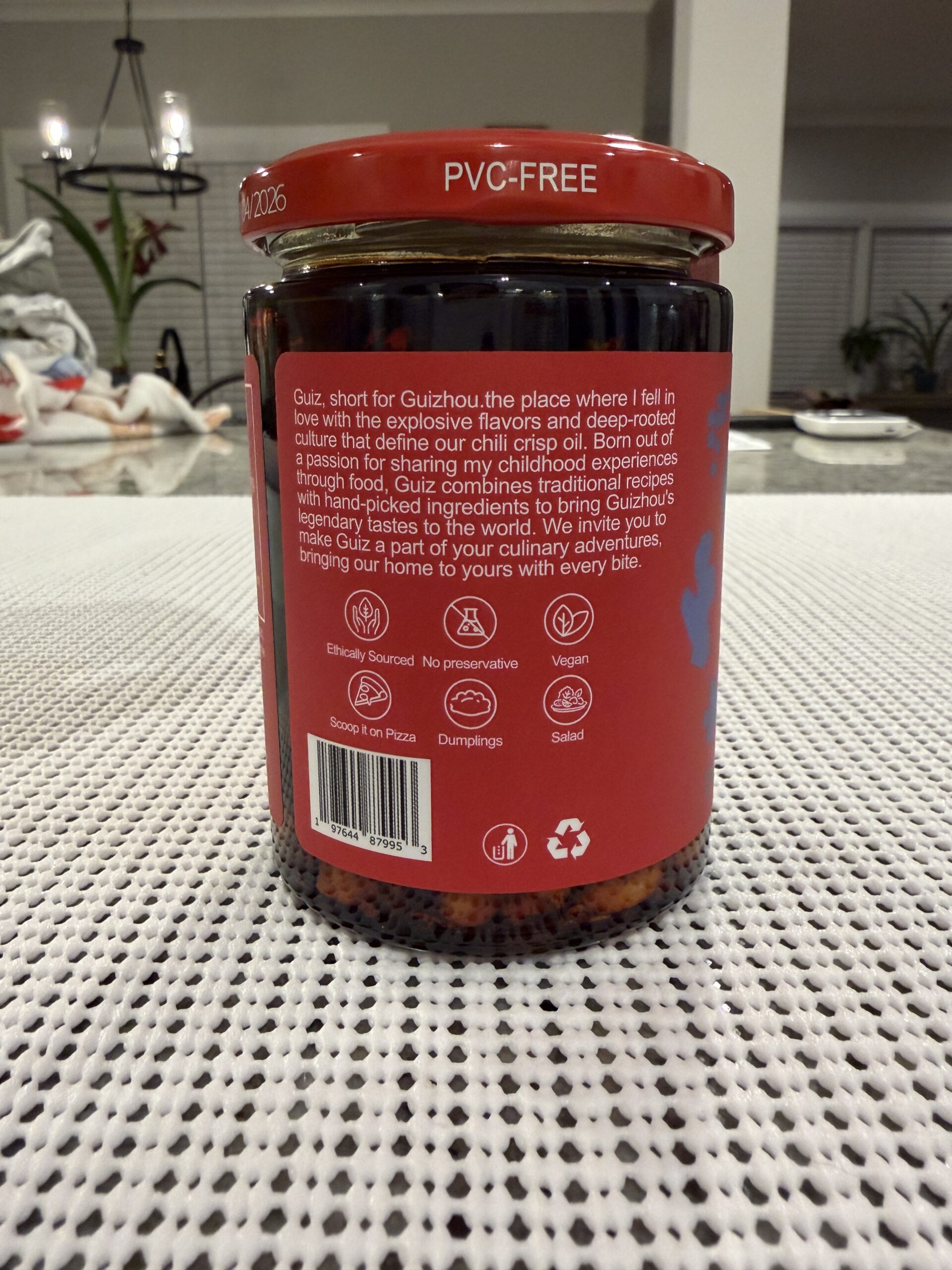
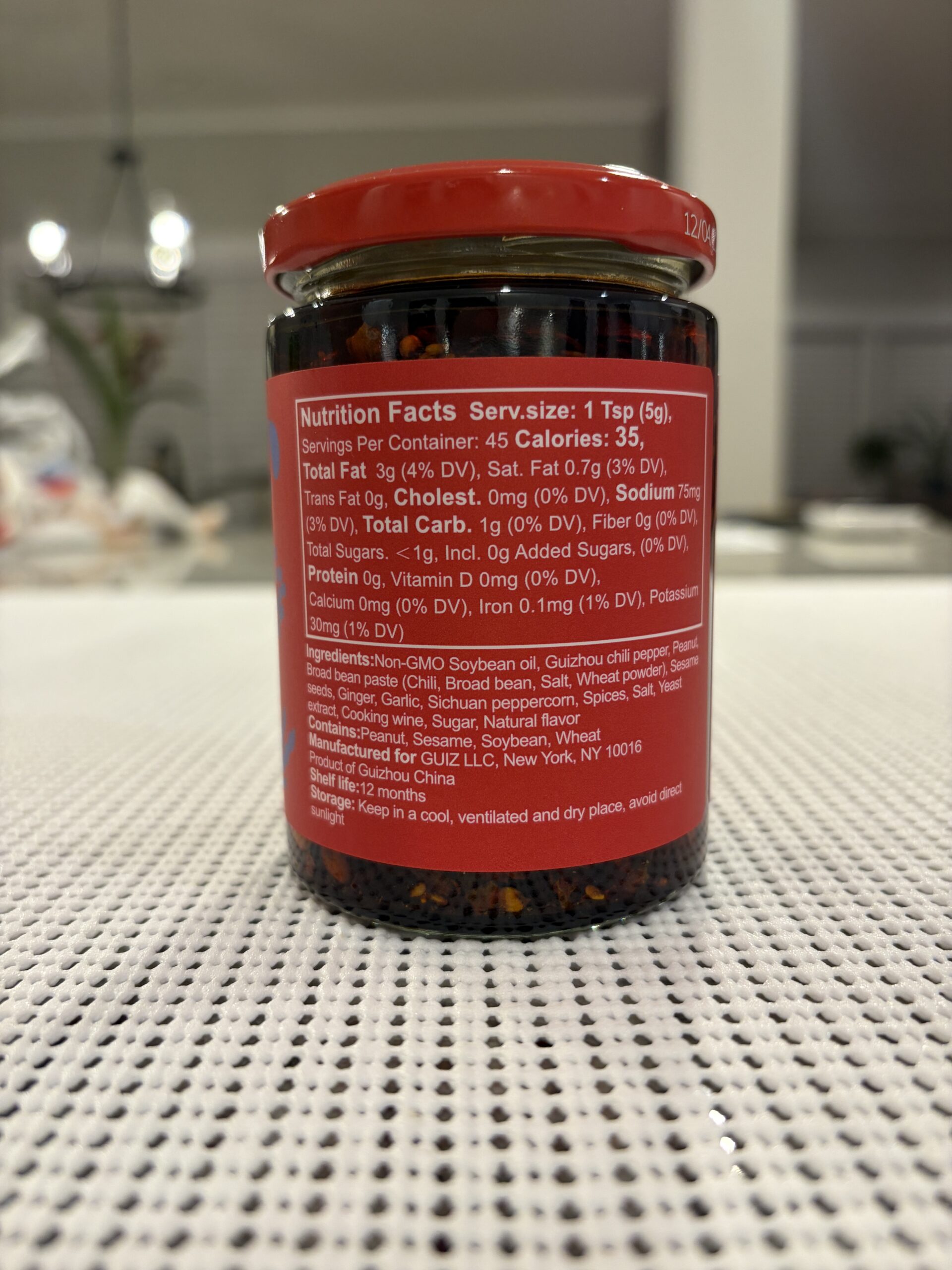
One teaspoon serving size. I don’t love that — it’s the kind of number designed to make the nutrition panel look better than reality. At 35 calories per teaspoon with no added sugars, a more realistic two-tablespoon serving puts you around 210 calories. The fat content is actually lower than expected for a soybean oil base, and sodium is reasonable. Nothing alarming, but the teaspoon thing is always a tell — a tablespoon serving would be more honest about how people actually use this.
Ingredient Quality
Non-GMO soybean oil leads the list, which is standard for Chinese-style chili crisps. Soybean oil isn’t the most interesting base, but it’s clean here — no off-flavors, no heaviness. What matters is what comes after it: Guizhou chili pepper, peanuts, broad bean paste, sesame seeds, ginger, garlic, Sichuan peppercorn, spices, salt, yeast extract, cooking wine, sugar, natural flavor.
That’s a packed label. Fourteen ingredients, and most of them are doing real work. The ingredient list tells you a lot about what to expect here. Peanuts sit third, which means they’re a structural ingredient, not a garnish. Broad bean paste (doubanjiang) is fourth — a fermented flavor bomb that brings umami depth and a slight funk. If you’ve had mapo tofu, you know what doubanjiang does. It’s a serious ingredient choice for a jarred chili crisp, and one you almost never see outside traditional Chinese cooking.
Sichuan peppercorn is seventh on the list, but don’t let the position fool you. A little goes a long way with Sichuan peppercorn, and this jar delivers the full numbing experience. It’s the kind of ingredient where label position understates its impact. Yeast extract and cooking wine sit even lower, but both contribute a background complexity that’s hard to name and easy to taste. The secondary seasonings here are doing more work than the primary ingredients in some competing jars I’ve tested.
Then there’s “spices” and “natural flavor” — the two generic catch-alls. I’d love more specificity, but that’s a labeling choice, not a quality concern. Whatever’s hiding behind those terms, it’s contributing to a depth of aroma and flavor that goes beyond what the named ingredients alone would explain.
Aroma
Opened the jar from about a foot away and the first thing that hit was a wave of traditional Chinese spice. Not one note — a full kitchen smell. Roasted chilies, toasted sesame, something warm and slightly fermented underneath that I couldn’t immediately place. Moved closer and the layers separated: the cooking wine adds a sharpness that’s hard to pin down, almost like a good stir-fry sauce base before the protein goes in. The broad bean paste gives it a savory depth that you can smell but can’t quite name until you read the label and it clicks.
This is not a chili crisp that smells like plain chili oil. It smells like someone is cooking something in the next room — something with garlic, ginger, peanuts, and enough chili to clear your sinuses. Complex, layered, and nothing about it smelled off or artificial. Really nice.
Appearance & Settlement
This is where GUIZ made its first strong impression. Before opening, the settlement was the best I’ve seen — almost 100% full of crispy bits with just a thin film of oil on top. On the regional styles spectrum, Guizhou-inspired products tend to lean heavy on solids, and this jar delivers on that expectation and then some.
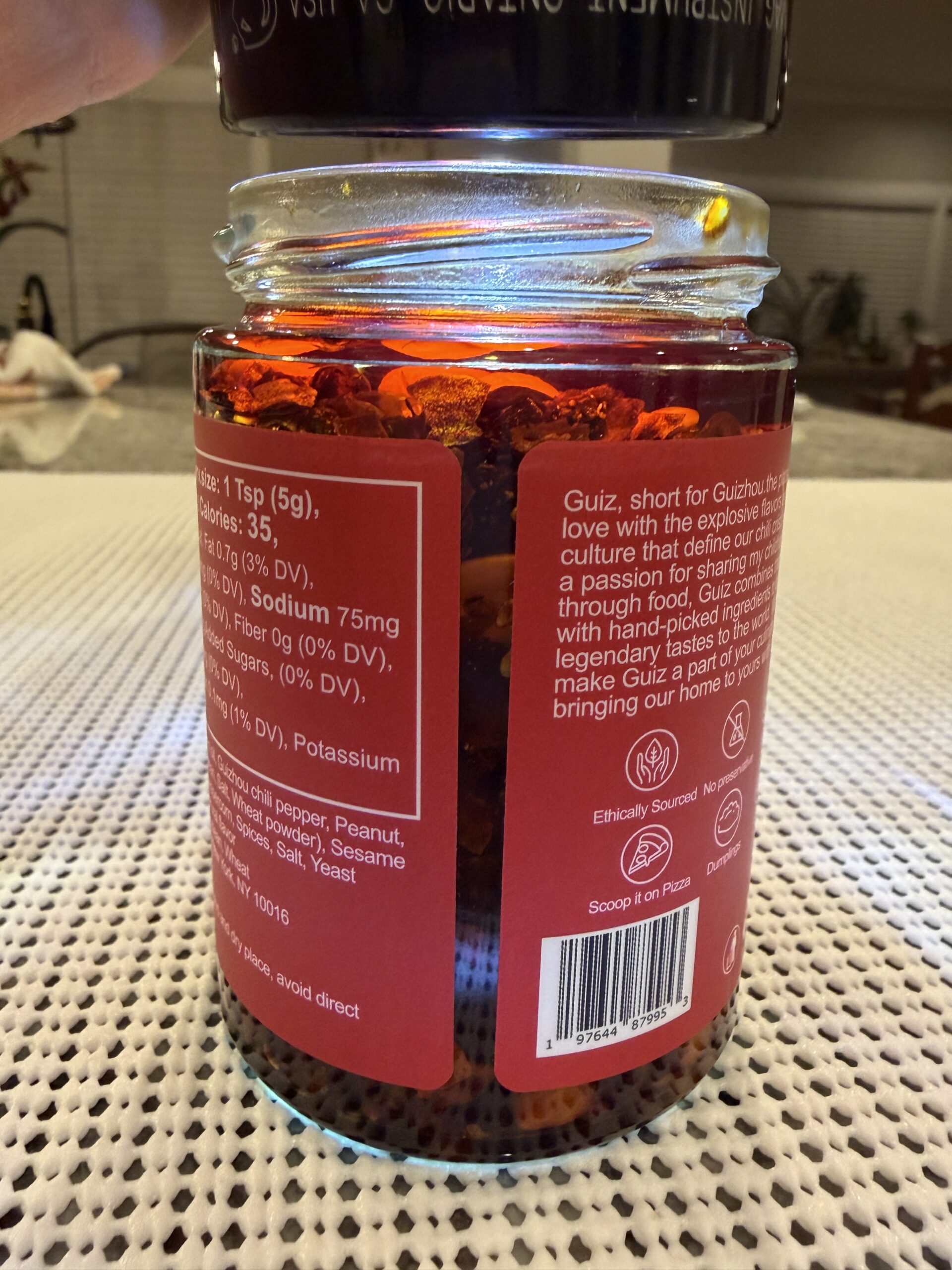
The oil itself is clear, with an orangish-red hue — somewhere between amber and paprika. No fine particulate floating around, which tells me the oil was strained or settled properly after cooking. You can see right down through it to the chili bits sitting dense and packed at every level of the jar. This isn’t a product where you scrape past an oil layer to find the good stuff hiding at the bottom. The good stuff is everywhere.
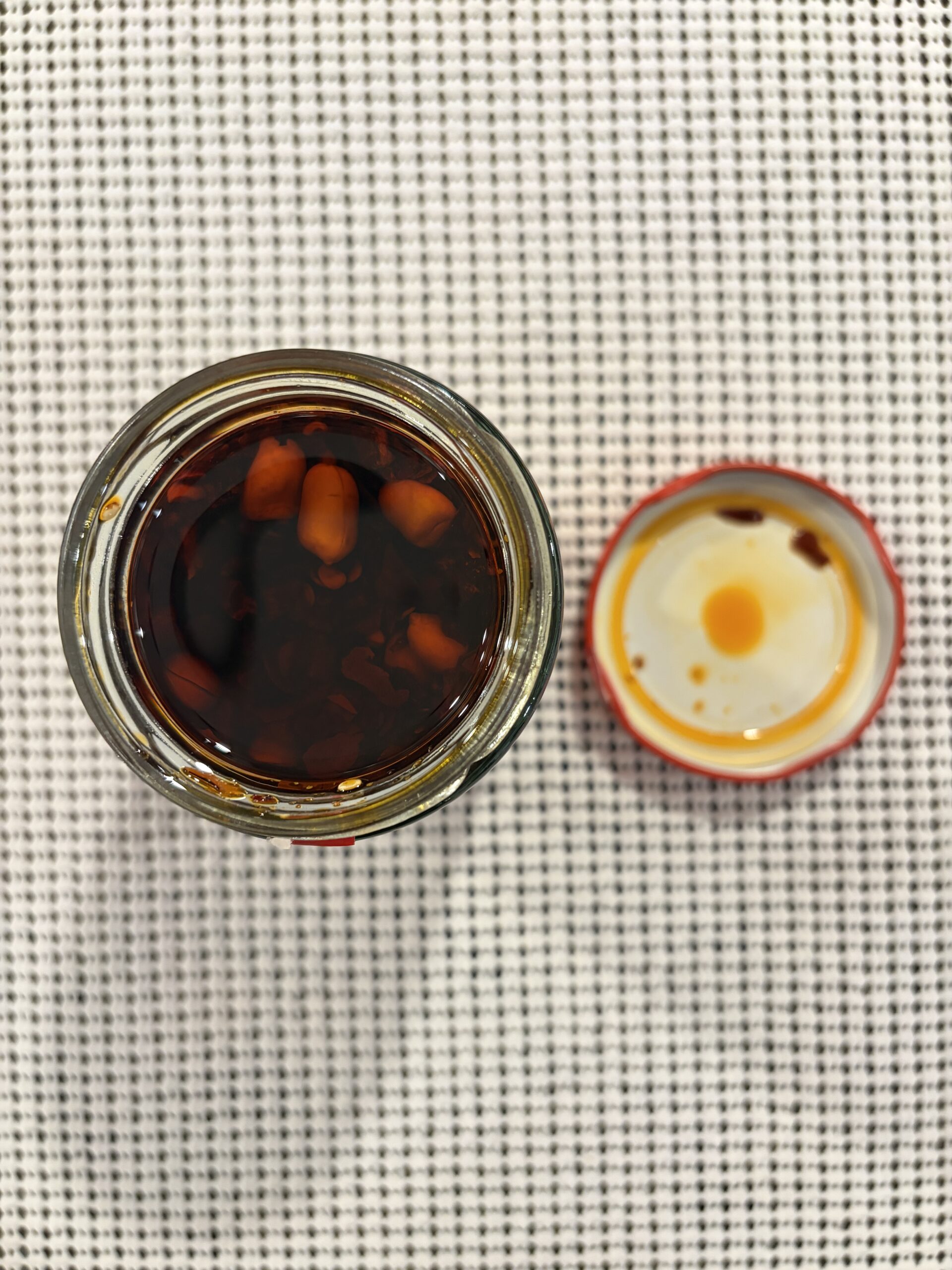
Visible ingredients span a wide size range: whole peanut pieces, sesame seeds, ground chilies in varying sizes, and what looks like bits of garlic and ginger throughout. The visual complexity matches the ingredient list, which is exactly what I want to see. Nothing looks uniform or over-processed — it looks like someone cooked this in a wok, not an assembly line.
Texture & Crunch
Fork-sit test before stirring: the fork rests on top of the settlement. Doesn’t sink. That’s a dense jar. The solids have enough structure to support the fork’s weight, which tells you the oil-to-solids ratio is in the top tier before you even taste anything.
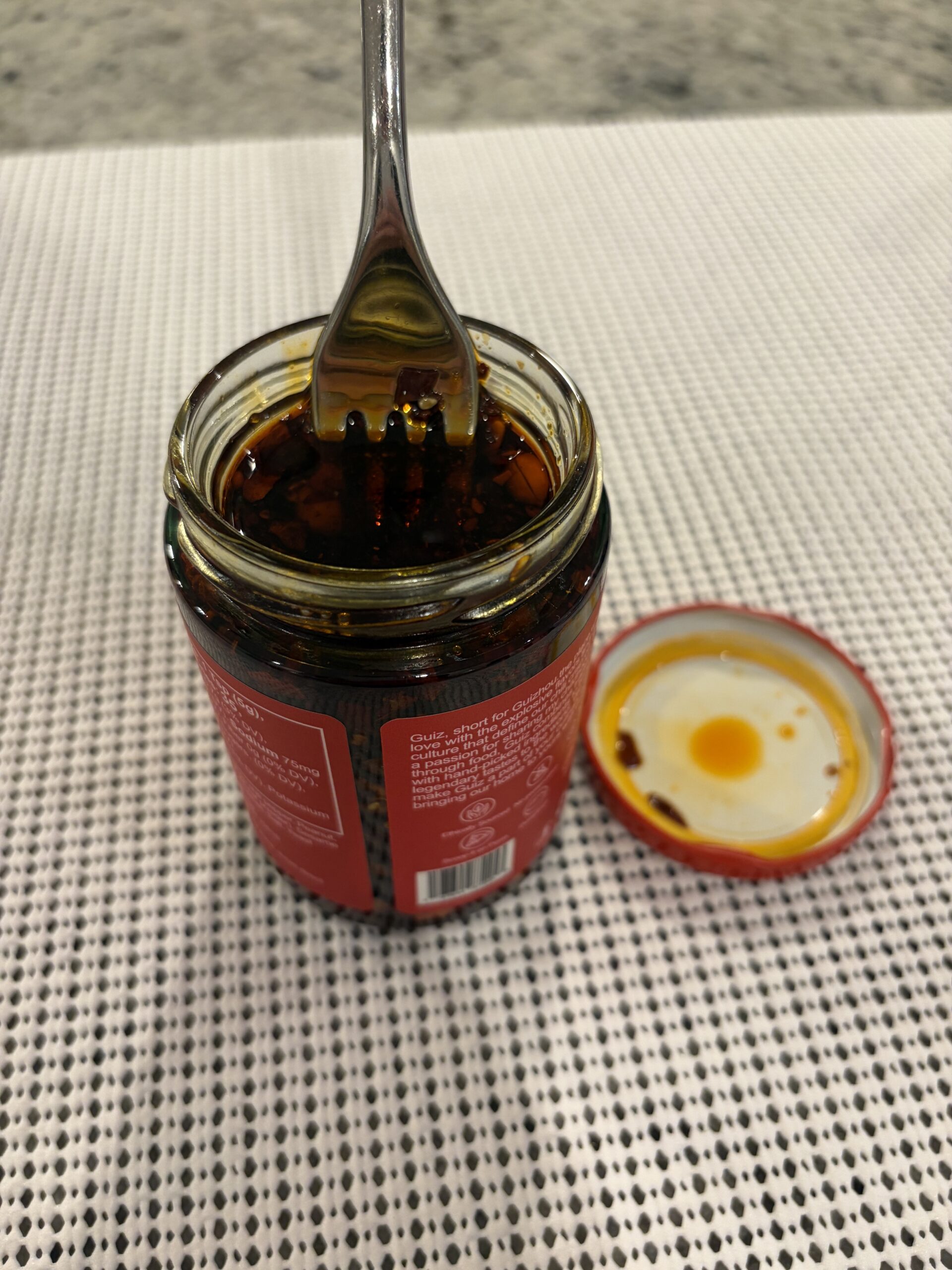
After stirring, the fork pulls through with resistance. Bits cling to it, the oil coats but doesn’t drown, and you get a loaded forkful every time. The peanuts provide the primary crunch — they’re intact enough to require a real bite, and they give the jar its structural backbone. Sesame seeds add a finer secondary layer. The chili pieces fall somewhere between crispy and crunchy depending on their size — smaller ground bits dissolve on contact with warm food, while the larger flakes hold their shape through a full bite.
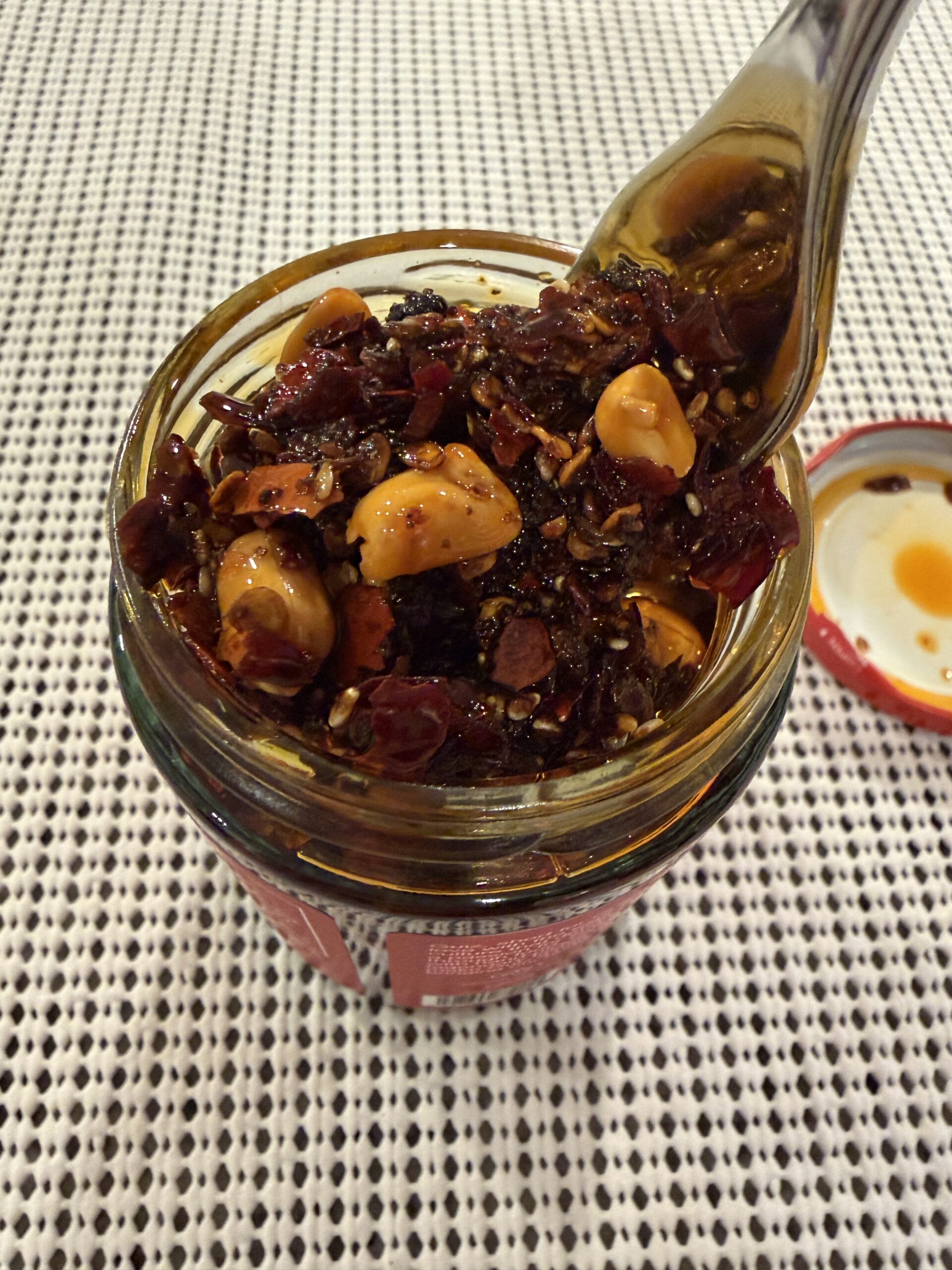
If I had to pick one thing to improve, it would be crispiness on the chili flakes specifically. The crispy bits overall are good — undeniable crunch from the peanuts and seeds — but the chili pieces themselves lean slightly toward chewy rather than shattery. A touch more frying time on those could push the texture from good to flawless. That said, the overall bit density is among the best I’ve tested. You are not fishing for scraps in an oil bath here. Every forkful is loaded.
Flavor Complexity
Here’s where this jar earns its tier. The flavor timeline goes like this: oil hits first, and it’s not empty oil. The soybean base is carrying garlic, ginger, and chili from the infusion — you taste those within the first second. Then the broader oil character shifts as the chili kick arrives. After that, the Sichuan peppercorn shows up and starts doing its thing: numbing, tingling, spreading across your tongue and lips.
But here’s what separates GUIZ from most jars at this price: even while the heat and the numbing are working your mouth over, you’re still tasting distinct flavors. The peanuts come through clearly — a roasted, slightly sweet nuttiness that anchors the whole experience. The broad bean paste adds a fermented depth underneath that keeps the flavor developing long after the initial hit. Yeast extract and cooking wine are low on the label but they show up in the mid-palate as a savory layer that’s hard to isolate and impossible to miss once you notice it.
Most chili crisps marketed at the American grocery shopper lean on sugar to bridge the gap between heat and accessibility. best original chili crisp does it. Some Fly By Jing variants do it. GUIZ doesn’t. Sugar is second-to-last on the ingredient list, and you can taste the difference — the flavors stay distinct instead of collapsing into a sweet-spicy blur. The complexity here comes from actual ingredients doing actual work, not from sugar smoothing over a simpler product. That’s a meaningful distinction.
This is a whole jar product. The oil does flavor work on its own — I tasted it separately, and it’s legitimately good. Not neutral filler, not just a heat vehicle. The oil alone would be nice drizzled over rice or noodles. The bits bring the crunch and the deeper layers. Together, they function as a designed system, not two separate things sharing a container.
Compared to Lao Gan Ma, the benchmark I measure every chili crisp against: GUIZ is ahead. LGM has its MSG-driven savoriness that’s hard to beat on a raw craving level, and I still reach for it when I want that specific hit. But GUIZ has depth that LGM doesn’t attempt. The chilies are more interesting — the Guizhou peppers bring a complexity that LGM’s simpler chili blend can’t match. The oil is doing more. And the peanut-doubanjiang backbone gives GUIZ a richness that operates on a different level. Compared to Fly By Jing Original, the bit density alone puts GUIZ in a different category — plus you’re getting a full-spectrum flavor rather than an oil-forward product with scattered solids.
Heat
I got rocked on the first bite. The heat here runs on two tracks: a chili burn from the Guizhou peppers that’s immediate and front-of-mouth, and a Sichuan peppercorn layer that builds into a numbing, tingling sensation across your lips, the roof of your mouth, and up into your nose.
This is a 4 on my scale. It’s hot. Not “clear your sinuses and regret your choices” hot, but hot enough that I was still feeling the Sichuan peppercorn several minutes after my last bite. The chili burn peaks within 15–20 seconds, but the numbing component sticks around and keeps reminding you it’s there. If you’re not used to mala-style heat, this will catch you off guard.
What makes it work is that the flavor doesn’t disappear under the spice. Even while my mouth was burning and tingling, I was still picking up peanut, sesame, and that broad bean paste funk underneath. The heat adds to the experience rather than replacing it — which is exactly what good Sichuan peppercorn should do when it’s balanced correctly. For heat-sensitive eaters, start with a quarter teaspoon on rice and build from there. For everyone else, this is the kind of heat that makes you want another bite before the last one fades.
Use Cases
The label suggests pizza, dumplings, and salad. Agree on all three. I’d add: fried rice, lo mein, scrambled eggs, avocado toast, plain white rice, ramen, grilled chicken, roasted vegetables. The peanut element makes it particularly good on anything that benefits from a nutty, savory hit — cold noodles, grain bowls, even a bowl of congee.
Where it might not work: delicate fish, anything dairy-heavy where the Sichuan peppercorn numbness could clash with creaminess, and desserts. Definitely don’t put it on ice cream.
The Mixing Angle
This is a standalone jar. It does not need to be mixed with anything else to reach its potential — it’s already there. That said, if you’re a mixer, GUIZ Original would pair well blended into a milder jar that needs more heat and crunch. Half a jar of Momofuku Chili Crunch topped off with GUIZ Original would give you GUIZ vs. Momofuku comparison’s sweet-savory base with GUIZ’s bite and density. But that’s a luxury move, not a necessity. This jar stands on its own.
Versatility & Packaging
At $11.98 for 8.11 ounces, you’re paying $1.48 per ounce. That’s competitive — in the same range as Fly By Jing and less than some boutique brands that deliver half the flavor. Given the bit density and the flavor complexity, the value proposition is strong. You’re getting a full, dense jar for the money — not paying a premium for oil with marketing attached.
The packaging is clean and functional. Glass jar, metal lid with a QR-coded seal sticker that doubles as a tamper indicator. Spoon access is fine — the mouth is wide enough to get a real spoonful without scraping. Shelf life is 12 months, and storage is just “cool, dry place” — no refrigeration required after opening, which is a practical win for anyone whose fridge is already full of condiments.
GUIZ Chili Crisp Review — Final Verdict
GUIZ Original Chili Crisp earns the highest tier I give. The settlement is the best I’ve tested — near-zero oil layer with crispy bits packed to the brim. The flavor complexity is the best I’ve tested across every jar reviewed so far: peanut, doubanjiang, Sichuan peppercorn, cooking wine, and yeast extract all doing identifiable, layered work. The heat is serious at a 4 out of 5 but never kills the flavor underneath it. The oil contributes as a whole-jar component, not dead weight. The only minor note is that the chili flake crispiness could be slightly sharper — but that’s a nitpick on an otherwise complete jar that hits every criterion I evaluate.
This is the first EXCELLENT I’ve given. It earned it. If you’re looking for one chili crisp to stock and never think twice about, this is the jar. Grab it on Amazon for $11.98.
GUIZ also makes a fermented black bean variant. See our GUIZ Black Bean Chili Crisp review for how the two jars compare.
Frequently Asked Questions
Is GUIZ chili crisp spicy?
Yes. GUIZ Original rates a 4 out of 5 on the Flavor Index Lab heat scale. It combines chili burn from Guizhou peppers with Sichuan peppercorn numbness. The heat is serious but doesn’t overpower the other flavors. If you’re sensitive to spice, start with a small amount on rice.
What does GUIZ chili crisp taste like?
GUIZ Original has a layered flavor profile. The oil carries garlic and ginger up front, followed by a chili kick and Sichuan peppercorn tingle. Peanuts add roasted nuttiness, and broad bean paste (doubanjiang) brings a fermented savory depth. Cooking wine and yeast extract add background complexity.
Where can I buy GUIZ chili crisp?
GUIZ Original Chili Crisp is available on Amazon for $11.98 per 8.11 oz jar. You can also order directly from the GUIZ website (guiz.co), which sometimes offers discounts and bundle deals.
Is GUIZ chili crisp vegan?
Yes. The label states that GUIZ Original Chili Crisp is vegan. The ingredient list contains no animal products — the base is soybean oil with chili peppers, peanuts, broad bean paste, sesame seeds, and spices.
How does GUIZ compare to Lao Gan Ma?
GUIZ Original offers more flavor complexity than Lao Gan Ma Spicy Chili Crisp. The oil does more flavor work, the chilies are more interesting (Guizhou peppers vs. LGM’s simpler blend), and the peanut-doubanjiang backbone adds richness that LGM doesn’t attempt. LGM has a stronger MSG-driven savory hit. GUIZ earned EXCELLENT; LGM earned GOOD.
What are the main ingredients in GUIZ chili crisp?
The full ingredient list: non-GMO soybean oil, Guizhou chili pepper, peanuts, broad bean paste (chili, broad bean, salt, wheat powder), sesame seeds, ginger, garlic, Sichuan peppercorn, spices, salt, yeast extract, cooking wine, sugar, and natural flavor.
Does GUIZ chili crisp need to be refrigerated?
No. The label says to keep it in a cool, ventilated, dry place and avoid direct sunlight, but does not require refrigeration after opening. Shelf life is 12 months.