
This post contains affiliate links. I may earn a small commission if you buy through them — at no extra cost to you. My scores are never influenced by this.
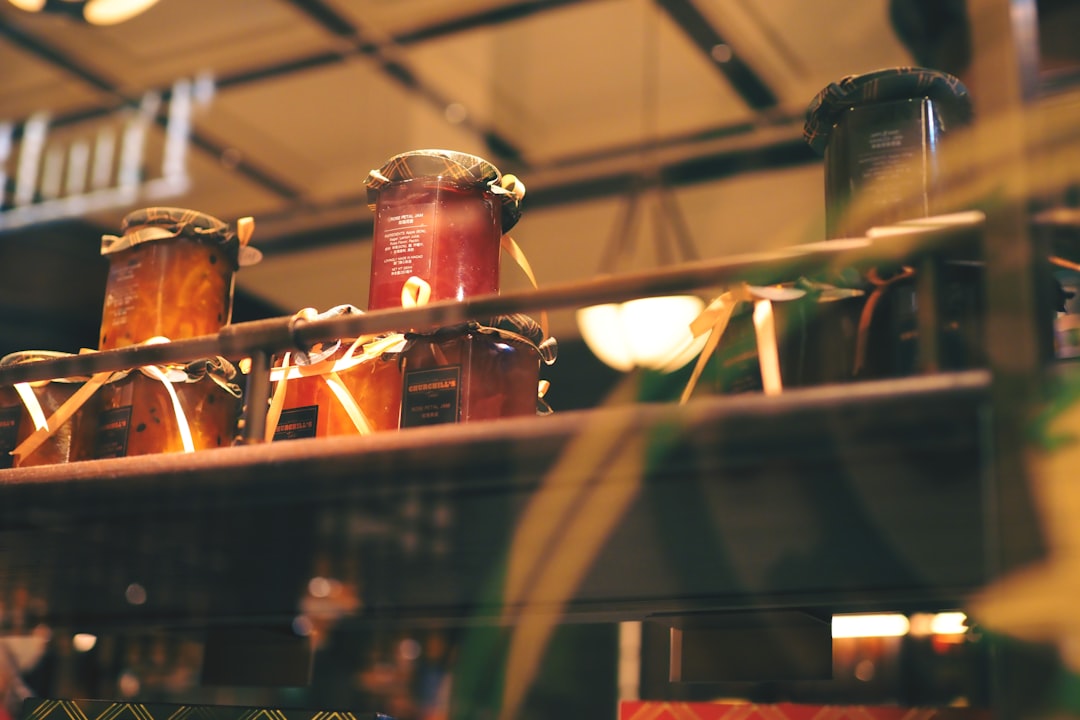
I had fourteen hot sauces in my fridge and zero chili crisps.
That’s not an exaggeration. I counted them during a kitchen purge last year. Cholula, Frank’s in three varieties, a habanero something from a farmers market, two bottles of sriracha, and a ghost pepper sauce I opened once. Fourteen bottles. All liquid. All doing the same thing at different volumes. I thought I had the best condiments a home cook could own. I’d graduated from ketchup years ago. I owned a vinegar I actually liked. I had opinions about mustard. I thought the game was over — you collect enough hot sauces, maybe branch into a nice BBQ rub or two, and that’s the map.
The map was missing an entire continent.
A friend left a jar of something at my place after a cookout. Small jar, Chinese label I couldn’t read, oil with stuff floating in it. I tried it on leftover rice the next morning and sat there for a full minute trying to figure out what had just happened in my mouth. Heat, yes — but also crunch. Garlic. Something fermented and savory underneath everything. The oil itself tasted like it had been cooked with intention, not just poured from a bottle. It was doing four things at once, and I didn’t have a word for any of them.
That jar was chili crisp. And the reason I’d never heard of it wasn’t that I wasn’t paying attention — it’s that nothing in the BBQ world, the hot sauce world, or the “best condiments” listicles on Google had ever pointed me in its direction.
The irony is that I had walked past a version of it dozens of times. Trader Joe’s Chili Onion Crunch had been sitting on the shelf every time I went in for coffee and frozen dumplings. I just never connected it to anything I was already cooking.
This is the honest guide to the best condiments I wish existed when I was staring at fourteen identical bottles wondering what I was missing.
The Shelf Everyone Starts With
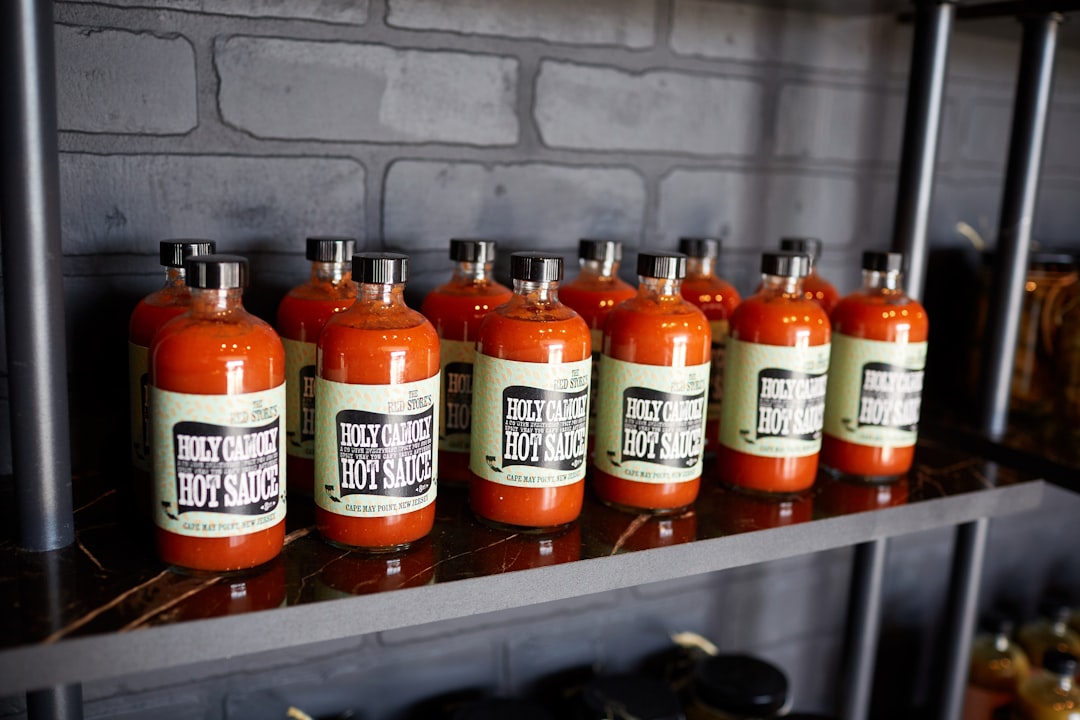
There’s a condiment evolution that most people go through without realizing it has stages. You just wake up one day and notice that your fridge door looks different than it did five years ago.
Stage one is the defaults. Ketchup, yellow mustard, mayo, ranch. These aren’t bad — they’re just the starting roster. You inherited them from whatever your parents kept in the fridge, and they work because they don’t ask anything of you. Squeeze, apply, done.
Stage two is when you discover that heat can be a daily condiment and not just a dare. For most people, this is sriracha. Maybe Frank’s Red Hot. You start putting it on eggs, on pizza, on things you never thought needed hot sauce. You feel like you’ve unlocked something. You have — but you’re still in the tutorial.
Stage three is the enthusiast phase. This is where the BBQ guys live, and the hot sauce collectors, and the people who own a vinegar they can’t pronounce. You’ve got three BBQ sauces for different meats. You own a chili flake blend you found at a specialty store. You have opinions about Dijon versus whole grain. Your fridge door is a curated shelf now, and you’re quietly proud of it.
Stage four is where most people stall out — because nothing in stage three points you toward what’s next. The BBQ ecosystem talks about rubs, smoke, and sauce. The hot sauce ecosystem talks about Scoville ratings and pepper varieties. The “best condiments” articles on the internet list the same twelve things (soy sauce, sriracha, Dijon, etc.) and call it comprehensive. Nobody mentions that there’s a whole category of condiments built on textured oil and crispy things that most Americans have never heard of.
That’s the gap. Not in your palate — in your information sources.
The Finishing Layer Your Smoker Can’t Make
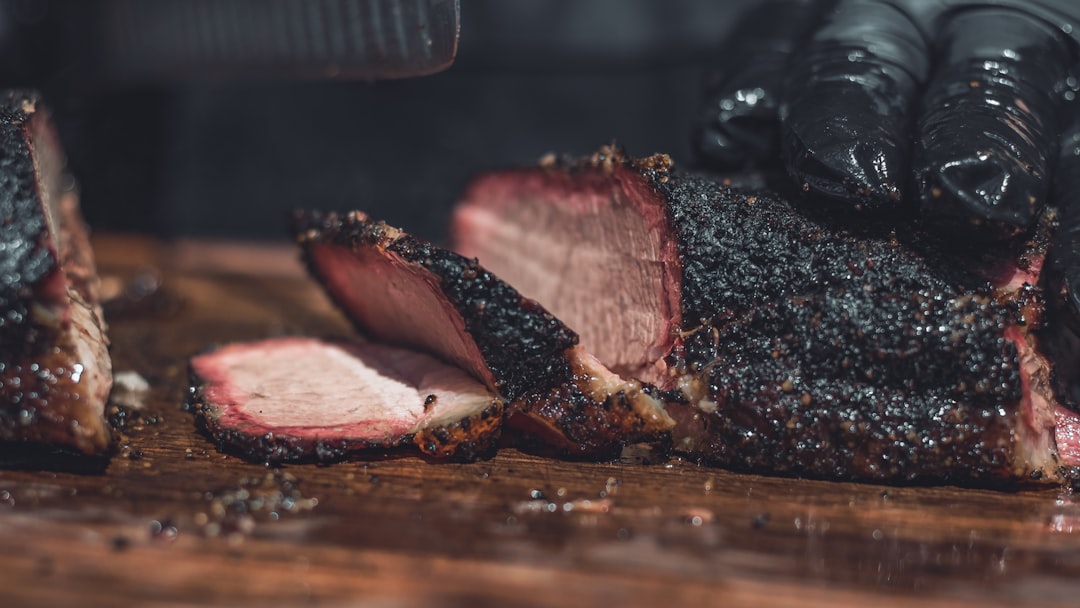
If you’ve spent any time in the BBQ world, you know the obsession with process. The wood selection, the rub composition, the twelve-hour low-and-slow cook, the bark, the smoke ring. It’s meticulous, and the results speak for themselves.
But here’s what nobody in the BBQ world talks about: what happens after the meat comes off the smoker. The finishing layer.
Most BBQ cooks treat the post-cook condiment as an afterthought. You’ve got Sweet Baby Ray’s on the table, maybe a Carolina vinegar sauce, maybe nothing at all because the brisket should speak for itself. And that last instinct — letting the meat stand alone — is right about 80% of the time. But the other 20% is where a finishing condiment can do something a rub and a smoker physically cannot.
Smoke gives you depth. A rub gives you crust. Neither gives you brightness, crunch on the plate, or that savory complexity that comes from fermented ingredients hitting rendered fat. That’s a different kind of flavor work, and it’s exactly what chili crisp does.
A spoonful of chili crisp on a slice of brisket does three things at once. The oil — usually soybean or rapeseed, sometimes sesame — carries fat-soluble flavor compounds that interact with the meat’s own rendered fat. The crispy bits (fried garlic, shallot, chili flakes, sometimes peanuts or sesame seeds) add a textural contrast against the bark that no sauce can replicate. And if the chili crisp has Sichuan peppercorn in it — and the good ones usually do — you get a tingle that lifts the smoke rather than competing with it.
This isn’t about replacing BBQ sauce. I’m not that person. It’s about having a finishing option that adds a dimension your smoker can’t produce. The grilling world has rubs, marinades, and sauces. It doesn’t have a textured condiment that brings crunch, heat, and umami to the plate in one move. Chili crisp fills that gap.
If you try this, put the chili crisp on the plate next to the meat — don’t pour it over everything. You want to dip into it, not drown the bark you spent fourteen hours building.
And if you want to go deeper into the funk: Lao Gan Ma Chili Oil with Fermented Soybeans on plated smoked meat is a move. The fermented black soybeans add a savory, almost meaty funk that layers right into the smoke instead of fighting it. It’s not crispy — it’s oily and dense and earthy — but on brisket or pulled pork, the beans do something that straight chili crisp doesn’t. That fermented depth is its own category of flavor.
I’d dabbled with miso pastes before, trying to get that same umami depth into something I could put on meat. Never figured out how to make it work as a finishing sauce — miso on its own is too thick, too salty, and dissolving it into something pourable always diluted the thing I was chasing. The fermented soybeans in that Lao Gan Ma jar solved the problem I couldn’t. They deliver the funk already suspended in oil, ready to go. No mixing, no thinning, no recipe required.
You Outgrew Ketchup. You’ll Outgrow Sriracha Too.
Sriracha did something important. It normalized the idea that heat could be a default condiment — not a stunt, not a special occasion, just a thing you put on food every day. Before sriracha showed up on every restaurant table in America, most people’s relationship with spicy food was either “I can handle it” bravado or “no thanks.” Sriracha made heat casual. That mattered.
But sriracha is also one-dimensional in a way that becomes obvious once you’ve tasted something that isn’t.
It’s liquid. There’s no texture, no crunch, no variation in what your mouth experiences. It hits the same way every time — vinegar-forward acidity, a garlic note, a medium burn that peaks fast and fades clean. It’s the same three notes on repeat, and for a while that’s enough. You put it on everything because it improves everything the same amount, the same way.
The 2022 shortage changed things for a lot of people. When sriracha disappeared from shelves for months, people started looking around. Some found chili oil. Some found gochujang. Some found sambal. And a lot of them never went back to sriracha as their daily driver — not because sriracha got worse, but because they realized heat could be more interesting than a squeeze bottle.
Here’s what sriracha can’t do: texture. There’s no crunch in a liquid. There’s no contrast between the sauce and what it’s sitting on. Every bite delivers the same experience — a thin, wet layer of vinegar-acid-garlic-heat. That’s consistent, sure. But consistency and complexity are different things. You can be consistent and boring. Sriracha, after a few years of daily use, starts to feel like background noise. It improves things, but it doesn’t make you stop and think about what you’re eating.
Chili crisp is what happens when heat gets a supporting cast. Instead of liquid on liquid, you’ve got oil with crispy bits — fried garlic, fried shallot, chili flakes, sometimes nuts or seeds. Instead of one heat profile, you’ve got layers: front burn from dried chilies, a slow tingle from Sichuan peppercorn, a savory baseline from fermented ingredients. Instead of vinegar driving the flavor, you’ve got MSG, sugar, salt, and aromatics building something that develops on your tongue instead of just hitting and leaving.
And the mouthfeel — sorry, texture — is the part that surprises people the most. You bite into fried garlic chips that shatter. You feel sesame seeds pop. The oil coats your tongue differently than vinegar does, carrying fat-soluble flavors to parts of your mouth that liquid hot sauce never reaches. It’s a fundamentally different physical experience, and once you’ve had it, plain liquid heat starts to feel like it’s missing something.
I’m not saying sriracha is bad. It does its job. But it’s the condiment equivalent of learning three chords on guitar — you can play a lot of songs, but there’s a whole instrument you haven’t explored yet.
If you want a stepping stone rather than a leap, Momofuku Chili Crunch is the closest thing to a bridge product. It’s at Whole Foods, the brand is recognizable from restaurants, and the flavor profile is familiar enough that a sriracha user won’t feel lost. It’s not the best chili crisp I’ve tested, but it’s the one most likely to already be in your grocery store. Start there if the Asian market feels like a detour.
What to Put on a $40 Steak (That Isn’t A1)
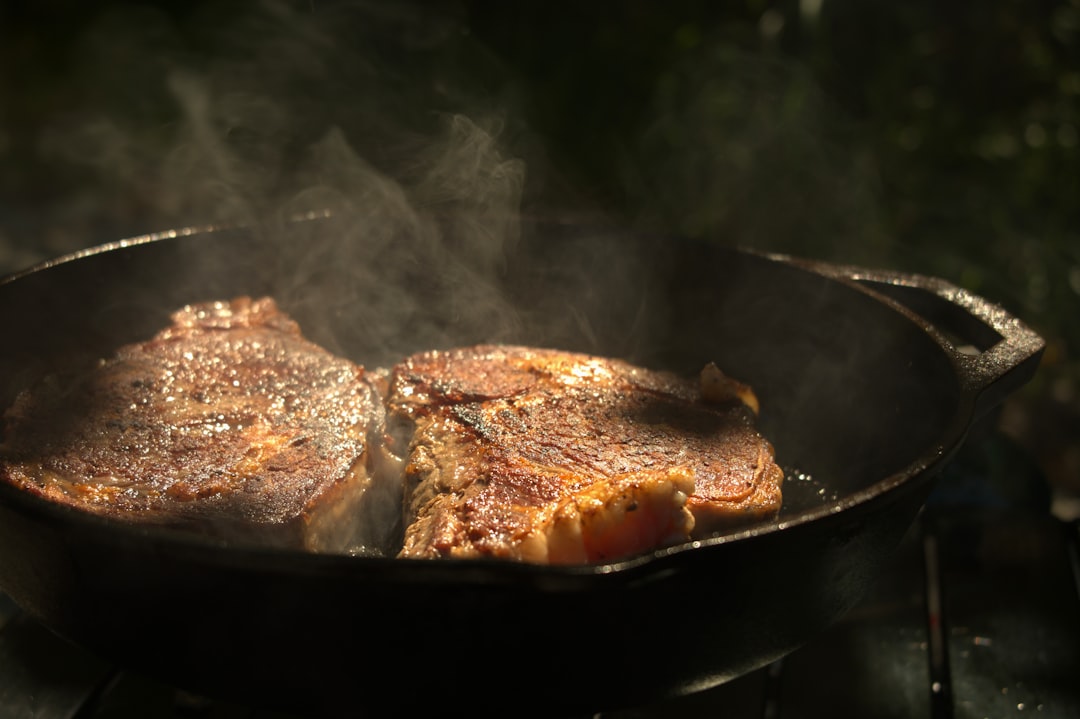
This one’s for the precision cooking crowd — the sous vide people, the reverse sear people, the “I own a Thermapen and I use it” people.
You know the drill. You nail the internal temp at 131°F. You rest it properly. You get the cast iron screaming hot and lay down a 90-second sear that gives you a crust you can hear. The steak is perfect. And then you sit down and eat it with… nothing. Or worse, A1.
Here’s the thing about a perfectly cooked steak: it’s already doing the heavy lifting on temperature, texture, and beef flavor. What it’s not doing is providing brightness, aromatic complexity, or any kind of contrast. A great steak is a great canvas. And the best condiments for steak aren’t sauces that mask the beef — they’re finishing condiments that add a layer on top of it.
A tablespoon of chili crisp on the plate — not on the steak, next to it — gives you something A1 never could. The oil carries fat-soluble flavors that interact with the rendered fat on the steak’s surface. The crispy bits give you crunch against the seared crust, which is a textural contrast that makes your brain pay attention. And if there’s Sichuan peppercorn in the mix, that tingle on beef is genuinely something you need to experience before you dismiss it.
I’m not talking about dousing a ribeye. I’m talking about a small spoonful on the side of the plate that you dip into between bites. It’s the same move as chimichurri, but with more texture and a completely different flavor architecture. The oil does something. The bits do something. Together they do something your steak knife can’t.
If you want a specific recommendation: S&B Crunchy Garlic is excellent on steak — the garlic chips shatter against the crust, and it’s lighter on oil than most Chinese-style chili crisps, so it doesn’t compete with the beef fat. And if you’re feeling adventurous, Momofuku Black Truffle Chili Crunch on a good ribeye is borderline absurd in the best way. The truffle oil meets the rendered beef fat and it’s just — yeah. That works.
If you’ve ever wondered whether chili crisp works as a cooking ingredient or just a topper, the steak test is where you figure it out. It works both ways — but as a finishing condiment on good meat, it’s a different experience than cooking with it. The oil’s flavor comes from how it was made, and that flavor hits hardest when it’s not competing with a pan.
The Best Condiments Are the Ones You Actually Use
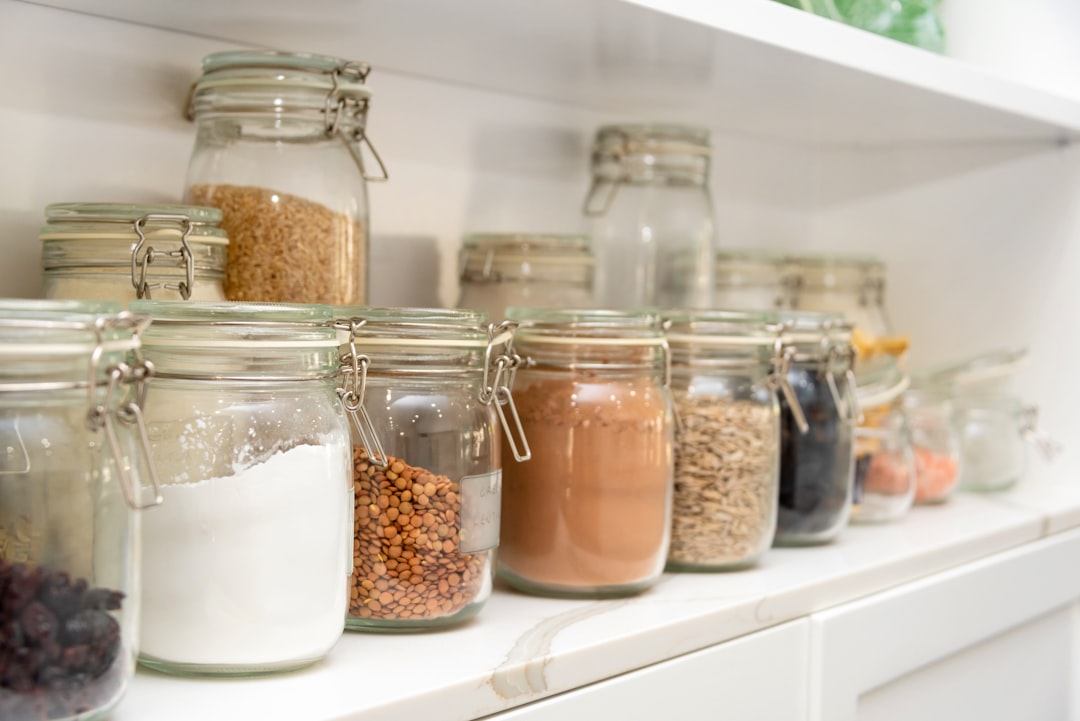
I’ve spent the last year testing chili crisps, chili oils, and salsa machas — reading every label, checking every ingredient list, trying every jar on the same set of foods. And the thing that keeps coming back to me isn’t which jar is best. It’s that most people’s condiment shelves are missing entire categories.
Here’s how I think about it now. Not a ranked list — a framework. Every condiment on your shelf should fill a role, and most shelves are overloaded in some roles and completely empty in others.
The acid. A good vinegar, citrus, something pickled. This is what cuts through richness and resets your palate between bites. Most people have this covered with a basic distilled vinegar and maybe some pickles — which is fine, but limited. A rice vinegar adds a softer acidity that works on Asian dishes without fighting the other flavors. A good sherry vinegar does things on roasted vegetables that balsamic pretends to do. Even just a bottle of fresh lemon juice in the fridge gives you acid on demand. The point is having something that isn’t just “sour” but actually makes the next bite taste better.
The heat — textured. This is the slot most shelves are missing entirely. A chili crisp gives you heat plus crunch plus oil plus flavor. It’s not just a spicy thing — it’s a condiment that does four jobs. If you don’t have one of these, you’re the guy with fourteen hot sauces and a blind spot. The buying guide covers what to look for. And if garlic is your thing specifically, the garlic-forward jars are their own subcategory.
The heat — liquid. Your sriracha, your Frank’s, your whatever-you-grab-without-thinking. Liquid heat still has a place. Quick applications, marinades, things where you need even distribution and don’t want oil. Keep one. But now it has a partner, not a monopoly.
The umami. Soy sauce is the obvious answer, and honestly, a good naturally brewed soy sauce is one of the most useful things you can own. Fish sauce if you cook Southeast Asian food — the smell is intense in the bottle, but a few drops in a stir fry or a soup adds a savory depth you can’t get any other way. Miso if you’re into Japanese flavors, or even if you’re not — a spoonful of white miso stirred into a vinaigrette is a quiet power move. This whole category is about depth: making food taste more like itself, not like something you added. Most people have soy sauce and stop there, which is fine. It’s arguably the most versatile umami source on earth.
The fat. A finishing oil worth drizzling. Good olive oil counts. So does chili oil — which bridges this category and the heat category in a way nothing else does. The variety across chili oil styles is wider than most people realize.
The sweet. Honey, maybe hot honey if you’re into that. This is the category that’s gotten the most attention lately, but it’s also the narrowest. Sweet is one note. Use it where it works (biscuits, fried chicken, pizza), but don’t let it take over.
The funk. Fermented anything. Gochujang. Salsa macha. Sambal. Doubanjiang. This is the deep end of the condiment world — flavors that are alive, that developed over weeks or months of fermentation, that taste different every time because they’re literally still changing in the jar. Most people don’t have anything in this category, and that’s where the biggest upgrade hides. Gochujang is the most approachable entry point — it’s sweet, spicy, and savory all at once, and it works as a marinade, a glaze, a dipping sauce, or straight off a spoon. Doubanjiang is darker and more intense — fermented broad bean and chili paste that’s the backbone of Sichuan cooking and a lot of the best chili crisps. Start with one. You’ll end up with three.
Here’s what I didn’t understand before I started testing: chili crisp covers multiple categories at once. A good jar gives you heat, fat, umami, and texture in a single spoonful. That’s why one jar of chili crisp can replace three or four bottles that each only do one thing. It’s not just a condiment — it’s a category shortcut. And at \ to \ a jar, that math works out fast.
The Three-Jar Starter Move
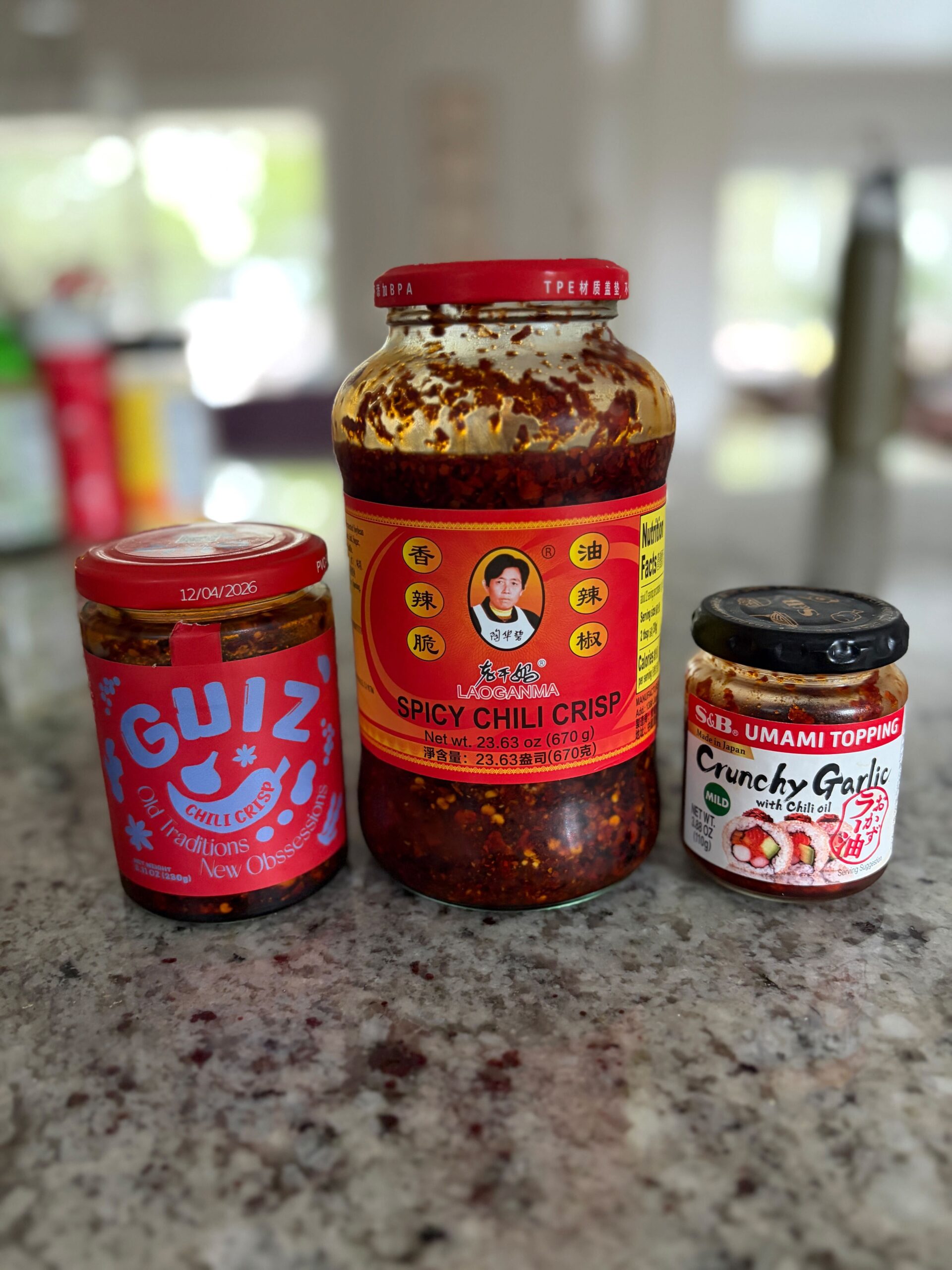
If you’ve read this far and you’re thinking about trying chili crisp, here’s exactly where to start. Not “go explore” — three specific jars that cost less than $25 total and will show you what this category can do.
Jar 1: Lao Gan Ma Spicy Chili Crisp. This is the benchmark. It’s been around since 1997, it costs about $4 for a big jar, and you can find it at most grocery stores with an Asian section. It’s not the best chili crisp I’ve tested — but it’s the one everything else gets compared to, and for good reason. Dense with crispy bits, a clean heat that builds slowly, and a fermented depth from doubanjiang that nothing else in this price range delivers. Start here. Get your bearings.
Jar 2: GUIZ Original Chili Crisp. This is what the category can be when someone puts real thought into every ingredient. It earned the only EXCELLENT tier I’ve given so far, and it did it by being a whole jar concept — the oil and the bits work together as a designed system, not two things sharing a container. After Lao Gan Ma shows you the baseline, GUIZ shows you the ceiling. Available on Amazon for about $14.
Jar 3: Something from a different tradition. A Japanese-style chili crisp like S&B, or a salsa macha if you can find one. The point of the third jar is to show you that “chili crisp” isn’t one thing — it’s a format that every food culture interprets differently. Japanese versions tend to be lighter on oil and heavier on aromatics. Salsa macha swaps fried garlic for toasted nuts and dried chilies. Same concept, completely different experience.
Total cost: under $25. All available on Amazon or at a well-stocked grocery store. That’s less than a brisket, less than a decent bottle of hot sauce from a specialty shop, and it opens up a condiment category that most people don’t know exists.
If you want the full ranked list of everything I’ve tested — with tiers, ingredient breakdowns, and specific recommendations by use case — the Best Chili Crisp buying guide is where that lives. And if you want a more structured starting point with specific food pairings for your first week, the Starter Kit guide walks you through it.
Frequently Asked Questions
What condiments should every kitchen have?
Build around six roles: an acid (good vinegar or citrus), textured heat (chili crisp), liquid heat (sriracha or similar), umami (soy sauce or fish sauce), a finishing fat (olive oil or chili oil), and something fermented (gochujang, sambal, or doubanjiang). Most kitchens are overloaded on liquid heat and completely missing textured heat and fermented condiments.
What is the best condiment for grilling?
For the cook itself, BBQ sauce and rubs do the work. But for finishing — adding something to the plate after the meat comes off — chili crisp adds texture, heat, and umami that no sauce can. A spoonful next to sliced brisket gives you crunch against bark and fat-soluble flavor from the oil. It’s a finishing layer, not a replacement for BBQ sauce.
What can I use instead of sriracha?
It depends on what you want. Chili crisp if you want texture plus heat plus umami in one spoonful. Gochujang if you want depth and sweetness with a fermented kick. Sambal oelek if you want raw chili intensity without the vinegar. Each one does something sriracha can’t, and they all work on eggs, rice, and noodles.
Is chili crisp a hot sauce?
No. Hot sauce is liquid heat — vinegar, chilies, maybe garlic, in a pourable form. Chili crisp is a textured condiment made of oil, crispy fried bits (garlic, shallot, chili flakes), and aromatics. The oil carries flavor, the bits add crunch, and the heat is one factor among several. They’re structurally different products that solve different problems on the plate.
What condiment goes with everything?
Chili crisp is the closest thing to a universal condiment. It works on eggs, rice, pizza, steak, pasta, dumplings, roasted vegetables, and most proteins. The oil carries fat-soluble flavor, the bits add crunch, and the heat is moderate enough to enhance without overwhelming. It covers more ground than any single hot sauce.
What is the most popular condiment in the world?
By volume, soy sauce. By cultural dominance in the US, ketchup — though its grip has been slipping for years. The fastest-growing condiment category right now is chili crisp, driven by the texture trend, the swicy movement (sweet plus spicy), and growing interest in Asian condiments among American home cooks.
What condiments are trending right now?
Chili crisp, hot honey, gochujang, and fermented chili pastes are all seeing significant growth. The broader trend is toward texture and complexity — away from one-note liquid heat and toward condiments that do multiple things at once. Chili crisp leads this shift because it combines heat, crunch, oil, and umami in a single jar.
What is a good finishing sauce for steak?
Skip A1. A high-quality chili crisp or chili oil with Sichuan peppercorn adds heat, umami, and crunch without masking the beef. Put it on the plate next to the steak, not on top — you want to dip into it between bites. Chimichurri is another strong option, but chili crisp gives you textural contrast that herb sauces can’t.