
This post contains affiliate links. I may earn a small commission if you buy through them — at no extra cost to you. My scores are never influenced by this.
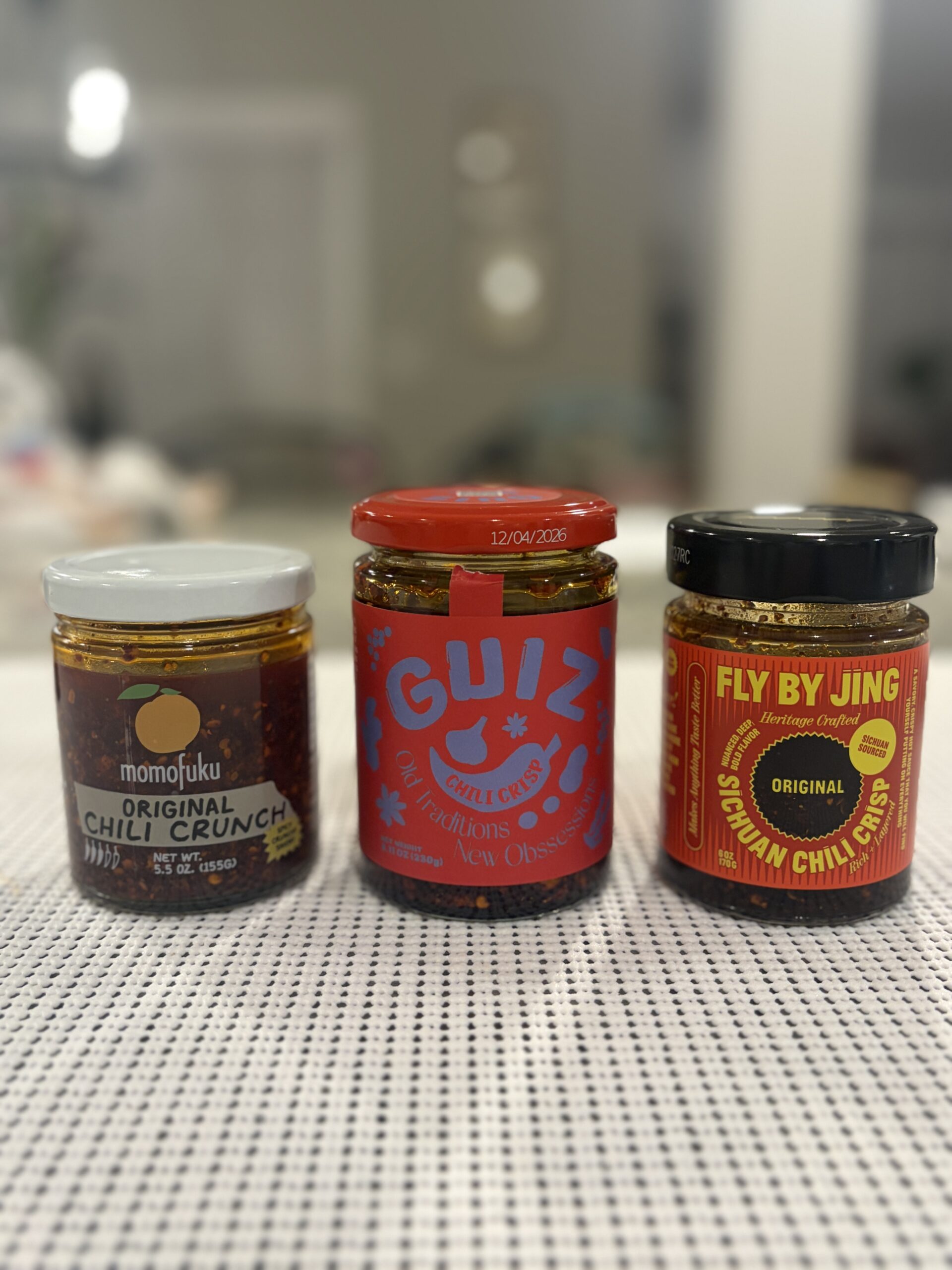
I’ve read the chili crisp ingredients on 25 labels at this point. Not glanced at — read. First ingredient to last, every line, every fine-print item. And when you stack 25 labels next to each other, patterns show up that no single jar can teach you.
This isn’t a ranked list. It’s not a recipe guide. It’s a findings report — what the labels actually reveal about chili crisp ingredients – and what separates a great jar from an average one, who’s using filler, and which ingredients consistently show up in the products I keep reaching for.
If you want to learn how to read a chili crisp label from scratch, start there. This post assumes you already know the basics. Here, I’m mapping the patterns across the full set.
The Four Layers of Every Chili Crisp
Every chili crisp I’ve opened is built on the same four layers. Doesn’t matter if it’s a $3 jar from the Asian grocery or a $16 jar from a DTC brand — the architecture is identical. What changes is the quality and ratio of each layer.
Oil
The foundation. Usually the first ingredient. It determines the jar’s body, how it coats food, and whether the flavor arrives passively (just oil being oil) or actively (oil doing flavor work on its own). The most common bases across the 25 labels I’ve read: soybean oil, grapeseed oil, rapeseed/canola oil, sesame oil, and olive oil. Each signals something different about the product’s style — more on that below. For a deep dive on what each oil type means, see the oil breakdown.
Chilies
The heat source. Some labels name the exact variety — Erjingtiao, Tribute pepper, Calabrian, Puya, chili de árbol. Others just say “chili” or “red pepper.” That specificity gap tells you something about the producer’s transparency. For the full guide on what each chili variety brings to the jar, start there.
Crispy Bits
The texture. This is what makes a chili crisp a chili crisp — fried garlic, shallots, sesame seeds, peanuts, fermented black beans. The composition and ratio of these bits turned out to be the single strongest quality predictor across all 25 products I tested. More on that in the crispy bits guide.
Seasonings
The supporting cast. Salt, sugar, MSG, Sichuan peppercorn, soy sauce, ginger, star anise, mushroom powder. These are the ingredients that separate a one-note jar from a layered one. Some jars use three seasonings. White Elephant uses 21 total ingredients — and every single one is an identifiable whole food. For more on the flavor builders, that post goes deep.
Oil Type Tells You Style, Not Quality
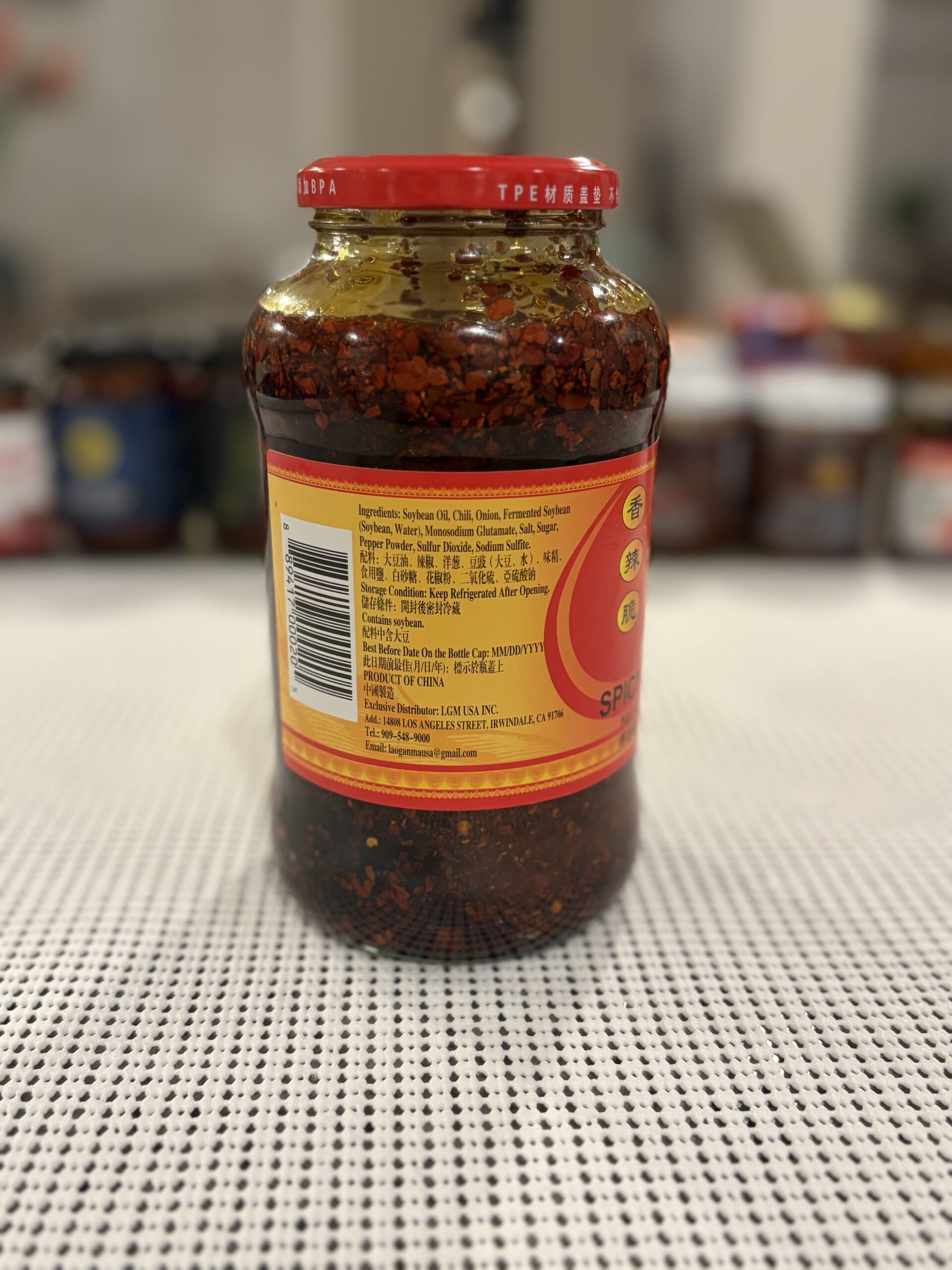
Before I started stacking labels, I assumed the oil type would predict quality. It doesn’t. What it predicts is style — the regional tradition the producer is drawing from.
| Oil Base | What It Signals | Products Using It | Tier Range |
|---|---|---|---|
| Soybean oil | Traditional Chinese, mass-market, or budget | Lao Gan Ma, GUIZ (both), FBJ Xtra Crunchy, FBJ Sweet & Spicy, Fusion Select, WUJU | SKIP to EXCELLENT |
| Rapeseed / Canola | Traditional Sichuan (pressed rapeseed) or modern neutral | Fly By Jing Original, FBJ Xtra Spicy, Hotpot Queen, Momoya (canola + sesame) | AVERAGE to GREAT |
| Grapeseed oil | Modern American / DTC brands | Momofuku (all 4 variants) | SKIP to GREAT |
| Olive oil | Italian / Calabrian / Mediterranean fusion | Trader Joe’s, Alessi, White Elephant (EVOO + avocado), Ikeuchi (olive palm) | AVERAGE to GREAT |
| Sesame oil (primary or co-primary) | Japanese / Korean, or used as a flavor accent | S&B (corn + sesame), Momoya (canola + sesame) | GOOD to GREAT |
| Rice bran oil | Regional specialty (Hawaiian, SE Asian) | Pono Hawaiian, WUJU (co-primary) | SKIP to GOOD |
The takeaway: GUIZ Original uses soybean oil and earned EXCELLENT. Momofuku Extra Spicy uses grapeseed oil and earned SKIP. The oil carries flavor — it doesn’t create it. What matters is what the producer does with the oil, not which one they picked.
That said, oil type is a useful style signal. If you see rapeseed oil (especially listed as “caiziyou” or pressed rapeseed), you’re probably looking at a producer who’s drawing from Sichuan tradition. Olive oil almost always means Italian or fusion. Grapeseed signals a newer American brand. None of these are quality judgments — they’re navigation tools.
Sesame oil as a co-primary (S&B, Momoya) is doing more flavor work than any other oil pairing I’ve seen. It’s not just a base — it’s a seasoning. Both of those jars have a toasty depth that starts in the oil before you even get to the bits. That’s the oil earning its place on the label. See regional styles explained for more on the Japanese approach.
The Crispy Bits Tell You Almost Everything
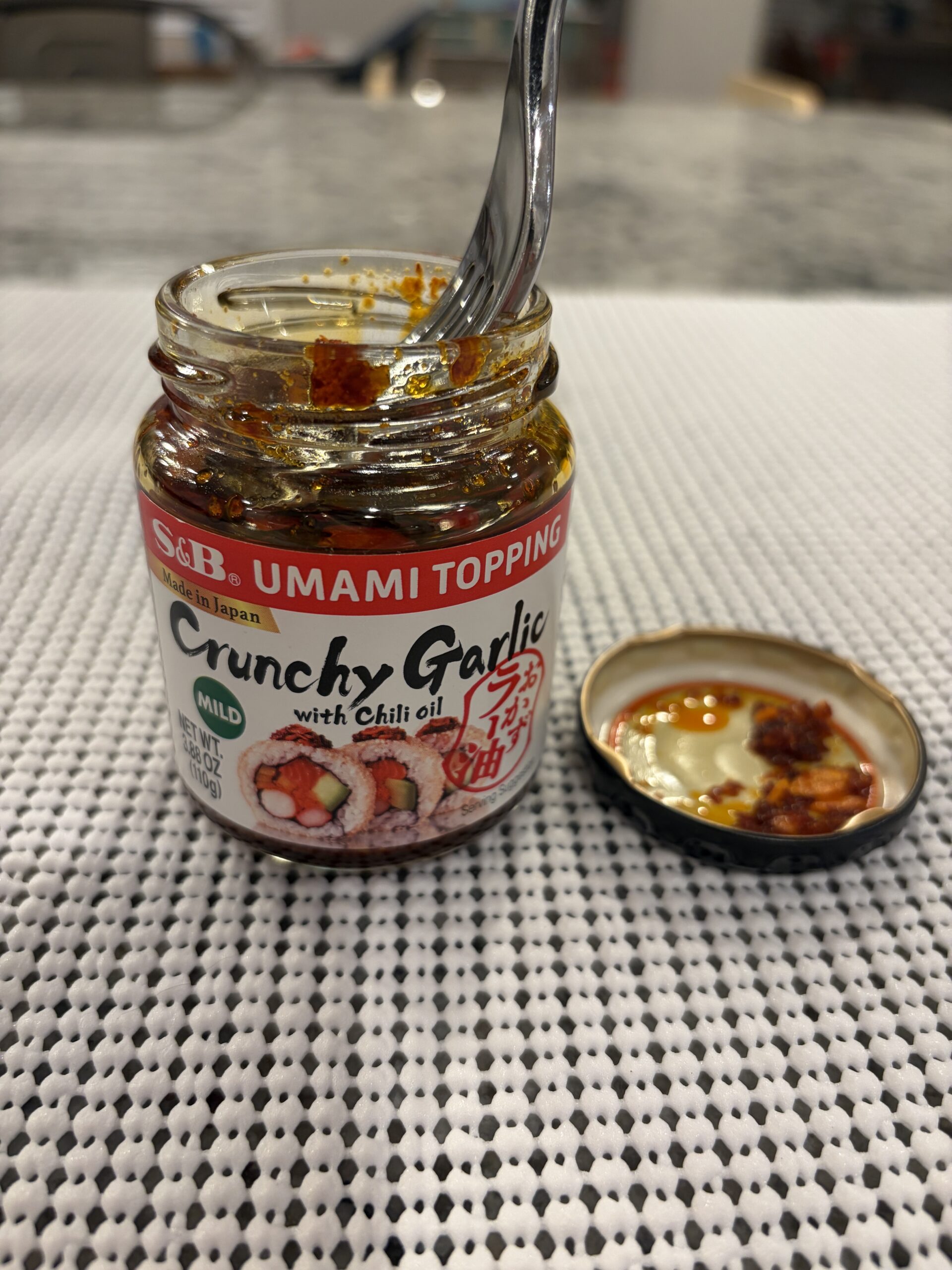
If I could teach a first-time chili crisp buyer to look at one thing on the label, it would be the crispy bits. Across 25 products, the composition and density of the solids was the strongest predictor of which tier a product landed in.
Fried Garlic and Shallot: The Quality Baseline
Products where fried garlic and/or shallot are the primary crunch sources — meaning they appear in the first five ingredients and you can actually see and pick out distinct pieces — consistently land GOOD or above. S&B has massive garlic chunks. Trader Joe’s is dense with onion and garlic. GUIZ Original packs peanuts and sesame alongside its chilies. Hotpot Queen leads with garlic and shiitake mushrooms. All GREAT or EXCELLENT.
Real fried garlic holds its crunch. You can fork through the jar three weeks after opening and still get a distinct snap. That’s a quality signal you can verify yourself.
Soybeans as Crispy Bits: The Filler Signal
When soybeans appear as a primary crunch source — not as fermented black beans or soy sauce, but as whole or split soybeans providing texture — the product tends to land AVERAGE or below. Lao Gan Ma’s original lists soybeans as the primary solid. They bulk up volume cheaply, but they dissolve the second they hit warm rice. The crunch is gone before you’ve finished chewing.
I’m not saying soybeans are always bad. LGM’s Chili Oil with Fermented Soybeans variant earned GOOD — but those are fermented soybeans doing flavor work, not plain soybeans faking crunch. There’s a real difference. I wrote a full breakdown of the soybean problem if you want the details.
The Crispy-Bit-to-Oil Ratio
Higher solids-to-oil ratio correlates with higher tiers across the board. The Airtable data tells the story:
| Crispy Bits % | Products | Avg Tier |
|---|---|---|
| 90–100% | GUIZ Original, GUIZ Black Bean, LGM Original, LGM Fermented, S&B, Real Naturals, WUJU | Mostly GOOD to EXCELLENT |
| 70–80% | TJ’s, Momofuku (all 4), FBJ Xtra Spicy, Momoya, Pono, White Elephant | Mostly GOOD to GREAT |
| 50–60% | FBJ Original, Ikeuchi, Alessi, FBJ Sweet & Spicy | Mostly AVERAGE to GOOD |
There are exceptions. WUJU has 100% bit density but earned SKIP — because the bits are there but the flavor isn’t. Ratio matters, but it’s not the only thing.
Complexity Signals: Ingredients That Predict Depth
Beyond the basics — oil, chilies, garlic, salt — there are a handful of ingredients that consistently show up in products I rate highly and are absent from products that feel one-dimensional.
Fermented Black Beans
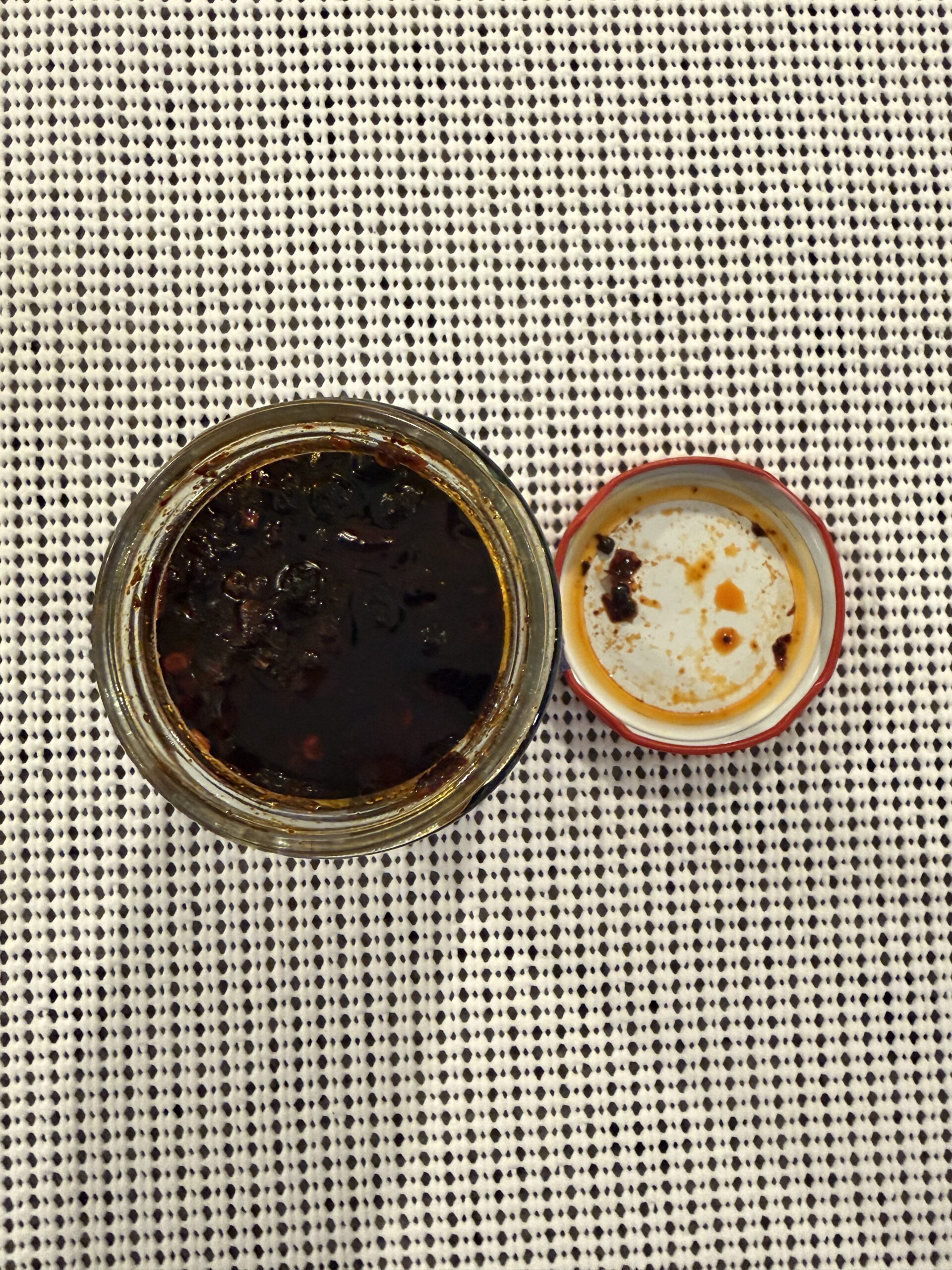
When fermented black beans (douchi) appear on the label, the product almost always has a savory depth that’s hard to get any other way. It’s not a taste you can point to immediately — it’s more like the flavor lingers longer than you’d expect and keeps developing in your mouth.
GUIZ Black Bean (GREAT) builds its entire identity around them. Hotpot Queen (GREAT) includes them in the seasoning blend. Fly By Jing Original lists them too — and even at AVERAGE (the bits-to-oil ratio held it back), the flavor complexity wasn’t the problem.
Fermented black beans are a complexity signal. They tell you the producer is thinking about layers, not just heat. I covered them in depth in the fermented black beans deep-dive.
Mushroom Powder
Hotpot Queen uses mushroom powder. So does White Elephant. Pono Hawaiian lists shiitake mushroom powder. Momofuku Black Truffle includes mushroom alongside truffle. Every one of these products earned GOOD or above.
Mushroom powder is a quiet umami builder. It doesn’t announce itself the way MSG does — there’s no immediate “wow, that’s savory” hit. It fills in the gaps. It’s the ingredient that makes you say “I don’t know why this tastes deeper” without being able to pinpoint why. When I see mushroom powder on a label, I read it as the producer caring about layered flavor, not just packing heat.
Sichuan Peppercorn
If a product is marketed as Sichuan-style and doesn’t list Sichuan peppercorn, something’s off. The tingle — that buzzy, numbing, almost-electric sensation on your lips — is the defining characteristic of the málà flavor profile. Without it, you’ve got chili heat but not the Sichuan experience.
GUIZ Original (EXCELLENT), Hotpot Queen (GREAT), FBJ Xtra Spicy (GOOD) — all list it. WUJU lists Sichuan peppercorns but earned SKIP — because the execution didn’t deliver on the ingredient’s potential. The peppercorn was there; the flavor wasn’t.
For the full guide on why Sichuan peppercorn isn’t actually a pepper and how the tingle works, that post covers it.
Red Flags We Found Across 25 Labels
“Natural Flavor”
Across 25 labels, the products that list “natural flavor” as an ingredient tend to cluster in the lower tiers. The products that don’t — that instead name their actual ingredients — trend higher.
There’s a logic to it. When a producer specifies “Erjingtiao chili” or “Tribute pepper” or “Guizhou chili pepper,” they’re being transparent about what’s in the jar. When a producer writes “natural flavor,” they’re legally allowed to obscure the source. It doesn’t mean the product is bad. It means you can’t verify what you’re eating from the label alone, and that’s a transparency gap.
I covered this in detail in the “natural flavor” explainer. The short version: it’s a regulatory category, not a quality indicator, and its presence on a chili crisp label usually means the producer is using flavor shortcuts rather than whole ingredients.
Ingredient Count as a Proxy
Most well-made chili crisps I’ve tested have 8 to 15 ingredients. That’s enough for oil, chilies, a few crispy bits, and a seasoning layer. Clean. Identifiable.
When the count climbs past 20, it usually means one of two things: either the producer is compensating for weak base ingredients with additives — or they’re using a genuinely complex recipe with identifiable whole foods. White Elephant is the proof that a long ingredient list isn’t automatically a red flag. It has 21 ingredients, and every single one is something you could find at a grocery store: Thai red chilies, gan hong la jiao, gochugaru, shiitake mushrooms, cinnamon, star anise, coriander, ginger. That’s not padding — that’s ambition. It earned GREAT.
The test isn’t “how many ingredients?” It’s “can I identify every ingredient on this label without a chemistry degree?”
Sugar Position
A little sugar is normal. It balances heat and adds a slight caramel note to fried aromatics. Most labels I’ve read list sugar somewhere between positions 6 and 12 — background role, doing supporting work.
When sugar appears in the top 5 ingredients, the product tends to lean noticeably sweet. FBJ Sweet and Spicy lists brown sugar high — and that sweetness dominates the entire jar. It earned GOOD, but the sweetness flattened the complexity that FBJ’s ingredient list should have produced. The sugar did the talking, and everything else was along for the ride.
Coconut sugar shows up in all four Momofuku variants. It’s positioned mid-label, and it adds a subtle warmth that integrates better than white sugar. Still worth noting when comparing labels.
The 30-Second Label Test
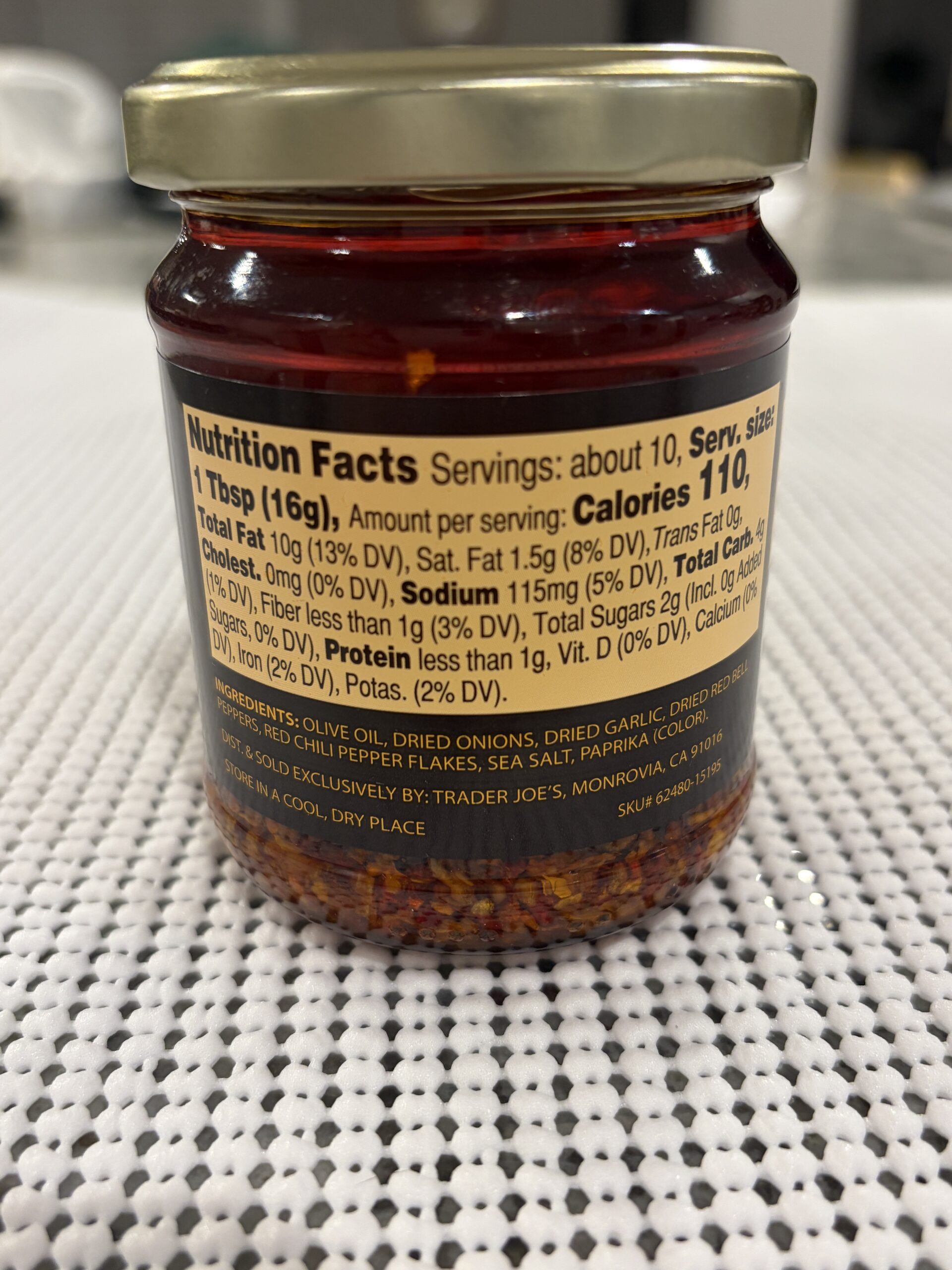
I’ve distilled 25 chili crisp ingredients labels into a quick-read framework. Next time you’re standing in the aisle holding a jar, run through these five checks:
1. First four ingredients. These tell you the oil base, the primary heat source, and what’s making the crunch. If you see a recognizable oil, a named chili, and fried garlic or shallot — that’s a strong start.
2. Soybeans above position 5? If whole soybeans are listed as a primary crunch source (not fermented, not soy sauce), a significant chunk of your “crispy bits” is filler. Not a dealbreaker, but know what you’re buying.
3. Specificity check. Does the label name its chilies, or just say “chili”? Does it say “rapeseed oil” or just “vegetable oil”? Specificity correlates with producers who care about ingredient sourcing.
4. “Natural flavor” scan. If it’s there, you can’t verify from the label what’s creating part of the taste. Not fatal — but the top-tier products across my testing don’t need it.
5. Count the ingredients. 8–15 is the sweet spot for most well-made jars. Under 8 might mean it’s simple by design (not bad). Over 20, check whether you can identify every item. If yes — ambitious recipe. If no — filler territory.
This won’t tell you whether you’ll love the taste. Taste is personal. But it will tell you whether the jar is made with care or cut with shortcuts. For the full walkthrough, see how to read a chili crisp label.
What I’d Tell a First-Time Buyer
If you’re standing in the store or scrolling through Amazon and you’ve never bought a jar before, here’s how to use the patterns above:
If you want traditional Sichuan depth — look for soybean or rapeseed oil, Sichuan peppercorn on the label, and fermented elements (black beans, broad bean paste). GUIZ Original earned EXCELLENT for a reason. It’s dense, layered, and traditional without being boring.
If you want bold crunch for eggs, rice, and noodles — look for fried garlic or shallot in the first five ingredients and a high bit-to-oil ratio. S&B Crunchy Garlic (GREAT) and Trader Joe’s Chili Onion Crunch (GREAT) both deliver dense, crunchy jars that hold up on warm food.
If you want something complex and unusual — look for a long ingredient list where every item is identifiable. White Elephant Prik Nam Mun (GREAT) and Hotpot Queen (GREAT) both take this approach — mushroom, cinnamon, star anise, fermented black beans, multiple chili varieties. They’re not simple, and they’re not trying to be.
If you want the full picture — every product I’ve tested, ranked. Or start with the starter kit guide if you want a curated entry point.
The Full Ingredient Map: 25 Products at a Glance
Here’s every product I’ve reviewed, mapped by oil type, key crispy bits, notable seasonings, and tier. This is the data behind everything in this post.
| Product | Oil | Key Bits | Notable Seasonings | Tier |
|---|---|---|---|---|
| GUIZ Original | Soybean | Peanuts, sesame | Broad bean paste, Sichuan peppercorn, ginger, garlic | EXCELLENT |
| GUIZ Black Bean | Soybean | Fermented black beans, sesame | Sichuan peppercorn, yeast extract, cooking wine | GREAT |
| S&B Crunchy Garlic | Corn + sesame | Fried garlic, fried onion | Soy sauce, AO sauce, sugar | GREAT |
| Trader Joe’s | Olive | Onion, garlic | Red bell pepper, paprika, sea salt | GREAT |
| Hotpot Queen | Rapeseed + peppercorn oil + soybean | Garlic, shiitake, porcini, sesame | Sichuan peppercorn, mushroom powder, fermented black bean, ginger | GREAT |
| White Elephant | EVOO + avocado | Shallot, garlic, shiitake | Truffle, soy sauce, cinnamon, star anise, coriander, ginger, sesame oil | GREAT |
| Momofuku Truffle | Grapeseed | Onions, sesame, garlic, shallots | Mushroom, truffle powder, truffle extract, seaweed | GREAT |
| Lao Gan Ma Original | Soybean | Soybeans | MSG, sugar, salt | GOOD |
| LGM Fermented | Soybean | Fermented soybeans, chili | MSG, sugar | GOOD |
| FBJ Xtra Spicy | Rapeseed + soybean + sesame | Fermented soybean, Sichuan peppercorn | Mushroom powder, seaweed powder, ginger | GOOD |
| FBJ Sweet & Spicy | Soybean | None (sauce) | Brown sugar, soy sauce, black vinegar, mushroom powder | GOOD |
| Momoya | Canola + sesame | Fried garlic, fried onion | MSG, sugar, soy sauce, chili soybean paste | GOOD |
| Pono Hawaiian | Rice bran | Shallots, garlic, sesame, coconut flour | Shiitake mushroom powder, sea salt, sugar | GOOD |
| Mama Teav’s | — | — | — | GOOD |
| Ikeuchi Bonito | Olive palm | Bonito, garlic, shallots, sesame | Salt, organic sugar | GOOD |
| Fusion Select | Soybean | — | — | GOOD |
| Momofuku Mild Garlic | Grapeseed | Onions, sesame, garlic, shallots | Coconut sugar, mushroom powder, yeast extract, seaweed | GOOD |
| FBJ Original | Rapeseed (caiziyou) | Mushrooms, Sichuan peppercorn | Fermented black beans, MSG | AVERAGE |
| FBJ Xtra Crunchy | Soybean + sesame + shallot oil | Soybeans, fava beans, pumpkin seeds, sunflower seeds, sesame | Yeast extract, Sichuan pepper, seaweed, mushroom powder | AVERAGE |
| Momofuku Original | Grapeseed | Shallots, garlic | Coconut sugar, sesame seeds | AVERAGE |
| Alessi Calabrian | Olive | Garlic, toasted onion | Red bell pepper, paprika, salt | AVERAGE |
| Real Naturals | None (dry) | Onion, garlic | Cane sugar, sea salt, mushroom powder | AVERAGE |
| WUJU | Soybean + rice bran | Garlic flakes, sesame seeds | Sichuan peppercorns, black pepper | SKIP |
| Momofuku Extra Spicy | Grapeseed | Shallots, garlic | Coconut sugar, sesame seeds | SKIP |
Mama Teav’s and Fusion Select ingredient data is incomplete in the current database — I’ll update this table as records are filled in.
Frequently Asked Questions
What are the most common ingredients in chili crisp?
Every chili crisp is built on four layers: a base oil (soybean, grapeseed, rapeseed, sesame, or olive), dried chilies for heat, crispy bits for texture (fried garlic, shallots, sesame seeds, peanuts), and seasonings (salt, sugar, MSG, Sichuan peppercorn, soy sauce). Most labels list 8 to 15 ingredients total.
What ingredients should I avoid in chili crisp?
Watch for whole soybeans listed as a primary crunch source — they dissolve on contact with warm food and are often used as cheap filler. “Natural flavor” on a chili crisp label usually signals the producer is using flavor shortcuts instead of whole ingredients. Neither is dangerous, but both are transparency gaps.
Does oil type matter in chili crisp?
Oil type signals the product’s regional style — rapeseed oil suggests traditional Sichuan, olive oil means Italian or fusion, grapeseed signals modern American brands — but it does not predict quality. GUIZ Original uses soybean oil and earned Excellent. Momofuku Extra Spicy uses grapeseed oil and earned Skip. The oil carries flavor; it doesn’t create it.
How many ingredients should a good chili crisp have?
Most well-made chili crisps have 8 to 15 ingredients. Under 8 is simple by design (not bad). Over 20, check whether every ingredient is identifiable — if yes, it’s an ambitious recipe. If the list is full of additives and vague terms like “natural flavor,” the count is padding.
What does “natural flavor” mean on a chili crisp label?
It’s a regulatory category that allows producers to use flavor compounds without specifying the source. On a chili crisp label, it usually appears in lower-tier products. Top-tier products name their actual ingredients (specific chili varieties, fermented black beans, mushroom powder) instead of relying on vague flavor categories.
Are soybeans bad in chili crisp?
Not always. Fermented soybeans and soy sauce add genuine flavor depth. But whole soybeans used as a primary crunch source are often filler — they bulk up volume cheaply and dissolve the moment they touch warm food. Check whether soybeans are doing flavor work (fermented) or texture work (whole), and whether they’re in the top five ingredients.
What makes a chili crisp high quality?
Based on testing 25 products: high crispy-bit-to-oil ratio, real fried garlic or shallot as the primary crunch source, named chili varieties on the label, and complexity ingredients like fermented black beans, Sichuan peppercorn, or mushroom powder. The best products don’t need “natural flavor” or soybean filler to fill the jar.