
This post contains affiliate links. I may earn a small commission if you buy through them — at no extra cost to you. My scores are never influenced by this.
This Redbloom umami chili crisp review covers a gut-healthy, low-FODMAP, no-seed-oil jar that promises umami flavor. The infused avocado oil is genuinely good — aromatic, flavorful, and the best thing in the jar. But the “crispy” bits are dried chili flakes and seeds that chew instead of crunch, and the umami flavor the name promises never shows up. If gut health is your priority and you’re willing to accept a chili oil with some bits in it, this might serve a purpose. As a chili crisp, it doesn’t land.
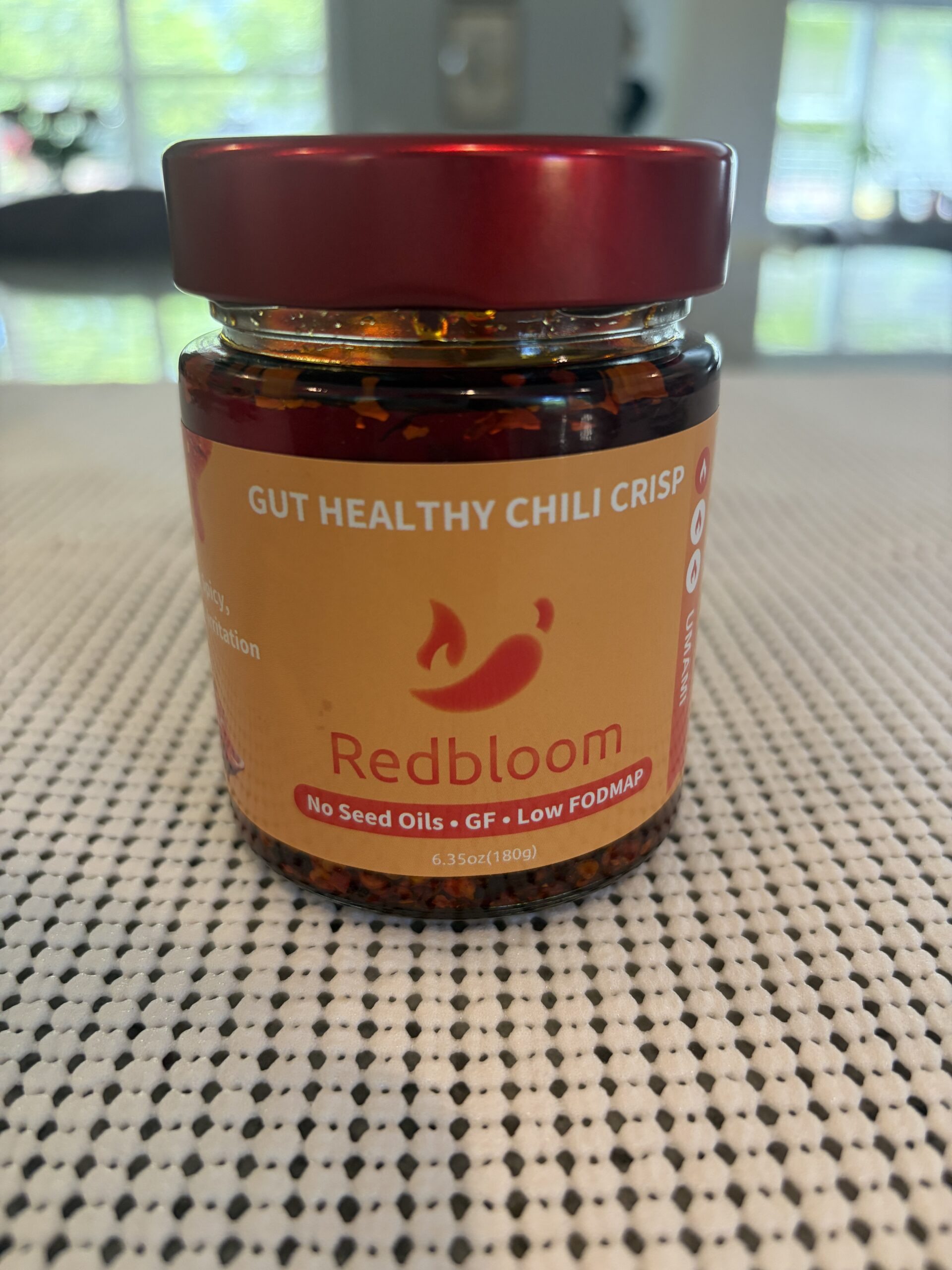
The Gut-Health Pitch
“Gut-healthy chili crisp” is a phrase I didn’t expect to be testing in 2026, but here we are. Redbloom is a Venice, California brand selling two varieties of chili crisp built around a specific promise: live spicy without irritation. No seed oils, gluten-free, low FODMAP. This Redbloom umami chili crisp review covers the milder of their two jars — the yellow-label Umami — to find out whether a product designed for digestive comfort can also work as a chili crisp worth reaching for.
The short answer: the oil is excellent. Everything else is a problem. If you’re new to the category, here’s what chili crisp actually is and why texture matters as much as flavor.
Quick Facts
| Brand | Redbloom (Red Bloom Health) |
| Product | Gut-Healthy Chili Crisp (Mild Umami) |
| Category | Chili Crisp |
| Style | Fusion American |
| Oil | Organic avocado oil, organic MCT oil |
| Heat | 1 / 5 |
| Price | $14.99 |
| Size | 6.35 oz / 180g |
| Per oz | $2.36/oz |
| Made in | China |
| Buy | Amazon |
| Tier | SKIP |
Serving size is one teaspoon. I don’t love that. At $2.36 per ounce, a teaspoon serving makes this one of the more expensive chili crisps I’ve tested on a per-use basis. A teaspoon of something that’s mostly oil is basically a drizzle.
Ingredient Quality
Redbloom does something I haven’t seen from any other brand: two separate ingredient labels. One lists the base ingredients — organic avocado oil, Sichuan chili flakes, Korean chili powder, Himalayan pink salt, organic lion’s mane, organic zinc salt, organic MCT oil. The second lists what the oil was infused with — organic habanero, Sichuan peppercorn, organic ginger, organic shallots, organic garlic, star anise, cinnamon bark, black cardamom.
Every brand should do this. When you read a standard chili crisp label, you have no idea which ingredients were cooked into the oil versus added as solids after. Redbloom separates the two, and the result is real transparency — you know exactly what you’re tasting in the oil and what you’re chewing in the solids. That infusion list alone (habanero, peppercorn, ginger, shallots, garlic, star anise, cinnamon bark, black cardamom) explains why the oil smells and tastes as good as it does.
The base ingredient list tells a different story. Lion’s mane and zinc salt are the gut-health play — functional ingredients that aren’t contributing flavor. No soy. No fermented components. No MSG. For a product called “Umami,” that’s a gap I’ll get to in the flavor section. Contains coconut — nothing else on the allergen front.
Aroma
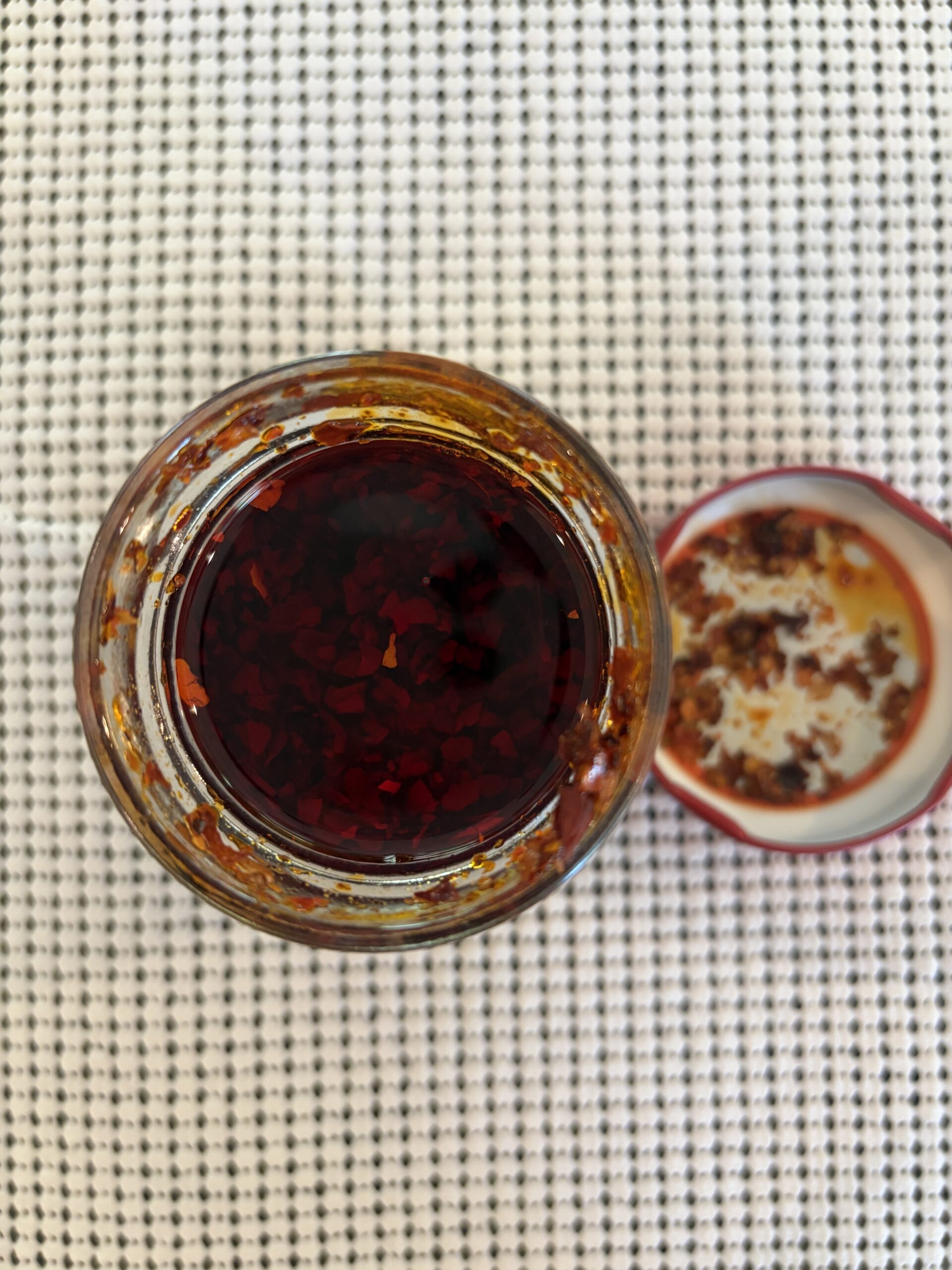
Lovely on open. All the infused spices come through immediately — star anise, ginger, a warm peppercorn note underneath. The aromatic profile is nearly identical to Redbloom’s Aroma (purple label) variety, which makes sense given that both jars share the exact same ingredient lists. The oil smells like it was made by someone who understands spice infusion. If the whole jar tasted the way it smells, this would be a different review.
Appearance and Settlement
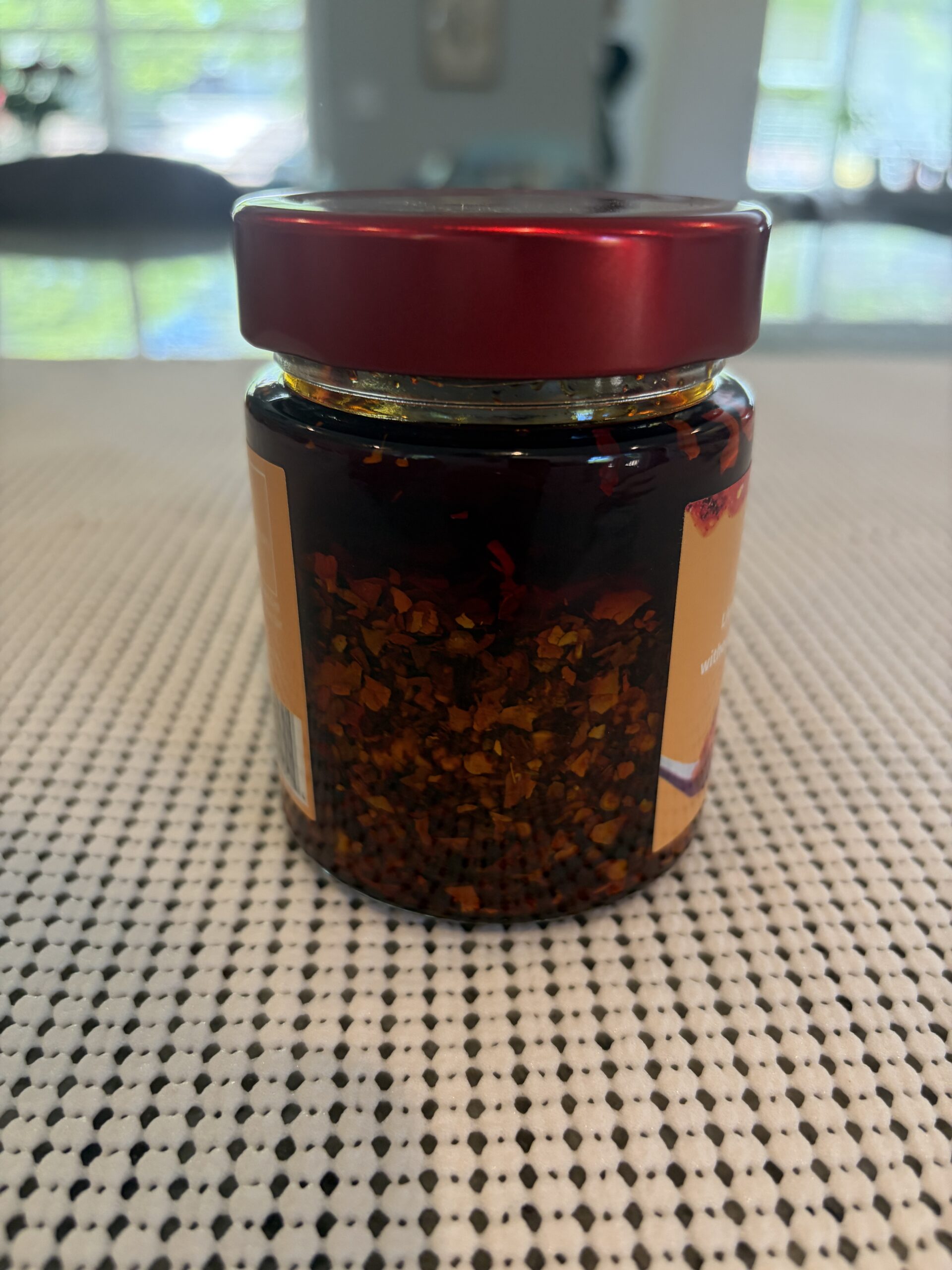
Settlement fills about 70% of the jar. That’s a decent ratio — the oil layer on top is roughly 30%, with the rest being chili flakes and seeds. Oil color is a clear, dark red, close to matching the jar lid. After stirring, it mixes up thick and even.
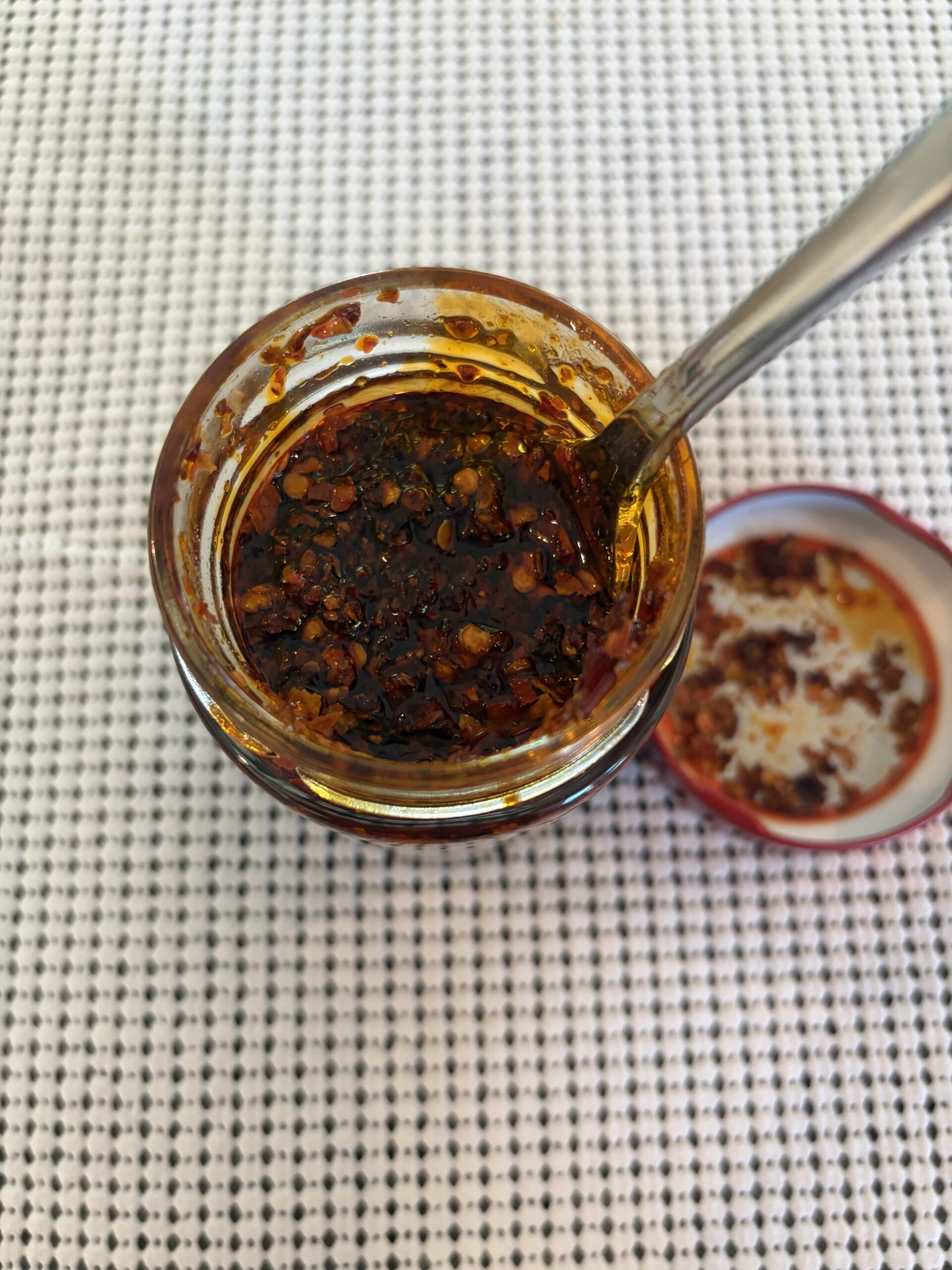
The bits are uniform — ground-up chilies, seeds, and flakes throughout. No visible garlic pieces, no shallot chips, no distinct ingredient shapes you can pick out. It looks like a chili grind, not a composed jar.
Texture and Crunch
This is where the jar falls apart.
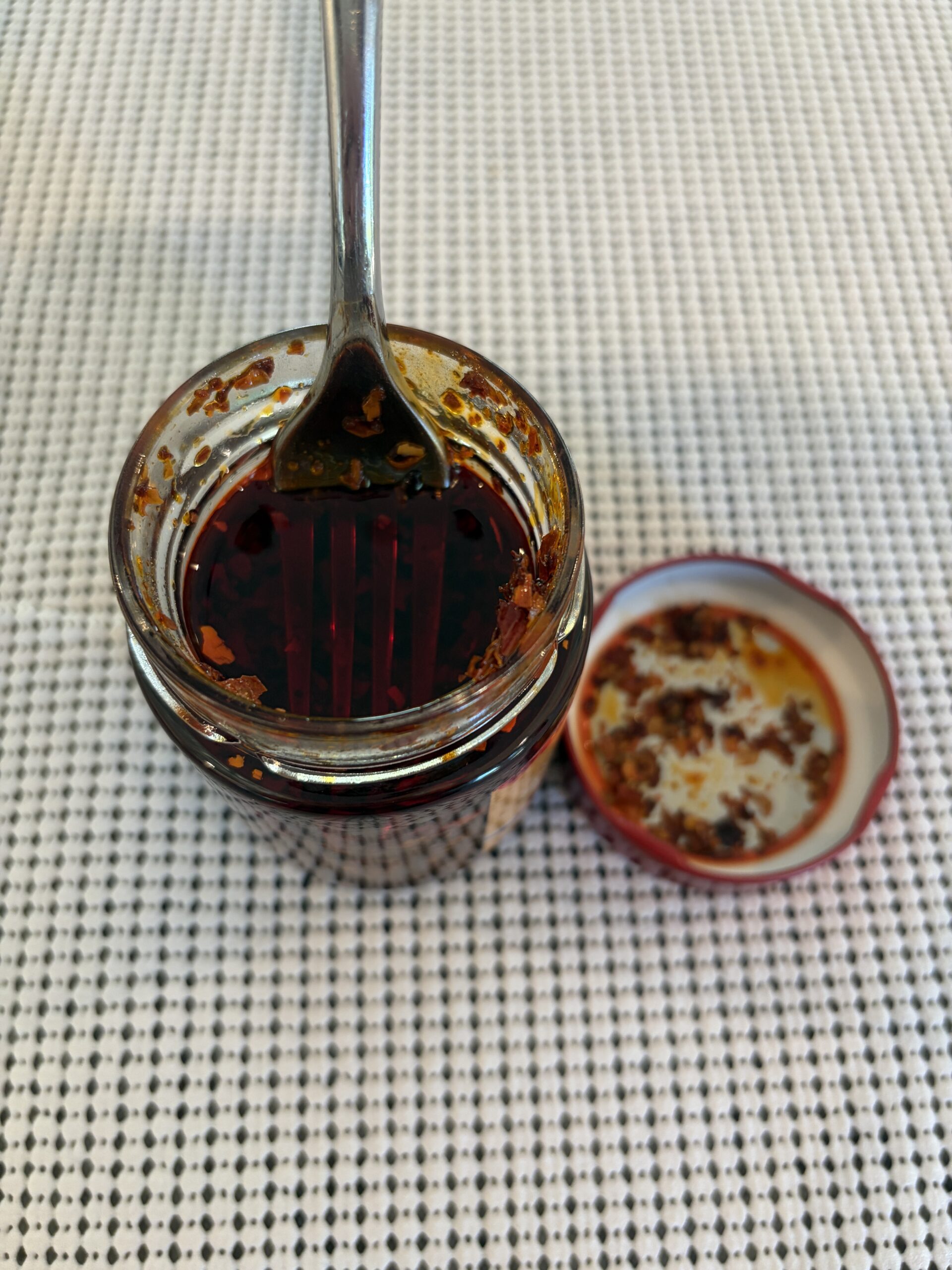
There’s no crunch. What you get is a mouthful of dried chili flakes and chili seeds — chewy, not crispy, not crunchy. The bits don’t snap, don’t shatter, and don’t add texture the way a chili crisp needs to. You’re chewing on what amounts to ground dried peppers suspended in oil.
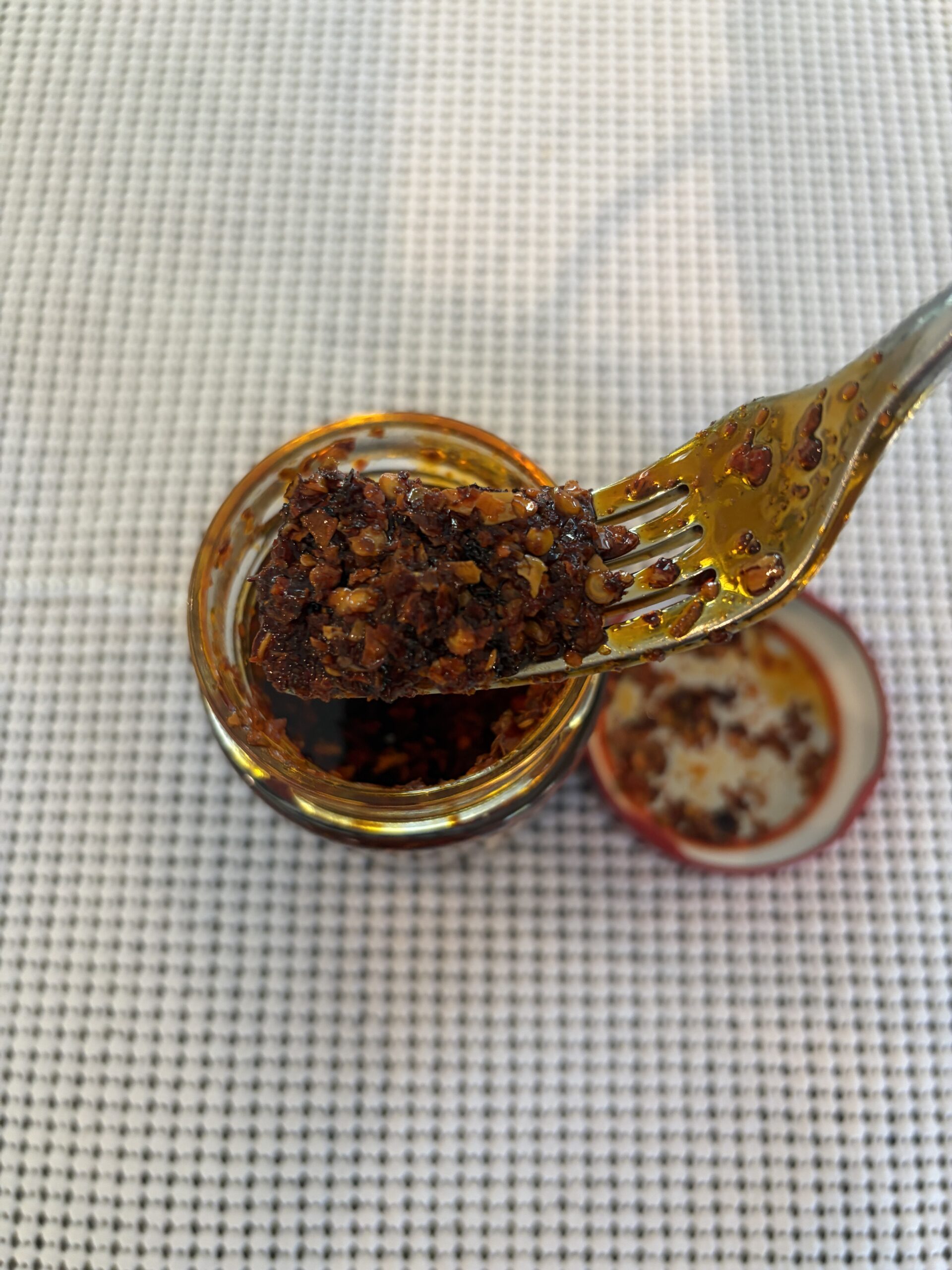
The fork-sit test before stirring shows decent density — the fork doesn’t sink straight to the bottom. But density and crunch are different things. These bits have mass without structure. On warm food, they’d vanish — no textural payoff at all.
If this were labeled as a chili oil with flakes, the texture wouldn’t be a failure. But “chili crisp” sets an expectation for crunch, and this doesn’t come close.
Flavor Complexity
The oil by itself is the best part of this jar, and it’s not close. Taste the oil alone and you get the full infusion — ginger, peppercorn, a thread of star anise, warmth from the habanero underneath. The avocado oil base is clean, not greasy, and the MCT oil addition doesn’t add any off-flavors. As infused oils go, this is good work.
Mix the oil with the bits and the experience gets worse, not better. The chili flakes and seeds add salt and some heat, but they don’t bring any flavor complexity with them. What was aromatic and layered in the oil becomes flat and salty when you eat the whole thing together. The jar is less than the sum of its parts — which is the opposite of what you want from a condiment.
And then there’s the name. “Umami” implies depth — that fermented, savory, hard-to-place richness that makes you keep eating. I didn’t get hardly any umami out of this. Without soy, without fermented bean paste, without any of the components that typically deliver umami flavor, the name is a promise the formula can’t keep. Lion’s mane is a functional mushroom, but at this concentration it’s not doing umami work. The salt picks up some slack, but salt isn’t umami.
For actual umami in a chili-forward condiment, something like Lao Gan Ma’s Chili Oil with Fermented Soybeans gets there through the ingredients that produce it — fermented soybeans. Those are arguably good for gut health too, which makes the exclusion here harder to understand.
Heat
Low. This is the milder of the two Redbloom varieties — 1 out of 3 on their flame scale. That flame scale, by the way, is confusing. The label shows three vertically stacked flames in white and orange with no legend explaining which color means “active.” I couldn’t tell which variety was supposed to be spicier from the packaging alone.
The heat itself is a low burn that sits on the tongue for a bit and fades without much character. It doesn’t build, doesn’t tingle, doesn’t do anything interesting. Korean chili powder and Sichuan chili flakes are both on the label, but neither variety’s signature heat profile comes through clearly. There’s habanero in the infusion list, which might account for the burn, but it’s dialed way down. For anyone with even moderate heat tolerance, this won’t register.
Use Cases
This is more of a disappearing condiment than a standalone. Mixed into food, the oil flavors blend in and the bits become invisible — which, depending on your perspective, is either the point or the problem. It could work stirred into a grain bowl or drizzled over soup where you want background warmth without texture. It won’t hold up on eggs, rice, or anything where you need the condiment to stand on its own.
The Mixing Angle
Not a standalone jar. I wouldn’t mix the two Redbloom varieties together — they share the same weaknesses. Dropping this into something extra-crunchy could theoretically rescue the oil flavor, but at $2.36 per ounce that’s an expensive base ingredient for a blend. If you’re going to spend that much, buy a jar that works on its own.
Versatility and Packaging
The jar is 6.35 oz / 180g. At $14.99, that’s $2.36 per ounce — on the pricier end, especially for a product that doesn’t hold up as a standalone condiment. The yellow label with white text on the ingredients panel is hard to read. The heat indicator — three stacked flames in alternating white and orange — needs a legend or a redesign. I had to taste both varieties to figure out which was supposed to be spicier.
One thing I appreciate: the “mix, serve, and refrigerate” instruction on the label is honest. Most chili crisps should be stirred and refrigerated after opening, and few brands say so on the jar.
Final Verdict: SKIP
I respect what Redbloom is doing. A chili crisp designed for gut-sensitive eaters, built on avocado and MCT oil, no seed oils, no soy, low FODMAP — that’s a real product for a real audience. And the infused oil is legitimately good. If they sold that oil alone as a chili-infused cooking oil, I’d be interested.
But this is a chili crisp that can’t crunch, named “Umami” without the ingredients to deliver umami. The bits don’t add flavor — they may actually detract from what the oil does well on its own. At $2.36 per ounce with a one-teaspoon serving size, the value isn’t there unless the gut-health benefits are specifically what you’re after.
If you have gut sensitivity and want a mild chili condiment with clean ingredients, this might serve a purpose. As a chili crisp? Better jars exist at every price point.
- Best Chili Crisp: Everything We’ve Tested — See where every jar ranks.
- What to Eat with Chili Crisp — A field guide to pairing by jar style.
- How to Build a Chili Crisp Starter Kit — Three jars, no overlap.
Frequently Asked Questions
Is Redbloom chili crisp good?
The infused avocado oil is genuinely excellent — aromatic and flavorful on its own. But the chili flakes lack crunch and flavor complexity. As a chili crisp, Redbloom Umami doesn’t meet the mark. We rated it SKIP.
What does Redbloom Umami chili crisp taste like?
The oil delivers warm, aromatic spice notes from its infusion — ginger, Sichuan peppercorn, star anise, and habanero warmth. The solids add salt and mild heat but lack distinct flavor. Despite the name, there’s very little actual umami character.
Is Redbloom chili crisp actually gut-healthy?
Redbloom uses no seed oils, is gluten-free, low FODMAP, and includes functional ingredients like organic lion’s mane and zinc salt. Whether it meaningfully improves gut health depends on individual needs, but the formula does avoid many common irritants.
Where can I buy Redbloom chili crisp?
Redbloom chili crisp is available on Amazon. Both the Umami (mild, yellow label) and Aroma (medium, purple label) varieties are sold individually and as a two-pack.
How spicy is Redbloom Umami chili crisp?
Mild. It’s the lower-heat variety — 1 out of 3 on Redbloom’s flame scale. The heat is a low burn that sits on the tongue briefly and fades without much buildup. Most people won’t find it challenging.
Is Redbloom chili crisp worth the price?
At $14.99 for 6.35 oz ($2.36 per ounce) with a one-teaspoon serving size, Redbloom is on the expensive side for a chili crisp. Better-performing jars exist at similar or lower price points.
What is the difference between Redbloom Aroma and Umami?
Both varieties share identical ingredient lists but produce different flavor and heat profiles. Aroma (purple label) is spicier with more floral and citrus notes. Umami (yellow label) is milder with more salt. Aroma is the stronger jar of the two.