
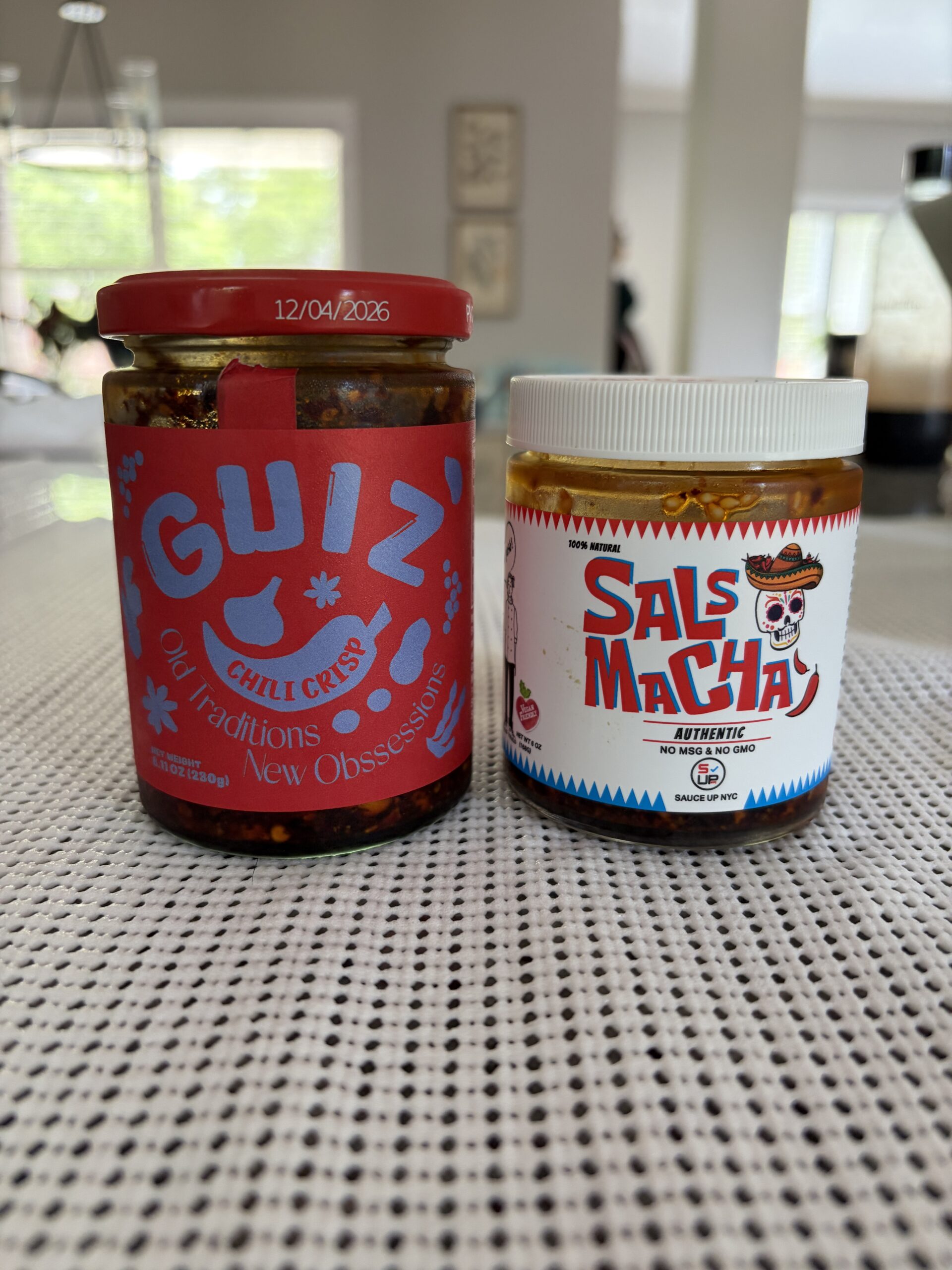
If you’re wondering about salsa macha vs chili crisp — whether they’re the same thing, which one to buy, or what actually separates them. I’ve been reading labels and testing jars in both categories for months. After 50-plus chili crisps and 10 salsa machas, I can tell you: they’re related, they overlap, and they are built differently. The labels tell two very different stories. The jars tell two very different stories. And once you understand what separates them, you’ll know exactly which one belongs on your shelf.
This isn’t a ranking post. This is the breakdown — what’s structurally different, what they share, and why some of the best jars in both categories are the ones borrowing from each other.
Salsa Macha vs Chili Crisp: The Core Differences
The fastest way to see the gap between these two condiments is to flip both jars over and read the back. The ingredient lists aren’t even close.
| Dimension | Chili Crisp | Salsa Macha |
|---|---|---|
| Origin | Sichuan/Guizhou, China (commercial: 1997 — Lao Gan Ma) | Veracruz, Mexico (possibly Totonac origins) |
| Base oil | Neutral: soybean, canola, or rapeseed most common | Olive oil, peanut oil, or grapeseed oil |
| Chili type | Chinese dried chilies, Sichuan peppercorn, sometimes doubanjiang | Mexican dried chilies: morita, guajillo, árbol, pasilla, chipotle |
| The “crispy” part | Fried aromatics: garlic, shallot, onion, sesame seeds | Nuts and seeds: peanuts, pepitas, sesame, sunflower seeds |
| Flavor character | Umami-forward, savory, garlic-rich | Smoky, nutty, often tangy from vinegar |
| Heat profile | Sichuan tingle (mala) or direct capsaicin burn | Dried chili smoke (morita, chipotle) or bright heat (árbol) |
| Sweetness | Rare — usually a red flag | Common and intentional: cranberry, raisin, brown sugar, piloncillo |
| Vinegar | Never — would break the oil system | Often present — tanginess is a positive signal |
| Texture | Crispy/crunchy fried bits suspended in oil | Chunky nuts and seeds in oil — denser, chewier, more to chew through |
| Primary use | Condiment — spoon on top | Condiment and ingredient — drizzle, spread, dip, cook with |
| Sugar | Usually a red flag in reviews | A category trait — evaluate balance, not just presence |
That table covers the structural framework. But the real differences show up when you start eating them side by side, which is what the rest of this post covers.
What Salsa Macha and Chili Crisp Have in Common
For all their differences, these two condiments share the same DNA. Both are oil-based chili condiments with suspended solids. Both deliver their flavor through a combination of infused oil and textured bits you chew through. Both reward the person who reads the ingredient list before buying.
The oil-to-solids ratio matters for both — you want to see enough stuff in the jar that the fork doesn’t sink straight to the bottom. I evaluate this the same way for both categories: hold the jar up, look at how the contents settle, and estimate how much is oil versus actual ingredients. A jar that’s 70% oil and 30% bits is selling you flavored cooking oil at condiment prices, regardless of whether it’s labeled chili crisp or salsa macha.
Both categories also have a label-reading problem. The first four ingredients tell you almost everything you need to know. If soybean oil is first in a chili crisp, you’re getting filler oil. If the only chili listed in a salsa macha is generic “chili flakes” instead of a named variety like morita or guajillo, the smokiness you’re expecting probably isn’t there. The label doesn’t lie, but brands rely on you not reading it.
Both have traditional and fusion interpretations. Chili crisp started in Sichuan and has been adapted into Japanese, Calabrian, Korean, and American fusion styles. Salsa macha started in Veracruz and is now being crossed with Asian ingredients by brands that straddle both traditions. The best products in both categories tend to be the ones that understand a tradition well enough to borrow from another one intelligently. The worst ones just throw ingredients together and put a trendy label on the jar.
For full category primers: What Is Chili Crisp, Actually? and What Is Salsa Macha?
The Case Studies: Products That Straddle Both Categories
This is where having tested products on both sides of the line makes a difference. I’ve reviewed jars that don’t fit cleanly into either category — brands that take chili crisp techniques and apply them to a salsa macha structure, or vice versa. These bridge products are the most interesting things happening in both categories right now.
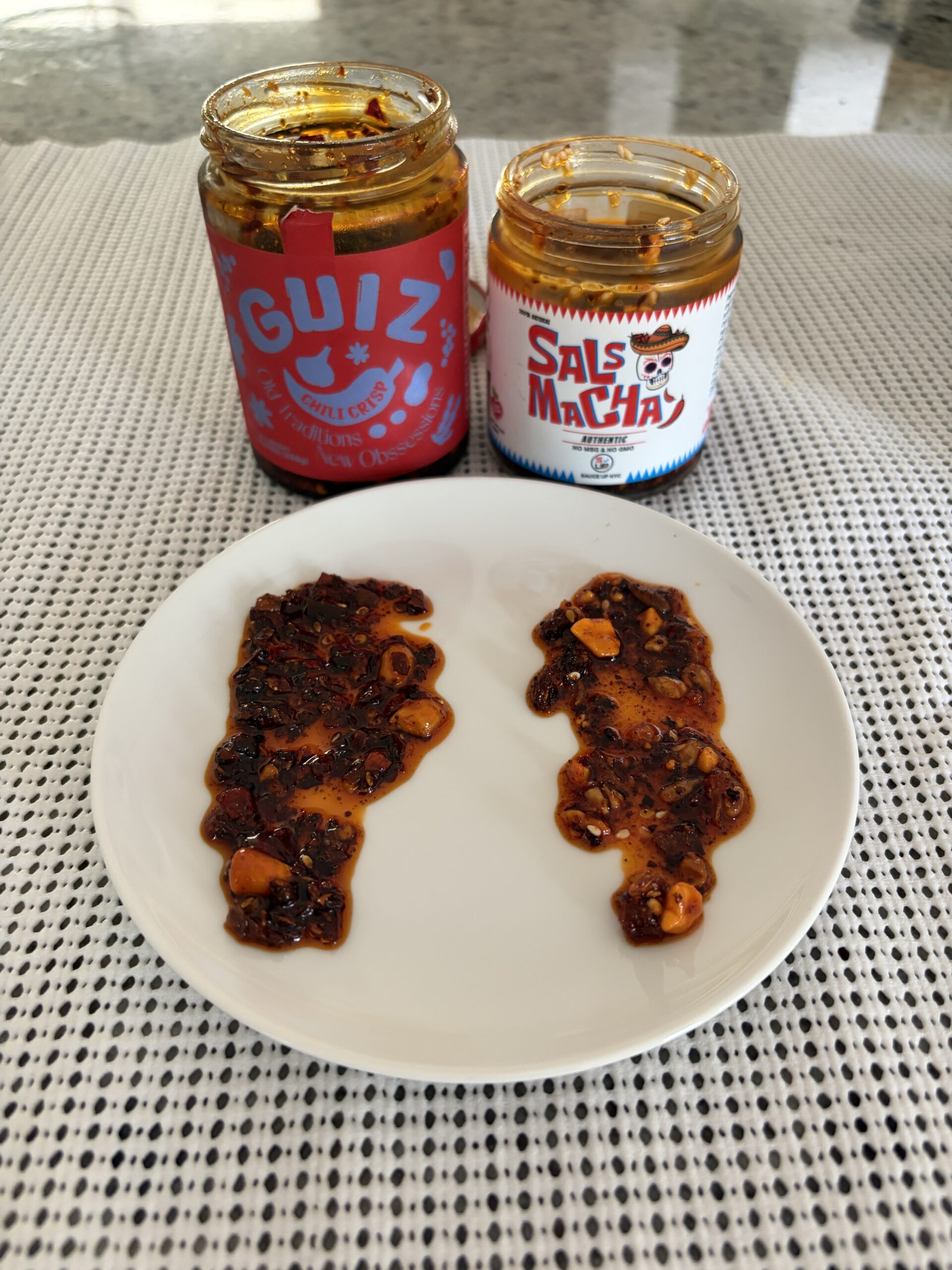
Sauce Up Salsa Macha. EXCELLENT
Sauce Up is known for their Asian chili crisps. Their salsa macha shouldn’t work as well as it does. The ingredient list reads like a meeting between two traditions: grapeseed oil, morita chili, sunflower seeds, peanuts, coconut palm sugar, fried shallot, guajillo chili, sesame seeds, Himalayan pink salt, fried garlic, árbol chili, japón chili, ground shiitake mushroom, cumin, ground ginger.
Four types of dried Mexican chilies. Fried shallot and fried garlic — straight from the chili crisp playbook. Ground shiitake mushroom for umami depth that a traditional salsa macha doesn’t usually have. Grapeseed oil base, which is neutral like a chili crisp instead of the olive oil you’d expect. And all of it comes together in a jar that’s about 80% solids, thick enough that it stirs up into something closer to a spread than a drizzle.
The flavor hits sweet first, then chili, then the cumin and shiitake fill in the middle. It’s not spicy — pleasantly mild, maybe a 1 out of 5. The peanut crunch is there, the seeds hold up, and the balance is the word I keep coming back to. Nothing dominates. Everything contributes. I like this better than any of Sauce Up’s chili crisps.
The lesson: the Asian influence isn’t diluting the salsa macha. It’s giving it a layer of umami depth that the category usually doesn’t have. Full review here.
CHiNGONAs Salsa Macha. GREAT
CHiNGONAs tries the same fusion move: rice bran oil, dried chilies, cumin, mushroom powder, ginger, black pepper, kosher salt, sugar, peanuts, sesame seeds, shallots, garlic. The Asian and Mexican ingredients are both there — mushroom powder, shallots, and garlic alongside cumin, peanuts, and dried chilies.
On opening, it smells better than almost anything I’ve tested in the category. Super fragrant — fried garlic mixed with chilies and a heavy cumin note that triggers memories of good food. The settlement is about 70% solids, and it stirs up thick with a satisfying crunch from the peanuts and seeds.
But the flavor doesn’t land the way the aroma promises. Cumin takes over. It’s the dominant note on the first bite, the mid-palate, and the finish. Dried chilies are second on the ingredient list, but cumin — listed third — is what you actually taste. The mushroom powder and garlic are there if you’re looking for them, but they’re playing backup to a cumin solo. The label says 3/5 heat; I’d call it a 1. It smells better than it tastes — and that gap between promise and delivery is what separates a GOOD jar from an EXCELLENT one.
The concept is right. The execution lets one ingredient run the show. Full review here.
Tia Lupita “Mexican Chili Crunch”
Tia Lupita is the clearest example of the marketing language blurring these categories. They call their product “salsa macha. Mexican chili crunch.” That second part — “chili crunch” — is a chili crisp term. It’s the word Momofuku tried to trademark. And Tia Lupita is applying it to a jar that is structurally salsa macha: olive oil, roasted peanuts or pumpkin seeds, morita chilies, sesame seeds, garlic, salt.
They make two variants. The Savory Peanut is olive oil, peanuts, sunflower seeds, sesame seeds, pumpkin seeds, garlic, morita chilies, and salt. Clean, simple, traditional. The Sweet Cranberry swaps the peanuts for pumpkin seeds and adds raisins and cranberries — dried fruit sweetness that’s a salsa macha trait, not a chili crisp one.
No fried aromatics. No Sichuan peppercorn. No fermented anything. The jar is salsa macha by every structural measure. But “Mexican Chili Crunch” on the label tells the chili crisp audience: this is for you, too. And honestly? That’s accurate. If you eat chili crisp, you’ll understand salsa macha immediately. The format is familiar enough that the label works — even if it’s technically a category crossover.
How I Evaluate Them Differently
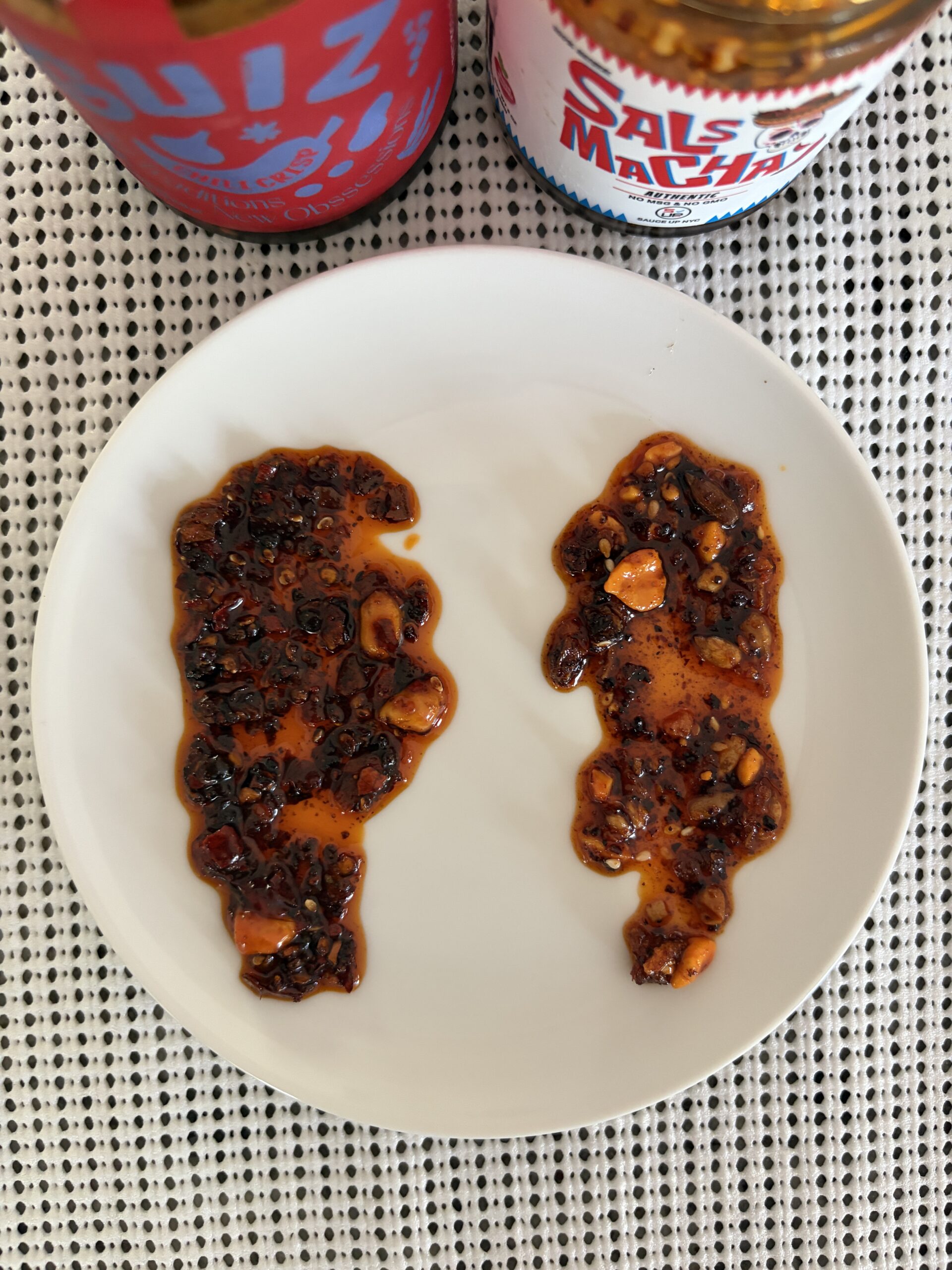
I use the same seven criteria for both — aroma, appearance, texture, flavor complexity, ingredient quality, versatility, packaging, but the weights shift, and some signals flip meaning entirely.
Crunch means different things. In chili crisp, crunch comes from fried aromatics: garlic chips, shallot crisps, chili fragments, sesame seeds. If I’m crunching on soybeans instead, that’s filler masquerading as texture. In salsa macha, crunch comes from nuts and seeds — peanuts, pepitas, sunflower seeds, sesame. The texture is denser and chewier by nature. You earn the flavor by chewing through it. Neither approach is better; they’re solving different texture problems.
Sugar changes sides. Sugar in a chili crisp usually means something’s wrong. It’s masking weak flavor or padding a thin product. Sugar in salsa macha — cranberry, raisin, piloncillo, coconut palm sugar — is a category trait. The question isn’t “is there sugar?” It’s “does the sweetness balance the smoke and the nuts, or does it flatten everything into one sweet note?”
Vinegar tells a different story. Vinegar in chili crisp is a category error. It would break the oil system and change the product into something closer to a hot sauce. In salsa macha, tanginess from vinegar is a positive signal. It cuts through the nut density and adds sharpness that lifts the whole jar.
Benchmarks don’t translate. Chili crisp has Lao Gan Ma — the jar that’s been on shelves since 1997 and that every new product is measured against, whether the brand likes it or not. Salsa macha doesn’t have that fixed reference point. There’s no single jar that defines the category. I compare organically within sessions — this jar against that jar, this chili blend against that one, but there’s no baseline everyone has already tasted.
Dried chili variety matters more in salsa macha. Chili crisp uses Chinese dried chilies, sometimes Sichuan peppercorn or doubanjiang, and the chili identity often plays second fiddle to the garlic and the oil. In salsa macha, the specific dried chilies — morita, guajillo, chipotle, árbol, pasilla — are the flavor backbone. A salsa macha that lists four named chili varieties is telling you something about its complexity before you even open the jar. One that just says “dried chilies” is leaving the question unanswered.
Which Should You Buy?
This depends entirely on what you’re reaching for. Here’s how I’d match them:
| If you want… | Buy this | Why |
|---|---|---|
| Everyday all-purpose condiment | Lao Gan Ma chili crisp | Cheap, available everywhere, works on anything you’d put hot sauce on |
| Smoky depth for tacos, eggs, grilled meat | Don Chilio Smoky Chipotle salsa macha | Chipotle smokiness in olive oil — simple, direct, designed for exactly these foods |
| Heat + complexity + crunch | GUIZ Original chili crisp | Sichuan tingle, peanut and sesame crunch, fermented depth — the first jar to earn top tier |
| Nutty crunch with layered flavor | Sauce Up Salsa Macha | Four chili types, seeds, shiitake umami — the fusion that actually works |
| A conversation piece for an adventurous eater | Don Pepe Morita | Chocolate, cloves, corn tortilla chips — a salsa macha that goes somewhere unexpected |
| Entry-level exploration of both categories | Trader Joe’s Chili Onion Crunch + Don Chilio Chipotle | One from each world — mild, approachable, cheap enough to experiment without committing to a $15 jar |
I didn’t expect a chili crisp brand to make the best salsa macha I’ve tested. But that’s what happened with Sauce Up — a brand whose original chili crisp left some things to be desired ended up making a salsa macha where everything clicks. The fried shallot and shiitake mushroom from their Asian line give the jar an umami backbone that traditional salsa machas don’t have, and the four dried Mexican chilies keep it rooted in the right tradition.
The fusion trend between these two categories isn’t watering anything down. It’s adding dimension. The products that borrow intelligently — taking chili crisp’s fried aromatic technique and applying it to salsa macha’s nut-and-chili structure — are making both categories more interesting. The products that just slap “Mexican chili crisp” on the label and call it a day aren’t doing the same work.
If you’ve only ever eaten chili crisp, try a salsa macha. The nuttiness, the smoke from morita chilies, the way the texture makes you chew for the flavor — it’s a different experience. And if you already love salsa macha, grab a jar of GUIZ or Lao Gan Ma and taste the other side. You’ll see where these categories talk to each other, and you’ll understand why the best jars in both are starting to sound like the same conversation.
The “Mexican Chili Crisp” Question
Brands are using “Mexican chili crisp” and “chili crunch” on salsa macha jars because it works. The chili crisp market is larger, the term is more widely recognized, and telling a chili crisp buyer “you’ll like this too” is honest marketing. SOMOS, Bite Society, and Tia Lupita all do it. NBC Today, Tasting Table, and multiple food publications have called salsa macha “the Mexican version of chili crisp.”
They’re not wrong, but they’re simplifying. Calling salsa macha “Mexican chili crisp” is like calling bourbon “American scotch.” The format is recognizable, the experience is adjacent, and the comparison helps someone new understand what they’re buying. But they’re different products with different ingredients, different histories, and — once you taste them side by side — different identities.
I evaluate every jar on salsa macha criteria regardless of what the label calls it. If it has nuts, dried Mexican chilies, and oil, it’s a salsa macha. If it has fried aromatics, Chinese dried chilies, and oil, it’s a chili crisp. If it has both — like Sauce Up or CHiNGONAs — it’s a fusion, and I evaluate it on its own merits.
What to Read Next
Now that you know the difference, go find your jar.
- Best Chili Crisp: Everything We’ve Tested — See where every jar ranks.
- What to Eat with Chili Crisp — A field guide to pairing by jar style.
- How to Build a Chili Crisp Starter Kit — Three jars, no overlap.
Frequently Asked Questions
Is salsa macha the same as chili crisp?
No. They’re both oil-based chili condiments, but salsa macha is built on dried Mexican chilies (morita, guajillo, árbol) and nuts or seeds (peanuts, pepitas, sesame), while chili crisp is built on fried aromatics (garlic, shallot, onion) and typically uses Chinese dried chilies or Sichuan peppercorn. Different ingredients, different traditions, different flavor profiles.
Can I use salsa macha like chili crisp?
Mostly, yes. Both are oil-based condiments you can drizzle, spread, or spoon onto food. Salsa macha tends to be nuttier, smokier, and denser, so it works especially well as a spread or dip — not just a drizzle. Chili crisp is lighter on the fork and more garlic-forward, which makes it a faster, more all-purpose condiment.
Which is spicier, salsa macha or chili crisp?
Neither category is inherently hotter. Both range from mild to very spicy depending on the brand and the chilies used. Salsa macha heat tends to be smoky (from morita or chipotle chilies), while chili crisp heat is more often a numbing Sichuan tingle or a sharp capsaicin burn.
Is ‘Mexican chili crisp’ just salsa macha?
Usually, yes. Several brands — including Tia Lupita, SOMOS, and Bite Society — market their salsa macha as ‘Mexican chili crisp’ or ‘Mexican chili crunch.’ The product inside is structurally salsa macha: olive oil, nuts, dried Mexican chilies. The label bridges both audiences.
Which is healthier, salsa macha or chili crisp?
Nutritionally similar — both are oil-based condiments. Salsa macha often uses olive oil (higher in monounsaturated fats) and contains nuts and seeds (protein, fiber). Chili crisp more commonly uses soybean or canola oil. Check sodium per serving on both.
Can I mix salsa macha and chili crisp together?
Absolutely. Combining the smoky, nutty depth of a salsa macha with the umami-garlic crunch of a chili crisp creates something more interesting than either alone. Try Sauce Up Salsa Macha with GUIZ Original Chili Crisp — the crossover is real.
What’s the best way to try both categories?
Start with one strong jar from each side. For chili crisp, GUIZ Original or Lao Gan Ma covers the fundamentals. For salsa macha, Sauce Up Salsa Macha or Don Chilio Smoky Chipotle gives you the category’s signature smoky, nutty character. Two jars, two traditions, and you’ll understand the difference immediately.